Meditation on 1 Corinthians 3:1–9
First Presbyterian Church of Smithtown, NY
Pastor Karen Crawford
Feb. 12, 2023
Audio of Pastor Karen’s Message:

I enjoyed a long walk yesterday afternoon. Wasn’t the weather beautiful? Not a cloud in the blue sky.
This was my first long walk since my surgery—so the good news is that I am getting stronger. I am healing. To take my mind off the pain and stress of surgery, I have become obsessed with backyard bird watching. Anybody else like to watch and feed birds?
My name is Karen Crawford, and I am the pastor of First Presbyterian Church in Smithtown, NY.
It brings me such joy to watch the birds—and you know, joy is a gift from the Lord, along with hope, peace, and faith. Paul says in Romans 15:13, “May the God of hope fill you with all joy and peace in believing, so that you may abound in hope by the power of the Holy Spirit.”
The psalmist is stirred by the beauty of Creation, God’s dwelling place, where all creatures, including the sparrow and swallow, are invited to make their home.
“How lovely is your dwelling place, LORD Almighty!” the psalmist sings in 84:1-3. “My soul yearns, even faints, for the courts of the LORD; my heart and my flesh cry out for the living God. Even the sparrow has found a home, and the swallow a nest for herself, where she may have her young— a place near your altar, LORD Almighty, my King and my God.”
The poet Emily Dickinson was inspired by watching birds to write of her faith in, “Hope Is the Thing with Feathers.”
Hope is the thing with feathers
That perches in the soul,
And sings the tune without the words,
And never stops at all,
And sweetest in the gale is heard;
And sore must be the storm
That could abash the little bird
That kept so many warm.
Did you know that Jesus was a bird watcher? He wasn’t big on feeding the birds, but that was because he knew God was taking care of them. He uses them as an object lesson for the crowd in Matthew 6, gathered on a mountain. He teaches them and us not to worry about anything, but to trust in the loving God who provides for all creatures—human, plant, and animal alike. “Look at the birds of the air,” he says—and I imagine he is nodding to the birds flying overhead. “They neither sow nor reap nor gather into barns, and yet your heavenly Father feeds them. Are you not of more value than they?” He isn’t devaluing the birds when he asks this question. He’s lifting the value of those who would follow him and trust him enough to leave behind their former lives.
My obsession with bird watching has led to me buy a variety of food and feeders to attract different kinds of birds. The finches like thistle seed; they come to visit in noisy groups. When I see them land in the shrubbery, I think of that saying, “Birds of a feather flock together.” We usually take that to mean people like to associate with people who are like them. But I have learned from watching birds that just because birds of the same species travel in flocks doesn’t mean they get along. I’ve seen some pretty nasty mid-air squabbles and how they try to knock each other off the feeders! But then, suddenly, something imperceptible to the human ear and eye will startle them, and they will fly off together to the next destination, which the Lord only knows.
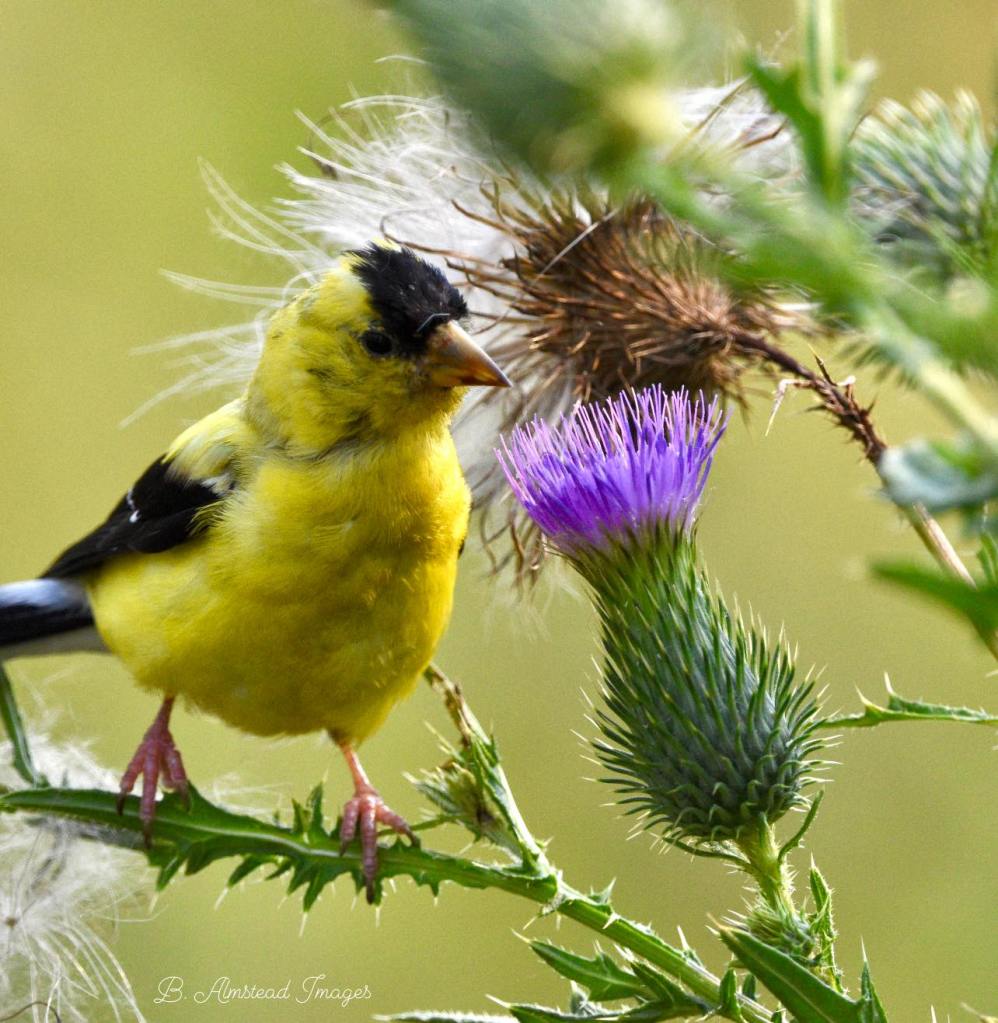
The picture of the squabbling flock of finches that ultimately stays together reminds me of the Corinthian congregation. In today’s passage in 1 Cor. 3, we can tell by his tone that the apostle Paul is exasperated with the church he helped to plant. He refers to his previous letter when he tells them how he couldn’t speak to them as “spiritual people” because they weren’t acting like spiritual people! They were “people of the flesh.” They were “infants in Christ” feeding on milk alone and not ready or willing to partake of “solid food.”
Because he believed that Christ was, indeed, returning for his Church within Paul’s lifetime, he wanted to make sure that the congregation for which he felt responsible was living faithfully. I think this is why he used such strong language; he felt there was no time to waste.
The issue Paul deals with in this brief passage is that they are turning the Sacrament of Baptism—and who presided over theirs—into a point of division. Paul names the problem: jealousy and quarreling. Some people are aligning themselves with Apollos, who led the church and baptized new believers after Paul had moved on. They are saying, “I belong to Apollos.” While others, who had been there since the church’s founding and were baptized by Paul, are saying, “I belong to Paul.” If we think about it in today’s church, we might encounter this as a generational divide—those who were here during Pastor Edwards’ tenure may be used to an entirely different style and focus of ministry and membership of the congregation than the church of today. It may be a case of personality or preference. In any case, they are letting their differences divide them rather than remaining centered on Jesus Christ crucified and risen, as Paul urges them to do.
The apostle reminds us that the quality of leadership needed for the Church is humble, servant leadership, with Christ as the model. It doesn’t matter if the Baptism was done by Paul or Apollos. Both men are servants of the living God. He emphasizes church growth that isn’t about numbers; it’s about seeking to grow spiritually and living out our faith, with God’s help. “I planted,” Paul says. “Apollos watered, but God gives the growth.”
Dear friends, today we welcome, ordain and/or install elders and deacons, encouraging them to follow Christ in servant leadership as they minister in our congregation. They are charged with provoking us to love and good deeds and helping us use our gifts for the good of the people and for God’s glory.
We are charged to encourage and help our leaders.One way we help them is by doing things that spur our own spiritual growth. Healthy churches are full of healthy Christians who care for one another, give generously, and gather regularly for worship, education, fellowship, and mission.
Another important thing we do for our leaders is to refrain from quarreling and other divisive behaviors. I invite you to pray for our Session, Deacons and Trustees, and the congregation. Pray for your pastor. I covet your prayers! We are God’s servants. God’s coworkers, working together! We pray with gratitude, remembering that the Church is not a human institution, and believing that GOD will provide the growth.
To our leaders, I say this: don’t lose your sense of humor! We make serious decisions in church leadership, but that doesn’t mean we can’t laugh and have fun. Don’t work too hard or neglect your family. Nurture your own relationship with the Lord. Take time for rest from your labors and to pursue JOY, truly God’s gift. I highly recommend bird watching and taking walks to experience the Wonder of God’s Creation, the Lord’s Dwelling Place. Perhaps you will be inspired to write songs and poetry about God, birds, and faith.
And finally—try to forgive all the little hurts. Quickly. Though we are being perfected and made complete in Christ, we are not perfect! I urge our leaders to assume the best intentions for everyone and see one another through the grace of our eternal God, who has forgiven us for all our sins in Jesus Christ. Paul tells the Corinthian church, a wildly diverse congregation that struggles to get along and find common ground, that in Christ, we no longer regard one another from a human point of view. In Christ, we are a new Creation. The old has passed away. Yesterday is gone! Behold, the new has come!
Let us pray.
Holy God, we thank you for your loving provision for all creatures—human, plant and animal alike. Thank you for the Spirit’s work of raising up new leaders and strengthening experienced leaders to persevere through the labor of ministry. Thank you for the birds and your gift of joy and Wonder in your Creation. Help us to be united and to pray and use the gifts, talents, and resources you have given us for your people and your glory. Bless us with spiritual growth so that we are a faithful witness–your loving, humble servants, working together in shared mission. May we today live out the promise that in Christ, we are a new Creation. Help us to forgive, let go of yesterday, and welcome the new day. Amen.
 Sharing God's Love and Grace