
Meditation on Matthew 18:21-33
First Presbyterian Church of Smithtown
Pastor Karen Crawford
Sept. 17, 2023
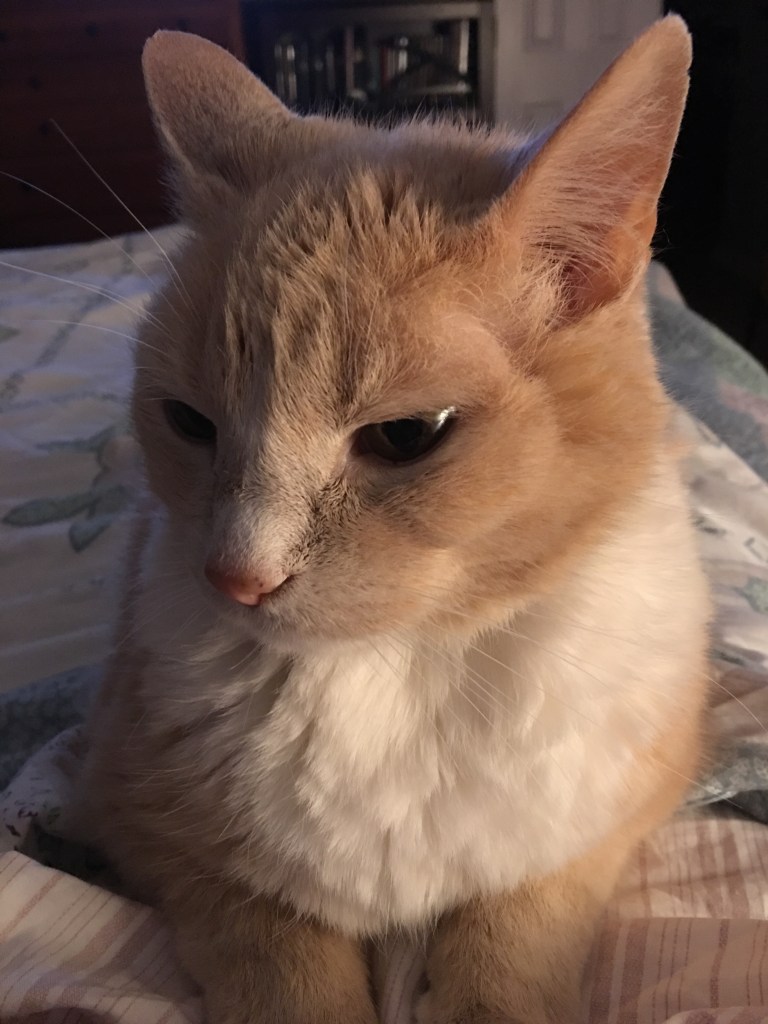
Jim and I have been blessed with many sweet pets. But there’s one particular fur baby who touched our hearts in unexpected ways. Unexpected would have been a good name for the orange and white stray who showed up in the parking lot of my rural Minnesota church one day. He trotted over to me, meowing, tail up in the air, as if he expected good things.
He was a big cat. He let me pick him up and hold him on my shoulder right away. He had a loud, strange purr—as if he had some loose change rattling around inside of him.
We had two dogs back then—a beautiful sheltie named Molly and a cutie pie Pomeranian named Mabel. No cats—and we weren’t looking for one.
The scruffy looking orange cat with a white belly that swung back and forth when he walked followed me as I made my way home to the manse, next to the church. He turned on the charm on the front steps, climbing into my lap when I sat down. He had a way of putting his face under the crook of my arm, as if he wanted to hide from the world. I gave him food and water. Then, I left him on the steps and went inside. He’d be gone by morning, I thought, like the other strays that came and went.
That night it poured. The cat bedded down in our front bushes and cried all night long. He hated the rain. I couldn’t sleep and either could our son, Jacob because of the yowling. In the morning, Jim went out early with the dogs, saying to me, “Don’t let that thing come in the house.” As soon as he went out, I opened the door. The cat came in. I fixed him a nice bowl of dry dogfood—beggars can’t be choosers—and he never slept outside again. We named him Melvyn.
Jim didn’t trust the cat roaming the house at night and didn’t want him to sleep in our room. Melvyn had to stay in the unfinished basement. He was terrified down there. He cried and ran around in a panic that first night. I opened the door and let him come upstairs in the early morning hours. I went back to bed, and he scratched at our closed bedroom door.
“He wooooooo?” He asked, then a little louder, when he heard me giggling. “He wooooooo?”
He slept in our bed every night after that, purring loudly, with the strange rattling noise. When Melvyn was happy, he wanted the world to know.
“I think he’s plotting to kill us,” Jim said.
When I opened the car door to take him to the vet for his first check up, he jumped inside like he was used to car rides. I could almost hear a country music soundtrack playing, “On the road again. I just can’t wait to get back on the road again.”
The vet told us he hadn’t always been a stray. He was neutered and declawed, and, get this, didn’t have worms or fleas. At one time, he had been someone’s house cat. But he’d been living on his own for a while. He was missing patches of hair and had scars that were once wounds. The vet recognized him, saying, “You’ve been here before, haven’t you?”
We often wondered what stories Melvyn could tell if he could tell us about his previous lives. The vet figured by his teeth that he was at least 7 years old. Probably older.
It was an adjustment period—Melvyn getting used to living with us and us with him. He didn’t mind being indoors as long as we were with him. If we left the house, he would go wild—running all over the place, knocking things over, climbing to the top of the kitchen cabinets and refrigerator. Getting into things. He would act like he was starving as soon as we left. One time, he knocked over a plastic container of dry dog food left on the kitchen table while we were out. When we got home, he was on the table, and the dogs were having a feast of dry food spilled all over the floor. That night, they had a tummy ache.
The wild, panicked behavior continued, every time we left the house. He was obviously traumatized by something in the past.
One Saturday, we discovered that he had helped himself to the Communion bread while we were out. We had bought the French bread loaf for the church service the next morning. Melvyn, home alone, had knocked it off the counter, dragged it across the kitchen floor and chewed off one end. The closest actual grocery store where we could buy bakery bread was about 25 miles away. Jim suggested that we could just cut off the part where the cat had eaten.
“Not my Jesus bread!” I said. That was the only time I felt frustrated with Melvyn. But how could you stay mad at such a sweet creature?
Later that night, he was purring loudly in our bed. He was one grateful kitty, happy that we had come home to him and kept filling his food and water bowls.
It was months before Melvyn started to calm down when we left the house. I think he had finally come to the realization—these people love me. They’re not going to hurt me. They aren’t going to abandon me, even if I do something bad. They’re going to forgive me.
It took time.
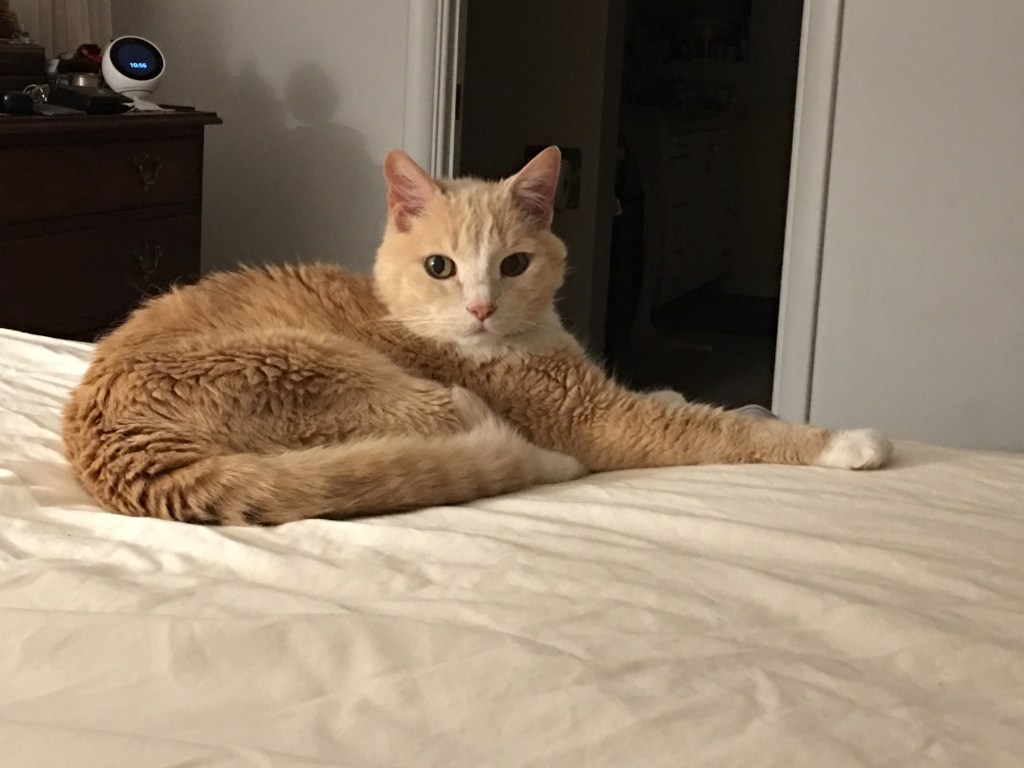
He grew increasingly calm and peaceful as the years went by. He never minded car rides, not even to the vet. He rode with us all the way from Minnesota to Florida, when I accepted a new call near where my parents lived. He never made a sound! He rode with us in the car all the way from Florida to Ohio, when I accepted a call to a new church family there. He adjusted to every new home, although he was cold in Ohio and slept on the rug in front of the hallway heat vent during the day.
He always knew that he was one of the family. He belonged. He never minded the two dogs, although they minded him, in the beginning.
Melvyn taught us that LOVE changes us. When someone loves us, unconditionally, and we know to whom we belong, then we have peace—and we can’t help but offer that same kind of love and grace to others. The root of Melvyn’s grace, I believe, was his gratitude to us for saving his life! He never had to sleep outside and go hungry in a Minnesota winter again.
This is not one of my favorite passages in Matthew. I actually end the reading before the lectionary stops because of the harsh warning at the end—of how God will punish us if we fail to show mercy and forgive others. Taken out of context, someone could get the wrong idea and not understand that God is love and that God will never stop forgiving us for our sins, even when we struggle, at times, to forgive those who have hurt us deeply.
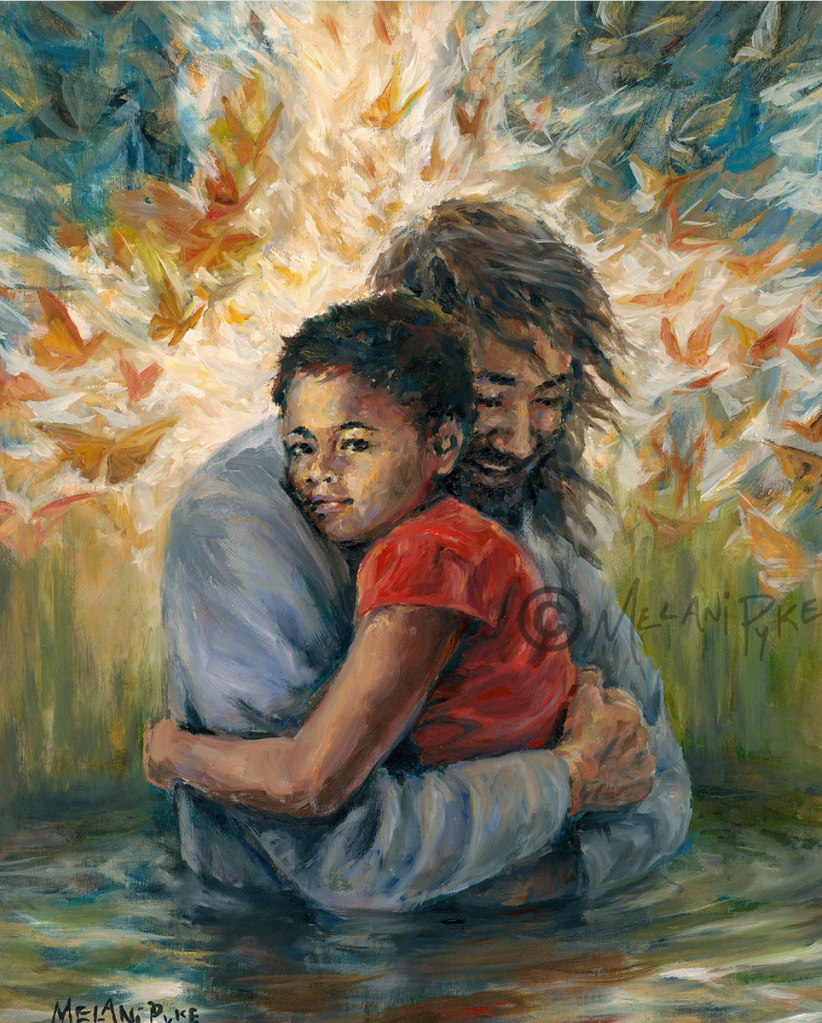
God speaks through the prophet Isaiah in 43:25 and Jeremiah in 31:34, assuring God’s people that not only will the Lord forgive, the Lord will remember our sins no more!!!! God intentionally forgets! The psalmist in 103:12 assures us that as far as the east is from the west, so far as God removes our transgressions from us.
The passage in Matthew has an almost comedic beginning. The disciples are asking how many times they must forgive a brother or sister in the faith. You can almost hear them bickering with each other. Thirteen guys living in close quarters; it’s a miracle these men of differing ages and backgrounds can get along at all!
Seven times to forgive sounds like a good number. Maybe there’s one disciple that is more annoying than the others, and they want a reason to exclude him from the group. “OK, you have one more chance!” Seven is a divine number in Hebrew Scripture. How many days in the Creation story? Seven—but the seventh is the Holy Sabbath, the Day of rest for the Lord and God’s people.
While I made it out to be a math problem in the children’s message today, it’s not really. Jesus saying, “seventy times seven!” is his way of saying, “Always and forever.” How many times must you forgive your brother and sister who hurt you? Always. Forever.
The parable is horrifying in that it sounds like it could happen today. Someone is forgiven for a great debt when they deserved punishment. Then, they withhold forgiveness to someone who owes them a debt. That’s easy to believe, right? It sounds like the world in which we live.
The point is this: If your Heavenly Parent has so lovingly and graciously forgiven you for all your sins, then you are changed by this love and grace! You are not the person you were before. You are NOT the same being. You can’t help but offer God’s love and grace when you have accepted the Lord’s love and grace for you.
Sometimes, that’s the problem—when we haven’t really accepted God’s grace and love for us. When we can’t forgive ourselves. That gets in the way of our loving and forgiving others.
Melvyn lived a long, happy life with us in Minnesota, Florida, and Ohio. He struggled with health problems as he aged. He went blind. He lost his appetite. Then, one day, he couldn’t walk anymore. He had no strength or movement in his hind legs. I didn’t want to let him go. Whenever I held him in my arms, he purred and went to sleep, as if nothing were wrong. He trusted me until the end. Finally, I let him cross the rainbow bridge.
He lives on in our hearts and yes, I believe the animals that God so lovingly created and called good live on with the Lord for all eternity.
Whenever I think about God’s amazing grace, I remember the example of our orange stray, with the white belly that swung back and forth when he walked. I still miss his, “He wooooo?” outside our bedroom door.
He remains a sweet reminder of how, when we fully understand to whom we belong and fully accept God’s unconditional love and amazing grace for us, we are changed. We have peace. And we can’t help but offer that same love and grace to others.
Let us pray.
Holy One, thank you for forgiving us for all our sins—and for not remembering them anymore! Help us to love as you love. We struggle to forgive others who have hurt us. We hold onto hurts; we have trouble forgetting them. We struggle to forgive ourselves. The problem is that we can’t always believe in your unconditional love! We only know conditional love in this world. Your grace seems, at times, too good to be true. But Your Word is TRUE and our faith tells us that your LOVE and GRACE are REAL. And that we are not the same people we used to be. For your amazing grace has changed us, and there’s no going back. In the name of Jesus we pray. Amen.
 Sharing God's Love and Grace