Meditation on Luke 2:1–20
Pastor Karen Crawford
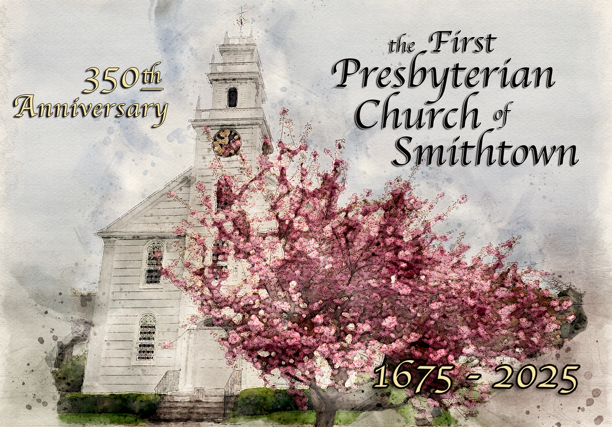
First Presbyterian Church of Smithtown
Christmas Eve
Dec. 24, 2023

I have to ask. Who here also came to our morning worship service? Thanks for coming back!
I have to make a confession. When I woke up this morning, my head wasn’t connected to my body. I had made such a big deal about how the morning service on Christmas Eve would have the children’s story. I said that repeatedly during announcements in worship and in our newsletter.
When I arrived at church this morning, my hands were filled with bags—including two huge bags with goodie bags for the children. But no story. I had left the picture book I planned to read to the children at home.
I discovered this about 15 minutes before the worship service was set to begin. I toyed with the idea—very briefly—of going back home to get the book. Of course, there wouldn’t be enough time.
I had worked so hard choosing a children’s Christmas story to read aloud. The perfectionist in me chose a book called, ‘Twas The Evening Before Christmas, but I had changed the ending and had all these sticky notes on pages that I wasn’t going to read, but that I would just show the pictures. Because the story was wrong! That bothered me.
On the last page of Twas the Evening Before Christmas, Mary whispers, “Merry Christmas to all and to all a good night!” There was no Christmas when Jesus was born. There were no Christians! And Mary was Jewish!!
All of this is cluttering my mind –and it’s 10 minutes before 10 a.m. Soon the bells would be chiming.
Well, I will just tell the story of Christ’s birth, I decide, using one of the nativity scenes in my office. I carry it into the sanctuary, set up it on a table—and then I notice that someone is missing. Joseph! There is NO Joseph!
So, I run back to my office looking to borrow a Joseph figurine from one of my other nativities. Guess what? My other nativities didn’t have a Joseph, except for one where he was glued into the scene. That wasn’t going to work. I needed to be able to move him around with the story.
I felt sorry for Joseph for about 30 seconds, until I remembered how in Matthew, he finds out Mary is pregnant before they are married—and he decides to break it off quietly, as if they were never engaged. In Mary’s time, a young Jewish girl would have been considered marriageable when she was 12 years and 6 months. Every marriage was preceded by a betrothal, after which the bride legally belonged to her bridegroom—so she belonged to Joseph, though she didn’t live with him and wouldn’t until the marriage was celebrated about a year after she became engaged.
If an angel hadn’t appeared to Joseph in a dream and confirmed Mary’s story of her pregnancy by the Holy Spirit, the Christmas story would have been completely changed. She may not have been traveling the long, arduous journey of 90 miles by foot over the hilly Judean countryside when the emperor decreed that all must be registered for the census in the father’s or husband’s ancestral place of birth. It was Joseph who was descended from the house and lineage of David, who was from Bethlehem. It IS possible that Mary, too, was descended from David, but we don’t know for sure. Luke tells us that Mary was a relative of the formerly barren Elizabeth, who was pregnant with John when Mary became pregnant with Jesus and went to visit her. Elizabeth was “of the daughters of Aaron,” and she and her priest husband, Zechariah were “righteous before God, walking in all the commandments and ordinances of the Lord blameless.”
At about 5 minutes before 10 this morning, I decided that a shepherd would have to stand in for Joseph in the children’s story. I used a sheep figurine to tell the part of the shepherds coming to see Jesus, Mary, and Joseph.
The Christmas story, when you think about it, while so familiar and comfortable to us who have been Christians for a long time, is full of strange twists and turns. Here is this travel weary couple, the young woman gives birth to her firstborn son without her mother or a midwife to help her. She lays him in a manger—an animal feeding trough—proof enough to me that there must have been farm animals witnessing the birth, though no animals are mentioned in Luke’s account.
We don’t know exactly where she gives birth—whether it was a stable or a cave. The Bible doesn’t say. The Church of the Nativity in the Holy Land was built over an ancient cave, they say, that was the place that Christ was born. But it’s still a mystery.
The manger scene that I grew up with had horses, camels, donkeys, cows, a dog, chicken, and, of course, some sheep. They had come with the shepherds when they made haste after the angels told them about the infant born in the small town of Bethlehem, overcrowded with exhausted travelers like Mary and Joseph because of the emperor’s decree. The sign that he was the long-awaited Messiah, our King of kings? The babe would be wrapped in strips of cloth, lying in a manger.
Cynthia Rigby, a theology professor at Austin Presbyterian Seminary and one of my favorite teachers in the Doctor of Ministry program, writes,
“Mary and Joseph make a home where there is no home; Jesus nestles in the manger and is nurtured in his parents’ arms; the shepherds tell the story of the angels, gathered in the dim candlelight of the stable, as if they are with old friends.”
I have considerable relief when Cindy goes on to validate my sentimental view of the manger scene, the Christmas story that we tell, again and again, in the greatest of detail. “There is something theologically correct about our nostalgic portrayals of the nativity,” she says. “The happy family and guests huddled ‘round the manger made of straw, a warm brown cow looking on, softly chewing. What is right about this is that there is a home—a home whose hearth is Jesus Christ himself. He is the center of Mary and Joseph’s life, the song of the angels, the mission of the shepherds. Where the Christ child lays, the story tells us, is home. This child is born for ‘all the people.’ He is our Savior and Messiah, the one in whom our unsettledness gives way to great joy and peace.”
As I read this entry in a 2008 commentary, today—after the Christmas Eve service this morning that was less than perfect, for a number of reasons—my mind holds an image of my beautiful teacher—younger than I and struggling with early onset Parkinson’s, recently diagnosed.
A year ago June, when she co-taught a seminar on wonder and creativity at Ghost Ranch, New Mexico, her hand shook so badly when she talked that the water she held in her paper cup would spill out on the floor. The once eloquent theologian, still passionate preacher, and prolific author, who urged us to write books while we still can and share our words with the next generations, struggled to finish her lectures and meals with us. Her uneaten food lay on her plate as she so graciously answered question after question that we asked. Cindy, a former journalist with the Dallas Morning News, is also a perfectionist—and I can only imagine how this terrible, frightening progressive disorder is turning her life upside down.
I was hoping to see her and her husband, my other favorite teacher, in a few weeks when I travel to Austin for another seminar. But she has taken a year off on sabbatical after not being well enough to teach her scheduled seminar last June.
If the Christmas story teaches us anything, it’s that if something can go wrong, it will. But that there are always divine surprises in low places, that it is always darkest before the dawn, and that our God cares about and values the lives of ordinary people, such as shepherds who are engaged in the most ordinary of all work for their time—watching over flocks by night—when they receive the extraordinary message from the heavenly host. “It is to us—ordinary people—that a son is born,” Cindy writes. “He is finally born, on this very evening, to we who have been waiting for the Messiah to come and change the world.”
Contrary to the expectations of many, “he does not seem to have come with the purpose of being a revolutionary. He is, as it turns out, just a baby. Surrounding the stable at Bethlehem, the forces of the empire that have orchestrated a census will soon make plans to murder newborn sons and will systematically crucify those who challenge conventional understandings of divine and human power. They, like us, are not expecting a threat to come from something so ordinary.
“Who suspects that this baby born today in the city of David will save us? That this baby born to Mary will bring us peace? That this baby’s consistent, persistent, habitual, ordinary obedience to God will have an extraordinary revolutionary impact?
“With the shepherds, we should tell what we know about this child.” This is my hope for you—for us—that we will tell what we know about this child and what we love about him and how he loves us! “With those who hear, we should stand amazed. With young Mary, we should treasure the extraordinary ordinary things of Christmas, pondering them in our hearts.”
Let us pray.
Holy One, thank you for sending Your Son to be our Savior and Messiah, the one in whom our unsettledness gives way to great joy and peace. We invite your Spirit to make its home in our hearts and guide us in our lives all our days. Stir us to treasure these strange but familiar words of the Christmas story and take time, with Mary, not just on Christmas Eve and Christmas Day but every day to ponder the words of angels, shepherds, and magi in our hearts. Help us to be part of the change in this world, the light in the darkness that began to shine when your Son was born and laid in a manger–because there was no room at the inn. In his name we pray. Amen.
 Sharing God's Love and Grace