Meditation on Mark 1:21–28
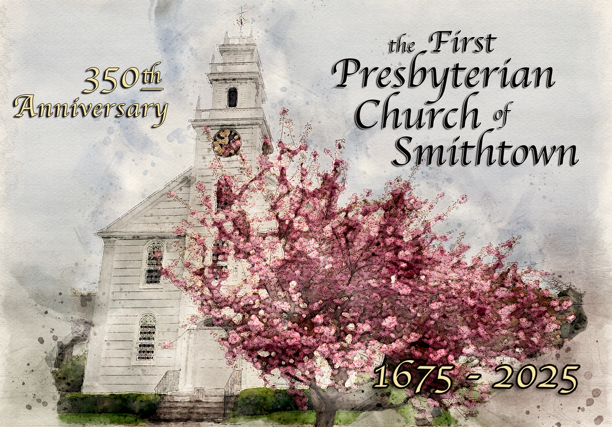
First Presbyterian Church of Smithtown
Pastor Karen Crawford
January 28, 2024

It was pouring rain, dark, and foggy when we drove to South Shore University Hospital in Bayshore on Thursday morning. We left the house at 5:36 a.m. It had been for me a night of mostly staring into the darkness, wondering what the next 48 hours would bring. Jim’s bag was packed with a change of clothes and two books for an overnight stay. My briefcase was filled with books, files, and my computer.
I knew that I was going to have a long day of waiting at the hospital.
Jim rolled into the O.R. around 8 a.m., after a quick prayer. The surgeon called around 10:30 a.m. to tell me everything went smoothly. I was able to see Jim in recovery by around 1 o’clock and in his hospital room sometime after 2.
It felt good to stand and stretch and walk the long way to his room from the place where I had been waiting. He was looking at a menu and considering possibilities for dinner when I arrived. I suggested lemon sorbet and rice pudding.
“Maybe, since you are a big man,” I said, “they will let you eat two desserts.” It felt good to laugh.
I have vivid memories of his first knee replacement in Ohio a few years ago. And I will be honest, those memories haunted me when we were preparing for this surgery. Still, we went into this with hope, knowing we are older and wiser; this was a different surgeon, different hospital, different protocol, and yes, simply a new day.
In order to heal in the present, we have to leave the past in the past, Amen?
Learning from our struggle after Jim’s surgery in Ohio, we reached out to our son, Danny, this time, and asked for help.
We all like to be independent. But the work of healing is done through community. It isn’t just one healer these days, and an instantaneous cure, but a team of medical professionals, in a variety of settings. The Lord uses many people –some of them strangers, some of them family and friends, to care for us when we are in need of healing.
The story of the man with the unclean spirit in the first chapter of Mark today is the first of a number of healing stories that I will be sharing from now throughout Lent. This is part of my work for the Doctor of Ministry program, and it’s also a passion of mine—the whole question of healing for those who are sick in body, mind, or soul.
My main concern is the question of how separation affects those who are sick or struggling with mobility—how they may feel as if they are on the margins or on the outside. You can have this strange, almost out of body experience when suddenly you are in the hospital, rehab, or in a nursing home. You may feel isolated, lonely, and homesick.
When Jesus heals in the New Testament—it isn’t just a physical cure, but it often has social implications, such as a restoration of the person to their family and faith community. But not always….
Today, we know so little about the man with the unclean spirit. We don’t know his name—as is sometimes the case when Jesus heals. He heals named friends and unnamed family members of friends. He heals the rich and poor. He usually heals members of his own faith, but not exclusively. He heals strangers with names and strangers unnamed. The man with the “unclean spirit” is a person unknown to the biblical writer, possibly unknown to Jesus and the disciples, whom he has just called and they dropped their nets to follow him in the preceding passage.
They have gone to Capernaum, an ancient city on the north shore of the Sea of Galilee. It is the setting for numerous miracles of healing in the New Testament. In Matthew, Jesus makes his home there right after his temptation in the wilderness. He will preach there regularly in the synagogue; he will give his sermon on the Bread of Life in John. This is where he cures the Roman officer’s servant of palsy and raises the daughter of Jairus from the dead.
Sometimes, the faith of the person interceding on the behalf of the afflicted is named and praised by Jesus. Sometimes, the faith of the person being healed is named and praised.
Sometimes, faith has little or nothing to do with the healing.
In the healing of the man with the unclean spirit in today’s passage, there’s no one interceding on his behalf. No family or friends that we know of. And the man himself never speaks. The demon living inside him does all the talking, much to the surprise of probably everyone there!
Theologian William Placher says, “A man with an unclean spirit did not belong in a synagogue. He was ritually unclean, and this was sacred space. …He promptly disrupts things by yelling his head off….Evil spirits never have any problem knowing who Jesus is.” [1]
James 2:19 says, “the demons believe and shudder.”
This is a passage where the English translation fails to adequately convey the original Greek meaning. Our Bibles in the pews—the NRSV—say that Jesus rebuked the unclean spirit, saying, “Be silent and come out of him!” What he says may be closer to “Shut up!” “Muzzle it!” and “Get out!” [2]
The unclean spirit convulses the man, crying out with a loud voice, before it comes out of him. All of this takes place within a worship service; there are many witnesses who actually stay and watch the whole thing, without running away. Mark says the people are “amazed.” In our English translations, they say, “A new teaching—with authority!” Well, some of us are wondering what the “new teaching” is. Who knows what the subject of Jesus’ teaching was that day? All anyone remembers is the casting out of the demon. I am pretty sure we would remember that, too, if that happened here.
This word translated “authority” is exousia! It is often “applied to kings and was especially associated with what God would have when his reign came.” [3] Exousia meant divine power, in contrast to the classically trained teachers and leaders of the faith, who were Jesus’ teachers when he was a young boy, full of questions. That word—exousia—appears twice in this passage—near the beginning in verse 22, “ They were astounded at his teaching, for he taught them as one having authority—exousia, divine power—and not as the scribes.” And verse 27, “They were all amazed, and they kept on asking one another, ‘What is this? A new teaching—with authority! (exousia, divine power). He commands even the unclean spirits, and they obey him.”
What happens to the man after he is cleansed of the unclean spirit? We don’t know. Is he restored to his community, his home and family? We don’t know. Maybe. The entire focus of this healing story is not on the man needing spiritual cleansing, but on the revelation of the exousia, the divine power, that possesses Jesus. After this, Jesus becomes famous throughout the surrounding region. Soon, he can’t go anywhere without folks bringing those who are sick or possessed by demons to be healed.
He cures many, but not all. The work of healing the world isn’t over, yet. That’s where WE come in.
Today, we will ordain and/or install our elders and deacons. We will pray for God’s exousia to fill, guide, and protect them as they seek to serve our congregation with energy, intelligence, imagination, and love. But let us remember that the ministry of healing belongs to the entire community. It’s not just the job of elders and deacons. We all have the authority to heal! Christ’s power, exousia, by faith!
N.T. Wright explains, “On the cross, (Jesus) completed the healing work he began that day in the synagogue. When the church learns again how to speak and act with the same authority (exousia), we will find both the saving power of God unleashed once more and a similar heightened opposition from the forces of darkness….They can still shriek, but since Calvary, they no longer have authority. To believe this is the key to Christian testimony and saving action in the world that, despite its frequent panic and despair, has already been claimed by the loving authority of God in Christ.” [4]
After worship today, I will be hurrying home to say goodbye to our son, Danny. He will be on the road to Cambridge, MA, this afternoon. A wintry mix of precipitation is expected.
I am glad we asked him to come. He was a BIG help! And it was so nice to see him. I know he lifted our spirits. I was surprised to hear him say that it was a nice “break” to come and see us. He could sleep in without being awakened by his young daughters jumping on him and his routine of caring for them. He had a little time to read and do some work on his computer. He had a nice walk by himself on Friday and a bike ride yesterday, while Jim slept and I prepared for worship.
You see, those who help are blessed as they serve others, just as those who need the help are blessed when others serve them! Remember that, dear friends, when you hesitate to ask for help, for fear you may be a burden.
One thing I learned from this experience is that in order to heal in the present, we have to leave the past in the past, Amen? And that the work of healing is done through the community, through the gifts of all the members of the Body of Christ. Through YOUR gifts!
The Lord uses many people –some of them strangers, some of them family and friends, to care for us when we are in need.
Let us pray.
Holy One, Gracious and Loving Healer, thank you for the way you care for us in community—through medical professionals, through strangers, family, and friends. We lift up those in need of your healing right now, those who are recovering from surgery, those who are sick with viruses or bacteria infections, those who are battling cancer and other diseases. We lift up those grieving the loss of loved ones and those who are lonely and feel far away from their home, family, and church family. Send your exousia, dear Lord, so that we may bring comfort, wholeness, and healing to your church and the world you so love. In the name of our Triune God we pray. Amen.
[1] William Placher, Mark (Louisville, KY: Westminster John Knox Press, 2010) 37-38.
[4] N.T. Wright, Mark for Everyone (Louisville, KY: Westminster John Knox Press, 2004) 11.
 Sharing God's Love and Grace