Meditation on Mark 9:2–9
First Presbyterian Church of Smithtown, NY
Pastor Karen Crawford
Feb. 11, 2024
I was at home preparing my message yesterday, when I felt a longing to be on the mountaintop with Jesus, Peter, James, and John. “What was that like?” I wondered, from the comfort of my second-floor office with a view of Oakfield Road.
I have never climbed a mountain before. I have seen pictures of snow-capped Mount Hermon, the likely setting for today’s gospel story, though we don’t know for sure. None of the gospel writers who tell the Transfiguration story—not Mark, Luke, or Matthew—tell us anything more than being led up a “high mountain.”
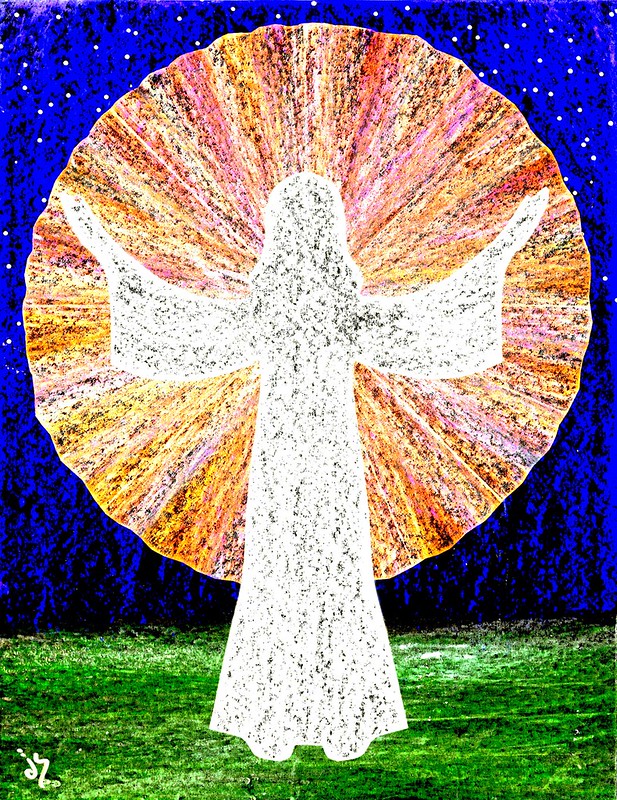
In my mind, I can envision the whistling wind of Mount Hermon, which straddles the border of Syria and Lebanon, and rises to 9,232 feet above sea level. I can imagine the terrifying cloud engulfing the disciples after they reach the summit and can’t believe their eyes as Jesus is transformed before them, his clothes shining with “a whiteness that no laundry on earth could match,” as one modern translation says. [1]
Mark doesn’t tell us that Jesus and his three chosen disciples—Peter, James, and John, all fishermen—climb the mountain to pray. He doesn’t say why the three of them go up the holy mountain, other than to be “by themselves.” Neither does Matthew. We assume this detail from Luke’s account.
This story makes me wonder, “What do fishermen know about mountain climbing?” Even if they had the right clothing and equipment, I am sure they were out of their comfort zone.
And why were they chosen from the 12? All we know is that Jesus led them away from the others so that they could be alone for a divine revelation. He trusted them, though they were as ordinary as ordinary can be.
In their journey with Jesus so far, he had preached and taught through parables; he calmed a storm when they were in a boat at sea. They had seen him bless children, heal people, and cast out demons. They were with him for the miraculous feeding of 5,000 people. They had seen Jesus rejected when he preached in his hometown of Nazareth. He had walked on water and raised a little girl from the dead. He had sent them out on a mission, giving them authority over unclean spirits. They cast out demons and anointed the sick with oil—and cured them.
But they still didn’t know who Jesus really was. They didn’t know God’s plan for salvation.
Just before Jesus led Peter, James, and John up a high mountain, he had begun to say things that upset them. They were shattered and baffled when he began to teach them that the “Son of Man must undergo great suffering, and be rejected by the elders, the chief priests, and the scribes, and be killed, and after three days rise again. He said all this quite openly.” “That seemed to them the complete negation of all that they understood of the Messiah.” [2]
Peter, the most passionate of Christ’s followers, couldn’t just sit back and listen to Jesus talk about his suffering and death. He took Jesus aside and rebuked him. Jesus responds by rebuking Peter with the strongest possible language, “Get behind me, Satan! For you are setting your mind not on divine things but on human things.”
Was the mountaintop experience meant to help Peter, James, and John, set their minds on divine things? What were they expecting on this day, not quite a week after his foretelling his death and resurrection? In any case, they weren’t expecting what happened.
My favorite part of the passage is when Peter reveals how overwhelmed he is by the experience, and yet his heart is still to serve the Lord with his gifts and talents. He SO wants to be useful! And he wants the experience to last, despite his fear. He doesn’t know what to say, Mark tells us, so he says to Jesus, “Teacher, it is good for us to be here; let us set up three tents: one for you, one for Moses, and one for Elijah.”
If you aren’t sure what to make of this familiar passage that we read every year at this time, be encouraged. You are not alone! The Transfiguration is still cloaked in mystery, even for Bible scholars.
“What happened, we cannot tell,” writes William Barclay. “We can only bow in reverence as we try to understand…Mark tells us that the garments of Jesus become radiant. The (Greek) word he uses (stilbein) is the word used for the glistening gleam of burnished brass or gold or of polished steel or of the golden glare of the sunlight. When the incident came to an end, a cloud overshadowed them.” The presence of God in Jewish thought “is regularly connected with the cloud. It was in the cloud that Moses met God. it was in the cloud that God came to the Tabernacle. It was the cloud which filled the Temple when it was dedicated after Solomon had built it. And it was the dream of the (Jewish people) that when the Messiah came the cloud of God’s presence would return to the Temple. The descent of the cloud is a way of saying that the Messiah had come.”
The appearance of Moses and Elijah with Christ serves to connect the history of God’s people with the future the Lord has planned. With the sharing of this divine vision, we are given a glimpse of eternity on the holy mountain, where heaven and earth come together at the summit. And where there is no death, no sorrow, no suffering or tears, but only life everlasting, in the presence of God and the Beloved Son.
It will be a long time before the disciples begin to grasp the meaning of the mysterious event, which is probably why Jesus tells them, as they descend the mountain, to “tell no one about what they had seen, until after the Son of Man had risen from the dead.”
Our lectionary reading ends here—but the story continues with the disciples—and with us. The disciples DO keep the matter to themselves, for the time being, but they can’t help but question “what this rising from the dead could mean.”
The experience will strengthen Peter’s testimony and help him be faithful to Christ’s call as he waits for the Savior’s return. He tells the Church in 2 Peter 1:16-19, “For we did not follow cleverly devised myths when we made known to you the power and coming of our Lord Jesus Christ, but we were eyewitnesses of his majesty. For when he received honor and glory from God the Father, and the voice was borne to him by the Majestic Glory, ‘This is my beloved Son, with whom I am well pleased,’ we ourselves heard this very voice borne from heaven, we were with him on the holy mountain.”
Dear friends, we, too, have been chosen to climb a high mountain with Jesus, Peter, James, and John. It doesn’t matter if we have ever climbed mountains before. Our faith is all we need. Let us allow the Spirit to interrupt us in our routines, stir us to pause from whatever we are doing, whatever we are thinking and feeling, wherever we are—and take us out of our comfort zones, much like the three fishermen, as ordinary as ordinary can be.
May the Spirit of wonder and the mystery of the mountaintop fill your heart with awe and grant you peace. May it encourage and strengthen you when you are feeling weary or worried. May the Transfiguration story embolden us to shine the light of Christ for all the world to see. As we come to the end of the Holy Season of anticipation and encounter that is Epiphany and prepare to walk the Lenten road, let us hold onto the beautiful image of the shining Christ on the summit of snow-capped Mount Hermon with this blessing for Transfiguration Sunday.
This is “Dazzling,” by Jan Richardson. [3]
Believe me, I know
how tempting it is
to remain inside this blessing,
to linger where everything
is dazzling
and clear.
We could build walls
around this blessing,
put a roof over it.
We could bring in
a table, chairs,
have the most amazing meals.
We could make a home.
We could stay.
But this blessing
is built for leaving.
This blessing
is made for coming down
the mountain.
This blessing
wants to be in motion,
to travel with you
as you return
to level ground.
It will seem strange
how quiet this blessing becomes
when it returns to earth.
It is not shy.
It is not afraid.
It simply knows
how to bide its time,
to watch and wait,
to discern and pray
until the moment comes
when it will reveal
everything it knows,
when it will shine forth
with all it has seen,
when it will dazzle
with the unforgettable light
you have carried
all this way.
Amen!
[1] N.T. Wright, Mark for Everyone (Louisville: Westminster John Knox Press, 2004) 113.
[2] William Barclay, The Gospel of Mark (Philadelphia: Westminster Press, 1975) 210-211.
[3] Jan Richardson, “Dazzling” from Circle of Grace: A Book of Blessings for the Seasons (Wanton Gospeller Press, 2015) 83.
 Sharing God's Love and Grace