Meditation on Luke 21:25–36
First Presbyterian Church of Smithtown
Pastor Karen Crawford
First Sunday of Advent
Dec. 1, 2024
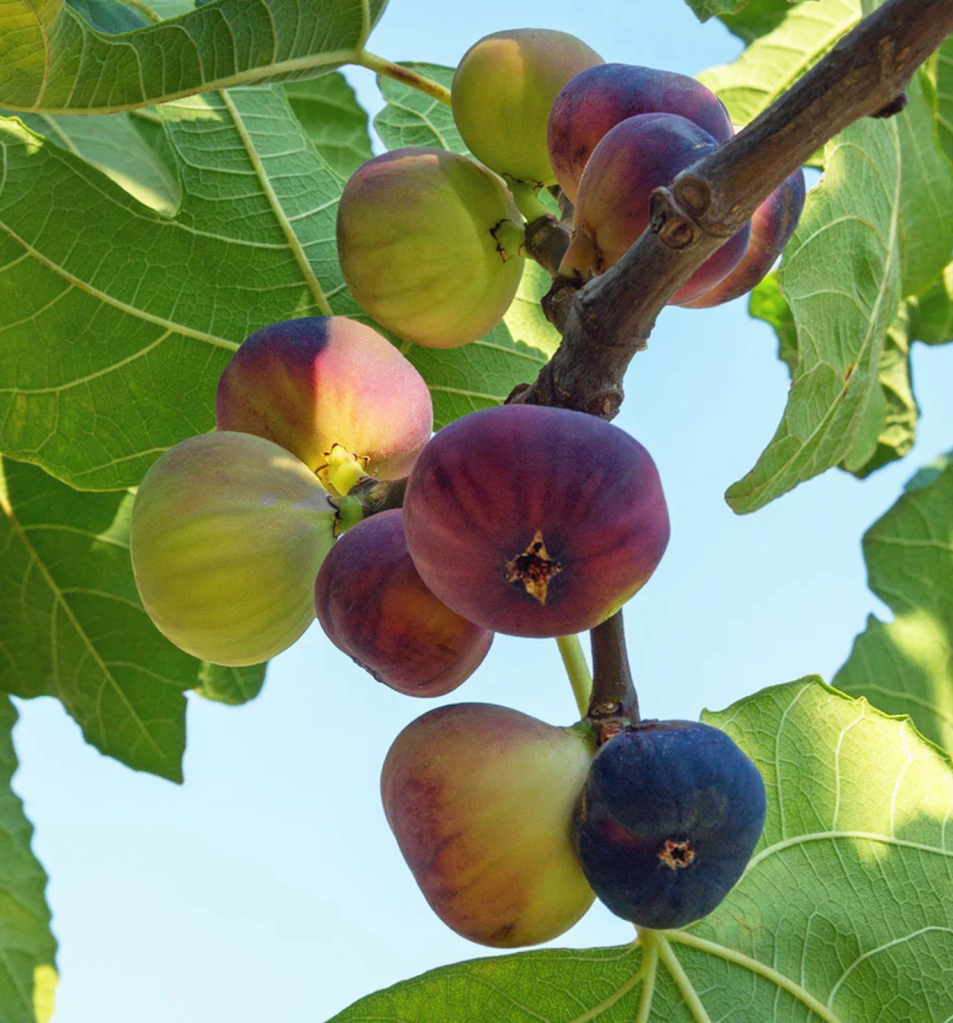
I like figs. Do you like figs?
In a tryout sermon, years ago on the First Sunday of Advent, I shared a children’s message about the lesson of the fig tree. I brought fig newtons for the children to eat as I told them about the hope of Christ’s return.
I told them that it was my favorite cookie. They stared at me blankly. They hadn’t had them before and of course it was their first time meeting me, as well. Later on, an aunt of one of the children said she felt sorry for me -if fig newtons were my favorite. Hadn’t I ever had chocolate chip cookies before? she asked, rolling her eyes playfully.
I was happy, then, to discover in my research for my doctoral project this summer and fall that at least three of the gardeners are growing fig trees. I am not the only one who likes figs!
But it surely can’t be easy growing a tree native to Mediterranean countries in our Long Island gardens, decks, and patios.
Have you ever noticed fig trees popping up all over the Scriptures?
It is the first fruit mentioned by name in the Bible. It’s in the story of Adam and Eve in Genesis. Of course, it’s not the forbidden fruit that Eve eats and gives to Adam. It’s the leaves of the tree the couple uses when their eyes are opened, after they eat it, and realize they are naked. They sew fig leaves together and make loincloths to help them hide from God when they are ashamed.
In Song of Solomon chapter 2 (vv. 11-13), fig trees are named for their beauty and scent, a sign of the arrival of spring, and an expression of God’s love for Israel:
For now the winter is past,
the rain is over and gone.
12 The flowers appear on the earth;
the time of singing has come,
and the voice of the turtledove
is heard in our land.
13 The fig tree puts forth its figs,
and the vines are in blossom;
they give forth fragrance.
Arise, my love, my fair one,
and come away.
In today’s reading in Luke 21, Jesus specifically names the fig tree to teach a spiritual lesson to his disciples. If you want to know when the Son of Man will return, “Look at the fig tree and all the trees,” he says, after warning of the signs of his coming. “As soon as they sprout leaves you can see for yourselves and know that summer is already near.”
Figs are an ancient fruit. Dried ones dating back to the Neolithic Age or 5,000 years before Christ were found in an excavation of a city on the western slopes of the Judean mountains. Figs played an important role in daily nutrition in biblical times. Because of their high sugar content, they could be dried, pressed into cakes, stored for long periods of time, like raisins and other delicacies, and offered as gifts. The fig tree or vine is among seven species in Micah 4:4 that symbolize prosperity and peace.
At least 1,000 different species of fig trees exist, mostly in tropical areas; some are wild; others are domesticated. The original fig tree species may have come from the jungles of northwest Turkey, an expert says. But the fig isn’t that easy to grow. It grows very slowly and may take years to bear fruit. And it’s not that pleasant or attractive. In Mediterranean countries, it grows to about 3 to 5 meters tall and has large leaves, rough to the touch. All parts of the plant contain a latex that is a skin irritant and may cause an allergic reaction.
Wild figs have female flowers that produce fruit and seeds and male flowers that don’t; the pollination of the female flowers depends on the work of a particular species of a tiny wasp. It’s a miracle, really, if this is the plant that Jesus is talking about—the wild fig tree that depends on one tiny wasp to bear any fruit at all.
This is the same plant that, in Luke 13 (vv. 6-9), Jesus talks about in another parable. This time, the fruitless fig tree is a metaphor for those who fail to repent and the long patience of God, the gardener.
A man had a fig tree growing in his vineyard, and he went to look for fruit on it but did not find any. So he said to the man who took care of the vineyard, ‘For three years now I’ve been coming to look for fruit on this fig tree and haven’t found any. Cut it down! Why should it use up the soil?’
‘Sir,’ the man replied, ‘leave it alone for one more year, and I’ll dig around it and fertilize it. If it bears fruit next year, fine! If not, then cut it down.’”
After church, oh, about a month ago, a couple that I interviewed for my project brought me a branch from their fig tree, wrapped in foil. They told me to put in water and wait for roots to grow before planting it.
I went home, put it in a jar of water and left it on a sunny shelf in the dining room. Then, I forgot about it. A couple of weeks later, I remembered it, and all the leaves had turned brown and fallen off. It was just a dried-up stick. I thought, “Oh well.” Another failure. But I changed the water and put it on the bathroom sink, where it would have not only light, but a more humid environment.
I forgot about it again—the stick in the water jar. I had other things on my mind—pastoral care needs for my flock and my own health challenge.
I went to see a new optometrist this week, someone recommended by someone else who was recommended, and I was so excited after I saw her. We talked about our faith; she sees her work as a ministry. She examined my eyes thoroughly and listened to my struggle after my surgeries last summer. She prescribed glasses with prisms for my double vision. I don’t have them, yet, and I don’t know for sure that they will work for me, but I have hope now that I didn’t have before. Later, I realized that she gave me hope through the present of her presence and the peaceful presence of Christ that lives within her, within all of us who believe.
After I shared my good news with my husband, I caught sight of the fig branch, and I couldn’t believe what I saw! That half-dead looking stick grew roots, and, not only that, it has a green fig! This was after I came up with the title for my message this week, “The Lesson of the Fig Tree.” The lesson of the fig tree was for me!


I just have to be patient and keep on hoping, praying, and waiting as I prepare my heart for the return of my Savior. That’s our focus, dear friends. We don’t have to fix every problem in our lives. We don’t have to fix every problem in everyone else’s lives. That’s not how we get ready. Christ does the work of healing and reconciliation. But we can hold onto hope in our Savior, who has already come and is coming again! And we can offer our hope through the present of presence to the weary world around us.
I would like to close my message with a list of suggestions for offering hope through the present of presence this Advent. This is from Joyce Rupp’s book, Out of the Ordinary. Ready?
Be with someone who needs you.
Be with a person who gives you hope.
Be with those who live in fear or whose hope is faint.
Be with an older person.
Be with a child.
Be with a teenager.
Be with a family member or friend.
Be with someone who has helped you to grow.
Be with one who is in pain.
Be with one who is grieving.
Be with someone in prison.
Be with someone who is homeless and food insecure.
Be with someone struggling with substance abuse.
Be with someone who is abused or neglected.
Be with your loved ones.
Be with yourself.
Let us pray. God of hope and love, you were so generous, sending the presence of your Beloved to dwell among us and to tell us who you are. Encourage us this Advent season to continue in the sharing of this loving presence through our attentiveness, given in prayer and acts of kindness. You who dwell within us, remind us often to let go of our busyness and hurriedness so that we can be with others in a loving way. Convince us that being is as important as doing. Thank you for being with us. Amen.
 Sharing God's Love and Grace