Tell Me About Your Garden Series
Meditation on Matthew 13:1-9, 18-23
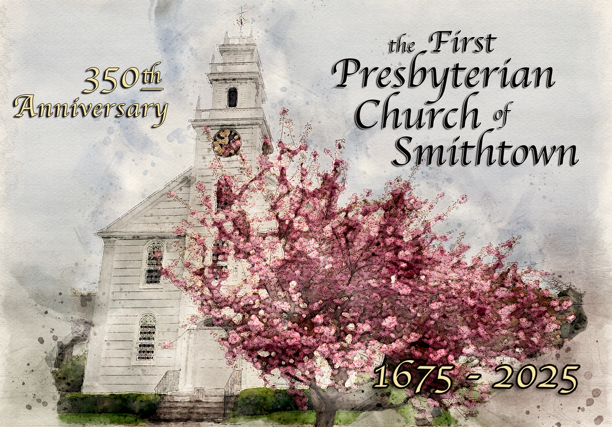
First Presbyterian Church of Smithtown, NY
Pastor Karen Crawford
Second Sunday in Lent
March 16, 2025
You come to fetch me from my work to-night
When supper’s on the table, and we’ll see
If I can leave off burying the white
Soft petals fallen from the apple tree.
(Soft petals, yes, but not so barren quite,
Mingled with these, smooth bean and wrinkled pea;)
And go along with you ere you lose sight
Of what you came for and become like me,
Slave to a springtime passion for the earth.
How Love burns through the Putting in the Seed
On through the watching for that early birth
When, just as the soil tarnishes with weed,
The sturdy seedling with arched body comes
Shouldering its way and shedding the earth crumbs.
—Robert Frost, “Putting in the Seed”[1]
Thank you to the 15 gardeners, ranging in age from 51 to 102, for opening your homes and gardens to me and sharing your stories in the summer and fall of 2024 and as a group in early spring 2025 for my doctoral project for Austin Presbyterian Theological Seminary.
Listen to the devotion here:

I planted seeds a few weeks ago. They started in my basement on what I expect was either Rev. Edwards’ or Rev. Hulsey’s old dining room table. It has been repurposed for an indoor potting area, which I am truly excited about. I have never had a place in my home to plant seeds and transplant seedlings. It’s kind of a basement she-shed, if you know what I mean.
One of our gardeners, Betsy, helped me with my seed planting. She is much more experienced at planting seeds than I am. She has planted a vegetable garden from seed since she was a teenager and learned from her father. Last winter was the first time I have ever started seeds in the house. I liked it so much, that I planted seeds and transplanted seedlings all summer long and into the fall. And the plants lived, much to the surprise of our landscapers, who scratched their heads. “No one plants in July,” Craig, Jr., says.
Now I am hooked. I can’t stop planting seeds.
Betsy provided the soil this time, as last year, I used a combination of potting soil, an organic garden soil, and peat moss. But I had some issues with the seedlings sometimes getting moldy. Betsy brought me a special soil for seed germination and another soil for transplanting. We put the transplanting soil at the bottom of the seed containers and the seed germination soil on the top, carefully added the seeds, and finished it off with a few sprays of water.
Within a few days, the seeds started to sprout. Echinacea, Black Eyed Susan, Dusty Miller, Lupine, Red Salvia, Columbine, Butterfly Weed, and Bee Balm. Pretty soon I realized the seeds would be better off upstairs where it was warmer and brighter. Now my she shed is the living room!
Maybe you grow seeds, too. Do you? Betsy, Belinda, and Reese all start seeds indoors and also direct sow in their garden in spring. Reese grows heirloom tomatoes from seed, as well as peppers and Swiss Chard. Ernie tried growing from seed once, but didn’t have success.
Belinda says, “I love growing from seed. That’s probably my favorite. …Then you feel like you grew it; it’s your creation. …I probably do more from seeds than existing plants because I get a kick out of it. I also feel that they’re hardier if you grow from seed.” Her husband, Brad, shares how he used to sell seed packets door to door when he was 10 or 11. “I would literally go door to door with my packs of seeds and say, ‘Do you want tomato, or do you want corn?’” Brad even got his own boys to sell seeds door to door one year. “We tried to rekindle my childhood,” he says, and laughs.
Bonnie says she grows marigolds from seed because she wants her granddaughter to “see the results of planting seeds.” “She helped me transplant them to the garden in the front,” Bonnie says. “They were huge last year. I never saw marigolds that tall!”

This year, her granddaughter is anxious to plant seeds with Grandma, again, but this time she wants to grow flowers to attract monarch butterflies. Me, too. That’s why I grow Butterfly Weed. Last year, I found a monarch caterpillar on my plant. That was exciting.

In biblical times, field crops grown from seed were winter cereals, mainly wheat and barley. Only one summer cereal crop is named in the Bible, a kind of sorghum, “which thrives well in the mountains, without irrigation.”[2] Biblical folks also had fruit and nut trees—date palms, olives, figs, walnuts, almonds, pomegranates, and sycamore.
And they planted small gardens near their homes, growing lentils, broad beans, chick-peas, garden peas, onions, leeks, and garlic, as well as coriander, cummin, dill, bitter vetch—an ancient legume—and possibly a kind of carrot. Additionally, they grew watermelons, mentioned in Numbers 11:5-6, when the Israelites in the wilderness are missing the foods that they were accustomed to eating and stuck with eating manna.[3]
The funny thing to me about the Parable of the Sower is that we never find out what kind of seed the Sower is sowing. The focus is on where the seeds lands, and of course it’s about discipleship. How can we be faithful followers of Jesus Christ? Our Sower in the gospel of Matthew sows his seed everywhere he goes, and the seeds land in four kinds of ground—the footpath, rocky ground, thorny ground, and good, fertile ground.[4]
Jesus explains the parable, saying the one who “hears the word of the kingdom and does not understand it, the evil one comes and snatches away what is sown in the heart; this is what was sown on the path.” The seeds sown “on rocky ground, this is the one who hears the word and immediately receives it with joy, yet such a person has no root but endures only for a while, and when trouble or persecution arises on account of the word, that person immediately falls away.” The seed sown “among thorns, this is the one who hears the word, but the cares of this age and the lure of wealth choke the word, and it yields nothing.” Finally, there is the seed “sown on good soil, this is the one who hears the word and understands it, who indeed bears fruit and yields in one case a hundredfold, in another sixty, and in another thirty.”
How should we respond to this teaching?
Mary Ann Tolbert gives us all the characters in Jesus’ time to help us. The scribes and Pharisees are those who rejected Jesus instantly, the first category. The “immediate joy and utter failure of the disciples, the second; the wealth, too great to give up,” the rich man in Matthew 19:23, the third.” But who is the fourth? The ones whom Jesus heals, such as the woman with a flow of blood in Matthew 9, to whom Jesus says, “Take heart, my daughter. Your faith has healed you.”[5]
But there’s another way of interpreting the passage. We are the seed. On which kind of ground did we land? Are we those who didn’t understand the word, sown on the hard path, snatched by birds? Are we lacking in spiritual root, sown on rocks, scorched by the sun, falling away when trouble and persecution comes? Are we so overwhelmed with the “cares of this age and the lure of wealth,” that we yield nothing? OR are we the seed sown on good soil? Are we, indeed, bearing fruit and yielding a hundredfold?
And there’s still another way to look at it, Barbara Brown Taylor says.[6]
“We hear the story and think it’s all about us, but what if we’re wrong? What if it’s not about us at all but about the sower? What if it’s not about our own successes and failures and birds and rocks and thorns but about the extravagance of the sower, who does not seem to be fazed by such concerns, who flings seed everywhere, wastes it with holy abandon, who feeds the birds, whistles at rocks, picks his way through the thorns, shouts hallelujah at the good soil and just keeps on sowing, confident that there’s enough seed to go around, that there is plenty, and that when the harvest comes at last it will fill every barn in the neighborhood to the rafters?”[7]
What if the focus is about the grace and generosity of our Creator, who doesn’t “obsess about the condition of the fields.”[8] And isn’t “stingy with the seed.”[9] The Lord “casts the seed everywhere, on good soil and bad.”[10] This is a God “who seems to be willing to keep reaching in the Lord’s seed bag for all eternity, covering the whole creation with the fertile seed of God’s truth.”[11]
And there’s one more way to interpret the story. This is my way. What if the Lord wants us to focus on the Sower’s generosity and kindness—and be like the Sower? What if we are called to sow extravagantly, without concern over whether the soil is good or bad, without judging if the seed is fruitful or not. Casting seed, sharing the Word, like it will never run out? Because it won’t.
If you haven’t started sowing your actual seeds, yet, you still have time. One Long Island gardening expert says April is the month when her seed starting “takes root.”[12] Yes, you can start lettuce and broccoli inside as early as February and plant peas and spinach outside as early as mid-March.[13] But most of the tender seedling planting won’t happen around here till Mother’s Day. Maybe you haven’t had success with planting seeds in the past—planting actual seeds in the soil and nurturing plants and sharing the word of God with whom the Lord brings onto your path, into your life, and nurturing them in the faith.
Be encouraged. It’s not up to us to judge the seed or the soil or our own skill for sowing. It’s not up to us to decide who receives the word of God and who doesn’t. Let us be like our generous, extravagant Maker, sowing seeds of kindness, grace, and truth, wherever we go.
Sow like we’ll never run out. Because we won’t.
Generous and Extravagant Sower, thank you for your love, mercy, and grace. Thank you for offering your Word, the seeds of eternity, to all people. And that you are patient with us who may not respond right away to your call to be disciples. That you are patient with us who may struggle to share our hope in you with other people whom you bring into our lives. Teach us to be like the Sower, and be extravagant, generous, joyful, and merciful as we seek to be faithful followers of your Son. Amen.
[1] Robert Frost, “Putting in the Seed,” The Poetry of Robert Frost, edited by Edward Connery Lathem (NY: Holt, Rinehart, and Winston, 1969), 123-124.
[2] Zohary, Plants of the Bible, 41.
[3] Zohary, Plants of the Bible, 85.
[4] Barbara Brown Taylor, The Seeds of Heaven: Sermons on the Gospel of Matthew (Louisville: Westminster John Knox Press, 2004), 25.
[5] Mary Ann Tolbert, Sowing the Gospel: Mark’s World in Literary-Historical Perspective (MN: Fortress Press, 1989),124.
[6] Taylor, The Seeds of Heaven, 26.
[7] Taylor, The Seeds of Heaven, 26.
[8] Taylor, The Seeds of Heaven, 26.
[9] Taylor, The Seeds of Heaven, 26.
[10] Taylor, The Seeds of Heaven, 26.
[11] Taylor, The Seeds of Heaven, 26.
 Sharing God's Love and Grace