Meditation on John 12:12-19
Tell Me About Your Garden Series
Palm Sunday
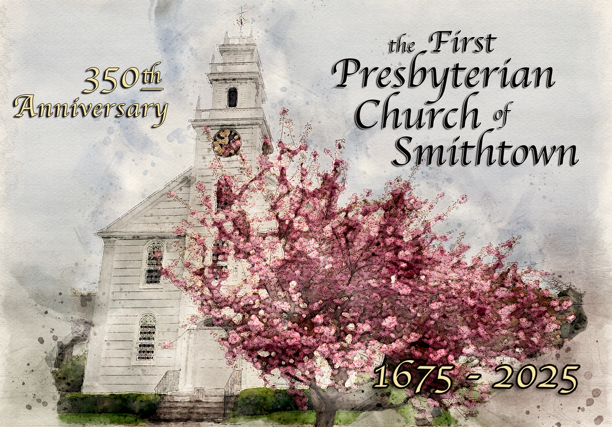
First Presbyterian Church of Smithtown, NY
Pastor Karen Crawford
April 13, 2025
Listen to the devotion here:

On Monday, though the weather was cold and rainy, I was outside pruning vines and ornamental grasses. Like weeding, pruning is one of those garden tasks that you either love or hate. For me, it depends on what I am pruning. Most of the gardeners whom I interviewed for my project said that pruning, like weeding, gave them a good feeling; they had peace, especially when they could see the results of their labor.
Lottie says of her and her husband George, “People like us, we take care of our plants like they are family. We make sure they are nourished; they are pruned.” She laughed when she told me about some plants that they have been “reeling in.” “We have had to chop them back to accommodate the other plants,” she says. “That’s part of being spiritual; we have to cut off the junk to see the good stuff.”
Kaitlyn says cutting back the invasive vines that grow under her fence is “cathartic.” She says to plants while pruning, “This is for your own good. You’re kind of a mess right now.” She understands her own need for God’s pruning in her life.
Hebrews 12:11 assures us, “Now, discipline always seems painful rather than pleasant at the time, but later it yields the peaceful fruit of righteousness to those who have been trained by it.” Jesus says in John 15 that he is the vine, and we are the branches. Even Christ is pruned by His Father, the Vinegrower, who removes every branch in him that bears no fruit and every branch that bears fruit he prunes to make it bear more fruit. We need and can expect the same loving discipline from the Lord.
Kaitlyn says when you look at her garden, you can see her state of mind, but there is beauty among the chaos. Pruning invasive vines, “just like problems in life, if you don’t attack them early, they become bigger problems… As I pull them out, there’s something like, ‘OK, I can attack this and you are with me and God is with me,’ and there’s something very satisfying. Of course, they keep growing back. But that’s life. That’s where I need to do things like mulch. Prevention is key.”
When I read the Palm Sunday passage in John through the lens of all God’s Creation, and not just people, I find a new layer of meaning. The crowd is stirred to break off branches of palm trees, a form of pruning, but they aren’t doing it for the well-being of the plant. The pruning is all for their own well-being and self-expression. They are welcoming Jesus to the Holy City.
This is not just a simple greeting. They are crying out as he enters, “Hosanna” or “Save us, now!” This is an act of worship. He who has done many signs pointing to his true identity is the long-awaited Messiah, the Son of God, who has healed, fed, restored sight to a man born blind, and raised Lazarus from the dead, the last of his signs.[1]
The account of Jesus’ triumphal yet humble entry into Jerusalem on the back of a young donkey (an echo of Zechariah 9:9) is in all four gospels. John is the only one who says the branches are from palm trees. These are actually date palms, which, along with other fruit trees, have a long and holy relationship with the Israelites.
Jerusalem botanist Michael Zohary says that “poetry and song celebrate trees and their fruit, which symbolize prosperity and peace.”[2] In Psalm 92:12-14, those who are “righteous are like the palm tree and grow like a cedar in Lebanon. They are planted in the house of the Lord, they flourish in the courts of our God. They still bring forth fruit in old age, they are ever full of sap and green (NRSVue).” [3] Palm trees and leaves are found in engravings and sculptures in Solomon’s Temple. Carved palm branches are found in artwork in the Capernaum synagogue, dating to the Third Century A.D.
Fruit trees are so sacred that it is forbidden to cut them down.[4] Deuteronomy 20:19 says, “If you besiege a town for a long time, making war against it in order to take it, you must not destroy its trees by wielding an ax against them. Although you may take food from them, you must not cut them down. Are trees in the field human beings that they should come under siege from you?”
But the date palm, one of the Holy Lands’ oldest fruit trees, cultivated as far back as 4,000 BC, is in a category by itself. “The date palm was so strongly established as a symbol for the people of Israel that after conquering the land the Romans issued coins showing a mourning woman underneath a palm –Judea Capta (Judea in Captivity).”
The palm, mentioned countless times in the Bible, was an “emblem of victory” on coins during the time of the Maccabees in the Second Century BC.[5] In fact, the waving of the palm branches when Jesus enters the Holy City stirs us to remember—though it is spring and not winter when Hanukkah is celebrated—Judas Maccabaeus entering the city in 164 BC after defeating the pagan invaders and cleansing the Temple.[6] His followers entered the city “waving palm branches in celebration.”[7] N.T. Wright says that “Jesus and his followers were … bringing together Hanukkah and Passover” with the waving of palm branches. “They were saying that Jesus was the true king, come to claim his throne, and that this was the moment when God would set Israel free once and for all.”
Many people and places are named for the date palm: Tamar, in Hebrew. You may remember the story of Judah’s daughter-in-law, Tamar, in Genesis 38. It’s not a story for Sunday School. She is unjustly accused of killing two of Judah’s sons, and there’s so much more to it. But at the end of the story, Judah proclaims that Tamar is more righteous than he.
The Bible calls Jericho, thought to be the oldest city in the world, “the city of palm trees.”[8] Deborah, serving as a judge for God’s people in Judges 4:5, “sat under the palm tree, which served in poetry as a symbol of upright stature, justice and righteousness. Its leaves are among the four species for the Feast of the Tabernacles in Nehemiah 8:15, and it continues to symbolize holiness and resurrection in Christian worship.”[9]
Apart from the spiritual significance of the palm are its practical uses. “The fruit is sustaining, its honey refreshing; from the tree’s trunk a tasty juice could be made. The leaflets were woven into mats, baskets, and other household utensils, while its wood served for fences, roofs, and rafts.”[10]
This day that begins with joy and excitement, with the waving of palms and all the symbols and imagery that point to Jesus being the long-awaited Messiah will end on a sober note. No matter which gospel we read, we always end up with the disciples not really understanding what it’s all about and certainly not knowing what’s in the road ahead. The Pharisees are always angry with the disciples and the crowd. In John’s account, they grumble to one another, “You see, you can do nothing. Look, the world has gone after him!”
We know that all this joy, excitement, and belief will soon change to unbelief, betrayal, suffering, and horror in a matter of days. And we can’t do anything about it. The story needs to be told, over and over, though it doesn’t get any less tragic and terrible. I always want to say on Palm Sunday, “Don’t do it, Jesus. Don’t go to Jerusalem.” But dear friends, he goes to the Holy City, under the waving of the sacred date palms, for you and for me. For us and our salvation. Because God so loves the world that he gave his one and only Son.
We who have been on this Lenten journey since Ash Wednesday, when we were marked with palm ash and recalled that we who were made from life-giving soil will someday become life-giving soil, again, have now begun our Holy Week journey. We want to skip right to Easter and the empty tomb. We are ready to shout, “He is risen!” But the cross looms ahead. And those who are pruning and waving date palm branches, shouting, “Hosanna! Blessed is the one who comes in the name of the Lord!” will soon be crying out “Crucify him! Crucify him. Crucify him.”
Let us pray.
Holy One, thank you for your Spirit that has led us on this Lenten journey and will never let us go. We are now drawing closer to the cross as we begin Holy Week. Lord, be gentle in your pruning of us, but prune us, just the same. Help us to bring forth fruit and remain green all our days. Stir us to remember what is so horrifying: our betrayal and his suffering, so that we will be truly thankful for all that you have done through Christ and be more faithful. Help us to share the story and our joy and hope of abundant and eternal life in him through our words and kindness, in creative ways. In the name of our triumphal but humble king we pray. Amen.
[1] N.T. Wright, John for Everyone Part 2 (Louisville: Westminster John Knox Press, 2002), 26.
[2] Michael Zohary, Plants of the Bible, (Cambridge: Cambridge University Press, 1982), 53.
[3] Zohary, Plants of the Bible, 60.
[4] Zohary, Plants of the Bible, (Cambridge: Cambridge University Press, 1982), 53.
[5] Zohary, Plants of the Bible, 60.
[6] N.T. Wright, John for Everyone Part 2, 25.
[7] N.T. Wright, John for Everyone Part 2, 25.
[8] Zohary, Plants of the Bible, 60.
 Sharing God's Love and Grace