Meditation on John 20:1-18
Tell Me About Your Garden series for Lent/Easter
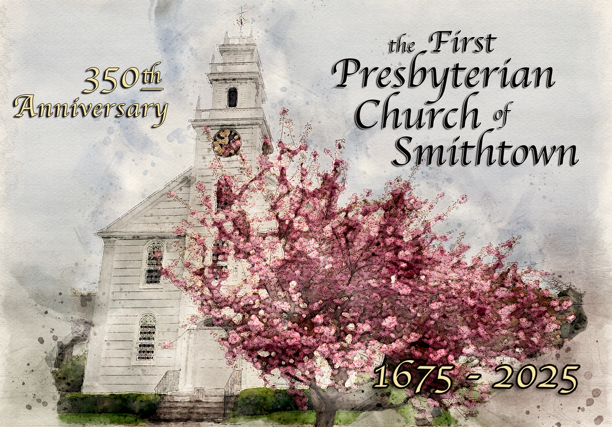
First Presbyterian Church of Smithtown, NY
Pastor Karen Crawford
Easter Sunday
April 20, 2025

Listen to the devotion here:
Our sanctuary has never looked or smelled as good as it does today, on Easter morning! This worship space was lovingly transformed yesterday by three passionate gardeners. They carefully arranged lilies, tulips, and hyacinths so that we would be transported to the scene of Christ’s last days on earth in the gospel of John.
In this gospel, there is a garden in the place where Christ was crucified. Of all things! To plant a garden in a place of such suffering is an act of grace. The device they used to bring about his suffering and death was once alive and growing in God’s Creation. As Peter boldly preaches on Pentecost, “The God of our ancestors raised up Jesus, whom you had killed by hanging him on a tree.”
In John, Jesus carries the tree himself to Golgotha or the Place of the Skull, where he and two others would be crucified. Standing at the foot of the cross were his mother and the sister of his mother, Mary of Clopas, Mary Magdalene, and a young man who calls himself, “the disciple whom Jesus loved.” Now we all know that Jesus doesn’t love this disciple more than the others. But this phrase helps us see ourselves in the story. We are Christ’s beloved, as well. His love for us is everlasting. He is with us now and his spirit strengthens us to live in faith, hope, and love.

In this garden, on a tree, broken and twisted for a cruel purpose, Jesus finishes the work of salvation, once and for all. Also in this garden is a “new tomb in which no one had yet been laid (John 19:41, NRSVue).”
A secret disciple named Joseph from Arimathea asks and receives Pilate’s permission to take away Christ’s body and prepare him for burial. Nicodemus, also a secret disciple who had visited Jesus one night, came with Joseph, carrying a hundred pounds of anointing spices made from two native plants, aloe—from the succulent leaves of aloe vera, widely used for medicine and embalming.[1] And myrrh—from a thorny shrub or small tree (Commiphora abyssinica) used in medicine, as an expensive perfume, and as incense in Egyptian temples.[2] Myrrh was a gift the magi offered to the infant Jesus, along with gold and frankincense. (Matthew 2:11).
Not Mary, Christ’s mother, but Mary Magdalene is the first to come to the garden that morning, while it is still dark, and find the stone removed. The tomb is empty! Mary, from a village on the west shore of the Sea of Tiberius, runs to get Simon Peter and the young lad who calls himself “the one whom Jesus loved,” telling them that someone has taken Christ’s body away. The three run to the tomb and see only the linen wrappings. They see and “believe”—but what they believe isn’t that Christ is risen from the dead! They believe, as Mary said, that his body is gone. They go home, despondent, presumably back to sleep, leaving Mary alone to grieve and continue to look for her Lord. She bends to peer inside the tomb. She is greeted by angels, who ask why she is weeping. “They have taken away my Lord, and I do not know where they have laid him,” she says. She turns and runs into a man, who asks her the same question and adds, “Who are you looking for?”
I often wonder what the Risen Lord looked like that morning, when Mary runs into him outside the tomb. He isn’t shining, like he is on the mountaintop at the Transfiguration. Could he be clad in the ordinary clothing of a laborer? Slightly dirty and disheveled? In any case, he is certainly not out of place in his surroundings when she mistakes him for a gardener.
The 15 gardeners in our flock whom I interviewed for my doctoral project last summer and fall said they were not afraid to get “dirty” to care for their plants. One said his wife accused him of playing in the dirt, which made him say that it was “clean dirt,” containing microbiomes that are good for our health. The most touching part of the interviews was when gardeners shared about who inspired them. Because everyone was inspired by someone, usually when they were young and usually but not always by a close family member—parents, grandparents, aunts, and uncles.
One gardener, Reese, had multiple family members who were gardeners. But the one who inspired him the most was his grandfather, who had a huge vegetable garden behind his house in Oakland, NJ. “Probably an acre,” he says. “He fed not only their family but neighbors …. He was a carpenter, a builder by trade. But he also had a love of gardening, and that’s really how I got started—in his garden, picking all his stuff.”
Home from college and looking for a way to earn some money between semesters, his grandfather had a job for him and not just picking vegetables. He said to Reese, “Come over here, and I’ll put you to work.” He had him driving truckloads of horse manure to people who needed fertilizer. Reese would first go to the horse farms and shovel dump truck loads full of manure and then deliver it to his grandfather’s neighbors and friends.
I wonder now what his grandfather would say about Reese, who has had a garden every single year, including the time he and his wife lived in a second-floor coop in Hauppauge. He had two tomato plants growing in pots on their balcony.
No matter the challenges, there will always be a garden, he says.
Reese and my other gardening friends would like to pass on their knowledge and love of gardening to their children and grandchildren, but times are different now. Lifestyles and interests are different. Not as many people garden as they used to at the turn of the 20th century. Reese’s grandfather lived in the Depression Era, when you planted a big garden, if you had the space, so your family could eat. And you always shared with extended family, friends, and neighbors so that others could eat, as well.
It’s that with church, nowadays, too. Lifestyles and interests are different. Times are changing. Not as many people go to church. At one time, not too long ago, we would have had three Easter services, including the sunrise worship at the beach, which was lovely this morning! This small, 200-year old sanctuary would be filled to overflowing. You had to get here early for the 9 a.m. service, so that you could get a seat. One member told me that she misses those days. Maybe you do, too, and looking around this room, you remember beloved friends and family no longer with us. Easter may stir a mix of emotions in you—joyful and sorrowful.
I have to say, when I look around the room, I am filled with gratitude. Thank you for your love for your church and for your Lord, who has chosen you, like Mary, to share your faith with the ones you love. Here in this beautiful sanctuary, adorned with fresh flowers arranged by passionate gardeners in our flock, I am wondering who inspired you to come to church and worship the Risen Savior? Who is responsible for you coming to believe? A family member? Neighbor or friend? Others nurtured you along the way, in addition to that one person who shared the spark that led to a flame that empowered you to hold onto your faith, though there were challenges. Maybe days, when you thought, like the Israelites wandering in the wilderness, “Is the Lord God still with me or not?”
And who have you inspired to not only hear the good news of the Living Christ but also to hope in the promise of the new creation in him and his glorious return for his church, and our new and abundant life in him that starts the moment we first believe? Who will you inspire when you leave this place today with your faith, hope, and love refreshed and renewed?
When Jesus calls Mary’s name, she recognizes the one she calls “Teacher.” When she clings to him, the Risen One gently asks her to release him as he has not yet ascended. He charges her with the role of serving as an apostle to the apostles.
“Go to my brothers and say to them,” says the one she mistook for a gardener, “‘I am ascending to my Father and your Father, to my God and your God.’”
Mary runs home and announces to the disciples, “I have seen the Lord!”
Let us pray.
Holy, Triune God, thank you for sending your Son to be our Savior and to draw us back to you when we went astray. Thank you that we are your beloved. Help us to believe in the new creation; our new life in Christ that starts the moment we first believe; and the hope of Christ’s return, triumphant and gloriously, for his Church. And as we cling to our faith, in joyful times and times of sorrow, help us to feel your loving presence with us and inspire others to believe and come home to a house of worship on the Lord’s Day, the first day of the week. In Christ’s name we pray. Amen.
[1] Michael Zohary, Plants of the Bible (Cambridge: Cambridge University Press, 1982), 204.
 Sharing God's Love and Grace