Meditation on 1 Timothy 2:1-7
First Presbyterian Church of Smithtown, NY
Reverend Dr. Karen Crawford
Sept. 21, 2025
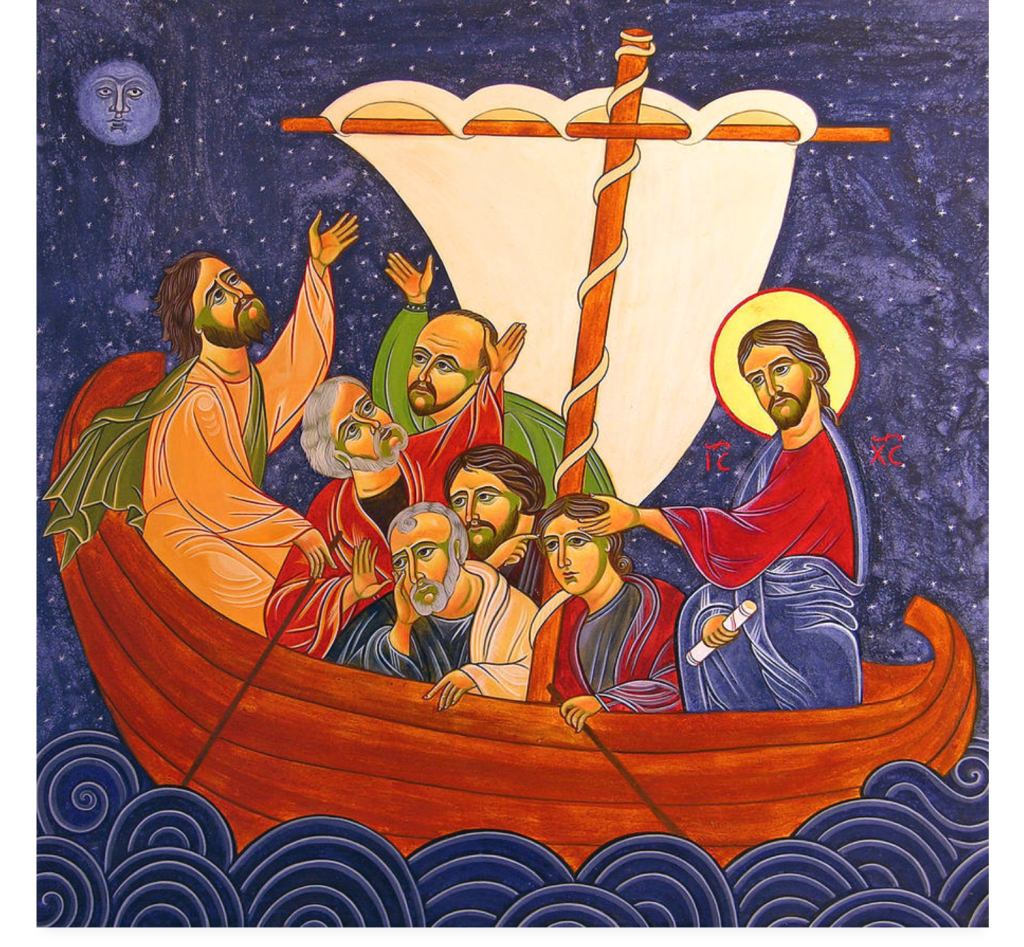
How many of you have ever ridden in a sailboat? How many of you have rowed a boat? It’s a lot of work to row a boat, isn’t it? Which would you rather do? Sail or row?
I started reading a book by Joan S. Gray this week called, Sailboat Church: Helping Your Church Rethink Its Mission and Practice. Some churches in the presbytery recommended it. I haven’t finished it, yet, but I already feel led to share some of what I read so far.
In the early days of Christianity, a boat was one of the symbols for the church. In Christ’s time, you could row or sail. The boat symbol that early Christians used was never a rowboat, though. It was always a sailboat. This image was stirred by the second chapter of Acts. On Pentecost, the Holy Spirit, while the disciples were praying, came like a rush of a violent wind.[1]
“For these early Christians, church was a God-powered, God-led, God-resourced adventure,” Gray writes. “They found they were caught up in something much bigger than themselves. Day by day, hour by hour, they moved as the Holy Spirit led them. They depended on the Spirit to provide what was needed to do God’s work. They knew that God was really in charge of what was happening.”[2]
The difference between sailboat and rowboat churches might not be apparent on the surface, she says. It doesn’t depend upon the size of the church membership or building or bank accounts. It doesn’t depend on the denomination or location. The difference is mindset.
The thinking of the rowboat church is that “God has given us a basic agenda (for example, to make the world a better place, save souls, help the poor, spread”[3] the gospel, and work for peace and justice. These are all good things for the church to do, but the mentality is, “We can do this” or We can’t do this.”[4] The rowboat church “focuses on circumstances, such as the money that it has or can raise, the available volunteers, the charisma and skill of the leaders, and the demographics of the community.”[5] The rowboat church relies on themselves—their own wisdom, strength, and resources. “It’s all about how hard, long, and well people are willing to row.”[6]
Another sign that a church has forgotten its sails and taken up rowing is the “frantic search for ways to fix perceived problems of both congregation and denominations” and find someone to blame if the “problems” aren’t easily solved. But this is all a form of “lightly disguised works righteousness,” she says. If we rely on ourselves alone for the direction of and success of our ministries, then we have forgotten that we belong to God and “God is the only one who saves.”[7]
Rowboat churches also tend to have “a mindset of scarcity,” always worrying that there won’t be enough resources (material or human). “If we believe that God has left us alone to do the work of the church by ourselves, we will row,” she says.” Rowing flows from the belief that the church is “essentially a human … institution.”[8]
The question for those desiring to sail rather than row is do we really believe when Ephesians 3:21 assures us, that “through the power at work within us we can do abundantly far more than we could ever ask or imagine?” Do we believe like Mary when the Angel Gabriel responds to her questions, “With God nothing is impossible?”[9]
Let’s hear more about the characteristics of the sailboat church. “Sailors put up and shift the sails and partner with the wind to move the boat.”[10] What believers do in this divine partnership is important. What God does in this partnership is “essential,” such as when Jesus says in John 15:5, “I am the vine and you are the branches… Apart from me, you can do nothing.” Sailboat churches also make nurturing relationships with Jesus Christ the highest priority. They are guided by Scripture, illumined by the Spirit. And they live to sail.
This is the part that really touches my heart—the living to sail. I had a great uncle who had a houseboat. When we went to visit him, it was always tied up in the marina. We hardly ever went anywhere in that boat. We just sat and rocked. Gray says that marinas around the world are full of sailboats that seldom leave the dock. Just as many churches have beautiful buildings and programs, but they seldom take the church outside the church’s walls and live out what they believe. They forget that “they exist to sail with the winds of the Spirit on the course that God has set out for them in the world.” Each one of us, Gray says, is called by God “into the sailing life.” [11]
There’s at least one other characteristic that divides sailors from rowers. Sailboat churches live by prayer,[12] something Gray emphasizes throughout the book, which ends with a guide to 40 days of prayer for congregations seeking spiritual transformation.
This is a prayer that requires not only speaking but listening for God’s voice. And sometimes it takes a while to hear from God.
Today, I am seeing both you and my IPAD clearly as I share this message. This is happening because a local optician and I have persevered, trying three different sets of glasses over the last 6 months or so that might help me when I am leading worship and for meetings and night driving. I also have prescription sunglasses for daytime driving and prescription reading glasses for using the computer. My vision struggles came about after my cataract surgeries a year ago last summer, when I was left with double vision and the sensation of walking around in a fog.
God has been faithful to respond to my prayers with an answer that was not what we were expecting. I wasn’t expecting that three different pairs of prescription glasses would help me in my vision challenges and the work that I need to do in ministry. I expected that one pair of glasses would be sufficient. And I wasn’t expecting to meet some of the nicest, most caring medical professionals on this journey to wholeness.
Providentially, Paul also speaks at length about congregational prayer in his letter to young Timothy in our lectionary epistle this week. Friends, we have stumbled upon the longest discussion about prayer in the New Testament!
Paul emphasizes the congregation’s practice of prayers for everyone. No one is to be excluded from the church’s prayers. In an echo of the Sermon on the Mount, when Jesus tells his followers to pray for their enemies, he singles out the need for prayer “for kings and all who are in high positions” so that the church may live a “quiet and peaceable life in all godliness and dignity.” This is long before Christianity became the religion of empire in the 4th century. In Paul’s time, the church is a small, often persecuted minority, and Paul himself is beaten and jailed for his church planting efforts. The congregation is to pray specifically for people to “come to the knowledge of the truth.”
The apostle expresses the “truth” to Timothy in this way. First, there is one God. This comes from the OT Shema in Deut. 6:4. This One God has a single desire to save everyone and everything. Second, there is one mediator between God and humankind. This dangerous belief rejects “the king’s role as the sole medium of the gods.”[13] Third, Paul affirms Christ’s humanity. God becoming one of us reveals God’s desire to save every one of us. Fourth, Christ gave himself as a “ransom for all.” This would have been meaningful to the people of Ephesus, which had a huge slave population at the time. His mention of payment of a ransom would “evoke images of a ransom price paid to set a slave free….(In effect), Jesus (has) exchanged his life as one human on behalf of every other human.”[14]
The passage ends with Paul declaring that he is a herald, apostle, and teacher of the Gentiles, something that he never says quite this way in any other place in the New Testament. It has taken years of prayerful discernment, but Paul has found his calling and it’s not—or no longer—a ministry to people of the religion of his childhood.
As we draw closer to celebrating our long ministry in Smithtown and long history in this centuries’ old building, I believe God is calling us to a season of grateful prayer and discernment.
May we remember, as Paul taught Timothy, to pray for everyone, especially those in high positions of authority. May we come to know Christ more and be transformed. May we let go of fears for scarcity and set sail by the winds of the Spirit for a new, abundant life. May we be granted strength and peace to seek greater involvement in our community and carry Christ’s saving love beyond these 200-year-old walls. May we be stirred to believe that we can do abundantly far more than we could ever ask or imagine with the power of God that lives within us. And with God, nothing is impossible!
Let us pray.
Holy One, thank you for your Son’s saving work for us on the cross, how he willingly served as a ransom payment for all sin, setting all the captives free. Thank you that we belong to you. Thank you for your Spirit’s transforming, guiding presence in our church for hundreds of years and for the faithfulness of the generations who worshiped and served here before us. Stir us to pray, dear Lord, for everyone, including those in high positions. And through our prayers and loving witness in our community, may others come to know Christ and enter the sailing life with us, never being stuck moored to the dock. May we all be stirred to believe that we can do abundantly far more than we could ever ask or imagine with the power of God that lives within us. And with God, nothing is impossible! Amen.
[1] Joan S. Gray, Sailboat Church, Helping Your Church Rethink Its Mission and Practice (Louisville: Westminster John Knox, 2014), 1.
[2] Joan S. Gray, Sailboat Church, Helping Your Church Rethink Its Mission and Practice, 1.
[13] Robert Wall, Connections: A Lectionary for Preaching and Worship,Year C, Vol. 3 (Louisville, Westminster John Knox, 2019),329.
 Sharing God's Love and Grace