Meditation on 1 Timothy 6:6–19
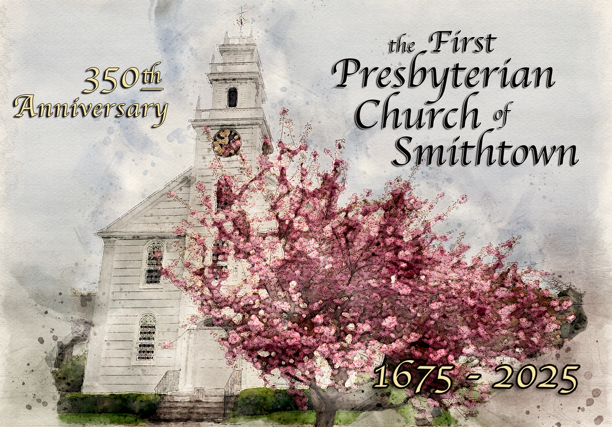
First Presbyterian Church of Smithtown
Reverend Dr. Karen Crawford
Sept. 28, 2025

I pulled out Eugene Petersen’s paraphrase, The Message, for the reading of Paul’s first letter to Timothy today.
On this day when we celebrate Christ’s claiming little James Lawrence in the waters of Baptism, and the gifts of the Spirit granting us power to grow in faith and love one another more, I wanted a translation that would be accessible to everyone on their unique walk with God. Eugene really did have a way with words, a talent for making the Scriptures seem as though they were written in modern times and not thousands of years ago.
Eugene, born in 1932, had studied Semitic languages in his master’s program at Johns Hopkins University. He had fallen in love with Hebrew and Greek while studying at New York Theological Seminary at 235 East 49th Street. When he came back to seminary to teach biblical languages, he couldn’t afford to live off his assistant professor salary, especially since he had met and married his wife, Jan, during his years in Baltimore. So, while he was teaching, he “added another job,” as he describes it in his memoir. The other job happened to be an associate pastor position in the Presbyterian Church in White Plains. He fully expected the position to be temporary. “I thought of it as something of an off-the cuff job,” he writes. “I did it for the money and only for the money, for I had no intention at the time of being a pastor.” He always assumed that he would be a professor.
After being married for 3 years, becoming a father, and working as a pastor and teaching biblical languages, as well as trying to write his dissertation, he realized that he was called to be a pastor. He abandoned the dissertation writing and accepted a call to plant a new church in the town of Bel Air, MD, which was fast becoming a suburb of Baltimore. He would spend the next 29 years there, and while all his life up into that moment—including growing up with a devout mother who told him Bible stories in plain, everyday language—had prepared him for his future ministry, he had a lot to learn about being a pastor.
Reading Paul’s letters to Timothy, we can hear from his tone both his confidence in the young man’s abilities and his concern for the challenges Timothy would face in Ephesus with Paul no longer there. He is concerned that the church has been visited by evangelists “introducing fantasy stories and fanciful family trees that digress into silliness,” as Eugene translates, “instead of pulling the people back into the center, deepening faith and obedience.” The whole point, Paul goes on in the beginning of this first letter to Timothy, is “simply love—love uncontaminated by self-interest and counterfeit faith, a life open to God.”
Paul likens his and Timothy’s work to a fight that must be battled with courage and prayer. Timothy must resist the culture that surrounds him, a culture that is, like today, filled with idols. Ephesus is a wealthy, sophisticated city on the coast of Ionia in what is now present-day Turkey. It was famous for the Temple of Artemis, completed around 550 BC. The city’s many monumental buildings include the Library of Celsus and a theatre that could hold 24,000 spectators.
From all this wealth and a culture filled with much to tempt and distract, Paul says to Timothy, “Run! Run for your life from all this.” And, “pursue a righteous life—a life of wonder, faith, love, steadiness, courtesy. Run hard and fast in the faith. Seize the eternal life, the life you were called to!”
Earlier in this letter, Paul tells Timothy not to be naïve. Eugene translates, “There are difficult times ahead. As the end approaches, people are going to be self- absorbed, money-hungry, self-promoting, stuck up, profane, contemptuous of parents, crude, coarse, dog-eat-dog, unbending, slanderers, impulsively wild, savage, cynical, treacherous, ruthless, bloated windbags, addicted to lust, and allergic to God.”
Timothy, who was nurtured in the faith by his Jewish mother, Eunice, and grandmother Lois, would eventually become the first bishop of Ephesus. His calling from the start will include equipping new leaders, especially those with gifts for preaching and teaching, who will take the good news of the Risen Christ throughout the city and beyond.
As Paul reveals his intimate connection with Timothy, knowing so many of his personal characteristics, I feel more connected to both of these ancient men who loved the Lord. Timothy struggles with self-confidence and needs the older man’s encouragement. Paul knows this and says in chapter 4, “Don’t let anyone put you down because you’re young” and not to worry about what critics will say. We can tell that Timothy is sensitive, caring, and loyal. He was there for Paul when Paul needed him. The older man writes in his second letter, “You’ve been a good apprentice to me, a part of my teaching, my manner of life, direction, faith, steadiness, love, patience, troubles, sufferings—suffering alone with me in all the grief I had to put up with in Antioch, Iconium, and Lystra…Anyone who wants to live all out for Christ,” he goes on, “is in for a lot of trouble.” What’s more, Timothy may have had some physical challenges. The apostle alludes to the younger man’s health issues in chapter 5, advising Timothy to “Go ahead and drink a little wine…it’s good for your digestion, good medicine for what ails you.”
It was my joy to baptize little James today and to feel the power of the Spirit in our midst. It was even more meaningful and emotional, perhaps, because it came in the same week that I mark the anniversary of my ordination, on Sept. 25, 2011, and the anniversary of my installation here in Smithtown in 2022. When pastors and elders laid hands on me and prayed during my service of ordination in Renville, Minnesota, 14 years ago, I had no idea how much I would come to love baptism! It’s my favorite thing in worship! And because I have always been a small church pastor, I have never had so many baptisms that I would do them all at once, in groups, on certain days in the church year. I choose to do them one at a time and keep them separated and special unless they are brothers—like Bronx and Roman—or cousins—like Grayson and Diego, Jr.—and the families want them baptized together.
Like Timothy, I have had wonderful mentors along my life’s journey. And I still have a lot to learn about being a pastor. I continue to be inspired by my siblings in the faith—all of you.
Like Eugene shares in his memoir, The Pastor, I didn’t grow up wanting to be a pastor. I never really thought about it until I was in my 40s. Eugene wanted to be a professor and I wanted to be a writer, as many of you well know. But I left journalism to go to seminary, assuming that I would return to it, someday. One thing led to another, and my mentors and the Spirit guided me to parish ministry. And here I am!
I don’t think that I ever met Eugene in person, but I was living in Bel Air near the end of his parish ministry. He had planted a Presbyterian church there, but I wasn’t Presbyterian at the time. He went on to be a professor, after all, of spiritual theology at Regent College in British Columbia. He published 30 books, including his Bible translation, which he worked on throughout the 1990s, finishing in 2002. Eugene went home to be with the Lord in 2018.
I hear echoes of Paul’s words to Timothy when Eugene ends his memoir with a letter to a young pastor. “Even though we have never met personally,” he writes, “because of my long friendship with your father, I feel we are part of the same family, which, of course, we are. But also companions in finding our way as pastors in this American culture that ‘knew not Joseph’ and doesn’t quite know what to make of us. That makes for lonely work. We need each other.”
Eugene speaks of the messiness of ministry: “a lot of stumbling around, fumbling the ball, losing my way and then finding it again. It is amazing now that anything came of it…” The two things that preserved the “uniqueness of pastor” for Eugene were worship and family. “I knew in my gut,” he says, that the act of worship with the congregation every week was what kept me centered and that it needed to be guarded vigilantly—nothing could be permitted to dilute or distract from it. And I knew that family provided the only hope I had of staying grounded, faithful, personally relational, in the daily practice of sacrificial love.”
Dear friends, we also need each other as we continue to embrace the faith in a counter-cultural kind of way. Next weekend, as we celebrate World Communion Sunday in the morning and rededicate ourselves and our 200-year-old sanctuary in the afternoon, we will need one another, even more. As Paul says, “There are difficult times ahead.” Our culture will continue to be materialistic, and religion for many people will be less important than it is today. And as Eugene told the young pastor, ministry is lonely work.
Paul’s words long ago ring true for us today. “Anyone who wants to live all out for Christ is in for a lot of trouble.”
But there’s one thing we can do, my sisters and brothers. Run, he says.
“Pursue a righteous life—a life of wonder, faith, love, steadiness, courtesy.
Run hard and fast in the faith. Seize the eternal life, the life you were called to!
“Run for your life!”
Let us pray.
Good Shepherd, thank you for the blessing of a baptism and the privilege of experiencing growth in Your Body. We lift up James and all the little ones in our church family and ask that you help us to nurture their faith. Stir us to remain centered on you and not distracted or pressured by the material culture in which we live as we seek to care for the next generations. Stir us to simply love, a love uncontaminated by self-interest, with a life open to God. Lord, the world is going to continue to change in ways we cannot anticipate. Only you, Lord, and your promises will stay the same. Strengthen us to pursue a righteous life—a life of wonder, faith, love, steadiness, courtesy. Stir us to run hard and fast and seize the eternal life. Stir us to run for our life. Amen.
 Sharing God's Love and Grace