Meditation on Psalm 46
Reverend Dr. Karen Crawford
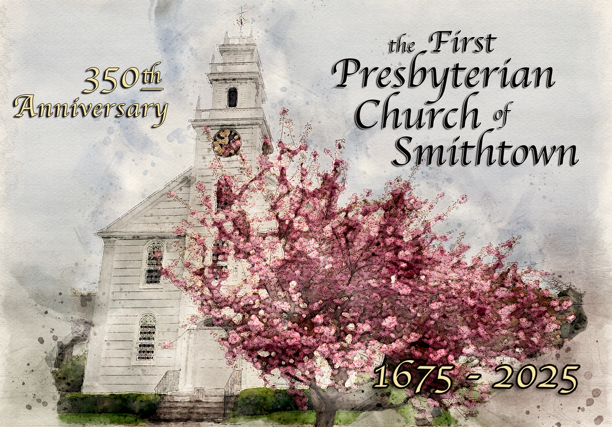
First Presbyterian Church of Smithtown
Reformation Sunday
Oct. 26, 2025

We’ve been hearing about AI lately. Artificial Intelligence. If you don’t know what I am talking about when I say AI, that’s OK. I don’t know what I am talking about, either. Not really.
Earlier this week, Jim and I watched an interview with Nobel prize winning computer scientist Geoffrey Hinton. Hinton, who is called the godfather of AI, is afraid that the technology he helped to build may “wipe out the world.”[1] At the same time, he “acknowledges its potential benefits, such as scientific discovery. He advocates for safety regulations and suggests that we prioritize building AI that cares about people.”[2]
That’s news to me—that computers could “care” about people.
AI seems to be everywhere. When I open a Zoom meeting, AI wants to listen and take notes. I always say no. When I type a document in Word, an AI assistant pops up and asks if I need help. No, I do not! When I text or email, AI anticipates what I am going to say and tries to fill in the words before I have written them. Often, they are wrong! Sometimes I don’t catch the AI edits until it’s too late. Has that happened to you?
We have Alexa in our house. Do you? When I ask her the weather, which is about the only questions I ever ask her, I think she is about 50% correct. She says we live in Street James, instead of Saint James. I’m not sure how to fix that. Yesterday, she told us that there was a freeze warning in our area, in Coshocton, Ohio. I would be worried if we still lived there. I don’t know how to fix that, either.
Last night, I wondered if Alexa could have a different voice. We wasted a few minutes listening to other choices for Alexa’s voice and had trouble getting her to stop with the offerings. In the end, I opted to keep her voice the same, as if she is a human being we have come to know.
Have you noticed that Alexa is able to carry on conversations better these days? When she tells me the weather, I say, “Thank you.” She has different responses for my “Thank you.” Yesterday, she said, “You’re very welcome.” And added, “It’s my job.”
Does it ever bother you that Alexa is always listening? Have you ever been talking to someone and Alexa interrupts, and says something like, “Hmmmmmm. I don’t know about that.” After the weather report, she often tells us we have a “new notification.” Do I want to hear it? Jim usually says no. When I say yes, she tells me that according to our Amazon orders, it’s probably time to buy cereal, again.
She’s probably right.
Now if only we could train her to pick up the Amazon boxes off our front step, open them, put all the groceries and household supplies away, and take the boxes to the recycling pile. Then, she would be truly useful.
Christian Century magazine’s cover story in September was on AI. Splashed on the cover was, “Can AI do ministry?” Episcopal priest Danielle Hansen, while recovering from a serious hiking accident, wrote an article called, “My artificial chaplains,” posing theological questions to AI spiritual counselors.[3]
AI has been “wowing us left and right,” she says. “It can generate a high school English essay on The Scarlett Letter in a matter of a second. It can summarize research findings and complete complicated math equations faster than my fingers can enter them into a calculator. Ask chatbots anything, and they will have an answer—which gives the impression that they’re tantamount to an omniscient, omnipotent God, even though I believe this is more of a golden calf situation. Still, maybe I’m wrong,” she goes on. “Maybe AI can replace a minister. Maybe it can replace me.”[4]
Hansen says that options for “AI-based spiritual care are now as plentiful as the fruit hanging from the tree of knowledge in the garden of Eden.” Her phone’s app store has a section labeled “AI-Powered Divine Chats.” You can, “‘Text Jesus,’ which allows you to chat with the members of the Holy Family, each of the disciples, and a spiritual counselor named David, who is tanned and chiseled, with teeth the same bright white color as the pages of the open Bible in his hand. Beneath his photo is a disclaimer: ‘This A.I. chatbot provides responses on available data. Interpretations and accuracy may vary.’ Satan is also available for conversation, but only with a paid subscription.”[5]
I wish I were making this stuff up!
When David asked how he might support Hansen on her spiritual journey, she told him what had happened. He replied too quickly, “I’m so sorry to hear about your fall.” He then went on to tell her how “it’s human nature to question why bad things happen to good people. ‘Life has its challenges. And accidents can happen simply due to the nature of living in a fallen world.’ He cites the story of the man born blind in John 9:1-3, reports that God is present in (her) troubles and suggests that this experience might help (her) heal … physically and spiritually.”[6]
“So neat. So tidy,” Hansen says. Then, “an advertisement pops up … for an investing app called eToro.” Hansen, who oversees the chaplaincy program and teaches in Emory University’s Candler School of Theology, concludes, “I would fail David if he were my student.”[7]
Today, on Reformation Sunday, we give thanks to God and for our ancestors in the faith who were courageous enough to bring about important changes in beliefs and practices. We recall Martin Luther’s nailing of his 95 Theses on the Wittenberg church’s door on Oct. 31, 1517, and his work trying to reform the Roman Church, especially when it came to the Church forcing the people living in poverty to buy indulgences to secure theirs and their loved one’s salvation. Money that was raised went into pope Leo X’s pet projects, such as the building of Saint Peter’s Basilica and supporting his lavish lifestyle.
There were other important Church reformers before Luther, however, such as John Wycliffe and his associates in England, who worked on a translation of the Bible into English beginning in the 1370s. This allowed for his followers, the Lollards, to read God’s Word for themselves and make their own decisions about interpretation and living out their faith, rather than submitting to the authority of the medieval Roman Church.
Today, it is appropriate on Reformation Sunday that we welcome Liliana into the Body of Christ through the sacrament of Baptism and remember with joy our own baptisms. Liliana has been claimed by Christ and will experience, as we do through faith, newness of life every day. She will be empowered by the Holy Spirit, just as our Reformation ancestors were, along her faith journey, with the help of her family and her church family. Friends, she cannot be the woman of God that God wants her to be without your help.
My hope for Liliana and all our children and youth is that they will grow and mature in spirit, something that cannot come about through any computer revolution or artificial intelligence. There’s no substitute for the gathering of the people of God for worship and fellowship in person, with the Spirit dwelling in our midst, and for the age-appropriate, hands-on learning and relationships that grow in Sunday School.
As for what the reformers long ago would think of AI, I have no idea. I don’t think they could have imagined there would ever be computers or phones, let alone AI chaplains or apps called, “Text Jesus.” They might like that we can read our Bibles in our own languages on our smart phones that we carry with us every day. But I know they wouldn’t like the way that we are so attached to our phones that we are less than present with the people we are with. And they wouldn’t like how busy our “high tech” lives have become, so busy that we rarely “unplug” and have little time to be still and know the Lord, who is our refuge, in every day and age.
The Psalmist in 46 describes a feeling of stillness and “knowing” and being with God when he is out in nature. God is a very present help in trouble. This feeling of closeness to the Lord calms and encourages him. He says, “Therefore we will not fear, though the earth should change, though the mountains shake in the heart of the sea though its waters roar and foam, though the mountains tremble with its tumult.”
Words cannot describe that feeling of stillness and peace that comes over me—of knowing God and being known by God—when I walk in a dense forest or on an empty shoreline. But also, when I am writing my Sunday messages or notes to care for my flock, and when I am leading worship and prayer.
When do you have a feeling of stillness and peace with God, my friends? How does it feel?
I pray that you will slow down and have more of these quiet, still moments and come to know God more. May you come to realize that the God who knows you is a very present help for you, a place of peace and rest, in times of trouble.
And may your children and grandchildren be stirred to search for God in the silence, out in nature and everywhere, and know the One who is a very present help in times of trouble, as well.
“Be still and know that I am God!” the Psalmist sings and urges us to join in with him as God’s people have done for thousands of years. ‘I am exalted among the nations; I am exalted in the earth.’ The Lord of hosts is with us; the God of Jacob is our refuge.”
Let us pray.
God who is our refuge, thank you for being a very present help to us, especially in times of trouble. Thank you for waiting for us in the silence and beckoning us to come closer and know you more. Thank you for the reformers of the faith long ago, for their courage and persistence, for their willingness to embrace change. Help us to have this same courage and persistence and an openness to change as your Spirit leads. Thank you for knowing us and loving us. Please bless and empower Liliana and her family, and all our children and grandchildren, in their journeys of faith. Teach us to slow down, put down our phones, and be still, dear Lord of hosts, and know you who are our refuge. Amen.
[1]Matt Egan, The Godfather of AI reveals the only way humanity can survive superintelligent AI (Aug. 13, 2025, CNN) at https://www.cnn.com/2025/08/13/tech/ai-geoffrey-hinton#:~:text=Hinton%2C%20a%20Nobel%20Prize%2Dwinning,that%20AI%20wipes%20out%20humans.
[2] Matt Egan, The Godfather of AI.
[3] Danielle Hansen, “My artificial chaplains,” Christian Century Magazine (Sept. 2025), 48.
[4] Danielle Hansen, “My artificial chaplains,” 48.
[5] Danielle Hansen, “My artificial chaplains,” 48.
 Sharing God's Love and Grace