Meditation on John 1:29-42
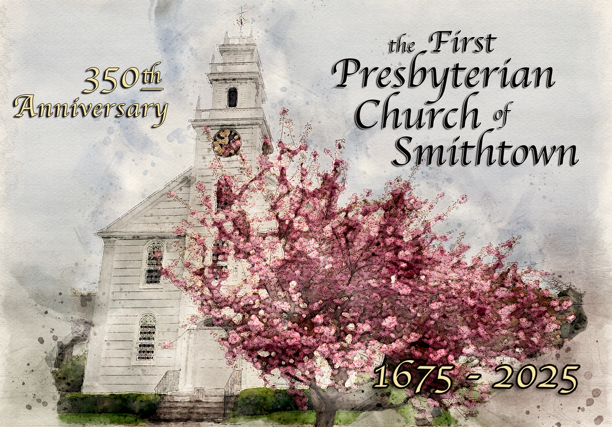
First Presbyterian Church of Smithtown
Rev. Dr. Karen Crawford
January 18, 2026
If I were to choose a theme for our ministry together this year, I would want it to be a year of slowing down. Would any of you be OK with that theme?
Lately, I have had the feeling that our lives are just speeding by us. That things are moving too fast in a 24-hour news cycle. Most people around us on Long Island always seem to be in a hurry. We are often in a hurry.
I have been reading a book by a Japanese Christian theologian named Kosuke Koyama. The book is Three Mile an Hour God. Some background on Kosuke: he taught at Union Theological Seminary in New York for 16 years. And he had been “a teenager in Tokyo and had come close to dying in U.S. air raid bombings of the Japanese capital during WWII.”[1] He had grown up in a Christian family and never forgot the “incredibly courageous words spoken to him at his baptism by the pastor of his congregation. ‘Kosuke, God calls you in Jesus Christ to love all your neighbors, even the Americans.’” “The ‘even,’ says Union Seminary’s former president Donald Shriver Jr, “would become a theological watchword in the rest of his life.”[2]
Three Mile an Hour God is about a God who is slow. Deuteronomy 8:1-4 tells us that the 40- year wilderness journey of the Israelites was for one lesson: “to humble you, testing you to know what was in your heart, whether you would keep his commandments or not. And he humbled you and let you hunger and fed you with manna, which you did not know, nor did your fathers know; that he might make you to know that man does not live by bread alone, but that man lives by everything that proceeds from the mouth of God.”
Forty years. One lesson.
God’s lesson couldn’t be learned easily in a comfortable classroom, Kosuke says. “God’s people must learn about bread and the word of God realistically and experientially. He took people into the wilderness.”[3] The wilderness is a place for possibilities, but it is also a “dangerous, desolate space inhabited by demons and evil spirits….The wilderness is full of promise and full of danger.”[4]
In the wilderness, we are closer to God than anywhere else. Or maybe it’s that we sense our being in the presence of God there. In the wilderness, we learn to trust in God for our every need. And in the wilderness, “our speed is slowed down until gradually we come to the speed in which we walk—three miles an hour.”[5]
Kosuke, writing in 1979, says, “We live today an efficient and speedy life. We are surrounded by electric switches, some of which cost us $10 and others may even cost $2000. We want more switches. Who among us dislikes efficiency and a smooth going comfortable life? University students use the Xerox machine in their studies. Housewives use “instant pizza” for supper. Men’s legs are fast deteriorating from the lack of the most basic human exercise, walking. Automobiles speeding at 50 miles an hour have replaced their legs. We believe in efficiency.”[6]
And yet God “moves slowly in the educational process of human beings”[7]—40 years walking in the wilderness, “three generations of the united monarchy,…19 kings of Israel…20 kings of Judah… the hosts of the prophets and priests, the experience of exile and restoration—isn’t this rather a slow and costly way,” Kosuke asks, “for God to let his people know the covenant relationship between God” and human beings?
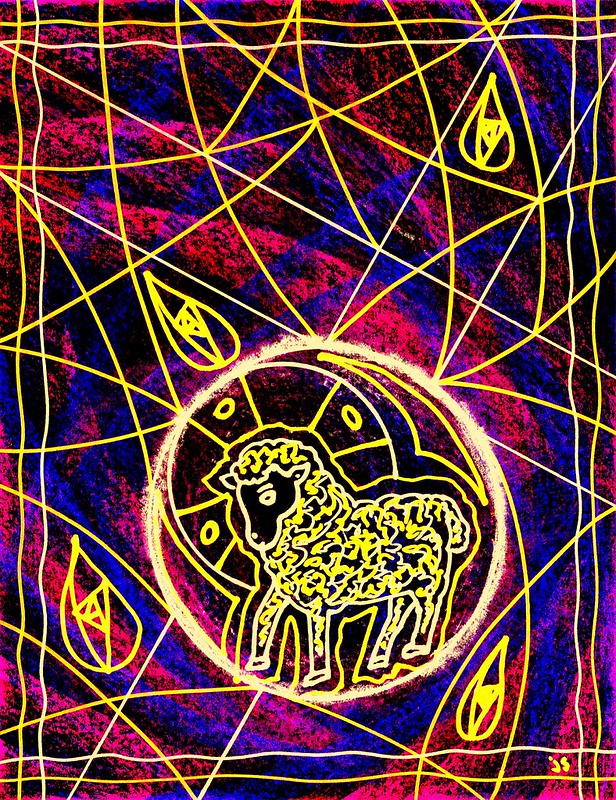
Our reading in the Gospel of John today tells the story of just two days’ happenings. It is a slow, simple but deep walk through the Word of God. Each day’s story begins with, “the next day.” “The next day…” John was hanging out with his disciples, and he sees Jesus walking by. He says, “Here is the Lamb of God who takes away the sin of the world!” He testifies to the divine revelation, when he baptized Jesus the day before, saying that the whole reason he was baptizing him was so that he would be revealed to Israel. And then, “The next day….” he is standing with two of his disciples and he sees Jesus walking by, again, and he says once more, “Look, here is the Lamb of God!”
John’s two disciples then choose to follow Jesus. They are walking behind him. Jesus turns and speaks to them, “What are you looking for?” he asks. Little did they know that the one whom they were following was already seeking him!
This is “the divine initiative. It is always God who takes the first step,” says William Barclay. “When the human mind begins to seek and the human heart begins to long, God comes to meet us far more than half-way. God does not leave us to search and search until we come to him; God comes out to meet us. As Augustine said, we could not even have begun to seek for God unless he had already found us. When we go to God, we do not go to one who hides himself and keeps us at a distance; we go to one who stands waiting for us, and who even takes the initiative by coming to meet us on the road.”[8]
His disciples don’t answer Jesus’ question directly. They ask him where he is staying. They call him, “Rabbi,” teacher. This communicates their desire to spend time with him, learn from him, and know him more. Jesus invites them to his home with, “Come and see.”
Andrew and another unnamed disciple spend the day with him, and by 4 p.m. are moved to follow him with their lives and share Jesus, the Lamb of God, with others who are close to them. Andrew goes and tells his brother, Simon, that they have found the Messiah—the one whom they were looking for. He brings Simon to Jesus, who gives him a new name to go with his new identity as his disciple. Simon will now be Cephas, the Aramaic word for rock or stone, which in Greek is Petros as in our name Peter.[9]
You and I, when we renewed our baptismal vows last Sunday, were reminded that we have taken on new identities in Jesus Christ. We are God’s beloved children, we who have decided to follow him through the wilderness that is all our lives. But here’s the thing. We may think that we have decided to follow him, when the reality is that it was Christ who loved us first and drew us to him. As Augustine said hundreds of years ago, “we could not even have begun to seek for God unless he had already found us.” As we turn and seek the Lord with our whole heart, the Lord comes to meet us far more than halfway, like the first disciples.
Jesus asks us now, as we decide to be intentional about slowing down this year and as we travel through the wilderness, through the storms of life, “What are you looking for?” And, “Who will you bring to me?”
Maybe you used to bring people to Jesus, but you haven’t for a while. The busyness of life got in the way. Who will you bring to meet Jesus, the Lamb of God who takes away the sin of the world? To whom will you say, “Come and see”?
If you remember anything from today’s message, I hope you will remember the speed of our walk with Jesus. What is it? He walks 3 miles an hour, never faster, but sometimes slower. We are called to follow him, as his first disciples were, though they didn’t know it at the time, all the way to the cross.
“Jesus Christ came,” says Kosuke.
He walked towards the ‘full stop.’ He lost his mobility. He was nailed down! He is not even at 3 miles an hour as we walk. He is not moving! What can be slower than ‘full stop’ – nailed down? At this point of ‘full stop,’ the apostolic church proclaims that the love of God to man is ultimately and fully revealed. God walks ‘slowly’ because he is love. If he is not love he would have gone much faster.
Love has its speed. It is an inner speed. It is a spiritual speed. It is a different kind of speed from the technological speed to which we are accustomed. It is ‘slow’ yet it is lord over all other speeds since it is the speed of love. It goes on in the depth of our life, whether we notice it or not, whether we are currently hit by storm or not, at 3 miles an hour. It is the speed we walk and therefore it is the speed the love of God walks.[10]
Let us pray….
Holy One, thank you for your Son, the Lamb of God who takes away the sin of the world. Thank you for loving us first and drawing us to you. Thank you for your invitation to come and see. Help us to slow down and be more intentional about lingering with you, spending time with one another. When we move too quickly and feel overwhelmed, remind us how slow your speed is. How slow the speed of love is. You are a three mile an hour God. You are with us in the wilderness. You are with us through all our storms. Stir us to share your love and bring others ever nearer to you. Amen.
[1]“Japanese Theologian Kosuke Koyama: Theology Rooted in the Experiences of Ordinary People,” in Christian Century Magazine (May 5, 2009) accessed January 17, 2026, at http://christiancentury.org/article/2009-05/japanese-theologian-kosuke-koyama.
[2]“Japanese Theologian Kosuke Koyama: Theology Rooted in the Experiences of Ordinary People,” Christian Century Magazine, May 5, 2009.
[3] Kosuke Koyama, Three Mile An Hour God (UK: SCM Press, 1979 and 2021), 4.
[4] Kosuke Koyama, Three Mile An Hour God, 4.
[5] Kosuke Koyama, Three Mile An Hour God, 6.
[6] Kosuke Koyama, Three Mile An Hour God, 7.
[7] Kosuke Koyama, Three Mile An Hour God, 7.
[8] William Barclay, The Gospel of John (vol. 1) in The New Daily Study Bible series (Louisville: Westminster John Knox Press, 2001), 101.
[9] N.T. Wright, John for Everyone (part 1) (Louisville: Westminster John Knox Press, 2002), 15.
[10] Kosuke Koyama, Three Mile An Hour God, 8.
 Sharing God's Love and Grace