Connecting the Faithful
First Presbyterian Church of Smithtown, NY
Pastor Karen Crawford

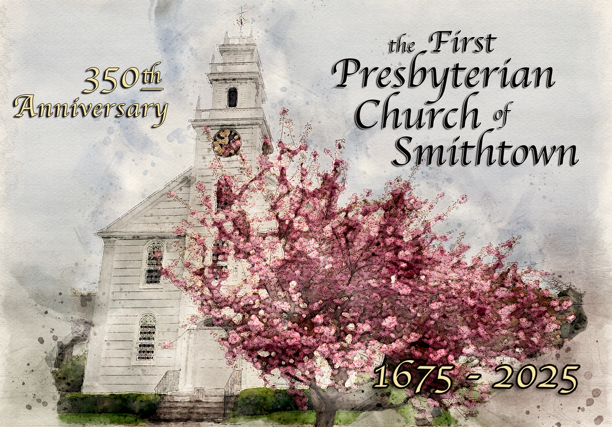
Rev. Dr. Karen E. Crawford, Pastor
Connecting the Faithful
First Presbyterian Church of Smithtown, NY
Pastor Karen Crawford
Connecting the Faithful
Pastor Karen Crawford
First Presbyterian Church of Smithtown
Meditation on Luke 6:20–31
All Saints’ Day
First Presbyterian Church of Smithtown
Nov. 6, 2022
Pastor Karen Crawford
Here is the link to the live-streamed video:

Jim and I attended our church’s book group on Wednesday night. Isabel led us in a discussion of a book about JP Morgan’s personal librarian, Belle da Costa Greene. The young woman’s career in 1905 is a rare occupation for women. But Belle isn’t like most women of her time. Her job is to curate a collection of rare manuscripts, books—including Gutenberg Bibles—and artwork for Morgan’s newly built library.
But she isn’t who she says she is. She lives a lie. Her name is really Belle Marion Greener. She is the daughter of Richard Greener, the first black graduate of Harvard, and a well-known advocate for equality. She’s black, passing as white.
We talked about whether she had a choice in the matter, really, since her mother is the one who orchestrated the ruse from the beginning and told Belle and her other children what to do and say. The mother is the one who reports her and Belle’s siblings’ race as white on the census and registers them as white when the children start school in New York after moving from Washington, D.C.
Belle probably worried about being caught in her lies every single day. And because of it, she never married or had children of her own. Being found out would destroy her career and reputation, and ruin the lives of her mother and siblings, who would also be outed as white. Then there’s minor detail that Belle’s family relies on her generous income as Morgan’s personal librarian.
But the lies aren’t discovered within her lifetime. Belle is famous now for amassing the collection for Morgan that is now open to the public. Her story serves as an inspiration to all women to follow their ambitions and passions, work hard and persevere, until their dreams are a reality.
Near the end of our discussion, I was asked whether I had heard of passing before, as in passing as another race, and if I could imagine the life. I hadn’t thought about it, but I suddenly thought of how my own family was quiet about being my father being Jewish in the rural and largely Christian community where I grew up. It wasn’t a secret, but it was kept private. And there were other secrets. I would later learn that my father’s uncles changed their names because they sounded too Jewish. And that my father’s mother wasn’t born in this country, as she had always told us. She had come over on a ship as a Jewish immigrant with her parents from what is today Latvia, when she was a young girl. She told a story of how she had lost her birth certificate and primary school records when her school had burned down. She wasn’t sure of her birthday or birth year, so she chose July 15—payday for her job with the Bureau of Engraving in Washington, D.C., until she retired.
All those years she kept her secrets—probably out of fear, like Belle, that something bad would happen to her and her family if she admitted to lying about her citizenship and her age, while working for the federal government.
So, here I am, thinking about my father and my Jewish family on the day we remember and give thanks for the gift of the lives of all the saints—and we consider how their lives affected ours and loved us into being. And I know that there was suffering in my family’s past and fear of antisemitism, not just in Europe leading up to and during WWII, but here, at home in the United States.
Yet, my father and his family always stayed true to their faith. Grandma covered her hair, lit candles, and said the Shabbat prayers in Hebrew as the sun went down every Friday. She fasted and prayed on Jewish holidays, attended synagogue when she could, and celebrated God’s faithfulness every year with her family gathered around the table, feasting on Passover.
It was partly due to their courage to be who God made them to be and live with hope that tomorrow will be better that helped make me who I am today.
And I know I am truly blessed!
***
On this All Saints’ Day, we read the familiar passage of the Beatitudes in Luke, The Sermon on the Plain. Jesus is sharing a vision of the Kingdom of God that he ushered in—and it’s nothing like the way of the world of his day—or the way of the world today.
Jesus baffles his audience of ordinary people with words that defy logic. He has their attention—and he has ours. For all of us have experienced suffering of some kind—suffering that comes without warning, that isn’t deserved, just as the audience for Luke’s gospel, the Early church, are experiencing. Many of them, as this minority religion, a sect of Judaism at first, are experiencing poverty, grief, hunger, fear, and persecution.
And this word blessing….This is a surprising thing. it isn’t the word for a priestly blessing. This Greek word makarios “implies a person’s inner happiness due to some good fortune the person has received.” So, everywhere we see the word “Blessed,” in this passage, we can substitute the words “Happy” or “Fortunate.” Which begs the question, how is it they are being encouraged and congratulated on their good fortune of being poor, hungry, sorrowful, and persecuted?” Since when did being poor, hungry, sad, and persecuted become a good thing?
This is what I want you to understand about this passage. The Beatitudes describe the Kingdom of God—which is in this present life and all around us, and it’s also not yet here. It’s coming and will be brought to fruition when Jesus returns to reign over His Church.
So, before we can show and tell others about Christ’s Kingdom and live it out, we have to first understand and imagine it. Jesus paints a picture for us. In the Kingdom of God, the poor are lifted up, those who mourn are brought to joy, and the proud and powerful are brought down. There’s justice, peace, mercy, love.
In the Kingdom of God, we don’t have enemies. We love one another. So that explains the command to love our enemies—and pray for them. When you love your enemies and pray for them, they aren’t your enemies anymore, are they?
When we do good to those who hate us, bless those who curse us, and pray for those who abuse us, we are changing the world right where we live! And yes, people will think we are being foolish—but we are not afraid to be fools for Christ, as the apostle Paul teaches us to do. For by this foolish behavior, everyone will know that we are his disciples—and others will be made ready for the Kingdom of God to become a present reality.
If you’re wondering, well, what do Presbyterians believe about the Kingdom of God and our responsibility as the people of faith? we read about it in our Book of Order. Our Constitution tells us that “in the life of the congregation, individual believers are equipped for the ministry of witness to the love and grace of God in and for the world. The congregation reaches out to people, communities, and the world to share the good news of Jesus Christ, to gather for worship, to offer care and nurture to God’s children, to speak for social justice and righteousness, to bear witness to the truth and to the reign of God that is coming into the world.”
***
Friends, we have an important job—bearing witness to the coming reign. One way that Session has decided to do this is by remembering Kristallnacht on the anniversary this Wednesday. On Nov. 9, 1938, Nazis terrorized Jews in Germany and Austria in the night that became known as Kristallnacht, or The Night of Broken Glass. Nazis killed at least 91 people that night, burned down hundreds of synagogues, vandalized and looted 7,500 Jewish businesses, and arrested up to 30,000 Jewish men, many of whom were taken to concentration camps. Weeks later, Nazis escalated their persecution of Jews, forcing them out of their own homes and businesses and banning Jewish children from German schools. Kristallnacht foreshadowed the coming genocide of 6 million Jewish people in the Holocaust.
We can’t change the past, but we can work toward a more peaceful future. Let us hold onto our vision of the Kingdom of God in the Beatitudes and share the vision with others. There’s no hatred or persecution in God’s Kingdom.
It’s like Martin Luther King, Jr., once said: “I have decided to stick with love. Hate is too great a burden to bear.”
We will show our solidarity with our Jewish neighbors and take a stand against the rising tide of antisemitism. We will join with synagogues and churches around the world in leaving the lights burning in our house of worship all night.
Light shall replace darkness… Friendship shall replace destruction. Good will triumph over evil.
May the sight of the lights blazing Tuesday night remind you of our hope and the vision of the Peaceable Kingdom that we can see and live by faith.
May you hear the words of Jesus, assuring you of the promise of the present and coming Reign of God and your calling to share it:
“Blessed are you!”
Let us pray.
Holy One, we are blessed—happy and fortunate—with the vision you paint for us in the Beatitudes. Thank you for your love and the gift of Christ’s peace, that defies logic—surpasses human understanding. We are blessed with the promise of the present and coming Reign of God—when the poor and lowly are lifted up and the rich and proud are brought low. And there will be no more hatred, prejudice, or persecution, no more hunger, sickness, or poverty. Strengthen us by your Holy Spirit to see and bear witness to this vision so that we can make a difference, right where we live, and draw others away from the darkness and into your light. In the name of our Triune God we pray. Amen.
Connecting the Faithful
Weekly newsletter for First Presbyterian Church of Smithtown, NY
Pastor Karen Crawford

Meditation on Jeremiah 31:31–34 and John 8:31-36
Reformation Sunday
Pastor Karen Crawford
First Presbyterian Church of Smithtown
Oct. 30, 2022
Here is a link to the worship service, with my message:
I was all set to begin writing my message for Reformation Sunday, when I found a letter that one of our members—Ron DeHart—gave to me after last Sunday’s service. I read the letter and tears came to my eyes. I pray the Spirit will touch your heart as it touched mine as I share some of it with you.
It was written by a young man named Joe Zimbler, a student of Gettysburg College. He writes of his plan to attend an event hosted by the campus chapter of the conservative Young Americans for Freedom (YAF). He is going to listen to the speaker, though he does not agree with the group’s views. Joe describes himself as someone “who hung a rainbow flag in (the) locker room.”
Joe is Ron’s grandson. His letter was published in school newspaper, The Gettysburgian, on Oct. 18. The headline is “Opinion: I Have Two Moms, Yet Will Be Attending YAF’s speaker.”
He sees polarization as the “biggest issue facing the world today.” “People on both sides of the political spectrum generally refuse to interact with those with different beliefs,” he says. “When your friends share similar beliefs, you are not exposed to other ways of thinking of ideas. It is so easy to look at the other side of an issue and say things such as, ‘How can people possibly support this?’ and ‘What is wrong with these people?’ and ‘Why don’t they see it the same way as me?’ People become so entrenched in their views and surround themselves with others with the same opinion that, over time, they cannot imagine how anyone can view it differently.”
He writes in response to the “hostile environment,” he says, that has “taken over the school.” “Everyone is frustrated, believing that their side is being silenced by the other. Listening to the other side of this issue would allow people to see that those on the other side of the aisle are not monsters, they are just people.”
He emphasizes the importance of taking time to try to understand why the “other side” feels the way they do. When his friends learned that Joe wanted to attend the event and hear the speaker, they were “appalled,” he says, “claiming this to be hate speech and feeling as though interacting with this speaker empowers him to spread a message of hatred towards members of LGBTQ+. And I understand this fear,” he goes on, “as giving someone a voice to challenge your identity or the identity of those close to you can be terrifying. However, if we want to change and coexist, we must listen to the other side and understand why they do not support the LGBTQ+ community. It is easy to say that it is because these are bad or hateful people, but how can you ever know until you engage them?”
Joe adds, “Change comes with active listening, listening, not to respond, but to understand. With that, we can work to foster a more inclusive world and understanding, a world where no one must feel threatened by sharing their beliefs. And a world where, regardless of your race, sex, gender, orientation, etc., you can walk around with little fear of being hated by others for those factors. So I will be attending the event.”
***
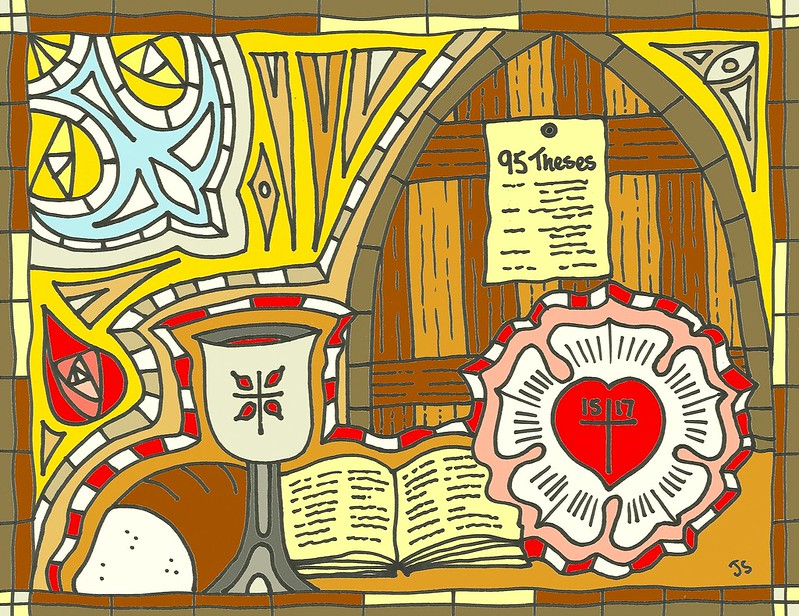
Here on Oct. 30, we commemorate the day Martin Luther posted his 95 Theses on the church door in Wittenberg in 1517, and, along with other reformers, helped bring the necessary changes in belief and practice that have made us who we are today. This is also the day we have chosen to welcome our seven confirmands into membership.
If there’s a word to describe this confirmation class, I would say it’s “gentleness.” I was warned, before we began meeting, that these students are “quiet,” and that I shouldn’t take it personally if they don’t talk. But in this short time we have had together, and through their faith statements shared through word and music, we have come to know each other better. And I have come to appreciate their kind and gentle ways!
They still need our help and encouragement to become the people God wants them to be.
Are we prepared to invest the time and energy into getting to know them and encouraging them to grow in faith, hope, love and service, not just by our words, but by our own acts of kindness, compassion, and generosity? Will we help them find how they may use their gifts and talents to serve the church and participate more fully in ministry at First Presbyterian Church of Smithtown?
Some of our confirmands would like to help with children’s programs or continue with their strong involvement in music ministries. Some will serve as liturgists and others may be working behind the scenes, such as helping with our church-wide cleanups, such as the one coming up in November. Others may labor on our Stream Team, helping us to share our hope in Christ beyond our church walls, something we never thought we would be doing until 2020 and the pandemic forced us to adapt to a strange new, virtual way to “do church.”
As we celebrate Reformation Sunday, this is a good time “to reclaim the great motto of the Reformation for our congregation, “Ecclesia Reformata, Semper Reformanda”: the church reformed and always reforming.”
Dr. Fred Heuser at the Presbyterian Historical Society says, “While Reformation Sunday may prompt us to look back to the great truths and insights articulated by Reformers … 500 years ago,” “it is even more important to look forward, especially at this time in the history of the Presbyterian Church (U.S.A). … Shaped by our theology, (a) common heritage unites us, despite what differences may divide us as a people of faith. As with other periods of transition in our church, our history has helped to both inform and inspire us. But it also continues to challenge us to listen and discover what the Holy Spirit is calling us to do in a new time.”
Friends, this is a time to seek God’s face and listen for God’s voice and remember that the Holy Spirit speaks through the young, as well as the old, as it did on Pentecost, when Peter preached with the words of the prophet Joel:
“In the last days it will be, God declares,
that I will pour out my Spirit upon all flesh,
and your sons and your daughters shall prophesy,
and your young men shall see visions,
and your old men shall dream dreams.
Even upon my slaves, both men and women,
in those days I will pour out my Spirit,
and they shall prophesy.”
I pray that we, together, will recognize the promise of Jeremiah and the New Covenant come to fruition in the Triune God—Father, Son, and Spirit. For “the days are surely coming,” the prophet proclaimed, “that I will put my law within them, and I will write it on their hearts, and I will be their God, and they shall be my people. No longer shall they teach one another or say to each other, ‘Know the Lord,’ for they shall all know me, from the least of them to the greatest…”
I have said this during our confirmation class—and I say it again to this quiet, gentle group. I pray you will be brave and find your voice and share it with the world through words and actions. Speak up for the oppressed. Work for peace and justice. As Christ told those who wished to follow him, we must live out what the Lord is teaching us, at the risk of our own lives. “If you continue in my word,” he says in John, “you are truly my disciples, and you will know the truth, and the truth will make you free.”
And I pray that more people will listen to young people like Joe, who speaks the truth in love, with a heart of peace, when his college has become a hostile environment, where people are not free to be themselves. A place where people are afraid and feel unsafe.
May God bring about the changes for which Joe and many others long—so that people with different beliefs are able to talk to one another and “listen actively, not to respond, but to understand” and “foster a world where no one must feel threatened by sharing their beliefs.”
“I will not yell at the speaker or be angry with those who disagree with me,” he says. And “maybe I will have the chance to ask one good question… Or maybe I won’t. Either way, I will walk out with a newfound understanding of the opinion of the other side, an opinion that, just like all others, deserves to be heard.”
“And after,” Joe says, “I will call my moms and tell them how much I love them.”
Let us pray.
Gracious and merciful God, thank you for creating us all in your image, but giving us the gift of diversity—being delightfully different from one another, in many ways. Thank you for the Holy Spirit that unites us, when the visible Church around the world is still scandalously divided. Help us all to be One, as your Son prayed for us, and to be peacemakers, sowing seeds of kindness and modeling active listening when we encounter hostile environments. Lead us to follow you more faithfully and live justly, by the power of the Spirit, as people grateful to be saved by your grace and know the truth that has set us free to love, in Jesus’ name. Amen.
Meditation on Luke 18:9-14
First Presbyterian Church of Smithtown, NY
Pastor Karen Crawford
Oct. 23, 2022
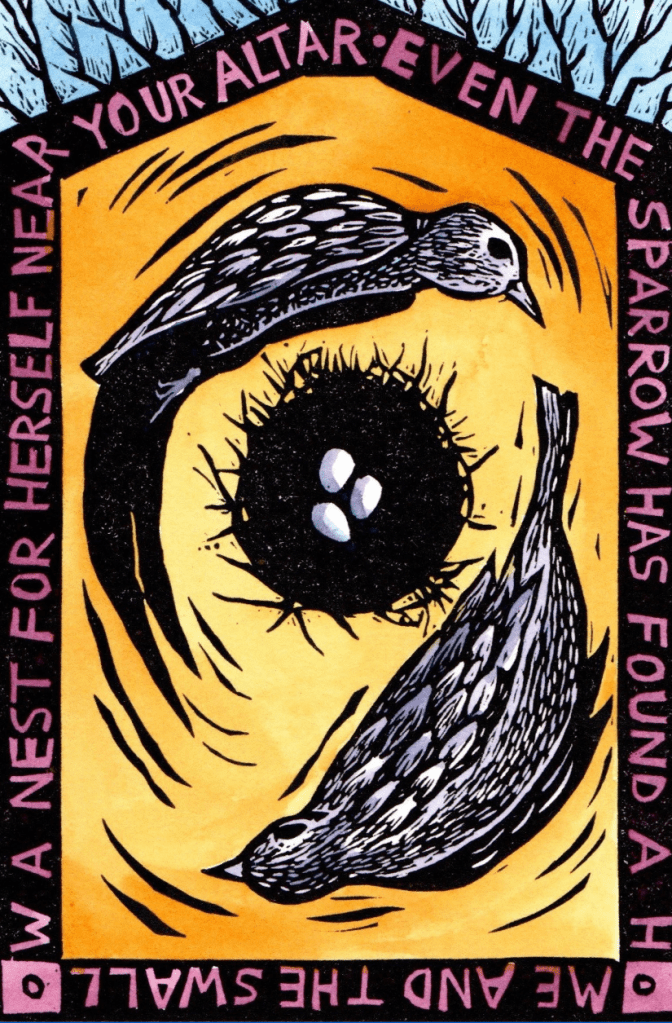
We gathered to celebrate the life of Pat Sartain yesterday and bear witness to our faith in a Risen Savior and the promise of resurrection to eternal life.
It was quite a crowd of people! And a beautiful service, filled with music, tears, and laughter, and the sharing of personal stories. We had some members and longtime friends who traveled a long distance to honor Pat and offer words of comfort to her family.
A little girl sitting in the front pew between her parents caught my attention. She is Pat’s granddaughter. She wore a wonderful yellow dress made from Grandma Pat’s plaid sash. And she was well behaved and patient, for a little girl of maybe 3 years old, who couldn’t possibly understand what most of the service was all about. And it was a long service—more than 90 minutes!
She was a little fidgety—so I gave her some chocolate, and it probably made her fidget more. One of the chocolates I gave her had a nut filling inside. She made a face and took it out of her mouth, announced that she didn’t like it, and gave it to her daddy. I couldn’t help but smile to myself.
I kept thinking of what Jesus would do. I know he would smile, too.
I remembered the time that he grew angry with the disciples for sternly ordering away the people bringing their babies to him, that he might touch them.
This story of Jesus blessing the children immediately follows today’s reading In Luke, the Parable of the Pharisee and the Tax Collector. Jesus actually calls for them to come back, saying, “Let the little children come to me, and do not stop them; for it is to such as these that the kingdom of God belongs.”
In our modern translations, a subheading separates the “Parable of the Pharisee and the Tax Collector” with “Jesus Blesses Little Children,” but I am sure that Luke didn’t mean for there to be a separation. None of this was in the original Greek manuscripts. Nor was there punctuation or chapters and verses. Those divisions are all modern editorial decisions. And it’s only because of the way the lectionary divides these passages that we read them on different Sundays, as if they are not related or connected to each other.
If we read the two passages together, we would go from the lesson of the parable: “For all who exalt themselves will be humbled, but all who humble themselves will be exalted” to “People were bringing even infants to him that he might touch them…”
The model example of holiness for Jesus is “even infants,” who have no idea what the faith and the practice of the faith is all about; they don’t know anything about the rules or expectations. And yet, God loves them, and the kingdom of God belongs to such as these.
Jesus takes it one step further—and he’s trying to teach his faithful disciples—that unless they “receive the kingdom of God as a little child (they) will not enter it.”
What he’s talking about, if you connect the two passages, is their own arrogance, maybe not so unlike the Pharisee in the parable—keeping the children away from Jesus, as if they are not good enough or worthy enough for his time, touch, and blessing. Connecting the two passages, Christ may be saying that the children would never trust in their own efforts at righteousness. They can’t help but come just as they are to Jesus, without worry about their good works and worthiness. They would trust in God’s love and mercy for them.
Dear friends, this is the challenge of today’s reading. Our justification—our salvation—is not obtained by doing things! And this is hard for us to accept because we are constantly focused on the things we are doing and planning our lists of things we are going to do. Some of us may be making mental lists right now of things you need to do today—and you can’t help it! This is what you and I have been taught. We are a society that values doers; people who do things and get stuff done!
Let me say it another way. Our justification—our salvation—is not achieved at all—at least not by us. Justification comes through God’s reaching out in mercy to helpless sinners like us, redeeming us through God’s own work, the sacrifice of the Son. It is a free and gracious gift to be received with joy and gratitude because we know we have done nothing to deserve it. Just as the tax collector cries out, “God, be merciful to me, a sinner!’
But the opposite can happen if we lose the proper focus for the work of ministry. We can lose our gratitude and start feeling resentful if we are pouring ourselves into the work of the church. I have seen this happen to good people, and it makes me sad. It’s hard not to look around and compare ourselves to others who might not seem to be working as much or giving of themselves at the same level we are giving. In that way, we may be tempted to be judgmental like the Pharisee in the parable.
If we begin to feel this way, there are questions we can ask ourselves to keep us on the right step in our faith journeys, such as, “Who are we doing the work for?” And, “Why are we doing it?” And, “Is it the work God is calling us to do at this time?” Because there are many good things we can be doing for God, but we cannot do every good thing. And God doesn’t want us to do every good thing we can think of doing.
We can, in our own enthusiasm to serve the Lord and the Church we love, take on too much and become overwhelmed and unhappy. The work God is calling us to do usually leads to peace, even if it makes us tired and takes us out of our comfort zone, every now and then. Does the work of ministry we are doing lead us to act in more loving and generous ways to others? Does the work we do for God lead us to feel nearer to the heart of God? Are we growing in our prayer life? Are we growing in faith?
And the comparisons can go wrong the other way, too. We might be in a season of our lives where we can’t get around as easily as we used to. We aren’t able to do the volunteering we used to do. We might not be able to get to worship every Sunday because of our health struggles—or because we are no longer driving and have to rely on others for transportation. We might feel bad about ourselves, comparing ourselves to others – or to the level of giving and participation we used to be able to do.
This isn’t God’s will for us. For our God doesn’t condemn us for what we do or fail to do.
The Lord wants to be in loving relationship with us—and for us to love one another, too.
So, come to the Lord with a humble heart, like the tax collector. Seek God’s mercy, without looking around or comparing yourself or your life to another.
Come as you are, today, trusting not in your own righteousness, not in anything you have done or what you plan to do, but in the righteousness that is a free gift to the humble and merciful from a gracious and loving Lord.
For you and for me and for everyone who believes.
Come like a child, knowing that Christ welcomes you into his embrace and will never shoo you away. For it is to such as these that the kingdom of God belongs!
Let us pray.
Holy One, thank you for all you have done for us and especially for the free gift of salvation by grace through faith in Jesus Christ. We forget sometimes that the good works we do are done with and for you and for the sake of growing your kingdom. Forgive us when we become so focused on what we are doing that we begin to rely on our own righteousness and lose our sense of gratitude for all you have done and for your love. Keep us from feelings of resentment or comparisons to others, unless we are seeking to be more like Jesus. Help us to remember your grace and mercy for sinners—and your desire to be in loving relationship with us, most of all. Teach us to humbly pray, to come to you with the trust of children, for to such as these your kingdom belongs. In Christ we pray. Amen.
Meditation on John 11, selected verses
In Memory of Patricia Sartain
Pastor Karen Crawford
First Presbyterian Church of Smithtown, NY
Oct. 22, 2022
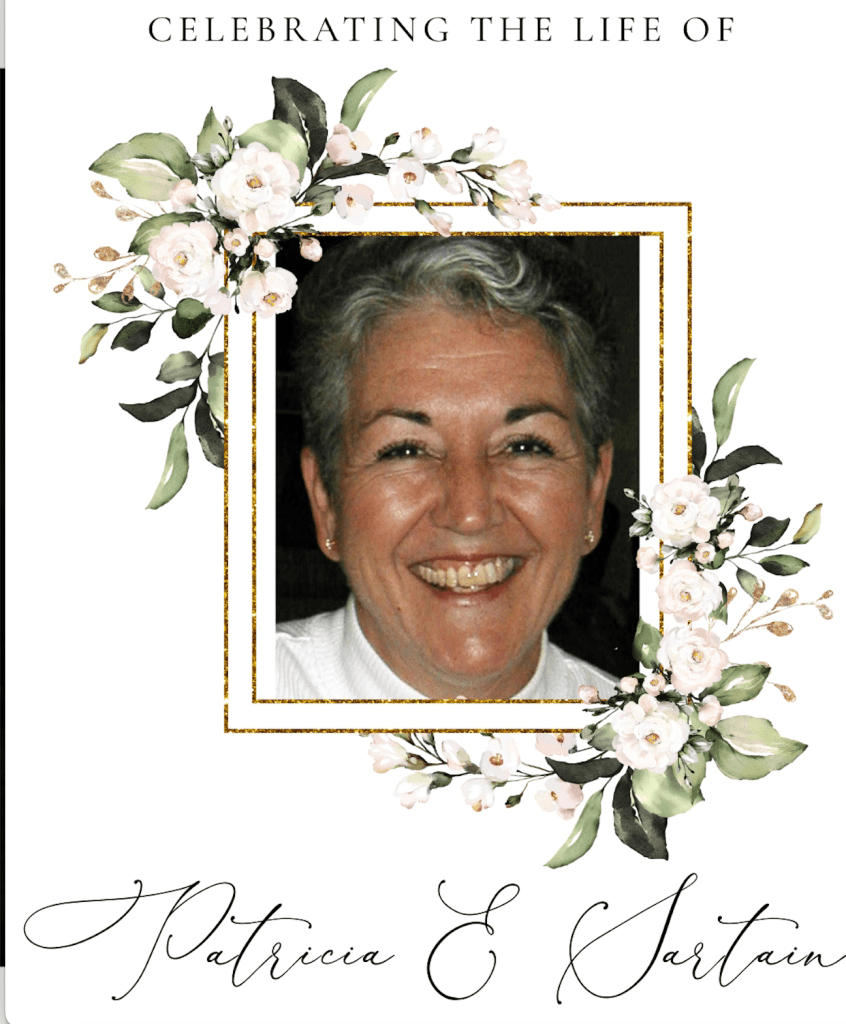
The yellow sweetheart roses were in a vase on the dining room table when I visited Tom on Tuesday. It was the 18th of the month—the special day he always celebrated with his wife, Pat, with the gift of a yellow rose and words of love scrawled on a florist card.
She kept all the cards he had ever given her with the roses—one every month, faithfully.
The yellow rose never lost its meaning—love. A love that never ends.
She was the pretty girl in the pink dress. Tom noticed her at his cousin Margit’s sister’s wedding. Do I have that right? He liked the way she held her head up high when she walked. Tall. Poised. He was so relieved to discover she wasn’t married—as he first thought. She was cousin Margit’s best friend.
Somehow, soon after that, Tom ended up riding with Pat to a music camp in New Hampshire for a 3-day weekend. She drove. A five-year-old nephew, Steven, served as the chaperone that weekend, going along with them on what could have been a romantic boat ride, if Steven hadn’t come.
Still, love was in the air. Pat lost the garnet setting from her ring that weekend. She told Tom later that she saw it as a sign the ring would soon be replaced. Tom was in law school, had no money, and was $10,000 in debt when $10,000 was a lot of money. He went back to his life after that wonderful weekend with Pat and little Steven in New Hampshire. Pat was with Tom when he graduated from law school. He passed the bar exam, but he hadn’t made up his mind, yet, about his plans for the future.
What day it was when he realized that his plans needed to include Patricia, he doesn’t recall. He proposed near the fireplace at Peter’s Back Street Pub on Jan. 9, 1978. She had already decided that if he didn’t propose by Feb. 18, she was going to dump him. They had been dating for 2 years, and she was a year older than Tom. She had a good job and was ready to settle down.
“Yes!” she said. “Yes. Yes.” And maybe she added, “What took you so long?”
They were married in the church in which she was raised, where her grandparents were founding members – Community Church of Little Neck. It was August 18, 1979. She was 31. He was 30. Pat, a gifted seamstress, sewed all the bridesmaids’ dresses for their wedding.
She had other gifts, too, nurtured from childhood. She had sung in choirs since she was 7. She shared her alto voice in Christmas Cantatas and played bells, learning in a “Genesis” handbell choir for beginners. She loved the camaraderie of choral groups.
She also had beautiful penmanship and was a good cook and hostess, knowing how to plan and organize meals for large crowds. She set the most beautiful table settings for special days, planning every detail down to the tablecloths and serving dishes. You would not find a ketchup bottle on her table.
She was a perfectionist. She was creative, stubborn, headstrong. She was “spirited,” Tom says.
She was a good public speaker. She wrote out and gave speeches for Eastern Star chapters and Grand Sessions in Buffalo, Syracuse, Lake Placid. She served in various leadership positions for the organization, including District Deputy. One year, she traveled to Scotland with her father to represent New York State Eastern Star.
Pat and Tom came to First Presbyterian Church of Smithtown in 1984, when the Rev. Bill Edwards was pastor. Their 3-year-old daughter, Elizabeth, born on Feb. 18, 1981, had been attending the Co-op preschool at the church. Pat served on the Co-op preschool board. They met other members through the school—and eventually made the church their worship home. They attended 9 o’clock services and brought their two children—Elizabeth and Thomas, born in 1983, to Sunday school.
Because of Pat’s family history with the church in Little Neck that her grandparents founded, she kept her membership in the church of her childhood. That didn’t stop her from strong involvement with her new church family. She sang with the choirs, rang bells, taught Sunday School and music and art for VBS. She was a counter with Adele and Harold Carson and Ruth Bosch. She loved to arrange flowers and was in the Flower Guild with Michelle DiGiacomo, Betty Deerfield, and Virginia Newcomb. She was active in supporting the Adopt an Angel program. She was a member of the Highlanders. The group would put on a social event once a month, including the Burns Supper in January. The family attended 3 worship services on Christmas Eve because of her participation in the ministry of music. They hosted a wassailing party between the 9 and 11 o’clock services.
She was a hard worker, generous with her time.
If I had to choose which biblical figure in the Mary and Martha stories who was closest to Pat Sartain, I would have to say she was probably more like the take-charge Martha. She was the one who organized the dinner for Jesus and his disciples, in contrast with her quiet, contemplative sister Mary, content to be still and sit at the Master’s feet.
Martha isn’t shy about sharing her disappointment with Jesus in our passage today, when he arrives several days after she has sent a note requesting that he return to Bethany, where she, Mary and their younger brother Lazarus lived. Lazarus, “the one whom Jesus loved,” as Martha wrote in her note, was gravely ill. She speaks plainly with Jesus. She doesn’t mince her words. “Lord, if you had been here, my brother would not have died.But even now I know that God will give you whatever you ask of him.”
Jesus answers, “Your brother will rise again.”
He had taught them about the resurrection of the dead “on the last day.” Martha assumes he is only offering her hope for what is to come, in the fullness of time, when all who had died were made alive, again, for eternity. She isn’t prepared for him to say, “I am the resurrection and the life. Those who believe in me, even though they die, will live, and everyone who lives and believes in me will never die.
“Do you believe this?” he asks.
She responds, “Yes, Lord, I believe that you are the Messiah, the Son of God, the one coming into the world.”
This passage on the raising of Lazarus reveals a God who shares in our sorrows. We hear how Jesus wept when he sees the family grieving for Lazarus, and how he is “troubled,” though he knows what will happen when he prays to God and calls out the deceased man’s name. This is the God who comforts us and can handle our anger and disappointment. The God who will embrace and strengthen us with divine love and forgiveness and the promise of life everlasting as we open our hearts to receive it.
There’s a surprising part to this passage, for me, at the end. Jesus invites the community of faith to participate in the raising of Lazarus. Christ doesn’t need any help in freeing Lazarus from his graveclothes to begin his new life after being in the tomb for an astounding four days. Christ could have done it all by himself. But he chooses not to. Instead, he makes the task of unbinding the work of the faith community.
As Lazarus comes out of the tomb, Jesus says, “Unbind him, and let him go.”
This is our calling right now, as a family of believers, offering love to help the grieving family bear this burden of sorrow, reminding them that they do not walk this way alone. We, too, will help carry the load, just as Christ shed tears for Lazarus with the grieving community, even when he knew that death wouldn’t have the last word.
We have the power to grab hold of and take off the graveclothes of sin and negativity that can so easily surround us and weigh us down. We have the power to live as Resurrection people, set free to change the world by witnessing to our faith in a risen Savior and live UNBOUND.
On Tuesday, Tom’s hand trembled as he held the cards he had given Pat every month—always on the 18th—the day they met, the day she was going to dump him if he didn’t propose, the day they were married, the day their daughter Elizabeth was born. He held the tiny cards in his hands on the 18th of October and was comforted by her act of keeping them, and his faithfulness in giving them. The yellow rose never lost its meaning, nor did the words scrawled on florist cards. The meaning was love.
Dear friends, the cross and empty tomb will never lose their meaning for us. The meaning is love. We are loved with a love that never ends.
Let us pray. Holy One, we thank you for the hope of our resurrection with Christ and the power of your Spirit to overcome the sin of this world through forgiveness and kindness. Stir us to loosen the graveclothes that so easily surround us and take hold of our new life in Jesus Christ—UNBOUND. Thank you for your love that never ends. In the name of our Triune God we pray. Amen.
Connecting the Faithful
Pastor Karen Crawford
Tracy Henchey, Newsletter Editor
First Presbyterian Church of Smithtown, NY

Meditation on Luke 17:11–19
First Presbyterian Church of Smithtown
Pastor Karen Crawford
Oct. 9, 2022
Link to the livestream of the worship, with my message: https://fb.watch/g3TPraiT-v/

Our confirmation students are, once again, gathering with me at the manse tonight, preparing to work on faith statements. This is the most challenging part of the entire confirmation program!
It just dawned on me yesterday: growing up in a Lutheran church, I never had to write an original faith statement. I had a lot of memorizing to do—the Lord’s Prayer with trespasses, the Ten Commandments, the books of the Bible, and the Apostles’ Creed. Did any of you have a lot of memorizing to do for your confirmation? I had to know all the right answers to the catechism—so that was more memorizing and making sure I used the correct language to express the church’s faith.
No one asked me what was in my heart.
I recently was asked to write a personal statement of faith for a doctor of ministry seminar. We were urged to be creative and use metaphor rather than the carefully crafted, traditional church language we have been taught. I spent hours and hours rewriting my statement of faith. And I’m still not completely satisfied with it. So, I feel great compassion for our students, writing and sharing faith statements for the first time, at such a young age.
I pray that they will trust themselves, their church, and me with this assignment and share what’s in their hearts. Because more important than our carefully crafted words is what’s in our hearts. The God who is always near to us is always listening for our hearts. Scripture assures us that our loving and compassionate God knows what’s in our hearts—like no one else does. In 1 Samuel 7, the Lord says to Samuel, “Do not look on his appearance or on the height of his stature, because I have rejected him, for the Lord does not see as mortals see; they look on the outward appearance, but the Lord looks on the heart.”
Jesus is on his way to Jerusalem in our reading in the gospel of Luke. He appears to be alone in this leg of the journey —a kind of a no-man’s land. He’s somewhere between Samaria, where the dreaded Samaritans live—who don’t worship and sacrifice to God at the Holy Temple in Jerusalem, but up on a mountain—and Galilee, where people of his own culture and Jewish faith dwell in their own communities.
Jews and Samaritans don’t usually live closely together. But they do in this village that Jesus enters—a place where healthy people don’t dare go; people with a skin disease live there. The Bible calls them “lepers,” but they don’t all necessarily have leprosy (Hansen’s disease). And it doesn’t matter if they do or not. They are ALL unclean because of the imperfections of their skin—it could be eczema or psoriasis or some other serious rash—but it’s ALL the same to the priests and considered contagious, no matter what it is. People with skin diseases cannot come to worship or live in the same home or community with their families. Their affliction is seen as a punishment for their sin or the sins of their parents.
How can they earn a living? You ask. They can’t. They have to remain at a distance from everyone who doesn’t have a skin disease. They are forced to beg and scrounge for food, relying on the charity of others. Many will die not from their skin disease, but from poverty, hopelessness, hunger, and loneliness.
Jesus enters this village where other people don’t dare go—because he came to seek and save the lost. He came to show God’s love and compassion to the stranger, the outsider and the outcast. He came to proclaim the Reign of God drawing near by calling all to repentance, casting out demons, and healing people of disease. Immediately, 10 lepers approach him, and they know who he is! Christ makes himself known to them. They still keep their distance, so as not to make the One who can heal and save them unclean.
They cry out, “Jesus, Master, have mercy on us!”
The healing doesn’t happen right away. Jesus invites the lepers to participate in their own healing by a simple show of faith—go and present yourselves to the priests. They are the ones who will declare them clean and allow them to return to their former lives, once again.
And verse 14, “As they went, they were healed!!!”
One turns back—and doesn’t follow through on doing what Jesus tells him to do, at least not yet. But the one who turns back after he is healed reveals the true state of his heart–his love and gratefulness to God. He praises his Healer with a loud voice, throwing himself at Jesus’s feet, thanking him profusely. And this is when Luke tells us that he is a Samaritan. He is an outsider to the Jewish community. After this joyful, healing encounter with Jesus, the lover of all people, he is a believer, with no place to go. Though he could live with Jewish lepers, he wouldn’t have been welcome to live in the healthy Jewish community.
My favorite line in this whole passage is when Jesus asks the man, and I believe that he speaks gently, almost playfully, “Were not ten made clean? So where are the other nine?” This is Christ’s way of telling him that he did the right thing! He is lifting up the Samaritan as an example because of his faith and the gratitude he expresses, with all his heart.
The door of salvation through Jesus Christ opens wide to ALL who come in faith and humility, recognizing that salvation is God’s loving gift—not a work, not something that can be earned. Or lost.
Jesus is speaking to generations of believers who might be tempted to judge other people as outsiders or unworthy of God’s grace, mercy, and healing, when he asks, “Did none of them return to give glory to God except this foreigner?”
He sends the Samaritan man off with a blessing, saying to him, “Get up and go on your way; your faith has made you well.” The Greek word translated “Get up” is the same word used for “resurrection.” And the Greek translated “made you well” may also be translated “healed” or “saved” you.
I find myself wondering what the Samaritan will do now, after his healing, life-changing encounter with Jesus. He may be, perhaps, like the Samaritan woman at the well—who becomes a believer in Jesus when he tells her her life story and offers her living water, so she will never thirst again. The Samaritan woman in John leaves her water jar at the well and becomes Christ’s apostle, sharing her testimony in the city and bringing others to faith in Christ the Messiah.
And I can’t help but wonder what happened to the other 9, as Jesus asked, perhaps playfully. Will others recognize them and welcome them as friends and family, once again?
Will their healing encounter lead them to share their stories? Will it lead to a change of heart? In their gratefulness to God for the gift of a new and abundant life, will they seek to bring Christ’s hope and healing to their community? What would you do? What will you do now that you’ve heard their story? What does your heart tell you?
I wonder how you will make a difference.
Let us pray.
Holy One, Heavenly Potter, thank you for breathing life in us at Creation and your Spirit that continues to breathe life into our ministries and unite our church family. Thank you for the gift of our faith, which we feel deeply in our hearts, and the promise of our healing and wholeness through the work of your Son. Fill us with such gratitude, Lord, that we cannot help but live lives of thanksgiving, in love and faithfulness, seeking to bring hope and healing to the world. We look forward to your Son’s return, when on earth it shall be as it is in heaven and the Potter’s work of art will be made complete. We pray these things with joy and thanksgiving. In Christ’s name. Amen.
Connecting the Faithful
Pastor Karen Crawford
Tracy Henchey, editor

Everyone has a calling. Ours is helping you.
Pastor Karen shares thoughts on faith, scripture, and God's love and grace revealed through backyard wildlife.
Fill up. Overflow. Run over.
Christian Lifestyle Blogger
The Joy of the Lord is our Strength
Church bulletin covers and other art by artist Stushie. Unique crayon and digital worship art
The Art and Craft of Blogging
The latest news on WordPress.com and the WordPress community.
 Sharing God's Love and Grace