You are witnesses!

Meditation on Luke 24:36-53

May 28, 2017

Ascension of the Lord

Merritt Island Presbyterian ChurchSlide05

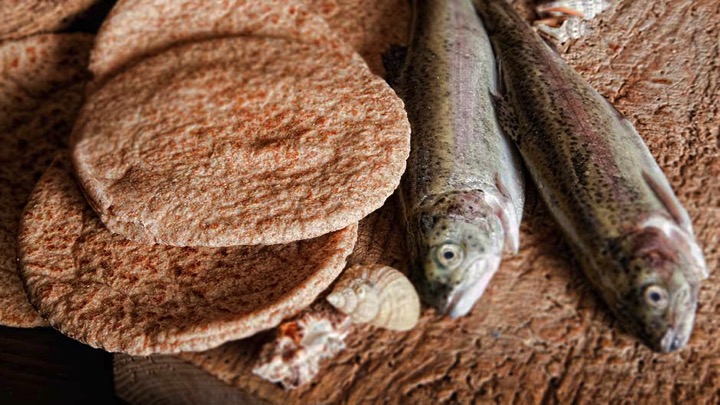
     36 While they were talking about this, Jesus himself stood among them and said to them, ‘Peace be with you.’ 37They were startled and terrified, and thought that they were seeing a ghost. 38He said to them, ‘Why are you frightened, and why do doubts arise in your hearts?  39Look at my hands and my feet; see that it is I myself. Touch me and see; for a ghost does not have flesh and bones as you see that I have.’ 40And when he had said this, he showed them his hands and his feet. 41While in their joy they were disbelieving and still wondering, he said to them, ‘Have you anything here to eat?’ 42They gave him a piece of broiled fish,  43and he took it and ate in their presence.

Slide13

   44 Then he said to them, ‘These are my words that I spoke to you while I was still with you— that everything written about me in the law of Moses, the prophets, and the psalms must be fulfilled. 45Then he opened their ’  minds to understand the scriptures, 46and he said to them, ‘Thus it is written, that the Messiah is to suffer and to rise from the dead on the third day,  47and that repentance and forgiveness of sins is to be proclaimed in his name to all nations, beginning from Jerusalem.  48You are witnesses of these things. 49And see, I am sending upon you what my Father promised; so stay here in the city until you have been clothed with power from on high.’ Then he led them out as far as Bethany, and, lifting up his hands, he blessed them.  51While he was blessing them, he withdrew from them and was carried up into heaven. 52And they worshipped him, and returned to Jerusalem with great joy; 53and they were continually in the temple blessing God.

***

Private Desmond Doss, a conscientious objector who enlisted in the army because he felt morally obligated to his country, served in one of the bloodiest battles of World War II–without a rifle.

Slide24

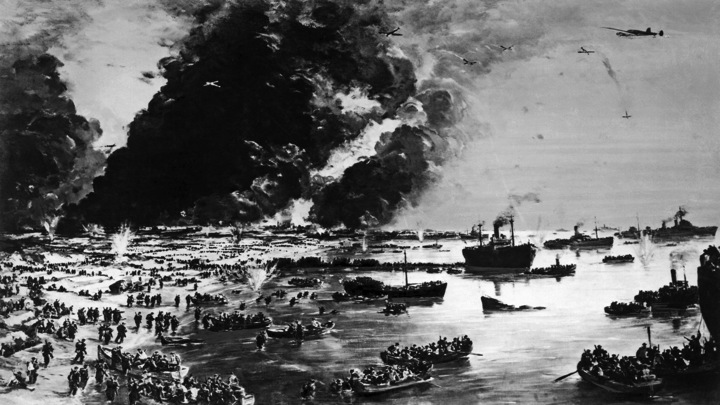
He had only his faith and his Bible to protect and strengthen him. It was April 1945. Okinawa. Desmond and his battalion had to climb to the top of a sheer 400-foot cliff, fortified with a network of Japanese machine gun nests and deadly booby traps. The treacherously steep cliff and the battle at the plateau on top were key to the Allies winning the battle of Okinawa. The cliff was nicknamed Hacksaw Ridge, the title of a recent movie that tells Desmond’s heroic story.

Slide26

Desmond, born Feb. 7, 1919, was from Lynchburg, VA. He was raised in the Seventh Day Adventist Church, which emphasized Sabbath keeping, nonviolence and a vegetarian lifestyle. His father was a WWI veteran who suffered from alcoholism and depression. Desmond attended a Seventh Day Adventist school until the 8th grade, then got a job at a lumberyard to help support his family. On April 1, 1942, he enlisted in the military, in spite of his work at a shipyard in Newport News that qualified him for a deferment. He hoped to be a medic.

At basic training at Fort Jackson, S.C., Desmond encountered hostility from fellow recruits when he refused to carry a rifle. His small size and shy temperament added to his vulnerability to insults and physical abuse. The other soldiers believed he would not just be useless in battle; he would be a major liability. His superiors attempted to have him discharged from the military. He persevered with his convictions. Finally, he was permitted to serve as a medic and was not forced to carry a rifle.

Desmond earned a Bronze Star for aiding wounded soldiers under fire when he served in Guam and the Philippines in 1944. Then in 1945, when his battalion’s mission was thought to be impossible and was ordered to retreat, Desmond refused to leave his wounded comrades behind. He ran alone into the battlefield, facing heavy machine gun and artillery fire, finding and carrying the wounded to the edge of the cliff.

He singlehandedly lowered them down Hacksaw Ridge on a rope to safety. Every time he saved one man’s life, he prayed, “Lord, please help me get one more.” In one night, he rescued an estimated 75 men, including his captain, Jack Glover, who had tried to have him transferred.

“He was one of the bravest persons alive,” Glover says in Hacksaw Ridge. “And then to have him end up saving my life was the irony of the whole thing.”

For his actions above and beyond the call of duty that night, Desmond was awarded the Medal of Honor.

Slide32

Those in his battalion who witnessed Desmond’s actions that night, including those whose lives he saved, had new respect and appreciation for the man they had ridiculed for praying, reading his Bible, observing the Sabbath and refusing to carry a rifle. Their hearts were opened to see the witness of Desmond’s strong faith that compelled him to put others’ needs and very lives before his own.


***


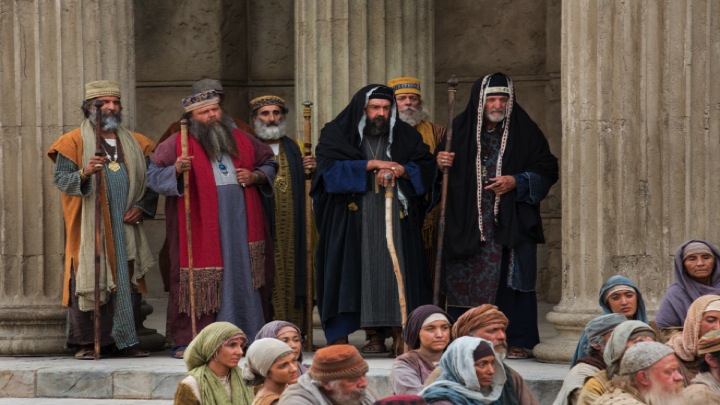
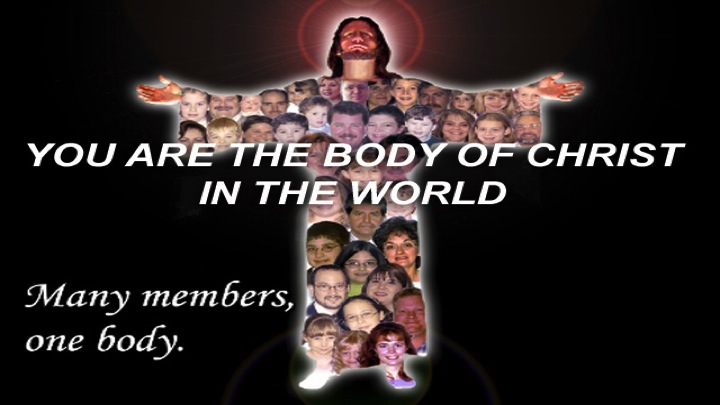
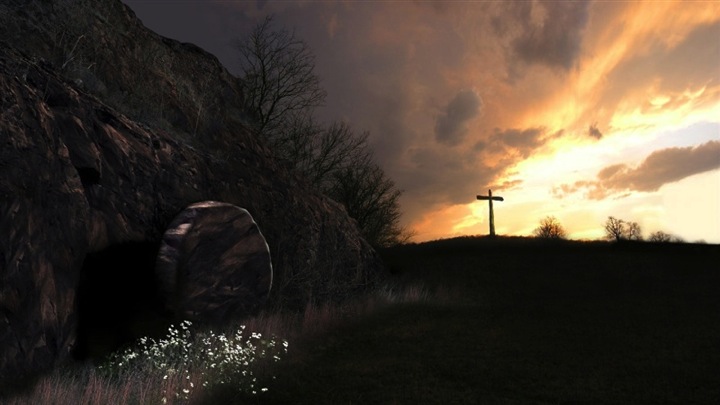
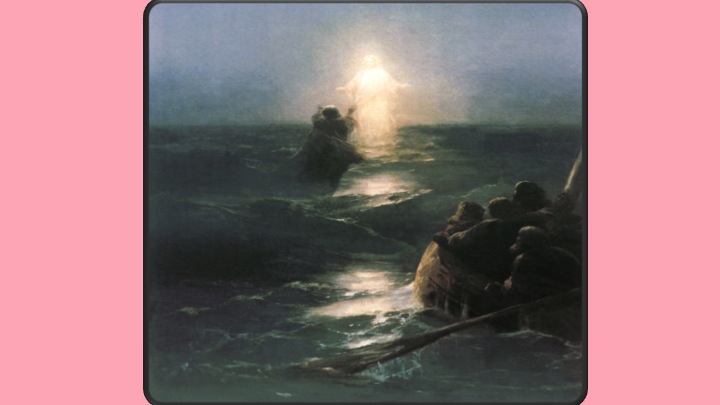
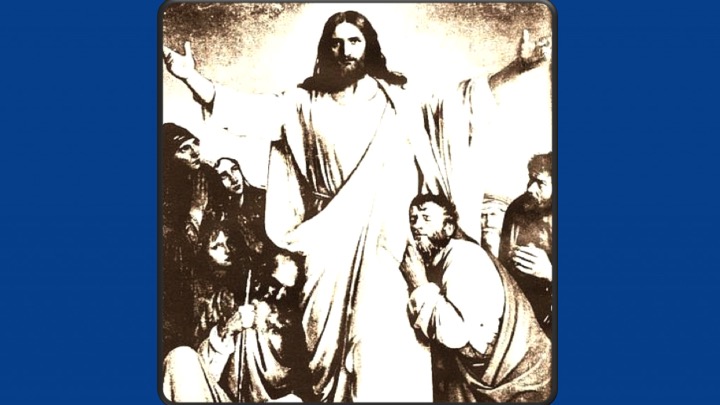
Desmond answered the call of the risen and ascending Christ, who charges his followers in Luke 24 to proclaim repentance and forgiveness to all the nations, telling them, “You are witnesses of these things.”

The “things” of which Jesus speaks are the resurrection appearances that the disciples are discussing at the beginning of today’s reading (in 24:36). The 11 are gathered in Jerusalem, along with other followers, including the two who saw the risen Christ as they were leaving Jerusalem and going home to Emmaus. Jesus greets his disciples with, “Peace to you!” This is “Shalom” in Hebrew; “Eirene” in Greek. This is the same way he greets them in two of John’s resurrection appearances (John 20:19). And this is how he teaches them to greet the households they visit in Luke 10:5-6: Whatever house you enter, first say, ‘Peace to this house!’  And if anyone is there who shares in peace, your peace will rest on that person; but if not, it will return to you.”

The disciples are terrified, despite his greeting and the other resurrection appearances they have witnessed. Jesus knows they are thinking they are seeing a ghost or spirit (pneuma) and he asks them, (literally) “Why do thoughts arise in your hearts?” The word that means “thoughts” and is translated “doubts” has a negative connotation here. But the same word is translated more neutrally in Luke 1:29–when Mary responds to the angel’s announcements: “ But she was much perplexed by his words and pondered what sort of greeting this might be.”

So Jesus offers more proof that he is not just a vision or apparition.

“See that I am myself,” is what Jesus literally says in v. 39. “Touch me and see,” he continues and mentions his “flesh and bones.” Then he shows them his hands and feet. Does this touching and seeing convince them? Not completely. In verse 41, we read of their “joy” and yet how they are “disbelieving and still wondering.”

Here’s my favorite part. “You got anything to eat?” Jesus asks. THIS is the Jesus they know and love. Jesus in Luke 7:34 imitates the Pharisees complaining about him: “The Son of Man came eating and drinking, and you say, ‘Here is a glutton and a drunkard, a friend of tax collectors and sinners.’” When Jesus eats the fish “in their presence,” we hear echoes of Emmaus and Jesus’ revealing himself in the breaking of bread. And then, also like Emmaus, Jesus opens his disciples’ minds to understand the Scriptures–and see how he is the fulfillment of them.

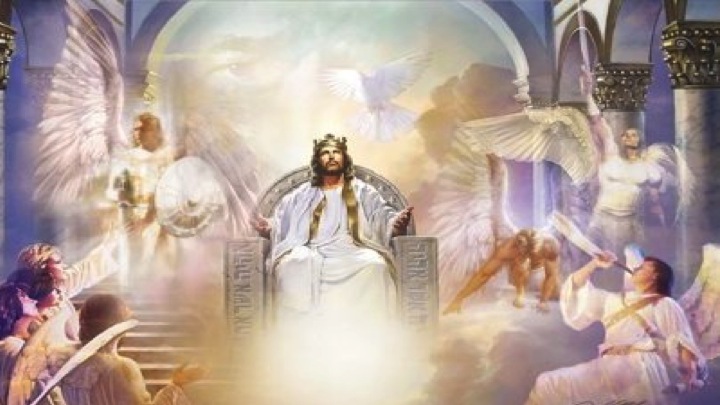
Luke’s book draws near to a close with just a few sentences about the ascension, which might lead some to believe that it isn’t that important. But it is. The ascension is the culmination of the gospel. It is the beginning of the fulfillment of our destiny! This is why we were created –to be the image of God–and we are, when united with Christ, who is, as we read in Col. 1:15 “the image of the invisible God,” and in Hebrews 1:3-4, the “reflection of God’s glory and the exact imprint of God’s very being.”

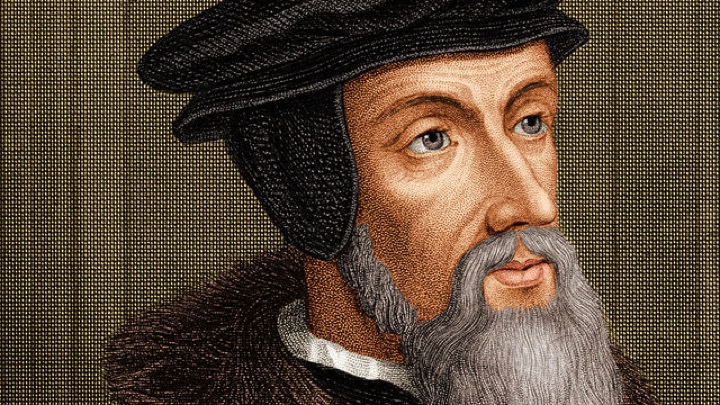
Reformer John Calvin writes in his Institutes of the Christian Religion, “From this (the ascension) our faith receives many benefits. First it understands that the Lord by his ascent opened the way into the Heavenly Kingdom, which had been closed through Adam. Since he entered heaven in our flesh, as if in our name, if follows, as the apostle says, that in a sense we already “sit with God in the heavenly places in him,” so that we do not await heaven with a bare hope, but in our Head already possess it.”

As Luke ends, Jesus ascends while blessing the disciples, like Moses when the Israelites had completed the tabernacle, just as God had commanded, in Exodus 39:42-43. The disciples worship Jesus as he is carried up into heaven from Bethany, hometown of Mary and Martha and younger brother, Lazarus, whom Jesus raised from the dead.

Slide21

The ascension is the bridge to the rest of the story–Acts. Luke closes with the joy of believers and their obedience to Jesus–returning to praise and bless the Lord in the Temple in Jerusalem–awaiting the Spirit that will enable them to become the community of God the Lord intends them to be. When they will be empowered to be Christ’s witnesses.


***

The movie, Hacksaw Ridge, doesn’t go much beyond Desmond Doss’ heroic 12- hour-rescue of 75 men. But the man who was the first conscientious objector to ever earn a Medal of Honor would spend the rest of his life, like many other war veterans, trying to put the past behind him. He didn’t think he was a hero. Wounded 4 times on Okinawa, he had extensive damage to his left arm that prevented him from pursuing a career in carpentry after the war, as he had hoped. And he had contracted tuberculosis while serving in the Philippines. After 5 and a half years of treatment–and losing a lung and 5 ribs–he was discharged from the hospital with 90% disability. An overdose of antibiotics later left him deaf in one ear.

The part of his life that the movie left out is, to me, also heroic–the more than 60 years that he overcame the challenges of his disability to care for his family on a small farm in Rising Fawn, Georgia.

Though his injuries prevented him from working full time, he continued to serve the Lord and his church until he died in 2006 at age 87.

When I think about the people I admire most, I think of courageous, unselfish people of faith like Desmond who put the needs and very lives of others before his own. I am grateful to all our veterans, particularly on Memorial Day, when we remember those who died for our country.

I also admire those who simply, quietly, faithfully serve the Lord every day. I see this–all the time–at our church!! I saw it this week in so many ways and especially on Wednesday–as we prepared for our preschool’s VPK graduation.

This slideshow requires JavaScript.

People who don’t do what they do for money. People who lovingly, patiently labor for the peace of knowing that the things they do to help, encourage and bring joy to others–the little acts of kindness in Jesus’ name–is what being Christ’s witnesses is all about.


Let us pray. Heavenly Father, thank you for sending your Son, Jesus, to be our Savior, to suffer and die for our sins, but then to be raised and ascended to live with you. Thank you for our hope of being raised with Him and everlasting life with you in a place without tears, suffering, sadness, anger, violence, or war. Thank you for the soldiers who served and those who are serving our country today. Bless them with peace and help them, if they struggle to find their way back into life and work at home in the States, once again. Comfort the families of those who worry about their sons and daughters who serve in dangerous, war-torn places. Empower us by your Spirit to be your faithful, humble witnesses, serving you with loving words and acts of kindness to encourage and help others every day. In Christ we pray. Amen.

He Lives in You!


Meditation on John 14:15-26

May 21, 2017

Merritt Island Presbyterian Church

Slide20

15 ‘If you love me, you will keep my commandments. 16And I will ask the Father, and he will give you another Advocate, to be with you forever. 17This is the Spirit of truth, whom the world cannot receive, because it neither sees him nor knows him. You know him, because he abides with you, and he will be in you.

     18 ‘I will not leave you orphaned; I am coming to you. 19In a little while the world will no longer see me, but you will see me; because I live, you also will live. 20On that day you will know that I am in my Father, and you in me, and I in you.  21They who have my commandments and keep them are those who love me; and those who love me will be loved by my Father, and I will love them and reveal myself to them.’

22Judas (not Iscariot) said to him, ‘Lord, how is it that you will reveal yourself to us, and not to the world?’ 23Jesus answered him, ‘Those who love me will keep my word, and my Father will love them, and we will come to them and make our home with them. 24Whoever does not love me does not keep my words; and the word that you hear is not mine, but is from the Father who sent me.

25 ‘I have said these things to you while I am still with you. 26But the Advocate, the Holy Spirit, whom the Father will send in my name, will teach you everything, and remind you of all that I have said to you.

***

I came home from church on Thursday and found that my husband had bought me a present. I was so happy! He bought a Black and Decker 20 volt Hedge Trimmer. He had been hearing me talk about how overgrown our hedges had become, and how we don’t have the right tools.

Slide22

I couldn’t wait to use my new power tool! I had never used a power hedge trimmer before. On Friday morning, I dressed in my grubby clothes, put on a hat, glasses and yard gloves and slathered on sunscreen. I was ready to conquer the rainforest!

Slide23

Ok, it wasn’t really as bad as that.

But Jim said, “Wait.” He told me to read the instruction manual. So I did.

Slide24

I read about the safety switch that you have to push before you can squeeze the trigger and start the blade movement. I read the “Trimming Instructions” that described the “working position,” telling me to “maintain proper footing and balance” and to not “overreach. Hold the unit firmly in both hands and turn the unit ON. Always hold the trimmer, as shown in the illustrations, with one hand on the switch handle and one hand on the bail handle (see figure 4). Never hold the unit by the blade guard!” Well, that seemed straightforward enough.

I read how to trim new growth with “wide, sweeping motions, feeding the blade teeth through the twigs” being the most effective way. “A slight downward tilt of the blade, in the direction of motion gives the best cutting.” I read the cautions against cutting stems greater than ¾ inch and how the blade may coast after turning off.

Then I read, “Danger: Keep hands away from blades.” That sounded like a great idea. I was ready!

But, not yet. Jim walked me out to the hedge with the trimmer and went through all the instructions, again, before turning it on and demonstrating its use.

I was growing impatient. “I can do it!” I said.

He just smiled and told me he wasn’t going to leave the house until I was finished using the new hedge trimmer. The reasons for his staying close by were obvious:

  1. I could have a question and need his help OR
  2. Something could happen and he might have to make a tourniquet and call 911 (not necessarily in that order) AND
  3. He loves me and only wants what is good for me.

***

As I worked outside, I thought about Jesus’ character–His love for us—and how he prayed God’s will would be done, knowing that God’s will is best for all of us. This is what leads him to tell the disciples to keep his commandments in John 14:15 –to do what he tells them to do–that is, if they love him. Love’s proof, Christ is saying, is obedience. The disciples find it much easier to talk about their love and loyalty than to always live it–just as we struggle at times to walk in Christ’s ways.

Jesus will repeat the same instruction to obey his commandments several times in this chapter and the idea will come up again and be expanded upon in the next. After saying, “keep my commandments” in 14:15, he says in 14:21, “They who have my commandments and keep them are those who love me.” He substitutes “word” for “commandments” in 14:23, “Those who love me will keep my word.” And the converse is true in v. 24, when he says, “Whoever does not love me does not keep my words.” He goes on to say that the authority for the “commandments” or “words” comes from God. “The word you hear is not mine,” he says, “but is from the Father who sent me.”

OK, I think we get it. We need to live in obedience to Christ. But what are these commandments–or words–that he is talking about? His language evokes the covenantal language of the Hebrew Bible, in which the people of Israel are characterized as those who “love God” and “keep his commands.” When we hear Jesus tell us to “keep his commandments,” we may also think of the Ten Commandments.

Slide35

But since he says, “my commandments,” we might remember the Greatest Commandment he talks about in the other 3 gospels: (Matthew 22:37-39, Mark 12:29-31 and Luke 10:26-27) ‘You shall love the Lord your God with all your heart, and with all your soul, and with all your strength, and with all your mind; and your neighbor as yourself.’

The best way, perhaps, to understand what Jesus means by “my commandments” in this context is to read what comes directly before and after this passage. You are probably not surprised to discover that in both before and after this passage, Jesus commands his disciples to love, in his example.

In John 13:33-35, after Jesus washes the disciples’ feet and Judas Iscariot leaves to set in motion the act of betrayal, Jesus gives the remaining disciples his “new commandment”–to bear witness of him to the world through the way they treat each other: “Just as I have loved you, you also should love one another. By this everyone will know that you are my disciples, if you have love for one another.”

In chapter 15, beginning at verse 9, Jesus commands his followers to love, “As the Father has loved me, so I have loved you, abide in my love. If you keep my commandments, you will abide in my love, just as I have kept my Father’s commandments and abide in his love.” Then at verse 12, he says, “This is my commandment, that you love one another as I have loved you.” He adds, foreshadowing the cross, “No one has greater love than this –to lay down one’s life for one’s friends.” And then we are back to love’s proof–obedience. “You are my friends,” Jesus says in 15:14, “if you do what I command you.” And finally, we learn the purpose for Christ’s commands in 15:11: JOY! For Christ wants what is GOOD for us! “I have said these things to you so that my joy may be in you, and that your joy may be complete.”

Now, there is only one thing left–the most important point of this passage–the gift of the Spirit. Why do you think that would come up immediately after Jesus tells them that if they love him, they will keep his commandments?

Because of God’s grace and mercy for us! God knows we can’t keep His commandments, no matter how hard we try. We can’t love as Christ loves and abide in His love– without His help.

“I will not leave you orphaned,” Jesus assures his followers in 14:18, “I am coming to you.”

This is not the Second Coming, of which He has already spoken in 14:2, with his “preparing a place” for them in His Father’s “house of many dwelling places.” And how he will “come again” and take them to himself in 14:3, “so that where I am, there you may also be.”

He is talking about a living presence that God will send at his request–“another Advocate” or “helper,” the “Spirit of Truth” to guide and empower us to do His will. And to be with us “forever.” For like my husband, who for love was loathe to leave me alone with a dangerous power tool, Jesus, our Friend and Lover of our Souls, will not leave us alone to fend for ourselves in this dark world. While we listen for God’s voice for us today as we read the Bible, we also rely on the Holy Spirit every day to guide and empower us to do the works God has planned for us. Jesus says in 14:25-26, “I have said these things to you while I am still with you. But the Advocate, the Holy Spirit, whom the Father will send in my name, will teach you everything and remind you of all that I have said to you.”

***

On Friday morning, after Jim taught me how to use the new power tool and insisted on staying close by, I pushed the safety button, squeezed the handle. The engine roared to life. The blades did the work as I held the power tool, following Jim’s example, and made downward, sweeping motions, as the instruction manual told me to do.

While I trimmed back the overgrown hedge, I thought about the Savior’s love and how he commands us to abide in his love, if we love him. And how His Spirit, a gift from God, enables us to do this.

Slide53

How he lives in me!

How He lives in you!


Let us pray.


Holy One, we are so happy that you have not abandoned us to try to follow your Son on our own. Thank you for the gift of your joy and the promise that our joy will be complete when we are obedient to you. Thank you for your gift of the Spirit of Truth that guides and enables us to do the works you have planned for us to do. Forgive us, Lord, when we try to resist the Spirit’s leading in our lives, when we choose not to abide in your love, but simply to do whatever we feel like doing. Transform us, by your Spirit, to be more like Your Son, who was perfectly obedient to you. In Jesus’ name we pray. Amen.


You are Living Stones!


Slide06Meditation on 1 Peter 2:2-10

May 14, 2017

Merritt Island Presbyterian Church

   Like newborn infants, long for the pure, spiritual milk, so that by it you may grow into salvation— 3if indeed you have tasted that the Lord is good. 4 Come to him, a living stone, though rejected by mortals yet chosen and precious in God’s sight, and 5like living stones, let yourselves be built into a spiritual house, to be a holy priesthood, to offer spiritual sacrifices acceptable to God through Jesus Christ. 6For it stands in scripture: ‘See, I am laying in Zion a stone, a cornerstone chosen and precious; and whoever believes in him will not be put to shame.’  7To you then who believe, he is precious; but for those who do not believe, ‘The stone that the builders rejected has become the very head of the corner’, 8and ‘A stone that makes them stumble, and a rock that makes them fall.’ They stumble because they disobey the word, as they were destined to do. 9 But you are a chosen race, a royal priesthood, a holy nation, God’s own people,  in order that you may proclaim the mighty acts of him who called you out of darkness into his marvelous light. 10 Once you were not a people, but now you are God’s people; once you had not received mercy, but now you have received mercy.

***

Isabella Baumfree was born in Ulster County, New York, around 1797, 21 years after Thomas Jefferson presented a document to the Continental Congress that declared our independence from England, saying, “We hold these truths to be self-evident, that all men are created equal, that they are endowed by their Creator with certain unalienable Rights, that among these are Life, Liberty and the pursuit of Happiness.

Slide24

Isabella’s actual birth date is unknown because she was born into slavery. Colonel Hardenbergh owned her family and the house in which Isabella worked in Esopus, a Dutch-speaking community, 95 miles north of New York City.

Slide25

Isabella was one of 12 children; 10 of whom were sold when they were very young.

Slide26

Only Isabella or “Belle,” as she was called, and her brother remained with their parents when the colonel died, and then his son, in 1806, and all of the Baumfrees were separated; 9-year-old “Belle” was sold at auction with a flock of sheep for $100. Her new owner was a harsh man named John Neely. She was sold 2 more times in the next 2 years until she became the property of John Dumont at West Park, near Kingston, NY. She began to learn English for the first time. Around 1815, Belle fell in love with a slave named Robert from a neighboring farm.

Slide27

They had a daughter, but Robert’s owner forbade their relationship. Robert and Belle never saw each other again. Dumont, in 1817, forced Belle to marry an older slave named Thomas, and they had 3 children.

New York emancipated its slaves on July 4, 1827. But Belle left Dumont with her infant daughter, Sophia, in 1826 when he reneged on a promise to free her. She could not bring her other daughter and 5-year-old son, Peter, with her because they were not legally freed in the emancipation order until they had served into their 20s.

Slide28

She said, “I did not run off, for I thought that wicked, but I walked off, believing that to be all right.” A kindly Christian couple took her and her baby into their New Paltz home, paying her for her services until the state’s emancipation law took effect. Shortly afterward, Belle learned her former owner had sold her son Peter illegally to an Alabama man. She fought Dumont in court and in 1828 became the first black woman to go to court against a white man–and win the case.

Slide30

She became a devout Christian while living with the Christian couple. Growing in courage–and in spirit and truth–she moved with her children to New York City in 1829 and found work as a housekeeper. But she would have more suffering when her son disappeared after taking a job on a whaling ship. She never saw him again.

While some people’s faith might falter with the grief Belle was made to bear, her faith grew stronger. She became a Methodist in 1843, experiencing another spiritual awakening or rebirth. She took on a new identity. Her new name? Sojourner Truth. “The Spirit calls me,” she told her friends, “and I must go.”

Slide31

She left to travel and preach of her hope in Jesus Christ and the goodness of God and work toward a more fair and just society–with the abolishment of slavery and equal human rights for all, including women.

Slide32

***

On this day when we honor and remember our mothers and the mothers of our faith, it is fitting to remember Isabella Baumfree, who, though she endured great suffering, persevered and sought to follow Christ. She felt called to preach the gospel and work to set the oppressed free, despite her having the lowest status of any person in American society in the 19th century–a freed slave, a black woman in an age when few women spoke in the public square and no women–black or white– possessed the right to vote.

Certainly, there are countless women we could hold up as examples of strong Christians who overcame adversity to become a bold witness for the Lord. But Isabella’s story and her taking on a new identity after coming to know Jesus reveals a sophisticated understanding of the Scripture, in particular 1 Peter, our epistle reading today. This is remarkable considering she was an uneducated, illiterate woman, who spoke English as a Second Language.

Peter writes his first letter to exiles in Asia Minor– Pontus, Galatia, Cappadocia, Asia and Bithynia.

Slide33

But this letter is for all Christians, stirring hope amidst trials and suffering. Though we don’t know exactly the situation 1st Century Christians face, Peter is saying, essentially, no matter where they live, even if it is their place of birth, now, because of their faith in Jesus Christ, (1:19) they are citizens of a heavenly kingdom and only sojourners in a pagan culture that is the Roman Empire.

God has given us, 1 Peter 1:3 says, “a new birth into a living hope through the resurrection of Jesus Christ from the dead,” an “inheritance that is imperishable, undefiled, and unfading, kept in heaven for you!” (1:4) And because of this living hope, we can “rejoice” for suffering and persecution have a godly purpose–our spiritual growth and maturity.

The main message of 1 Peter is this–that being a Christian means that we are changed AND our relationships with God and human beings are transformed. All of this is a gift from the Lord for those who desire to be changed and to “love one another deeply from the heart,” as Peter says in 1:22.

Our relationships with God and one another are fed by God’s Word and prayer. Peter exhorts us in 2:2 to be “newborn infants,” who are completely reliant on their mothers for nourishment. “Long for the pure, spiritual milk,” he says, meaning God’s Word. He quotes Psalm 34:8– “if indeed you have tasted that the Lord is good.” This “tasting” is an enjoyment and intimate experience of God, being in the divine presence and not just an intellectual knowledge of Scripture.

Peter draws from the prophet Isaiah with the language of a “living stone,” for Jesus Christ. “Come to him, a living stone,” he says, “though rejected by (human beings) yet chosen and precious in God’s sight!” He continues to quote Scripture in 2:6, with, “See, I am laying in Zion a stone, a cornerstone chosen and precious; and whoever believes in him will not be put to shame.’

In our spiritual rebirth, we have become more like him–and less like our former selves, though we still sin and must seek to be holy in our conduct. We, like the cornerstone of our faith, are also “living stones” — –sometimes rejected by human beings when we go against the culture in which we live yet chosen by God and precious to Him. Holiness is a gift from the God who is holy, the result of obedience to God’s Word AND following in Christ’s loving example. “Do not be conformed to the desires that you formerly had in ignorance,” he says. And, in 2:1, “Rid yourselves of all malice…deceit, insincerity, jealousy, and slander or ‘backbiting,’” as some translations say.

The goal is not simply our personal holiness, but that we become united with one another in Christ, built by God into a “spiritual house.” This is something we must allow the Lord to do; God will not do it without our cooperation and participation. In this day and age, when kindness in the public square is so rare, we can take comfort in the promise of 2:5 that God will make us into a “holy priesthood.” We are a “chosen race, a royal priesthood, a holy nation,” called for a purpose, as Sojourner Truth well understood, “To proclaim the mighty acts of him who called you out of darkness and into his marvelous light.”

Slide21


***

Sojourner Truth, who heard and heeded God’s call, persevering through suffering, became one of the most influential African American women of the 19th century. Sojourner’s image has been carved, painted, sketched, made into rag dolls, and engraved on a stamp.

In 2009, a bust of Sojourner Truth was unveiled at the U.S. Capitol.

Slide53

The U.S. Treasury Dept. plans to feature Sojourner on the back of a $10 bill.

In her lifetime, she joined with abolitionist groups, worked for women’s rights, religious tolerance, prison reform, and pacifism. In 1843, she bought her first home in Florence, Mass., for $300

Slide54


and spoke at the first National Women’s Rights Convention. She went on numerous lecture tours, often speaking to hostile crowds.

Slide55

She dictated her life story in 1850 and it was published as a book called, The Narrative of Sojourner Truth: A Northern Slave.

Slide56

In May 1851, she attended the Ohio Women’s Rights Convention where she delivered her famous extemporaneous speech, later known as “Ain’t I a Woman.”

Slide57

She met Abraham Lincoln in 1864 and helped recruit black troops for the Union Army.

Slide58

She met President Ulysses S. Grant and tried unsuccessfully for 7 years to secure land grants for former slaves.

Slide59

She rode streetcars in Washington, D.C. in 1865 to help force desegregation.

Slide60

In 1872, she tried to vote in the presidential election, but was turned away at the polling place.

Slide61

She had found support in high places, but never saw the just and equal society of which she dreamed–at least, not before she went home to be with the Lord in 1883.

Slide62


***

So, Church, how are you doing with God’s call on your life? Are you, like newborns, longing for the pure spiritual milk from the living stone, the cornerstone, rejected by human beings, but chosen and precious to God? Are you struggling through a dark time, finding it hard to see God’s marvelous light? Remember: You aren’t who you used to be! You don’t have to fall into the same old negative thinking and behaviors. You have a new identity! Don’t fret if the world rejects you. You are chosen and precious to God! You are a holy priesthood! You are living stones!

Slide63

Let us pray. Holy One, thank you for the gift of Your Son, the Cornerstone of our faith and the Living Stone, who, though rejected by human beings, is chosen and precious in your sight. Thank you for calling us to follow in Christ’s footsteps–to love as he loved– and for remaking us into his image–into living stones, sometimes rejected by human beings, but chosen and always precious to you! Thank you for the great women of faith who have come before us, the mothers who have suffered, yet persevered in their trust for you. Thank you for Sojourner Truth, whom you used to be a bold witness for the gospel and to make our country a more just and fair place. We thank you for your promise to make us into a holy priesthood and to use us for your good purposes. Please bless all the women and girls of our faith community with courage, strength, wisdom, peace and joy as we seek to be transformed by you and to do all that you have ordained for us to do– for you! In your Precious Son’s name we pray. Amen.


“You Are His Sheep”

Slide41

Meditation on John 10:1-10

May 7, 2017

Merritt Island Presbyterian Church

   Very truly, I tell you, anyone who does not enter the sheepfold by the gate but climbs in by another way is a thief and a bandit. 2The one who enters by the gate is the shepherd of the sheep.  3The gatekeeper opens the gate for him, and the sheep hear his voice. He calls his own sheep by name and leads them out.  4When he has brought out all his own, he goes ahead of them, and the sheep follow him because they know his voice. 5They will not follow a stranger, but they will run from him because they do not know the voice of strangers.’ 6Jesus used this figure of speech with them, but they did not understand what he was saying to them. 7 So again Jesus said to them, ‘Very truly, I tell you, I am the gate for the sheep.  8All who came before me are thieves and bandits; but the sheep did not listen to them.  9I am the gate. Whoever enters by me will be saved, and will come in and go out and find pasture. 10The thief comes only to steal and kill and destroy. I came that they may have life, and have it abundantly.

***


While telling jokes about the Gorton fisherman catching fish of a nice, uniform, rectangular shape, David dresses his son, Jack, into a long yellow raincoat and matching yellow hat.


Mary Lou, MIPC’s performing arts director, helps David dress Jack, who plays “Peter the Fisherman” in the senior Kids Klub show, Life School Musical.

Slide19

Junior and Senior Kids Klub shows continue this afternoon at 4. David is part of the Kids Klub family of volunteers, assisting Mary Lou by helping children learn their lines, use bigger voices, speak with expression, and understand theatrical lingo, such as “stage left.” The yellow hat has a wide brim–so wide, that it very nearly conceals Jack’s face.

Slide21

“That won’t do,” Mary Lou will say later, rushing to the stage to fold back the brim. “Your mother will want to see your face!” she says, and laughs.

It’s easy to see Kids Klub in the biblical context of sheep and shepherds, especially this week, when there were many directions for little lambs to follow, with rehearsals Tuesday and Friday, and shows Saturday and Sunday. Many volunteer shepherds assist Mary Lou, the head shepherd. Every one of them has a role in working to strengthen and equip the children to minister to the community with the hope of the gospel, spoken and sung. One volunteer shepherd–Jennifer–taught the children to sing songs such as “Special in God’s Eyes” and “Heroes in Disguise.” This is Elly, Jennifer’s daughter, with her mom.

Still another volunteer shepherd is Pam, who wears a number of important hats, including choreographer and snack chair. Pam’s seat during rehearsals and shows is on a cushion at Mary Lou’s feet in front of the stage.

Slide26


Pam teaches the children all the moves. She signals every cartwheel and footstep.…


She guides every arm lift, head turn, and pom pom shake.


Slide33

She directs every spin, twirl , and dancer’s pose .


Slide37

For the shepherds at Kids Klub, it’s all about the sheep. But the shepherds can only guide the sheep to do what the children are able to do–and what they are willing to do. But motivation isn’t usually a problem. Children who participate in the program, for the most part, want to be there. And if there is too much talking or movement, Mary Lou calls out, “Kids Klub, howdee!” Everyone freezes, gets quiet and listens. They know her voice– and they know her. They trust her and want to please her. Mary Lou knows their names–and which kids belong to which families. She knows their personalities and their abilities, their strengths and weaknesses.

So I was surprised some weeks back when I learned that the senior Kids Klub was having trouble. The older children hadn’t learned their lines. They didn’t know their songs! Some of them have been in the program for years. They are smart and talented and usually cooperative. Were they too comfortable, too confident? They were looking around, watching other kids on stage, instead of keeping their eyes on Mary Lou and Pam. Some were talking to each other and not listening for the voices of their shepherds–and following only them.

***


Jesus tells a parable about a shepherd and some sheep in our gospel reading today. But it isn’t the, “I am the good shepherd” passage. Not yet! That doesn’t begin until John 10:11. And though we are tempted to jump ahead, these first 10 verses of the chapter are connected to the preceding chapter. We know this because the verse opens with, “Amen, amen,” translated, “Very truly.” Double “amen’s,” aren’t used to introduce a fresh topic, scholars say. We encounter double amen’s again in verse 7 of this passage! Jesus is really trying to make his point–to explain what the Pharisees have, up to now, not understood.

So, we return to chapter 9 and recall how Jesus heals a man born blind. The man comes to believe in Jesus, but the Pharisees are angry and say Jesus cannot be from God because he healed on the Sabbath. They are angrier, still, when Jesus says that he came into the world “for judgment so that those who do not see may see and those who do see may become blind.” The Pharisees realize Jesus is talking about them–that they who want to exclude the blind man Jesus has healed from their community are the ones who are blind and whose “sin remains.”

Slide39

Then Jesus tells the Pharisees a story from every day life–the parable of a shepherd and some sheep– to persuade them of their error–and to lead all who will hear this Scripture for generations to come to trust in Him whom God sent for love, as John 3:16 says, and so that they might not perish, but have everlasting life.

Slide38

Sheep in Jesus’ time are a valuable commodity—and many people own sheep and goats. The wool is used for clothing and blankets; sheepskin has a variety of uses, including holding water or wine; and the people drink sheep’s milk and eat sheep’s milk cheese and lamb. When the Pharisees hear this story, you may be surprised that they are probably not imagining sheep to be dumb–as some of today’s farmers in the U.S. often say. Sheep are dependent on a human caretaker; that is true. They cannot just be allowed to roam free; they are prone to wander, stumble and fall or get eaten by wild animals. They need to be led to pasture–nourishment–and water. But they are also gentle and social animals, preferring to remain in the flock. And they aren’t dumb. The part about the sheep recognizing and obeying the voice of the shepherd, who calls them a by name (or a nickname) is true, even with the average flock containing about 100 sheep.

Slide41

But although we might have a warm feeling when we think of shepherds, the elite Pharisees and other urban dwellers of Jesus’ time despise shepherds as a group. They are members of the lowest classes and social outcasts. They have a reputation (perhaps unfairly) for being rough, unscrupulous characters that pasture their animals on other people’s land and steal wool, milk and kids from the flock. This is in spite of all the OT shepherd and sheep imagery revealing God’s intimacy with His people, such as Isaiah 40:11, “He tends his flock like a shepherd: He gathers the lambs in his arms and carries them close to his heart; he gently leads those that have young.” And Ezekiel 34:12-16, that begins,  As a shepherd looks after his scattered flock when he is with them, so will I look after my sheep. I will rescue them from all the places where they were scattered on a day of clouds and darkness…”

When Jesus speaks of thieves and bandits, though, the Pharisees are nodding their heads. Sheep stealing is so common back then that to protect the sheep, shepherds sleep with them, often at the entrance to the stone enclosure.

Slide08

So when Jesus says, “I am the gate for the sheep,” think of his protection and his provision, as we read on, “Whoever enters by me will be saved, and will come in and go out and find pasture.” This is in sharp contrast to the thief who comes only to “steal and kill and destroy.”

Jesus has come so that we–His sheep–may have life and have it abundantly.


***

And abundantly we do live–when we listen for God’s voice and seek to obey, trusting the one who loves and cares for us like no other. The one who calls us affectionately by name and protects us from the evil one. Let us never become too comfortable or over-confident so that we stop listening–and take our eyes off our loving Shepherd. For we are like sheep, prone to wander, stumble and fall. We need the Lord to lead us on right paths and nourish us by His Word and Spirit.

Slide09

If we are looking for a lesson in obedience–a modern day parable of sheep and shepherds from our every day life–then we may go no further than Kids Klub. Both the junior and senior Kids Klub shows were wonderful yesterday, thanks to the loving, patient guidance of the shepherds–and sheep that listened for and heard their shepherds’ voices, trusted and obeyed.

And I was given the best job of all. Mary Lou had me sit close to the stage, below a 5-year-old boy performing in his first ever show.

Slide49

I was to motion him to the microphone–which is taller than he is–when it’s time for him to say his one line that comes up quickly in the first scene. After a girl says, “no more standing in line at the barfeteria” and another says, “Ewwww! Disgusting! Gross!!” Isaac says, “And no more Mystery-meat Monday…”

He waited till the room was quiet before delivering his line perfectly. The audience hung on his every word, before bursting into laughter.

But when I motioned him to the microphone to sing with 3 others, I was so proud I almost cried when his voice soared above them all:

“Yes, Jesus loves me! Yes, Jesus loves me! Yes, Jesus loves me! The Bible tells me so.”


Let us pray.

Holy One, we thank you for leading us in the paths that you want us to go. Thank you for the work you are doing in us–for transforming us, day by day, into people you can use to build your kingdom, here on earth. Thank you for the gift of abundant life through belief on your Son and for the promise that we will not perish, but live eternally with You. Help us to trust you every day, to listen for your voice, and to obey. Strengthen our faith. Bless those who labor for the children and young families. Give them energy, creativity, and joy. And bless the children, Lord, fill them with spiritual gifts as they seek to minister together, reaching out to our community, sharing the hope of our Good Shepherd, through Your Word and songs of praise. In Christ we pray. Amen.


The Stranger in Jerusalem


Meditation on Luke 24: 13-35

April 30, 2017

Merritt Island Presbyterian Church


13 Now on that same day two of them were going to a village called Emmaus, about seven miles* from Jerusalem, 14and talking with each other about all these things that had happened. Slide0615While they were talking and discussing, Jesus himself came near and went with them, 16but their eyes were kept from recognizing him. 17And he said to them, ‘What are you discussing with each other while you walk along?’ They stood still, looking sad.* 18Then one of them, whose name was Cleopas, answered him,  ‘Are you the only stranger in Jerusalem who does not know the things that have taken place there in these days?’ 19He asked them, ‘What things?’ They replied, ‘The things about Jesus of Nazareth,* who was a prophet mighty in deed and word before God and all the people ,20

and how our chief priests and leaders handed him over to be condemned to death and crucified him.

Slide13

21But we had hoped that he was the one to redeem Israel.* Yes, and besides all this, it is now the third day since these things took place. 22Moreover, some women of our group astounded us. They were at the tomb early this morning, 23and when they did not find his body there, they came back and told us that they had indeed seen a vision of angels who said that he was alive.

Slide14

24Some of those who were with us went to the tomb and found it just as the women had said; but they did not see him.’ 25Then he said to them,  ‘Oh, how foolish you are, and how slow of heart to believe all that the prophets have declared! 26Was it not necessary that the Messiah* should suffer these things and then enter into his glory?’ 27Then beginning with Moses

Slide16

and all the prophets, he interpreted to them the things about himself in all the scriptures.

28 As they came near the village to which they were going, he walked ahead as if he were going on. 29But they urged him strongly, saying,  ‘Stay with us, because it is almost evening and the day is now nearly over.’ So he went in to stay with them.

Slide18

30When he was at the table with them, he took bread, blessed and broke it, and gave it to them. 31Then their eyes were opened, and they recognized him; and he vanished from their sight. 32They said to each other, ‘Were not our hearts burning within us while he was talking to us on the road, while he was opening the scriptures to us?’ 33That same hour they got up and returned to Jerusalem; and they found the eleven and their companions gathered together. 34They were saying, ‘The Lord has risen indeed, and he has appeared to Simon!’ 35Then they told what had happened on the road, and how he had been made known to them in the breaking of the bread.

***


   The little girl with tussled hair greeted her Daddy with a bright smile, but then saw the woman standing near him at the entrance to her preschool. The smile turned to a puzzled look.

“Where is Grandpa Jim?” our granddaughter, Jessie, asked.

Danny, my stepson, answered, “Give Grandma Karen a hug. Grandpa Jim is in the car waiting for you.”

Jessie stared at me with a blank expression, before dashing out the door, without her coat. Danny trailed behind, holding her jacket and calling her name. The weather was cool and damp in Cambridge, Mass.

And that’s how our visit with our granddaughter began, a couple days after Easter. Though Jim had visited on his own, it had been nearly a year since I had seen Jessie in person. And at only 3 years and 3 months, a year between visits is a long time. She didn’t recognize me.

It wouldn’t be long, though, till we would be comfortable together. At her home, I sat on the floor with Jessie and we talked as she opened the presents we had brought her.

 She wanted me to read to her. So I did.

She said she was hungry. So I shared the graham crackers I had packed in my suitcase, asking her not to tell Daddy and Mommy that I gave her snacks. She smiled at our secret, and we ate.

Slide28

And that was all it took. She knew I was her Grandma, after that. The relationship was renewed–and grew as we spent time together every day. We shared meals and snacks. She popped Cheerios into my mouth, one by one. We read Peppa Pig Goes Swimming and Peppa’s Easter Egg Hunt until she had memorized the words and finished all my sentences.

Slide29Slide30

 And we played Strawberry Shortcake Bingo and got silly on the couch.

This slideshow requires JavaScript.

My hair became as tussled as Jessie’s.

Slide37

We baked a batch of birthday brownies for her Daddy.

And we took a long walk to the library before Jessie’s parents drove us to the airport on our last day. As they put her into her car seat, she called out, “Grandma Karen! Come sit by me!”

Slide41

When we tried to say goodbye, she burst into loud sobs and clung to her Mommy. This was not the right end to the story. Grandma and Grandpa were supposed to stay with her forever. She didn’t want my kiss or hug. Sadness mingled with anger and confusion.

Slide42

She didn’t say goodbye.

***


The disciples had some similar feelings, perhaps, after they lost Jesus, their beloved teacher, the one who called them brother, sister and friend. They likely experienced shock, grief, sadness, and confusion, in a greater intensity, of course, than Jessie experienced. For the disciples–not just the 12 but “all his acquaintances who had followed him from Galilee”– in Luke 23:49–had stood on a hill, watching the one the angel had proclaimed in Luke 2:11– “Savior”, “Messiah” and “Lord”–suffer and die.

Slide44

This is not how the story was supposed to end, they thought, though Jesus had warned his loved ones what was to come. And the risen Christ will soon explain in full to his disciples gathered in Jerusalem the true meaning of the resurrection. In 24:45-46, he will “open their minds to understand the scriptures,” and he will say,  “Thus it is written, that the Messiah is to suffer and to rise from the dead on the third day and that repentance and forgiveness of sins is to be proclaimed to all nations, beginning from Jerusalem.”

But on the evening of the day that a group of women discover Christ’s empty tomb, the disciples don’t know how to feel, what to believe or what to do.

Slide47

They begin to disperse, some of them, leaving Jerusalem at the end of the Feast of the Passover. Some return home.

And Jesus seeks out those struggling with fear and doubt–and not just the original 12 who answered his call. The disciples he pursues in today’s passage are a man named Cleopas, a name that appears nowhere else in the Bible, and another person we are tempted to overlook because he isn’t named. Jesus joins them as they walk 60 stadia or 7 miles from Jerusalem to Emmaus, a village named only in Luke, a place unknown to us today.

Slide48

“What are you talking about?” Jesus interrupts them, and they don’t answer right away. They stand still, says 24:17, “looking sad.” The Greek word translated sad (skythropos) can also mean angry, such as in Matthew 6:1 when the word describes the “long face” of the fasting Pharisees. Cleopas seems to be mocking Jesus when he asks in v. 18, “Are you the only stranger in Jerusalem who does not know the things that have taken place there in these days?”

But it isn’t their fault that they don’t “see” Jesus, at first. This is all part of God’s plan! They are “prevented from recognizing them,” says verse 16, a condition that will be reversed in verse 31 after Christ “opens” Scripture to them, teaching them “things concerning himself” says verse 27, “in ALL the Scriptures.” Don’t miss this important nugget. If you want to learn about Jesus and truly know him, you will find him in the study of ALL the Scriptures–not just the New Testament. They are nourished first on God’s Word before the living Christ makes his presence known in the breaking of the bread.

When Jesus asks, “What things?” I hear echoes of his question to his disciples in Matthew 16:13-20,  “Who do you say that I am?” He wants to hear Cleopas’ doubts and fears? His anger and pain! His disbelief! Just as he wants to hear our confessions, too. He wants to know what we think and feel — and to have a relationship with us!

Slide50

Cleopas doesn’t answer like Peter, who, before Jesus’ betrayal and death, confidently declares, “You are the Messiah, the Son of the Living God.” Peter will fearfully deny knowing him later on. Cleopas says that Jesus of Nazareth was, “a prophet, a man powerful in deed and speech before God and all the people.” And he doesn’t accept any responsibility for what happened to Jesus. “The chief priests and leaders handed him over,” he says in v. 20, and “they crucified him.”

Jesus is a disappointment to some of his followers, just as he is to some of us, at times, when he doesn’t do what we want him to do! When he doesn’t make everything the way we want it to be. “We had hoped that he was the very one who was going to liberate Israel,” Cleopas says. With Christ’s death and the empty tomb, their world living under Roman oppression is just the same!

Or is it?

Reclining at table with the disciples, just as he had in the Last Supper with his 12 disciples, Jesus blesses and breaks the bread–and gives it to them. They recognize him and are not discouraged when he disappears from their sight. Running the 7 miles back to Jerusalem, though the sun has surely gone down, they proclaim to the other disciples, “The Lord has risen, indeed!”

***

I have thought of our granddaughter, Jessie, every day since our visit. Slide43 

I feel badly for her tears, though I am sure she has forgotten her sadness by now. We should have prepared her better for our leaving. Yet, at the same time, I know that at 3 years and 3 months, she cannot understand the ways of the world. Waiting even a few months to see us will seem like a long, long time.

We aren’t much different than Jessie when it comes to understanding and applying spiritual truths to our lives. We celebrate the empty tomb, the Risen Christ, at Easter, but then we live the next day, as if nothing has changed. If Christ is alive, friends, then everything is changed! We are changed! We have new life! We are risen with Him! But we don’t want the Spirit to interrupt us as we go on with our lives, seeking what is comfortable and pleasant, rather than seeking to do God’s will, which might include some suffering and pain.

I think Luke intentionally leaves out the name of the “other” disciple with Cleopas, who, when Christ wasn’t what he hoped he would be, gave up and went home.

Slide51

Luke wants us to see that the disciple without the name is you! It’s me!

We need to be reminded, again and again, that we are not alone; we are strengthened and united by Christ’s presence when we gather for Word and Sacrament. Christ continually seeks out those who might wander away from Him in fear, confusion, and doubt.

If that’s you on the road to Emmaus, then come back to the Lord, friend! You will find no condemnation — only love and forgiveness– with Him. Then let us go out, like the earliest disciples, and proclaim the Good News to all the nations! The Lord is risen, indeed!

Slide57


Let us pray…


Risen Lord, we thank you for your Spirit that illumines the Scriptures for us — so that we know the truth and the truth liberates us, sets us free from sin and death. Thank you for your presence in the Sacraments of the Lord’s Supper and Baptism. Thank you for seeking out those who have doubts and fears, Lord, revealing yourself to even us, who do not think we are important. Yet we are your children, eternally blessed, loved and forgiven. Strengthen us to do your Will, Lord, and take the paths of righteousness, not comfort and pleasure. Draw us nearer to you. Lead us to proclaim the Good News to all the nations. For Christ is alive! He is risen, indeed! Amen.


Easter People

Slide21

Meditation on Col. 3:1-4 and John 20:1-18

Easter Sunday 2017

Merritt Island Presbyterian Church

     So if you have been raised with Christ, seek the things that are above, where Christ is, seated at the right hand of God. Set your minds on things that are above, not on things that are on earth, for you have died, and your life is hidden with Christ in God. When Christ who is your life is revealed, then you also will be revealed with him in glory. (Col. 3:1-4)  

     Early on the first day of the week, while it was still dark, Mary Magdalene came to the tomb and saw that the stone had been removed from the tomb. 

Slide07

So she ran and went to Simon Peter and the other disciple, the one whom Jesus loved, and said to them, ‘They have taken the Lord out of the tomb, and we do not know where they have laid him.’ Then Peter and the other disciple set out and went towards the tomb. 

Slide09

The two were running together, but the other disciple outran Peter and reached the tomb first. He bent down to look in and saw the linen wrappings lying there, but he did not go in. Then Simon Peter came, following him, and went into the tomb.

Slide10

He saw the linen wrappings lying there, and the cloth that had been on Jesus’ head, not lying with the linen wrappings but rolled up in a place by itself. Then the other disciple, who reached the tomb first, also went in, and he saw and believed; for as yet they did not understand the scripture, that he must rise from the dead. Then the disciples returned to their homes.

    But Mary stood weeping outside the tomb.

Slide11

As she wept, she bent over to look into the tomb; and she saw two angels in white, sitting where the body of Jesus had been lying, one at the head and the other at the feet.

Slide12

 They said to her, ‘Woman, why are you weeping?’ She said to them, ‘They have taken away my Lord, and I do not know where they have laid him.’ When she had said this, she turned round and saw Jesus standing there, but she did not know that it was Jesus. Jesus said to her,  ‘Woman, why are you weeping? For whom are you looking?’ Supposing him to be the gardener, she said to him, ‘Sir, if you have carried him away, tell me where you have laid him, and I will take him away.’ Jesus said to her,  ‘Mary!’ She turned and said to him in Hebrew, ‘Rabbouni!’ (which means Teacher). 

Slide19

 Jesus said to her, ‘Do not hold on to me, because I have not yet ascended to the Father. But go to my brothers and say to them, “I am ascending to my Father and your Father, to my God and your God.” ’Mary Magdalene went and announced to the disciples,  ‘I have seen the Lord’; and she told them that he had said these things to her. (John 20:1-18)

***

Thank you all for your prayers for my mom this week! Mom fell Monday night and was taken by ambulance to a hospital in Orange City. We visited her there on Wednesday after she had surgery to repair a broken hip. Although she dozed on and off for the hours we were with her, when she was awake, she had to be my mother. She told me I needed to rest more and stop doing so much. That I was “pale” and looked tired. It was Holy Week, and I was preparing the service for Maundy Thursday on my laptop in her hospital room. I had to smile at my 78-year-old mom telling me to stop doing so much. It was the pot calling the kettle black! The day she fell, she had been out for hours with friends having lunch at the Daytona State College culinary school cafe, at least a 30-minute drive from her home. I am sure she had already swam laps that morning, made or received 5 to 10 phone calls, and took care of Dad. Did I mention she works part time preparing people’s taxes, sings in her church choir and plays bridge every week?

But she was right. I was tired–hadn’t slept well the night before, thinking about her surgery and the long recovery ahead. I wondered how my dad would do with her at the hospital and then rehab–when he would be on his own. I felt like this great weight was on my shoulders. And then, on the way out of the hospital that evening, we stumbled upon the chapel! We saw a beautiful stained glass window with the tree of life. When, in Genesis, God made human beings in His image and called them “good.”

Slide23

Slide24

 People had shared their thoughts and prayers on cards, writing of their own value in God’s eyes and their testimonies of healing.

Slide25

On the wall was a verse from Revelation 21:1-7. The passage is the vision of the “new heaven and new earth” and the holy city,  the “new Jerusalem, coming down out of heaven from God,’ a bride adorned for her husband. When Christ will wipe every tear from their eyes. Death will be no more; mourning and crying and pain will be no more, for the first things have passed away.”

Slide26

…“See, I am making all things new.” And ……“It is done! I am the Alpha and the Omega, the beginning and the end. To the thirsty I will give water as a gift from the spring of the water of life. …and I will be their God and they will be my children.”

I was drawn to the chapel’s large wooden cross, draped with white cloth–symbolizing the Resurrection.

Slide32

And the weight I had been feeling on my shoulders began to lift. I felt the presence of the Spirit and joy touched my heart. I was reminded, looking up at the cross, that even Easter People, those who believe with all their heart in Jesus’ work on the cross for our sakes, his dying and his rising– can get drawn into the worries, problems and fears of this world. But then–we look up! Our hope is ALWAYS in Him! Answers to all of life’s questions lie at the foot of the cross. Our lives are hidden in Him–and waiting to be revealed–by the one who is ALIVE forever and coming again! Hallelujah! Amen!

***

The message of Paul to the Colossians is this–that we who believe on Christ’s resurrection and have been baptized, have already been raised with him; this happened in our baptism so that we would live new lives in Him. As Paul writes to the Galatians in 2:20,  “It is no longer I who live but Christ who lives in me.” Paul, in Colossians, says our lives are “hidden in Christ.” Isn’t that beautiful? This intimacy speaks of His love for us and our protection and security. Nothing can harm a soul hidden in Christ! Paul goes on to say that now that we are baptized, “Christ is our life,” sounding very much like when he writes to the Philippians in 1:21, saying,  “For me, to live is Christ.” Paul is saying there’s nothing more important to him than Jesus Christ. Therefore, professing faith in Jesus and being baptized isn’t the “end all” to being a Christian, as some might think. This is just the beginning of something new, something God has planned and God only knows, something good, as Paul says in Philippians 1:6,  “I am confident of this, that the one who began a good work among you will bring it to completion by the day of Jesus Christ.”

Our Colossians reading provides instructions on living the Christian life. “Seek the things that are above,” he says, “where Christ is.” “Don’t fix your thoughts,” he says, on the things of the earth. He repeats for emphasis, “Set your mind on the things that are above.” Reading beyond the lectionary verses, we discover that Paul isn’t arguing for the Christian to withdraw from all activities and responsibilities in this world to simply contemplate God. He is talking about changing our attitudes and behavior so that others can see Christ in us. This doesn’t just happen automatically when we become a Christian. It is something we do with the Spirit.

But before we can live as Christ, we have to “put to death” what is “earthly,” such as “greed,” “idolatry,” “evil desire” and “fornication.” He says, “get rid of anger, wrath, malice, slander, and abusive language.” “Don’t lie to one another,” he says. Then, Paul reminds us who we are, in spite of our sin. Isn’t that amazing? We are, because of God’s love and grace, “God’s chosen ones, holy and beloved.” Therefore, we must clothe ourselves with compassion, kindness, humility, meekness and patience.” “Bear with one another,” he says, “and if anyone has a complaint against another, forgive each other;  just as the Lord has forgiven you.” And, “above all, clothe yourselves with love, which binds everything together in perfect harmony.” Christ’s followers let Christ’s peace “rule in their hearts.” They are “thankful” and allow the word of Christ to dwell in them richly. They “teach and admonish one another with all wisdom”; and they gather to worship and praise the Lord, singing “psalms, hymns and spiritual songs to God”, “with gratitude in (their) hearts.” And whatever we do, “in word or deed” we do in the name of the Lord Jesus, “giving thanks to God the Father through Him.”

***

Yesterday, our congregation hosted an “Eggstravaganza” to share the love of Christ with our community. We had many faithful volunteers –leading children to make crafts,

 decorate cookies like Easter eggs,

Slide49

play games,

Slide51

 plant seeds, and eat hot dogs and chips. And then we had 2 egg hunts, one for preschoolers and the other for older kids.

 You know, some churches might be critical of our light-hearted, bunny and chick-themed crafts and games. They might say our Eggstravaganza wasn’t religious enough.

But watching the families interact with volunteers and one another, laughing, hugging, 

Slide53

 meeting new people,

making new friends, and sharing stories, I saw the love and grace of Jesus Christ. I saw Easter People– whose minds were not fixed on earthly things, but were fixed on things above– building God’s Kingdom, loving one another as Christ loves us. I saw God’s “chosen ones, holy and beloved” seeking to draw others closer to Christ and live new lives hidden in the one who is ALIVE forever–and coming again! Hallelujah! Amen!

This slideshow requires JavaScript.

Let us pray. Holy One, we praise you and thank you for Your Son, Jesus, and His willingness to be obedient to you to the point of dying on a cross. Thank you for the witness of the disciples and for Mary, especially, who stayed at the empty tomb, meeting the angels and the risen Christ. Help us, Lord, to be faithful Easter People, trusting you during times of struggle, sorrow and pain. Heal our loved ones, who are sick. Comfort and give peace and patience to their caregivers. Keep us coming back to the foot of the cross, when we are weary or discouraged, so that we might find answers to all of our questions. Thank you for raising Jesus from the dead and the promise that we, too, are and shall be raised with and hidden in Him who is ALIVE forever–and coming again! Hallelujah! Amen.


Humble King

Slide05

Meditation on Matthew 21:1-11

(April 9) “Palm Sunday” 2017

     When they had come near Jerusalem and had reached Bethphage, at the Mount of Olives, Jesus sent two disciples, 2saying to them, ‘Go into the village ahead of you, and immediately you will find a donkey tied, and a colt with her; untie them and bring them to me. 3If anyone says anything to you, just say this, “The Lord needs them.” And he will send them immediately.’ 4This took place to fulfill what had been spoken through the prophet, saying,  5 ‘Tell the daughter of Zion, Look, your king is coming to you, humble, and mounted on a donkey, and on a colt, the foal of a donkey.’ 6The disciples went and did as Jesus had directed them; 7they brought the donkey and the colt, and put their cloaks on them, and he sat on them. 8A very large crowd spread their cloaks on the road, and others cut branches from the trees and spread them on the road. 9The crowds that went ahead of him and that followed were shouting, ‘Hosanna to the Son of David! Blessed is the one who comes in the name of the Lord! Hosanna in the highest heaven!’ 10When he entered Jerusalem, the whole city was in turmoil, asking, ‘Who is this?’ 11The crowds were saying, ‘This is the prophet Jesus from Nazareth in Galilee.’

***

On Friday, when I learned of the U.S. missile strike on Syria in retaliation for the Syrian leader’s use of chemical weapons on his own people, I did what I could do to foster love and peace in a broken, angry world. Though I usually work from home on Fridays, I went to the church to help in our preschool. The classes had planned Easter parties and egg hunts and they were short staffed because of illness. My whispered prayer, from a heart heavy with sorrow, was, “Lord, what do you want me to do today? How can I help someone in need?” For God knows that we are strengthened and encouraged when God uses us, even in what we think are small ways, to help others. Some of my greatest blessings have come from taking time in my busy schedule to visit with the children participating in our children’s ministries. Let us not forget that the Lord brought them to us to love and nurture in the faith!

Jesus was often taking time from what others might see as “more important” ministry–teaching and preaching –to heal someone who was sick, blind or lame and bless the children. In Matthew 19:13-15, families are bringing little children to Jesus so that he might lay hands on them and pray. And his disciples scold them! Jesus says, “Let the children come onto me, and do not stop them, for it is to such as these that the kingdom of heaven belongs.”

Slide28

And he “laid his hands on them” before going on his way. Jesus ministers to children on other occasions, too, such as when he raises from the dead Jairus’ little girl in Mark 5 and inspires a small child in John 6:9 with a few loaves of bread and fish to share them with a hungry crowd.

Slide32

How wonderful and special that child must feel when Jesus prays and multiplies his gift to feed a multitude–and there’s food left over!

On Friday, I talked with, listened to and comforted children. I helped kids find Easter eggs and retrieved candy that fell out when they were opened.


I pushed children on swings, washed and dried hands, poured and cleaned up spilled juice, and urged children to eat their sandwiches, grapes and carrots, and save the sweets for “later.” I opened Lunchables, fruit snacks, and cracker packs. And I helped put the children down for naps, patting their backs. I did what I could do to foster love and peace, even while knowing that what I did–and what other kind volunteers did that day to bless the children and staff at the preschool– wasn’t enough to fix a broken, angry world.

I did what I could, knowing that it is in the giving, loving, serving, and peacemaking that I find strength and hope to carry on, praising our Savior, our humble king, who gave his life to save us all.

***

On this day, we remember what some Bible scholars call the “Triumphal Entry” of Jesus. The imagery of the cheering crowd, singing psalms and the people laying down their cloaks for him to show their loyalty would stir Matthew’s Jewish-Christian audience to connect this procession with the anointing of King Jehu in 2 Kings 9:13: “Then hurriedly they all took their cloaks and spread them for him on the bare steps; and they blew the trumpet, and proclaimed, “Jehu is king.”   Christ’s entry into Jerusalem is also reminiscent of Judas Maccabeus entering the city and being welcomed after an important victory in 1 Maccabees 13:51: “On the twenty-third day of the second month, in the one hundred seventy-first year, the Jews entered it with praise and palm branches, and with harps and cymbals and stringed instruments, and with hymns and songs, because a great enemy had been crushed and removed from Israel.”

The procession may also remind Jewish readers of the Maccabees’ triumph over Antiochus Epiphanes and the “cleansing” of the Holy Temple. Antiochus, around 175 BC, profaned the Temple, offering swine’s flesh on the altar, making sacrifices to Zeus, and turning the Temple chambers into brothels. 2 Maccabees 10:7 says, “Therefore, carrying ivy-wreathed wands and beautiful branches and also fronds of palm, they offered hymns of thanksgiving to him who had given success to the purifying of his own holy place.” The passage that immediately follows the Triumphal Entry in Matthew seems to support this claim that Jesus intends to cleanse what has been profaned. For in Matthew 21:12-13, Jesus drives out all who are selling and buying in the temple, overturning the tables of the moneychangers and the seats of those selling doves.

Jesus’ mode of transportation reveals that he has no intention of becoming a worldly king. He arrives on the foal of a donkey, not on a warhorse, like the kings of his time. By riding on a foal rather than an adult donkey, Jesus is proclaiming that he is the Messiah! His entry fulfills the vision of Zechariah 9:9, when the prophet sees the “king” coming to Jerusalem “humble and riding on a donkey, the foal of a donkey.” Additionally, a foal hasn’t been broken or ridden, making it suitable for a sacred purpose. In Numbers 19:2 and Deuteronomy 21:3, the heifer used in ceremonies of cleansing in the Temple had to be an animal that had never been yoked or worked before.

Jesus rides into Jerusalem when the population of the city is at its highest. He comes during the Passover, when more than 2 million pilgrims have come to worship in Jerusalem. This is according to a Roman governor’s census of the number of lambs slain for the Passover, assuming one lamb fed about 10 people. Jesus arrives as the city recalls and gives thanks to the God who hears their cry in Exodus, saves them from slavery and oppression and leads them to the promised land.

The Jewish crowd, oppressed by Roman rule, cries out “Hosanna!” which means, “Save (us) now!” This cry could be addressed to a worldly king or to their God, such as in Psalm 118:24-26: “This is the day which the LORD has made; Let us rejoice and be glad in it. O Lord, do save (hosanna; save now), we beseech you …do send prosperity. Blessed is the one who comes in the name of the LORD!”

Whatever Christ’s reasons for making his entrance to Jerusalem in such a manner that all eyes of the city would be focused on him, his disciples’ joy reveals their lack of understanding of where this journey will end, though Christ has warned them. In Matthew 20:18-19, Jesus tells his disciples, ‘See, we are going up to Jerusalem, and the Son of Man will be handed over to the chief priests and scribes, and they will condemn him to death ; then they will hand him over to the Gentiles to be mocked and flogged and crucified; and on the third day he will be raised.’

While Jesus’ Galilean followers rejoice that Jesus is the “Son of David,” the “whole city of Jerusalem,” is in “turmoil,” asking, “Who is this?” While the crowds declare Jesus a prophet from Nazareth, the cross looms ahead!

The humble king rides into Jerusalem on a mission of love and peace, to die and save (us) now!

***

Friends, I urge you to continue Christ’s mission of love and peace by serving God and neighbor every day, as I challenged you for these 40 Lenten days. Serve him with your gifts and talents and possessions, not because your good works are needed for your salvation but because you love the Lord and want to obey. Serve and give –use what God has given you to bless others, especially people in need. And remember the children here at our preschool, Kids Klub, Tremendous Tuesday suppers, Sunday school, and VBS. Jesus found time in his demanding schedule to bless the children, though the disciples wanted to shoo them away. For it is in the giving, loving, serving, and peacemaking that you will find strength and hope to carry on, praising our Savior, our humble king, who gave his life to save us all.

Let us pray. Holy One, thank you for your love and for sending Jesus, our humble King, to be the Savior of all people. Help us, Lord, to continue your Son’s mission of love and peace, bringing hope to the hopeless, light in the darkness, life to what is lifeless. Forgive us for our angry, violent ways. Rescue those in harm’s way around the world, living in war-torn areas, homeless, hungry, and without adequate medical care or clean water. Give wisdom, courage and humility to our leaders. Lead us to walk in righteous paths. And we pray for the Church, Lord. Help us to nurture the children that you have entrusted to us. Build up and grant healing to our preschool staff. Help us to raise up more volunteers with gifts to serve in children’s ministries so that we may be a blessing to many and draw others closer to you. In Christ we pray. Amen.

The God Who Listens, Loves and Heals

Slide09

Meditation on John 11 (selected verses)

April 2, 2017

Merritt Island Presbyterian Church

      Now a certain man was ill, Lazarus of Bethany, the village of Mary and her sister Martha.

Slide02


2Mary was the one who anointed the Lord with perfume and wiped his feet with her hair; her brother Lazarus was ill. 3So the sisters sent a message to Jesus,  ‘Lord, he whom you love is ill.’ 4But when Jesus heard it, he said, ‘This illness does not lead to death; rather it is for God’s glory, so that the Son of God may be glorified through it.’ 5Accordingly, though Jesus loved Martha and her sister and Lazarus, 6after having heard that Lazarus was ill, he stayed two days longer in the place where he was… 17 When Jesus arrived, he found that Lazarus had already been in the tomb for four days.


18Now Bethany was near Jerusalem, some two miles away, 19and many of the Jews had come to Martha and Mary to console them about their brother. 20When Martha heard that Jesus was coming, she went and met him, while Mary stayed at home. 21Martha said to Jesus, ‘Lord, if you had been here, my brother would not have died. 22 But even now I know that God will give you whatever you ask of him.’23Jesus said to her, ‘Your brother will rise again.’  24Martha said to him, ‘I know that he will rise again in the resurrection on the last day.’ 25Jesus said to her, ‘I am the resurrection and the life. Those who believe in me, even though they die, will live, 26and everyone who lives and believes in me will never die. Do you believe this?’ 27She said to him, ‘Yes, Lord, I believe that you are the Messiah, the Son of God, the one coming into the world.’

28 When she had said this, she went back and called her sister Mary, and told her privately, ‘The Teacher is here and is calling for you.’ 29And when she heard it, she got up quickly and went to him. 30Now Jesus had not yet come to the village, but was still at the place where Martha had met him. 31The Jews who were with her in the house, consoling her, saw Mary get up quickly and go out. They followed her because they thought that she was going to the tomb to weep there. 32When Mary came where Jesus was and saw him, she knelt at his feet and said to him, ‘Lord, if you had been here, my brother would not have died.’ 33When Jesus saw her weeping, and the Jews who came with her also weeping, he was greatly disturbed in spirit and deeply moved.

Slide57

34He said, ‘Where have you laid him?’ They said to him, ‘Lord, come and see.’ 35Jesus began to weep. So the Jews said, ‘See how he loved him!’ 37But some of them said, ‘Could not he who opened the eyes of the blind man have kept this man from dying?’

38 Then Jesus, again greatly disturbed, came to the tomb. It was a cave, and a stone was lying against it.

39Jesus said, ‘Take away the stone.’ Martha, the sister of the dead man, said to him, ‘Lord, already there is a stench because he has been dead for four days.’ 40Jesus said to her, ‘Did I not tell you that if you believed, you would see the glory of God?’ 41So they took away the stone. And Jesus looked upwards and said, ‘Father, I thank you for having heard me.  42I knew that you always hear me, but I have said this for the sake of the crowd standing here, so that they may believe that you sent me.’”

***

I visited Betty at a local hospital on Wednesday. Betty, who turns 95 at the end of April, greeted me with a smile. “Oh, it’s you!” she said, trying to think of my name. “Pastor Karen! My daughter said you might come.”

I had planned a week earlier to see her at the rehab center on Merritt Island that has been her home for several months. But B.J., her daughter, called and told me she was in the hospital, again. Last fall, Betty broke her hip and needed surgery, then rehab. She couldn’t go back to her apartment in the senior living community where she had lived. She needed more care.

This hospital visit was for blood transfusions and tests. She expected to stay one night and a day. She ended up staying 4 or 5 days. And she wasn’t sure why. She shared her frustration with me. At least at the rehab center, she could get up and walk around with her walker. At the hospital, she was stuck in bed all day. And the food! I listened sympathetically as she told me about her breakfast that morning. Usually, she loves breakfast. But the hospital served her cold chicken broth, jello and lemon ice.

“What kind of a breakfast is that?” she asked, making a face. I laughed. It wasn’t anything I wanted to eat for breakfast, either.

I listened as she shared about her illness and her family–children, grandchildren– and reminisced about her younger days, when her husband was still alive. He died when he was just 60 years old. When the conversation might lag, I would ask another question that would stir another story. Does that happen when you visit someone in the hospital or nursing home? And I would listen again, keeping my heart and mind open to hearing not just the words, but the heart behind the words. She seemed lonely and a bit scared. She needed to know that someone was listening. That someone cared.

When I visit people who are sick or grieving, I come with the Spirit of Christ inside of me to witness to our God who always listens, loves, and desires to heal us– so that others might come to believe on Jesus our Messiah, who died for our sins.

Those trained in Stephen Ministry — a lay ministry in 12,000 congregations and 170 Christian denominations in the U.S., Canada, and 29 other countries– have learned about our listening, loving, healing God as they are stirred to listen with their hearts. We have 12 Stephen Ministers (women and men) in our congregation! They have completed at least 50 hours of training through a partnership with Grace United Methodist Church on Merritt Island. If you are interested in training to be a Stephen Minister or if you are in need of a sister or brother in Christ to walk beside you through a personal crisis, such as a serious illness or the death of a loved one, let me know. During the Stephen Ministry training, those who seek to serve the Lord with their gifts of compassion and love learn how in Exodus 2:23-24, God hears the “groaning” of the Israelites held captive in Egypt and remembers God’s covenant with them. How in Exodus 16:12, God hears the grumbling of the Israelites, wandering in the wilderness, and responds with grace. How in Psalm 66:19, the psalmist sings, “God has surely listened and heard my voice in prayer.” God even hears our unspoken concerns! In Isaiah 65:24, the Lord God says, “Before they call, I will answer; while they are still speaking, I will hear.” Stephen Ministers study our gospel reading in John today, when Jesus, standing before Lazarus’ tomb, looks up and says, “Father I thank you that you have heard me. I knew that you always hear me, but I have said this for the benefit of the people standing here, that they may believe you have sent me.”

At my visit with Betty, as she talked about her illness and reminisced about her younger days, her daughter called. Betty answered the phone, told her daughter I was with her and asked me what I wanted to do.

“Why don’t I pray for you?” I asked, thinking she would call her back.

But she didn’t hang up. She set the receiver on the bed in between us, so her daughter could hear the words I would say– and pray with us.

This was someone who believed in the God who listens, the God who loves, the God who desires to heal us!


***

Before Lazarus dies, his older sisters Mary and Martha, close friends of Jesus, send word to the Lord that “the one whom you love is ill.” And Jesus, telling his disciples that the illness won’t lead to death, continues to minister across the Jordan River, where John had baptized, for 2 more days. “And many believed in him there,” says John 10:42. Then Jesus goes to Bethany. And what happens? Lazarus is already dead.

How do you think the disciples feel when they learn this? Sad. Confused. Disappointed in Jesus, who promised that “God and God’s Son” would be glorified through the illness. Yet they don’t think it’s because Jesus doesn’t care. They know Jesus loves Lazarus–and so do we, for the phrase is repeated 3 times–in verses 3, 5 and 36, when he is crying at the tomb.

Martha tells Jesus in verse 21, ‘Lord, if you had been here, my brother would not have died.” But then, she still has a glimmer of hope. For Jesus has done miracles of healing before, including opening the eyes of the blind. “But even now I know,” she says in v. 22, “that God will give you whatever you ask of him.” Jesus tells her that her brother will rise again. “I am the resurrection and the life,” he says in v. 25 and 26. “Those who believe in me, even though they die, will live,  and everyone who lives and believes in me will never die.” He asks Martha, “Do you believe this?” And though Martha is overcome with grief, she clings to her faith. “Yes, Lord,” she says in v. 27. “I believe that you are the Messiah, the Son of God, the one coming into the world.” Then she goes and finds her sister, Mary, who is grieving at home with her community, and sends her to speak with Jesus. Mary, in v. 32, goes to him and kneels at his feet–a sign of respect, submission, and humility, despite her disappointment and grief. “Lord,” she says, echoing Martha’s words, “if you had been here, my brother would not have died.”   This act of kneeling at Jesus’ feet in humility brings to mind what was mentioned in v. 2, foreshadowing what would happen in the next chapter, John 12. When Mary takes a “pint of pure nard, an expensive perfume” and pours it on Jesus’ feet. Then she wipes his feet with her hair. And the house is filled with the fragrance used to anoint the dead.

Slide03

Now Jesus listens to Mary, sees her crying and is “greatly disturbed in spirit and deeply moved.” For the Lord cares about our grief and suffering. He grieves and suffers with us! He is the God who listens, loves, and desires our healing. Friends, do you believe in the Messiah? The Son of God, the one who is coming again to gather His Church? The one who lives in the heart of every Christian to bring us comfort, hope and strength for every day?

Jesus orders the stone to be removed from the tomb, though Lazarus has been dead 4 days and the stench of death has already set in. He prays aloud and cries out with a shout, “‘Lazarus, come out!’ The dead man appears, hands and feet still bound with cloth, and his face wrapped in a cloth. “Unbind him,” Jesus says, “and let him go.”

Slide59

The raising of Lazarus would lead many to believe in Jesus the Messiah that day. But others would tell the Pharisees, who feared that more Jews would come to believe. And the Romans would come and destroy their holy place and nation. The high priest, Caiaphas, prophesied that Jesus was about to die for the nation, and not for the nation only, but to gather into one the dispersed children of God.

From that day on, they planned to put Jesus to death.

Let us pray.

Holy One, we thank you for sending Jesus, our Messiah, your Son, to take away the sins of the world so that we might be reconciled with you. Thank you for being the God who hears our prayers, and grieves when we grieve, suffers whenever we are suffer. Thank you for being the God who loves us unconditionally, though we have done nothing to deserve this love. Thank you for your desire to heal us of all our diseases and make us whole and for your Spirit that lives within us, comforting us and strengthening us to do your will each day. Help us, Lord, to really listen for your voice and obey. Stir us to truly love and serve one another and share one another’s burdens and pain. And bless our Stephen Ministers as they seek to serve the Church with their gifts of compassion and love. And bless the children, Lord, participating in our Kids Klub program and the staff and volunteers who guide and care for them, nourishing them in the faith and Word of God, urging them to be their very best selves and, at the same time, loving them just as they are. Bless the families with peace and a deepening sense of your presence as you draw them closer to you. In Christ we pray. Amen.

“Now I See”

Slide04

Meditation on John 9 (Selected verses)

March 26, 2017

Merritt Island Presbyterian Church

9As Jesus walked along, he saw a man blind from birth. 2His disciples asked him, ‘Rabbi, who sinned, this man or his parents, that he was born blind?’ 3Jesus answered, ‘Neither this man nor his parents sinned; he was born blind so that God’s works might be revealed in him. 4We must work the works of him who sent me while it is day; night is coming when no one can work.  5As long as I am in the world, I am the light of the world.’ 6When he had said this, he spat on the ground and made mud with the saliva and spread the mud on the man’s eyes, 7saying to him, ‘Go, wash in the pool of Siloam’ (which means Sent). Then he went and washed and came back able to see.  8The neighbors and those who had seen him before as a beggar began to ask, ‘Is this not the man who used to sit and beg?’ 9Some were saying, ‘It is he.’ Others were saying, ‘No, but it is someone like him.’ He kept saying, ‘I am the man.’ 10But they kept asking him, ‘Then how were your eyes opened?’ 11He answered, ‘The man called Jesus made mud, spread it on my eyes, and said to me, “Go to Siloam and wash.” Then I went and washed and received my sight.’ 12They said to him, ‘Where is he?’ He said, ‘I do not know.’ 13 They brought to the Pharisees the man who had formerly been blind. 14Now it was a sabbath day when Jesus made the mud and opened his eyes.15Then the Pharisees also began to ask him how he had received his sight. He said to them, ‘He put mud on my eyes. Then I washed, and now I see.’ 16Some of the Pharisees said, ‘This man is not from God, for he does not observe the sabbath.’ But others said, ‘How can a man who is a sinner perform such signs?’ And they were divided. 17So they said again to the blind man, ‘What do you say about him? It was your eyes he opened.’ He said, ‘He is a prophet.’ 18 The Jews did not believe that he had been blind and had received his sight until they called the parents of the man who had received his sight19and asked them, ‘Is this your son, who you say was born blind? How then does he now see?’ 20His parents answered, ‘We know that this is our son, and that he was born blind; 21 but we do not know how it is that now he sees, nor do we know who opened his eyes. Ask him; he is of age. …’ 22His parents said this because they were afraid of the Jews; for the Jews had already agreed that anyone who confessed Jesus to be the Messiah would be put out of the synagogue… 24 So for the second time they called the man who had been blind, and they said to him, ‘Give glory to God! We know that this man is a sinner.’25He answered, ‘I do not know whether he is a sinner. One thing I do know, that though I was blind, now I see.’ 

***

On Thursday, a group of about 40 children and adults gathered in Cocoa to pack and wrap food to feed needy children. The Children’s Hunger Project of Brevard County provides food every Friday to hundreds of young children in local schools who may not otherwise have enough nutritious food to eat on the weekend.

Slide25


Elaine Kicklighter organized the hands-on mission event for our church. She welcomed and guided volunteers with her handmade sign.

Slide26Slide27

Supervisors provided step-by-step instructions on how to pack and wrap and trained several people to be “runners.”

Slide28Slide29Slide30Slide31

They did a great job! It felt good to be working together on a shared mission to our community. We talked and laughed as we wrapped, packed and stacked. Time just flew by.

This slideshow requires JavaScript.


The Children’s Hunger Project goal is to feed every hungry or undernourished elementary school age child in the county, one at a time. Volunteers delivered about 56,000 food packages to schools for children’s backpacks in the 2015-16 school year. They would like to be able to feed even more. They rely on donations from individuals, businesses and other community groups, including our congregation.

Slide39

A March 9 article in the Washington Post says “more than 13 million kids in this country go to school hungry.” One in 5 children in the U.S. live in “food insecure households,” lacking “consistent access to enough food.” Other estimates are as high as 15 million hungry kids, with one in 4 living in food insecure households.

Slide40

“Kids who go to school hungry may suffer an inability to concentrate and … fall behind academically. Hungry kids are more likely to miss school because of illness,” suffer from depression and anxiety, and develop behavioral problems as teenagers. “They are more liable to drop out before graduation, which leads to lower paying jobs and a greater probability of being food insecure adults.”

Slide41

The Washington Post article discusses a children’s backpack program called “End 68 Hours of Hunger.” It started with one mother, Claire Bloom, who saw a need to feed kids on the weekends. Claire, who lives in the affluent town of Dover, New Hampshire, was at a book club meeting in 2010 when a teacher mentioned that she had students who went from lunch on Friday to breakfast on Monday with nothing to eat. “I was appalled; absolutely stunned and appalled,’” Claire said.

Her eyes were opened to a poverty she never knew existed in her community. And she felt compelled to do something about it.

***

Our reading in John brings to light some of the suffering and need in Jesus’s day. He and his disciples leave the temple in Jerusalem and pass a beggar, blind since birth. A man with such an affliction would be unclean and have little choice but to live in poverty and beg for food. The disciples ask, “Rabbi, who sinned? This man or his parents that he was born blind?” Thus begins a story that reveals the darkness and ignorance of the religious leaders and the love and compassion of the Lord, the “light of the world,” for those whom society deems worthless or simply a burden. Such compassion is a sign of God’s Kingdom drawing near and the arrival of the one who is to come. Jesus says in Matthew 11:5-6, when John’s disciples ask Jesus if he is the Messiah, “Go and tell John what you hear and see:  the blind receive their sight, the lame walk, the lepers are cleansed, the deaf hear, the dead are raised, and the poor have good news brought to them.   And blessed is anyone who takes no offense at me.”

These acts of mercy and miracles of healing are lifted up as the ministry of Christ’s followers in Matthew 10:7 when Jesus sends out the 12 disciples on a mission. “As you go, proclaim the good news, ‘The kingdom of heaven has come near.’ Cure the sick, raise the dead, cleanse the lepers, cast out demons.”

Now in John’s gospel, Jesus tells his disciples that the man who was born blind is blind not because of sin, but so that God’s works would be revealed in him (9:3). This foreshadows an even more startling miracle to come–the raising of Lazarus from the dead in John 11.

Slide50

A number of details in this passage stand out as important and different than other healing accounts. First, the beggar doesn’t ask to be healed; nor does he seem to know him. Christ comes to him, uninvited, applies the clay/spittle mixture to his eyes, and tells him to “wash in the pool of Siloam,” without promising that this act will bring healing. This detail may bring to mind the story of Naaman in 2 Kings 5:10-14, a war hero who had leprosy.

Slide51

Unlike the prideful Naaman, the unnamed blind man is humble and quick to obey Jesus without question or protest. The reward is a miracle that the Pharisees and many of the Jewish community do not want to acknowledge. For they have called the blind man a sinner, undeserving of God’s blessing. And they call Jesus a sinner, too, because he breaks the law; he has made mud to heal a man on the Sabbath (v. 14). And this isn’t the first time he has healed on the Sabbath; in John 5, he heals on the Sabbath a paralyzed man lying by a pool by the Sheep Gate in Jerusalem. He had been ill for 38 years.

Slide52

With the healing of the blind man in ch. 9, the Pharisees investigate as if they are attempting to solve a crime. They interrogate the man’s parents, who only admit that he is their son for fear they will be shunned by their community of faith. The Pharisees then demand that the beggar to tell them how Jesus “opened his eyes.” They use this expression to mean physical healing. But the expression is also used for spiritual illumination. When the disciples are walking with the risen Christ in Luke 24 on the road to Emmaus, they don’t know that it is he, until they sit down to share a meal. Jesus breaks the bread and their eyes are “opened” and they recognize him.

Slide53

The beggar of John 9, who will soon experience spiritual illumination, along with physical healing, responds bravely to the Pharisees’ questions. “The one thing I do know, he says, “is that though I was blind, now I see.”

Later, the Pharisees will become angry with him and drive him out of the community.

Jesus then seeks the man out and asks, ‘Do you believe in the Son of Man?’

     The man answers, “And who is he, sir? Tell me, so that I may believe in him.”

     “You have seen him,” Jesus says. “The one who is speaking with you is he.’

       “Lord,” the man responds, “I believe.”


***


Studying our gospel this week, I find it particularly meaningful that of all the people the Lord could have chosen to reveal his identity, he chose the lowly, humble, despised and rejected. He chose a blind man persecuted his entire life for sins he did not commit. He chose a man who, when Jesus put clay and spit on his eyes and told him to go wash in a pool, he did it without question or protest, without knowing that his act of obedience would heal him.

Thousands of years later, Christ has revealed His divinity to us. Do we have Christ’s heart of compassion for the poor, sick, despised and rejected? If so, that compassion should stir us to continual acts of mercy and kindness. It should flow out of our hearts and shape the words we say and the decisions we make every day. Christ’s compassion should compel us to seek to change the structures and systems in our society that reward the arrogant and powerful and neglect the needs of the poor and the sick. How should we respond, friends, as the Church of Christ in the 21st century? Let us ask God to open our eyes that we may truly see–and respond, “Lord, I believe!”

Slide59

Let us pray. Open our eyes, Lord, so that we see the world with your eternal vision. Spirit, fill our hearts with love that will transform us and flow into every aspect of our lives–shaping our actions, words, relationships, and decisions. Forgive us for refusing to see what you desire us to see–the broken places in us that you want to heal, the hidden sins we are ashamed to confess, the burdens we carry that you want us to let go so that we may be free to walk in your ways. Strengthen us to humbly obey your commands, like the man who was born blind, but could see better than the rich, pious and powerful of his time. Help us to work for change in our society so that the needs of the poor, sick and despised will not be neglected. Keep us in your tender care, Good Shepherd. Lead us to live in peace and unity. In Christ we pray. Amen.


Is the Lord Among Us?


Meditation on Exodus 17:1-7

March 19, 2017

Merritt Island Presbyterian Church


     From the wilderness of Sin the whole congregation of the Israelites journeyed by stages, as the Lord commanded. They camped at Rephidim, but there was no water for the people to drink. 2The people quarrelled with Moses, and said, ‘Give us water to drink.’ Moses said to them, ‘Why do you quarrel with me? Why do you test the Lord?’ 3But the people thirsted there for water; and the people complained against Moses and said, ‘Why did you bring us out of Egypt, to kill us and our children and livestock with thirst?’ 4So Moses cried out to the Lord, ‘What shall I do with this people? They are almost ready to stone me.’ 5The Lord said to Moses, ‘Go on ahead of the people, and take some of the elders of Israel with you; take in your hand the staff with which you struck the Nile, and go.  6I will be standing there in front of you on the rock at Horeb.  Strike the rock, and water will come out of it, so that the people may drink.’ Moses did so, in the sight of the elders of Israel.  7He called the place Massah and Meribah, because the Israelites quarrelled and tested the Lord, saying, ‘Is the Lord among us or not?’


***


We are happy and blessed to welcome a number of new members into our congregation today! Happy and blessed! The folks who are joining with us to love and serve the Lord and be nurtured in God’s Word and Spirit come with a variety of spiritual gifts and talents.


Slide21Slide22Slide23Slide24Slide18Slide19Slide20Slide17

We are a diverse group! If you look around the room, you see some people who grew up on Merritt Island or who have been living here a long time.


You also see many who have lived in a variety of states before coming here–people from the Southeast, Southwest, from the Mid-Atlantic and the Northeast , the West Coast and all the states in between !


We have quite a few who have traveled the world; some have lived in other countries.


Like you and I, our newest members have their own unique faith stories to share. Some were raised Presbyterian. Others were not.

When we had a gathering after worship a little while back with those considering joining the church, I shared how I was not raised Presbyterian. And how, at different times in my life, I had to find a new a worship home –such as when I went away to college and then got married and moved to Baltimore — and how hard it was to find a church that truly felt like home. We visited an assortment of churches, but it was a while before we felt that we were in the right place. And then we moved out to the suburbs and had to start all over again.

So, knowing my own struggle to find the right place to worship in my 20s and 30s, this makes me even more grateful to the Lord for this day — when we joyfully welcome new friends, brothers and sisters, who are making a commitment to journey with us and serve the Lord alongside us. You have come to a place of grace, a place filled with imperfect people straining to hear God’s voice and seeking to do God’s will.

This is a place that welcomes everyone, accepts you as you are,

Slide48


wherever you are on your spiritual journey, and encourages you in your walk with God.

Slide49

May you find hope and healing in this place.

Slide50

May you find love here.

Slide51

You have found a place where your gifts and talents are welcomed and needed!

Slide52Slide53

A safe place where there are people with whom you can share your sorrows, burdens and joys,

Slide54

a refuge from the storms of life.

Slide55

Slide58

May you find, in this place, comfort and strength in God’s Word but also be challenged, transformed and equipped by the Spirit to do things for God that you never dreamed you would do.

This is a place where you will find others like you–clinging to faith in times of trial, struggling to be the people God wants us to be.

***


Sometimes, when I read Exodus, I forget that Moses is the leader of a congregation–a very large congregation, at that. Exodus 12:37 says Moses led 600,000 adult males out of Egypt. (They didn’t always count women and children back then.) God’s people are on the move, physically and figuratively. God, through Moses, is leading the Israelites out of slavery and oppression to the land of the promise.

Slide66

The song of triumph that Moses and the Israelites sing to the Lord in Ex. 15 after God parts the Sea of Reeds, allowing the Israelites to pass unharmed, then taking the lives of the Egyptian troops pursuing them, soon turns to lament, when the wilderness proves to be a hard place to live.

Slide64


Just when they fear they will surely starve, God sends bread from heaven to feed them and continues to feed them daily for 40 years.

Slide67

In today’s passage, the Israelites camp at a place with no water. Rather than seeking help from the Lord and encouraging one another in times of difficulty, they quarrel with Moses and challenge his leadership, blaming him for their troubles. This isn’t the first time they accuse him of trying to kill them. In Exodus 14:11, they say to Moses, “Was it because there were no graves in Egypt that you brought us to the desert to die? What have you done to us by bringing us out of Egypt?” This isn’t the first time they question their decision to follow Moses and leave their life in Egypt. In Exodus 16:3, the Israelites say, “If only the LORD had killed us back in Egypt. There we sat around pots filled with meat and ate all the bread we wanted. But now you have brought us into this wilderness to starve us all to death.”

This is the first time, however, that they specifically mention their children and livestock. A whole new generation of Israelites are being born and raised without any first-hand experience of the life in Egypt God’s people once lived. And Moses doesn’t seem to be growing in faith or love as the years pass. He doesn’t ask the Lord to provide water for the people who could die of thirst. Instead, he complains about the people God has called him to shepherd and seems to be concerned only about his own survival. Moses cries out to God, “What shall I do with this people? They are almost ready to stone me.”

Our gracious God doesn’t punish Israel for having a bad attitude and wanting to do away with Moses. The Lord knows what the people need–water to drink!–just as God knows what our needs are, before we ask. And God knows what Moses needs–a sign that the Lord is still using him to lead Israel and that God hasn’t abandoned them to die in the wilderness without ever seeing the land of the promise.

The same staff that Moses uses to strike the Nile at God’s command and bring about a sign of death for Pharaoh’s people

Slide75


will be the one Moses must use now to strike the rock at Horeb–and bring about a miracle of life for God’s people.

Slide11

Horeb, in Deuteronomy, is the place where God will give God’s life-giving word, The Ten Commandments, to Moses. But first, it is the place where God’s people experience life-giving water from a most unlikely source, a rock.

Or is it? For God is often compared to a rock in the Hebrew Bible. Psalm 18:46 says, “The Lord lives! Blessed be my Rock! Let the God of my salvation be exalted.” Psalm 18:2 says, “The LORD is my rock, my fortress and my deliverer; my God is my rock, in whom I take refuge…” And again, Psalm 62:2, “Truly he is my rock and my salvation; he is my fortress, I will never be shaken.”

Thousands of years later, the Son of God will meet a Samaritan Woman at Jacob’s well and take us back to the Exodus miracle with his promise to give all who believe on Him living water so we may never thirst again.

Slide83

Our Exodus reading ends after Moses strikes the rock “in the sight of the elders of Israel.” But we aren’t left wondering if the water ever came from the rock–for if it had not, then God’s people would not have survived. The passage concludes with the burning question on Israel’s mind during their time of struggle. “Is the Lord among us–or not?”

It is human nature to look for someone to blame when things go wrong and to question the Lord’s presence with us during times of suffering or loss. Or when things simply don’t go the way we want them to. The reality is that God never left them! It was they who wandered away from the faith!

But God had a plan to bring them back. This was no accident that God’s people camped in a place without water. In 17:1, we read how the Israelites journeyed “by stages, as the Lord commanded.” The Lord knew they were going to have a challenge. And God planned to bless them with a miracle all along.

Slide87

Water from a rock! How cool is that?


***

Friends, we will have challenges ahead as a congregation. We are in that uncomfortable transition, similar to ancient Israel, between the promise and its fulfillment as we wait and long for Christ’s return and the Kingdom of God coming to fruition. It isn’t easy to be the Church in this increasingly secular age. But it has never been “easy” to be followers of Christ! Just as Christ urges his disciples to take up their crosses and follow him, we should accept, even welcome, some hardship and sacrifice, trusting that God will give us the strength and courage to meet every challenge.

We need never question, as Israel did, if the Lord is among us. Christ says in Matthew 28:20, “And surely I am with you always even to the end of the age.” Let us never fail to be grateful for God’s many blessings to us and fall into grumbling and complaining. Let us be ever grateful for God’s grace–for forgiving us for all our sins and giving us eternal life with Him.

Let us give God thanks and praise for strengthening us in faith and numbers today! May we anticipate with hope and joy the miraculous blessings God has planned.

Like water from a rock! How cool is that?


Let us pray. Heavenly Father, thank you for being the rock of our salvation, our refuge, our deliverer! Thank you for your grace–for loving and forgiving us even though we are, at times, as faithless as the ancient Israelites, wandering in the wilderness. Help us, Lord, to be ever grateful for your blessings to us and not lose sight of your goodness. May we always sense your loving presence with us, especially during times of trial, so that we never feel abandoned or afraid. Thank you for drawing more believers into our congregation and growing our faith! Guide us to paths of righteousness as a congregation and as individuals. Mold us into the people you want us to be! In Christ we pray. Amen.
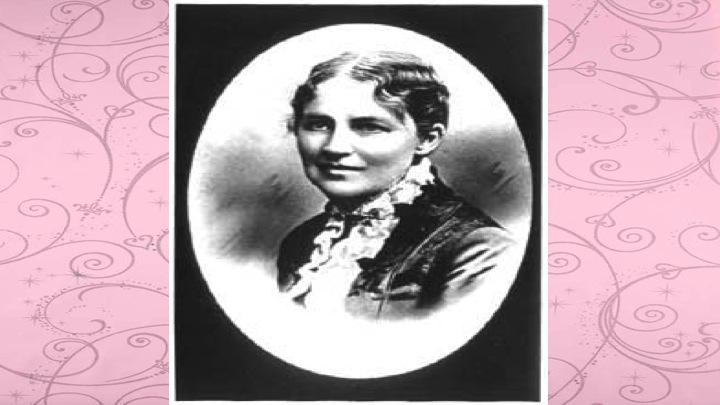
 

Practical Resources for Churches

Everyone has a calling. Ours is helping you.

Consider the Birds

Pastor Karen shares thoughts on faith, scripture, and God's love and grace revealed through backyard wildlife.

F.O.R. Jesus

Fill up. Overflow. Run over.

Becoming HIS Tapestry

Christian Lifestyle Blogger

Whatever Happens,Rejoice.

The Joy of the Lord is our Strength

Stushie Art

Church bulletin covers and other art by artist Stushie. Unique crayon and digital worship art

The Daily Post

The Art and Craft of Blogging

WordPress.com News

The latest news on WordPress.com and the WordPress community.