“A World of Difference”

Aug. 21, 2016 images for blog.001

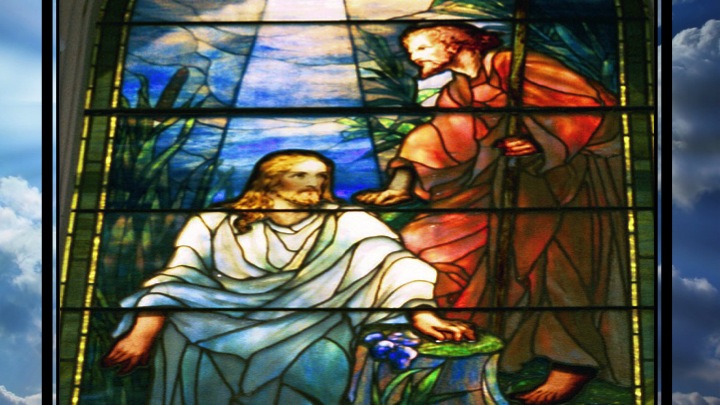
Now the word of the Lord came to me saying,  ‘Before I formed you in the womb I knew you, and before you were born I consecrated you; I appointed you a prophet to the nations.’ 

Aug. 21, 2016 images for blog.002


Then I said, ‘Ah, Lord God! Truly I do not know how to speak, for I am only a boy.’ But the Lord said to me, ‘Do not say, “I am only a boy”; for you shall go to all to whom I send you, and you shall speak whatever I command you. 

Aug. 21, 2016 images for blog.005

Do not be afraid of them, for I am with you to deliver you, says the Lord.’ Then the Lord put out his hand and touched my mouth;

Aug. 21, 2016 images for blog.007

and the Lord said to me, ‘Now I have put my words in your mouth.  See, today I appoint you over nations and over kingdoms, to pluck up and to pull down, to destroy and to overthrow, to build and to plant.’

Aug. 21, 2016 images for blog.010

     I came back from the Montreat Youth Conference, and everyone asks, “How was Montreat? Did you have a good time?” And I answer, “Yes, it was great!” But then you start to talk about what happened at this huge PC (USA), 5-day youth gathering, and you don’t know where to begin!

The setting is so important.

This slideshow requires JavaScript.


The people you come with are SO important.

Aug. 21, 2016 images for blog.014


Your attitude is SO important. It takes faith to listen for God’s voice and commit to the Spirit’s work, to have your own identity and calling as a child of God–loved by God, used by God for God’s glory– confirmed. It feels like magic when you’re there; I don’t know how to explain it, except that it’s the Spirit of God that draws us, embraces, refreshes, heals and challenges us in our comings and goings, year after year.

The theme was “A World of Difference”–emphasizing the acceptance and embrace of differences in the Body of Christ and the great diversity of the world! It was also a call to discover and live out our different callings–every one of us, but most of all, the youth–and Make a World of Difference TOGETHER, loving and serving God and people in new, creative, and bold ways.

“Prophesy!” one speaker urged us. “Prophesy to the Church!”

We only had 1 youth from MIPC go this year–a young man who has attended youth group faithfully and has happily gone to Montreat several years in a row. But we all proudly claimed Jacob as our own! At times, I think Jacob looked after us as much as we looked after him. Since this was my first Montreat Youth Conference, I was always asking Jacob questions–especially how to get to where we were going. He led me and his mom, Leslie, on footpaths (shortcuts) we would probably not have found on our own! He’d walk ahead of us with his long, youthful strides up and down steep slopes–grassy–rocky and sometimes paved, but usually not. We would follow, more slowly and carefully, behind him, sometimes struggling a little to keep up. He’d smile and toss helpful phrases back at us: “Don’t fall!”

We had a zillion jokes about how there were 4 adults to watch over 1 youth–5 if you count Elizabeth who went as a small group leader and stayed in different housing. Larger youth groups filled up entire pews during worship and keynote. We had plenty of space to spread out on MIPC’s pew!


Cindy, our back home leader, organizer, and driver, would say, as we prepared for worship or another activity, “Let me check and see if everyone is here.” She would pretend to look around, before pointing to Jacob sitting right in front of us.

Aug. 21, 2016 images for blog.018

“One!” she’d call out. “OK, we’re all here!” But sometimes we’d get overconfident about Jacob, who is really a young adult. He graduated from high school this spring and works full time. Sometimes, we would be talking to each other and we’d suddenly realize that Jacob wasn’t with us. We’d look at each other and say, “Where’s Jacob?” And laugh–because here there’s 4 or 5 chaperones–and we’ve lost track of our one youth!! He was usually ahead of us and we’d meet up with him soon after. He has the confidence of one shaped by Montreat experiences and the Spirit of nurture with his family and his church!

Worship happens every morning and evening at the conference. Worship is active, begins with something called “Energizers!” which are difficult for uncoordinated, middle aged people like me! But they get us all up and moving and bring smiles to our faces. I loved that worship was packed with visuals, such as video clips, photos, and skits. Youth are involved in every aspect of worship –flying banners, carrying lit candles, bearing pieces of a heart that come together and other symbols of the Spirit’s presence and uniting, healing, power among us!

This slideshow requires JavaScript.


Worship leaders played piano and guitar with traditional and contemporary pieces, including original compositions, such as the theme song for our week, “A World of Difference.”

Aug. 21, 2016 images for blog.022


The words to every song–original, modern and traditional– were projected on two large screens on either side of the stage.


Twice a day, youth and some adults led or participated in small groups. We studied scripture and discussed serious topics relevant to teenagers raised by the keynote speaker or evening preacher. One teen shared how she had stayed up late the night before listening for 2 hours as another teen shared a problem he had, a struggle he had never shared with anyone else. She had tears in her eyes as she described how they prayed God would heal him–as God had healed her, when doctors and counselors could not.

I celebrated my birthday at the conference with my back home group that gave me, among other gifts, a Montreat T-shirt and an adorable card with kitty voices meowing “Happy Birthday.”

And I celebrated my birthday in my small group, bringing cookies to share. They made me a beautiful card and signed my Montreat shirt–so that I would remember them by name and pray for them by name. I promised I would! :o)


They let me take their pictures. Here are some of my new friends!

This slideshow requires JavaScript.


***

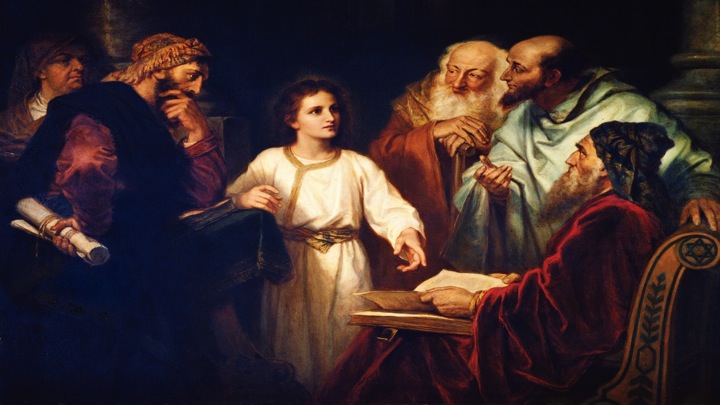
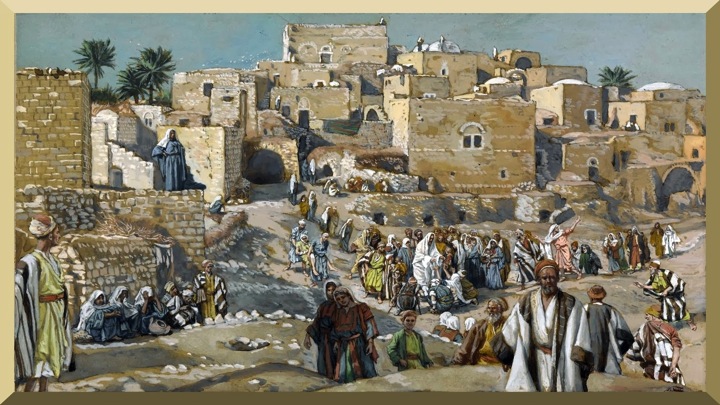
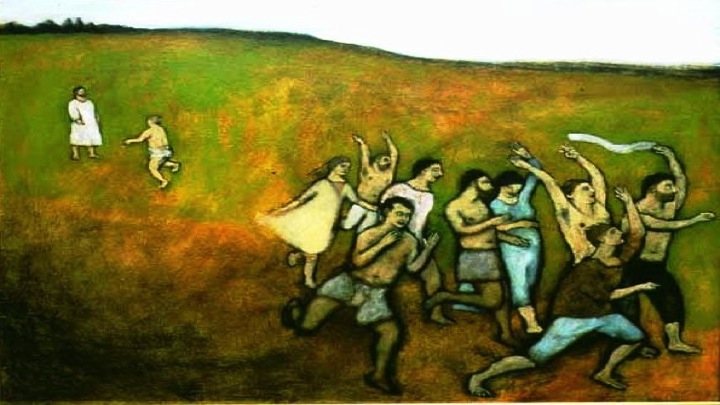
The Jeremiah reading fits perfectly with the day we celebrate youth and share about our annual trip to Montreat. What a powerful passage this is–the call of Jeremiah, coming just a few years before Jerusalem is destroyed, and Israel is captured and exiled to Babylon, about 600 years before the birth of Christ. The call is more like the call of Moses than the call of Isaiah, who has an elaborate vision.

Aug. 21, 2016 images for blog.041
The call of Isaiah

Moses, who has a speech problem, hears God’s voice plainly, but like Jeremiah feels unworthy and unable to do what God wants him to do.

Aug. 21, 2016 images for blog.042
The call of Moses

Jeremiah protests, “I’m just a boy! I don’t know how to speak!” But the Lord doesn’t say, “Oh, yeah, you’re right. You’re just a boy. What was I thinking?”

God says, “You’re the one I want. No one knows you better than I! I have known you since before I formed you in your mother’s womb! I’ve been planning this all along; you are consecrated–set aside as holy–to be my prophet to the nations!!”

Aug. 21, 2016 images for blog.044
The call of Jeremiah

The call of Jeremiah brings to mind the call of Abraham, as well, for the Lord doesn’t specify Abraham’s final destination. He says, “Go, to a place I will show you!” The Lord assures Abraham that He will be with him wherever he goes; he needn’t be afraid!

Aug. 21, 2016 images for blog.043


The Lord, in a similar way, assures Jeremiah, “You shall go to all to whom I send you, and you shall speak whatever I command you. Do not be afraid of them, for I am with you to deliver you.” God’s mighty word will lead to the “plucking up, pulling down,” and destruction of nations. But the promise is there for God’s people, though they will suffer greatly in their captivity and exile of about 50 years. Our God of mercy will also “build” and “plant.” In Jeremiah 29:11-13, we are assured of God’s wonderful plans that are still true for us today! “For surely I know the plans I have for you, says the Lord, plans for your welfare and not for harm, to give you a future with hope. Then when you call upon me and come and pray to me, I will hear you. When you search for me, you will find me; if you seek me with all your heart.”

***

Someone asked me what I liked best about Montreat. “That’s easy,” I said. “Getting to know the people from my own church!!” We had lots of uninterrupted time together, in between scheduled conference activities. We stayed in a 100-year-old house without a/c, TV, radio, or Internet.


It was a simple life, except you had to go outside and down a flight of stairs to go from the bedrooms to the kitchen, dining and family room

Aug. 21, 2016 images for blog.049
Mike in our downstairs dining room

where we ate meals, played Uno, and snacked endlessly.


The bathrooms were interesting. Glad we didn’t have to use the heat; it was ancient!


Also for entertainment, Jacob and Mike played a rope game on the back porch.

Aug. 21, 2016 images for blog.056

And an orange kitty came to visit one afternoon.

This slideshow requires JavaScript.


I was sad when I had to leave a day early. I needed to get back to prepare for Sunday worship and a funeral Sunday afternoon. I was sad to leave Montreat, at all. For at Montreat, our group was united and renewed in faith; we had our callings as children of God, loved by God, used by God for God’s glory, confirmed! We grew to know and love more the Lord and one another. I missed the last night when Jacob and all the other high school seniors gathered around Lake Susan. They lit candles.

Aug. 21, 2016 images for blog.062


Then the adults and other youth laid hands on them and prayed for God’s blessing.

Aug. 21, 2016 images for blog.063


That Friday night, I was with them in spirit. And I continue to pray for Jacob and the youth I met at Montreat, the youth of our congregation, and the youth of our community we haven’t yet met. My prayer is that they will seek the Lord and hear God’s voice as clearly as Jeremiah heard God calling to him when he was “just a boy.”

I pray the Lord will continue to lead us and all our young people to make a WORLD of difference, as we sang in our theme song at Montreat.

Aug. 21, 2016 images for blog.064
Click below to hear “A World of Difference”

Aug. 21, 2016 images for blog.065Aug. 21, 2016 images for blog.066Aug. 21, 2016 images for blog.067Aug. 21, 2016 images for blog.068Aug. 21, 2016 images for blog.069Aug. 21, 2016 images for blog.070Aug. 21, 2016 images for blog.071Aug. 21, 2016 images for blog.072Aug. 21, 2016 images for blog.073


Will you pray with me?


Holy God of mercy, thank you for claiming us, calling and equipping us to love and serve you with our lives! Refresh and renew us by your Spirit, filling us with the gifts we need to do your will. Awaken in the hearts of every believer a better understanding of your plan and purpose for them, a plan that you have had for us since you formed us in our mother’s womb. Restore unto all of us the joy and peace of our salvation. Lead us to boldly and creatively reach out to the children and youth in our community with your love. In Christ we pray. Amen.

“Running the Race”

Aug. 14, 2016 slides  09.016Aug. 14, 2016 slides  09.017

29 “By faith the people passed through the Red Sea as if it were dry land, but when the Egyptians attempted to do so they were drowned.

Aug. 14, 2016 slides  09.018

    30By faith the walls of Jericho fell after they had been encircled for seven days.31


Aug. 14, 2016 slides  09.019


By faith Rahab the prostitute did not perish with those who were disobedient,* because she had received the spies in peace.

Aug. 14, 2016 slides  09.020

Aug. 14, 2016 slides  09.021

32 And what more should I say? For time would fail me to tell of Gideon, Barak, Samson,

Aug. 14, 2016 slides  09.022


Jephthah, of David

Aug. 14, 2016 slides  09.023


and Samuel

Aug. 14, 2016 slides  09.024

and the prophets—33who through faith conquered kingdoms, administered justice, obtained promises, shut the mouths of lions,

Aug. 14, 2016 slides  09.025

34quenched raging fire,

Aug. 14, 2016 slides  09.026

escaped the edge of the sword, won strength out of weakness, became mighty in war, put foreign armies to flight. 35Women received their dead by resurrection.

Aug. 14, 2016 slides  09.027

Others were tortured, refusing to accept release, in order to obtain a better resurrection. 36Others suffered mocking and flogging, and even chains and imprisonment. 

Aug. 14, 2016 slides  09.028

37They were stoned to death, 

Aug. 14, 2016 slides  09.029


they were sawn in two,* they were killed by the sword; they went about in skins of sheep and goats, destitute, persecuted, tormented— 

Aug. 14, 2016 slides  09.030

38of whom the world was not worthy. They wandered in deserts and mountains,

Aug. 14, 2016 slides  09.031


and in caves and holes in the ground.

Aug. 14, 2016 slides  09.032


39 Yet all these, though they were commended for their faith, did not receive what was promised, 40since God had provided something better so that they would not, without us, be made perfect.

Aug. 14, 2016 slides  09.033


12Therefore, since we are surrounded by so great a cloud of witnesses, let us also lay aside every weight and the sin that clings so closely, and let us run with perseverance the race that is set before us, 

Aug. 14, 2016 slides  09.034

Aug. 14, 2016 slides  09.035

2looking to Jesus the pioneer and perfecter of our faith, who for the sake of* the joy that was set before him endured the cross, disregarding its shame,

Aug. 14, 2016 slides  09.036


and has taken his seat at the right hand of the throne of God.

Aug. 14, 2016 slides  09.038

3 Consider him who endured such hostility against himself from sinners so that you may not grow weary or lose heart.”

***

I am happy to be back with you today! The recovery from my surgery 2 weeks ago has been challenging. Your kindness has helped me so much!

Aug. 14, 2016 slides  09.040


Thank you for your prayers, cards and pictures,

Aug. 14, 2016 slides  09.041

for the books you shared with me,

Aug. 14, 2016 slides  09.042


for your meals, flowers and other gifts,

Aug. 14, 2016 slides  09.043


for your many expressions of love! This is one of the shawls from Heavenly Handmade.

Aug. 14, 2016 slides  09.044

They say that laughter is the best medicine. I was blessed with some laughter during that first week, when I really needed it! I received funny notes from folks in our congregation. One member wrote to tell me, among other things, that he had “three surgeries of consequence and the happy news is that two of them turned out well…. We are glad you are safely home and under a mosquito net.”

Aug. 14, 2016 slides  09.045


I have had help from a few non-humans, too!

Aug. 14, 2016 slides  09.046


Nurse Melvyn demonstrated a “wholistic” approach to my healthcare. He walked up and down my whole body when I came home from the hospital and was resting in bed. He clowned around to make me laugh–rolling from side to side and lying on his back, paws sticking up in the air.

Aug. 14, 2016 slides  09.047

He demonstrated healthy recovery habits, including many hours of sleeping.

Aug. 14, 2016 slides  09.048


What’s been hard is not just the pain, but the limitations on my usual activities, including my ministry activities. I missed the joy of leading worship with you these past 2 Sundays and being with my church family. I was sad not to able to be there to help our staff last week and to welcome Cheryl Carson on her first day. I didn’t like not being able to visit members who were sick.

I did experience blessing, though, through all this. I enjoyed precious time with my family. I discovered our couch is really comfy! I hadn’t noticed before–probably because I haven’t spent much time on it–or relaxing at home. Jim and I watched “My Fair Lady,” “The Sound of Music,”

Aug. 14, 2016 slides  09.049


and the Olympics,

Aug. 14, 2016 slides  09.050


with modern day heroes who inspire us to try harder, to keep on going, and always do our best. My favorite part of the Olympics was watching the USA women’s gymnastics team. Tears sprang to my eyes when Simone and Aly won gold and silver.

Aug. 14, 2016 slides  09.051

I had heard of their very human struggles–had watched some of them play out during the games. Their moment of victory follows many years of preparation, practice, pain and sacrifice. Both have had no time for “a social life” growing up. No football games or proms. Simone, 19, adopted by her grandparents, was homeschooled and began gymnastics when she was 6 after a daycare field trip to a gym inspired her. Here’s some of what Simone can do now.


It’s hard to believe that in 2013, she did so poorly that she feared her gymnastics career was over. Now, people are calling her one of the best gymnasts ever!

This is beautiful Aly, 22, who has been doing gymnastics since she was a toddler.

Aug. 14, 2016 slides  09.056


I almost couldn’t bear to watch her struggle through one of the events at Rio–earning her coach’s scolding while the cameras rolled. She looked shaken, but she didn’t give up. She went on to perform her best floor exercise routine to date, with the audience cheering her on, sharing their joy in her triumph. She waited anxiously for her score. Then the tears came.

She had won!

She had never been alone, though she may have felt that way when she was struggling–just as we sometimes do. Along with millions of witnesses around the globe, she and Aly have had the support of their coaches, teammates, friends and families, without which, they never would have made it to the Olympics!

Aug. 14, 2016 slides  09.063Aug. 14, 2016 slides  09.064Aug. 14, 2016 slides  09.065

Aug. 14, 2016 slides  09.066


***

I thought of the Olympics when I read our passage in Hebrews this week. The first Olympics were held in 776 BC in honor of the god Zeus and were staged on the ancient plains of Olympia, a sanctuary of ancient Greece on the Peloponnese peninsula.

Aug. 14, 2016 slides  09.067

Aug. 14, 2016 slides  09.068


The games continued every 4 years until Emperor Theodosius decreed in 393 A.D. that all such “pagan cults” be banned and were not revived until the 19th century. The author of Hebrews is thinking about an Olympic event when he continues his teaching on faith to a 1st century Jewish/Christian Greek-speaking audience. He elaborates on how faith isn’t just believing in what we cannot see and hoping for the best, but enduring trials with courage, believing in the joy of the Lord that will come. With the “great cloud of witnesses” passage, he compares our lives of faith and our struggles with sin as a faith community to running a long distance relay race. He is referring to the “stadion,” a sprint event of about 180 meters that was the first and only event for the Olympics from 776 BC to 728 BC.

Aug. 14, 2016 slides  09.069

The stadion was named for the building in which it took place. The word became stadium in Latin later became incorporated into English.

In Hebrews 12, the runners are watched by multitudes from generations past that have already handed the baton of faith and are waiting as invisible spectators to encourage those who run last. The word translated “race” or “contest”–agon–implies struggle, and is the origin of the English word, “agonize.”

The author of Hebrews writes for those who know Hebrew Scripture well. He jogs their memory of Bible heroes such as Gideon, Samson and David without saying anything but their names and the rhetorical device, “What more am I to say?” He doesn’t need to go into detail when he mentions the Red Sea; of course he is talking about Moses and the freeing of the Israelite captives. When he speaks of the drowning of the Egyptians, they know he means Pharaoh’s soldiers who pursue the Israelites and attempts to kill the former slaves. They know of Joshua and the battle of Jericho. The list of heroes includes men and women–none of which are perfect in their obedience to the Lord (recall the sins, for example, of David). The list includes Rahab, whose occupation (prostitute) is emphasized, perhaps to encourage us all that God can and will use every believer for God’s purposes. Rahab welcomes Joshua and his men, embraces the God of the Israelites before they capture her city, hides the spies and lies to save them from her own king’s men.

While more can be said of the heroes on or missing from the list in chapter 11, the beginning of chapter 12 intrigues me more. First, the allusion to lay aside every weight brings to mind the ancient practice of removing one’s clothing before running a race, such as the Olympics, which was only open to men in ancient times.

Aug. 14, 2016 slides  09.070


Competing without clothing required a certain confidence in oneself and willingness to be more vulnerable. Does that speak to our need to be more confident as we follow Christ and allow ourselves to be vulnerable to one another as we run this race?

Second, this race is not of our choosing; it’s God ordained– set before us–every one of us– and it has been run by others, including our Savior, the first to complete it. He is not only the greatest example of faith, he is the pioneer, the source of our faith, which he has perfected for us through his work on the cross.

Aug. 14, 2016 slides  09.071


Third, what is the joy that lay before Jesus that allowed him to endure? It is the joy of knowing he is obedient to God and will be with His Father in Heaven, seated at the right hand of the throne of God, as we read in 12:2. It is the joy of knowing that His suffering is the cost of God’s redemption of a world God so loves. And it’s the same Spirit of joy that Christ gives his disciples on Pentecost, a joy that only comes from the Lord that will be our strength, as the prophet tells us in Nehemiah 8:10.

And finally, what is the “sin” that “readily clings” to this 1st century Christian community, a marginalized minority suffering persecution that isn’t to the point of bloodshed, but is shameful and humiliating, all the same? We often think of sin as malicious or selfish deeds against God and neighbor. But that isn’t the “sin” Hebrews is talking about. This is anything that hinders their courageous, enduring faith and their continuing on in the example of Jesus, who, as Paul tells us in Philippians 2:7 was God who emptied himself of divinity to become human– slave of all. This sin is despair or discouragement–giving up hope.

The word this early Christian community needed to hear–and the word our own faith community needs today is spoken in 12:3: Don’t grow weary. Don’t lose heart. Don’t lose sight of your goal–following Christ. You aren’t alone! We have each other–the Church in every time and place! The great cloud of witnesses!

Aug. 14, 2016 slides  09.072

And we have Jesus, the source and perfecter of our faith. In times of suffering and times of trial, remember that it is He who longs to give you His joy that will be your strength for every day!

Aug. 14, 2016 slides  09.073

Let us pray.

Holy One, we thank you for your Word that inspires us to keep running the race to enduring, courageous faith, a race that you have set before us. We open our hearts and minds now to receive and embrace your joy that is and always will be our strength. Thank you that we are not alone in this race and our trials–that Jesus our Savior has run the race to completion, has suffered died and risen again for our sakes, and is with us now, though we may struggle, stumble and fall. Forgive us for our sins. Help us, Lord, to persevere and not grow weary. Never lose heart! Help us to keep our eyes focused on our goal–following Jesus Christ. In his name we pray. Amen.


“Welcome to the Neighborhood”

Meditation on Luke 10: 10:25–37

July 10, 2016

Merritt Island Presbyterian Church


Slide16

 Just then a lawyer stood up to test Jesus. “Teacher,” he said, “what must I do to inherit eternal life?”

Slide17

He said to him, “What is written in the law? What do you read there?”

Slide18Slide19

    He answered, “You shall love the Lord your God with all your heart, and with all your soul, and with all your strength, and with all your mind; and your neighbor as yourself.” And he said to him, “You have given the right answer; do this, and you will live.”

      But wanting to justify himself, he asked Jesus, “And who is my neighbor?”

       Jesus replied, “A man was going down from Jerusalem to Jericho, and fell into the hands of robbers, who stripped him, beat him, and went away, leaving him half dead.

Slide23Slide24Slide25

Slide26

Now by chance a priest was going down that road; and when he saw him, he passed by on the other side.


Slide27

So likewise a Levite when he came to the place and saw him, passed by on the other side.

Slide28


But a Samaritan while traveling came near him; and when he saw him, he was moved with pity.

Slide29

He went to him and bandaged his wounds, having poured oil and wine on them.


Slide30


Then he put him on his own animal, brought him to an inn, and took care of him.


Slide31


The next day he took out two denarii, gave them to the innkeeper, and said, ‘Take care of him; and when I come back, I will repay you whatever more you spend.’


Slide32


   Which of these three, do you think, was a neighbor to the man who fell into the hands of the robbers?”

    He said, “The one who showed him kindness.”

     Jesus said to him, “Do this and you shall live.”


***

We sat around tables in the fellowship hall, like we usually did, after worship on Sunday about, oh, 15 months ago. I was serving a church in rural Minnesota. A man, who was not usually unkind, started telling jokes about Native Americans. Some of his audience, lingering over black coffee and cookie bars, wore guilty smiles. Some let out loud guffaws, while sending me sideways glances. They knew how I felt. They were not pleased with the mission trip I was planning with another church to Spirit Lake Tribal Nation last August.

Slide38Slide39

We were planning to teach an Outback-themed VBS at a community center and serve one full meal and snacks each day. Native Americans living on Reservations have some of the worst levels of poverty and unemployment in America;

Slide40


they report the highest rates of substance abuse and dependence of any ethnic group; 46% of Native American women have been victims of abuse.

Slide41


Children often live in single parent households or the parents are absent altogether–having left the Reservation; many grandparents are raising grandchildren.

Local churches on the Reservation, in nearby Devil’s Lake, ND, and in other parts of the country are responding to this mission field, reaching out with love and kindness, supplying food, clothing, toys and school supplies, friendship and faith–revealing the God of mercy who sent His Son to redeem and heal a broken world.

Slide42

We learned of these ministry opportunities at Spirit Lake Indian Reservation through the PC(USA) Website and Joe Obermeyer, a youth pastor from Bdecan Presbyterian Church, one of the churches on the Reservation.

Slide43Slide44Slide45

Few families on the Reservation of about 6,600 people attend church, but parents will drop their kids off for VBS. They see it as a safe place, free food for their kids, and “free daycare.” I had never led a mission trip or VBS before going to Spirit Lake. But when we learned of the children in need, the 20 or so people on our mission team who traveled to the Reservation were moved to compassion! We had to DO something to bring hope and joy and the peace of Christ.

Slide46

We were determined to go, despite the disapproval of some who didn’t believe that VBS on an Indian Reservation would make a difference. It was a waste of time and money that could spent in their own community.

Slide47

When we arrived at the Tokio community center where we would host VBS, members of Devil’s Lake Presbyterian church showed up with a picnic meal after our 6 to 8 hour drive. But I looked around at the un-air-conditioned building, the flies, the dirt, and the mugshots of local sex offenders barred from the premises, and I had my misgivings.

I thought, “Welcome to the neighborhood.”

Slide48


***

The Good Samaritan story is perhaps one of the most familiar passages of the New Testament. It has become a cliché. Everybody knows that a Good Samaritan is someone who comes to the aid of a stranger. Sermons often focus on the stranger who helps the Jewish man, who was beaten, robbed, and left for dead by the side of the road.


Slide50


The one who helps is of a faith, culture and ethnic group that happens to be an enemy of the Jewish people in Jesus’ time. Obviously, this point is important to Luke because the word for Samaritan is placed at the beginning of the Greek sentence for emphasis. The noun (subject) usually follows the verb and can even be at the end of the sentence or omitted altogether. Jews and Samaritans begin their mutual contempt in the 8th century BCE when the Assyrian conquest of Israel leads to the forced migration of foreign peoples into Samaria, the ancient capital, now on Israel’s West Bank.

Slide51Slide52


We see evidence of the adversarial relationship in the chapter that precedes this passage. In Luke 9, a Samaritan town refuses to receive Jesus on his way to Jerusalem; James and John want to call down fire from heaven on them, but Jesus rebukes them. (9:51-56). Some preachers focus on the self-absorbed, uncaring so-called religious people who pass by the suffering man and do nothing.


Slide53Slide54


What intrigues me is why Jesus is saying all this–and what it means for us! He is speaking not with his disciples, but a hostile man called a “lawyer” in the NRSV, but he is really a scribe– an expert in the interpretation of Mosaic law. He knows the Torah! We know he’s hostile because in verse 25 he stands up “to test” Jesus, asking a question that puzzles me.


Slide55


Friends, what do we have to do to “inherit” anything? Nothing! It’s a gift from a relative after they die. It’s a trick question, an open challenge to the authority and insight of this Galilean without any credentials as a “Teacher” of the law, which is exactly what the man calls Jesus, probably without sincerity! Jesus answers with a question. “What is written in the law (the Torah)? What do you read there?” Or as some translators say, “How do you read it?” The scribe answers with 2 verses from the Torah, connected and slightly changed. He adds dianoia — “mind” to Deut. 6:5, the command to love God with all heart, soul and might. And then he leaves out part of Leviticus 19:18, which is, in full, 18 “You shall not take vengeance or bear a grudge against the sons of your own people, but you shall love your neighbor as yourself: I am the Lord.” Yes, that specific verse does refer to loving your own kin and community–which is the scribe’s point, when he asks Jesus, trying to “justify” himself by only caring about his own people, “And who is my neighbor?”

Jesus answers by telling a story of a man moved by compassion to give of himself, his time, and his possessions for a man who isn’t his kin or from his community, a man that the scribe would think of as his enemy. Then Jesus asks, “Which of these three, do you think, was a neighbor to the man who fell into the hands of the robbers?”

The scribe answers, “The one who showed kindness.” “Do this,” Jesus commands, “and you shall live.”

What is the whole point of this exchange between Jesus and the know- it-all-scribe? Jesus wants to teach the hostile man that to love God and neighbor and to walk in the path of eternal life means being kind and compassionate to all. Jesus is also teaching us –and all the generations who hear God’s Word and take it to heart–to be kind and show compassion to all people. And just as importantly, Jesus is urging us to model and teach kindness and compassion to those who are hostile to the radical inclusivity of the gospel. The love and grace of God aren’t just for white people, Americans, Christians, English speakers, heterosexuals and people of a certain political party. John 3:16 assures us that God’s gift of eternal life through His Son is for ALL the world that God so loves!

Slide61

The question is never, “Who is my neighbor?” For everyone is our neighbor, especially someone who needs our help, someone whom God places in our path. The question is always, “How can I be a neighbor and show love and compassion, like Christ has shown for me?”


***

The first day of our VBS at Spirit Lake was pretty much a disaster–or at least it felt that way. The children were wild, unruly and uncooperative. They wouldn’t sit still. They wouldn’t sing. They were used to running around and playing with balls in the space that we had turned into centers for music, games, crafts and Bible. The only thing they seemed to be interested in was eating. They were hungry! We never had leftovers, not even salad! The kids ate everything on their plates or they took their plates and drinks home with them, carrying them around till it was time to go.

But on the second day, things changed. Maybe we had changed in our expectations. Maybe the Lord was just testing our faith. All the children came back. And more came! We served more than 50 children over 4 days, ending the program with a family program and ice cream social. The children came in like little lambs, put on their nametags without a fuss, and waited in line, without pushing and shoving.

We met the children at the door, surprising them by greeting them by name, with affection, despite their unruliness the day before. They responded to the simple kindness and generosity of strangers, who talked funny, had different colored hair and really white skin–or at least, some of us did. They hugged, laughed and sang with us, eagerly memorized their Bible verse with the motions and volunteered to recite it. They held our hands and climbed into our laps and onto the shoulders of their crew leaders. Yes, praise God, it was, “Welcome to the neighborhood.”


Slide90

Let us pray.


Holy One, we praise you for the work you are doing in our hearts and lives! Thank you for Jesus and for your Spirit that convicts us of our sin of prejudice. Forgive us for being unkind to even our own kin and community and our lack of compassion for people of different faiths and cultures that may frighten or bewilder us. Forgive us for holding onto our money and possessions, rather than using all that we are and all that we have to build up your Kingdom and your Church. Help us to love you with all heart, soul, mind and might. Lead us to love our neighbors as ourselves and to change the world with our words and deeds– so that the oppressed go free, and children are nurtured in your ways –and never go hungry for food or love. Let justice flow down like a river, righteousness like a never-failing stream! In Christ we pray. Amen.


Slide91


“Go, Wash in the Jordan”

Slide17


Meditation on 2 Kings 5:1-14

July 3, 2016

Merritt Island Presbyterian Church


Slide18


Naaman, commander of the army of the king of Aram, was a great man and in high favor with his master, because by him the Lord had given victory to Aram. The man, though a mighty warrior, was a leper.


Slide19


Now the Arameans on one of their raids had taken a young girl captive from the land of Israel, and she served Naaman’s wife. She said to her mistress, ‘If only my lord were with the prophet who is in Samaria! He would cure him of his leprosy.’

So Naaman went in and told his lord just what the girl from the land of Israel had said. And the king of Aram said, ‘Go then, and I will send along a letter to the king of Israel.’ He went, taking with him ten talents of silver, six thousand shekels of gold, and ten sets of garments. He brought the letter to the king of Israel, which read, ‘When this letter reaches you, know that I have sent to you my servant Naaman, that you may cure him of his leprosy.’ When the king of Israel read the letter, he tore his clothes and said, ‘Am I God, to give death or life, that this man sends word to me to cure a man of his leprosy? Just look and see how he is trying to pick a quarrel with me.’ But when Elisha the man of God heard that the king of Israel had torn his clothes, he sent a message to the king, ‘Why have you torn your clothes? Let him come to me, that he may learn that there is a prophet in Israel.’

So Naaman came with his horses and chariots, and halted at the entrance of Elisha’s house.


Slide26


Elisha sent a messenger to him, saying, ‘Go, wash in the Jordan seven times, and your flesh shall be restored and you shall be clean.’


Slide28


     But Naaman became angry and went away, saying, ‘I thought that for me he would surely come out, and stand and call on the name of the Lord his God, and would wave his hand over the spot, and cure the leprosy! Are not Abana and Pharpar, the rivers of Damascus, better than all the waters of Israel? Could I not wash in them, and be clean?’


Slide31


He turned and went away in a rage. But his servants approached and said to him, ‘Father, if the prophet had commanded you to do something difficult, would you not have done it? How much more, when all he said to you was, “Wash, and be clean”?’ So he went down and immersed (dipped) himself seven times in the Jordan, according to the word of the man of God; his flesh was restored like the flesh of a young boy, and he was clean.


Slide34Slide36


Jim and I watched one of my favorite movies this week– “The Princess Bride.” The 1987 classic begins with an elderly man reading the fairy tale, “The Princess Bride,” to his young grandson, home sick from school. At first, the boy can’t tear himself away from his video game to listen to the tale, but he becomes more interested after his grandpa promises “sports” in the story– “fencing, fighting, torture, murder, pirates, revenge, true love and miracles.”

Slide38Slide39

Once upon a time, a beautiful maiden, Buttercup, and Wesley, a poor farm boy, fall in love. He leaves the village to find his fortune, planning to return and marry her.

Slide40


But the Dread Pirate Roberts attacks Wesley’s ship, Buttercup learns, leaving no survivors. She grieves and vows to never love again. Then, evil Prince Humperdink, chooses Buttercup to be his wife.


Slide41


But he hires 3 men –Inigo, Vizzini, and Fezzik–to start a war by kidnapping and killing her and blaming another kingdom for her death.

Slide42


Wesley, who masquerades as the Dread Pirate Roberts, returns just in time to save Buttercup.


Slide43Slide44

But the Prince captures him and sends him to be tortured in the Pit of Despair. Inigo and Fezzik go looking for Wesley to help them avenge Inigo’s father, who was killed 20 years before by a 6-fingered man.  They find Wesley, but he’s already dead. Not giving up, they take him to Miracle Max, and give him all the money they have (which isn’t much) to restore him to life.

Slide45

Max agrees when he learns that it will mean humiliation for Humperdink, who fired Max.

Slide46


Max and his wife, Valerie (Carol Kane), make a magic pill for Inigo and Fezzik to give to Wesley. “The chocolate coating makes it down easier,” Valerie says. “But you have to wait 15 minutes for full potency…And you shouldn’t go in swimming after at least…” “An hour,” Max finishes.


Slide47

“Have fun storming the castle!” they say, waving to Inigo, Fezzik and the still unconscious Wesley. Valerie asks Max, “Do you think it’ll work?” Max says, “It’ll take a miracle.”


Slide48

But everything works out perfectly, because it’s a fairy tale. After some adventures and misadventures, Buttercup is saved from the evil prince. The miracle pill restores Wesley’s health. Inigo’s father is avenged. Buttercup and Wesley and their friends ride off into the sunset–to live happily ever after.

***

A miracle is what the great Aramean warrior, Naaman, needs in our reading in 2 Kings today. What is startling, right away, is learning that the one who desires healing and seeks it in Israel’s God is Israel’s archenemy. Naaman, which means “fair” or “gracious,” is the commander of the army of Aram, also called Syria.

Slide50

Aram was one of Noah’s grandsons and one of Shem’s sons (Gen. 10-11).

Slide51

The two kingdoms that are almost continually in conflict are experiencing a rare peace when the “young girl” captured in a raid from “the land of Israel” and made to serve Naaman’s wife wants to help the one responsible for her capture and enslavement! She is the one who has faith in the God of Israel and God’s prophet Elisha–not the king of Israel. We don’t know exactly when this miracle took place, since neither the king of Aram (Syria) or Israel is identified.

Naaman is called “a leper,” but we aren’t sure what his skin disease actually was–or its severity. He doesn’t appear to be suffering from the “leprosy” that is known today as Hansen’s disease, which causes pain, widespread infection of the joints, eventual loss of limbs and gross disfigurement. He is not forced to live in quarantine. He isn’t ritually unclean or subject to the regulations of Lev. 13. Naaman learns of Elisha in Samaria indirectly from his wife, who listens to her young servant. Naaman, without hesitation, it seems, approaches his king with this information and the king of Aram, writes a letter for Naaman to take to the king of Israel. Strangely, the king of Aram fails to mention the prophet in the letter, and the king of Israel doesn’t turn to Elisha for help. The king of Israel immediately jumps to the wrong conclusion, believing that the Syrian king is looking for an excuse to go to war.

Let’s consider the gift Naaman brings. One talent is about 32 kilograms; a shekel weighs about 30 milligrams. Naaman’s total gift would amount to about 340 kilograms of silver (about 749 pounds) and 90 kilograms (198 pounds) of gold. This is an enormous amount!! He would need an army of horses and chariots to carry this gift! This speaks of Naaman’s great wealth, his determination not to be ignored, his great desire to be healed, and his willingness to pay a steep price for it.

Naaman’s request and the king’s fearful response somehow reach Elisha, who is probably still in Gilgal (where he was in ch. 4) with his students. Elisha sends a messenger to the king, saying, “Let him come to me that he may learn that there is a prophet in Israel.” Naaman, with his parade of horses and chariots and silver and gold, goes to Elisha’s house, but Elisha isn’t there!


Slide26


There’s only a messenger, who says, “Go wash in the Jordan 7 times!” This is not the reception or cure that the mighty warrior expected, desired, or felt he deserved.

Slide56

He wants a miracle like Miracle Max –a chocolate-coated, magic pill–so that he can have life, just as he imagines it to be without his disease. “Washing” in the Jordan is an insult to Naaman, who is quick to defend the rivers of his homeland. But this healing isn’t just about Naaman being cured of disease–it is about his being brought to the faith–his conversion to belief in the gracious, merciful God of Israel. Elisha sends him to the Jordan because of its significance for Israel– who crossed it to enter God’s Promised Land.


Slide57

Elijah and Elisha crossed the Jordan together before the Lord took Elijah up to heaven in a whirlwind.


Slide58


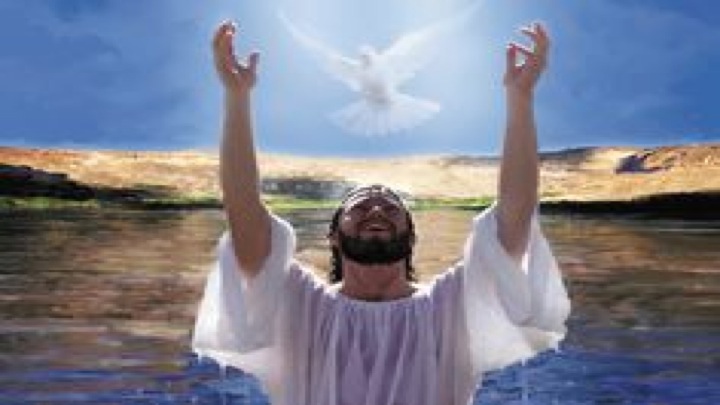
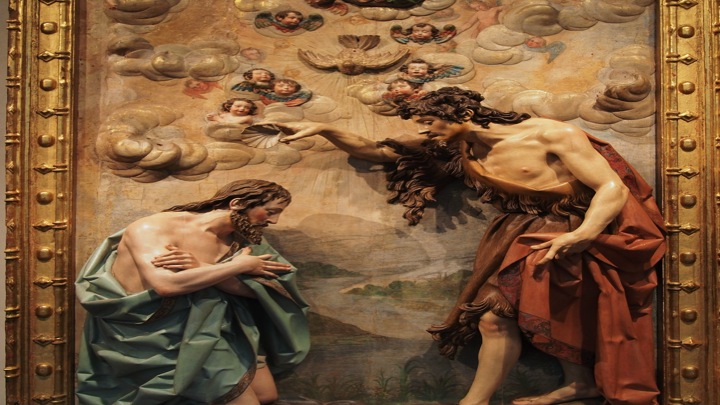
In the New Testament, John will call sinners to repentance in the Jordan. Jesus will be baptized there to show us the way.


Slide59


Just like at the beginning of today’s passage in 2 Kings, we find, at the end, that those with great faith and wisdom are those with the lowest status! When the mighty warrior turns away from Elisha’s messenger in a rage, his servants muster the courage to approach and ask, ‘Father, if the prophet had commanded you to do something difficult, would you not have done it? How much more, when all he said to you was, “Wash, and be clean”?’  The miracle is that Naamann listens–and his heart is moved to obey. He immerses or “dips” himself in the Jordan 7 times–and his healing is complete. The verb translated “immerse” or “dip” is unusual in the Old Testament, often referring to objects dipped in blood. Even when it refers to objects dipped in water (such as 2 Kings 8:15) or in other liquids (Deut. 33:24 and 1 Sam. 14:27), it is not a synonym for “washing.” His flesh is “restored like the flesh of a young boy”– language that brings us back to the young, innocent child at the beginning of his story, caught between the two warring kingdoms–the Israeli slave who stirred Naaman to search for his cleansing of body and soul, though he didn’t know it at the time. What Naaman needed more than anything was to be made whole.

Friends, we may be tempted to approach God like he’s Miracle Max in a fairy tale, wanting the magic, chocolate-coated pill that goes down easy and sweet–so everything can be how we want it to be–perhaps as things used to be, when we were younger. And we can be prideful and stubborn like Naaman–and stop listening to God’s word because it isn’t what we want to hear. We may end up making things more difficult for ourselves than they have to be. We may even miss out on the healing work God has planned for us and the opportunity to witness to God’s amazing power–and our own obedience to him.

After Naaman is healed, he returns to “the man of God,” in verse 15, and stands before him with all his horses and chariots and men. And Naaman says, “Now I know…” “Now I know that there is no God in all the earth, save for Israel.” Naaman’s extravagant gifts are not needed. The Lord’s gift of wholeness–body and soul–is not something that can be bought or earned. But God’s mercy and grace should stir a heart-felt response in us, as Naaman’s healing does for him. The mighty warrior and former enemy of Israel vows to build an altar in his homeland of Aram so that he can worship and serve the One True God. Think of the witness that this man of great reputation will have in enemy territory! Think of all the conversions and healings that will come!

The words of the prophet stir us today to recall our baptisms, when we first tasted the Spirit-filled life and began to listen for God’s voice.

Slide63


Let us heed God’s call to love and serve with fresh commitment, not expecting a fairy tale life and “happily ever after” but simply to live in grateful obedience to the Lord. “Go, wash in the Jordan! Wash and be made whole!”

Slide62


Let us pray.


Holy One, thank you for your Spirit that continues to fill us, guide us, and wash us clean from all our sins! Thank you for our baptisms and for the way you continually respond to our cries for healing–and your desire to make us whole. Father, we are in need of your healing now for our bodies and souls! Forgive us for our stubbornness and pride wanting you to work in us and our lives the way we want you to do. Humble us and make us grateful for the miracles we experience and witness every day. Stir us to respond with loving service to you and your people, like the lowly servants in your Word. In Christ we pray. Amen.


“I Have Redeemed You”

Meditation on Isaiah 43 (Selected verses)

Witness to the Resurrection/Celebration of Life

 In Memory of Barbara Montesion

June 28, 2016

barbara_montesion

August 16, 1927 – April 18, 2016


But now thus says the Lord,
he who created you, O Jacob,
he who formed you, O Israel:
Do not fear, for I have redeemed you;
I have called you by name, you are mine.
When you pass through the waters, I will be with you;
and through the rivers, they shall not overwhelm you;
when you walk through fire you shall not be burned,
and the flame shall not consume you.
For I am the Lord your God,
the Holy One of Israel, your Savior.
I give Egypt as your ransom,
Ethiopia and Seba in exchange for you.
Do not fear, for I am with you;
I will bring your offspring from the east,
and from the west I will gather you;
I will say to the north, ‘Give them up’,
and to the south, ‘Do not withhold;
bring my sons from far away
and my daughters from the end of the earth—
everyone who is called by my name,
whom I created for my glory,
whom I formed and made.’…
I am the Lord, your Holy One,
the Creator of Israel, your King.
Do not remember the former things,
or consider the things of old.
I am about to do a new thing;
now it springs forth, do you not perceive it?
I will make a way in the wilderness
and rivers in the desert.
I, I am He who blots out your transgressions for my own sake,
and I will not remember your sins.
Thus says the Lord, the King of Israel and his Redeemer, the Lord of hosts:
I am the first and I am the last; Besides me, there is no god.

Do not fear. Or be afraid.

***

It was one day last April. I had just sliced and wrapped bread and poured juice for my home communion kit, when Barbara’s caregiver and friend, Deborah, called the church office asking for the pastor. I listened as she shared about her friend’s recent cancer diagnosis and grim prognosis, delivered by a healthcare professional in a matter-of-fact voice. I heard of Barbara’s pain, anxiety and fear, and my heart went out to her. Being new here last fall, I hadn’t met Barbara, yet, or heard her story. Because of her health, some years had passed since she had been able to come to church. She had been active in the congregation for a number of years; her portrait with her husband, Frank, appears in two of our church directories. She had friends here and happy memories. “Barbara Williams Bishop” joined the church on Dec. 15, 1991. She married Frank Montesion here on Feb. 15, 1994.

Deborah asked if I could come to Barb’s home in Rockledge that day. Would I come and pray? I came that afternoon, with an elder, Marilyn Smoot. It was a mysterious thing, I remember thinking at the time, a rare thing, really, to have, at the last minute, some space opening up in my visitation schedule. It had never happened before. It was part of a divine plan for Marilyn and me to meet with Barb, members of her family and her friend, and share moments of sweetness, amidst the pain. Barb welcomed us and took my hand. We communed with Christ and one another at Barb’s bedside, a little tray with juice and challah bread balanced on her nightstand. We ate and drank spiritual food, experiencing a glimmer of the great banquet–when God’s people come from east and west and north and south to sit at table in the Kingdom of God. The bread and cup stirred a glimpse of the new creation–when we will all be made new. No more suffering. No more pain. No more tears. No more fear.

Barb, with Deb’s help, shared some of her story– that she was from Mount Vernon, NY. How she attended college in New Jersey and earned a degree in math. She planned to be a teacher, but became an accountant. She smiled as we talked about her ballroom dancing and her beautiful gowns. Her daughter, Pat, told me later that her mom took ballroom dance lessons for the first time when she was 53 just to “keep busy” after her first husband, John Bishop, died. It didn’t take long before she became involved in competitive ballroom dancing. In more recent years, she taught water aerobics and enjoyed walking.

At Barb’s bedside, Deborah mentioned that Barb loved to travel. I assumed she went on some cruises, took a few trips. I underestimated her spirit of adventure! She and John traveled around the country extensively, beginning with a cross-country rail trip in 1968. They boarded a train in Chicago and went to Albuquerque, Los Angeles, San Francisco, Seattle, Victoria British Columbia, Banff and Minneapolis. They traveled to the American West several times and went to Nova Scotia. And, yes, they took some cruises. After her first husband died, Barbara traveled with her daughter, Pat, to Bermuda, Alaska, Germany, Switzerland, British Isles, Greece, Mexico, and Tahiti.  With her second husband, Frank, she went to Northern Ireland, Scandinavia, Hawaii, the Panama Canal, and the Caribbean.  She didn’t give up traveling until the 1980s, when it became too hard for her to get around. She missed it.

As we talked, Barb hugged a large, brown stuffed bear that we brought her, its maroon velvet necktie perfectly matching her maroon bedclothes. The stuffed bear is one of our church’s “blessed bears,” its tag declaring that it was blessed by prayer and scripture as it sat on a pew during worship. It was a reminder for Barb of 1 Cor. 13:7– that love “bears all things, believes all things, hopes all things, endures all things.” We always think of that scripture as talking about human love–or at least what our love should do and be– but the love Paul speaks of is God’s love available to us through the Spirit to all who seek the greatest gift. We wanted to make sure that Barb knew that God would always be with her, helping her to “bear” all things.

She told us that she often thought about the church and wanted to come back and see us. She said she was looking forward to meeting the new pastor. Marilyn and I laughed–and she joined in– after we told her that she had already met the pastor. Guess I wasn’t what she expected! :o)

Barb was hungry for God’s Word. She had regularly attended Bible studies, when she was feeling better, and was a member of a Christian women’s association. When we were together that day in April, I don’t remember the scripture I read, but something stirred me afterward to ask Barb if she believed. I sensed she needed reassurance of God’s forgiveness and the promise of everlasting life with Him.

“Oh, yes,” she said, nodding her head. “Oh, yes!”

She wanted to go home to be with the Lord. But she needed to be assured that she still belonged to Him, that she was a lamb of Christ’s flock. She needed to be reassured that nothing can separate us from God’s love shown in Jesus Christ, as Paul in Romans tells us.

We are always God’s people, and the Lord is always our God.

You are REDEEMED,” says the Lord through Isaiah. “You are MINE.


***


Israel also needed to be reassured of God’s forgiveness and love at the time of the exile. Prophets such as Isaiah were telling the people that the Babylonian destruction of the Temple and the Holy City and their exile was God’s punishment for their unfaithfulness. The people had fallen away from the God of Israel. Even the priests had taken foreign wives and had adopted their pagan ways. They were worshiping idols.

The author of Isaiah 43, living between 550 and 515 BCE, tells the people how unlovable they are just before today’s reading. In 42:18-25, Isaiah calls them blind and deaf to God’s presence. Israel deserves God’s wrath and punishment! And then, in chapter 43, Isaiah says, “But now…” What follows “but now” is all good news– a healing balm for God’s people, feeling broken and unloved. The One who created us for His glory knew, from the foundation of the world, that we would be unfaithful. But God loves us anyway. He chose to forgive us, Isaiah says, for “his own sake”! He wants to be with us, to delight in a loving relationship with us. But we are no different than the ancient Israelites. We have idols. We care about ourselves more than the Lord. We spend too much time thinking how we can be happier, how we can change what we don’t like about ourselves, our lives and other people, rather than seeking God’s face, living in gratitude to the One who gave us life and so many blessings–so that we will be a blessing to others and to Him.

Why do we waste so much time being afraid and anxious? Why do we worry that God can’t possibly love and forgive us, even when God’s Word tells us He does? The problem is that we can’t see ourselves as God sees us–through the redemption of Jesus Christ. We only see the darkness of our sins! “We see through a mirror dimly,” Paul tells us, with only the promise that someday we will see our Savior “face to face.” We can only trust in the Spirit that lives in and among us now, guiding and empowering us to do His will each day. We can only seek the Lord in prayer–and keep on seeking Him. We can only cling to the promises of God in His Word.

It was less than a week after our visit with Barb when her friend, Deborah, called me again. Barb had gone home to be with God, her creator who made her for His glory. Her Savior, Redeemer and Lord.

Listen now to the promises of God’s Word! Listen with your heart. See Christ with your hope and faith, believing without a doubt that someday you will, like Barb, see Him face to face.

Do not fear, for I have redeemed you; I have called you by name, you are mine. When you pass through the waters, I will be with you; and through the rivers, they shall not overwhelm you; when you walk through fire you shall not be burned, and the flame shall not consume you. … Do not fear, for I am with you…I am the Lord, your Holy One, the Creator of Israel, your King. Do not remember the former things, or consider the things of old. I am about to do a new thing; now it springs forth, do you not perceive it? I will make a way in the wilderness and rivers in the desert. I, I am He who blots out your transgressions for my own sake and I will not remember your sins. Thus says the Lord, the King of Israel and his Redeemer, the Lord of hosts: I am the first and I am the last; Besides me, there is no god. Do not fear. Or be afraid.”


Let us pray.


Holy One, thank you for your Word and your promise of forgiveness and everlasting life if we believe in your Son and His work on the cross for our sakes. Forgive us for our doubts, fears and anxieties–and for our sin of idolatry, for loving you less than we love ourselves and seeking happiness and security in the things of this world. Help us to walk in Christ’s loving ways and be more eternally minded, more and more seeking your face, resting in your grace. Make us truly grateful for your gift of life and your faithfulness to us. Grant us your peace in the knowledge that we belong to you. That you are OUR God. May we feel your comforting, healing presence with us always. Stir our hearts to contentment and acceptance of ourselves, other people, Your church, and Your will. Heal us with your joy. In Christ we pray. Amen.

***

In Memory of

Barbara A. Montesion

August 16, 1927 – April 18, 2016

Obituary


Barbara Montesion, 88, of Rockledge, FL., passed away Monday, April 18, 2016 at home.

She was born in Mt. Vernon, New York, and came to Brevard County in 1991 from Pluckemin, NJ. She was an Accountant before retiring.

She is survived by her sons; John (Sue) Bishop and David (Debbie) Bishop, daughter; Patricia (Stephen) Carlson, stepchildren; Stephen Montesion, Mark Montesion, Catherine (John) Redmond, Marcia (Gary) Secallus, grandchildren; Liam Lawry, Asa Bishop, Rod Leith, Vanessa Volpone, Miklyn Montesion, Gionni Montesion, Catherine Secallus, Gary Secallus, and John Redmond. She also leaves her great grandchildren; Grace Redmond, Sophie Redmond, Brayden Volpone, and her sister-in-law; Sue Bishop. She was preceded in death by her husbands; John L. Bishop, and Frank P. Montesion.

She was a 1948 graduate of Trenton State Teachers College (Barbara Williams), and a former volunteer for Meals on Wheels in Brevard County, Florida. She was also a member of the Merritt Island Presbyterian Church, and the Women’s Christian Association. She was an avid traveler and ballroom dancer.


“I Will Never Leave You”

Slide01

Meditation on 2 Kings 2:1-15

June 26, 2016

Merritt Island Presbyterian Church

   Now when the Lord was about to take Elijah up to heaven by a whirlwind, Elijah and Elisha were on their way from Gilgal. Elijah said to Elisha, ‘Stay here; for the Lord has sent me as far as Bethel.’ But Elisha said, ‘As the Lord lives, and as you yourself live, I will not leave you.’ So they went down to Bethel.  


Slide04

     The company of prophets who were in Bethel came out to Elisha, and said to him, ‘Do you know that today the Lord will take your master away from you?’ And he (Elisha) said, ‘Yes, I know; keep silent.’

     Elijah said to him, ‘Elisha, stay here; for the Lord has sent me to Jericho.’ But he said, ‘As the Lord lives, and as you yourself live, I will not leave you.’ So they came to Jericho. 

Slide09

The company of prophets who were at Jericho drew near to Elisha, and said to him, ‘Do you know that today the Lord will take your master away from you?’ And he answered, “Yes, I know; be silent.’

      Then Elijah said to him, ‘Stay here; for the Lord has sent me to the Jordan.’ But he said, ‘As the Lord lives, and as you yourself live, I will not leave you.’ So the two of them went on. Fifty men of the company of prophets also went, and stood at some distance from them, as they both were standing by the Jordan. 

Slide14


Then Elijah took his mantle and rolled it up, and struck the water; the water was parted to the one side and to the other, until the two of them crossed on dry ground.

Slide15

Slide16     

When they had crossed, Elijah said to Elisha, ‘Tell me what I may do for you, before I am taken from you.’ Elisha said, ‘Please let me inherit a double share of your spirit.’ He responded, ‘You have asked a hard thing; yet, if you see me as I am being taken from you, it will be granted you; if not, it will not.’ 

As they continued walking and talking, a chariot of fire and horses of fire separated the two of them, and Elijah ascended in a whirlwind into heaven. 

Slide20


Elisha kept watching and crying out, ‘Father, father! The chariots of Israel and its horsemen!’ But when he could no longer see him, he grasped his own clothes and tore them in two pieces.

    He picked up the mantle of Elijah that had fallen from him, and went back and stood on the bank of the Jordan.

Slide22


 He took the mantle of Elijah that had fallen from him, and struck the water, saying, ‘Where is the Lord, the God of Elijah?’ When he had struck the water, the water was parted to the one side and to the other, and Elisha went over.

Slide24

 When the company of prophets who were at Jericho saw him at a distance, they declared, ‘The spirit of Elijah rests on Elisha.’ They came to meet him and bowed to the ground before him.

***


     My friend, Erma, turned 96 in January. This is a photo of her when Jim and I visited her in Renville, MN, in May.

Slide27


She was in her kitchen, about to serve us her homemade rhubarb pie. Yes, she still bakes pies, though not as much as she used to. Perhaps more startling is that on her 95th birthday, I received a Facebook friend request from her! Her family had bought her an IPad. She had never used a computer before! Now it is easier to stay connected with her and her family–and for her to stay connected with me.

I met Erma in July 2011, when I first arrived in Renville. Her husband, Chet, who died in 1972, had been a pastor and served my former congregation, Ebenezer Presbyterian Church, for about 11 years. Under Chet’s leadership, the church of the 1950s needed more space for Sunday school! They built a 2-story addition. And Erma, who had taught in a one-room school, started a Sunday school class for 3-year olds!

Slide29

She and I became close friends. She nurtured my faith and encouraged me to walk confidently in my call to ministry. I looked forward to my visits with her, and hearing her stories about family, her life long ago, and the church in the old days. I felt a special touch of the Spirit when we prayed. Whenever I felt discouraged, Erma was there for me.

I am truly blessed that she is one of many people whom the Lord has used to help me find me way and become more comfortable with the person the Lord has called me to be!

You may have a similar story to tell! You are in church today because someone cared about you, shared the Lord with you, and helped to nurture you in the faith. You are who you are today–a follower of Christ–because someone loved you, took time to teach and encourage you and make you feel special, too.

***

In our 2 Kings reading today, we encounter Elijah and Elisha in a godly, helping relationship. Elijah, whose name means “YHWH is my God!”, is in his last days of ministry. Last week, we read how Elijah ran to the wilderness, fleeing Jezebel, who wants to kill him.

Slide30

Weary of his prophetic call, he asks the Lord to “take away his life.” God sends angels to feed him and prepare him for the work to come.

Slide31

Hiding in a cave, Elijah hears God in the “sound of sheer silence.”

Slide32

The Lord tells him to return to Damascus and anoint new kings of Aram and Israel. Along the way, he will train up and anoint Elisha to take his place. God will send the tired, lonely prophet help and encouragement.

Elijah finds Elisha when he is plowing a field with 12 oxen in Abel-mecholah in northern Israel.

Slide33

“Abel-mecholah” means, “Meadow of Dancing.” Elisha, probably in his 20s, is the son of a wealthy landowner named Shaphat. Elijah throws his loose outer garment or “mantle” over Elisha as he passes by.

Slide34

Elisha, whose name means, “My God is Salvation,” recognizes the call to prophetic ministry. He leaves his oxen, runs after Elijah. This reminds me of how Jesus calls his would-be disciples while they are working, too. They leave their nets–their way of life and making a living–and follow him.

Slide35

Elijah regrets his invitation when Elisha asks to first kiss his father and mother goodbye. “Go back again,” Elijah says, “for what have I done to you?” Elisha, to prove his commitment, returns from following him only long enough to slaughter the oxen, cook the meat over the wood of the plough, and feed it to his friends and relatives, in effect, declaring that he was not going back to his old life!

Elisha’s call story may be compared to the call of the would-be disciple in today’s gospel reading in Luke 9:61-62. Someone approaches Jesus and says, “I will follow you, Lord; but first let me bid farewell to my family. Then Jesus declared, ‘No one who puts his hand to the plow and then looks back is fit for the kingdom of God.” Jesus’ reference to the plow–and looking back– is likely a reference to Elisha!

We hear nothing of Elisha again until about 4 years later, when we are nearing the end of Elijah’s ministry. Today’s passage in 2 Kings begins, “Now when the Lord was about to take Elijah up to heaven by a whirlwind…” Elijah is the only prophet taken to heaven, without dying first, though Genesis 5:24 tells of another man–Enoch–who didn’t experience death. He “walked faithfully with God; then he was no more, because God took him away.”

Elijah will try 3 times to persuade Elisha to leave him–to stay in Gilgal, Bethel, then Jericho. Three times, Elisha insists, “As the Lord lives, and as you yourself live, I will not leave you.” This may be a test for Elisha. His 3 proclamations of commitment may be compared with Peter’s denying Jesus 3 times before the cock crows

Slide40

and the risen Jesus asking Peter 3 times, after he denied him, “Do you love me?”

Slide41


Do you wonder who this “company of prophets” are who keep asking Elisha, ‘Do you know that today the Lord will take your master away from you?’ To which Elisha always answers, ‘Yes, I know; keep silent.’ Be quiet!! Doesn’t he sound annoyed? Other translations say, “Sons of prophets.” But they are not prophets; they are students, perhaps, or “groupies.” They threaten to distract Elisha. With his curt reply, we get a sense of his grief at the thought of losing his friend.

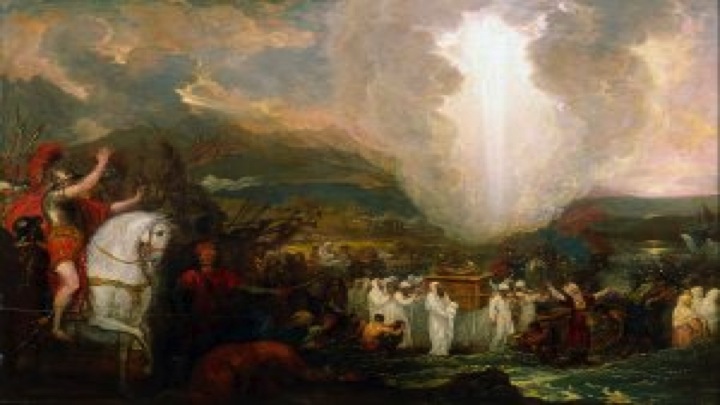
Finally, Elijah and Elisha are at the Jordan, where so many important things happen in the Bible. The Israelites, in Joshua, cross the Jordan to reach the Promise Land. They, too, cross it on dry land as they follow the ark of the covenant.

Slide44


The mantle striking the water and the water parting points back to Moses at the Red Sea.


Slide45


After they cross the Jordan, Elijah asks Elisha what he may do for him. Elisha asks to “inherit, a double share of your spirit.” He is asking for the status as rightful heir to the prophetic leader’s role. The phrase means twice as much as any other heir, not double the amount that Elijah has! Then we find out why Elisha has been so persistent to stay with Elijah. If Elisha is permitted to see Elijah being taken, then his wish to follow in Elijah’s footsteps will be granted.

While they are walking, a chariot and horses of fire separate them; Elijah ascends in a whirlwind. For some reason, art often depicts Elijah riding the chariot.

Slide47


But the Bible doesn’t say that he actually rides the chariot and horses of fire–only that they separate them before Elijah is taken up. Scholars are puzzled over the horses and chariot of fire. Chariots and horses are transportation, of course, for war. Wind and fire are associated with God, the Holy Spirit, as in Acts 2. In the OT, the “whirlwind” is a symbol of God’s judgment. Elisha’s cry is also puzzling–not the “My Father, My Father” part, which is a common address of respect for a mentor or teacher. But the rest, “The chariots of Israel and its horses!” We hear the cry again in 2 Kings 13:14, but this time it’s Israel’s King Joash who says it, weeping as Elisha dies.

We learn today the importance of the mentor relationship, the godly friendship. It takes investment of heart, mind, and time. God brings people together for a season and for good reason–so we can learn together–and love, serve, hear and know more the God of our salvation. God helped Elijah when he was exhausted and discouraged by bringing him Elisha. But the blessings were there for Elisha, too. Remember his commitment to his mentor and friend, “‘As the Lord lives, and as you yourself live, I will not leave you.’

I am grateful for Erma–for our friendship that will last, despite the distance. I am grateful for the many people God is using to help me grow and serve Him with all my gifts, with all my life. I am also grateful for the opportunities God has provided for me to help others. I am happy to see God is using you, too!


Who will you reach out to with Christ’s love–and your friendship?

Slide66


Yes, it will take your heart, mind and time! Whose faith will you touch today?

Slide67


Let us pray.

Holy One, thank you for sending your Son, who has promised to be with us always, even to the end of the age! Thank you for your forgiveness and your Word, which assures us that your will is for us to have godly friendships–to love one another and help one another as we seek to serve you with our hearts, minds and lives. Build up our faith as we seek to nurture the faith of others. Bless our relationships. May they always be Christ-centered and glorifying to you. Strengthen our commitment to one another–and to you, who are the Rock of our Salvation, our hope and inspiration. In Christ we pray. Amen.

“God in the Silence”


Meditation on 1 Kings 19:1-16

June 19, 2016

Slide01Merritt Island Presbyterian Church

       Ahab told Jezebel all that Elijah had done, and how he had killed all the prophets (of Baal) with the sword. Then the (Queen) Jezebel sent a messenger to Elijah, saying, ‘So may the gods do to me, and more also, if I do not make your life like the life of one of them by this time tomorrow.’

Slide02


Then Elijah was afraid; he got up and fled for his life, and came to Beer-sheba, which belongs to Judah; he left his servant there.

Slide03

But he himself went a day’s journey into the wilderness, and came and sat down under a solitary broom tree.

Slide04

He asked that he might die: ‘It is enough; now, O Lord, take away my life, for I am no better than my ancestors.’

Slide05

Then he lay down under the broom tree and fell asleep.

Slide06

Suddenly an angel touched him and said to him, ‘Get up and eat.’  He looked, and there at his head was a cake baked on hot stones, and a jar of water.

Slide07


He ate and drank, and lay down again. The angel of the Lord came a second time, touched him, and said, ‘Get up and eat, otherwise the journey will be too much for you.’ He got up, and ate and drank; then he went in the strength of that food for forty days and forty nights to Horeb the mount of God.

Slide08


At that place he came to a cave, and spent the night there.

Slide09

Then the word of the Lord came to him, saying, ‘What are you doing here, Elijah?’

Slide10

He answered, ‘I have been very zealous for the Lord, the God of hosts; for the Israelites have forsaken your covenant, thrown down your altars, and killed your prophets with the sword. I alone am left, and they are seeking my life, to take it away.’

Slide11


He said, ‘Go out and stand on the mountain before the Lord, for the Lord is about to pass by.’

Slide12


Now there was a great wind, so strong that it was splitting mountains and breaking rocks in pieces before the Lord, but the Lord was not in the wind;

Slide13


and after the wind an earthquake,

Slide14

but the Lord was not in the earthquake;

Slide15

and after the earthquake a fire,

Slide16

but the Lord was not in the fire;

Slide17


and after the fire a sound of sheer silence.

Slide18


When Elijah heard it, he wrapped his face in his mantle and went out and stood at the entrance of the cave.

Slide19


Then there came a voice to him that said, ‘What are you doing here, Elijah?’

Slide20


He answered, ‘I have been very zealous for the Lord, the God of hosts; for the Israelites have forsaken your covenant, thrown down your altars, and killed your prophets with the sword. I alone am left, and they are seeking my life, to take it away.’

Slide21


Then the Lord said to him, ‘Go, return on your way to the wilderness of Damascus;

Slide22


when you arrive, you shall anoint Hazael as king over Aram.

Slide23


Also you shall anoint Jehu son of Nimshi as king over Israel;

Slide24

and you shall anoint Elisha son of Shaphat of Abel-meholah as prophet in your place.

***

I had an adventure this week at MIPC! Instead of my normal routine of office hours, worship planning, meetings, and visits, I taught Bible at our Cave Quest VBS!

Slide27


It was an awesome week!

We gathered each morning–a dozen or more adult and teen volunteers and 25 to 30 children — to do some “caving” and learn about Jesus.

Slide28


We sang songs, such as “I Have Decided,” My Hope is in the Lord,” and “Jesus is the Light of the World!”


Slide33

The children did crafts.

Slide34


Played games.

Enjoyed snacks!


They watched video clips and considered how they could apply biblical principles to their lives.


We learned how Jesus gives us hope, courage and direction!


How we shouldn’t worry!


How Jesus gives us love. And how He gives us power through His Spirit that lives in our hearts!

It was a busy and sometimes exhausting but also uplifting week for our faithful volunteers. My hope is that we will be stirred to remember, most of all, the “God sightings” we experienced. Julie Hill led us each day to pass a flickering light and share where and when we “saw God”–in the beauty of the world around us and in the love of the people God brought near to us.

Slide49


The God sightings happened for me in the quiet spaces in between the planned lessons and activities. When I was really listening to the children and fully present, without my mind traveling to the next thing I needed to do. I saw the Lord when a little boy shared about starting kindergarten in the fall and already missing his friends from VPK. Others shared their sadness at the loss of family members and beloved pets.

Slide50


I saw God in the funny cat stories that created a sense of community and intimacy before the so-called “real” lessons began.

Slide51

I saw the Lord when the children responded in unexpected ways to my carefully planned lessons. Once, I pulled a number of objects out of my big, black bag, one by one, to illustrate some of Jesus’ teachings on the Sermon on the Mount. After I pulled out a flashlight, salt shaker, plastic lily bouquet, and a book of Florida birds, a little girl jumped up, stuck her head in my bag, and said with wonder in her voice, “How much STUFF do you have in there?!”

Slide52

Then, when I was teaching on Jesus telling us to be “Salt for the World” a child blurted out, “Salt is BAD for you!”

Slide53


I saw Jesus in the way the children grasped the concept of letting our light shine for the world as letting our kindness, good deeds and gentleness show as a witness to Christ’s love. They came up with all sorts of good things they already do, like visiting friends and family in the hospital, helping with chores, and making pictures and cards to give away.

Slide54


Truly, God was with us all week. God never leaves us! But what a blessing it is when we experience those unexpected God sightings–when suddenly we can feel God’s comforting presence and are reassured that God is using all of us–despite our weaknesses, weariness and insecurities– for His special work!


***

Our reading in 1 Kings today tells of Elijah, a man God is using for His purposes, despite the prophet’s insecurities and weariness. Elijah is a “wanted man,” an “enemy of the state,” fleeing wicked Queen Jezebel who has threatened his life, traveling about 100 miles to a wilderness area, to Beersheba.

Slide55

Elijah, obeying God, has killed the prophets of Baal, whom Jezebel worships. Beersheba is the southernmost area of the territories that the Israelites settled, belonging to the tribe of Judah. Beersheba is founded, Genesis tells us, when Abraham and Abimelech fight over a well and make a covenant. Abimelech’s men took the well from Abraham after Abraham dug it, so Abraham brings sheep and cattle to Abimelech to try to get the well back. He sets aside seven lambs to swear that it was he who had dug the well. Abimelech concedes that yes, the well belongs to Abraham. Beersheba is Hebrew for “Well of Seven” or “Well of the Oath.”

Slide56


Elijah is miserable at Beersheba; he is rebelling from God; the Lord has not led him there, but God will still provide protection and sustenance. Underneath a broom tree, a weary, frightened Elijah tells God that he’s done! “It is enough; now, O Lord, take away my life.” Then he falls asleep. But instead of dying of hunger or thirst–or being killed by Jezebel’s armies–Elijah is cared for by an angel of the Lord, who gently wakes and nourishes him with water and bread that has been baked on hot stones for him!

Slide57

Elijah eats, drinks, and goes back to sleep. Then it happens again–the angel awakens Elijah and feeds him, this time telling him that he must eat to have strength for the journey ahead. Wait a minute! Didn’t Elijah tell the Lord that he is done? Seems God has other plans! Makes me think about the many times God leads us to do things that are hard for us–that are really tiring for us and stretch us in so many ways–but that doesn’t mean that God doesn’t want us to do them! It only means that we need God’s help with the work he has called us to! The food Elijah eats miraculously feeds him for 40 days and 40 nights–does that remind you of something? Yes! Noah’s ark!

Slide58


All this time, the Lord has not responded to Elijah’s rant or rebellion. Finally, in verse 9, the word of the Lord comes to the prophet. “What are you doing here, Elijah?” God asks–confirming that Elijah’s trip was not what God had wanted him to do.

Slide59


Elijah is defensive, assuring the Lord how zealous he has been, then expressing his fear. “I alone am left, and they are seeking my life, to take it away.”

Slide60


He is conflicted. He doesn’t really want to die–as he had requested of the Lord under the broom tree; he just doesn’t want to do the hard things that he knows God wants him to do.

In verse 11, Elijah is warned of an imminent personal encounter with the Lord–not just a prophetic word. The Lord is about to “pass by.” But God will not come as Elijah expects–not in the great wind or the earthquake. Not in the fire.


This unpredictable God, from whom we can never hide, is in the “sound of sheer silence.” Elijah, a sinful man in the presence of a holy and righteous God, must cover his face with his mantle–the one that he will soon throw over Elisha, his successor, as he plows a yoke of oxen in his father’s fields.

Slide25


God asks Elijah, a second time, “What are you doing here?” Elijah’s answer is the same as it was before. “I alone am left, and they are seeking my life, to take it away.” This time, Elijah’s heart must be ready to hear from God, because the Lord tells him to go back–and finish the work He has called him to. Elijah has 2 kings to anoint and a prophet to train up to take his place, among many other things, before a chariot of fire and a whirlwind take him up into the sky.

Slide63


This time, Elijah will trust the Lord–not heard in the wind, earthquake or fire, but in the silence– and obey, knowing that God will give him the power and courage to do what the Lord has planned for him to do. Despite his insecurities. Despite his fears. Despite his weariness.

Do you? Do you, like Elijah, trust the Lord to strengthen and lead you to do what God has planned for you?

Slide64

Listen for God, not just when you are alone, but throughout the day–especially in between all those careful plans that you have made. Listen for the Lord and be present with the people God has brought near to you! Listen for the Lord in the noise and chaos of your life. But especially in the silence. Seek, with the Spirit’s help, to obey.

Slide65

Let us pray.


Holy One, God in the silence, forgive us for our rebellion–for when we have run from you, with excuses–too weary and frightened by what you call us to do. Give us courage to trust in you. Thank you for your faithfulness to provide all that we need, every day, to minister to one another and to our community–to witness of your unconditional love, mercy and grace, shown in the gift of your precious Son, our Redeemer. Thank you for the help we received from Cocoa Presbyterian Church this week and for drawing the children, teens and adults who came to participate in VBS closer to one another–and to you. Bless our community with many more God sightings in the weeks, months and years to come. Help us to slow down and be fully present with the people you have brought near us. Open our hearts to seek your face and listen for your voice. Strengthen us by your Spirit to obey. In Christ we pray. Amen.

“No Longer I”

Slide13

Meditation on Galatians 2:15–21

June 12, 2016

 We ourselves are Jews by birth and not Gentile sinners; yet we know that a person is justified not by the works of the law but through faith in Jesus Christ. And we have come to believe in Christ Jesus, so that we might be justified by faith in Christ, and not by doing the works of the law, because no one will be justified by the works of the law. But if, in our effort to be justified in Christ, we ourselves have been found to be sinners, is Christ then a servant of sin? Certainly not! But if I build up again the very things that I once tore down, then I demonstrate that I am a transgressor. For through the law I died to the law, so that I might live to God. I have been crucified with Christ; and it is no longer I who live, but it is Christ who lives in me. And the life I now live in the flesh I live by faith in the Son of God, who loved me and gave himself for me. I do not nullify the grace of God; for if justification comes through the law, then Christ died for nothing. 

***

Today, we welcome two children into the fold, claiming them for Christ through the waters of baptism. With every baptism, we are asked to “remember with joy our own baptism” –to cherish the vows that were made for us by the Church and our families; to treasure the promise of the Spirit’s work in us.

Slide14

We are cleansed from sin; we have a new identity–new lives in Him!

Like Kenny and Heather, I wasn’t baptized as an infant. I was 13 when I was baptized at Redeemer Lutheran Church in Damascus, Maryland.

Slide15


My dad is Jewish; my mom is a Christian. Before my parents got married, my dad promised my mother’s mother, a Norwegian Lutheran, that their children would go to Sunday school and church, but also learn and experience the faith of my father’s family. Then, when we were old enough, we would have the freedom to choose what religion we would follow.

Differences between Christianity and Judaism seemed small to me as a child. The God was the same loving, gracious God in both faiths. The Hebrew Bible or Old Testament, as we call it, makes up more than half of the Christian Bible! Unlike Christianity, you are born into the Jewish faith, though Christians may convert to Judaism. Both of Dad’s parents were Jewish. Dad’s faith didn’t require weekly attendance in a house of worship, though other Jews may attend Shabbat services every Friday at sundown in a synagogue, along with religious instruction or Hebrew school during the week. Dad sometimes attended the Lutheran church with my mom, brother, sister, and me.

One of the big differences in our faith that I noticed as a child was that my Jewish relatives didn’t celebrate Christmas. They didn’t have Christmas trees!

Slide16

They didn’t prepare for Santa.

Slide17

Dad had always wanted a Christmas tree growing up and hadn’t been allowed; so we had a tree every year. Dad was in charge of choosing and decorating it. My Jewish cousins celebrated Hanukkah, with the lighting of candles for 8 days, retelling the story, and exchanging gifts, including gold-foil-wrapped chocolate “gelt” and “dreidels”.

Slide18

Slide19

Slide20

We sang songs and ate special foods, such as latkes.

Slide21

Sometimes, Dad would take us to the synagogue with his parents on the High Holy days–Yom Kippur and Rosh Hashanah.

Slide22

Slide23

Grandma would fast and pray all day, but then prepare enormous meals for the extended family to eat at sundown, beginning with kneidel soup,

Slide24

gefilte fish,

Slide25

and chopped liver.

Slide26

Grandma always kept a kosher table, making sure not to serve any milk products with meat and never cooking or serving pork or shellfish.

But the most important holiday in the Jewish faith was the Passover or Pesach. Passover, a feast of 7 days, is usually celebrated in the home on the first night with a Seder— a worship service around the dining table, with special foods to retell the story.

Slide27

Here is Dad celebrating Passover with his family when he was a little boy.

Slide28


The Passover story was and still is what gives Jewish people their identity, their understanding of who they are in relation to God. They are the people of the exile and return, called to live in obedience to the Gracious God of the Promise, the Almighty, Everlasting Creator of the universe, who knows, forgives, and loves them still.

Slide29


***

Jewish identity and life of faith are important to the understanding of Galatians, which highlights the struggle of the early years of the Church when its membership grows to include Gentiles, many of whom, in addition to being uncircumcised, had very little knowledge of Scripture or Jewish life.

Slide30

They are wrestling with the question of what is necessary to live as a Christian, though many of the Church, particularly the leaders, are still Jewish, raised in the faith since birth. How do they separate their Jewish identity from their new baptismal identities–as children of the new covenant, crucified yet alive with Christ, who lives inside them?

The letter to the Galatians was particularly inspirational to 15th and 16th century reformers, such as Martin Luther, who embraced the letter’s message of God’s gracious gift of salvation through faith alone.

Slide31


In Luther’s time, as it was in Paul’s, the question on everyone’s lips was, “How can I, a sinful person, find acceptance in the eyes of a holy and righteous God?”

Slide32

Paul’s answer in Galatians is that we don’t have the same identity that we had before! No matter who we were before we knew Christ as our Lord and Savior, we aren’t that sinful person anymore–not in God’s eyes! We just have to believe this, trust God for this, and walk in this truth– that the Son of God who loves us gave his life for us!

Paul writes, “no longer I, but… Christ.” Εγώ (ego) is the Greek word for the pronoun “I,” but it is not really needed here. In Greek, like in Spanish, the pronoun is communicated through the verb endings. Εγώ (ego), then, is an “emphatic I”.

Slide33


Paul is emphasizing the “I” –the identities that we used to be–the “I’s” that we aren’t anymore! “I have been crucified with Christ,” Paul says, “and it is no longer I who live, but it is Christ who lives in me.”

Slide34

The Galatians, living in the Roman province of Galatia in what is now Turkey, have been mislead by itinerant missionaries into believing that Gentiles need to be circumcised before they can become the people of God.

Slide35

Leading up to Paul’s argument against circumcision, the apostle in chapter 2 tells of a public confrontation with Peter in Antioch, when Paul calls Peter a hypocrite. Peter had been all for ministry to the Gentiles when the apostles met with James in the Jerusalem church 14 years earlier. But after “certain people came from James” to visit Peter in Antioch, they stopped eating with Gentiles, Paul says, “for fear of the circumcision faction.”

Slide36

Paul continues in 2:14, “But when I saw that they were not acting consistently with the truth of the gospel, I said to Cephas before them all, ‘If you, though a Jew, live like a Gentile and not like a Jew, how can you compel the Gentiles to live like Jews?’”

Slide38

In today’s reading, Paul begins by making a distinction between Jews and Gentiles. But of course it’s just a rhetorical device when he refers to himself and other Jewish believers as “Jews by birth and not Gentile sinners.” He is pretending to be on his audience’s side before he persuades them to take his viewpoint, which is that there is “no distinction in Jew or Gentile” in Christ, for “God shows no partiality.” As he later writes in Romans 3:23, “All have sinned and fallen short of the glory of God.” And in Romans 3:10, “There is no one righteous, not even one.”


Slide39


Paul’s argument against circumcision begins by saying that a person cannot be not “justified” by the “works of the law but through faith in Jesus Christ.” Are you wondering what he means by “works of the law?” Obviously it means something larger than the Ten Commandments because circumcision isn’t one of the 10! But it’s hard to pin down exactly what Paul means. In the Hebrew Bible, the written “law” is the Torah, the first 5 books. Yet Paul isn’t just referring to the Torah, either. But to dig more deeply into “works of the law,” rather than the next part of the verse may actually distract us from Paul’s main point, which is to emphasize the importance of faith over “works.” For our purposes, we can define “works” simply as any human effort to accomplish our own salvation or to add to what Christ has already done for us through his death on a cross.

As we look at the second part of the phrase that has been translated “through faith in Jesus Christ,” we find one little word translated “in” that is cause for debate among scholars because it may also be translated “of.”

Slide40

If it is Faith in Christ, this could mean our salvation is based on a human reaction—believing in Christ. The danger is that this could become a work!

Slide41

If it is “Faith of Christ,” this could mean our salvation is based on an action of Christ: Christ’s unflinching faithfulness to the will of God, his obedience unto death.

Slide42

I am more inclined to agree with the scholars who favor the second translation; this would fit Paul’s message of grace! Let us never forget that faith is a human response to God’s gracious deed; it is not a possession to guarantee our status before God; it is God’s gift–so it cannot be a “work!” And there’s no way to “claim” it so as to put God in debt, as if God owes US a special blessing or special care because we believe.

Slide43

***

At 13, though I didn’t fully understand what baptism means, the Lord gave me a new identity. I was no longer “I”, for “I” had been crucified with Christ, so that “I” no longer lived, but it is Christ who lives in me.

But my struggle with my baptismal identity–letting go of the “emphatic I”– will be a struggle my whole life through, just as the Galatians struggled to find their new selves and new lives in Jesus Christ. And you, my friends, may continue to struggle with your baptismal identities, too. Because there’s something inside of us that finds it hard to believe that Christ loves us so much that he gave his life for each one of us and for all of us. And that his gift of faith is all that we need to be forgiven for all our sins, to have new life in Him!

Friends, the essential question for today, as it was for Paul and Luther, is still, “How can I, a sinful person, find acceptance in the eyes of a holy and righteous God?” The answer is still found in God’s Word:

Slide44

“I have been crucified with Christ…”

Slide45


And it is no longer I who live,

Slide46

but it is Christ who lives in me.

Slide47

And the life I now live in the flesh…

Slide48

I live by faith in the Son of God who loved me …

Slide49


and gave himself for me.


Slide50


Let us pray.


Gracious God, we praise you for being the God of all the Universe, who planned from the beginning to send Your Only Son to save us from our sins because we couldn’t do anything to make ourselves righteous before you. Thank you for your love and grace, which we struggle to accept; it’s so hard to forgive ourselves! Help us to let go of our old, sinful “I’s”, the “I’s” we used to be. Strengthen us to believe in your love and the Spirit’s transforming work in us, and to let the life of Jesus shine through us so that all the world may see and know Christ the Lord. In His name we pray. Amen!

Wild Thing!

Slide05

Meditation on 1 Kings 17:8-24

June 5, 2016

Merritt Island Presbyterian Church

      “Then the word of the Lord came to Ezekiel, saying, ‘Go now to Zarephath, which belongs to Sidon, and live there; for I have commanded a widow there to feed you.’ So he set out and went to Zarephath. When he came to the gate of the town, a widow was there gathering sticks; he called to her and said, ‘Bring me a little water in a vessel, so that I may drink.’ As she was going to bring it, he called to her and said, ‘Bring me a morsel of bread in your hand.’ But she said, ‘As the Lord your God lives, I have nothing baked, only a handful of meal in a jar, and a little oil in a jug; I am now gathering a couple of sticks, so that I may go home and prepare it for myself and my son, that we may eat it, and die.’ Elijah said to her, ‘Do not be afraid; go and do as you have said; but first make me a little cake of it and bring it to me, and afterwards make something for yourself and your son. For thus says the Lord the God of Israel: The jar of meal will not be emptied and the jug of oil will not fail until the day that the Lord sends rain on the earth.’ She went and did as Elijah said, so that she as well as he and her household ate for many days. The jar of meal was not emptied, neither did the jug of oil fail, according to the word of the Lord that he spoke by Elijah.

      After this the son of the woman, the mistress of the house, became ill; his illness was so severe that there was no breath left in him. She then said to Elijah, ‘What have you against me, O man of God? You have come to me to bring my sin to remembrance, and to cause the death of my son!’ But he said to her, ‘Give me your son.’ He took him from her bosom, carried him up into the upper chamber where he was lodging, and laid him on his own bed. He cried out to the Lord, ‘O Lord my God, have you brought calamity even upon the widow with whom I am staying, by killing her son?’ Then he stretched himself upon the child three times, and cried out to the Lord, ‘O Lord my God, let this child’s life come into him again.’ The Lord listened to the voice of Elijah; the life of the child came into him again, and he revived. Elijah took the child, brought him down from the upper chamber into the house, and gave him to his mother; then Elijah said, ‘See, your son is alive.’ So the woman said to Elijah, ‘Now I know that you are a man of God, and that the word of the Lord in your mouth is truth.’

***

Jim and I, and Marilyn and Craig Smoot traveled together to Maitland to a presbytery meeting this week. It was great to see some of my colleagues in ministry and build on relationships, some of which began 8-9 months ago.

Slide06


One gentleman asked me, “How are things at Merritt Island? How are you? Are you happy?”

I told him that I feel at home here. This is where I belong. Things are “good.” But I am still learning and growing.

What I didn’t tell him was that the one important thing I am learning is the importance of spending time with members outside the church. I am learning how important it is to visit people in their homes. Ministry happens best when we are willing and able to walk alongside another–to meet people right where they live– and be willing to be vulnerable so that the Spirit can do its healing, transforming work. This intimate kind of ministry is the ministry of presence–for it is Christ that dwells within us that does the ministering through us.

Slide07

I haven’t had time to get to know all of you, yet, and visit you in your homes. So this week, I decided to make some changes in my schedule to open up time when these visits can be made. Saying “yes” to home visits means saying “no” to some other things, so I will need your support and understanding to do this. My goal is to visit everyone by the end of this year–so that Christ in me can work through me.

My home visits have already begun!

Slide08

Slide09

Slide10

Slide11


***

In our 1 Kings 17 reading, we meet “Elijah the Tishbite.” Tishbe was a remote village in the mountains of Gilead, an area east of the Jordan River.

Slide12

Elijah, whose name means “Yahweh is my God!” is a rough around the edges kind of guy. We know nothing of his childhood, only that he was born to Jewish parents, but we don’t know their names. He appears abruptly in 1 Kings after 16 chapters tell of the succession of Israel’s kings after David dies and the evil that they do. In chapter 16, King Ahab marries Jezebel, daughter of King Ethbaal of the Sidonians. Sidon was a prosperous, commercial city, famous for gold and silver and manufacture of embroidery, dies, metals, and glass.

Slide13


Although Sidon was within the limits of the Promised Land, the Israelites never possessed it. It belonged to the tribe of Asher, who were unwilling to drive out their wealthy neighbors.

Slide14

Here is modern Sidon today.

Slide15


After marrying Jezebel, Ahab erects “an altar to Baal in the house of Baal” in Samaria, a city that Ahab’s father, Omri, built on a hill bought from a man named Shemer. And Ahab and Jezebel worshiped Baal there.

At the start of chapter 17, Elijah angers King Ahab, who was even more evil than Omri, who was more evil than all Israel’s kings before him. Elijah tells the king that Israel is going to suffer from a terrible drought (because of his sins. Elijah promises no “dew or rain” for years, until he, the God of Israel’s prophet, gives the word for the drought to end. Elijah then flees from Ahab’s wrath and goes into hiding by the Wadi Cherith, a stream east of the Jordan, where God commands the ravens to feed him bread and meat.

Slide16

Here, Elijah, fits in with the wild creatures and becomes even more a kind of a wild thing himself, preferring the company of animals to people.

But then the Wadi dries up; Elijah has no water!

Slide17


The Lord tells Elijah, “Go now to Zarephath, which belongs to Sidon, for I have commanded a widow to feed you.” Zarephath was a Phoenician city on the Mediterranean coast, between Sidon and Tyre.

Slide18

Slide19

Here is the modern city, formerly Zarephath.

Slide20

Elijah is perhaps second only to Moses, when it comes to the most important prophets of the Old Testament. At the transfiguration on the mountaintop, who do the disciples see with Jesus? Moses and Elijah. Matthew 17:3, “Suddenly, Moses and Elijah appeared and began talking with Jesus.”

Slide21Slide22


The story of Elijah and the widow is important to Jesus, who refers to it in Luke 4:25-26, But I tell you truthfully that there were many widows in Israel in the time of Elijah, when the sky was shut for three and a half years and great famine swept over all the land. Yet Elijah was not sent to any of them, but to the widow of Zarephath in Sidon.”

Slide23

It is significant that John the Baptist is mistaken for Elijah! John reminded Israel of him!

Slide24

John 1:20-21 tells us, “He (John) did not refuse to confess, but openly declared, ‘I am not the Christ.’ ‘Who are you then?’ they inquired. ‘Are you Elijah?’ He said, ‘I am not.’”

Slide25

John is also rough around the edges, a kind of wild thing, living in the wilderness on an unusual diet (honey and locusts),

Slide26

wearing unusual clothing (camel’s hair).

Slide27


Then, in Matthew 16: 13-14, Jesus is mistaken for Elijah! “When Jesus came to the region of Caesarea Philippi, He questioned His disciples: ‘Who do people say the Son of Man is?’ They replied, ‘Some say John the Baptist; others say Elijah; and still others, Jeremiah or one of the prophets.’”

Slide28

Like Jesus, Elijah obeys the Lord. God sends him to live in Zarephath, amongst idol-worshipers, because the Lord has a plan for him to minister to people in need. But this will require Elijah to allow himself to be vulnerable to a stranger. He accepts help from a widow who has given up all hope of surviving the terrible famine; she hasn’t enough food for her and her son.

Slide29

But something stirs her to listen to this kind of wild thing, the prophet of a God she doesn’t know. He tells her in 17:13-14, “Do not be afraid.” She should make him a “cake” with the meal before she feeds her son and herself. “For thus says the Lord the God of Israel: The jar of meal will not be emptied and the jug of oil will not fail until the day that the Lord sends rain on the earth.”

Slide30

And she does as Elijah says. And the jar of meal doesn’t run out; the oil doesn’t fail. God provides for many days.

Slide31

Slide32

But then a crisis of faith. The boy falls ill, and there is “no breath left in him.” He dies! Now you have to understand how desolate the widow feels. Her only child, a son, is her only hope of survival in her society. She is relying on him to take care of her when he is grown. All hope is lost with his death! She turns on Elijah in anger and blames the One whom Elijah credits for miraculously providing for them. “What have you against me, O man of God?!” she asks–and some interpret this as sarcasm. But she takes partial responsibility for her loss, for it is her own sin that God remembers, she says, when the Lord takes her son.

Elijah, too, believes that God has caused the son’s death, but that death doesn’t have the final word. All of his emotion pours out in his prayer to the Lord, for this wild prophet of God, a creature that is more comfortable in the wilderness with animals than living with people, has grown to care for this foreign widow and her son, who have shared from their poverty with him. He cries out, “O Lord my God, let this child’s life come into him again.”

Slide33


God hears his prayer. God answers. The child is revived. Hope and joy replace the widow’s sarcasm and desolation. “Now I know that you are a man of God,” she says, “and that the word of the Lord in your mouth is truth.”

Slide34

Slide35

***

Friends, Elijah’s ministry was one of presence. He was willing to walk alongside someone in need–right where they live. The Spirit of God ministered in and through him! His faith grew through God’s miraculous provision. It grew even more when God brought the child back to life!

And the stranger, the alien, came to trust Elijah, though he was rough on the outside–a wild thing. Through the witness of his faith, she found her own. She came to trust Elijah’s God.

Will you join me in a ministry of presence? May Christ within us work in and through us!

My home visits have already begun!


Slide36

Slide37Slide38

Slide39


Let us pray.

Slide40

Holy One, we give you thanks and praise for your miraculous provision for us day by day, hour by hour. Thank you for sending your Son to make a way for us to return to you when we were lost in our sin. Thank you that Christ lives within the heart of every believer now–and is transforming us into his likeness as we seek to walk in your ways. Help us, Lord, to allow ourselves to be vulnerable–to visit one another right where we live in the intimate ministry of presence. Stir us to open our homes and hearts so that you might work in and through us. May we be like Elijah and seek to care for and be cared for by strangers like the widow from Zarephath and her son–and meet them in their time of need. In Christ we pray. Amen.
Amazing Faith, Awesome Friends


Meditation on Luke 7:1-10

May 29, 2016

Merritt Island Presbyterian Church

       After Jesus had finished all his sayings in the hearing of the people, he entered Capernaum. A centurion there had a slave whom he valued highly, and who was ill and close to death. When he heard about Jesus, he sent some Jewish elders to him, asking him to come and heal his slave. When they came to Jesus, they appealed to him earnestly, saying, ‘He is worthy of having you do this for him, for he loves our people, and it is he who built our synagogue for us.’ And Jesus went with them, but when he was not far from the house, the centurion sent friends to say to him, ‘Lord, do not trouble yourself, for I am not worthy to have you come under my roof; therefore I did not presume to come to you. But only speak the word, and let my servant be healed. For I also am a man set under authority, with soldiers under me; and I say to one, “Go”, and he goes, and to another, “Come”, and he comes, and to my slave, “Do this”, and the slave does it.’ When Jesus heard this he was amazed at him, and turning to the crowd that followed him, he said, ‘I tell you, not even in Israel have I found such faith.’ When those who had been sent returned to the house, they found the slave in good health.

***

Coming home from a walk yesterday, I caught sight of a lady who lives two doors down from us. She is a small lady, and she was working on our next-door neighbor’s yard, handling a power edging tool and leaf blower by herself. It touched my heart to see her doing this as she also cares for a 5-year-old daughter and a teenage son who is confined to a wheelchair. I marveled that she had found the time and energy to help a neighbor in need. When she saw me watching her and smiling, she turned off the tools and greeted me. Then we chatted like old friends, though we have only had a few conversations since Jim and I moved in last October.

The yard she was working in was the yard of a young, single man whom we have been praying for as a church since November. John hasn’t been well enough to live in his home for nearly 6 months. I told her that it was nice of her to work on John’s yard. She laughed and lifted her shoulders. “It’s what neighbors do!”

Our neighbor, John, has cancer. His Caringbridge website says that on Nov. 18, John’s father found him unresponsive.  He was rushed to Holmes Regional Medical Center where an MRI showed 2 tumors in the temporal lobe of his brain, one being inoperable. On Nov. 21, a neurosurgeon did a resection of the large tumor (the size of a D battery), and told the family that he would receive 2 weeks of radiation and a once a month chemo pill, but “it did not look promising.” He was released on Nov. 26 (Thanksgiving), only to end up back at Holmes on the 28th. He was released again from Holmes Dec. 2, and he traveled north to stay with and be cared for by his family in Rochester, NY. His condition is still very serious.

On March 29, John turned 32.

The neighbor working in his yard got a faraway look in her eye as we talked about him. “It’s so sad,” she said.

We both said at the same time, “He’s so young.”

“I will keep praying for him,” I said. “So will my church.”

We talked about other things after that–our plans for Memorial Day, her difficulties traveling with her son and how expensive it is to go anywhere. I shared that we were going to see my parents in Orange City and that Dad had just had another heart surgery a week ago Thursday, but he was doing well.

As I went inside, I thought about what a blessing our conversation had been–how uplifting it was to share our mutual concerns and encourage one another. And I thought how important it is for the community of faith to persist in prayer for John and others struggling with health problems, without medical professionals offering much hope for their healing.

Later, I recalled my visit to Mom and Dad last Monday–and how everywhere Mom and I went at their retirement community where they have lived only a couple of months, people would stop us and ask how Dad was. They looked pleased with Mom’s good report; a woman who sings with my Mom in church said, “Of course he’s doing well! The choir prayed for him!”

And I thought about how many times we ask people to pray–and they do–and all goes well with our loved ones. And we don’t think much about it. We just move on to worry about something or someone else. I could almost hear Jesus saying, as he often did to his disciples, “Have you so little faith?”

***

Our gospel reading today in Luke 7 is a healing story, but even more than that, it is a story of an amazing faith and awesome friends who are willing to go to Jesus on their friend’s behalf. This passage reveals the power of the faith community, when we share our needs with one another and take them to the Lord. But it is also the assurance that God cares for all who are suffering–regardless of their status in society.

This healing story takes place in Capernaum, a name that means “city of Comfort.” Capernaum, near the northwest corner of the Sea of Galilee, is where Jesus lives at the beginning of his ministry–after he is tempted for 40 days in the wilderness and John is arrested, according to Matthew 4:13-16. Five of the 12 disciples Jesus calls are from Capernaum, one of the most prosperous and crowded districts in Palestine at the time. The city is the scene of a number of NT miracles; it is where Jesus casts a demon out of a man in the synagogue on the Sabbath.

The synagogue in Capernaum comes up in our reading today in Luke 7, the healing of the centurion’s slave. The man responsible for the building of the synagogue in Capernaum in Jesus’ time is a Gentile, a centurion, an officer at the head of a Roman company of 100 men. He may have been in service to Herod Antipas, the tetrarch of Galilee, or to Pontius Pilate, the procurator of Judea.

The account of the healing of the centurion’s slave in Luke also appears in Matthew, but with some variation. Matthew tells of the centurion who himself comes to Jesus and beseeches him to heal his “servant,” who is “lying paralyzed at home, in terrible distress.” Luke’s centurion doesn’t come to Jesus in person; instead 2 groups of people come on the centurion’s behalf, seeking healing for his “slave” who is “ill and close to death.”

Two different English words describe the man who is close to death–a servant in Matthew and a slave in Luke. But it’s the same Greek word–doulos –that is translated servant and slave. The reality is there was no real distinction in biblical times between servanthood and slavery. Servant or slave, one did not have freedom to choose one’s life or make a way for themselves in the world; one didn’t have protections from abuse and oppression; neither would they have a voice, unless someone spoke up for them.

But not all slaves were treated badly in biblical times. Luke 7:2 says the centurion “value(s) highly” his slave. In verse 3, we learn that the centurion believed in Jesus when he heard about him–the wonderful deeds of healing. He cared enough about his slave, who was near to death, that he sent some Jewish elders to ask for Jesus’ healing. We don’t find out why the centurion didn’t go in person until later on. By the way, the word for these Jewish elders is presbyterous–which is where our Presbyterian form of government came from– or rule by “elders.” Presbyterous is sometimes translated “old men,” such as in Acts 2:17.

The Jewish delegation provides an introduction that includes not just the good deed the centurion has done, but also where his heart lies. The “old men” say to Jesus, “He is worthy of having you do this for him, for he loves our people, and it is he who built our synagogue for us.” Jesus listens and without any argument or questioning, he goes with them. Then, before he reaches the centurion’s house, the centurion sends another group of people. This time, they are “friends”–Jew or Gentile, we don’t know. But the fact that he sends “friends” rather than people who work for him speaks of the character of this powerful man. For to have friends, you have to be a friend–you have to care about other people. These friends of unknown nationality and religion convey the centurion’s message, “Lord, do not trouble yourself…” This is literally, “do not bother.” Why? Because the humble centurion knows he is an outsider to the nation of Israel, despite his love for the Jewish people–an uncircumcised Gentile. He feels “unworthy” for Jesus to “come under his roof,” and it is his unworthiness that has prevented him from seeking out Jesus in person. Any expectation of Jesus coming to visit him in his home would be presumptuous, even if he were responsible for the building of the synagogue. What he doesn’t say goes without saying–that a Gentile’s home was unclean to a Jew, a source of defilement for Jesus.

The centurion stops Jesus from coming to his home at the last minute, but not because he is giving up on his request for his slave’s healing. It isn’t necessary for Jesus to come, he says, for he believes that Christ, who has power and authority over all things given to him by God, need only speak the word and his slave will be healed! The centurion understands power and authority, as he is a man under another’s authority and also has 100 soldiers under him–who can say to one, “Go”, and he goes, and to another, “Come”, and he comes. That he would believe that Jesus’ physical presence and touch are unnecessary for a healing to take place would go against common belief of his day.

When Jesus hears of the centurion’s faith he is amazed. Turning to the crowd, he says, ‘I tell you, not even in Israel have I found such faith.’

And when those who had been sent to Jesus return to the centurion’s home, they find the slave in good health.

Friends, when we pray for our family and friends, do we have a faith like the humble centurion–a faith that amazed even Christ himself? And when Christ heals our loved ones when we pray, do we simply move on to worry about someone or something else?

Would Jesus say to us as he often did to his disciples, “Have you so little faith?”


Let us pray.

Holy One, we thank you for your Word that teaches us of the importance of faith and the power of the community when we come together and lift one another up in prayer. But Lord, we often struggle with doubts and fail to give you thanks for your gifts of healing for family and friends. Forgive us for, at times, having so little faith. Renew us by your Spirit and fill us to overflowing with an amazing faith. Humble us so that we, like the centurion, will understand that we are helpless to live as the people you want us to be if we are not wholeheartedly seeking you and trusting in you. Help us to let go of our anxieties and feel your comforting presence with us always. Stir us to truly love and serve our neighbors and see everyone as friends. Give us patience and strength to walk by faith with you every day until that glorious day when there’s no more pain, sickness or sorrow and we finally we see you, face to face. In Christ we pray. Amen.
Practical Resources for Churches

Everyone has a calling. Ours is helping you.

Consider the Birds

Pastor Karen shares thoughts on faith, scripture, and God's love and grace revealed through backyard wildlife.

F.O.R. Jesus

Fill up. Overflow. Run over.
Becoming HIS Tapestry

Christian Lifestyle Blogger

Whatever Happens,Rejoice.

The Joy of the Lord is our Strength

Stushie Art

Church bulletin covers and other art by artist Stushie. Unique crayon and digital worship art

The Daily Post

The Art and Craft of Blogging

WordPress.com News

The latest news on WordPress.com and the WordPress community.