Connecting the Faithful of First Presbyterian Church of Smithtown, NY
Pastor Karen Crawford
Rev. Dr. Karen E. Crawford, Pastor
Connecting the Faithful of First Presbyterian Church of Smithtown, NY
Pastor Karen Crawford
Meditation on 1 John 3:1–3
First Presbyterian Church of Smithtown
Pastor Karen Crawford
Nov. 5, 2023
All Saints Sunday

I remember having a meal with my father. We were at a restaurant in Maryland. I had a cheese omelet and a bagel, though it was dinner, not breakfast. I was living in the Baltimore area and going to university, studying to be a teacher.
It was the fall of 1985. I was taking an American Studies class. We were asked to write our family histories, going back three generations or more. We had to place ourselves in the family story, see patterns, and make connections. I was only 19 at the time—just beginning my adult life. We were asked to interview members of our families—and encourage them to share personal stories.
Why is it that I can remember what I ate—but I can’t recall the stories Dad shared with me that night? I do think if I listen really hard I can still hear his voice and see his mannerisms as he spoke. I can hear his laugh. He often had a far-off look—and he would answer some of my questions with a pause, then “I don’t know.”
At the end of the meal, something had changed in my father. The normally shy, reserved man had a determined look on his face when we stood up and hugged goodbye. He was going to research our family history and get me the answers that I sought. He would leave no stone unturned until he knew the names, dates, places, and as many details as possible of the lives of the people who came before us. These people made decisions about who they would marry, how they would raise their kids, what they would do for a living and where they would live, even many of them embracing a new country—America!—and new cities, such as New York, Pleasantville, Baltimore, and Washington, D.C., and leaving old countries behind: Norway. Hungary. Latvia. Poland.
Our passage in First John is about family. The family of God is like a biological family. God is Father and Jesus is Son. The followers of Christ are “little children.” I lost count of how many times John uses the word “children” and “little children” and “children of God” in John’s letters.
The John who wrote this is called, “John the Evangelist.” He writes in the style of John the Apostle, who wrote the gospel of John. We find similar words, phrases, and ideas. John the Evangelist starts the first letter, “We declare to you what was from the beginning, what we have heard, what we have seen with our eyes, what we have looked at and touched with our hands, concerning the word of life—this life was revealed, and we have seen it and testify to it..”
The gospel of John starts, “ In the beginning was the Word, and the Word was with God, and the Word was God. He was in the beginning with God. All things came into being through him, and without him not one thing came into being. What has come into being in him was life, and the life was the light of all people. The light shines in the darkness, and the darkness did not overtake it.”
The tone of John’s letters is intimate and affectionate, as if the writer is speaking to an audience he knows well and cares for, yet no specific church is identified. Scholars believe the letter was written in Ephesus, on the western shore of modern-day Turkey, between 95 and 110 A.D. He wrote for Christians who probably never met Jesus in the flesh.
He writes for all Christ’s followers, in every time and place. He writes to reveal the love and grace of God and encourage us to live in love and grace, as if we are a new family, a family tree connected by faith and a desire to follow Christ with our lives.
He shares the hope of salvation to stir the church to grow in faith, faithfulness, and boldness, because Christ didn’t come to save a small, exclusive group of people. He says in 1 John 5:13, “I write these things to you who believe in the name of the Son of God, so that you may know that you have eternal life.” And, “My little children,” he says in 1 John 2:1, “I am writing these things to you so that you may not sin. But if anyone does sin, we have an advocate with the Father, Jesus Christ the righteous, and he is the atoning sacrifice for our sins and not for ours only but also for the sins of the whole world.”
This reminds me of John 3:16, “For God so loved the world that He gave his one and only Son, so that whoever believes on Him shall not perish, but have everlasting life.”
John the Evangelist is concerned that the church may be led astray by false teachers, whom he calls antichrists. The most important identifier of God’s children? LOVE. Love that is God’s gift to us, as we hear in today’s passage. Later in the letter, we learn that we are able to love at all because of God, who IS love. And, “We love because he first loved us” (1 John 4:19).
Love for the children of God isn’t merely affectionate speech. It is revealed through our giving. “How does God’s love abide in anyone,” he asks in 1 John 3:17 and 18, “who has the world’s goods and sees a brother or sister in need and yet refuses to help? Little children, let us love, not in word or speech, but in truth and action.”
A church that lacks love is not following Christ. Love is essential; it is the main ingredient for our life in Christ together. “Whoever does not love abides in death,” he says in chapter 3. And, “…We know love by this, that he laid down his life for us—and we ought to lay down our lives for one another.”
On All Saints Day, we look back to remember, honor, and be inspired by all the saints—all our loved ones—who gave of themselves so that we could become the people we are today. We give thanks for all that we learned from the example of the generations before us—the Great Cloud Witnesses that are still with us, though we can’t see or hear them cheering us on, urging us to continue to run the race of faith in the years to come.
I don’t know about you, but I always feel emotional on All Saints Day. I feel sad for those who aren’t with us. Especially when we are lighting candles for them. But most of all, I feel overcome with gratitude for knowing and loving them.
What a tremendous gift it was to have the father that I had! A father who would eat a meal with me, then spend the next 3 decades intensely researching our family history, going back generations for both sides of our family. His research would lead to my parents traveling the world to see the places where their ancestors had lived and meet family members they had never met. My mom stays in touch with some of them.
Dad continued to update our family histories up until the last year of his life with us, when Parkinson’s interfered. He went home to be with God in August 2019.
And yes, he found the information I needed in time for the American Studies class in fall 1985. That’s when I discovered that I came from a long line of strong women, who made choices that were sometimes different from their parents’ choices. While my grandmothers didn’t have the opportunity or encouragement to go to college, they never stopped growing and learning, adapting and redefining themselves. They liked to read. They were creative. They had opinions about things. Family was always important. They embraced life, though they lived through wars and economic struggles, such as the Great Depression. They overcame difficulties and losses.
They loved deeply. And they held onto their faith.
As I look around the room today, I see a gathering of saints! You are God’s children now! You abide in God and God’s love abides in you!
I encourage you to share your stories with your biological families and your brothers and sisters in the faith today. Don’t wait! Don’t put it off! Don’t be so busy with activities and chores that you neglect to share the stories of all the saints.
Keep on sharing your stories with the next generation because this moment, today, will never happen again. Everything can change in an instant. Keep on sharing your love—for that is the most important thing for the children of God.
The Spirit is still working in us. If you get discouraged with yourself and can’t see your own progress on your journey of faith, hold onto the promise in today’s passage in First John—that “what we will be has not yet been revealed. What we do know is this: when he is revealed, we will be like him, for we will see him as he is.”
I wish I could remember all of Dad’s stories of that day and so many days that followed the meal that started his passion for genealogy. I don’t know why I remember the cheese omelet and the bagel. I think he was wearing a red sweater vest that he wore when the weather grew colder. I know he was wearing a hat. He always wore a hat.
If only I could hear his voice, once again, and see all his mannerisms, the expressions on his face, the way he hesitated before answering a question. The way he wasn’t afraid to say, “I don’t know.” And his look of sheer determination that he would not leave a stone unturned until he knew the names, dates, places, and as many details as possible of the lives of the people who came before us. Those who helped to make us who we are today.
I remember my father’s love.

Will you pray with me? Let us pray.
Holy God, Heavenly Parent, thank you for your loving us first and your gift of love to your Church. Help us to be more faithful to reveal your love and grace to the world, for your salvation is for all people. Thank you for the example of all the saints—our loved ones who have gone before us and helped to make us who we are today. Keep us on the right paths, dear Lord. Slow us down if we are moving too fast. Keep us from being so busy that we don’t take time to share and be inspired by the stories of all the saints. Help us to honor them and give thanks to you for the gift of their lives, their love, and their faith. In Christ we pray. Amen.
Pastor Karen Crawford
First Presbyterian Church of Smithtown, NY

Meditation on John 8:31–36
First Presbyterian Church of Smithtown
Pastor Karen Crawford
Reformation Sunday: Oct. 29, 2023
A few days ago, I took the right hands of my son, James, and his bride, Andrea, and prayed over the rings they would place on each other’s fingers. I began to speak the words that James and Andrea would echo, phrase by phrase, their voices shaking with emotion, their eyes shining with tears.
“Andrea, I give you this ring as a sign of my love, a pledge of my faithfulness, and a symbol of the covenant we make this day.”
I give thanks to God for the honor and privilege that it was to preside over my son’s wedding—here in our beautiful sanctuary. I am so grateful to my flock—especially those who served behind the scenes to help make the special day even more special.
Everything was perfect, including the weather. Andrea’s family flew from Minnesota for what became a destination wedding. They traveled to New York, some of them, for the very first time.
I shared a personal message at their wedding—something I rarely do, as the wedding service nearly always seems complete without it. I tried hard not to embarrass James—and I borrowed a theme from the Back to the Future movies. I said, if only we had the DeLorean time machine—not to go back and fix something that was broken in the past, but to give hope and peace to James, who never wanted to move to Minnesota.
If only the James and Andrea of today, I said, wearing their wedding finery, could show up at our home next to the church in Renville, Minnesota, 12 years ago. Their mission would be to tell James the good news—the good future God had planned! For God cares about the desires of our hearts, dear friends!
But then, it was the process of loss and grief, and then healing, growth, and love that made James the strong man he is today. It was painful, at times, for all of us who were out of our comfort zones in rural Minnesota, where the winters are long and cold. Leaving our old lives—and friends—behind.
They met in college, a year after we arrived—James and Andrea. They dated for 11 years. They became engaged in an old-fashioned way two years ago. Then they called me on Zoom to share the news—and ask me if I would marry them. The decision to be married in this church came a year later, when they visited us in Smithtown last summer.
I quoted the text couples often choose for their weddings—First Corinthians 13, composed by a single man named Paul who wrote of God’s love thousands of years ago. I urged them, of all that love is, to be patient and kind. To say, “I love you. I’m sorry. I forgive you—and I love you even more.”
God is our model for patience and kindness. God is so patient. God is so kind!
On Reformation Sunday, we look back on the history of the Christian Church and remember some of the people and events that worked together to move the Church onto a different, more faithful path, which led, hundreds of years later, to where we are today.
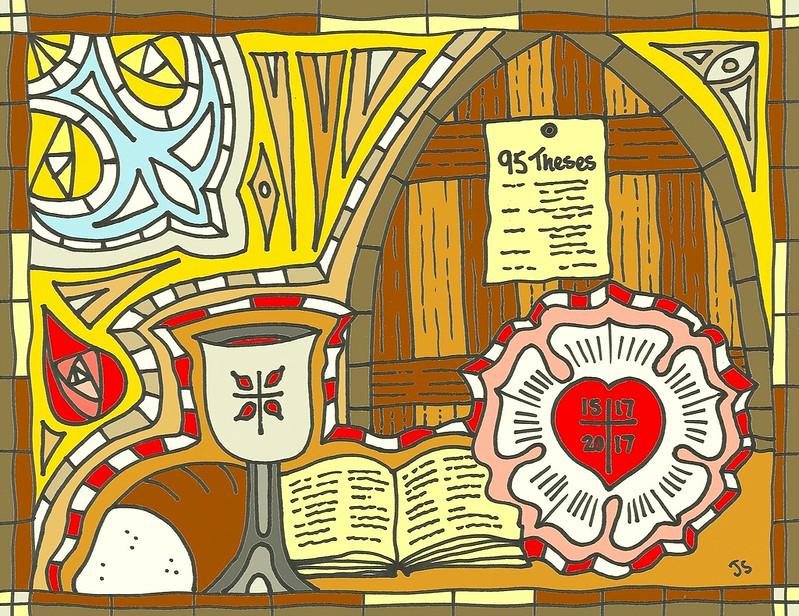
The date for Reformation Sunday in the church year falls as close to Oct. 31 as possible, to commemorate Martin Luther’s posting of his 95 Theses on the Wittenberg castle church door. Actually, we don’t know the exact date that he nailed his Theses to the door, urging the Roman Church to reform; it could have been as late as mid November! But we do know that he sent the Theses enclosed with a letter to Albert of Brandenburg, the Archbishop of Mainz, on Oct. 31, 1517.
Luther called for changes in belief and practice. He believed that individuals could be saved only by personal faith in Jesus Christ and the grace of God. He objected to the Church’s practices of works-based righteousness– pilgrimages, the sale of indulgences to obtain forgiveness, and prayers addressed to saints. He advocated the printing of the Bible in the language of the people, rather than Latin, so they could read and understand Scripture with the help of Gutenberg’s new invention: the printing press.
But it’s unfair to give all the credit for the Protestant Reformation to Martin Luther alone. He followed countless reformers of the Church calling for a return to biblical teachings. Some better-known ones who came before Luther include John Wycliffe, at Oxford University, and Jan Hus, at Charles University in Prague. Luther joins other Protestant reformers of the 15th and 16th Centuries–French Theologian John Calvin, Scottish Minister John Knox, and Swiss Pastor Ulrich Zwingli, who trace many of their theological understandings to the ideas of a person of color, born in the 4th century, A.D. I am speaking of the North African Saint Augustine of Hippo—in what is today Algeria.
And there are other, less famous people to remember and honor today, on Reformation Sunday. The writings, teachings, and lives of countless religious women over the centuries have also helped to shape the Christian Church around the world. Sadly, most people don’t know about them. Do you know of Hildegard of Bingen, Mechthild of Magdeburg, Julian of Norwich, Margery Kempe, Catherine of Sienna, Bridget of Sweden, Clare of Assisi, and Teresa of Avila? These are just a few whose stories and contributions to the Church are coming to light and being shared after hundreds of years of being overlooked or ignored.
But rather than make Reformation Sunday an ode to the heroes and heroines of the faith or focus on the historical differences and disagreements between Protestants and Catholics, let us, instead, consider the ongoing work of the Holy Spirit in every believer to bring about the Church’s transformation. For Reformation Sunday is about change!
This isn’t about us seeking to reform ourselves or the church according to our own personal preferences. That’s always a temptation! Presbyterians and other believers in the Reformed Tradition hold to the motto, Ecclesia reformata, semper reformanda, that is, “the church reformed, always reforming,’ according to the Word of God and the call of the Spirit.”
Our gospel reading in John today is about Christ inviting those who are beginning to believe in him to have a change of heart so they may follow him and experience new life. “If you continue in my word, you are truly my disciples,” he says, “and you will know the truth, and the truth will make you free.”
There’s only one problem with his statement—the talk of being “made free.” That puts them on the defensive and a promise becomes the obstacle to their following Jesus. “Made free from WHAT?” they want to know. They say with pride, “We are descendants of Abraham and have never been slaves to anyone.”
Does this surprise you? The history of the Israelite people, the whole story of Moses leading them out of captivity in Egypt, has been forgotten. They miss the point that Jesus is trying to make—the hope for all eternity for sinners, needing a Savior—in this world and in the world to come. The kind of freedom we have is the freedom from our bondage to sin and death.
That means living in confidence, sure of God’s loving purpose for our lives during the most uncomfortable or unhappy times. This is how the Spirit molds and changes us, when we go through the process of loss and grief, then come to experience God’s healing, growth, and love through the people God has sent to care for us and for us to care for them.
The encouragement during trials from the epistle of James comes to mind. “Consider it pure joy, my brothers and sisters,” he says in chapter 1, “whenever you face trials of many kinds, because you know that the testing of your faith produces perseverance. Let perseverance finish its work so that you may be mature and complete, not lacking anything.”
In my wedding reflection on Thursday, I told my youngest son how proud his family is of him. How happy we are that he and Andrea have found each other. How we love them both. How they are better together than they were apart.
I pray that the Holy Spirit that brought about their growth and transformation will continue to guide and strengthen them in their marriage and help them keep all the promises they made that day. And that the Lord would help them to be patient and kind. I know if they seek to love with patience and kindness, all the rest will fall into place.
This is what I pray for all of us. That our relationship with the Lord and one another will be like a strong marriage. We have chosen to live in loving covenant. We can’t help but deal with change as a congregation when the world around us is changing every day. Our calling and challenge are always to be faithful—to know Christ and to walk in his loving ways, as best as we can. And if we fall, to get back up again. To welcome the continuing reformation of the heart and mind of every believer.
Sometimes, we need to say, “I love you. I’m sorry. I forgive you—and I love you even more.”
The Lord will bless our church family with growth and maturity if we are patient, dear friends. If we are kind. Our Triune God is our perfect model for love!
The Lord is so patient. The Lord is so kind. The promise is that will not lack anything!
If the Son of God has made us free, we are free indeed!
Let us pray.
Holy One, thank you for your Word and the self-giving example of your Son, Jesus Christ, who invites us, right this moment, to embrace a change of heart and new life by faith. Thank you for the promise of freedom from the burden of sin and death through belief in the Son, our Savior, and commitment to drawing nearer to him in prayer, following in His ways as best as we can. If we fall, please lift us up. Encourage us when we are uncomfortable or unhappy about our life’s situation. Some of us are going through difficult times, dear Lord. Some of us are struggling with serious health challenges or grieving the loss of a loved one. Some of us are caring for a loved one with health problems, and we feel afraid for the future. Strengthen us each day, God of compassion, that we might continue in the ministry you have called us to as individuals and a church of Jesus Christ. Teach us to always be patient and kind, with our families by birth and marriage and our family of faith, especially in times of trial or differences of opinion. For you are so patient. You are so kind! In your Son’s name we pray. Amen.
Meditation on Philippians 4:1–9 (Pastor)
First Presbyterian Church of Smithtown, NY
Pastor Karen Crawford
Oct. 15, 2023

My son, Jacob, reached out to me by text message yesterday. “Hey, Mom. Can I call?”
Jacob moved to Colorado over Memorial Day Weekend. He had been living with us and going to college. Since then, he has lived with a friend, landed his first job in a CPA office, and moved into a studio apartment in Denver in August.
When I received his text, I called him. “Hi Jacob! How’s it going?” I asked.
“It’s going good,” he said. “But it’s getting cold. Did I leave a coat at the house?”
By the end of the call, I had ordered a winter coat on Amazon. I’m still his mother, right? He has had a few bumps in the road on his journey, making a new life in Colorado. His car didn’t pass emissions testing. He had to purchase a new catalytic converter. It was expensive. But he figured it out—found a mechanic and transportation when he was having his car repaired. He still likes his job, though he doesn’t want to do taxes forever, he said.
He has found a new hobby. He is learning sword fighting with his friend, the instructor, on Sunday afternoons. The important thing, he said, is to not be aggressive—to be gentle, so no one gets hurt.
When I hung up the phone, I laughed with relief. I was so worried when Jacob was moving out 5 months ago. Well, now I can truly say—our prayers have been answered. God has been faithful, and I am SO grateful. If only I could have seen ahead to this day—when I would know for sure that everything would be OK.
This passage in Philippians is one of my favorites in the Bible. Paul’s epistle to the Philippian church is a friendship letter at a time when letter writing was something of an art, taken seriously by ancient Greeks and Romans. This is hard for us to grasp in our culture of cell phones, text messages and emails, when few people sit down with pen and paper and take seriously the crafting of a letter.
Throughout all of Paul’s letters, we find a call to unity. This is no exception in Philippians, with his urging two women who are longtime friends and laborers for the gospel to be of the same mind and the one leading the church to help them reconcile.
If one theme could be chosen for this encouraging letter, it would be “joy.” This may be surprising when you consider that Paul wrote this letter when he was detained in a Roman prison, with no hope of release. He uses the Greek word Chara for joy twice in this passage and two more times for a word with the same root. “Rejoice,” he says. “Rejoice in the Lord.” This is number one for Paul’s instruction on how to live faithfully. Chara is a joy that is more than a happy feeling. It comes from the choice to trust that God will keep God’s promises. Joy is a fruit of the Spirit—a gift for believers who seek it.
Number two in Paul’s instructions is his call for a change in attitude, a new way of being and letting the world see we are different. “Let your gentleness be known to everyone,” he says. “The Lord is near.” Christ modeled gentleness in the face of aggression. In our society today, gentleness is seen as weakness. You and I now know it is a strength! Gentleness is also a gift from God.
Number three, “Be anxious for nothing,” he says. That’s a hard one to follow. People were anxious in the time of Christ, just like we are today. Jesus tells his followers in the Sermon on the Mount in Matthew 6, “Therefore I tell you, do not worry about your life, what you will eat or drink; or about your body, what you will wear…. (and) who of you by worrying can add a single hour to his life?” Jesus wouldn’t be telling people not to worry if they weren’t already worrying and didn’t have anything real to worry about. They did—just as we, too, have legitimate things to concern us today.
Number 4 in Paul’s instructions is, “But in everything (meaning every worrisome situation) by prayer and supplication with thanksgiving (trusting that God will hear your concern and respond) let your requests be made known to God.” I hear echoes of Jesus saying in Matthew 7:7, “Ask, and you shall receive; seek, and you will find; knock, and the door shall be opened for you.”
Here’s the promise when we let go of anxiety and choose to turn our worries into prayer, with thanksgiving: we will have the peace of God.
What caught my eye, studying this familiar and beloved passage this week, was that, along with telling us to turn our worries into prayers with thanksgiving, Paul tells us to take control of our thinking. Think on THESE things, he says. This was an AHAH! moment for me in seminary, when I was homesick and missing my husband and children. I don’t have to keep thinking the thoughts that make me sad or anxious. I can choose to think other thoughts. I can give the anxious thoughts to God.
Coming from a man in prison, with plenty of time to think about his situation, and remember all the mistakes in his life, especially the ones before his conversion, his advice is sound.
This isn’t the first time Paul has talked about the battle for our minds and how we may fight back. In Colossians chapter 3, he says, “Set your minds on things above, not on earthly things.” In Second Cor. 10:5, he tells the church, “we take every thought captive to Christ.” In Second Cor. 2:16, he assures us that we have “the mind of Christ.”
Another way of thinking of this list of things to think about is seeing it like a filter in a search engine. Have you ever used filters in a search engine on your computer? You put in key words and phrases and your search is narrowed to include these key words and phrases, while leaving out the results without those key words and phrases. So, when Paul says, “Think on THESE THINGS,” he means don’t think about anything that isn’t these things and especially don’t think about what is opposite of these things:
Friends, what is the promise? Peace. In Greek, this is eirene. Not a human peace that we create for ourselves. This is the peace of God that is a gift of God, a peace of mind that arises from our reconciliation with God in Christ. This is a peace that surpasses all understanding—meaning it isn’t logical to human beings. It doesn’t make sense to have peace when you are Paul, detained in chains in a Roman prison, unless it is eirene, reconciliation with God, which no one can ever take away from us! What a beautiful image Paul supplies in this letter of friendship of the peace of God guarding our hearts and our minds in Christ Jesus.
The call from Jacob was truly a gift after an anxious week. If you know me well, you know that I am a worrier, especially when my plate is full and I am not allowing myself enough rest. Is that true for you? Anxiety is worse when you are tired? Rest today, dear friends, rest and receive Christ’s peace. I will do my best to rest, as well.
Sometimes, the scriptures that are our favorites are the ones that speak to our own struggles. In this passage in Philippians, we find hope that we aren’t the only ones who struggle with anxiety. This has been a problem for thousands of years.
We are living in anxious times, brothers and sisters. We will have anxious thoughts every day. If we didn’t, we wouldn’t be human beings. Remember Paul’s list of what to think about when you are tempted to be anxious or let your thoughts drift to negative things. They have to pass this test:
Are the thoughts honorable, just, pure, pleasing, or commendable? If not, let them go. They aren’t God’s will for you! The same goes for what people are saying to you. If the words aren’t honorable, just, pure, pleasing, or commendable, excellent or worthy of praise, change the subject to something more positive and uplifting for both of you. If that still doesn’t work, then politely end the conversation. It’s not good for you or for them to continue with that kind of talk.
When the worries come, as they will, turn them into prayers, the kind where you are listening for God and opening your heart for God’s healing. Don’t just pray the kind of prayers where you are going on and on about your problems and the problems of the world—and getting yourself more and more upset. Pray for the Lord to help you carry your burden of anxiety. Then, let the Lord carry your burden. Better, yet, leave it at the foot of the cross.
If only we could face every anxiety-provoking situation with the hope that God’s got this! It may take time, and there will be surprises. The future is unknown to us. But we can trust our loving God and all the promises in Scripture. If only I could remember how God has answered so many prayers for me in my life so far, including the one for Jacob’s wellbeing.
God has been faithful, and we are SO grateful. If only I could have seen ahead to this day—when everything would be OK.
With Paul, I say, “Rejoice in the Lord. Again,” I say, “rejoice!” And, “may the peace of God guard your hearts and minds in Christ Jesus our Lord.”
Will you pray with me?
Let us pray.
God of peace, we thank you for the letters of Paul, his encouragement for churches of every time and place. Thank you for your faithfulness —helping us with every anxious situation and your promise of always being there with us in our daily struggles. Give us, as Paul says, the mind of Christ; let us be united as Christ’s Body, not allowing any harmful, divisive spirit to dwell with us in our congregation. Remind us, today and always, when we are tempted to be negative or anxious that you have a good future planned, waiting to unfold. And that we will be OK. Today is the day to rejoice in the Lord, no matter our circumstances. Again, I say, “Rejoice!” We pray in Christ, with thanksgiving. Amen.
Meditation on Exodus 20:1-4, 7-9, 19-20
First Presbyterian Church of Smithtown
Pastor Karen Crawford
Oct. 8, 2023
I don’t know how old I was when I first heard about the 10 commandments. Did we learn about them in Sunday School? Maybe it was Vacation Bible School.
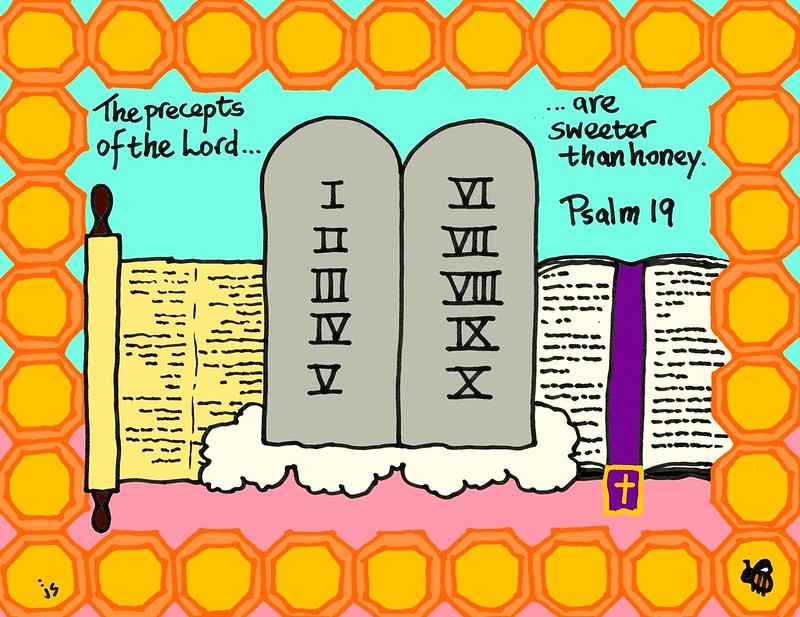
When was the first time you heard about the Ten Commandments? I remember learning about them when I was young, before I really understood what they all meant! Some of the Commandments are definitely for a mature audience, aren’t they? I can just hear some of Kathy Seymour’s class on the drive home from church, “Mommy, what’s adultery?”
I do recall that I had to know the Ten Commandments, along with the Apostle’s Creed, and the Lord’s Prayer for my Confirmation in the Lutheran Church. Did you have to know those, too?
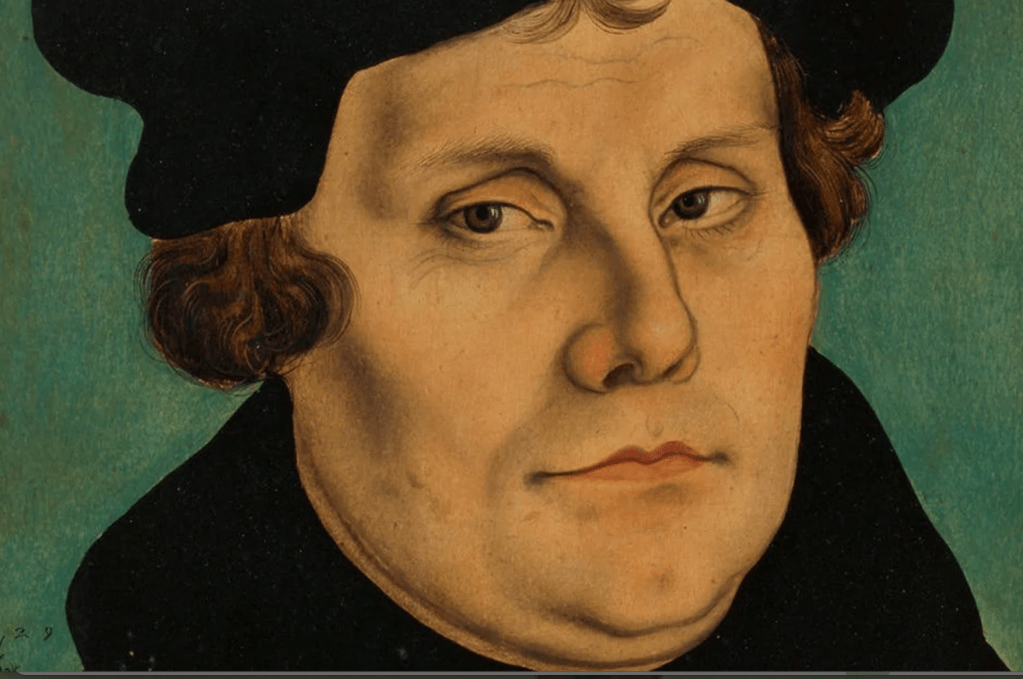
Martin Luther, a priest and professor of Theology at Wittenberg University, was big on Christian education for children. Long before Sunday School programs, he wrote the Small Catechism, also known as Luther’s Little Instruction Book. This 1529 publication was a guide for fathers to teach their children and servants the essentials of the Christian faith. This was one of Luther’s most influential works—even more influential than his 95 Theses that he nailed to the door of the Wittenberg Church on Oct. 31, 1517.
I opened Luther’s Small Catechism yesterday, and what did I find on the first page of Section 1? The Ten Commandments and a simple but not childish explanation of each one. It was an attempt to make them understandable for all ages and help us apply them to our daily lives. The explanations begin with a question, “What does this mean?” as if a parent is speaking with a child.
For example, “The First Commandment: You shall have no other gods. What does this mean? We should fear, love, and trust in God above all things.”
Each explanation after the First Commandment begins with, “We should fear and love God so that…” Meaning, our love for God will lead to our obedience to God’s commands.
Moving on to the “Fourth Commandment: Honor your father and your mother. What does this mean? We should fear and love God so that we do not despise or anger our parents and other authorities, but honor them, serve and obey them, love and cherish them.”
“The Fifth Commandment (is) You shall not murder. What does this mean? We should fear and love God so that we do not hurt or harm our neighbor in his body, but help and support him in every physical need.”
Are you wondering what he will do with the Sixth Commandment, “You shall not commit adultery?” “What does this mean?” he begins. “We should fear and love God so that we lead a sexually pure and decent life in what we say and do, and husband and wife love and honor each other.”
The Ten Commandments that Moses receives on Mount Sinai is a highpoint for God’s prophet in the wilderness journey. God has sustained the Israelites with bread from heaven and water from a rock. The Lord has been with God’s people, not only rescuing them from their Egyptian enemies through the crossing of the sea on dry land but saving them from an attack by King Amalek’s forces at Rephidim in chapter 17.
A low point is coming. A really low point—when Moses descends the mountain and discovers that the Israelites, losing patience while waiting for him, urge his brother, Aaron, to melt down their jewelry and make a golden idol for them to worship, thereby breaking the most important Commandment of all, “You shall have no other gods before me. You shall not make for yourself an idol, whether in the form of anything that is in heaven above or that is on the earth beneath or that is in the water under the earth.”
But in Chapter 19, before the Lord gives Moses the Commandments—the sum of which, Jesus will say, are LOVE of God and neighbor—the Lord assures Moses of the Lord’s continuing love and care for the House of Jacob. “You have seen what I did to the Egyptians,” God says to Moses, “and how I bore you on eagles’ wings and brought you to myself. Now therefore, if you obey my voice and keep my covenant, you shall be my treasured possession out of all the peoples. Indeed, the whole earth is mine, but you shall be for me a priestly kingdom and a holy nation.”
French lawyer John Calvin, writing after Luther as an exile in Geneva, Switzerland, in 1559, saw the foreshadowing of Christ in the Ten Commandments and the other laws of Moses. He writes in his Institutes of the Christian Religion how Peter “neatly turns the saying of Moses, teaching that the fullness of grace that the Jews had tasted under the law has been shown forth in Christ: “‘You are a chosen race,” says 1 Peter 2:9, “a royal priesthood.’” (350) Calvin writes that the Law was given “not to restrain folk of the Old Covenant under itself, but to foster hope of salvation in Christ until His coming.”(349)
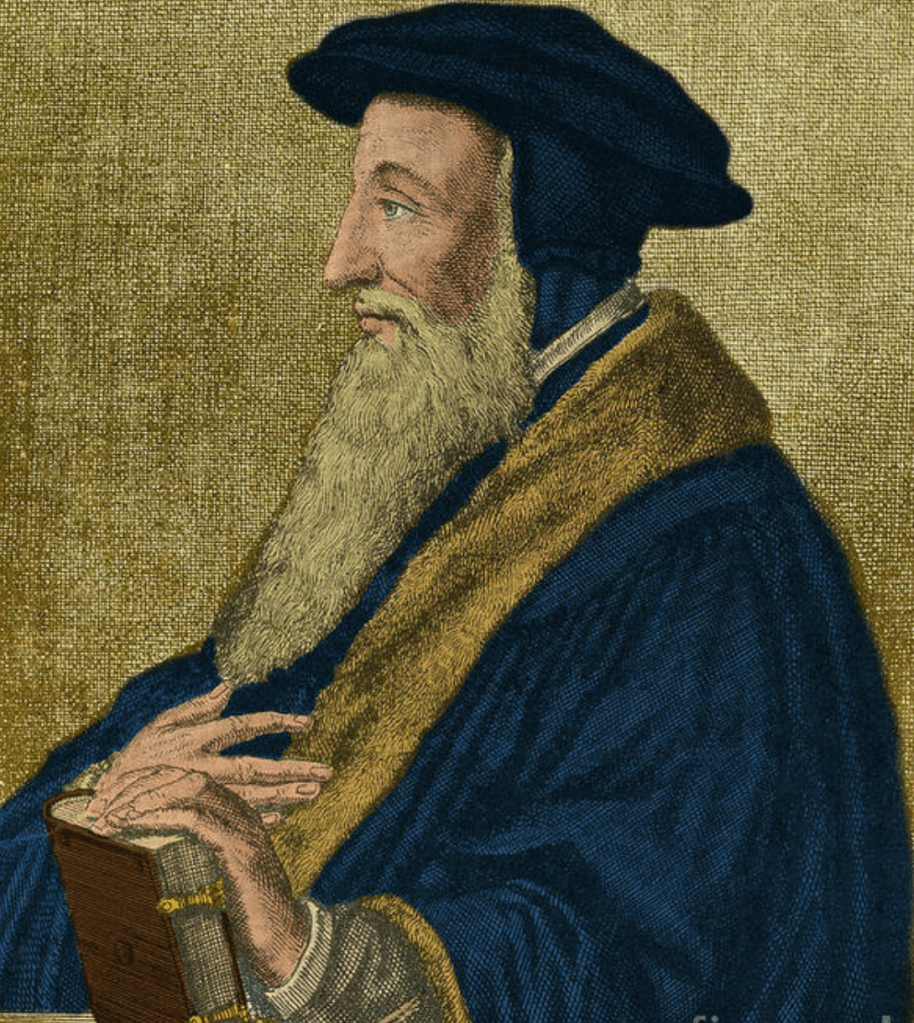
In the Commandments, we see the righteousness of God! And, at the same time, it is as if we are looking in a mirror that “discloses our own sinfulness,” Calvin says. (354) The fulfillment of the law, no matter how hard we try, is impossible for us! (353).
That doesn’t mean we shouldn’t try to live in obedience to them, with God’s help. Christ tells us in Matthew in the Sermon on the Mount, “Do not think that I have come to abolish the Law or the Prophets; I have not come to abolish them but to fulfill them. For truly, I say to you, until heaven and earth pass away, not an iota, not a dot, will pass from the Law until all is accomplished.”
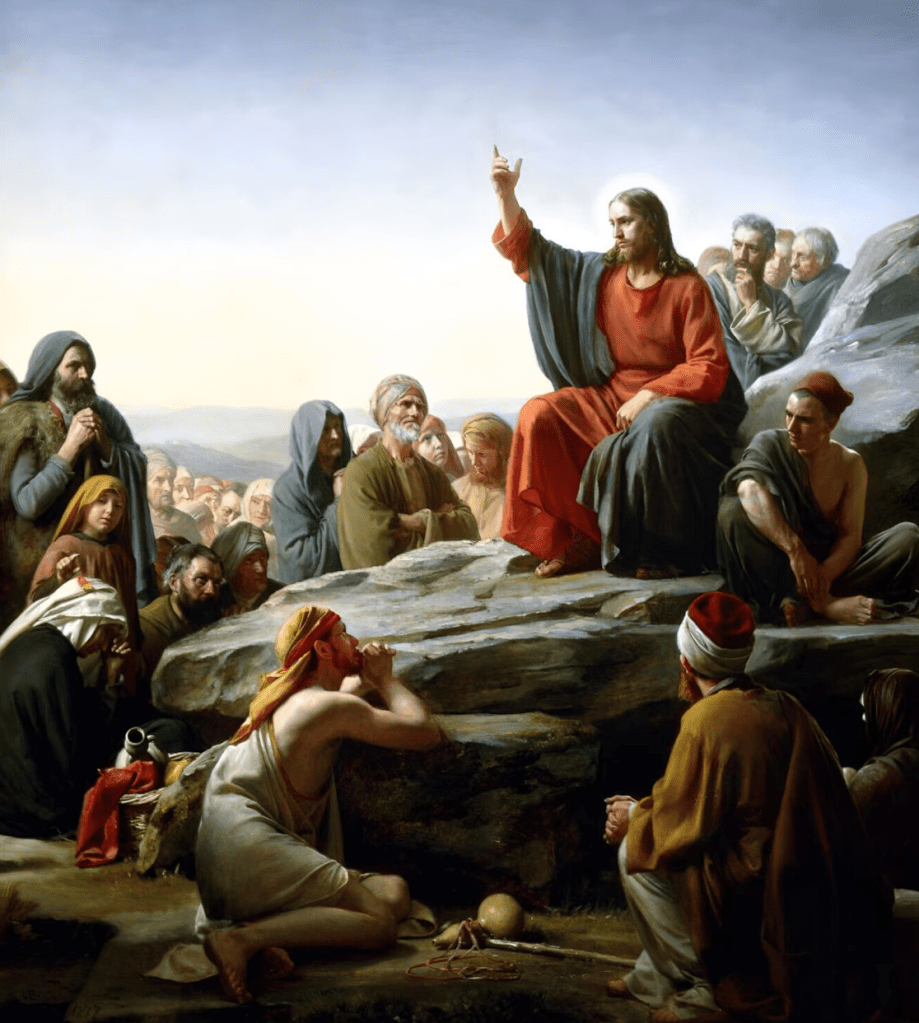
Jesus teaches his followers that it isn’t enough to know the commandments and be able to recite them, like some of us did for our Confirmation. It isn’t enough to know OF them and say we believe in them. We have to live our lives in a way that reveals our faith and obedience to them. In John 14:15, Jesus says, “Anyone who loves me will keep my commandments. My Father will love them, and we will come to them and make our home with them.”
In this age, when every day, we watch the news and learn of such terrible, hateful, and violent things happening in the world, the Ten Commandments—the sum of which are love of God and love of neighbor—are more important to live out than ever!
My favorite story of Jesus that reveals his attitude toward the commandments is the account of the rich man or rich young ruler in Matthew, Mark, and Luke. You know what I am talking about? In this story, Jesus teaches us what love is, what love does, with a large helping of God’s grace, as if we are taking a college course called, “Love 101.”
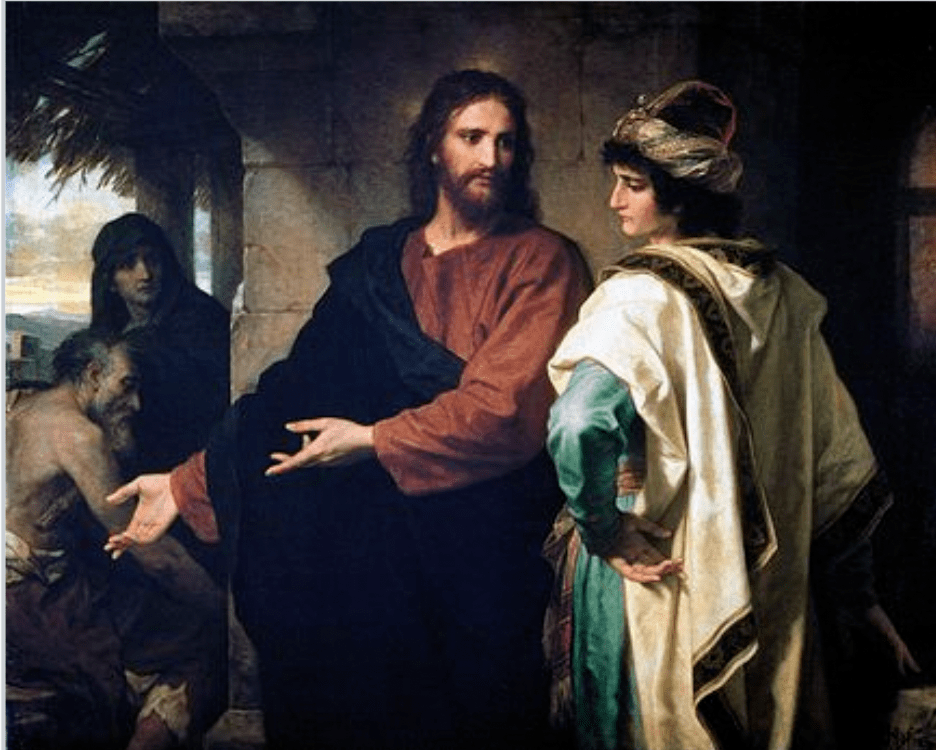
If you don’t remember anything else from today’s message, but the Ten Commandments are God’s Love 101 for the faith community, and the story of the rich man and Jesus, then you have all that you need. You can leave church today equipped to love and do God’s will.
Here goes….
17 As he was setting out on a journey,” begins the account in Mark 10, “a man ran up and knelt before him and asked him, “Good Teacher, what must I do to inherit eternal life?” 18 Jesus said to him, “Why do you call me good? No one is good but God alone. 19 You know the commandments: ‘You shall not murder. You shall not commit adultery. You shall not steal. You shall not bear false witness. You shall not defraud. Honor your father and mother.’ ” 20 He said to him, “Teacher, I have kept all these since my youth.” 21 Jesus, looking at him, loved him and said, “You lack one thing; go, sell what you own, and give the money to the poor, and you will have treasure in heaven; then come, follow me.” 22 When he heard this, he was shocked and went away grieving, for he had many possessions.
23 Then Jesus looked around and said to his disciples, “How hard it will be for those who have wealth to enter the kingdom of God!” 24 And the disciples were perplexed at these words. But Jesus said to them again, “Children, how hard it is to enter the kingdom of God! 25 It is easier for a camel to go through the eye of a needle than for someone who is rich to enter the kingdom of God.” 26 They were greatly astounded and said to one another, “Then who can be saved?” 27 Jesus looked at them and said, “For mortals it is impossible, but not for God; for God all things are possible.”
Let us pray.
Holy One, thank you for your Ten Commandments, given to Moses and passed down to us, through all the generations, to give shape to your community of faith. Thank you for showing us love and grace and teaching us how to love you and our neighbor by living in obedience to your Word. We thank you and praise you for having a plan, from the foundation of the world, for sinful human beings who would not be able to keep all your commandments, no matter how hard we try. Thank you for giving us your Son, our Savior, Jesus Christ, the perfect fulfillment of your Law, through whom you have made all things possible to those who believe. Amen.
Meditation on Exodus 17:1-7
First Presbyterian Church of Smithtown
World Communion Sunday
Pastor Karen Crawford
Oct. 1, 2023
Our presbytery gathered for worship and a meeting yesterday at Grace Presbyterian Church in Selden. The church building was small. It needed some paint. The yard was a bit overgrown.
It was pouring rain, and I was glad that Jim and I, Marci and Dulcie arrived early. We found good parking spaces and shared one of the round tables in the room that functions as a worship space, fellowship hall, and community meeting room.
Elders and pastors filled up the seats.
The work of preparing food and drink came down to just a couple of ladies, longtime members of the host congregation. One came to the microphone and told her story and the church’s story. How it was two congregations of differing denominations. They came together and built a new church. They called it, “Grace.”
She had apologized to me for not having everything ready when we arrived. She said, “We couldn’t get in here last night because there was an AA meeting.” The little church hosts AA meetings every night and has its own food pantry! What they have—they want to share.
The moderator of our presbytery opened the meeting and our worship, speaking of the love in that place. Others would come to the microphone to lead us in worship or share a report—and they, too, spoke of the love. When the presbytery recognized the names of elders gone home to be with God over the last year, a woman danced and praised the Lord with her face, her hands, her arms, her feet, her whole body. She danced as Tasha Cobbs Leonard sang,
He knows my name
Yes, he knows my name
He knows my name
Yes, he knows my name.
It was a presbytery meeting like I had never experienced. I am trying to figure out what was different. Was it the people around me? Sometimes our presbytery has seemed cold and unwelcoming. Was it the small church building. The informal worship?
Or was it I? Had I changed since the last presbytery meeting?
Was it the lady who danced, praising God with her face, her hands, her arms, her feet, her whole body, as Tasha Cobbs Leonard sang,
So now
I pour out
My heart to you
Here in
Your presence
I am made new
You know my name
You know my name
You know my name.
Something is different about Moses in chapter 17 of Exodus. Different from 16, when the Lord says to God’s people, starving in the wilderness, “I’m gonna rain bread from heaven for you, each day!”
Moses has changed—not in a good way. The Israelites are still struggling with the transition to a new kind of life—freedom from captivity, freedom to come to know and follow their God. They are still looking to Moses and Aaron for help—and they are still afraid that this wilderness journey will end badly. Now the whole congregation is quarreling with Moses. They “quarrel” and “test” the Lord, so much so that the place formerly known as Rephidim, Hebrew for “place of rest,” is now called Massah, which means “testing,” and Meribah, which means “quarrelling.”
They say to Moses, “Give us water to drink!”
Moses seems to be at the end of his compassion. His store has run out! He asks why they are quarreling with him, while “the people thirsted there for water, asking, ‘Why did you bring us out of Egypt, to kill us and our children and livestock with thirst?’ He cries out to the Lord on their behalf, much like he did when they were hungry in chapter 16. But he asks God, “What shall I do with this people? They are almost ready to stone me!”
He says, “This people,” not MY people or YOUR people. He says, “THEY”—not US. He doesn’t count himself as one of the flock.
I read this week how each person on this desert crossing would require six liters of water per day. Six liters! Per day! The large animals would, of course, need more. We are talking about thousands of people—men, women, children, and infants.
Today, as I study this passage, I am startled that I am seeing so much weakness in Moses, the most revered prophet of Israel, presumed author of the entire Torah—the law or teachings of Judaism. Yes, he is rightly struggling against all odds to help the people of God in unthinkable, dangerous circumstances. But I see a failure in leadership. He seems distant. His heart isn’t in it anymore.
Yet in his weakness is exactly where the Lord God meets Moses, once again. And this is where God meets you and I—as we humbly seek God’s help, knowing that we don’t have all the answers; we don’t know the path ahead. We know that no matter what happens, our loving God will be there with us, too.
Moses will be kinder and more compassionate another day—when he is trying to solve all the people’s problems and acting as a judge in chapter 18. When this crisis ends, his priestly father-in-law, Jethro, will visit him in the wilderness, bringing Moses’ wife and sons. He will tell him that he’s trying to do too much on his own. That he needs to train up elders to help him. He follows his father-in-law’s wise advice.
On this day, when the people are ready to perish of thirst, the Lord will send him out ahead of the people, with some elders to witness the miracle. This is a shared experience that will bind together the community of faith and inspire them to awe and wonder. This story will be carried and retold by the Israelites from generation to generation before it is ever written down. God tells Moses—take your staff in your hand, you know the one that you used to strike the Nile, and the one that you used to part the Red Sea.
Strike the rock, he says. Water will come out. The people will drink. He does. It does. And they do.
Yesterday, at the presbytery meeting, I felt the love all around. My heart was open to the love—and I was willing to share it with others. Yes, I was different. Maybe others were, too.
At one point, a man asked me if Grace were my church. I said, “No, but WELCOME.” He asked for directions. I pointed the way.
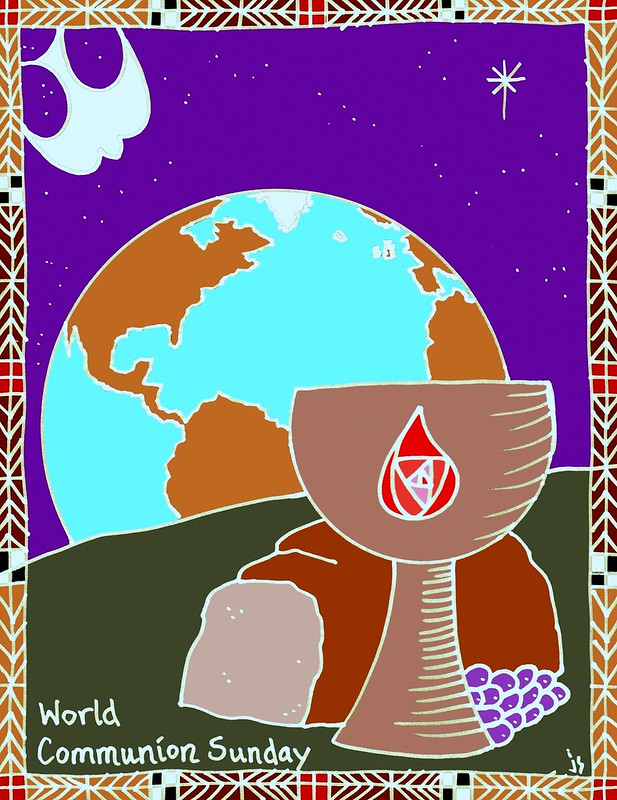
When we celebrated Communion—and it was just those tiny, sealed cups of juice with the little wafers wrapped inside—it was emotional for me. We experienced a spiritual oneness, especially with the invitation to the table. Pastor Rachel invited all who had regrets—all who had ever said something they wished they hadn’t said. All who had done something they wished they had never done. All were invited to come to the Lord’s Table.
It’s a temptation for us to see some people in the Body of Christ as separate from us. Not just different, but separate. Not us. They don’t go to our church. They aren’t members of our denomination. They have different views, different ways of worshiping and living out their faith.
On World Communion Sunday, we are reminded of our Oneness in Christ, no matter what we think about Christians who seem so different. To separate ourselves from our neighbors in Christ is not what the Lord desires of us. When Jesus prays for his followers, he prays that we would all be ONE.
It’s also a temptation for us to see the presbytery as something separate from our congregation—but that’s not how it is with Presbyterians. WE are the presbytery. I am the presbytery. YOU are the presbytery. If we want to see change in the presbytery, then we have to BE part of the change. I will say it even more directly. If we see that change is needed, then God is calling us to help with the change.
We can’t be lone Christians, just like Moses couldn’t be everything to the Israelites or be separate from them. We have to be committed to a worshiping community. We are called to have a church home. Be one of a particular flock. We have to allow the SPIRIT to do its work of transformation and that happens when we are living and growing in community. Sometimes, it’s a painful experience. Growth. The work begins in our hearts.
But you and I – we have the living water that Jesus promised the Samaritan woman at the well, the one who was an outcast to her community. Jesus promises his living water to all the Samaritans—people outside Christ’s own faith community! You see, there’s no boundaries on living water. There’s no limit. It’s offered to all people! It’s a well that never runs dry. Jesus says in John 4, “those who drink of the water that I will give them will never be thirsty. The water that I will give will become in them a spring of water gushing up to eternal life.”
Today, at the Lord’s Table, we will be nourished and strengthened! We will be made ONE, again, with all Christ’s followers—in every time and place. May we be made ready to be sent out to love, serve, and give of ourselves—all that we have and all that we are—without fear that we will somehow run out of resources and not have enough for ourselves.
May we never question, as the Israelites did in times of crisis, “Is the Lord among us or not?” Let us trust in the abundance of a God who can make water gush from a rock in the wilderness.
May we be filled to overflowing with a joyful spirit, so that we rise and dance like the woman at a tiny church called Grace. The one who danced to praise God with her face, her hands, her arms, her feet, her whole body.
So now
I pour out
My heart to you
Here in
Your presence
I am made new
You know my name
You know my name
You know my name.
Let us pray.
Holy One, Thank you for knowing our names and never forgetting us. We invite you now to pour into us your Living Water so that our joy will overflow. Empower us to live abundantly, not holding onto what we have, fearful of not having enough. Thank you for the well that is Jesus the Christ—the well that never runs dry—a spring of water gushing up to eternal life. Break down the walls and barriers that human beings put up to separate ourselves from others. We know that you desire us to be united in faith and are called to do our part to heal and help a broken world. Stir us to a deeper commitment to our church family, a stronger walk with you, and a deeper, more loving relationship with your Son. In His name we pray. Amen.

Meditation on Exodus 16:2-15
First Presbyterian Church of Smithtown, NY
Pastor Karen Crawford
Sept. 24, 2023

Dear friends, this a special day in the life of our ministry together. A year ago, we celebrated the official beginning of our ministry at my service of installation.
Do you remember that day? Does it seem longer than a year has passed? It does to me.
And at the same time, does it seem like yesterday? Me, too.
Tomorrow, I am celebrating another ministry milestone—the anniversary of my ordination on Sept. 25, 2011.
When I accepted the call to serve my first flock, Jim and I sold our home in York, PA, and moved to rural southwest Minnesota with two of our children and two dogs. We lived in a manse right next to the church. It was an easy walk, except in winter, when the snow was deep, and the ice was thick. It was safer to drive. I knew my way around the building, where all the light switches were in the dark. I did have to watch for bats, though. That was my first experience with church bats.
I never went hungry in Minnesota. They had plenty of potlucks, only they called them Hot Dishes. And every Sunday, after worship, we gathered around tables in the fellowship hall, and had what they called “a little lunch.” They drank black coffee and ate refreshments that people brought. Often the goodies included some kind of a dessert cut into bars.
The first time that I ever had rhubarb was in Minnesota! Have you ever had rhubarb? They made rhubarb pie, rhubarb crisp with a meringue topping, and rhubarb jam, and a sweet syrup for ice cream. I never quite got used to rhubarb! Food in every faith community is for comfort and friendship as much as nourishment, isn’t it? They used to serve a hot meal at funerals—scalloped potatoes and ham, buttered bread, coffee and cake.
They prepared a feast to follow my ordination service, but that day was especially memorable because I received a call that morning that one of my elderly church members was dying. The family asked me to come. After the morning worship service, I drove to the hospital, 25 miles away on country roads. When I arrived at George’s room, he had just taken his final breath. His sons, daughters in law, and their children were gathered around him.
The room was silent and still. I remember vividly the beauty of the loving expressions on the family’s faces—shining with tears. I felt the breath of God all around.
It was one of the holy moments of ministry, when the Lord God made God’s presence known and provided for all our needs in ways that sometimes took us by surprise.
It was the first of many holy moments to come.
The holy moment for Israel in today’s passage in Exodus begins with a crisis. A crisis of food will lead to a crisis of faith. Six weeks has passed since the Israelites fled Egypt and crossed the sea on dry land to escape the Egyptian armies. They have overcome seemingly insurmountable obstacles, including bitter, undrinkable water in the wilderness of Shur after the crossing of the sea. Moses cried out to the Lord and God showed him a piece of wood and told him to throw it in the water. Moses threw in the wood, and the water became sweet.
In the wilderness of Sin, where there’s no food, the whole congregation complains against Moses, saying, if only we had died, “when we sat by the fleshpots and ate our fill of bread.” They longed for the comfort of the food that filled their bellies and meant home and family to them, the food of their community, though it would mean returning to cruel treatment under slavery. Six weeks after they fled captivity, they wanted to go back to Egypt. They wanted to go home.
When things go wrong, people begin to question if God is still with us, if God still cares, maybe even if God exists at all.
So the Lord says to Moses, “I’m gonna rain bread from heaven for you, each day.”
The Lord God listens to their complaints and doesn’t punish them. The Lord graciously responds by providing for their needs. Not only does God provide bread, the Lord sends quails to cover the camp in the evening. They have meat to eat!
The problem is that can’t always see the miraculous provision of God—that the Lord has helped them every step of their journey. This is part of Moses’ calling to help them see God and believe in God’s love. They are just beginning to learn what it means to be people of faith. The first time they see the fine, flaky substance, they ask one another, “What is it?” Moses says, “It is the bread that the Lord has given you to eat.”
God raining bread from heaven for the Israelites is a defining moment for them. The story is repeated over and over in the wilderness years and in the exile years in Babylon, when they are a long way from home, their faith begins to waiver, and they need encouragement. Under Moses’ leadership, they become God’s people in the wilderness, learning to trust in the One who feeds them and provides for their every need, every day.
Centuries later, Jesus will recall the miraculous provision for the Israelites when he teaches his followers to pray, “Give us this day our daily bread.”
In the gospel of John, Jesus will use God’s miraculous provision in the wilderness to explain the new thing that God is doing in and through his body, with the promise of forgiveness and eternal life.
“I am the living bread that came down from heaven,” Jesus says in John 6. “Whoever eats of this bread will live forever; and the bread that I will give for the life of the world is my flesh.”
As I look back on 12 years of ordained ministry, I remember the kindness of people—the friendship. I remember the love and being invited to share in so many intimate, holy moments with God’s people.
Today, we have experienced a beautiful, holy moment in ministry with our welcoming of Stella Rae into the Body of Christ through Baptism.
I had a funny thought last night, when I was thinking of the mysterious plan that God has for every person. Most parents aren’t thinking, at their child’s Baptism, that their daughter or son may someday become a pastor. I am sure that my parents weren’t thinking, in the 1970s at my Baptism at age 13, that I was going to grow up to be a pastor. That was a big surprise to them—and to me when I heard the call of God to pastoral ministry in my 40s!
What if God wants Stella to pursue ordained ministry? Wouldn’t that be amazing?
We have no idea what the Lord has planned for our young people. But it all starts with Baptism! It’s up to us to nurture the faith of every child in our flock and treat each one as if their faith is going to make a difference in the Kingdom of God and in the world today. Because it will!
In my first year of ministry at Ebenezer in 2011, I often wondered what God was thinking. I was so nervous—afraid to make a mistake. I wasn’t sure that I was cut out for a minister’s life. I hardly slept on Saturday nights because I was worried that my messages weren’t good enough. But my first flock welcomed my gifts for ministry, and they showed me and told me what they needed from their pastor. They let me be the person that the Spirit was helping me to be. Their faith inspired me! I will always be grateful for my Minnesota flock. We experienced many holy moments together.
A couple of hours before my service of ordination and installation, I was in a hospital room, holding the hand of a longtime member who had gone home to be with the Lord. With the family gathered around, I prayed my first prayer of comfort after a death. It was my first death as a pastor. It would be my first funeral a few days later. A couple of hundred people came. We walked up to the cemetery in a long procession, the church bell tolling, again and again. Afterward, we ate scalloped potatoes and ham, buttered bread, coffee and cake.
Looking back, I only remember the feeling of peace that came over me and settled in the hospital room. The Lord God was there for us in our moment of need.
The Lord God who provided for Moses and the Israelites in the wilderness will continue to listen to our prayers and provide for our church family. We can trust the One to whom we pray, “Give us this day our daily bread.” The One who sent the Son to be our living bread from heaven, the bread that he offers to all people for the life of the world.
The One who heard all the complaints of the Israelites and responded not in anger, but in mercy and grace,
“I’m gonna rain bread from heaven for you!”
Let us pray.
Holy One, thank you for your Son, our Living Bread from heaven who offers to all who partake and trust in him abundant and everlasting life. Thank you for your patience with us when we complain, like the ancient people of God, who only wanted the comfortable food from slavery and were suspicious of the new flaky substance on the grass. Help us to trust in your loving, daily provision for us—for all our needs, body, mind and spirit, when we pray, “Give us this day our daily bread.” And thank you for the children of our congregation, especially baby Stella, whom you claimed today in her Baptism. Grant us wisdom and creativity to nurture the children so that their faith will make a difference in your Kingdom and in this world. In the name of the Living Bread we pray. Amen.
Meditation on Matthew 18:21-33
First Presbyterian Church of Smithtown
Pastor Karen Crawford
Sept. 17, 2023

Jim and I have been blessed with many sweet pets. But there’s one particular fur baby who touched our hearts in unexpected ways. Unexpected would have been a good name for the orange and white stray who showed up in the parking lot of my rural Minnesota church one day. He trotted over to me, meowing, tail up in the air, as if he expected good things.
He was a big cat. He let me pick him up and hold him on my shoulder right away. He had a loud, strange purr—as if he had some loose change rattling around inside of him.
We had two dogs back then—a beautiful sheltie named Molly and a cutie pie Pomeranian named Mabel. No cats—and we weren’t looking for one.
The scruffy looking orange cat with a white belly that swung back and forth when he walked followed me as I made my way home to the manse, next to the church. He turned on the charm on the front steps, climbing into my lap when I sat down. He had a way of putting his face under the crook of my arm, as if he wanted to hide from the world. I gave him food and water. Then, I left him on the steps and went inside. He’d be gone by morning, I thought, like the other strays that came and went.
That night it poured. The cat bedded down in our front bushes and cried all night long. He hated the rain. I couldn’t sleep and either could our son, Jacob because of the yowling. In the morning, Jim went out early with the dogs, saying to me, “Don’t let that thing come in the house.” As soon as he went out, I opened the door. The cat came in. I fixed him a nice bowl of dry dogfood—beggars can’t be choosers—and he never slept outside again. We named him Melvyn.
Jim didn’t trust the cat roaming the house at night and didn’t want him to sleep in our room. Melvyn had to stay in the unfinished basement. He was terrified down there. He cried and ran around in a panic that first night. I opened the door and let him come upstairs in the early morning hours. I went back to bed, and he scratched at our closed bedroom door.
“He wooooooo?” He asked, then a little louder, when he heard me giggling. “He wooooooo?”
He slept in our bed every night after that, purring loudly, with the strange rattling noise. When Melvyn was happy, he wanted the world to know.
“I think he’s plotting to kill us,” Jim said.
When I opened the car door to take him to the vet for his first check up, he jumped inside like he was used to car rides. I could almost hear a country music soundtrack playing, “On the road again. I just can’t wait to get back on the road again.”
The vet told us he hadn’t always been a stray. He was neutered and declawed, and, get this, didn’t have worms or fleas. At one time, he had been someone’s house cat. But he’d been living on his own for a while. He was missing patches of hair and had scars that were once wounds. The vet recognized him, saying, “You’ve been here before, haven’t you?”
We often wondered what stories Melvyn could tell if he could tell us about his previous lives. The vet figured by his teeth that he was at least 7 years old. Probably older.
It was an adjustment period—Melvyn getting used to living with us and us with him. He didn’t mind being indoors as long as we were with him. If we left the house, he would go wild—running all over the place, knocking things over, climbing to the top of the kitchen cabinets and refrigerator. Getting into things. He would act like he was starving as soon as we left. One time, he knocked over a plastic container of dry dog food left on the kitchen table while we were out. When we got home, he was on the table, and the dogs were having a feast of dry food spilled all over the floor. That night, they had a tummy ache.
The wild, panicked behavior continued, every time we left the house. He was obviously traumatized by something in the past.
One Saturday, we discovered that he had helped himself to the Communion bread while we were out. We had bought the French bread loaf for the church service the next morning. Melvyn, home alone, had knocked it off the counter, dragged it across the kitchen floor and chewed off one end. The closest actual grocery store where we could buy bakery bread was about 25 miles away. Jim suggested that we could just cut off the part where the cat had eaten.
“Not my Jesus bread!” I said. That was the only time I felt frustrated with Melvyn. But how could you stay mad at such a sweet creature?
Later that night, he was purring loudly in our bed. He was one grateful kitty, happy that we had come home to him and kept filling his food and water bowls.
It was months before Melvyn started to calm down when we left the house. I think he had finally come to the realization—these people love me. They’re not going to hurt me. They aren’t going to abandon me, even if I do something bad. They’re going to forgive me.
It took time.

He grew increasingly calm and peaceful as the years went by. He never minded car rides, not even to the vet. He rode with us all the way from Minnesota to Florida, when I accepted a new call near where my parents lived. He never made a sound! He rode with us in the car all the way from Florida to Ohio, when I accepted a call to a new church family there. He adjusted to every new home, although he was cold in Ohio and slept on the rug in front of the hallway heat vent during the day.
He always knew that he was one of the family. He belonged. He never minded the two dogs, although they minded him, in the beginning.
Melvyn taught us that LOVE changes us. When someone loves us, unconditionally, and we know to whom we belong, then we have peace—and we can’t help but offer that same kind of love and grace to others. The root of Melvyn’s grace, I believe, was his gratitude to us for saving his life! He never had to sleep outside and go hungry in a Minnesota winter again.
This is not one of my favorite passages in Matthew. I actually end the reading before the lectionary stops because of the harsh warning at the end—of how God will punish us if we fail to show mercy and forgive others. Taken out of context, someone could get the wrong idea and not understand that God is love and that God will never stop forgiving us for our sins, even when we struggle, at times, to forgive those who have hurt us deeply.
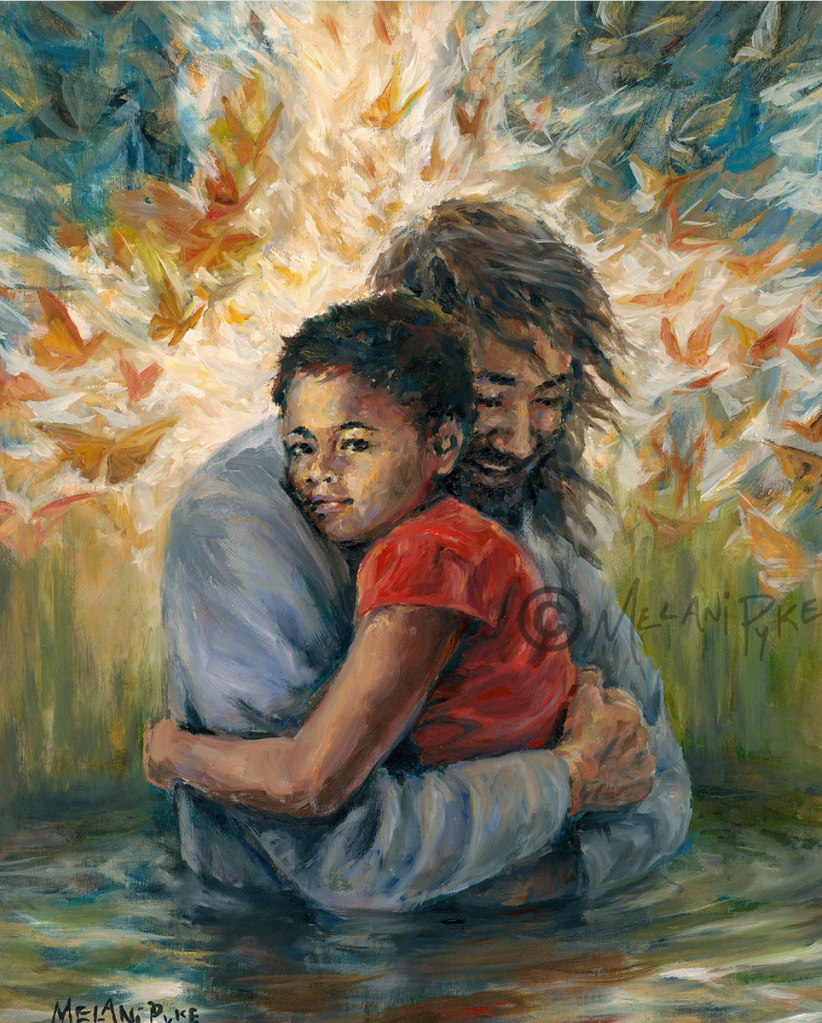
God speaks through the prophet Isaiah in 43:25 and Jeremiah in 31:34, assuring God’s people that not only will the Lord forgive, the Lord will remember our sins no more!!!! God intentionally forgets! The psalmist in 103:12 assures us that as far as the east is from the west, so far as God removes our transgressions from us.
The passage in Matthew has an almost comedic beginning. The disciples are asking how many times they must forgive a brother or sister in the faith. You can almost hear them bickering with each other. Thirteen guys living in close quarters; it’s a miracle these men of differing ages and backgrounds can get along at all!
Seven times to forgive sounds like a good number. Maybe there’s one disciple that is more annoying than the others, and they want a reason to exclude him from the group. “OK, you have one more chance!” Seven is a divine number in Hebrew Scripture. How many days in the Creation story? Seven—but the seventh is the Holy Sabbath, the Day of rest for the Lord and God’s people.
While I made it out to be a math problem in the children’s message today, it’s not really. Jesus saying, “seventy times seven!” is his way of saying, “Always and forever.” How many times must you forgive your brother and sister who hurt you? Always. Forever.
The parable is horrifying in that it sounds like it could happen today. Someone is forgiven for a great debt when they deserved punishment. Then, they withhold forgiveness to someone who owes them a debt. That’s easy to believe, right? It sounds like the world in which we live.
The point is this: If your Heavenly Parent has so lovingly and graciously forgiven you for all your sins, then you are changed by this love and grace! You are not the person you were before. You are NOT the same being. You can’t help but offer God’s love and grace when you have accepted the Lord’s love and grace for you.
Sometimes, that’s the problem—when we haven’t really accepted God’s grace and love for us. When we can’t forgive ourselves. That gets in the way of our loving and forgiving others.
Melvyn lived a long, happy life with us in Minnesota, Florida, and Ohio. He struggled with health problems as he aged. He went blind. He lost his appetite. Then, one day, he couldn’t walk anymore. He had no strength or movement in his hind legs. I didn’t want to let him go. Whenever I held him in my arms, he purred and went to sleep, as if nothing were wrong. He trusted me until the end. Finally, I let him cross the rainbow bridge.
He lives on in our hearts and yes, I believe the animals that God so lovingly created and called good live on with the Lord for all eternity.
Whenever I think about God’s amazing grace, I remember the example of our orange stray, with the white belly that swung back and forth when he walked. I still miss his, “He wooooo?” outside our bedroom door.
He remains a sweet reminder of how, when we fully understand to whom we belong and fully accept God’s unconditional love and amazing grace for us, we are changed. We have peace. And we can’t help but offer that same love and grace to others.
Let us pray.
Holy One, thank you for forgiving us for all our sins—and for not remembering them anymore! Help us to love as you love. We struggle to forgive others who have hurt us. We hold onto hurts; we have trouble forgetting them. We struggle to forgive ourselves. The problem is that we can’t always believe in your unconditional love! We only know conditional love in this world. Your grace seems, at times, too good to be true. But Your Word is TRUE and our faith tells us that your LOVE and GRACE are REAL. And that we are not the same people we used to be. For your amazing grace has changed us, and there’s no going back. In the name of Jesus we pray. Amen.
Everyone has a calling. Ours is helping you.
Pastor Karen shares thoughts on faith, scripture, and God's love and grace revealed through backyard wildlife.
Fill up. Overflow. Run over.
Christian Lifestyle Blogger
The Joy of the Lord is our Strength
Church bulletin covers and other art by artist Stushie. Unique crayon and digital worship art
The Art and Craft of Blogging
The latest news on WordPress.com and the WordPress community.
 Sharing God's Love and Grace