Rest!

Meditation on Matthew 11:16-19, 25-30

First Presbyterian Church of Smithtown

Pastor Karen Crawford

July 9, 2023

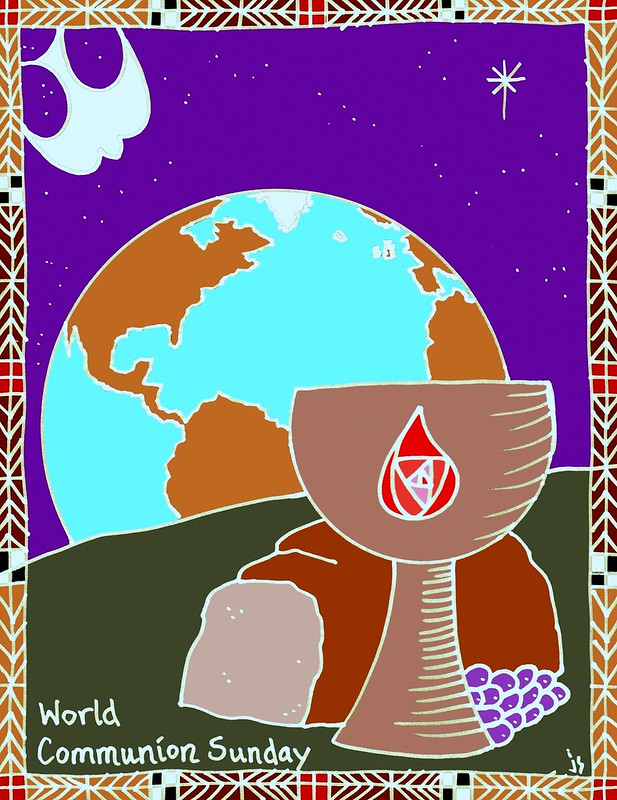
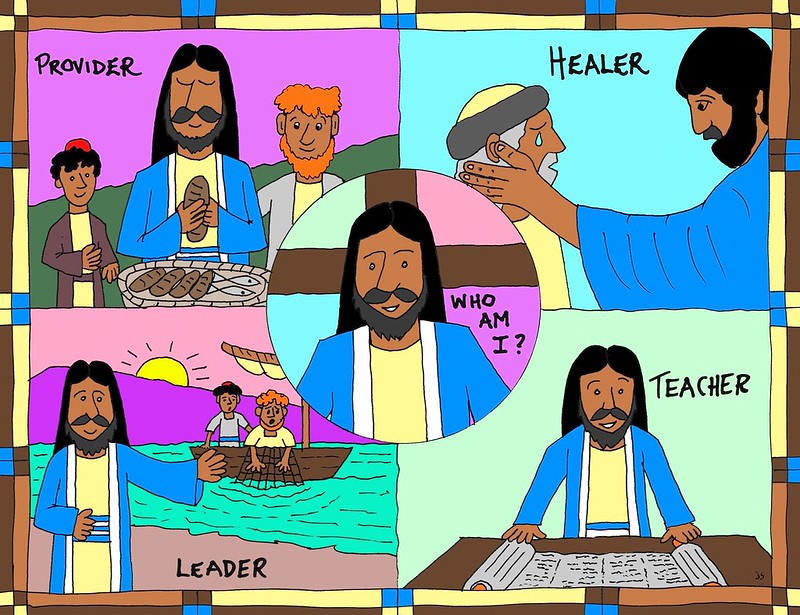
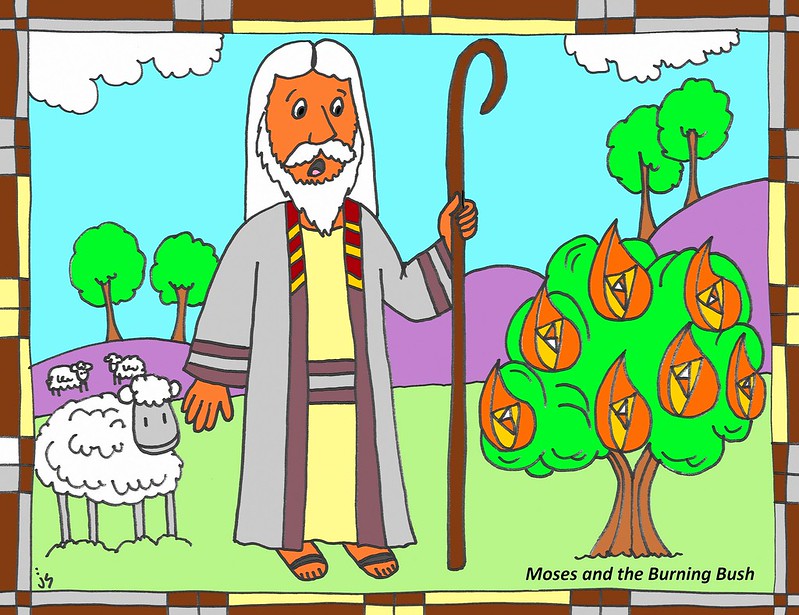
Art by Stushie

I made a stop at an optician’s office to buy new glasses this week, in between pastoral care visits and serving Home Communion. Still wearing my pink clergy shirt with a white collar, I stopped in to see John in the Shop Rite shopping center in Hauppauge.

Well, my eyeglass prescription had changed, and I had been putting it off and worrying about it. I didn’t want to spend $800, like I did 7 years ago when I bought new glasses in Florida. And I thought, if I paid that much for my glasses that long ago, in Florida, how much are they going to cost me here?

One of our members had recommended John. She told me some of his story—and the good experience she had with him. Beginning in middle school, John learned how to grind lenses from his optician uncle. His parents sent him to help his uncle in his eyeglass shop for a few weeks each summer. John said that he was a terror with his glasses and was always breaking them as a kid. His parents were weary of replacing them!

“Go and learn how to make them yourself,” they said!

So he did.

John had nothing but wonderful things to say about his uncle—and what a testimony to his hands-on teaching and example that John would decide that he, too, would pursue a career as an optician and help people see better by fitting them with glasses.

He didn’t have any coupon offers for me. No buy one, get one half off. He was just kind, honest, and generous. He was funny, too. When I walked up to the counter with my new prescription and asked if he would help me find new glasses, he looked at the paper—and looked at me not wearing any glasses—and said, “You must be wearing contact lenses. Because you’re REALLY near sighted!”

In the end, he didn’t try to sell me any glasses! He said, “You don’t look like a glasses’ kind of girl. You look like a contact lenses’ kind of girl.” (And I didn’t mind being called a girl at all!)

He persuaded me to let him make new lenses for my old frames that he would straighten and tighten. The new lenses cost about half the price I paid for new glasses 7 years ago and would be thinner and lighter than the old ones. He shook his head when I offered to give him a deposit. No one pays until they pick up their glasses and walk out satisfied. He would text me when they were ready.

I didn’t expect that, at all!

As I drove home, I thought about how John learned the technology of making eyeglasses and fitting people for glasses through a formal degree program. But he learned how to be an optician as an apprentice to his uncle, working closely with and watching a man who obviously cared about his clients and his community more than maximizing his profit!

Our passage in Matthew today is about seeing the ways of Christ and our faith with fresh eyes and doing the unexpected as a witness to Christ. This reading is about wisdom—a new kind of wisdom than what passes for wisdom in our culture and wisdom in Jesus’ time and place.

Things haven’t changed THAT much.

Jesus turns everything upside down! People are confused and angered by him! He sounds exasperated by those who are misunderstanding and complaining about what he and his relative, John the Baptist, have been doing and saying about the Kingdom of God and the importance of repentance. He is sharply critical of institutional religion, with those in leadership holding to a form of religiosity, without actually living a life of faith, in loving relationship with God and neighbor.

Jesus says of his critics,

 “For John came neither eating nor drinking, and they say, ‘He has a demon’; the Son of Man came eating and drinking, and they say, ‘Look, a glutton and a drunkard, a friend of tax collectors and sinners!’ Yet wisdom is vindicated by her deeds.”

The example Christ gives of those who are understanding and living out their faith is that of children and infants—the ones without any voice, power, or status. He prays, “I thank you, Father, Lord of heaven and earth, because you have hidden these things (the true wisdom of the world) from the wise and the intelligent and have revealed them to infants; yes, Father, for such was your gracious will.”

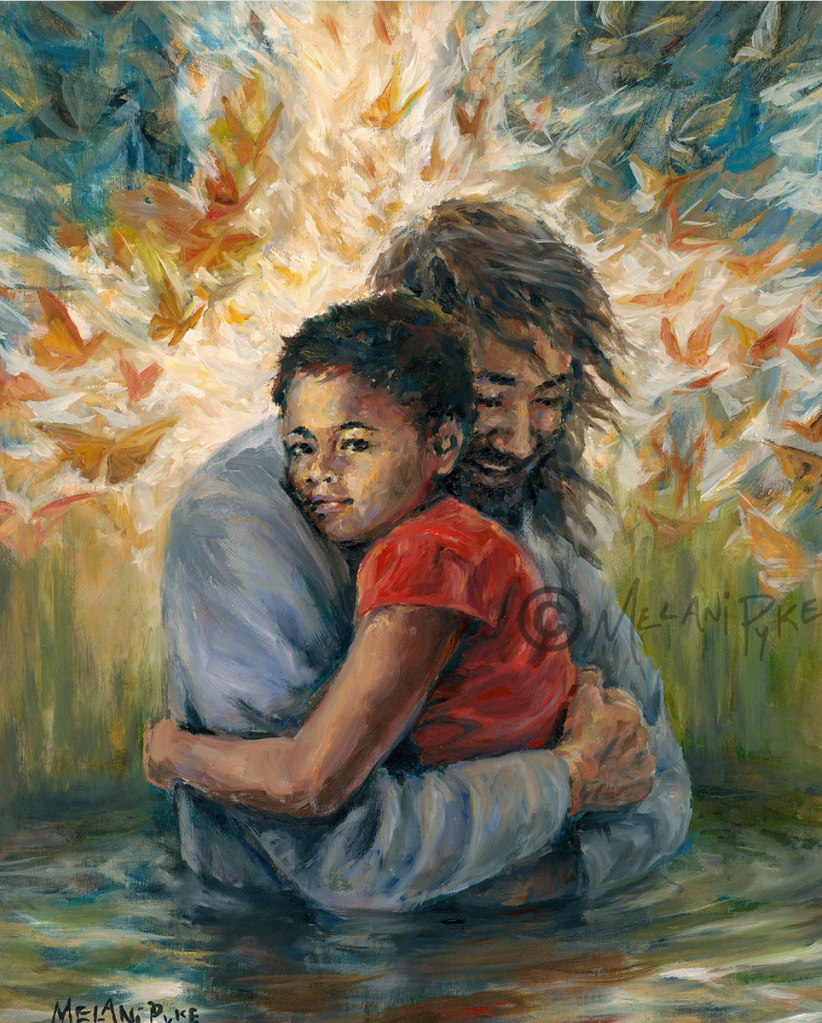
On this day when we welcome and baptize Jesse Scanna, Jr. and celebrate his entrance into Christ’s Body and being claimed by Him, isn’t it inspiring to talk about the wisdom of children and infants as a model for us all? This is important to remember—that it isn’t just the family and Church family who have much to teach and nurture in those whom we baptize. The children and infants also have much to teach and nurture in US—if only we have eyes to see and hearts open to learn from them and be changed by them.

In Matthew 18, the disciples are arguing with each other over who is the greatest and Jesus  “called a child, whom he put among them, and said, “Truly I tell you, unless you change and become like children, you will never enter the kingdom of heaven. Whoever becomes humble like this child is the greatest in the kingdom of heaven. Whoever welcomes one such child in my name welcomes me.”

When I was with the optician in Hauppauge, being fitting for my new lenses, the optician who learned his care and concern for his clients as a teen from the uncle who served as his mentor, asked me to put on my glasses, while I was wearing my contact lenses. He apologized for any discomfort it would cause me.

As I looked through my contact lenses, combined with my glasses with thick, corrective lenses, I saw the room completely distorted. The world was a mush of colors and unidentifiable shapes. I couldn’t tell which forms were people and which were furniture. Even the light emanating from light fixtures was bent and casting an eerie glow.

A new thought popped into my head. This is how the world looks to some people, who live without faith. Who have NO hope. The world is ugly, distorted. Confusing.

When we know Christ and the compassion of God, we have clarity. We see glimpses of the Kingdom right here. We see blessings and order in the midst of chaos and uncertainty.

I saw the kindness of an optician as a gracious gift from God on a seemingly ordinary day. It’s all in how we see the world and ourselves, our testimonies in Christ. Everything looks different when we see our own personal stories through the lens of the life and self-giving love of Christ, our Savior, humble teacher, and merciful healer.

But those of us who have been churchgoers for a long time may be tempted to take for granted the yoke of Christ or forget that we have to keep on choosing to accept this yoke, each day. That is, if we want to have a peace that surpasses all understanding and a kind of rest that the world will never give.

This is a SOUL rest. A SABBATH rest we can experience any time—and not just on Sunday morning. This is for those who want a different way of life than the world would choose for us. For those who long to stop striving and trying to be perfect, strong, and smart. For those who are always falling short of our own ridiculously high expectations and not living in the fullness of Christ’s redeemed! This invitation from Christ to companion with him for all eternity is a gift for ALL who seek it!

Listen to your Lord, once again, through The Message, Eugene Peterson’s translation:

“Are you tired? Worn out? Burned out on religion? Come to me. Get away with me and you’ll recover your life. I’ll show you how to take a real rest. Walk with me and work with me. Watch how I do it.  Learn the unforced rhythms of grace. I won’t lay anything heavy or ill-fitting on you. Keep company with me and you’ll learn to live freely and lightly.”

Let us pray.

Holy One, we ARE tired. We ARE worn out. We are ready for a change. Yes, we will come to you. Yes, we want to get away with you and recover our lives, the lives you have planned for us. Teach us about real rest. Help us to take a real rest. Gather us close to you so that we may watch you as you walk and work and learn to walk and work with you. Give us your joy and peace as we experience the unforced rhythms of grace—something we can’t see or know in this world without knowing you. We promise to trust you as you build up our faith. We trust that you won’t lay anything heavy or ill-fitting on us—that everything will be OK. That you will keep company with us as we keep company with you and be stirred to live freely and lightly. In your Son’s name we pray with thanksgiving. Amen.

Welcome!

Meditation on Matthew 10:40-42

First Presbyterian Church of Smithtown

Pastor Karen Crawford

July 2, 2023

Art by Stushie

Today, we had the joy of presenting an A.B. Lawrence Memorial Scholarship to Alyssa Hubbs, who has grown up in our congregation!

I have seen her faith in action, and her loving, giving ways up close. I marvel at her servant spirit, something I don’t often see in a person so young. I wrote this in a letter of recommendation for the Rambo Scholarship from Northport, which she also received!

I told the scholarship committee that among her many spiritual gifts, the one I see the most often is her gift of “helps” – offering and following through with any task that is needed, without any fanfare. She is humble and hardworking, probably embarrassed by all this attention!

She puts the needs of others before her own.

The list of her acts of service is long. She served as a junior deacon for more than two years. She baked bread for Communion and cookies for bake sales and assisted at fundraisers. She has a great rapport with young children and adults and has labored as a teacher and helper in Sunday school for five years. Just think how many lives she has already touched with her gentle spirit!

She shows up for church clean up days, in spite of her busy schedule, with her family, not being afraid to get her hands dirty—weeding and blowing leaves, power washing the parking lot, and washing windows. During the pandemic when the church was closed, she helped deliver Communion baskets to members, with bread and juice and inspirational pamphlets. She has wrapped countless presents for Adopt-an-Angel.

She isn’t just a worker. She isn’t JUST a Martha, though you know how important Martha’s gifts were for the Lord and his disciples. She is also a Mary—and I want to encourage her, today, to continue in her pursuit of Mary gifts in her busy life—the gift of contemplation, meditation on Scripture and pursuit of peace with God, drawing nearer to the Lord in prayer. This will give you strength and purpose, Alyssa, to do all that God has ordained for you to do.

On the first Sunday that I led worship—on March 20, 2022—Alyssa raised her hand during the sharing of joys and concerns. She asked for prayer for healing for her younger sister, Sara, who had just recently been diagnosed with diabetes. I could hear the concern in her voice and sense her strong belief in prayer. Since then, she has made other prayer requests for family and friends during worship.

There’s so much more to Alyssa—and I am sure some of you have beautiful Alyssa stories to share.

I have never seen her without a smile and a cheerful word on greeting, even if she has one of those headaches that she sometimes gets. Alyssa is a hugger! She possesses the gift of WELCOME.

As we praise and encourage Alyssa to keep going in her faith journey and discern God’s will for her life, let us be reminded that this young woman didn’t become the person she is all by herself. She has a close-knit, loving and faithful family. Her parents have brought her and her sister to church and Sunday School since they were babes in their arms, as they say. They model what it means to be humble servants. They work behind the scenes, quietly doing things that are important for the Kingdom of God. They are huggers, too! They possess the gift of WELCOME.

As we encourage Alyssa’s family to hold onto their faith and keep going in the works that God is leading them to do, let us be reminded that this family isn’t the family they are today all by themselves. Healthy families come from healthy communities, and especially healthy congregations. You have modeled to Alyssa’s family the love and welcome of Christ and encouraged them in their gifts!

Friends, we are connected by this common calling to serve Christ –and by the power of the Spirit, we can see the beauty of the Lord in each other. Every time we show love to one another and humbly serve each one, with acts of kindness and generosity both quiet and loud, small and large… we show the love and welcome of Christ to those whom Jesus called “the little ones.” This is his term of endearment for his followers. For all of us!

As he sends us out on a dangerous mission, just like he sent out the original 12, he sends us out with a promise. “Truly, I tell you,” he says, “none of these (his followers) will lose their reward.”

Our passage in Matthew falls at the end of chapter 10, and so much happens in this chapter! He calls the 12 disciples and “gives them authority over unclean spirits, to cast them out, and to cure every disease and every sickness!” He provides a list of instructions as they go to proclaim the good news that “The Kingdom of heaven has come near.” Their job is to do what he has been doing, with the Spirit’s power: “cure the sick, raise the dead, cleanse the lepers, cast out demons.”

Isn’t it curious that He gives them a list of things NOT to take with them? This goes against everything his society would expect. It goes against logic! Don’t take any money, he says. “For you received without payment; give without payment.” “Take no gold, or silver, or copper in your belts, no bag for your journey, or two tunics, or sandals, or a staff…” he says.

If the people open their hearts and homes to receive Christ’s good news, welcome and peace, they, too, will be Christ’s followers, proclaimers of his good news, welcome and peace to neighbors and strangers.

It really is simple, isn’t it? Why wouldn’t everyone embrace such a mission? Well, Christ promises his followers that they will be persecuted. This comes with seeking to build the present and coming Kingdom of heaven, of which we only see in glimpses in this side of eternal life.  “See, I am sending you out like sheep in the midst of wolves, so be wise as serpents and innocent as doves,” he says.

The religious and political leaders will be the persecutors. They will be handed over to councils, flogged in their own religious gathering places, dragged before governors and kings—all because of Jesus. But they need not fear those in power. The Spirit will lead them and give them the words to say as if Christ were speaking through them.

One of my favorite parts of chapter 10 is when Jesus uses birds to illustrate God’s love and tender care. Beginning at verse 29, “Are not two sparrows sold for a penny?” he asks—and a penny was worth about what our penny is worth today. “Yet not one of them will fall to the ground apart from your Father. And even the hairs of your head are all numbered,” he goes on. “So do not be afraid,” Jesus says, of his mission and our calling. “For you are of more value than sparrows.”

Sometimes, it’s hard to imagine what a mission looks like, in this day and age. We think of “missionaries.” I know some who have answered that call to overseas’ mission fields.

Most of us aren’t called to be foreign mission workers. God doesn’t expect us all to leave our jobs and families, and, like Abraham at 75, go to a place where God will show us. Our mission field, at least for now, is right here where God has sent us, planted us, and continues to use and grow us. Every day, we choose to be obedient, serve and reveal God’s love, bear Christ’s peace and welcome one another, neighbors and strangers, as if we were welcoming Christ himself.

Here in our church family, we have said goodbye to many members as they move on to live and serve God in other places. In the last year or so, we have said goodbye to Marsha Saddlemire, Timmi Nalepa and her husband, Bob O’Brien. Harriet McMahon, and Tracy Henchey and her family. But when we gather at the Lord’s Table, as we will in a few moments, we are reunited with Christ’s Body in every time and place. It’s as if they never left! And we see a glimpse of the present and coming Kingdom of heaven that Christ often talked about. The Spirit re-members and strengthens the whole Church. Renewed and refreshed by bread and cup, we are, once again, sent out on our mission to proclaim the good news and reveal the love, peace, and welcome of Christ to the world.

In a few months, we will say goodbye, for a little while to Alyssa, who will be studying nursing at Iona University. We will hold her in our hearts and prayers and look forward to seeing her at Christmastime, if not before!

 Alyssa, you are being sent on a mission much like the mission of the 12 long ago. It will be challenging and hard, at times, and surprising and exciting—because God has a plan. You will learn and grow and make new friends! I know you! You will bloom wherever God plants you. We will be here waiting for you with open arms, ready to WELCOME you home! We will all want to give you hugs!

We will have more time together before we say goodbye, but when you go, I have a list of instructions. It isn’t quite the same as Christ’s list for his disciples. You will need money. Your parents will help you with that! You will need at least two sets of clothes. Probably more. And you will need more than one pair of shoes and one bag!

Alyssa, our love and peace, and the love and peace of Christ, will go with you.

Wherever you go, Christ will be with you in Spirit! He will help you to know God’s will each day. You don’t need to know more than one day—so don’t worry about the future!

Oh, and Christ will give you the words to say.

Do not fear! For the Lord loves you more than the sparrow. Not one sparrow falls to the ground apart from God’s knowing and caring.

Remember to be like Martha and continue in your humble service, with your precious gift of helps. And be like Mary—draw near to God and God will draw near to you!

Finally, remember to use your gift of WELCOME to neighbors and strangers. Keep on hugging! And in so doing, you will welcome Christ Himself.

Will you pray with me? Let us pray.

Holy One, thank you for your love and welcome—desiring all to come to you and your Kingdom of Heaven, brought near through our Savior, Jesus Christ. Fill us with your love and welcome—so that we may serve you by loving and welcoming neighbors and strangers, until all may come to know you and your love and welcome, too. As we seek to obey your word and do your will, grant us your peace. Watch over our children and grandchildren, when you send them out on their divine mission. Give us strength to release them and faith to trust them to be with you wherever they go. Be gentle with them as you transform and grow them. Then use them, dear God and Father of all humanity, to make the world a better place. In the name of Christ the Lord we pray. Amen.

The Spirit Helps Us in Our Weakness

Meditation on Romans 8:14-38

In Memory of June Carlson

6/24/1930-3/22/2023

First Presbyterian Church of Smithtown

Pastor Karen Crawford

June 25, 2023

I was the new pastor in Smithtown when I called June Carlson in May of last year. I introduced myself and told her how surprised I was to discover that she was living in the same senior living community where my mom lives—John Knox Village, in Orange City, FL.

She shared how surprised SHE was that her pastor from Smithtown, New York was calling her! And she knew my Mom! They met playing bridge.

We had a wonderful conversation that day, in which I learned a little about her life here and her life there and her hopes for the church. She never forgot us, though it had been some 9 years since she had moved away. She specifically asked about programs for children and youth. Did we bring back Vacation Bible School, yet? It was the first of many wonderful conversations; I continued to reach out to her by phone regularly, and we exchanged cards and letters.

On that first call, she told me how, in addition to playing bridge with my mom, they often had lunch together with a group on Sundays at 2, when June gathered a circle of her “interesting” friends at John Knox. June had a sharp mind and enjoyed being in the company of other bright, active women. At those gatherings, my mom learned how June missed Smithtown—her church and community friends and all of the groups with which she had been involved.

 Yes, Smithtown was still her hometown, though she was born in Manhattan and grew up in Brooklyn. She graduated from what is now SUNY Oswego, northwest of Syracuse, and met dark-haired, dark-eyed Allan Carlson while they were attending graduate school at Columbia University. They were married at Grace Reformed Church in Brooklyn on Jan. 27, 1951. They lived in East Patchogue from ‘57-59 and had two children, Barbara and Phil. They moved to Schenectady for a couple of years before coming to Hauppauge in ‘62, then Saint James in ‘70.

Overall, June lived in the Smithtown area 51 years. She and Allan joined our congregation in the early 1960s, bringing their children with them for worship and children and youth programs, including Vacation Bible School!

June never shared with me that she had been a kindergarten teacher! She served children in elementary schools in Commack for 28 years—Circle Hill, Cedar Road, and Rolling Hills. She retired in 1992. When I heard that—it all made sense. Why she worried about children’s ministry so much and why we got along so well—because as a former teacher myself, I know the importance of nurturing the faith of children from an early age. We can’t wait till they are fully grown to tell them about God’s love. They need to know it now!

June cared about her community and was a joiner. She was a member of the Smithtown Garden Club and one of her projects included tending the Caleb Smith Park herb garden. She served as a trustee on the Library Board and member of the Friends of Smithtown Library. She served on the town arts council and the auxiliary of St. Catherine’s Hospital in Smithtown when it was St. John’s. She was active with the historical society. She wanted to help other women pursue higher education; this led to her involvement with PEO and remaining active with the group after she moved to Florida. This was true of AAUW, of which she was a charter member of Smithtown’s chapter. She loved participating in fund-raising activities—chairing fashion shows and luncheons.

At her senior living community in Florida, June remained active and social. In addition to playing bridge several days a week, she went to morning aquatic exercise classes, and, when she was living independently in an apartment there, attended a local church on Sunday mornings.

The strange coincidence, if you believe in coincidences, was that I actually met June at John Knox while I was serving a church on Merritt Island and visiting my parents there. I met her, again, when I was serving the church in Ohio and my father passed away in August 2019. I presided over his funeral at the community center at John Knox. And she came.

So, I think I have known June since 2016 or 17, only I have never seen her in her beloved Smithtown. Well, perhaps that’s not true. Because I have sensed her spirit with us in her garden. The garden was established in 1994, with her gift, in memory of her husband, Allan, who died on Feb. 19, 1982, and her son, Philip, who died on Nov. 17, 1993.

To talk with June, you would never know that she had experienced the great sadness of losing her husband and son, while he was still a young man. Tending to the garden was a way of nurturing her memories—and a good reminder that death can and would be swallowed up by life. She often checked in with our trustees, asking them how the garden was growing—and making sure there were funds for its upkeep.

June married a man named from Australia named Keith Johnston in 1989 and this led to their buying a place in Palm Coast, FL, and their dividing their time between Long Island and Florida.

June in 1989 with her flowers on the day of her wedding to Keith Johnston in First Presbyterian Church of Smithtown.

Keith passed away in 2014, and June moved to John Knox in Orange City in 2015.

To talk with her by phone, you would never know about her physical challenges. She never talked about her pain or struggle with mobility and low vision. She didn’t complain about her health. She continued to play bridge and do many other social things as long as she could.

I think one reason that she was able to move past the pain of her losses and persevere through the many challenges and life transitions, including having to leave her apartment and move to the nursing home, was the help from the Spirit of the Lord. The Spirit gave her strength while she was weak. I never sensed any fear in June. She was a woman of faith and great confidence, a woman who persevered and was not ready to give up when things got hard.

This is the promise to all the faithful in Paul’s letter to the Romans. That the Spirit who lives within us and dwells in our midst also intercedes for us with God, with groans and sighs too deep for words. Because we don’t always know how we ought to pray. We can’t find the words to say. We don’t know what we need. The Spirit does!

 We ourselves wait for our transformation, the conforming to the image of God’s Son, as Paul says. We wait for the revealing of our redemption and our glory as the children of God. We wait for all Creation to be set free from its bondage and decay. And as we wait in hope, we seek to participate in the Spirit’s creative work in and all around us. We might not be able to see the changes with our own eyes, but our faith tells us that it is happening, right now. This very moment. As we share June’s story and remember God’s promises, including God’s everlasting presence with us, the transformation is taking place.

I talked with my mom yesterday to let her know about our remembering June today. Mom still volunteers at the nursing home where June spent her last months; it’s where my father was in his last months with us, as well. She helped June and helps others in wheelchairs come to the worship service on Sunday morning.

She talked about how popular June was. How she had many friends, and that she is dearly missed—especially by one lady, another resident, who was a close friend to her at the nursing home. They were always together. Her name is Dottie Hallevy, and she just celebrated her 102nd birthday!

This is how we can glimpse the love of God right here with us now–through the love of friends and family.

Is there something you are struggling with right now? Do you have fear or anxiety? Are you struggling with the pain of grief and loss? Or possibly, a physical or financial challenge is worrying you? A big decision that you have to make? Maybe you are worrying about a loved one?

Remember the Holy Spirit is interceding with God for you, for all the Body of Christ, right now. None of us know how to perfectly pray as we ought. That doesn’t mean we shouldn’t pray! We should absolutely pray without ceasing, as Paul will say in another letter—I Thess. 5:17. But it is hard to pray in God’s will when we don’t know what God’s will is. But the Spirit always knows. And the Spirit wants to help us in our weakness!

We are all connected by the love of God poured into our hearts by the Holy Spirit. God’s Love that brought you here to worship today will continue to unite the Church and empower us to do God’s will, as the Spirit reveals it. As we receive God’s Love, we are moved to reach out in friendship to others, especially those who may truly be in need of a friend.

Remember: This is how the world will be able to catch a glimpse of the Savior’s love—by the love we share, especially with those in need.

 We who have come to worship because of God’s Love will go from this place in the love of a God who knows us intimately! For this is a God who searches our hearts! A gracious God who does not condemn us!

We will leave without fear, knowing with all certainty that nothing can ever separate us from the love of God in Christ Jesus our Lord.

Let us pray.

Holy and Gracious God, thank you for not withholding your Only Son, when we were in need of a Savior. Thank for your love and the promise that we will never be separated from your love—or from your everlasting presence with us. Thank you for all the saints—for the Children of God and your Spirit that intercedes for us, leads us, and helps us in our weakness. Replace our fear with faith, dear Lord. Keep us walking in kindness and gentleness, praying without ceasing, and making new friendships so that others may see a glimpse of your love. In the name of Christ we pray. Amen.

The Faith of Father Abraham

Meditation on Genesis 12, 18, and 21, selected verses

Pastor Karen Crawford

First Presbyterian Church of Smithtown

June 18, 2023

We had the Sunday School picnic at the manse last Sunday. It was amazing! The weather was perfect. Many of the children, families, teachers, and children’s ministry leaders came and stayed several hours. We ate and watched the children play. They ran around on the grass, did cartwheels, jumped rope and played tug-of-war, blew bubbles and threw bean bags, and raced through the manse looking for my dog and cat!

The most memorable thing of all to me was when a whole group of them climbed a tree. With no adults involved, the children helped one another up into the tree—one by one, small ones were lifted up. Hands reached out to grasp other hands.

Little boys, bigger boys, little girls, bigger girls—everyone was welcome to come to the tree and stay awhile.

I will never look at that tree again without remembering that special day—when moms and dads were working hard in their callings to be Christian mothers and fathers. Is it OK to claim that word for Presbyterians? We are Christians! And we aren’t ashamed for the world to know it!

This is my second Father’s Day with you. I have to admit that it is a little intimidating preaching on Father’s Day—as a pastor who has never been a father. Probably your first pastor who has never been a FATHER. I can’t pretend to understand all that men go through when they are fathers. Being a father is a special calling—and it’s not my calling. But it IS my calling to encourage you as you seek to be faithful.

I have been blessed with a wonderful father and a wonderful husband, who has been a terrific stepdad to my 3 boys—now men—for nearly 18 years. I watch fathers—how they interact with their children and how the interactions change as their children grow up. Fathers and sons, like mothers and daughters, can also become friends.

My husband and his son, Danny, text often. They talk about politics, economics, sports, and the granddaughters—their favorite topic. Danny sends photos and video messages, which we so appreciate. It touches my heart to see Danny, who is a Ph.D. biochemist, working hard to serve his family, including a professional wife, who is a researcher and staff physician at Boston Children’s Hospital and instructor of pediatrics at Harvard Medical School.

Danny isn’t the father of Father Knows Best or Leave It to Beaver, where the husband comes home in a suit and tie, and says to his wife, wearing pearls and lipstick, dress and hose and, of course, an apron, “Honey, I’m home. What’s for dinner?” Danny is the one who gets the girls ready for school in the morning—gets them out of bed, including the youngest one, Maddie, who is 5 and not a morning person. He makes their breakfast, sees that they are dressed appropriately, prepares their snacks and lunchboxes, and gets them to their respective schools on time. He also shops and cooks dinner and does so many other tasks—quietly, behind the scenes, without complaint. He is involved in school and after school activities, as his wife Hiu-fai is. They play with their children, taking them out on weekends, when they are not involved in gymnastics, soccer, hockey, softball or other sports. They go on bike rides to parks, playgrounds, museums, and community festivals. They go on family vacations.

Men, of all ages, I see you working hard to care for your families, to support them in their interests and help them grow in every way, and most of all, to nurture their lives of faith in a time when, frankly, it’s not cool for guys to be in church or talk about church involvement, let alone their faith. Is it? It’s not cool.

The biblical example I offer you is the one whom Paul in his letter to the Romans calls the “Father of us all.” Let’s consider the faith of our Father Abraham. He writes in Romans 4, beginning at verse 13,

For the promise that he would inherit the world did not come to Abraham or to his descendants through the law but through the righteousness of faith… For this reason the promise depends on faith, in order that it may rest on grace, so that it may be guaranteed to all his descendants, not only to the adherents of the law but also to those who share the faith of Abraham (who is the father of all of us,  as it is written, “I have made you the father of many nations”), in the presence of the God in whom he believed, who gives life to the dead and calls into existence the things that do not exist. 

Hoping against hope, he believed that he would become ‘the father of many nations,” according to what was said, ‘So shall your descendants be.’  He did not weaken in faith when he considered his own body, which was already as good as dead (for he was about a hundred years old), and the barrenness of Sarah’s womb. No distrust made him waver concerning the promise of God, but he grew strong in his faith as he gave glory to God, being fully convinced that God was able to do what he had promised.”

Abraham’s call story begins in Gen. 12—when he is 75 and hears God’s voice telling him to leave his home and kin and go off into the wilderness to a place God would show him. He hears a God that nobody else hears, a God who is near to him, a God who is gracious and loving, a God who makes promises and keeps them, even when Abraham and Sarah take matters into their own hands—and, frankly, make a mess of things. They just didn’t understand, like we don’t always understand, that sometimes, God calls us to wait and wait and wait…

Finally, at the age of 100, Isaac is born. Abraham had already had another child, Ishmael, with his wife’s Egyptian servant, Hagar. But Ishmael, at Sarah’s insistence to protect the inheritance of Isaac, is sent off to live in the wilderness. Isaac is the one who would be the next patriarch in the faith that would then be passed on to his younger son, Jacob, whom we also know as Israel, who would have 12 children with 2 wives and 2 concubines—now that’s an interesting story—and all would become the 12 tribes of Israel. His favorite son, Joseph, would carry the faith to Egypt, when he was taken as a slave—and he would become second in command to Pharaoh and save the lives of many people in a famine, including his family.

While God called Abraham to be a father, he was first and foremost a man of faith—hearing God’s voice and obeying without question, even when that meant the possibility of sacrificing the long-awaited son, years later, in a divine test on a mountain. In Abraham’s fatherhood, his offspring would be a blessing to all the nations, all the families on the earth.

This is a promise that all fathers have today. You are chosen, as well, in Jesus Christ. Your calling to fatherhood means that you are nurturing your offspring in the faith and life of the children of God. Wheww! It’s hard work in this busy time, when some days, you are just trying to juggle all the tasks that a person does to work and care for families.

Today, especially, on Father’s Day, may the knowledge of your special calling give you joy and peace. Because in your daily lives, though you are unaware of it, you are continuing the blessing of Abraham, as we are grafted into the family tree through our Savior! You are continuing to bless all the families of the earth through your offspring and their offspring, who every day, are a joyful witness to the faith and hope of Jesus Christ, without necessarily even talking about it. Thank you, Fathers, for all you do for your families and the Family of God.

And now, what about the men whose children are grown and, like my kids, live far away? Or maybe, you are a single man—not yet or never married, with kids. You still have a calling to be a father in the faith! That’s why you are here today—to be encouraged in that calling. You are needed to encourage other men, particularly younger men, in their walk with God. Don’t be shy about it! The Spirit will help you! Thank you, Fathers in the faith, for all you do for the Family of God.

My brothers in the Lord, may you always be people who care, people who listen with love and good humor, without judgement, when other men are sharing how weary and discouraged they are. Because men get tired, and they worry about their families all the time. I am sure some of them lie awake at night, wondering and worrying about the future.

My sisters and brothers, may we all be people who care, people who listen with love and good humor, without judgment, because, like Abraham, we all make mistakes! But our gracious Lord offers new mercies every morning.

We serve a God who always keeps God’s promises, though we may have to wait and wait and wait to see the promises come true.

Let us pray. Will you pray with me?

Heavenly Father, thank you for your tender love for us, sending your Son, Jesus Christ, to lead us back to you when we had gone astray. Thank you for the call of Abraham and the example of a faithful but very human man, hearing your voice when no one else in the world could hear you—and obeying immediately, without question. We lift up all the fathers in our community and world today. They have many challenges. It’s hard to be fathers and it’s harder still to be Christian fathers. Give them wisdom and strength, courage and endurance to live out their faith as you lead them and to help their children and children’s children grow in every way—including spiritually. Stir us all to believe in your promises and encourage the “fathers” in our lives. In the name of the Father, Son and Holy Spirit we pray. Amen.

One day, while eating with tax collectors and sinners

Meditation on Matthew 9:9–13, 18–26

First Presbyterian Church of Smithtown

Sunday School Appreciation and Recognition Day

Pastor Karen Crawford

June 11, 2023

It is good to be back, leading worship and sharing a message with my flock! I missed you! How have you been?  This past week, I traveled to Austin, TX, for my 4th class in my Doctor of Ministry program. I have two more classes to go before my final project.

What I have learned so far, from this program, is the importance of hospitality, kindness, and mercy to all people. That doesn’t mean we don’t compare ourselves with other students, at least in the beginning. We have introverts and extroverts! People with different learning styles, strengths and needs. People ranging in age from 30 ish to 60 something, varying in gender and sexual preference or orientation– married, divorced, or single; with and without pets, children or grandchildren. Some serve as spiritual directors, counselors and teachers or work for presbyteries to train lay pastors or as EP’s and GP’s. Others are camp directors, chaplains, associate pastors, co-pastors, heads of staff, solo pastors, church planters and mission workers. Then, there are those with ministries serving children and families or young adults; and those ministering to veterans with PTSD.

We are Presbyterians, Baptists, Methodists, Episcopalians, Lutherans, former Catholic priests, Unitarian Universalists, and pastors serving in the United Church of Christ and United Church of Canada. The miracle is that we all get along with each other and care for one another through this challenging and creative program.

I’ll be honest. Sometimes there is tension because of our differences. But we are determined to not let our differences divide us—because of our faith that the Body is ONE. That we share the same Spirit. Inside our classes or dorms and especially when we eat together, in the dining hall or in local restaurants. No one is an outsider.

And this is how it is with Jesus—who shares meals with everyone—rich and poor, old and young, powerful and weak, those who like him, and those who don’t. Jesus eats with EVERYONE. So much so, that the Pharisees, who are faithful in their adherence to their beliefs, are annoyed.

They ask his disciples, “Why does your teacher eat with tax collectors and sinners?” One of the tax collectors, Matthew, who has just answered the call to follow Jesus and become one of his closest friends.

Eating is an intimate act, isn’t it? We both give and receive, when we share a meal. The meal, itself, means nourishment to the body, but also nourishment for relationships for those who are eating. The table is the great social equalizer, too, especially if you are all eating the same food. We are all human beings, who need to eat. And we need the social nourishment, too, of friendship. What better way to grow in friendship than by sharing a meal?

So, one day, while eating with tax collectors and sinners, Jesus is interrupted in his eating and teaching about our need for mercy, of all things—and how mercy is even more important in living out our faith than sacrifice. A leader has come to ask Jesus to heal his loved one. “My daughter has just died,” he says, “but come and lay your hand on her, and she will live.” The man has run out of options. There isn’t anything more that can be done for her! She has been pronounced dead. He isn’t ready to give up on her. Not if there’s a chance for her healing.

Matthew doesn’t tell us how old she is or give any details about the leader, but in Mark and Luke, the man is a leader of the synagogue called Jairus and his daughter is 12 years old. The man has seen Jesus heal. He makes his heartfelt request and Jesus responds immediately to his cry for help, though it means rising from the table and ending the dinner party, a celebration to welcome Matthew into the fold.

He’s on his way there—when there’s another who needs healing. Isn’t it funny how ministry happens when we are on our way to do ministry somewhere else? God has plans! Jesus is in just the right place at the right time. The woman who needs healing is an outsider because of her chronic health condition. She has been bleeding for 12 years. The medical profession has let her down—found no cure. She must be exhausted! But she sees Jesus, and she thinks to herself, “If only I can touch the fringe of his cloak, I will be healed.” That’s faith!

The fringe is the Hebew tzitzit, worn by Jewish men and some women to remind them of the commandments. This is a sacred cloth and not just the bottom threads of any garment. Jesus knows why she has touched his fringe, and says, “Take heart, daughter; your faith has made you well.” The Greek word, sozo translated made you well could also be translated, “saved you.” This is healing of body and soul!

Finally, Jesus arrives at the leader’s home—and the flutes are playing, and the crowd is making a commotion—and Jesus tells them all to go away. They are beginning some kind of ritual done at the time of death, maybe like a funeral, when Jesus says, “Stop the music! She isn’t dead!” He takes her by the hand, and she gets up.

This makes me wonder why we always talk about the raising of Lazarus, but we hardly ever say anything about the raising of this 12-year-old unnamed girl, which is just as miraculous and wonderful! The bodies of young girls and women are as important to Jesus as adult men. And the healing of strangers is as important to him as the healing of friends and family.

I don’t want you to miss something here. It all starts with the meal, a kind of celebration of Matthew’s saying yes to following Jesus. At the meal, no one is an outsider. Everyone is welcome to the table and into a loving relationship with Jesus and all who follow him.

And the meal—where people draw closer to the Lord and one another—as they are nourished, body and soul–strengthens them to go and do acts of mercy and love, for Jesus’s sake. The meal of thanksgiving is very much like our Communion that we will celebrate today, in a few moments, the meal that unites and strengthens us to go and serve God and neighbor, in Christ’s name.

There’s one more special, spiritual thing we have planned for today. We are having a Sunday School picnic at the manse. We are celebrating another beautiful, joyful program year. And we want to say thank you to all the students, teachers, and families. Amazing things happen in Sunday School. Don’t you agree? Raise your hand if you ever went to Sunday School. I can tell! Look how amazing YOU are!

Sunday School is where children are nourished by sacred story, testimony and prayers, arts and crafts, music and games, and, of course, snacks, and, best of all, friendship. One cool thing about Sunday School is that the children become friends with other children they might not otherwise know and befriend—if it weren’t for the church! In our Sunday School, no one is an outsider. Ever.

There’s one requirement. You do have to be willing to receive hospitality, kindness and mercy and offer them to others. Hospitality, kindness, and mercy–that’s what Sunday School is all about. This is where we learn to be Christ’s disciples—not only with minds and words, but with actions and feelings. This is a place and time where our faith is formed and shaped—where our love for the Lord and one another is fed and grown.

This is my hope for our picnic today—the first Sunday School picnic in more than a few years and my first Sunday School picnic with you. Like the meal with Jesus before he goes and heals and like the Lord’s Supper we will share in a few moments, may our picnic bind us together in love, so that no one is an outsider, ever. May the gathering strengthen us—body, mind, and soul—to go and do more acts of hospitality, kindness, and mercy—and truly be Christ’s Body for the world!

Let us pray.

Holy One, thank you for your loving kindness, mercy, and hospitality, shown through the heart, words, and actions of your Son, our Savior, Jesus Christ. Thank you that he was willing to eat with strangers and friends alike, sinners and tax collectors, rich and poor, insiders and outsiders—and that he continues to share our meals with us, bless us, heal us, and grant us his peace for everlasting life. Thank you for the gift of faith of the man whose daughter had died and the woman who struggled with bleeding and for Christ’s compassion and power to heal. May we also have a strong faith, so that we might go and do acts of compassion and kindness, healing, and mercy that you lead us to do. May we always be a witness, within this congregation and out in the world, that no one is an outsider. In Jesus’ name. Amen.

Leaning into Hope

Guest Speaker/Worship Leader: Dulcie Stoepker McLeod

First Presbyterian Church of Smithtown

June 4, 2023

I want to talk today about a set of triplets.  No, it’s not 3 children!  And it’s not the Trinity, although this is Trinity Sunday.  It’s the trio found in Paul’s first letter to the Corinthians, Chapter 13, verse 13: “So now faith, hope, and love abide, these three; but the greatest of these is love.”  This is probably one of the best-known passages from the New Testament, and it’s easy to see why.

 Everyone knows that faith is important in the life of a Christian.  We refer to our brand of religion as our faith, we talk about our faith journeys, and we encourage one another to believe in the triune God and to live lives that will be guided by and pleasing to that triune God.  Likewise, to live that sort of life will surely involve spreading the good news of God’s love and being Christ’s loving hands in this world.  Faith and love are essential components of Christian life, and love (the greatest of the three) sort of drives the good things that we try to do in God’s name.

But hope?  In my experience, and maybe in yours as well, hope is the least mentioned of these triplets.  It feels as if hope is kind of…well, it’s kind of what we do when we aren’t sure what to do, or what comes next.   Is hope really as important as Paul makes it out to be?  What is it, and how does it work in the Christian life?

Well, I’ve done a little bit of research, and for starters, apparently there are 3 kinds of hope:  false hope, static hope, and active hope.

People want to have hope.  We even say that people are “holding out hope” for a miracle.  And we certainly don’t want to trash talk miracles, because they probably occur more often in our lives than we even realize.  But false hope is sold by charlatans, and that sort of hope does no one any good except those charlatans.  We might think of the peddlers of “cure-all” tonics back in the 1920’s—some elixir that is “guaranteed to cure everything from indigestion to arthritis—and it’ll give you sex appeal, to boot.”  {Side note:  they’re still out there—but now they’re on the internet.] And when we tell ourselves that nothing is wrong when something is definitely wrong—well, we’re selling that kind of false hope to ourselves.

Now, the second kind of hope–Static hope–isn’t so bad.  But it’s just sort of a placeholder to tamp down our worries.  “I hope she makes her flight.”  “I hope the test doesn’t ask me about Chapter 7; I didn’t actually study that one.”  We say we hope, but we can really only wait to see what happens.  Saying “I hope it doesn’t rain on Saturday” doesn’t move the future one way or the other—not one inch.

But then there’s active hope.  This is hope where we look around to see what we can do to improve the chances of a positive outcome.  We look around to see what we can do.  So, what can we do?  What actions can we take?

Well, prayer, of course.  We have to have hope that God will take up for us what we cannot do for ourselves.  But that’s just it.  God never said, “Don’t try anything tricky, now.  Just stay home and pray and see what happens.”  If that were the case, then the apostles would have stayed in that upper room, praying that the rest of humanity would somehow magically turn to God and believe in the saving love of Jesus Christ.  We know that that is not what happened.  The apostles knew that hope was part of the mission, part of the job description.  Spreading hope for redemption and new life was what they did as they traveled the world.  And having hope was square one.  I do not think that they could ever have done what they did if they weren’t moved by faith and love, while leaning into hope. 

Now, you know what they say—that once we learn some new word or fact, we begin to see it all around us.  Maybe it was always there but now we’re beginning to notice it.  I don’t typically read Psychology Today, but the cover story of the June issue—which I spotted at the grocery checkout line—was about HOPE (all caps).  And here’s a very relevant tidbit from a book I finished reading on Friday afternoon.  The book is Why the Greeks Matter, by Thomas Cahill, and the point he makes as he closes his final chapter is that hope was one of the defining traits of—not the Greeks—but Jews and Christians.  

Here’s a quote.  He states that the worldview of the New Testament stressed “the adventure of a personal journey with God, a lifetime journey in which  [human beings were] invited to unite [themselves] to God by imitating God’s justice and mercy…Time is real…[I]t does not repeat itself but proceeds inexorably, which makes each moment—and the decisions I make each moment—precious.  I am not merely an instance of [a human], I am this particular, unrepeatable human being, who never existed before and will never exist again.  I create a real future in the present by what I do now.  Whereas fate was central to Greeks and Romans, hope is central to Jews and Christians.  Anyone who doubts the great gulf between these two worldviews has only to reread the speeches Hector makes [in The Iliad] to realize the impossibility of putting such speeches on the lips of any believing Jew or Christian: [and here’s the snippet]

            ‘And fate?  No one alive has ever escaped it,

            neither brave man nor coward, I tell you—

            it’s born with us the day that we are born.’ “

We can easily recognize that this idea is in complete opposition to the triplets of 1 Corinthians. So hope, it turns out, is recognized as a central and essential part of the Christian worldview.

Now, here’s another perspective.

An article in the Washington Post a few months back looked at hope from the point of view of journalism.  But I think that some of the author’s points were just as applicable to everyday people.  With so many terrible things happening in the world, talking about hope or hopefulness sounds almost delusional.  And, frankly, being cynical feels like a protective shield against having our hearts broken.  But apparently it’s just the opposite.  Scientists have been studying hope for over 30 years and they have begun to see it as a skill that can be taught and strengthened.  More than 2,000 studies have shown that those who practice hope do better in sports, school, and work.  “They manage illness, pain, and injury better and score higher on assessments of happiness, purpose, and self-esteem.”  People who know how to tap into hope are better able to bounce back from traumas like domestic violence, child abuse, and other terrible situations.  I’m thinking of those who lives are shattered by war, poverty, or natural disasters. 

So hope is actually good for us.  Active hope means taking up a challenge to see the future in brighter terms and believing that we “actually have a role to play in making it better.”  “If [hope] were an equation, it would look something like: hope = goals + roadmap + willpower.”

Here’s where I have to include an example from my own life experience.  My mother was the one to call when I felt that there was no hope and I just didn’t know what to do.  So, if I called home from college, let’s say, in a panic because “I have 2 exams tomorrow, plus I need to get more research done for a huge paper due on Wednesday, but I’m already drooping with exhaustion from a late night studying last night and I just don’t know what to do.”  Now, here’s Mom:  “Okay.  Okay.”  This was always the starter, followed by “Let’s think.”  And she would ask some questions about relative importance of factors, and then she’d make some recommendations like “What if you—fill in the blank with actions that could be arranged to get the most bang for the buck.”  And voilá!  Suddenly there are goals plus a roadmap.  And my mother fed me willpower with a steam shovel.  I always channel her when my own children have felt helpless and unable to muster hope.  Giving someone hope when hope is gone—active hope, not the false, pie-in-the-sky kind but active hope—is really God’s work.  I believe that.

You remember the saying “Faith without works is dead”?  Many works are driven by love, but maybe some start out driven by hope. 

If we believe that there is a chance and that we can help to drive up the success rate of that chance, then we are exercising our active hope.  In fact, the anticipation of what tomorrow may bring—when looked at as a challenge that we are ready to meet with a combination of positivity and realism—makes each day glow with expectation.  Planning for upcoming events and activities (like the kind we enjoy through our Christian fellowship) keeps each present day hopeful and keeps us from dwelling on the past or on times when things didn’t go our way.  Hope helps us to live life fully—the life that God wants for us, not a shadow existence where we give up our lives to fear and doubt and regret. There’s an old Mexican proverb:  “I never ask God to give me anything.  I just ask God to put me where things are.  I can do the rest.”  That’s living with active hope!  Think about the difference between saying, “I wish” and “I hope.”  If you say that you wish our congregation could do or be something in the next year—well, that may just be wishful thinking.  But if you say that you hope that we will—now you’re ready to put yourself and the church on the path to action and potential success.

I actually got into this examination of hope by reading the obituary of a man called Brother Andrew.  He died last October, at the age of 94.  (If you are on Session, you may recall my speaking about this man.)  He had grown up in the Netherlands, during the Nazi occupation.  His family made it their calling to share what little they had with the hungry and homeless.  As an adult, he made it his mission to bring Bibles (ultimately millions of Bibles over his lifetime) to Christians behind the Iron Curtain who had none.  You may recall how difficult, even risky, it was to practice the Christian faith during those Cold War days.  In the former Czechoslovakia, pastors had to have their sermons approved by the government before they could preach them.  Think about that for a moment.  People in Macedonia could only attend church after dark.  To be seen going to a worship service was just too dangerous. 

And many of these faithful Christians (because who could doubt their commitment to the faith when they were willing to worship under threat)—many of these Christians had no Bibles.  They were starting to lose hope that those in the West even thought about them and their struggles to practice the most basic forms of Christian worship.  But Brother Andrew traveled back and forth many times, ostensibly as a teacher but most importantly as a smuggler of Bibles.  And wherever he went, he brought hope. 

Once, when he was traveling to the former Yugoslavia, his car already weighed down with hidden Bibles, his traveling companion hopped into the front seat with a carton of Ukrainian Bibles on his lap.  His thinking was “If we’re going to be arrested for carrying in Bibles, we might as well be arrested for carrying in a lot of them.”

So Brother Andrew’s mission was to embrace a challenge—much as the apostles did.  They traveled the world teaching faith, preaching love, and spreading hope to people who had lost sight of it. 

So here’s today’s message, in a nutshell:

  1.  Remember that hope is really important.  Paul said that love was the most important of the three, but if he didn’t think that hope was important, he wouldn’t have included it in that trio of mindsets in 1 Corinthians.  Hope is important to our Christian life.

2. The best way to keep hope going is with prayer and action.  Hope means that we haven’t given up.  And sometimes hope primes the pump of action. 

Remember: 

Hope = Goal + Roadmap + Willpower.  That doesn’t mean that we should waste effort on those things that we cannot change!   Remember that the serenity prayer concludes with “and the wisdom to know the difference.”  Sometimes we need to pray for strength to endure what cannot be changed or doesn’t go our way.  But we shouldn’t throw in the towel on living.  Leaning into hope keeps us focused on what we CAN do, even when we can’t fix everything.  And why shouldn’t we have hope?  We walk each day with Jesus—our savior and our friend.

And, lastly, we can encourage others to have hope.  People need to know that others care about them.  They’re not forgotten.  Nothing can lead a person to lose hope faster than feeling entirely unseen or forgotten.  We don’t have to cross international borders, like Brother Andrew, to bring hope.  There are so many ways that we can be smugglers of hope right in our own neighborhoods and families wherever we see people—Christian or not—who feel forgotten, lonely, or afraid.  The world is full of these people, isn’t it? Lifting people up and giving them a reason for hope is part of our mission as Christ’s hands in the world.  After all, it’s linked forever between faith and love.

Will you pray with me?

Heavenly and Triune God,

Keep us ever mindful of our many blessings.  Alongside faith and love, help us to lean into hope—for ourselves and for the world.  And may we always be bringers of hope—even smugglers of hope–to those who need to know that they are seen and that they are loved.

In Jesus name we pray. Amen

The Holy Spirit Has Come

Meditation on Acts 2:1-21 for Pentecost

Pastor Karen Crawford

First Presbyterian Church of Smithtown, NY

May 28, 2023

Art by Stushie

My son left on a plane for Denver yesterday. He and I cleaned out his bedroom and packed three big suitcases and a couple of smaller ones. When we were done, all the suitcases were too heavy for me to lift. His dresser drawers are empty. His closets are MOSTLY empty. There’s still a few important things left that he will retrieve when he comes back, hopefully, in October, when his younger brother gets married here. But there’s no knowing what the future will hold. He graduated college this month, and is interviewing for jobs in Colorado, a place he chose to live for a number of personal reasons. 

One by one, our children have moved away to find their destinies, live out their dreams, and become the people God has planned for them to be.  One lives in Minnesota; one lives in Massachusetts with his wife and daughters. One lives in California; and now, one will be living in Colorado. After Jacob moved out yesterday, taking his three huge suitcases and two smaller bags with him, the house already felt too big for Jim and me, a dog and a cat. I am not sure how I will do with this new season of life.  I don’t feel comfortable with this “empty nest” thing. Mostly, I am just missing my son.

Friends, the Power of Love is this—it doesn’t just let go of us, even if we might want it to. Love connects us to God and people with a power so strong that even when we aren’t together, Love is still there. Don’t you still love people who are no longer with you?

The only thing left to do, through all these seasons of our lives, is trust the Spirit.

The Spirit lives in all of us. The Spirit is doing its transforming work in us, right now, as I share this message. The Spirit of the Living God that came on Pentecost is with us still—transforming our hearts and lives in sometimes imperceptible ways – and then suddenly, we realize there’s been a big change! And we feel shaken to the core.

That’s how we know, dear friends, how we are reminded, that the Holy Spirit has come!

On Pentecost, the first group of Christ’s followers encounter LOVE with a capital L! Love sets them on fire with a gift of tongues that surprises everyone—including the disciples who are speaking in previously unknown languages. They are able to communicate with strangers from many nations gathered in Jerusalem for the feast of Shavuot, a Hebrew word that means “Weeks.” “Pentecost” comes from the Greek word that means “50,” for it is 50 days after the second night of Passover. Shavuot is a time of thanksgiving for the first fruits of the wheat harvest and for the giving of the Torah to Moses on Mt. Sinai.

These Galileans—uneducated, unsophisticated—can’t possibly know these languages on their own, without God’s help. They are also beginning to live into their spiritual gifts, such as Peter’s sudden ability to proclaim the Word—and use humor to engage his audience—some who are taken by the wonder of the wind, fire, and speaking in tongues, and some who sneer with disgust, “They are filled with new wine!” They’re just drunk!!

Don’t forget! This is the Peter who had denied Jesus 3 times before the cock crowed! He had let Jesus down and all the disciples down! But now, Christ’s promise to Peter that he would be the rock on which he would build his church comes true. Now he breaks down the barriers between people when he opens his mouth and proclaims, “Fellow Jews and all who live in Jerusalem, let this be known to you, and listen to what I say.Indeed, these are not drunk, as you suppose, for it is only nine o’clock in the morning.”

In other words, wait till later—and yes, these will be drunk—just like you!!

His beautiful sermon connects the coming of the Spirit to its foreshadowing by the prophet Joel in Holy Scripture, beginning at verse 17…

17 ‘In the last days it will be, God declares,
that I will pour out my Spirit upon all flesh,
    and your sons and your daughters shall prophesy,
and your young men shall see visions,
    and your old men shall dream dreams.
18 Even upon my slaves, both men and women,
    in those days I will pour out my Spirit,
        and they shall prophesy.

Peter’s preaching cuts to the heart. People are convicted of their sin and their need for a Savior. Thousands of people call on the name of the Lord. The Church of Jesus Christ is “born” and will grow and move, from person to person, testimony to testimony, place to place. The move of the Spirit is entirely unpredictable. As Jesus says to Nicodemus in John 3:8, “The wind blows where it chooses, and you hear the sound of it, but you do not know where it comes from or where it goes. So it is with everyone who is born of the Spirit.”

At times, the Church stumbles a bit—and becomes divided. Does this happen today? Of course.  One memorable time is in Acts 15:36-41, just before Paul leaves on his second missionary journey. While he and Barnabas plan out the details of the trip, they get into an argument about whether John “Mark” should go with them. Paul, who had had a dramatic conversion experience on the Road to Damascus to persecute Christians, now doesn’t think Mark should be given a second chance. Here’s the passage….

36 And after some days Paul said to Barnabas, “Let us return and visit the brothers in every city where we proclaimed the word of the Lord, and see how they are.” 37 Now Barnabas wanted to take with them John called Mark. 38 But Paul thought best not to take with them one who had withdrawn from them in Pamphylia and had not gone with them to the work. 39 And there arose a sharp disagreement, so that they separated from each other. Barnabas took Mark with him and sailed away to Cyprus, 40 but Paul chose Silas and departed, having been commended by the brothers to the grace of the Lord.”

Barnabas was the first to believe in Paul, when the other followers of Christ still saw him as Saul, the persecutor of Christians. Barnabas was one of his closest friends and you could even say his mentor. How was Paul able to continue in ministry, though his heart must have been breaking? And yet we see that Paul and Silas’s ministry WAS made fruitful by the Spirit when we read in verse 41, “And he went through Syria and Cilicia, strengthening the churches.”

So, I got to thinking… What we perceive as painful divisions or simply long separations are only temporary in the eternal scheme of things. Today, we grieve loved ones, some who have gone home to be with the Lord, already. But one day, we will all be gathered for the heavenly banquet, when worshipers will come from east and west and north and south to sit at table in in the Kingdom of God. Nothing will separate us from God or one another—not then! We will experience the fullness of the Power of LOVE; now, we only experience it in part.

I told my son that I wasn’t going to call and bother him. That lasted a few hours. I did call him last night, when he had waited about 6 hours at JFK for his flight. I had something important to ask him. I had just washed his quilt. Did he want me to mail it to him? He paused and said, “I guess you could do that.” The conversation lasted about 2 minutes. The loudspeaker booming at the gate kept interrupting. But it was nice to hear his voice—and to tell him, once again, that I love him. And to hear him say, “I love you” back.

I don’t know how I will get through this new season of my life. Right now, I feel shaken to the core. But my faith tells me to trust the Spirit that is already in the place where my son is going. Psalm 139 tells us that there’s nowhere we can go on earth to escape the Lord! God is already there! All that’s left is trust in the good plan that our Loving Lord has for him and for all of us.

And that feeling of being shaken to the core—that’s how we are reminded that the Holy Spirit is doing its work in and with us. It doesn’t always feel comfortable! Think of Pentecost—that wasn’t comfortable—with a rush of violent wind and tongues of fire! Sometimes, the Spirit’s work in us is, well, scary! That’s how we are reminded, dear friends, that the Holy Spirit has come!

Will you pray with me?

Heavenly Father, thank you for sending your Holy Spirit on Pentecost to give birth to and empower the Church. Thank you that your Spirit is still with us, working in our hearts and lives, in ways that are sometimes imperceptible, and other times, we are shaken to the core. Thank you for having a plan for every one of us and reminding us, with every sunrise and sunset, of your love and faithfulness. Be with our loved ones, Lord, from whom we are separated. Comfort our grieving hearts. By your Spirit, fill up any empty spaces in us, left by personal losses. Let us be filled to overflowing with the Power of Your Love to do your will. In the name of our Triune God we pray. Amen.

“Constantly Devoting Themselves to Prayer”

Meditation on Acts 1:6-14
First Presbyterian Church of Smithtown
Pastor Karen Crawford
May 21, 2023

Her name was Wilma. She was a member of my flock in Coshocton. And she was my friend.

We became close during the pandemic in 2020. But our friendship started before then. We sang in the choir together, and we shared a love for church history and orange cats. Hers was named Eddie. Mine was Melvyn. She was smart and outspoken. Though she didn’t have the opportunity to attend college, she had worked for the historical society and museum and as a genealogist, tending the collection in the historical room at the library. She had co-written two local history books.

Our dream was to work on a local history project together. I was going to help her sort through a large collection of 19th century letters and write the story of her husband’s great grandfather, the Rev. William Ellis Hunt. He served as the pastor of the Presbyterian church in the 1800s for 42 years.

Her husband, Paul, struggled with health and mobility problems. We visited him in a personal care center, celebrated Communion there, and shared stories about the good old days. But when the pandemic led to closures and the virus swept through the town, we were not able to see him. Wilma continued to call and sometimes visit him by standing in the yard outside his window.

When Paul tested positive for COVID, he was put into isolation at the hospital. The nurses finally allowed the family to visit. They were dressed in special coverings from head to toe and could only see Paul through the glass in the ICU. He died on June 29, 2020.

I presided over the funeral at our small chapel. Only 10 people were allowed to attend. I still remember how Wilma looked under the tent at the graveside, with her twin sister, Wanda. The strong, smart, no-nonsense woman with a quirky sense of humor was overcome by emotion. She wiped away tears and apologized for crying. I told her it was OK.  It was more than OK.

We had prayed and prayed for Paul.  And God’s answer was that the Lord took him home.

Wilma, with her characteristic strength and good humor, became more involved in the church than ever! She attended Thursday night Zoom book studies with me, wrote articles and member spotlights for our newsletter. She wrote and shared scripturally based devotions for our prayer fellowship group.

And we still talked on the phone regularly and shared memories of Paul. About a year after his passing, she underwent back surgery. There were complications. And we prayed, and we prayed, and we prayed. The energetic, spry little woman that I knew was now in a wheelchair.

She continued to hold onto hope that she would be able to walk, again. But she couldn’t go back to her home or to her big, orange cat Eddie. She couldn’t live independently anymore. And we would never work together on William Ellis Hunt’s story.

Her new home was an assisted living facility—a nice one that served ice cream in the middle of the night if you wanted it, she said. But it was 45 minutes from the town where she had lived nearly all her life—away from friends, family, church, and me. And it was still the pandemic; visitation was limited. Her friends continued to call her, leaving messages on her unanswered cell phone. They wondered why she wasn’t calling back.

All we could do was pray.

The disciples praying together in the Upper Room—being constantly devoted to prayer—stirs me to wonder…. What are they praying for? And were their prayers answered in the way they expected?

Jesus was continually surprising them. And it seemed like they weren’t on the same page with him. When the risen Christ was with his disciples and was teaching them, they still didn’t understand what his death and resurrection meant. The disciples asked him at the beginning of our passage in Acts chapter 1, “Lord, is this the time when you will restore the kingdom to Israel?” 

Jesus replies, oh so patiently, “It is not for you to know the times or periods that the Father has set by his own authority.” But you are going to receive power from on high, he goes on. The Holy Spirit will come upon you. And you will be my witnesses to the ends of the earth.

And just like that—he’s gone!! Lifted into the air, as they watch down below. “A cloud took him out of their sight.”

Yes, I’m pretty sure they weren’t expecting that!  They continue to stand there, watching the sky, until finally two men in white startle them by asking why they are still standing there, looking up? Here’s the promise. “He’s coming back.” This Jesus, who has been taken up from you into heaven, will come in the same way as you saw him go into heaven.”

He’s coming on a cloud! He’s coming, again!

So, they return to Jerusalem in haste and gather in the Upper Room. They have a calling and a purpose, but no direction or power to move forward in ministry. These are not just the original 12 disciples, minus Judas Iscariot, but others, even “certain” women, including his mother, Mary, and his brothers—half siblings.  Locked in the Upper Room, they have nothing to do but pray and wait…..For the promise of the angels to come true—that Jesus will come again, just as he left. And that the Spirit would come, and each would have Christ’s power to not just be his disciple, but his apostle, from the Greek apostolos, meaning “one being sent.”

This passage read alongside Jesus’ prayer for his disciples in John—just after he tells them that his hour has come—reveals how Christ’s request that they become One is coming true—through prayer!

 I am asking on their behalf,” Jesus says in John 17:10, near the end of this beautiful prayer. “All mine are yours, and yours are mine, and I have been glorified in them. And now I am no longer in the world, but they are in the world, and I am coming to you. Holy Father, protect them in your name that you have given me, so that they may be one, as we are one.”

The arrival of the Spirit will draw them ever nearer to God and one another and empower them to be his witnesses, as he has said. Still, we are waiting for that ultimate promise, made by the two men in white—that Jesus will come again, just as he left. We pray, as Andrae’ Crouch sang in that wonderful gospel song, that it will be, “Soon and Very Soon,” when we’re going to see the king.

And we continue to hold each other in our powerful prayers. We never give up hope, though the prayers may not be answered in the way that we expect. We trust in the things we don’t know or understand, yet, because we are still tightly enmeshed in this world, just as the first disciples were who asked Jesus, “Lord, is this the time when you will restore the kingdom to Israel?” 

We pray, as the Lord continues to pray with and for us—that we would be One—with each other, in the Lord, in God’s love.

I traveled to visit Wilma a couple of times in her new home at the assisted living center. We talked a few times on the phone, with her daughter’s help. The last time was right before I left Coshocton to come and shepherd my new flock.

She excitedly told me about how she was leading a Bible study for the residents—and they were asking good questions and one fella, with a salty tongue and a flirty manner, was making her laugh. She was leading a current events discussion group, reading the paper aloud each day. She was organizing games of wheelchair beach ball, encouraging others to keep moving and have fun. She was beginning to see the surgical complications that left her in a wheelchair as the thing that set her free to do what God had ordained. She had found her purpose, a ministry—an answer to her prayer. While she still missed Coshocton and her church, she was content that God was using her. She was at peace.

It was my turn to be overcome by emotion. She gave me her blessing to go on to my new ministry—wherever God was calling me. At that moment, I only felt grief, knowing that I would probably never see Wilma again—not in this world, anyway.

Surprisingly, I heard from Wilma’s daughter, Christy, yesterday! Christy responded to my text from a New York phone number, “Mom is doing great.” She directed me to the FB page of her assisted living center where there are pictures of her and “all the things she’s been doing.” “She’s found her groove,” her daughter said, “and enjoying herself! Thank goodness!”

She gave me her mother’s mailing address and phone number but warned that she still never answers her cell phone or returns calls—because she is too busy! I saw her on Facebook—smiling with her friends—poised to eat lemon cake in one photo, painting a large sign in another that says, “Believe.”

 I look again at the photo because I don’t see it right away. Yes, she is still in a wheelchair, but she sits easily and naturally, as if it is, well, just another chair. All of this is an answer to prayer, but not the answer we expected.  We wanted her to walk again.

And by her faith and the grace of God, she is learning to soar.

Let us pray.

Holy One, thank you for your Son, Jesus Christ, who prayed for his disciples and continues to pray for us today. Help us, Lord, to be One in You, One in Your Love. May we feel the safety of your grace and embrace. Stir us to hold one another in our powerful prayers and be constantly devoted to prayer, as your disciples were in the Upper Room. Teach us how to pray. Guide us in your will. Give us patience when the answer is “Wait for my answer,” and when your answer is not what we expect—or what we want. Thank you for showing your purpose to Wilma, using her for a special ministry, and entrusting all of us to be your witnesses to the ends of the earth. And dear Lord, please hold Wilma and all of the vulnerable senior citizens in our flock in your tender care.  Bless and protect them from harm. In the name of Your Son we pray. Amen.

Finding a Wife for Isaac: Rebekah’s Story

Meditation on Genesis 24, selected verses

First Presbyterian Church of Smithtown

Pastor Karen Crawford

Mother’s Day

May 14, 2023

I was juggling a journalism career and caring for three boys, the youngest of whom was in elementary school, when Jim and I met. He was a local pastor, and I had covered a Celtic worship service at his church as a feature story.

I didn’t have time or energy to date. I wasn’t sure that I wanted to allow another man into my life. I needed to care for my children. He told me he would wait until I did have time for him – and wanted a friend. No matter long it might take.

When I talk to young families today, I remember those exhausting years, when they had their activities with school and friends and homework. They got sick and needed to go to doctors and be cared for at home. And there was only me to care for them, and I was working full time.

Looking back to those years, I know that we survived by the love and grace of God.

I wanted to share the story of Rebekah for my Mother’s Day message this year because her story never comes up in the lectionary cycle. We hear a little about her sons and their stories, but nothing about the mother of two nations—Israel (Jacob) and Edom (Esau). And compared to my story of wife and motherhood, she had many more challenges, although she did have help. She married into a wealthy family that had servants.

But let’s talk about how she didn’t have a choice about marriage or her future. She couldn’t have a “career.” Or, I should say her career was getting married and having children. She wouldn’t have any choice about the man she would marry or where she would end up living when she became his wife.

When Abraham’s servant was sent to her community to get a wife, the word we translate “get” is literally “to take, seize or possess,” terms that define marriage in their Near Eastern context from the perspective of the groom. Jewish scholar Nahum Sarna says,“The narrative also reflects the custom of the parent initiating the marriage transaction.”

That they meet at a well was natural, for a newly arrived stranger, coming on camels in a hot, arid climate would need to find water. It was the place to find valuable information and gossip from the townsfolk and shepherds. Moses did the same thing and met his wife to be at a well. And Rebekah’s son, Jacob, fleeing the wrath of his brother, Esau, would also meet his wife, Rachel, a shepherdess, at a well.

Rebekah never met her husband before she agreed to marry him. Did she know he was a man in his 40s of few words, who had never dated or left home? Probably not. Did she know he was the only child of an aging mother who before his birth in her 90s had been unable to conceive? She probably did not know Isaac’s story at all.

Many scholars point out the passivity of Isaac’s character and the fact that he is rarely caught in dialogue with other people, and when he speaks, he seems young for his age.  For example, in the story of the binding of Isaac, he is a teenager, and yet he is trusting like a small boy when he accompanies his father up the mountain to his almost sacrifice. Scholars today believe Isaac had some special needs and this was the reason that he was closely watched, protected, and cared for by his mother, Sarah, until she died—and this was the impetus for Abraham, his aging father, to send out his servant to find a wife from his own kin for Isaac.  

The servant who shares Abraham’s fervent faith is a praying man, seeking God to guide him. He is sent to the hometown of Nahor, Abraham’s brother. This place, Aram-naharaim, isn’t mentioned in any other passage in the Bible. So where exactly it was, we aren’t sure. The name “naharaim” means “the land along the river.” But through divine intervention, the one who meets the faithful man at the well and offers him water and waters his camels is the one for whom the servant has prayed from the heart. This is Rebekah, a beautiful young girl, much younger than Isaac. She is the granddaughter of Nahor and his wife Milcah. She is Abraham’s great niece, which today in our culture would make her ineligible for marriage to her cousin. But in Abraham’s day, the relationship is perfect, a match made in heaven.

The servant, upon discovering her identity, impresses her with his expensive presents– a gold nose ring weighing a half shekel and two bracelets for her arms weighing ten gold shekels. The servant bears more lavish gifts: “jewelry of silver and of gold and garments (for) Rebekah; he also gave to her brother and to her mother costly ornaments.”

After the servant shares his story with Rebekah’s brother and father, they agree that this “thing comes from the Lord; we cannot speak to you anything bad or good.  Look, Rebekah is before you, take her and go, and let her be the wife of your master’s son, as the Lord has spoken.”

Rebekah is obedient. The family sends her away with a blessing. She has no idea what her husband will look like. She sees him walking in a field and asks the servant who he is. The servant says, “It is my master.” So she takes her veil and covers herself. Near Eastern women were usually unveiled, like us, but brides were veiled in the marriage ceremony, as some choose to be today. Rachel veiling herself upon meeting Isaac is her “unspoken signal to (him) that she is his bride.”

After the servant explains to Isaac who Rebekah is, Isaac brings her into his mother Sarah’s tent. By this act, she formally becomes the successor to the matriarch, and the continuity of the generations is assured.

And here’s the most important detail. Isaac loves her. Arranged marriages didn’t mean there wasn’t love.

 And Isaac is comforted after his mother’s death. So it isn’t just that he needs his mother or another woman to care for him. It is that her death brings so much grief and loss, that he cannot bear to go on without her.

It will be 20 years before Rebekah will conceive. The Hebrew Bible calls her “barren,” with the ancient assumption that the problem is with Rebekah’s body—and not Isaac’s. She gives birth to twin boys after a hard pregnancy, so much so that she prays to God, “If it is to be this way, why do I live?” The Lord speaks to her, saying, “Two nations are in your womb, and two peoples born of you shall be divided; the one shall be stronger than the other, the elder shall serve the younger.”

Isaac, who is 60 when his sons are born, loves Esau, the strong hunter who provides meat for him to eat, while Rebekah loves Jacob, a mild man who enjoys staying at the camp, at home with his mother, helping with the cooking. But her favorite son will be forced to leave her as a young man, before he is married—as a result of her trying to help him become the person God wants him to be. She leads him to steal the blessing of Isaac, meant for the firstborn. It is very likely that she never sees him again, when he flees for his life!

I can imagine how her heart must have been broken to be separated from him and wonder, for the rest of her days, how his life turned out. I know she would want him to be happy—to marry, have children, and be loved. I am sure a day doesn’t go without her missing him and wondering if she made the right choices.

Jacob lives a complicated life, filled with sadness and pain in giving up his home and family, but also joy, love, and goodness. Rebekah’s grandson, Joseph, will be responsible for saving the lives of many people, including Jacob and his family, when Joseph rises from slavery to become second in command to Pharoah in Egypt. If only she had lived to know the wonderful things that would happen because of her faithfulness to God—marrying the man whom God had chosen for her and accepting the life God had ordained for her and her sons, though it wasn’t easy.

Today, on Mother’s Day, I want to encourage all the mothers who haven’t had easy lives. Who have made choices and sometimes questioned their choices. Or felt that things were so out of their control—and there weren’t enough choices. I want to encourage all the mothers and grandmothers who have spent sleepless nights worrying about their husbands and children and grandchildren and themselves. And all the mothers who are exhausted from their busy lives, juggling jobs and caring for loved ones and not always having time or energy for selfcare.

I want to tell you that God is with you and hears you when you cry out in prayer. And everything will be OK, though nothing will ever be perfect. You know that the plans you have for yourself and your family may not be God’s plans. But you can trust in God’s love. Hold onto your hopes and dreams for the future.

I want to say thank you to my own mother for bringing me into this world and giving me life, and for doing all the exhausting things for me that I have tried to do for my children. I can’t imagine that being my mother has ever been easy. I know my mom always wanted me to be happy and well—and still wants this for me. And I want this for her, too, especially since my dad died in 2019 and I know it’s hard to have an empty house, with no one to care for after decades of caring for loved ones.

I want to say thank you to my husband, Jim, who waited for me and helped me and loved me when I struggled to love myself in those early, exhausting days and years, and still loves me, and waits for me, and has helped me be a better mother and better human being and faithful child of God, because of his love and faith and patience.

And I want to say thank you to the Lord, whose love is poured into my heart for my family and my church family, a God who continually provides for us, and whose grace is always sufficient for me.

Will you pray with me? Let us pray.

Holy One, you are Divine Parent, both Father and Mother to us all. Thank you for our families, especially our mothers, who have helped to make us who we are today. Thank you for your love and grace, for always being there to listen and answer our prayers for our spouses, children, and grandchildren—and for ourselves. Thank you for always being with our loved ones and embracing them with YOUR perfect love. Help us to trust in you, that even in the face of difficulties, loneliness, failed efforts, and broken dreams, such as in the example of Rebekah, that you will bring all things to work together for good for those who love you and live according to your word. In the name of our Triune God we pray. Amen.

A Place Prepared for You, A Place to Call Home

Meditation on John 14:1-14

First Presbyterian Church of Smithtown

Pastor Karen Crawford

May 7, 2023

Link to the full service with the baptism and message:

https://fb.watch/koRrYaAnf-/

After so many days of cool, rainy weather, we enjoyed beautiful spring weather yesterday! Did anybody get to spend some time outside?

When I came home yesterday from the memorial service, the first thing I wanted to do was take a walk. I changed my clothes, put on my sneakers, and held up the leash and halter for our toy poodle pup, Minnie.

“Do you want to go for walkies?” I asked. Does any one else have to talk baby talk with their small dogs?

She started hopping around on her hind legs and holding up her front paws, wanting to be picked up. I put on her tiny halter and leash.

I find myself watching Minnie as much as watching the scenery when we are walking. Her face is so expressive. She is startled by sights and sounds. Delivery trucks. The mailman. Lawnmowers and leaf blowers. Children laughing and riding bikes. A man digging a hole in his front yard.  

Yesterday, we walked by a house on the corner of Great Oak and Red Oak, and a flock of chickens were making noise. Buck buck buck!

She stopped and dropped her curly tail and tried to make herself as small as possible.

“Come on, Minnie!” I said, giving her leash a little tug. “It’s OK. They’re just chickens.”

She slowly responded, moving forward, and glancing back to make sure that none of the chickens were following us. Soon the chickens were forgotten, and she was trotting alongside me more confidently—even venturing out in front.

I love it when she runs ahead of me, then stops to look back and see if I am still there on the end of the leash!

As she grows accustomed to walks in the big, wide world, I think of what it’s been like for us learning to walk with Jesus over the years. Some days, the road is familiar, and the walk is smooth and easy. We move along confidently, knowing and doing our calling, sensing the Lord with us. Maybe we have some hills and bumps and curves, but we manage to adjust to the terrain. Other times, we are startled by new sights and sounds, things that make us stop and want to turn around and go back. We are afraid to take a wrong step! But then we look for Jesus, find the Lord still with us, reassuring us that we DO know the right path, the right road to take. The Way.

And what is The Way? Knowing Christ and seeking to follow in his loving, merciful, and gracious example.

The disciples in John 14 want to see the Father, as one says to Jesus, to be “satisfied.”  They want to know more about this final destination—the Father’s house, with many dwelling places. But they also want to know what life will be like in this world, when Christ has gone home to be with the Father and left them behind, as he tells them, “Where I am going, you cannot go.”

When they ask to see the Father, the problem is ultimately a problem of faith, Jesus says.  “Do you not believe that I am in the Father and the Father is in me?” he asks. If they have seen Jesus and know him, then they have seen the Father and know God, for the works he has done are the works God has done through him.

And then Christ makes an astonishing claim. His followers will do even greater works—he’s talking about acts of love, kindness, peace, justice, healing, serving, and giving—when he is with the Father and no longer with them in the flesh. Just ask for my help, he says, and you will have it, to the glory of God. In the next passage, he will urge them to keep his commandments, if they love him, and that he will ask the Father to give them an Advocate—the Spirit of truth, who will abide in and with them, always, helping them to do God’s will.

When I think about the promise of Christ’s followers doing even greater works, it occurs to me that the Lord is speaking of the Church of every age—not just the first disciples. God is speaking to us. We have nothing to fear, not with the Spirit abiding in and with us, teaching us what we need to know, helping us walk as the Lord wants us to go.

And we are back to Minnie, again.

Walking our toy poodle pup yesterday, I thought about the image of her leash—and the Spirit tethering us to the Lord in a way that both provides freedom of movement and choice for us, but always within God’s gaze and protection. Just like I am never going to let go of Minnie’s leash when we are walking in the road, we are never out of God’s sight or God’s grasp. As Isaiah 49:16 says, “See, I have engraved you on the palms of my hands; your walls are ever before me.”

And if something truly dangerous comes along, I am going to reach down and pick her up and hold her until the danger has passed, and it is safe to let her go, again. Wouldn’t our Lord do that for us and more, as well?

The best part of the walk with Minnie? When we reach as far as we are going to go that day, and we turn back.

Minnie nearly breaks into a gallop on her 4-inch legs as we retrace our steps. This tiny dog, not yet a year old, knows the way home! As much as she loves “walkies,” you should see her enthusiasm, how she confidently pulls on the leash when we turn back onto Oakfield Road—and she sees our driveway up ahead.

Today, we welcomed Malia Marie Chow into the Kingdom of God through Baptism. Christ has claimed her as his own and will continue to fill her and equip her with spiritual gifts to strengthen her in her life of faith. We have promised to encourage Malia and share our hope in Christ and God’s love with her. We have vowed to walk beside her family in this journey—to pray for her and for them as they seek to follow Christ in their own lives.

Malia Marie Chow, daughter of Sean and Julie Chow., was baptized on May 7, 2023.

And I leave you with one of the beautiful promises that the Lord makes in John chapter 14.

I want you to think about the place that has been prepared for each of us through Christ’s saving work on the cross.

There’s a place for Malia. A place for her family.

A place for you and your families.

A place for me and my family.

There’s room for every family on the earth,

in the place that Christ has prepared!

A place of peace and healing. Grace and love.  

A place to call home– in this world and the world to come.

Let us pray.

Holy One, we can hardly imagine the beauty of the place that Christ has prepared for each of us. We thank you for this promise. We scarce can take it in—this precious gift of life eternal and how Your Son accomplished our salvation through suffering and dying on a cross. Like the first disciples, we have questions, and we never feel like we have sufficient information. We aren’t always satisfied with not knowing everything. But as the apostle Paul assures us, now we see only in part, but one day, when you come again to take us to yourself, we will see you face to face, and we won’t have questions, anymore. Help us to live by faith, confidently, helping one another walk this way, and trusting in the leading of your Spirit, abiding with us always. In the name of our Risen Savior, we pray. Amen.

Practical Resources for Churches

Everyone has a calling. Ours is helping you.

Consider the Birds

Pastor Karen shares thoughts on faith, scripture, and God's love and grace revealed through backyard wildlife.

F.O.R. Jesus

Fill up. Overflow. Run over.

Becoming HIS Tapestry

Christian Lifestyle Blogger

Whatever Happens,Rejoice.

The Joy of the Lord is our Strength

Stushie Art

Church bulletin covers and other art by artist Stushie. Unique crayon and digital worship art

The Daily Post

The Art and Craft of Blogging

WordPress.com News

The latest news on WordPress.com and the WordPress community.