Seed, Scattered and Sown

Message on Mark 4:26-34

First Presbyterian Church of Smithtown

Pastor Karen Crawford

June 16, 2024


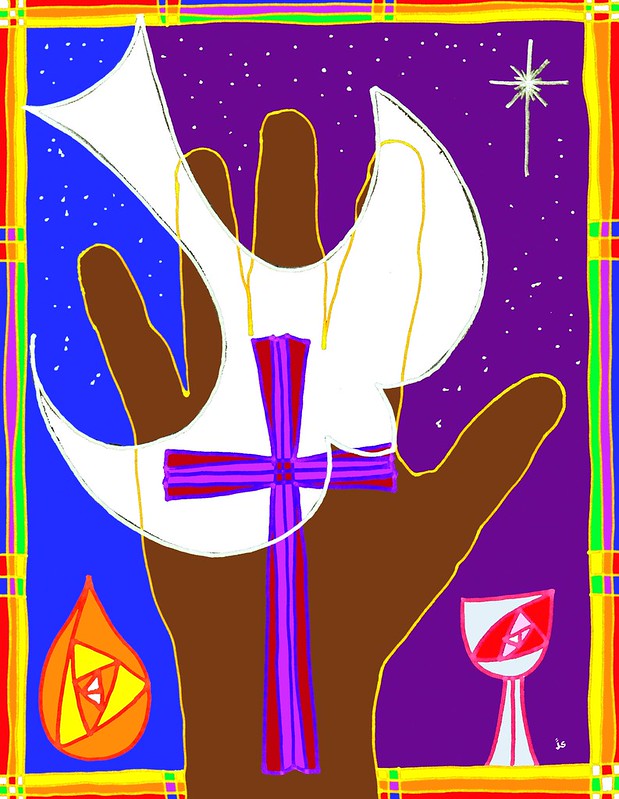
Art by Stushie, used with permission

I was happy to hear that everything went well with the gifts of children’s clothing and baby wipes and diapers at Smithtown’s homeless shelter while I was away. Thank you to all who gave these gifts for families in need, and to Linda Goodwin and Joanna Marmelstein for organizing this mission outreach and going there to share our gifts.

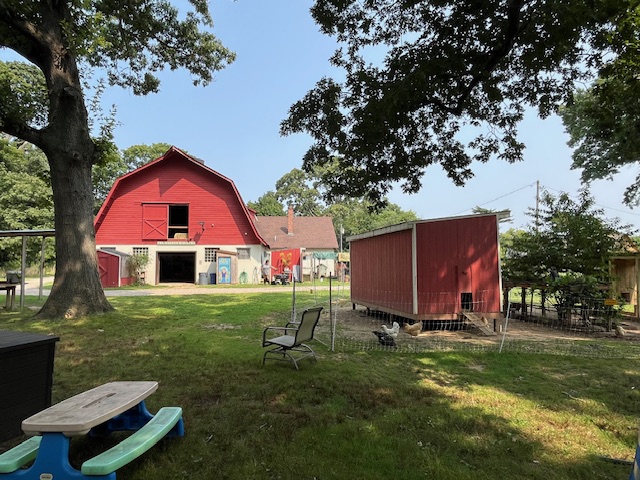
Then, I saw photos of a little garden yesterday, made possible by our Deacons. They continue to quietly give of themselves to help others, especially children. They have a heart to help children! I told Barbara Ruoff, the moderator, how it touched me to see the green sprouts and pretty petunias popping out of the metal containers on the grass—and to hear of the labor they have been doing.

Barbara told me how the garden came into being.

“The Deacons approved some money for Laurie to buy plants at Borella’s where they give us a discount,” she said. “We also provided some soil. I went to the shelter one afternoon, and the kids and I planted flowers and vegetables in two of the bins. It was so much fun to plant with the kids,” she went on. “At the end of our planting one of the boys, who is about 7 or 8 years old, said, ‘I think when I grow up, I would like to be a gardener!’”

“That’s all I need!” Barbara said. “What a reward!”

Every day, the Lord gives us opportunities to bless others when we scatter and sow seeds of hope and faith. Every day, we make a choice—to participate in our Divine Gardener’s holy labor—or to let the opportunities to grow the Kingdom pass us by.

As I read these two familiar seed parables, the gardener in me says, “Hold on! What is this scattering seed?” No good gardener just scatters seed on the ground, without preparing the soil and carefully covering each one to a specific planting depth. And who is this “someone?” I wonder, who just scatters seed? It is mysterious, indeed. But then it becomes more mysterious when the one who scatters, “would sleep and rise night and day, and the seed would sprout and grow, he does not know how.”

Jesus really has our attention here, doesn’t he? The story illustrates some ancient agricultural techniques. That is how some crops were planted—by seeds simply being scattered on the ground. Jesus’s first hearers are nodding their heads. They know this. Only, those who are not Christ’s followers don’t know the hidden meaning in the parable. Jesus explains this only to his disciples.

Yes. We know who scatters seeds every day. It’s us. We are working for the Gardener, the Lord of the Harvest. We scatter, with the Spirit’s help, as we interact with friends, neighbors, family, and strangers every day. We have no idea what is happening with the seeds of kindness and goodness that we are spreading and the sharing of God’s word through our actions. Will they take root? We don’t know. We don’t know if the people will receive them or if there will be growth, if they do. That isn’t up to us, just like it wasn’t up to the farmers in Jesus’ time.

 The work of the Kingdom is for all of us—and yet—we don’t know what we are doing, not on a spiritual level. It’s a secret. Only God knows what is happening in the hearts and minds of human beings. We can trust God to use us to be gardeners for the Son.

Of these two parables, the gardener in me connects with the mustard seed story more than the story of the scattered seed. It just grows like a weed, that mustard seed, no matter what the soil. I can hear Jesus telling all of us to be like a weed! Grow to be a tree! You are that tiny seed with great potential Christ has planted—and in your planting and growing, you are also growing the kingdom, you see.

Let’s think for a moment about “opportunity.” That word is on my mind. We often think of opportunity as something we should seize so good things will happen for us—maybe we’ll get rich! One dictionary provides two definitions of opportunity. One is, “A set of circumstances that makes it possible to do something.” Another is, “a chance for employment or promotion,” such as, “career opportunities in our New York headquarters.” When “opportunity knocks, a chance for success or advancement occurs.”

But what does the Bible say about opportunity? The Apostle Paul in Ephesians 5:15-20 says this:


“Be very careful, then, how you live—not as unwise but as wise, making the most of every opportunity, because the days are evil. Therefore do not be foolish, but understand what the Lord’s will is.  Do not get drunk on wine, which leads to debauchery. Instead, be filled with the Spirit, speaking to one another with psalms, hymns, and songs from the Spirit. Sing and make music from your heart to the Lord,  always giving thanks to God the Father for everything, in the name of our Lord Jesus Christ.”

Opportunity, then, is not to make good things happen for ourselves, but to do what is pleasing to God. We have another chance to be faithful, to do what is right. Jesus, in John 4:35, speaks of the work of the gospel as an opportunity that presents itself every day, to those who have eyes to see. “Behold, I say to you, lift up your eyes and look at the fields, for they are already white for harvest!” 

I think of this little boy, planting with Barbara; he was so moved by the experience. Her caring ways and loving spirit are what he needed. The act of planting in the soil, watering, and waiting for growth is a beautiful miracle from God. But it wouldn’t have happened if Laurie and Barbara hadn’t taken the opportunity to serve those in need, as passionately as if they were serving the Lord.

On this day when we honor our fathers, I can’t help but remember gifts my father gave me and the example he was for our family. He went home to be with God in August 2019. He was a cartographer, but his hobby was gardening, until his health prevented it. I can picture him now, standing with his watering can, putting water in the saucers underneath his African violets on a white, wheeled plant cart on our porch, so the leaves wouldn’t get wet. I can see him with his foot on a shovel, digging out the sod, widening a bed for flowers or vegetables. I always marveled at his strength when he did that, because I was just a little girl, and I couldn’t dig with a shovel or push a heavy wheelbarrow like he did, with ease. I can see him bending over the miniature roses that he grew, along with perennials and shrubs. He would harvest these little yellow and red flowers with scissors and a smile, bring them inside, and place them in water in tiny vases.

My father sowed seeds of kindness and patience, every time I was with him. He was a great listener. Today, on Father’s Day, I wish that we could be together, once again. I would tell him all about the garden at the manse—the Shasta daisies that have grown as tall as Jim, the echinacea with their purple flowers and strong stalks, both of which were started from seed last year. I am sure he would love the red roses cascading on our front walk and would remind me to remove the spent flowers so the plants will keep blooming. I would tell him about this garden our deacons have helped to plant at the homeless shelter with the children. He would be impressed—especially the part about the small boy who has already decided that one day, given the opportunity, he will be a gardener, too. I wonder who influenced my father; who was his gardening teachers? How did the Lord stir that joy inside of him, a joy that stayed with him all his nearly 85 years—and has been passed onto me?

Dear friends, you are the seeds Christ has planted, right here in good soil. This is the best soil—worship on Sunday morning, with your fellow seedling sisters and brothers in Christ. You are the seeds, scattered and sown. It is a great mystery. God only knows. The Heavenly Father will bring forth the growth in you, if you continue to take every opportunity to do God’s will and seek to be pleasing to the Lord each day.

You have the seeds of God’s Word, hidden deep within you. When you leave here today, you will have opportunities to scatter and sow. Don’t hesitate! Opportunities in God’s economy are for blessing others. Don’t worry about whether your seeds of kindness and generosity will take root. That’s not our job. Just keep on going and sowing and giving of yourself—the person you are now, the person you are becoming. Trust the Lord of the Harvest, who is enabling you to grow and be transformed, more and more.

You aren’t what you were yesterday or even this morning. The Spirit is cultivating a whole new YOU.

So, have you had a hard week? A hard couple of weeks, maybe? I’m with you. It’s been rough. God has always been faithful to us—to me and to you. God always will be!

The presbytery met yesterday in Oceanside. Everyone was assigned to a prayer group and given a prompt for spiritual reflection.  I am going to leave you with these thoughts today.

Picture in your mind a white daisy growing up from the mud. Can you do that right now?  Close your eyes. In your spiritual life, what feels like the “mud”? What is flourishing, like the flower?

Where do you see opportunity…. to bloom?

Let us pray.

Holy One, Loving Gardener, thank you for scattering and sowing us, those whom you created in your image and planted seeds of your Son’s righteousness within us. Thank you for the good soil in which we have been firmly planted, in our families and right here in this church, where our seedling sisters and brothers are gathered. Help us to be that good soil for others, nurturing hope and faith. Stir us to be generous, giving of ourselves and our resources, without fear or worry. Transform and grow us as Your Son’s disciples, a family of God, so that we may never miss an opportunity to scatter and sow seeds of kindness, goodness, and love, so that we may never miss an opportunity to bloom. Amen.

Send Me!

Art by Stushie, used with permission

Meditation on Isaiah 6:1–8

Pastor Karen Crawford

First Presbyterian Church of Smithtown, NY

Trinity Sunday/Memorial Day Weekend

May 26, 2024

I can’t remember the moment when I heard God calling me to parish ministry. I don’t think it was just one moment, actually, but rather a gradual illumination, a slow dawning, that this was God’s will for my life.

Looking back at those first years of ministry, I remember many joys and sorrows, highs and lows. Some of the most difficult struggles weren’t the challenges of the wintry climate of Minnesota or my flock, but those that were within myself—when I began to doubt my own abilities and gifts.

The one lesson that the Lord is trying to teach me—and all of us, I believe—is that our feeling of not being worthy or good enough to serve the Lord and God’s people has nothing to do with God’s call and claim on our lives. In fact, I might argue that the feeling of inadequacy almost always goes along with the call. If you aren’t feeling inadequate, then maybe you don’t understand what the Lord is requiring of you.

And if you’re someone who is kind of a perfectionist, then you are always going to feel like you aren’t good enough. Who am I talking to, now, when I talk about perfectionism? You will focus on your flaws and past mistakes and believe that everything in the scheme of things must be fixed and perfect before God can use you. This is, in fact, a sinful way of looking at things because it doesn’t acknowledge Christ’s suffering work that accomplished our forgiveness, once and for all. Our sins have been blotted out—not with a hot coal, but with the One who died on a cross and lives, again. Those with perfectionistic tendences believe that we have something more to do to somehow earn or achieve God’s forgiveness and our worthiness to follow God’s Son, Jesus Christ.

Here is my most recent struggle. I’ve shared with some of you that I am still experiencing some blurred vision and headaches after my eye surgeries, particularly when I am reading and writing and working at the computer. A doctor this week told me that the lens implants have become cloudy, something that can happen. The way to correct it is to have another surgery, in three months or so.

This little setback has worked on my confidence—made me become concerned that I would be able to do what I need to do for my class that starts in Austin in about a week.

That’s what I mean about the struggle with self-doubt and fear of failure—and how this is the REAL cause of our hesitation in answering the call to serve the Lord with our lives—devoting ourselves more fully to following Christ. This is what leads us to say, “No, Lord. I’m not the one. I’m not good enough. Don’t send me!”

Are we surprised that Isaiah has an overwhelming feeling of inadequacy in the presence of a Holy God, sitting on a throne, high and lofty, in his vision recorded in chapter 6? The hem of God’s robe filled the whole temple! Seraphs, snake-like creatures with wings, are all around. Isaiah describes them as each having “six wings: with two they covered their faces, and with two they covered their feet, and with two they flew.” And they calling to one another, singing: “‘Holy, holy, holy is the Lord of hosts; the whole earth is full of his glory.’”

The pivots shake with the voices. The house of the Lord is filled with smoke. Isaiah says, “‘Woe is me! I am lost, for I am a man of unclean lips, and I live among a people of unclean lips; yet my eyes have seen the King, the Lord of hosts!’” His personal and communal confession makes us wonder if this is just the ordinary inadequacy of sinful human beings in the presence of God–or is there something more going on?

In part, the answer lies in the time in which he lives, “the year that King Uzziah died,” around 738 BCE. This is a pivotal point in Israelite history. “Uzziah’s death marks a transition from political stability to the looming Assyrian crisis. (And) yet it is far more about a change in God’s time,” says biblical scholar Robert A. Ratcliff.  This is a time when the “will of God can be more clearly seen and the presence of God more clearly felt.” [1]

Terrible things are about to happen, right when God’s will and very presence would be revealed to Isaiah, for the sake of God’s children. The Lord is about to do a new thing in the midst of a war, which will lead to the Assyrians’ capture of Samaria, the capitol of the Northern Kingdom of Israel in 720 BCE, and many of the Israelites being carried off into captivity.

So you are wondering, right now, how then, can we relate to Isaiah’s story, those of us certainly living in difference circumstances, in the 21st century? We can connect with his call story, because it raises “the daunting question of what it means to be chosen to fulfill God’s purposes.” [2]

For we, too, are chosen. Yes, we are !

 In Scripture, frequently those who receive the call realize its potential to upend their lives” [3] and so they resist. “Jeremiah objects due to his youth and inexperience in public speaking.” Moses pleads with God to send someone else, saying that he has a speech impediment, a stutter, when he is really terrified to return to Egypt, where he is wanted for murder. When God calls Jonah to go and preach to Israelites’ enemies, the Ninevites, Jonah heads in the opposite direction, rather than obey the troubling voice of God.

But after Isaiah’s initial resistance—and the seraph’s touching his mouth with a burning coal, so that his guilt has departed and his sin has been blotted out—Isaiah answers God’s question, ‘Whom shall I send, and who will go for us?’ with an obedient and enthusiastic, ‘Here am I. Send me!’”

Isaiah will have his work cut out for him. The people will not listen to Isaiah’s prophetic word. They will resist God’s claim on their lives and refuse to embrace the Lord’s call to return to their faith and faithfulness. In his lifetime, Isaiah, the one whose name means, “The Lord is my salvation,” and is a descendant of Judah and Tamar, is ridiculed and persecuted, enduring beatings and imprisonment during his 55 to 60-year ministry, which will end in martyrdom. He would never know the importance of his life, ministry, and writings for God’s people in Judaism or for Christianity. You may not realize that “his writings are mentioned more than 400 times in the New Testament, making it the most popular Old Testament book (for Christ’s followers), along with the Psalms.” [4]

I come to the end of my message, and I feel the heavy burden of perfectionism, once again—stirred by Isaiah’s terrified outburst in God’s presence. If Isaiah, God’s prophet, felt inadequate with God’s call on his life, then how can we ordinary, flawed human beings become comfortable, confident, and secure in what the Lord is calling us to do as individuals and as a church of Jesus Christ?

Because we are all called to do our best to develop and use the gifts that God has given us for God’s glory and Kingdom purposes. All of us are ministers—even the youngest child in our church family is called to love and serve God and neighbor and proclaim our hope in Christ through words and acts of kindness. This is what ministry is all about—living our faith.

The answer is surely the Trinity, who makes it possible for us to live into and embrace our callings and be faithful to the One who never expects us to be perfect. Our Creator has made God’s choice! And it’s YOU! And it’s ME! Don’t be like Jonah and run from your call. Remember how his story ends with him spending time in the belly of a whale praying, before coming to himself and vowing to do what God calls him to do.

Be like Isaiah, who was aware of his own sinfulness in the presence of a Holy God, yet still allowed God to use him in a mighty way.

Christ has given us the Spirit to guide and empower us to do even greater works for God the Father than Jesus and his first disciples were able to do. This whole focus on “perfection” in our society, is a distraction from living out the fullest expression of our faith.  

I don’t like to say that it was God’s will that I would struggle a bit with my vision right now. I don’t know what the Lord has planned for me. But I can trust in God’s love. Isaiah says in chapter 55, “My thoughts are not your thoughts, nor are your ways my ways, says the Lord. For as the heavens are higher than the earth, so are my ways higher than your ways and my thoughts than your thoughts.”

 But maybe this is a pivotal time in my life, when I will realize and feel keenly, through some of these struggles, the power and presence of our loving and gracious God.

So, what are you thinking? What stands in the way of your stepping out of your comfort zone and being more faithful to God’s call?

What will it take for you to let go of your fear and insecurity and say, with Isaiah, “Send me!”

Will you pray with me? Let us pray.

Holy, holy, holy, Three in One! We are fearful and intimidated by your call on our lives, knowing that being faithful and obedient will involve some struggle, but also that we can rely on the strength and guidance of your Spirit, always present with us. Help us now to overcome the temptation to perfectionism anything that stands in the way of our confidently answering your question to Isaiah, ‘Whom shall I send, and who will go for us?’ ‘Here am I; send me!’ In the name of our Triune God—Father, Son, and Holy Spirit—we pray. Amen.


     [1] Robert A. Ratcliff, “Isaiah 6:1-6” in Connections, Year B, V. 3 (Lousville, Westminster John Knox Press, 2021), 5.

     [2] Ratcliff, 5.

     [3] Ratcliff, 5-6.

     [4] Harold Songer, “Isaiah and the New Testament” in Sage Journals, v. 65, issue 4, December 1968.

The Secret of Happiness

Meditation on Ezekiel 37:1–14

First Presbyterian Church of Smithtown

Pastor Karen Crawford

May 19, 2024

Pentecost

Art by Stushie, used with permission

The title of my message today is, “The Secret of Happiness.” I would love to know, right now, before I start preaching, does anyone already know the secret of happiness? Have you found it?

Do you want to share it with the rest of us?

Spoiler alert. This message is not going to provide all the answers to the question, “What is the Secret to Happiness?” But…maybe, with the Spirit’s help, it will lead us closer to the One who DOES have all the answers, who knows us better than we know ourselves, and has the power to heal and transform our hearts and minds.

At the beginning of the week, I was doing my exercises with our denomination’s program “Call to Health.” It’s an app for my phone—and it offers articles, videos and suggested activities to improve the well-being of pastors. It’s been around a while—though having it as an app might be something relatively new. And, up to this year, I have largely ignored it, until I decided that I wanted to earn enough points to be eligible for a 50% decrease in my health insurance deductible next year. Yes, I was motivated to save money!

So, with my less than enthusiastic attitude, I watched one of the healthy videos on Monday—and was surprised to find that it was more interesting and helpful than I thought it would be. Although I can’t seem to locate the video, anymore, I believe it was called, “The Secret of Happiness: Gratitude.”

Now we’ve been hearing about the power of gratitude for years—not just in the church for our faith, but popular psychology has been telling us that grateful people are happy people. Oprah Winfrey is one of the proponents of gratitude journals—this started back in the 1990s. Anyone ever keep a gratitude journal? They are still wildly popular today.

But it didn’t always work for Oprah. She says at her website, “For years I’ve been advocating the power and pleasure of being grateful. I kept a gratitude journal for a full decade without fail—and urged you all to do the same. Then life got busy. My schedule overwhelmed me. I still opened my journal some nights, but my ritual of writing down five things I was grateful for every day started slipping away.” [1]

A few years ago, when she came across a journal entry from 1996, she wondered why she no longer felt the joy of simple moments. Since that time, she had “accumulated more wealth, more responsibility, more possessions. Everything, it seemed, had grown exponentially—except my happiness,” she writes. “How had I, with all my options and opportunities, become one of those people who never have time to feel delight? I was stretched in so many directions, I wasn’t feeling much of anything. Too busy doing.”  The truth was, she was busy in 1996, too. But she had made gratitude a daily priority. She went through the day “looking for things to be grateful for, and something always showed up.”  

That’s what got me thinking that the problem with ascribing all the power for happiness, for Christians, into mustering up our own gratefulness, pulling us up by our gratefulness bootstraps, so to speak, no matter the changing circumstances of our lives, is that it leaves out the component of faith and fails to recognize the power of the Spirit to transform our hearts and minds. We can’t make ourselves be happy or grateful—not without the Lord’s help. The good news is that we can ask God for these spiritual gifts—for that is what they are. Love, joy, faith, patience, kindness, goodness, gentleness, thankfulness, self-control —all of these are gifts from God, poured into our hearts.

Yes—we should be looking for things for which to be grateful, as we ask in faith for the Lord to reveal them. And then we will experience the wonder and joy of God’s presence and recognize the hand of God in our lives, in a new way!

In the video that I watched on Monday, the interviewer met with about four people on camera separately—young and older, male and female. He asked them to think of the person who had made the greatest impact on their lives—the one who inspired them to be who they are today. They each named the person—a mother, sister, friend, and possibly a teacher, I can’t recall the detail. They were then urged to write that person a letter, expressing their gratitude. Some of them wrote long letters—though they might not have been the long letter-writing kind. Next the interviewer surprised them by saying, “Let’s call that person right now and read them your letter.”

 You can imagine how this stirred an emotional response in the writer and the one who listened on the other end of the phone—on speakerphone, so we could hear all the conversation. Something happened when those letters were read, when those beautiful, loving, grateful words were shared and received. Something happened—not only to the two people directly involved, but to the interviewer, whose mood was obviously lifted, and yes, to me, who just watched and listened to all this play out.

So, here we are on Pentecost, and I chose the Ezekiel reading to encourage us of the power of God’s Spirit—the very breath of God—present thousands of years ago when Israel was homesick and grieving in exile, losing all hope, and present right now, in this place, within us and in our midst today.

I chose Ezekiel rather than Acts because I have been visiting people going through life’s difficult transitions, longing for home. Some are grieving the loss of their own good health or mobility, despite modern medicine and prayer. Some have had to move out of the home where they lived for many years and accept that the old way of life is gone. For some, the move comes within years of losing a spouse, and this adds to the grief and loss. In this situation, how could anyone feel grateful or happy, if they are being honest? What are they going to write in their gratitude journals?

So, what is this promise from God through the prophet Ezekiel that was meant for the ancient Israelites and is relevant for us today? Here is what I want you to remember. The Spirit’s transformation doesn’t just happen—not in the Pentecost story in Acts and not in the dry bones story in Ezekiel. The Spirit comes after the church in Acts gathers for prayer and worship for days after the risen Jesus has ascended. Yes, it’s all about God and God’s power—the coming of the Spirit and the work of the Spirit, but we have to believe in it and we have to seek it, with all our heart and soul, mind and might.

In this familiar Ezekiel passage, the Spirit comes when the situation is bleak—when a miracle is truly needed. Hope is all but lost for the exiles. The prophet seeks God, and the Lord brings him not to a high, beautiful place. This is no mountaintop experience! God takes Ezekiel to a valley of dry bones. Death and decay are all around!  Theologian Amy Erickson says, “The tragedy here is not merely that these formerly living, breathing humans will never again have life, but that their bones are lying in a heap in some unnamed Babylonian valley, uncared for and haphazardly dispersed outside of a family tomb… Further, their bones are languishing outside the land of Israel.” [2]

In response to God’s question of can these bones live, the prophet says, “O Lord God, you know.”  This is something like our expression, “God only knows!” The Lord tells his prophet to preach to the bones! That’s just what every preacher wants to hear. Go and a share a message with the dead. But the Lord promises that there will be life when Ezekiel prophecies. Ezekiel does what God commands, “and breath came into them, and they lived, and stood on their feet, a vast multitude.”

The whole house of Israel is like the dry bones in the valley, God explains to Ezekiel. But I will breathe new life into them. And I will take them home.

It was a Monday morning when I watched the video on gratitude—The Secret to Happiness—and I had chores to do, and I can’t explain why I felt such joy in hearing the conversation between the grateful one and the one who had made a big impact on their life. It occurred to me that they probably had no idea the difference they and their relationship had made in the loved one’s life.

Just like you and I have no idea whose lives we have touched and will touch in the future through our loving relationship with them and each other.

On Monday and throughout this week, I have thought of those who have made a big impact on my life—so many people!—and with these thoughts, I have felt joy and gratitude, the same gifts that God wants to give everyone to strengthen and support us in our lives of faith!

We don’t always have a mountaintop experience with the Lord. Sometimes, God brings us to the valley of dry bones where we look at a dark reality. We aren’t going to escape difficulties in this world, my friends. We didn’t become Christ’s followers to have an easy life. But we remember what the psalmist sings in 121,  “I lift up my eyes to the hills– where does my help come from? My help comes from the LORD, the Maker of heaven and earth.”

Shhhh. Listen. This is the Secret to Happiness. Here it is. The One who has put God’s spirit inside human beings at Creation, and came like a mighty, rushing wind in Jerusalem on Pentecost, and brought dry bones back to life in a Babylonian valley, is breathing with a fresh breath on us now to give us the power to live more abundantly.

The Spirit’s transformation doesn’t just happen while we go about our daily routine, checking off items on our to-do list. Don’t be too busy doing that you stop feeling and seeking the One who longs for a more intimate relationship with you. Take time to reflect. Take time to pray, wherever you are. Keep on looking for that which brings you gratitude and you will become more grateful and joyful, with God’s help.

Who are the ones who have made a big impact on your life? Can you think of one person who particularly inspired you? I encourage you to write them a letter—and share it with them by phone or in person, if they are still with us, because you need to hear their reaction—and they need to hear your words of praise and thanks. Because sometimes, you have no idea how much you are making a difference in someone’s life. You have no idea how dry their bones are feeling—and how life-bringing your Spirit-led, powerful words may be.

And it’s in your thanks and praise that you will find new life for your own dry bones, too.

Let us pray.

Holy Spirit, breathe on us now new life into our dry, weary bones. Lift us from desert valleys of discouragement onto high places of joy and peace. Help those who may be going through difficult life transitions and health challenges. Be with all of us, Lord, as we seek your presence and to be obedient, like Ezekiel, even if it seems like a crazy thing you want us to do. Empower us by your Spirit to draw others nearer to you and in so doing, grow in relationship with you who is our spiritual home. In the name of the Father, Son, and Holy Spirit we pray. Amen.


      [1] Oprah Winfrey at https://www.oprah.com/spirit/oprahs-gratitude-journal-oprah-on-gratitude

       [2] Amy Erickson, “Day of Pentecost (Ezekiel)” in Connections: A Lectionary Commentary for Preaching and Teaching, Year B., Vol. 2 (Louisville: Westminster John Knox Press, 2020), 329.

And He Was Carried Up into Heaven!

Meditation on Luke 24:44–53

Pastor Karen Crawford

Ascension of Our Lord

May 12, 2024

Art by Stushie, used with permission

It’s so good to be back with my flock today—after being away two Sundays! It felt like a long time for me.  I missed you so much. Thank you for your cards and calls!

My eye surgeries went well. I am seeing better and better, each day—especially the dramatic return of vivid colors and fine details. The shadows are gone! I can see all the expressions on your faces, even the Presbyterians sitting in the back of the sanctuary!

Yesterday, I was looking through the materials that the surgical center gave me with post op instructions and supplies.  I found two plastic cards with information about the lens implants, which came from The Netherlands. Each has my name, the name of the surgeon and the surgical center, and the dates of my surgeries.

I have decided to keep the cards, but not for the usual reasons. I put them in my wallet as a reminder of a miracle and Christ’s faithfulness to help me in my time of need. The cards record the procedure that signaled an end of a long struggle with low vision and the beginning of my healing journey.

I will NEVER go back to the way I was seeing before the surgery!! And I am just beginning to realize the changes this will mean—a whole new quality of life. I have been wearing glasses since I was a little girl and contact lenses for 30 years or more. The last few years, my vision could no longer be adequately corrected by glasses or contact lenses. Now, I wake up in the morning, open my eyes, and I can see!

In a way, the implant cards remind me a little of our baptism certificates. Both help us recall what God has done. Baby Mia may look like the same child she was before she was baptized this morning. But she isn’t the same, not spiritually. Nor are we, after the promises we made to help her parents nurture her in the faith. She will never go back to being the child before she was claimed by Christ in the waters of baptism. A former life has ended. A new life, with the Holy Spirit, dwelling inside her, helping and guiding her to become all that God wants her to be, has begun.

There’s no going back!

Ascension of the Lord arrives quietly, 40 days after the Resurrection, but without any of the fanfare of Easter.

If you are looking for the Ascension accounts in the Bible, Luke is the only evangelist to describe it as a specific event. The commissioning scene on a mountain in Matthew 28 implies Christ’s leaving, without any details. The original ending of Mark has no departure, but at verse 19, it says, he was “taken up into heaven, and sat down at the right hand of God.” John’s gospel has a long farewell discourse, and resurrection appearances, but no ascension.

Every time we baptize, install, and ordain, we recite the Apostles’ Creed, affirming our belief in the Ascension. We say, “on the third day he rose again from the dead; he ascended into heaven and is seated at the right hand of God the Father almighty; from thence he shall come to judge the living and the dead.”

But what does the Ascension mean for us as Christians? John Calvin, in his Institutes of the Christian Religion, shares his thoughts on what God accomplished through the Ascension. “From this (the ascension) our faith receives many benefits. First it understands that the Lord by his ascent to heaven opened the way into the Heavenly Kingdom, which had been closed through Adam. Since he entered heaven in our flesh, as if in our name, if follows, as the apostle says, that in a sense we already ‘sit with God in the heavenly places in him,’ so that we do not await heaven with a bare hope, but in our Head (Jesus Christ) already possess it.” [1]

It’s a curious thing, but even Luke’s account says little about the actual leaving in these 9 verses that close his gospel; only one verse says anything about it. But we find wonderful details in this one verse! It’s the best goodbye ever! Verse 51, “While he was blessing them, he withdrew from them and was carried up into heaven.” He leaves his loved ones with a blessing and final instructions.

He isn’t telling them anything new, with his last words. He repeats what he has already told them—for our sakes, as well as theirs. Let’s take a closer look at his instructions and consider what they might mean for us today.

One: he tells them to keep studying the Scripture. What Scripture did the disciples have? What we call the Old Testament!  Some Christians think we don’t need the Old Testament anymore, and yet, Jesus says we do. He says, “Remember everything I have taught you. How I am the fulfillment of the law of Moses, the prophets, and the psalms.” He had opened their minds to a new understanding of the Scriptures that they have heard since they were children. His Spirit continues to open to us a new understanding of Scripture for our lives, each day.

And two, he assures them, and us, once again, what all this was for—the Messiah’s suffering and rising from the dead on the third day. This isn’t a random act of terror! We all need to be comforted that God is still in control when bad things happen, and we are frightened or grieving and feel so out of control. The disciples need assurance that God has a plan! The apostle Paul explains in Romans 8:28 how “all things work together for good for those who love God and are called according to his purposes.” This is what Christ’s death, rising, and now ascension has accomplished for the world: “repentance and forgiveness of sins” may be proclaimed in Christ’s name to all the nations.

Something more in his last words helps us with our lives today—and that’s when Jesus tells them what to do RIGHT NOW. We sometimes feel paralyzed, frozen in fear, grief, or anxiety. The worst thing is not knowing what to do next! The disciples must be feeling overwhelmed by all that’s happened, but then Jesus says, “Listen. Stay here. Don’t go anywhere, yet. You are in the right place! I am sending my Spirit to strengthen and help you in your mission to all the nations.” He is saying that to us, as well. “Stay here. My Spirit will guide and strengthen you in your mission, which begins right here, in your faith community.”

Here’s something else I want you to notice. How do the disciples receive and respond to Christ’s last words? This is the amazing part! They aren’t afraid. They aren’t sad, according to Luke. And they will never go back to be the people they were before the Ascension. This sight, this experience, signals a whole new quality of life.

Theologian Fred Craddock says, “The disciples are not dejected and downcast by the departure of Christ, nor do they look longingly back to Galilee and the life they knew before he called them to follow him. Instead, they look for the power from on high, and in this hope, they return to Jerusalem and to the temple, full of joy and blessing God.”

“Luke has come full circle,” he goes on. “He began his gospel with a scene in Jerusalem, in the temple, at the hour of worship. Events in that opening scene generated anticipation in the reader: God is at work and something marvelous is about to happen. The reader is again in Jerusalem, in the temple, at the hour of worship. Events in this closing scene again generate anticipation: God is at work and something marvelous is about to happen.” [2]

There’s one thing left that I am pondering… Now that I have experienced another miracle from God and have been blessed with this special gift of restored vision; what will the Lord require of me? For those who witnessed the miracle of the Ascension and the blessing from Christ as he was carried up to heaven were then empowered for ministry. For the rest of their lives, they had this shared, bittersweet memory of the day they said goodbye to Jesus, an experience that would help them persevere through difficult times.

James 1:17 tells us that every blessing, every good gift, comes from God—the Father of Lights. And Luke 12:48 says, “From everyone who has been given much, much will be required; and from the one who has been entrusted with much, much more will be asked.”

You have many special gifts, too, dear friends. Every day, I am seeing more of them as you are generous in your giving, your offering of yourselves! I know that God has a plan for us, so that we would be a blessing for others. I look forward to that shared labor with you.

Do you know that on May 1, we passed the second anniversary of my call to ministry in Smithtown with you?

The one thing I have learned in these past two years is what I remember saying in my first message to you! That we need one another! Ministry is about friendship, caring for one another, serving with our gifts and talents. We don’t want to bother people with our needs. We all want to be independent—that’s the American way—but that’s not God’s design for the Church. Christ prayed that his followers would be one and be known as his disciples by their love for one another.

I invite you to continue walking with me on this journey of faith and healing, embracing a new quality of abundant life, received by baptism, claimed by Christ. May it comfort you and bring you peace to know that we still belong to him!

May we be encouraged to share our testimonies as God leads us, bearing witness to the faithfulness of Christ. May we never cease our gathering together regularly, like the first disciples, for joyful worship, blessing the Lord continually.

For God is at work and something marvelous is about to happen!

Let us pray.

Holy One, thank you for the Ascension of Your Son, who now sits at your right hand in glory. We anxiously await his return and the promise of our glory with him. Thank you for the miracles of healing we hear about every day and experience for ourselves in this world. May we never cease to be grateful for your love and healing, grace and mercy, and forgiveness for all our sins. Empower us to be your witnesses, dear Lord, to proclaim the good news to all the nations, beginning right here, where we live. In the name of Your Son, Risen, Ascended, Glorified, and Coming Again, we pray. Amen.


    [1] John Calvin, Institudes of the Christian Religion 2.16.15, ed. John T. McNeill, trans. Ford Lewis Battles, 2 vols. Library of Christian Classics 20-21 (Philadelphia: Westminster, 1960), 1:524.

    [2] Fred Craddock, Luke in “Interpretation: A Bible Commentary for Teaching and Preaching,” (Louisville: John Knox Press, 1990), 295.

“Keeper” of the Garden

Meditation on Genesis 2:4b-10, 15

First Presbyterian Church of Smithtown, NY

Pastor Karen Crawford

April 21, 2024

Creation Care Sunday

We hosted a funeral at the church yesterday. The service was not for a member but for someone with Smithtown family connections. Everything went smoothly. Special thanks to our volunteers who helped behind the scenes!

After the funeral, I felt so happy that God had used me, relieved that the family, whom I had never met before yesterday except on the phone and on Zoom, was pleased, blessed, and grateful. But also, I was tired, after pouring myself into this very important aspect of our ministry together.

Today, I want to share with you how God always ministers to me after I minister to grieving families with funerals that we Presbyterians call “services to witness to the resurrection.”

The Lord draws me outside to breathe the air. I always take a walk, though it might be a short one, as it was yesterday, just around our yard. I admire all that is growing around me, and in my mind, I begin planning for the new thing that I will add to the garden. This has been my tradition since the pandemic—to plant a new flower, shrub, or tree after every funeral, to truly witness to the resurrection and bring new life into the world.

Yesterday, when the sun came out after the rain, I dreamed of the flowers and vegetables that I started from seed in the house and hope to plant this summer. I ordered some more coneflower seeds, as well—mixed colors—and a deep blue perennial salvia to plant with my scarlet red variety.

I can’t put into words the joy, comfort, and spiritual and emotional lifting up that I experience whenever my hands are in the soil with green growing things. I feel a closeness to the Lord God, our Creator, who formed the first human being— adam in Hebrewin God’s own image, from the dust of the earth or adamah—and breathed God’s own Spirit—ruach—into his nostrils.

In today’s passage in Genesis chapter 2, we learn that the first job given to human beings in the Creation story is to be tillers and “keepers” of the Garden, with a capital G. The root of the Hebrew word for “keeper” is shamar. Shamar means keep, guard, preserve, protect, watch over, observe, treasure, retain, and wait for.

This word, shamar, is the same word Cain uses in Genesis 4 when God confronts him after he attacks and kills his brother in the field. “Where is your brother Abel?” God asks. “I don’t know,” Cain replies. “Am I my brother’s keeper?”

God doesn’t answer that question—and of course, we all know the answer. Yes, we are our brothers’ and sisters’ keepers—shamar. To guard, preserve, protect, watch over, observe, treasure, retain, and wait for.

So, alongside today’s passage in Genesis 2, we read that we are keepers of all our human neighbors and keepers of all that God created and entrusted to us, for as long as we live on the earth.

On this day that we celebrate the gift of God’s Creation and remember our calling to care for our home that we share with every generation, I invite you to think about and pray for our beautiful yet fragile earth. What we might do as a church to be better stewards of that which the Lord has entrusted to us?

Prayer is powerful! Prayer will help bring about change! Prayer will open our hearts and minds to hear from the Holy Spirit and will lead to our transformation and our transforming work, right here in our community.

What has really convicted me of late is the problem of plastic pollution and how my buying products in plastic containers or wrapped in hard or soft plastic is adding to the problem. It seems so out of our control—so many products come in plastic!

The National Oceanic and Atmospheric Administration, in its “Guide to Plastic in the Ocean,” [1] says it’s a problem that we can do something about it. The top 10 items of trash picked up in the ocean in 2017 were “food wrappers, beverage bottles, grocery bags, straws, and take out containers, all made of plastic.” [2] Scientists think that about 8 million metric tons of plastic entered the oceans in 2010. That’s the weight of nearly 90 aircraft carriers, and that was 14 years ago! The problem continues to grow. [3]

Unlike some other kinds of waste, plastic doesn’t decompose. It doesn’t break down or go away. (It) can stick around indefinitely, wreaking havoc on marine ecosystems. We have all seen pictures of wildlife entangled and trapped in plastic that makes its way to our oceans.

And, “as the plastic is tossed around, much of it breaks into tiny pieces, called microplastics… These fibers, beads, and microplastic fragments can all absorb harmful pollutants like pesticides, dyes, and flame retardants, only to later release them in the ocean.” [4]

We are urged to reduce our use of plastics, to reuse and recycle as much as possible, and to participate in a marine litter clean up in or near our community.

When I started the Doctor of Ministry program with Austin Seminary two years ago, I didn’t realize how passionate was my concern for God’s world, and that it truly is my faith that stirs my heart to compassion and love for all God’s creatures. I say that because not everyone who observes Earth Day, for example, is a Christian. This makes sense because the one thing we share with the diversity of people around the world is this planet we call home.

But I was surprised to learn through my reading that not all Christians are concerned for the earth and all that lives in it. Some have been taught that certain scriptures support the view that it doesn’t matter what happens to our world, it doesn’t matter how we treat the earth and its inhabitants, because our world is passing away! Some say that human destruction of the world might even hasten Christ’s return! He will come again and take us away from all our problems, many that we created. Loss of habitats for wildlife; extinction of native animals and plants; pollution of the air, water, and soil—they claim that none of these will matter, when we all get to heaven.

Christianity, itself, as it is lived out in the West, may be a root cause of our ecological crisis. This is according to Lynn White, a medieval historian, who wrote in 1967 that Christianity is the most anthropocentric or human centered religion the world has ever seen. Church Fathers, as early as the Second Century, have taught that human beings share, “in great measure, God’s transcendence of nature. Christianity, in contrast to (many other ancient religions) not only established a dualism of man and nature but also insisted that it is God’s will that man exploit nature for his proper ends.”

White believed that what we do about ecology depends on what we believe is the relationship between human beings and nature. He held up for our example someone whom he called the “greatest spiritual revolutionary in Western history”—Saint Francis of Assisi. [5] He praised his belief in the virtue of humility” [6]not just for individuals but for all people. Francis attempted to present an alternative Christian view of nature and humanity’s relation to it; he tried to substitute the idea of the equality of all creatures, including human beings, for the idea of humanity’s “limitless rule of creation.” [7] He tried, and he failed, at least he did in the 13th century, and was branded a heretic.

I believe that the way we live our lives—the way we treat ourselves, one another, all our neighbors and our world—reflects our belief in our connection to one another and all living creatures through Jesus Christ. Our liturgist read today in Colossians chapter 1, “for in him all things in heaven and on earth were created, things visible and invisible, whether thrones or dominions or rulers or powers—all things have been created through him and for him.He himself is before all things, and in him all things hold together.”  That phrase, “all things,” comes up again in 1:20 when we read how Christ’s suffering work wasn’t just to bring peace with God and human beings. “Through him God was pleased to reconcile to himself all things, whether on earth or in heaven, by making peace through the blood of his cross.”

Stirred by the convictions of my faith, I asked our Session if the Confirmation class and I could host a speaker from Sweetbriar Nature Center after worship today. Sweetbriar serves our community by helping sick and injured wildlife and seeking to release them, when possible, back into the wild. Those who cannot be released because they would not be able to survive are cared for indefinitely by mostly volunteers at the center.

I am looking forward to the live animal program called, “Caring for Wildlife.”  I hope that it will give us answers to the question, “What can we do to help wildlife in need?”

Thank you to all who bought our little succulents planted in church anniversary mugs. Thank you to Betty Deerfield and Peg Holthusen for helping us! We have a few more plants available. So far, we have raised more than $500 to help Sweetbriar and our church family in our labor of love…

Love for all creatures, that is. Human and nonhuman. All creatures, great and small.

Will you pray with me?

Let us pray.

God, our Creator of the world and all that is in it, thank you for your love for all creatures, including human beings. We praise you for our calling as Christ’s followers to care for one another and show your love and grace to all our neighbors. Reveal to us what we might be able to do as a church to be better stewards of the world you have entrusted to us. Forgive us when we haven’t paid enough attention to our daily habits, when we have thought and acted more like consumers than good stewards of your wonderful Creation. Transform our hearts and minds and the hearts and minds of all human beings so that we may understand our connection to the world around us in Jesus Christ. Help us to live as if we are equal to and not superior to plants and animals, all things in heaven and on earth, all that you have created in, with, through, and for your Son. Remind us often that your world was not given to us simply to satisfy human desires and exploit for our own purposes. Teach us how to be tillers and  keepers, dear Lord. Keepers of the Garden with a capital G. Lead us to guard, preserve, protect, watch over, observe, treasure, retain, and wait for all creatures, great and small. Amen.


[1] https://oceanservice.noaa.gov/hazards/marinedebris/plastics-in-the-ocean.html

[2] https://oceanservice.noaa.gov/hazards/marinedebris/plastics-in-the-ocean.html

[3] https://oceanservice.noaa.gov/hazards/marinedebris/plastics-in-the-ocean.html

[4] https://oceanservice.noaa.gov/hazards/marinedebris/plastics-in-the-ocean.html

     [5] Lynn White, “The Historical Roots of Our Ecological Crisis”in Science (V. 155, No. 3767, March 10, 1967), 1203-1207.

      [6] White, 1203-1207.

      [7] White, 1203-1207.

Meditation on Romans 8

In Memory of Gillette Dauphinot Piper

First Presbyterian Church of Smithtown, NY

Pastor Karen Crawford

April 20, 2024

Gillette did not have an ordinary childhood. But how could she? She was born in 1941, a time that lives on in the American memory, the year Japanese forces attacked Pearl Harbor, and our world would be forever changed.

Gillette didn’t have ordinary parents.

 Her mother was Nancy White, daughter of the general manager of Hearst Magazines. Miss White, as she preferred to be called even after her 3 marriages, would rise to become editor-in-chief of Harper’s Bazaar from 1958 to 1971. This was a time when there were only two major women’s fashion magazines in America (Harper’s Bazaar and Vogue). [1]

Gillette’s father was Clarence J. Dauphinot, Jr., the son of a Wall Street investment banker. The 1935 Princeton graduate worked as a runner at Kidder, Peabody & Company on Wall Street during the Depression. In 1946, he moved to Brazil to start, with two associates, Deltec International. The asset manager would become known for helping to develop Latin America’s financial markets after World War II.[2]

By the time Gill was born, Nancy was a single mother and was busy with her own life and career. Gill was sent to boarding school and even a convent, briefly. The woman who raised her was her grandmother, Virginia Gillette White, who lived in Smithtown, with husband, Thomas Justin White, who died in 1948, when Gill was 7. “Gammy” and Gill’s cousins provided the family that she needed. Their home, an old mill that Gammy was renovating, was the place where memories were made, laughter was heard, and Gill’s self-concept was nurtured and shaped. Sadly, in 1958, Gammy died. Gillette, still a teenager, had lost the one who mothered her.

Revealing an inner strength, Gillette went on to Barnard College, spending a year studying at the Sorbonne in Paris. She graduated in 1963 summa cum laude, with a degree in French Literature. She landed a job in New York City as a department store buyer. She was elegant and graceful, high society, a sought-after young lady of New York.

She met her future husband while working in Bermuda; he was on a transatlantic sailboat race. William Scott Piper III, a doctor, would serve in the Army in Japan during the Vietnam War. They had three children: Scott (William Scott Piper IV), born in Japan; Derek (Dauphinot Derek Piper), born in Denver; and Michel (now Michel Bauer), born while they were living in Arizona. When Gill’s husband finished his orthopedic residencies, they moved to Miami, where he worked as an orthopedic surgeon.

A deep struggle with alcoholism would bring Gill to seek professional help. She entered a program and took it seriously; there, she found her path to healing. She left with a desire to help others find healing, too.

She went back to school and completed a Master’s in Social Work from Barry University in 1985. She became a family therapist. The woman who looked forever young and never lost her sense of style discovered that she had gifts for helping young women and teen-aged girls with substance abuse issues.

But more suffering was ahead. Gill would have to deal with a great loss. Derek, her middle son, had graduated from medical school and pursued medical relief work in Central America and Southeast Asia when he was diagnosed with advanced brain cancer. He died in 2006. He was just 36.

Gill’s grief nearly broke her; she never fully recovered from the loss.

Her faith journey that began with Catholicism in her childhood would bring her to study Buddhism and practice meditation. The one who went on numerous ocean sailing trips and safaris in Africa was stirred to travel to Burma (now Myanmar) on pilgrimage.

Although she continued to grieve Derek, she told people that the only thing that got her through losing him was her faith. She had had a vision on a retreat and had spoken with her grandmother. She believed in an afterlife.

The Apostle Paul, in his letter to the Romans, assures us that we cannot avoid suffering in our lives, but that suffering is only to be endured for a time. Nothing may be compared to the glory that will be revealed to us—not just in heaven—but as we seek to live as Christ in this world. Our world is groaning in the pains of a kind of rebirth, being transformed, like us, into a new creation. The Spirit empowers us to pray when we have no idea how or what words to say. The Spirit intercedes for us with God so that what God intends may come to fruition. The Spirit also empowers us to live abundant lives with our Risen Savior by faith.

This is how all things work together for good—not that all things ARE good in this world. But that those who love the Lord and seek to live for him and show Christ’s love, through acts of kindness and service, will shine His light into dark places and give hope where hope is so desperately needed.

And what can be better news than the assurance that we are not condemned for what we do or fail to do? We can live with confidence, in freedom, without fear. We have a God who loves the world, wants the best for us and knows what’s best for us—a God who knows us better than we know ourselves!

A God who has a plan for everyone’s life, so that no one’s existence is ever ordinary!

Our loving Lord was willing to become one of us, humbled himself and took on fragile human form, so that he may experience all the sufferings and losses that we will ever experience. Christ modeled a new way to live, reaching out to strangers and foreigners, outcasts and marginalized people, sharing meals with the rich and poor, educated and illiterate, blessing small children, and welcoming all to come to him and cast our heavy burdens upon him.

We are never alone in our struggles.

Gill didn’t let her struggles and pain defeat her. She overcame many hardships. To those who knew her well and admired her tenacity and grit, she said, “What’s my choice? I have to go through it.”

The loss of Derek was followed, four years later, by another loss—the end of her marriage. For Gill, divorce led to a new beginning. She left Miami and moved to a retirement community in Sarasota, where she could be closer to Michel. Her beloved companions were Mozart, her Labrador, and Haydn, the Labradoodle.

She didn’t let chronic neck and back pain and injuries from falls keep her from doing the things that she wanted to do. She stayed active—playing tennis and doing yoga and Pilates at 82. She talked about current events and history. She loved going to the opera, parties, and dancing.

A memory the family will always cherish is Gill dancing with her grandkids at a wedding, though she had had recent hip surgery. The tiny woman who had cardigans and purses in every color, who loved tropical flowers and animals, could be surprising, silly, and funny. Once, she named a stray cat, “Treetop.”

Even in “retirement,” she continued to find her life and sense of self-worth through serving others. She was a philanthropist for women’s rights. She supported an international organization called Women for Women, which invests in women survivors of war and conflict, providing them with social and economic skills to transform their own lives. And she worked to improve her community, volunteering many hours to organize the local lending library.

When I asked her family what they will miss about her, Michel said she would miss her support, elegance, and generosity. “I always knew that she would be there for me and my family,” she said.

Even as we miss our loved ones, dear friends, and long to see them in the world to come, there’s One we can count on to be with us now and strengthen us all of our days.

Let us remember and be inspired by the one thing that helped Gillette carry on after the tragic loss of her son, Derek— her faith!

What can be more wonderful, friends, than the knowledge that nothing we do, nothing we say or fail to say, no choice that we make, no mistake, no things present nor things to come, no suffering, no trial, no struggle, no loss of any kind can separate us from the love of God in Christ Jesus our Lord?

Amen.


“Have You Anything to Eat?”

Meditation on Luke 24:36b-48

First Presbyterian Church of Smithtown, NY

Pastor Karen Crawford

April 14, 2024

Art by Stushie, used with permission

I have a scar on my left wrist that is almost as old as I am.

There’s a story behind every scar, isn’t there?

I was thinking the other day how there’s only one person left in the world who really knows the whole story with the 3-inch scar on my wrist. That’s my mom, who will be turning 85 in June. I was maybe 2 or 3.

In all actuality, I don’t remember being injured. I don’t remember any pain. I only remember the story my mother has told me.

But there’s a picture of my dad holding me, not long after the injury. I have an ugly red scab on my wrist. And an ugly red scab on my neck, which has since faded to the point where I almost forgot about it—until a year ago, when I had my thyroid removed.

The surgeon made a cut right through the old scar. It’s barely noticeable now.

My mother told me that I reached for a pot of boiling soup on the stove. I didn’t want to wait for her to pour it into a bowl. I was at the age where I probably wanted to do everything myself and thought I could do everything myself. The pot of boiling soup poured down the front of me.

It was winter, and I was wearing a long-sleeved turtleneck, with cuffs at the wrists and collar. My mom, who was a nurse, worked quickly to remove the turtleneck, while I was screaming in fear and pain. She pulled my right arm out first and then the shirt over my head. The hot soup had soaked through the cuff on my left arm, at my wrist. I was seriously burned.

Mom took me to the hospital. There was nothing they could do for me. It was a burn in the 1960s. We could only wait for my body to heal itself.

Mom said she was told to soak my wrist. One day, the ugly scab came off—and there was new, pink skin underneath.

I was self-conscious about the scar on my wrist when I was in grade school. The wrinkly skin didn’t look like the rest of my arm. It had strange red and brown spots. The hair didn’t grow back normally. When I wore short sleeved shirts, sometimes my classmates asked me about it, thinking it was a fresh wound.

How ugly my wrist was, I thought back then. How I wish that I had never done what I had done—and then, I wouldn’t have an ugly scar.

This seemingly insignificant scar on my wrist comes to mind while I read this passage of one of the resurrection appearances in the gospel of Luke. This appearance happens right after the two disciples have been walking with the risen Christ on the road to Emmaus without knowing they are with Jesus. They are going home after a long, confusing, upsetting day that began with the discovery by the women of Christ’s empty tomb. What did that mean—the empty tomb? Did someone steal the body?

Meanwhile, they tell Jesus what happened that morning, and he opens the Scriptures to them, and their hearts are burning. They invite him inside their home. He blesses and breaks the bread, and their eyes are opened, and they recognize him. He vanishes, and they run back to Jerusalem that night to tell the other disciples what happened.

While the two disciples are sharing their story, Jesus surprises and terrifies the group by making another appearance, in today’s reading. He says, “Shalom! Peace be with you.” And even though the women shared the news of the risen Christ, and the two disciples shared the news of the risen Christ, the group can’t wrap their heads around what is happening.

People don’t just come back from the dead, do they? Especially those whom they have watched die in a cruel and terrible manner. And if people DO come back from the dead, well, doesn’t that mean they are ghosts? Just like some people nowadays believe in ghosts and relish stories of the paranormal on TV, they believed in ghosts in ancient times, too.

Jesus is saying to them, “Come on, I am not a ghost. Look at my hands and feet. Go ahead, do not be shy, touch me. You ever seen a ghost who looks like this? Didn’t think so. Anybody here got something to eat? I’ll have the broiled fish.” [1]  

“The Jesus who repeatedly ate with his disciples, with sinners (and tax collectors), and with Pharisees now eats his last meal before leaving his disciples in the ascension. He does this… to prove that he is not just a vision or a ghost, that he has really conquered death.” [2]

The disciples look at his scars, touch his flesh, hear his voice, and are filled with joy, but, at the same time, they are disbelieving and wondering what is going on.

Jesus is doing two things that he does best—eating and teaching them, opening their minds, once again, to the Scriptures in a way only Jesus can.

The scars capture my attention, as this is the second week we have discussed the appearances of the risen Christ and his showing them his scars. Seeing the scars, they aren’t stirred to anger or want revenge for the injustice of Christ being crucified. The scars don’t bring hatred or fear.

The scars tell the truth, and they are stirred to joy because of what God has done!

I am seeing the 3-inch scar on my wrist in a new way, after studying this passage. The Lord doesn’t want me to remember a childhood error, grabbing a pot of hot soup off the stove. God doesn’t want me to remember the pain. And I don’t!

The scar is a reminder to me of the love of my mother, who acted quickly to remove the soup-soaked turtleneck and get me to a doctor, right away. She may have saved my life that day, and she would do it again in an instant. Just as we would do the same for all our loved ones.

What if we saw all our scars not as ugly, not as stories of injuries or surgeries, but instead as marks of beauty, further proof of the faithfulness of our God, who has a wonderful plan for each of us? Rather than sadness, shame, or grief as we recall injuries, surgeries, and pain, what if we are moved, instead, to wonder, joy, and gratitude for all that God has done?

I am seeing that black and white photograph in a different light, that one my mom or another relative took of me, with the ugly red scab on my wrist and at my neck, sitting in my father’s lap.

The expressions on our faces tell the whole story.

Dad is smiling, and my head is tipped back as if I am giggling from being tickled or from something funny that he said—or both.

The ordeal is over. The danger has passed. I have a feeling that we might have just finished sharing a meal.

Dear friends, “the one whose life the church shares in Word and Sacrament is not a ghost or a disembodied spirit. He is the risen Lord.” [3]

“The passage ends as a kind of ordination service,” says Thomas Long, professor emeritus at Candler School of Theology. “Jesus has done his work, and it is now time for the disciples—then and now—to do theirs. Jesus sends them into the world, not as soldiers, diplomats, program planners, or celebrities, but as ‘witnesses.’

“It is the thinnest of all portfolios. The church has no weapons, no credentials, no powerful allies, no fancy remedies, or quick fixes; it is to offer only what it has seen and heard in Jesus. …That, of course, is what the world most needs: honest and courageous disciples who will get on the witness stand and tell the truth, the whole truth, and nothing but the truth.” [4]

Christ sends us out, with our scars and stories of redemption, miracles of healing, and the grace and love of our living, forgiving God.

The peace of Christ is with you!

He is risen! Hope is everywhere.

And WE are witnesses of these things.

Let us pray.

Loving God, thank you for healing us, over and over again, and the promise of eternal life by faith in your Son, Jesus Christ. We anxiously await the return of our Messiah, when we will finally live in resurrected flesh and blood bodies in a new heaven, a new earth. But until that time, help us to be your faithful witnesses—to tell the truth, the whole truth, and nothing but the truth, courageously, without embarrassment, fear, or apology. Christ is risen! Hallelujah! In Him, our stories and our very lives have been redeemed. Amen!


     [1] Thomas Long, “Third Sunday of Easter” in Connections, A Lectionary Commentary for Preaching and Worship, Year B, vol. 2, Lent through Pentecost (Louisville: Westminster John Knox Press, 2020), 232-233.

     [2] Justo L. Gonzalez, Luke from the series Belief: A Theological Commentary on the Bible (Louisville: Westminster John Knox, 2010), 279-280.

[3] Justo Gonzalez, 279.

[4] Thomas Long, 233.

What Do You Need to Believe?

Meditation on John 20:19–31

First Presbyterian Church of Smithtown, NY

Pastor Karen Crawford

Second Sunday of Easter

April 7, 2024

Art by Stushie, used with permission

Where were you on Friday when Long Island experienced an earthquake? Did you know it was an earthquake, right away?

The earthquake we felt this past Friday, April 5, was a magnitude 4.8 at its epicenter in New Jersey. Nassau and Suffolk County emergency response received more than 200 9-1-1 calls from those who were curious about it.

Catherine Jennings, a 9th grade earth science teacher at Half Hollow Hills High School in Dix Hills, just happened to be doing a lesson on earthquakes when the floor and desks started shaking. Her students looked at her, thinking that she must be staging it. “How could we be so lucky to have this happen at the exact moment that I am teaching about it?” she said. [1]

While the earthquake caught us all by surprise, tomorrow, on April 8, we are expecting another natural wonder here on Long Island. Is everybody ready with your special solar eclipse glasses?

All 50 states, except Alaska, will experience at least a partial solar eclipse. Those within a roughly 115-mile path from Texas through Maine through parts of Eastern Canada will experience a total solar eclipse. The total or near total eclipse is expected to visit and exit New York tomorrow afternoon, between 2 and 3:30 p.m. [2] An estimated 31.6 million people live in the path of totality this year, compared to 12 million who saw the eclipse in 2017.[3]

One of the interesting effects of the total eclipse, Nasa says, is that some of the nocturnal animals may wake up, thinking it’s nighttime, while other non-nocturnal animals may think it’s time to go to sleep. [4]

This natural event has stirred excitement and the planning of eclipse watch parties. If we miss seeing the eclipse tomorrow, North Americans will have to wait till 2044 to see another solar eclipse, but only if we are living in or willing to travel to Montana, North Dakota, South Dakota, or parts of Canada and Greenland. The next total solar eclipse to cross the continental U.S., from coast to coast, will occur in 2045. [5] However, if we don’t mind traveling to a remote part of northwestern Alaska, we would be able to see one as early as March 30, 2033.

I have mixed feelings about all this. I want to see it and hear about it. I am eager to marvel at the amazing photos. But also, I can’t help but wonder …. is seeing the eclipse going to make any lasting difference in my life?

 Basically, we are getting excited about not being able to see the light of the sun for as long as 4 minutes in the middle of the afternoon. We WILL get to see something that isn’t usually visible—and that’s the “sun’s corona, or outer atmosphere, which is usually obscured by the bright face of the sun.” [6]

But all the hype being generated is big business for tourism. Airlines are offering specialized experiences for eclipse travel. Hotels in the path of the total eclipse are raising their rates as about 12 million Americans plan on traveling to get a better view of the eclipse. [7]

It just shows the hunger that is inside of us to see something awe-inspiring and the lengths that people are willing to go—not to mention the money some are willing to pay—to see and experience a natural wonder for ourselves, and with it, be, somehow, forever changed.

We step into the room with Christ’s disciples today in the 20th chapter of John, hiding behind locked doors for fear of the religious authorities. The group, at this point, includes many more than the original 11 men (12 minus Judas Iscariot.) All the women who have followed and served Jesus and provided for him during his ministry are there, including Mary Magdalene, who was the first to meet the risen Savior that morning in the garden of the empty tomb. She runs to the other disciples saying, “I have seen the Lord!”

The fact that they are still hiding in fear reveals that they have dismissed her astounding news. All of them have failed to believe what they didn’t see with their own eyes and hear with their own ears, let alone touch with their hands.

This is an illustration of what the church looks like without the risen Christ. “It is locked off from the world, crouching in fear.” [8] And yet, there is no place our Lord would rather be than with his followers, gathered in his name, as he promises all of us. Into this room filled with terror, sadness, and disbelief, the risen Christ, who knows us better than we know ourselves, appears to bring hope and strength for his followers to carry on.

How do they recognize him? He is known by his scars, scars that could have been fully healed by God the Father in his raising but were left so that his followers could identify him. He still bears the marks on his hands from the nails and a wound in his side where a spear pierced him. They rejoice when they see him.

“John reminds us that the risen Christ is not stopped by the church’s locked doors…The risen Christ invades the church, pushing through the locked doors and bringing peace, his own presence, forgiveness, the Spirit, and life abundant.” [9]

The first person with whom they share the message of the risen Christ is Thomas, or Didymus, Greek for “Twin.” I find myself wondering where Didymus has been, when the rest of the disciples were locked in the room. Maybe he is the most courageous of the group. Maybe he left to find food for the others and to find out what is happening in the world. Maybe he just chose to be alone with his grief. But then, he comes back to the others, and they say, “We have seen the Lord.” Why would he believe them? After all, they didn’t believe Mary.

This is what Thomas needs to believe: he needs to see and touch the scars.

Jesus hears his request, and, a week later, he appears to Thomas and says, “Touch and see. Do not doubt but believe.”

This word translated “doubt” is not the best word for apistos (without faith or no faith). Doubt has more modern connotations of questions that arise amidst a faith journey. This is the beginning of Thomas’s faith or trust, which is the same word, and his calling as an apostle—one who is sent out to carry the message. He will go from having no faith to having all the faith that he needs for his calling– apistos alla pistos.

Thomas is rewarded by his honesty with the revelation that Christ is, indeed, fully divine. He is the only one to fall down and worship him, saying, “My Lord and my God!”

This isn’t the end of the lesson for Thomas or for us and Christ’s followers who will come after us—because there will be many more whose lives we will touch with our resilient faith.

 Jesus offers a greater blessing for those who didn’t see him when he was risen or know him as a human being—and yet we still believe, we still trust in him. This chapter closes with John saying that Jesus did many other signs in the presence of his disciples, but “these are written so that you may come to believe that Jesus is the Messiah, the Son of God, AND that through believing you may have life in his name.”

So I ask you now. Thomas needed to touch and see the Savior’s scars in order to believe and through believing, have life in his name. What do you need to believe and through believing, have life in his name? What do YOU need to go from apistos alla pistos—from no faith to faith?

Today, we had the joy of baptizing baby Elizabeth. Today is the beginning of her faith journey. The Spirit has claimed her and has given her gifts to use for God’s glory. Today, is the first day of our work to help her come to understand her gifts and grow to spiritual maturity, as well as support her family as they seek to raise Lizzie in the nurture of the Lord.

Dear friends, how will you do it? How will you encourage Lizzie and her parents to be faithful to their calling? How will you be a witness to the transforming work of the Holy Spirit, joyfully dwelling within you and flowing out to bless all humankind?

May we never be like the first church without the Risen Christ, cowering in fear and despair behind locked doors. May we, like Thomas, come to realize that meeting the Risen Savior is more than just an awe-inspiring sight, but rather an invitation to enter in to a deep and abiding relationship with him.

May we, like Thomas and the other disciples, be forever changed.

Christ is sending us out, this very moment, with the message of hope that never grows old, spoken on the eve of the empty tomb, “We have seen the Lord!”

Let us pray.

Holy One, thank you for sending your own Son, your Only Son, to suffer and give his life to save us from our sins. Thank you for your love and for knowing us better than we know ourselves—even knowing just what it is that we need in order to believe and through believing, have life in his name. Thank you for the invitation, right now, to all of us from our Risen Savior to enter into a deep and abiding relationship with him. Help us, Lord, to be faithful, to witness to the joy-filled, abundant life for all who seek to draw nearer to Christ and become more like him. Stir us to share the message of hope that never grows old, spoken on the eve of the empty tomb, “We have seen the Lord!” Amen.


[1] https://pix11.com/news/local-news/long-island/long-island-teacher-was-teaching-lesson-on-earthquakes-when-4-8-magnitude-quake-struck/

[2] https://ny1.com/nyc/all-boroughs/weather/2024/03/28/ny1-weather-blog

[3] https://dailyjournal.net/2024/04/05/faq-total-solar-eclipse-reminders-tips/#:~:text=An%20estimated%2031.6%20million%20people,than%20it%20did%20in%202017.

[4] https://science.nasa.gov/eclipses/future-eclipses/eclipse-2024/

[5] https://www.nbcnews.com/science/science-news/solar-eclipse-2024-everything-know-glasses-time-totality-explained-rcna146382

[6] https://dailyjournal.net/2024/04/05/faq-total-solar-eclipse-reminders-tips/#:~:text=An%20estimated%2031.6%20million%20people,than%20it%20did%20in%202017.

[7] https://www.foxbusiness.com/economy/eclipse-tourism-expected-bring-big-bucks-areas-path-totality

[8] Thomas Long, “Second Sunday of Easter” in Connections, Year B, Vol. 2 (Louisville: Westminster John Knox Press, 2020), 216.

[9] Thomas Long, 217.

Who Will Roll Away the Stone for Us?

Meditation on Mark 16:1-8

First Presbyterian Church of Smithtown

Easter Sunday, March 31, 2024

Pastor Karen Crawford

Art by Stushie, used with permission

    In January, 1997, the French Coast Guard transmitted its final message in Morse Code:

    “Calling all, this is our last cry before eternal silence.” [1]

    “Ships in distress had radioed out dits and dahs from the era of the (ship) Titanic to the era of the movie Titanic. In near instant time, the beeps could be deciphered by Morse-code stations thousands of miles away. First used to send messages over land in 1844, Morse code outlived the telegraph age by becoming (the language) of the sea. But by the late 20th century, satellite radio was turning it into a dying language. In February 1999, it officially ceased being the standard for maritime communications.” [2]

   April’s Atlantic Magazine tells the story of the last operational Morse-code radio station in North America, nestled within the Point Reyes National Seashore, north of San Francisco. The station—which is actually two buildings some 25 miles apart—”once watched over the waters of the Pacific and Indian Oceans.” [3] Both sites shut down in 1997, but a few years later, “a couple of radio enthusiasts brought them back to life. The crew has gotten slightly larger over the years. Its members call themselves ‘radio squirrels.’”  [4]  They get together every Saturday and “beep out maritime news and weather reports and receive any stray messages. Most of the time, they are communicating with a WWII-era ship permanently parked at the San Francisco pier.”  [5] Some of the machines they use date back to WWII.

     “To send a message, they (tap) each Morse-code letter into a gadget called a ‘bug,’ generating a loud, staticky noise that reverberates throughout the whole building. ‘It’s almost like jazz,’ one of the radio squirrels said, ‘a music of rhythm and timing that can sound different depending on who is doing the tapping.” [6] Volunteers start each Saturday morning “with ‘services’ for ‘The Church of Continuous Wave.’” [7] They share a meal on vintage plates, branded with the Radio Corporation of America’s old logo.

    Does it feel strange to read an Easter Scripture, without bumping into the Risen Christ? Mark’s gospel may feel abrupt and maybe like something is missing to those who are used to the Easter account in the gospel of John—when Mary Magdalene stumbles upon Jesus himself after she has seen the empty tomb and the angels. Jesus asks her, like the angels did, “Who are you looking for?” She doesn’t recognize him, in her state of distress. She supposes that he is the gardener, and she, again, asks for Christ’s body so that she might tend to it.

    Then, Jesus says her name, “Mary,” and finally, Mary recognizes him! And he sends her out to carry the message of his resurrection to the others.

    John’s resurrection account is definitely my favorite and my choice for most years when sharing my Easter message.  But Mark’s story speaks to me this year. It did in 2021, too, during the pandemic, when churches had been closed, and we were fragmented and discouraged.

     The detail about the three women’s greatest fear on the way to the tomb strikes me as very real this year. They keep asking one another, “Who will roll away the stone for us?” Of all the things they could or should be afraid of, such as being women at a cemetery at sunrise, visiting the tomb of someone who was crucified for crimes against the state, they are worried they won’t be strong enough to move the stone. Aren’t they worried that Roman soldiers might be there? Aren’t they worried there might be grave robbers?

     This is what we do. We worry about things that we anticipate will be problems or obstacles, and then, they never actually become problems or obstacles. We end up with other problems or challenges we never anticipated.

      They reach the tomb, and the large, heavy stone has been rolled away, and surprise, surprise, no Jesus. Instead, the three women—Mary Magdalene; Mary, mother of James who may also have been the mother of Jesus, and Salome, who might have been Mrs. Zebedee— discover a young man in a white robe, who knows why they have come. He immediately tries to comfort them. Because whenever people are in the presence of an angel of the Lord, it’s, frankly, terrifying.

     The young man says, Don’t be alarmed. I know the one you are looking for—Jesus of Nazareth, who was crucified. “He has been raised; he’s not here! Look, there is the place they laid him.”

    The angel charges the three women to carry the message of the Risen Christ to the men, who are probably still sleeping and given up hope. “Go, tell his disciples and Peter,” he says, “that he is going ahead of you to Galilee; there you will see him, just as he told you.”

Then the women—who followed Jesus while he was alive, had provided for him while he was in Galilee, and watched the crucifixion from a distance—run away. “Terror and amazement had seized them, and they said nothing to anyone, for they were afraid.”

They fail, just as the three male disciples—Peter, James, and John—had failed Jesus on the night he was betrayed, when he was agitated and brought them with him to the Garden of Gethsemane in Mark 14 to pray. And they kept falling asleep. Three times, he woke them up and scolded them.

     The men had failed. The women had failed. Mark’s gospel is over. Scholars agree that anything that comes after verse 8 isn’t part of Mark’s original account. Everything else was added by others later. The story ends in fear, with no one sharing the message with anyone.

    Why does Mark do that?

    Some think that Mark was interrupted or even died before he finished. Others think that the end of the story was lost. But many believe that Mark meant to end it with the women being too amazed and afraid to share. Theologian William Placher writes, “All through Mark, women have been faithful when men failed to be, and these women have come to the tomb to minister to Jesus’ body when the male disciples are long gone, but in the end, no human beings are completed faithful. Fear captures us all.” [8]

     It’s perhaps these features of Mark that speak to us today, “in our own age of uncertainty, when a Gospel that ends with Christ triumphantly present is harder to reconcile with the horrors of the world around us and the doubts within us. Mark throws the ball to us, as he did to his first readers. The three women run away silent, but we have heard the story; it is up to us, in our lives and our testimony, to tell it and keep it alive.” [9]

     The Lord will continue to find a way for us to communicate God’s unchanging message of hope in the Living Christ for generations to come, even if our methods of communication might change a little, just as Morse Code fell out of fashion.

    Ships didn’t stop communicating. Satellite radio was simply found to be a better way.

    But what explains the Radio Squirrels getting together every Saturday morning, for “services” for “The Church of Continuous Wave,” and to share a meal on vintage RCA plates? It seems to me that just when our society declares something, “old-fashioned” or “outdated,” it doesn’t take long for someone to be willing to bring it back to life.

    Morse Code isn’t quite extinct. The U.S. Navy still teaches it to some sailors, and in 2017, a British man who had broken his leg on a beach used it to signal for help in the dark with a flashlight. And while most of the Radio Squirrels are retired or nearing retirement, the last time The Atlantic’s photographer went to visit them, she spotted a 17-year-old “hovering around the squirrels in action. Born after the effective end of Morse code, he was nonetheless eager to help keep the jazz going.” [10]

I would like to close my Easter message today with a poem. This is Jan Richardson’s “Seen: for Easter Day.” [11]

You had not imagined

that something so empty

could fill you to overflowing.

and now you carry

the knowledge

like an awful treasure

or like a child

that curls itself

within your heart;

how the emptiness

will bear forth

a new world

you cannot fathom

but on whose edge

you stand.

So why do you linger?

You have seen,

and so you are

already blessed.

You have been seen,

And so you are

the blessing.

There is no other word

you need.

There is simply

to go

and tell.

There is simply

to begin.

Amen.


     [1] Saahil Desai, “The Radio Squirrels of Point Reyes” in The Atlantic, April, 2024, 17-19.

     [2] Desai, The Atlantic, 17-19.

     [3] Desai, The Atlantic, 17-19.

     [4] Desai, The Atlantic, 17-19.

     [5] Desai, The Atlantic, 17-19.

     [6] Desai, The Atlantic, 17-19.

     [7] Desai, The Atlantic, 17-19.

      [8] William C. Placher, Mark from the series Belief, A Theological Commentary of the Bible (Louisville: Westminster John Knox Press, 2010), 247.

      [9] Placher, 248.

     [10] Desai, The Atlantic, 17-19.

     [11] Jan Richardson, Circle of Grace (Orlando, FL: Wanton Gospeller Press, 2015), 154-155.

If You Have Love for One Another

Meditation on John chapter 13

First Presbyterian Church of Smithtown

Pastor Karen Crawford

March 28, 2024

Maundy Thursday

Art by Stushie, used with permission

I woke up Tuesday morning to discover the Francis Scott Key Bridge was no more.

Being a Maryland native and having lived in Baltimore for a number of years while I was studying to be a teacher, I was shocked to watch the footage of the mile and a half bridge on Interstate 695 collapse into the Patapsco River.

A cargo ship as large as three football fields, carrying 1.5 million gallons of fuel oil and lube oil and 4,700 cargo containers, lost power. And though the 22-member crew and a local harbor pilot did everything they could to avert the disaster, the ship drifted into one of the 47-year-old pillars. Those on board the ship were not hurt, but most of those working on the bridge, filling potholes in the middle of the night, were plunged into the 47-degree, dark waters below.

Soon, the stories of those whose day started as an ordinary work shift began to be shared. We learned about the six construction workers from Mexico, Guatemala, El Salvador, and Honduras. Divers recovered the bodies of two men inside a red pickup truck. Alejandro Hernandez Fuentes, a 35-year-old from Mexico, was the foreman of the construction crew and lived in Baltimore. Dorlian Ronial Castillo Cabrera, was a 26-year-old from Guatemala who lived in Dundalk, a blue collar community in Baltimore County.

A few days after the tragic bridge collapse, some miracle stories are coming to light. Two of the workers were rescued and survived. Another man escaped the collapsing bridge that night by running back to the end. He was a highway inspector with valuable knowledge about the construction site. He was commended that, in spite of the traumatic experience that left him shaken to the core, he was able to help the dive team map out the debris field before the divers went into the water.

“He almost died,” an official said of the highway inspector. “That man is a very special man. He was able to fight the fear and really help us out.”

The other four workers are still missing. The recovery efforts have been paused due to the danger to divers searching essentially blindly in the dark waters, with shifting debris all around them. Miguel Luna, a Salvadoran father of three who lived in Maryland for 19 years, is among the lost, as is 38-year-old Maynor Yassir Suazo Sandoval, a U.S. resident for 18 years who migrated from Honduras. Suazo was married with two children – an 18-year-old son and a 6-year-old daughter.

The missing men and their families were the subject of Masses and vigils across the city this week that we call Holy Week. Prayers for God’s help in recovering the lost were lifted up at an interfaith vigil at Mt. Olivet Baptist Church of Turner Station, a historically black community in southeast Baltimore County that was once a thriving steel mill town.

The interfaith community promised to support the families impacted by this tragedy.

Tonight, we hold in our hearts and prayers the families who lost loved ones and the city and county now struggling to recover in the wake of the bridge collapse. We do this while we recall what happened at the Last Supper—what Christ did and said. What his disciples did and said. And we consider how what we say and do bears witness to the love of God, revealed in Christ Jesus, our Savior and Lord.

This is what I hope you will remember from tonight’s message. Three things.

The meal. The towel. And the “new commandment.”

First, the meal.

It isn’t actually his last supper with his disciples. The Risen Christ will eat another meal with his beloved in John, a breakfast of bread and broiled fish that he will prepare for them on the shore of the Sea of Galilee. But this is the meal, tonight, that we think of as the “Last Supper” and imagine a certain way because of Leonardo di Vinci’s famous painting of the same name.

We don’t know exactly what is on the menu, but we know what is on Christ’s mind. He knows that “his hour had come to depart from this world and go to the Father.” He foretells his death, and he is passing on the mantle of authority to his disciples, much like Elijah to Elisha, equipping them for the work of his ministry. He wants them to be able to continue on when he is no longer with them in the flesh.  And Judas Iscariot is on his mind. This is why Jesus is “troubled” in spirit, a Greek word, tarassó, also meaning “agitated” or “stirred up.” Jesus identifies his betrayer at the supper, not by name or angry confrontation, but by handing him a piece of bread that he has dipped in a sauce, possibly made from fish. This is a gesture of warmth and intimacy—to share bread that one has dipped.

This is something important for us to notice—that Christ not only tells us to love our enemies; he shows us how by sharing food and offering friendship. This is further proof that the Table of the Lord is open wide to EVERYONE. No one who seeks to partake of the bread and cup and come to know Christ more should ever be excluded from the Lord’s Supper, where we are made one in Christ, united as Christ’s body for the world.

An unseen guest is present at the meal. Satan is there, though his disciples are unaware of The Accuser’s presence. He is in the heart of Judas before the meal, but then Satan enters Christ’s betrayer fully after he eats the bread that Jesus has given to him.

And now, the towel.

During supper, before Judas leaves, Jesus stands up, removes his outer garment, wraps a towel around his waist, and begins to wash his disciples’ feet. This is upsetting to the disciples because, according to Jewish Midrash, “not even a Hebrew slave was expected to perform such menial service.” (Mary Louise Bringle, Feasting on the Word, 279). Foot washing is an ancient form of hospitality, but usually water was brought so that the guest would wash their own feet.

The towel, the foot washing, is Jesus laying the groundwork for his final instructions, his “new commandment.” This is his sermon illustration. He says, “So if I, your Lord and Teacher, have washed your feet, you also ought to wash one another’s feet. For I have set you an example, that you also should do as I have done to you.”

Jesus is often using ordinary objects from his environment to teach spiritual principles. Such as when we he says, “Look at the birds…” Or “Consider the lilies of the field…” in the Sermon on the Mount. He is now using the towel as the object that brings the lesson home to them and stirs an emotional reaction.

“A towel,” one theologian says, “something used to dry dishes, wash children, wipe tables, clean wounds, cool fevers, warm aching joints, swaddle babies, mop up sweat, blot away tears. The mantle of Jesus’ authority is a tool of women’s work—of practical, daily, unglamorous service.” (Bringle, 279)

Peter’s refusing Christ’s humble act of service, saying, “You will never wash my feet,” is an example of how we find it hard to receive one another’s gifts of humble hospitality, even from someone we love and who loves us. We would have felt the same way if we were in Peter’s place. Sometimes, when we do receive hospitality from someone else, we immediately feel compelled to pay them back, in some way. This is what our society teaches us, but it’s not what Christ meant in his final instructions. God’s love, revealed in Christ, is sacrificial, unconditional, and everlasting. God’s love never ends.

Finally, the new commandment.

As we continue to hear updates on Baltimore’s recovery and learn about the economic impacts of the bridge loss, and even a temporary closure of what was the busiest port in the nation. As we continue to listen to debate over the question of who will pay for a new bridge, and speculation over who is to blame, I pray that we will keep our ears open to the stories that honor the men who lost their lives, those who worked all night at a low-wage, dangerous construction job, filling potholes on a bridge, something that most people would never consider doing.

I hope that we will remember to pray for the families impacted by this tragedy and the communities that will be affected by the loss of the bridge named for the 35-year old lawyer and poet who saw the U.S. flag of 15 stars and stripes flying victoriously over Fort McHenry, after a night of bombardment by the British Navy during the War of 1812, and he was inspired to write The Star Spangled Banner.

Prayer is one way we can ALWAYS show our love for one another and for all people in need of God’s healing, comfort, peace, and provision.

May we remember, through our own acts of humble service—the giving and receiving of acts of kindness and generosity—the meal, the towel, and the commandment for all Christ’s followers.

“Little children,” he says to us now. “I give you a new commandment, that you love one another. Just as I have loved you, you also should love one another. By this everyone will know that you are my disciples, if you have love for one another.”

Let us pray.

Holy One, we lift up the families of those who lost loved ones in the bridge collapse and the people of Baltimore who are struggling and will be struggling to recover from this event for a while. We pray that the interfaith community will be a strength and support to those in need. Thank you for Christ’s example of love through the washing of his disciples’ feet. Teach us how to heed that “new” commandment to reveal Christ’s love by loving others through the giving and receiving of acts of kindness and humility. Thank you that your love for us, shown in the giving of your Son, is sacrificial, unconditional, and everlasting. Thank you that your love never ends. Amen.

Practical Resources for Churches

Everyone has a calling. Ours is helping you.

Consider the Birds

Pastor Karen shares thoughts on faith, scripture, and God's love and grace revealed through backyard wildlife.

F.O.R. Jesus

Fill up. Overflow. Run over.

Becoming HIS Tapestry

Christian Lifestyle Blogger

Whatever Happens,Rejoice.

The Joy of the Lord is our Strength

Stushie Art

Church bulletin covers and other art by artist Stushie. Unique crayon and digital worship art

The Daily Post

The Art and Craft of Blogging

WordPress.com Blog

News, Tips & Website Tutorials