The Presbyterian Church, 142 N. 4th St., Coshocton, OH 43812
Sixth Sunday of Easter
Pastor Karen Crawford
Alice Hoover, organist
Ashley and Valeree Bryant, liturgists


Rev. Dr. Karen E. Crawford, Pastor
The Presbyterian Church, 142 N. 4th St., Coshocton, OH 43812
Sixth Sunday of Easter
Pastor Karen Crawford
Alice Hoover, organist
Ashley and Valeree Bryant, liturgists
Meditation on John 15:1-8
The Presbyterian Church, 142 N. 4th St., Coshocton, OH 43812
Pastor Karen Crawford
May 2, 2021
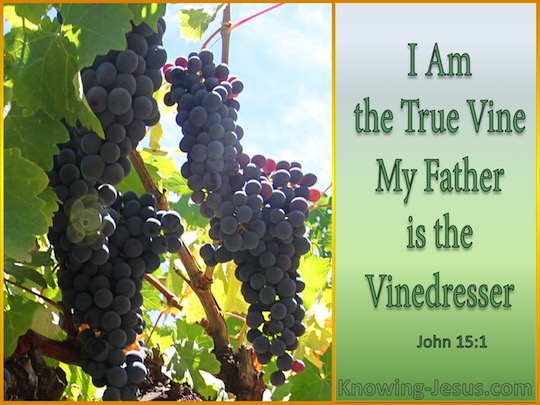
“I am the true vine, and my Father is the vinegrower. 2 He removes every branch in me that bears no fruit. Every branch that bears fruit he prunes to make it bear more fruit. 3 You have already been cleansed by the word that I have spoken to you. 4 Abide in me as I abide in you. Just as the branch cannot bear fruit by itself unless it abides in the vine, neither can you unless you abide in me. 5 I am the vine, you are the branches. Those who abide in me and I in them bear much fruit, because apart from me you can do nothing. 6 Whoever does not abide in me is thrown away like a branch and withers; such branches are gathered, thrown into the fire, and burned. 7 If you abide in me, and my words abide in you, ask for whatever you wish, and it will be done for you. 8 My Father is glorified by this, that you bear much fruit and become my disciples.“
***
We are back from our long journey, traveling to Minnesota by car, making frequent stops along the way to visit friends and family. The weather wasn’t much different than it was here. Except I heard it snowed in Ohio! It didn’t snow in Minnesota. We had a kind of heavy frost one morning. That’s about it.
We arrived home Sunday night. On Monday, I went out to mow the lawn, and first we had to pick up branches. We must have had quite a windstorm while we were away, along with the snow!
What was most noticeable was the damage to the lilacs. Large branches had come down and others had broken off and lodged themselves on other branches.



It was hard to tell if some were dead before they were broken off in the wind—or if they died after they were broken off. There was nothing left to do with them but drag them out to the trash.
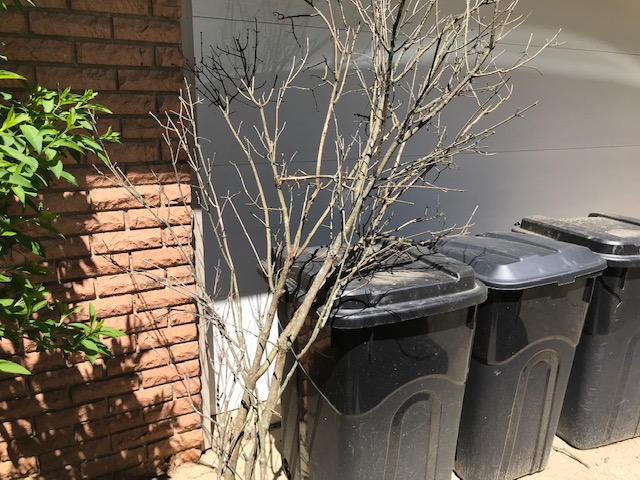
I have pruned the lilacs the last two years. But they really should have been cut back years ago, before they became unmanageable, long and leggy, with leaves mostly on top; branches competing for sunlight and crowding each other out. There’s even a maple tree growing in the middle of one of the lilacs and it’s large enough to need a chainsaw to cut it down.

I saw only about a dozen flowers on the whole group of 4 or 5 large lilacs.
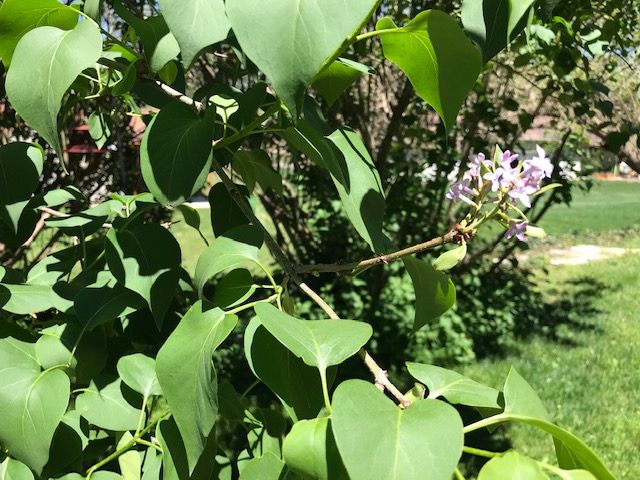
My neighbor says she remembers the lilacs years ago—covered with beautiful blooms and the air filled with the sweet lilac scent.
Still, when I see those scraggly purple flowers, I have hope. Someday, someday, if I keep on pruning the old and encouraging new growth, the lilacs may once again bloom gloriously.
***
Our Lord is giving us a window, in John 15, into the culture and horticulture of his time when he uses the metaphor of God the vinedresser, Jesus the vine and his followers the branches. “Jesus is explaining how the grapevine, branches, and the actions of the vinedresser describe the relationship of the community to the Father” and the Son (Deirdre Good).
This isn’t the first time we have run into Jesus teaching through the example of a vineyard. In the Parable of the Wicked Tenants in Luke 20:9-18, Jesus reveals the grace of God through a noble vineyard owner who is in a position of power, but chooses not to take vengeance. Rather “he puts his anger far away, opting for total vulnerability in the face of violence…Patience, long suffering, risk-taking, compassion and self-emptying together describe the vineyard owner” (Kenneth E. Bailey, Jesus Through. Middle Eastern Eyes).
Vine metaphors in the Hebrew Scriptures convey God’s love and care for Israel, but also God’s judgment, as in Isaiah 5:1-7, for Israel’s failure to produce fruit.
“No plant is mentioned more times in the Bible than the grape and its products, chiefly wine but also raisins and vinegar. The grape vine is grown solely for its fruit; there is no other use for the vine in the Scriptures. Even the wood of the vine is worthless (Ezekiel 15)” (Bible Plants Site, Old Dominion University, Norfolk, VA).
Scriptures emphasize several features of the grape plant that help us understand its use in Bible imagery.
“The character of the grapevine is to spread and climb. For example, Joseph was likened to a fruitful vine (Genesis 49:22). The image is used in a negative sense of Israel (Hosea 10:1). In Bible days, grapes were usually not grown on trellises as they are today. Rather, a large rootstock was allowed to develop and from this the branches would spread across the ground. Many vineyards of this type are still found near Hebron… (Numbers 13:23)” (Bible Plants Site, Old Dominion University, Norfolk, VA).
Pruning is essential if the vine is to produce grapes. When Jesus talks about this in John 15:2, his disciples already know this! They aren’t surprised that the vinedresser prunes. They probably have seen it and may have done it themselves. Even branches that have borne good fruit are carefully pruned. Why? So they will bear more fruit!! What they haven’t thought about is that God is the vinedresser that prunes us—not to punish us, but to transform us so that we can become our best selves. He wants to make us into a new creation that he can use—so that the world will come to know Him and BE MADE NEW.
What you need to know is what we miss in the English translation. The Greek word in verse 2 for prune and cleanse comes from the same root! They are essentially the same word, translated two different ways. New Testament scholar N.T. Wright says, “He wants us to link the pruning of the vine with the clean state of the disciples. They have already been pruned, though no doubt there is more of it to come. Jesus has spoken the word to them, calling them to take up their cross and follow him. They have had to submit to the pruner’s knife, cutting away other goals and ambitions.” When Wright says this, I am picturing Peter, Andrew, James and John dropping their nets—letting go of who they used to be and how they used to spend their days and nights trying to earn a living for their families through fishing. Everything changes when Christ says, “Come follow me.”

Are you wondering what Jesus means by bearing fruit? When the Apostle Paul talks about the fruit of the spirit in Galatians, he means: love, joy, peace, patience, kindness, generosity, faithfulness, gentleness, and self control.
But Jesus is emphasizing in this passage: love! Growing in love—perfect love that casts out all fear and follows Christ till the end. Love that comes from God, who is love and is revealed by the humble, self-giving Son. This passage in John 15 is about love that connects Christ’s followers with God through Him. It’s about love that is shared with the world so that all may come to know him.
We know this from the context, as this chapter follows the passage where Jesus tells his disciples,“Those who love me will keep my word, and my Father will love them, and we will come to them and make our home with them” (John 14:23). In John 13, he has given them a new commandment, “that you love one another. Just as I have loved you, you also should love one another. By this everyone will know that you are my disciples, if you have love for one another.”
Did you lose count how many times Jesus uses the word translated “abide”? About 10 times in chapter 15! The verb form of abide is one that we don’t have in English. It is aorist, which is a kind of simple past tense, without saying the duration of the activity. Our abiding in Christ has already happened! But it’s still going on. It is past, present, and future.
What does Christ mean–to abide in his love?
N.T. Wright explains, “Jesus is speaking “of the intimate relationship with him that (his disciples) are to cultivate. Branches that decide to ‘go it alone,’ to try living without the life of the vine, soon discover their mistake. They wither and die, and are good for nothing but the fire. But branches that remain in the vine, and submit to the pruner’s knife when necessary, live and bear fruit. That is the prospect that Jesus holds out to his followers—to all of us.”
Cultivating an intimate relationship with Christ requires two things. One: we must remain in the community that knows and loves him and celebrates him as Lord. “There is no such thing as a solitary Christian,” Wright says. “We can’t ‘go it alone.”
The other thing is that our Christian faith can’t just be a Sunday morning activity. “We must live as a people of prayer and worship in our private lives” and be willing to be pruned by the vinedresser, even when it hurts.
What is God cutting away in you and your life to help you to grow in new ways and become the person God has planned for you to be?
“You did not choose me but I chose you,” Jesus says in John 15:16. “And I appointed you to go and bear fruit, fruit that will last.”
And here is the promise, the blessing of when we abide or remain in Christ’s love.
Jesus says in 15:11, “I have said these things to you so that my joy may be in you and that your joy may be complete.”
***
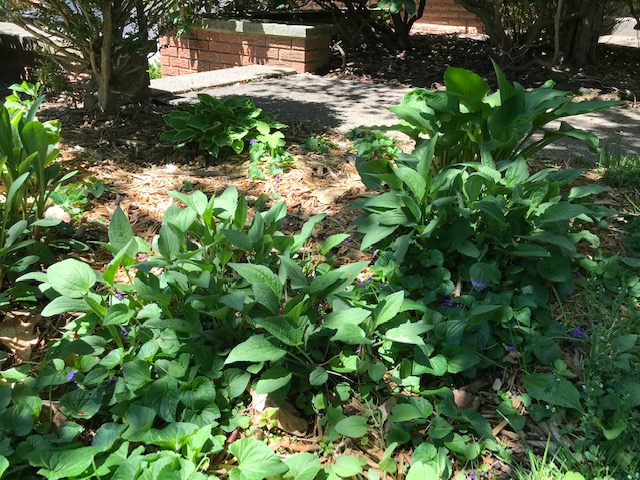
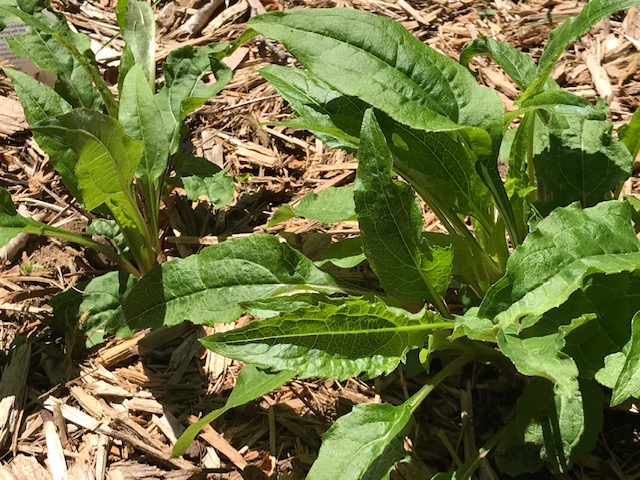
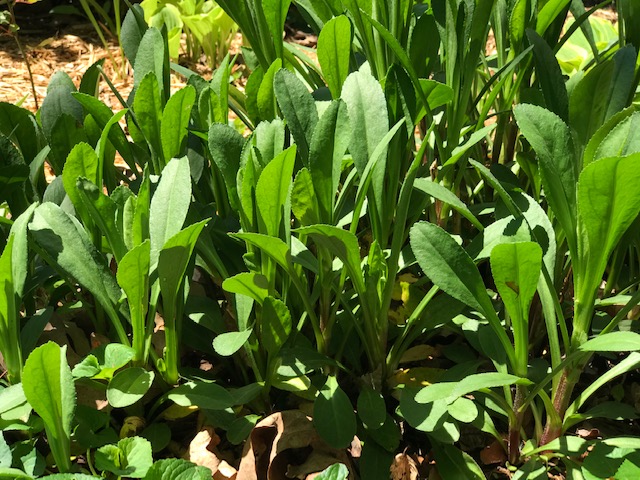
After I returned from our road trip to Minnesota, I couldn’t wait to see my garden. Some of my flowers were blooming.


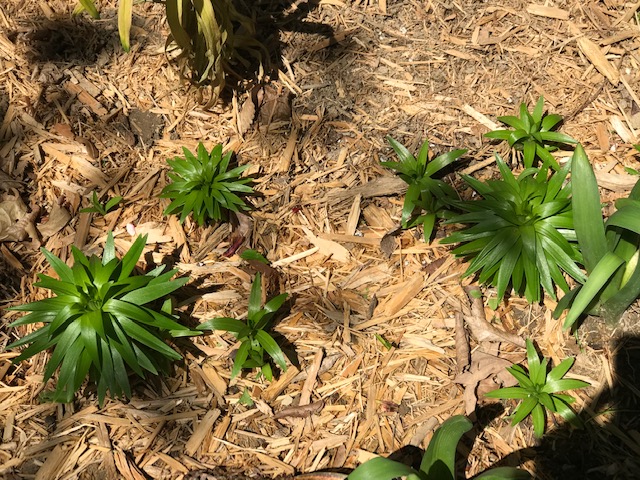
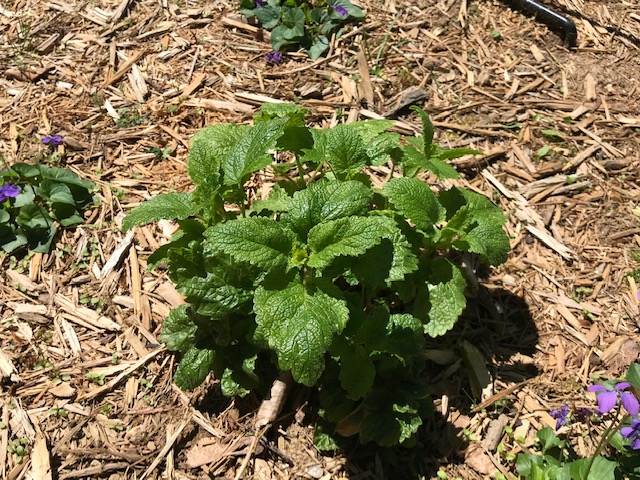
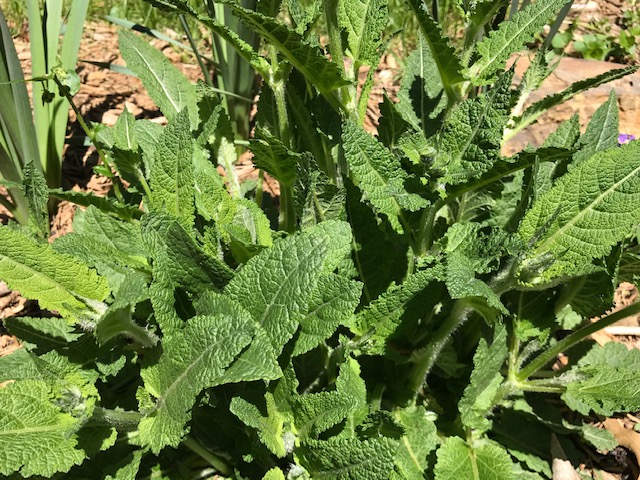
But most are just beginning to pop through the soil, putting forth shoots and leaves. I was so excited, I took pictures of lilies, bell flowers, clematis, and lemon balm, dreaming of what they will be, given time and favorable growing conditions, including my work as a gardener—watering, weeding, mulching, and yes, pruning.
Salvia, Black eyed Susans, Echinacea, Shasta Daisies…
That’s when it dawned on me. That’s how the Lord sees us! God looks with the eyes of eternity and sees us bearing fruit, already! He sees us in full bloom!

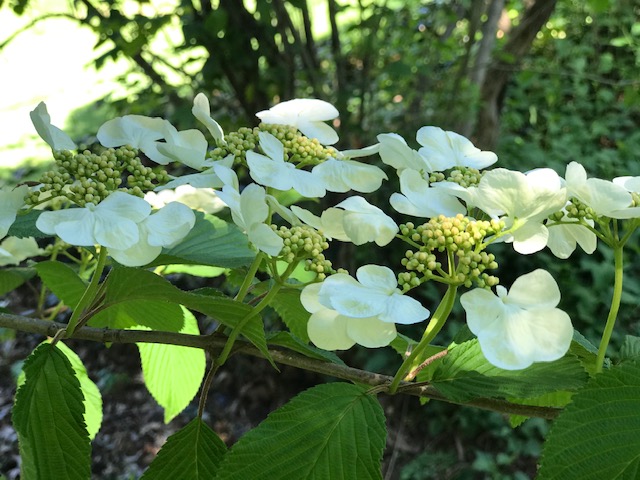
The Lord rejoices at every bit of growth we make as the beloved branches connected to the true vine–following Jesus, becoming more like Him, growing in love and sharing God’s love with the world.
He chooses to forgive us and remember our sins no more. God sees us as made righteous now, through God’s work in Jesus Christ! But we can’t see what we are now—God’s Redeemed. And we can’t see what we will be, when the work of the Spirit is finished in us at the day of Jesus Christ. We can only trust the Vine, who wants to give us his joy and make our joy complete!
Our Heavenly Gardener calls to us now—from the past, present and future. “Abide in me.”
Let us pray,
Heavenly Gardener, thank you for your love for us, spoken in your Word, through your Son, Jesus Christ. He is our True Vine and we are his branches. We have been made one with you and one another through his suffering work on a cross. Thank you for the hope we have in our Risen Christ—that we are new creatures. Today! That we have been chosen by you and appointed to bear good fruit. Prune us, Lord, and make us the people you want us to be. Help us to be more loving and to abide in you, Lord, empowered to share your love with the world. Amen.
5th Sunday of Easter
The Presbyterian Church
142 N. 4th St., Coshocton, OH 43812
Pastor Karen Crawford
Alice Hoover, organist
Sarah and Andrew Swigert, liturgists
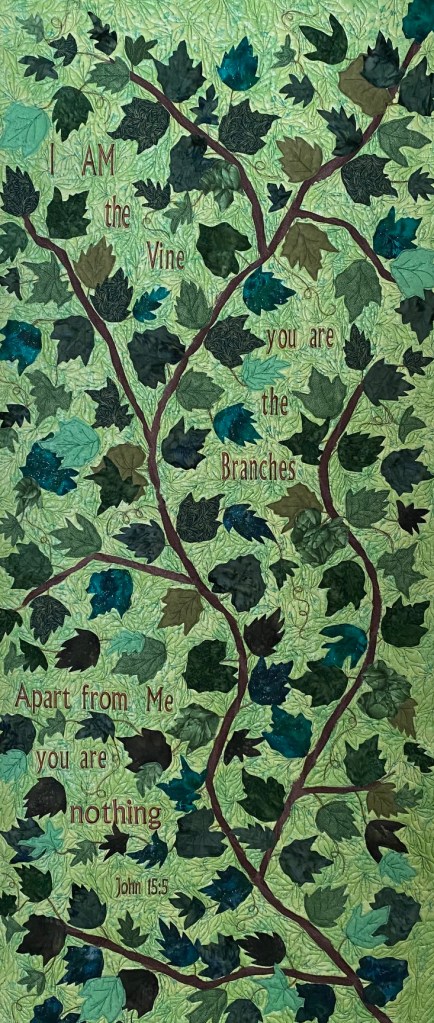
Meditation on John 20:19-31
Pastor Karen Crawford
The Presbyterian Church, 142 N. 4th St., Coshocton, OH 43812
April 11, 2021

I was in the lobby of Cleveland Clinic in Wooster, when I sensed Jesus standing in the midst of patients and caregivers. Waiting for Jim to finish with a blood draw, I felt the presence of Christ with the people around me.
A man named Herb walked by me, and, noticing his hat, I asked if I could take his picture. He wanted to wear that hat to the clinic, his wife said. He had bought it in Nashville, Indiana, so that he could make other people smile, she said. The world needs smiles, she added. “Yes,” I said.


Then a lady in a wheelchair whizzed by me and quickly hoisted herself out of the wheelchair into a lobby seat. I marveled at her upper body strength. She was 62, she said, and could probably win in an arm-wrestling match with her grown sons. She had been in the wheelchair 16 years—since a surgeon had amputated her leg. Cancer. Her muscles grew when she adapted to life in a wheelchair. She praised the surgeon for saving her life and offered his name.
She shared more painful things. How her husband didn’t want to be married to someone without a leg, leaving her in her time of need. I listened, feeling the breath of God blowing through that room where people wait for good news and bad news, carrying hope in their heart for a better tomorrow.
***
The presence of Christ is found in all sorts of unexpected places. The Bible tells us where Christ may be found. He hung out with children—gave them hugs and blessed them when their mothers brought them to him.

He ate and drank with people from all walks of life, including prostitutes and tax collectors;

he sought out to bless and heal those on the margins—a demon-possessed man who lived in the tombs outside of town;
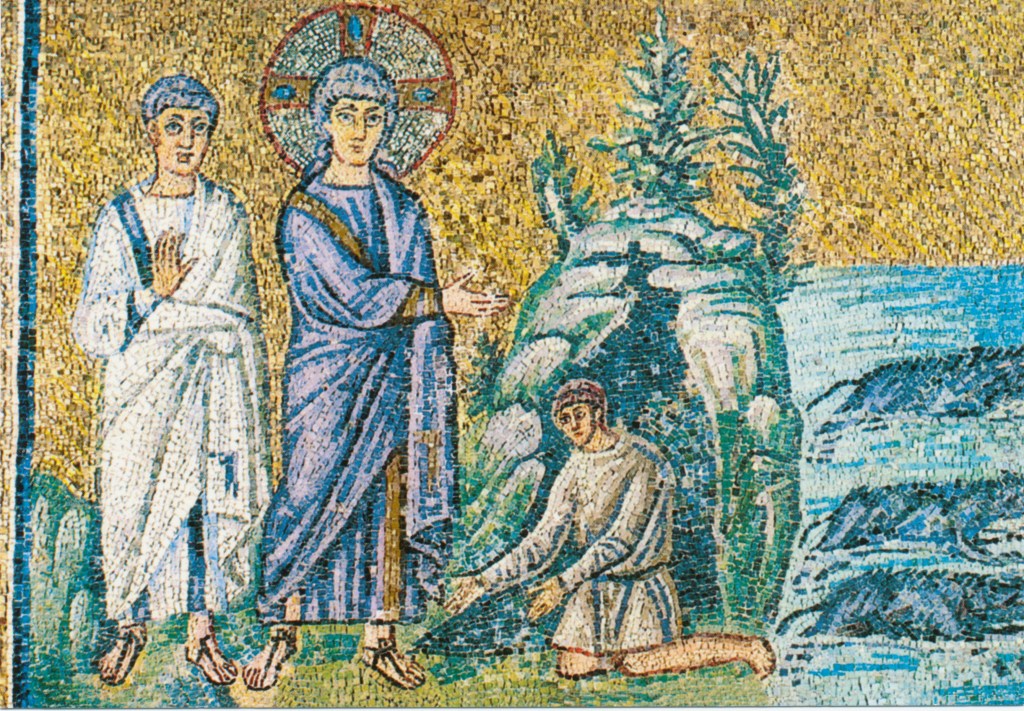
he fed the poor and hungry, restored the blind and lame, and a man with a withered hand; and healed those who were sick with diseases without cures!

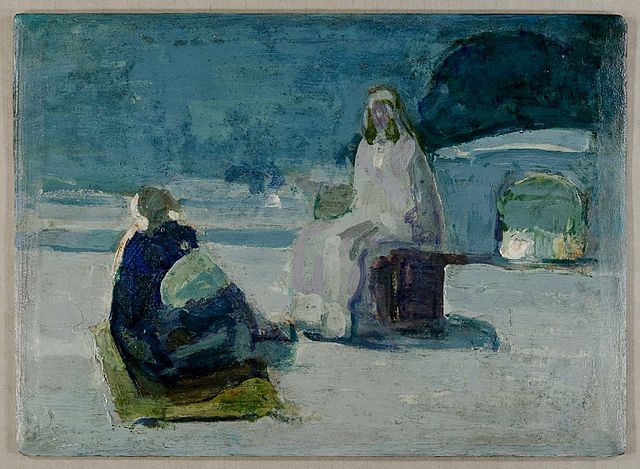
He opened his door at night to seekers, such as Nicodemus.
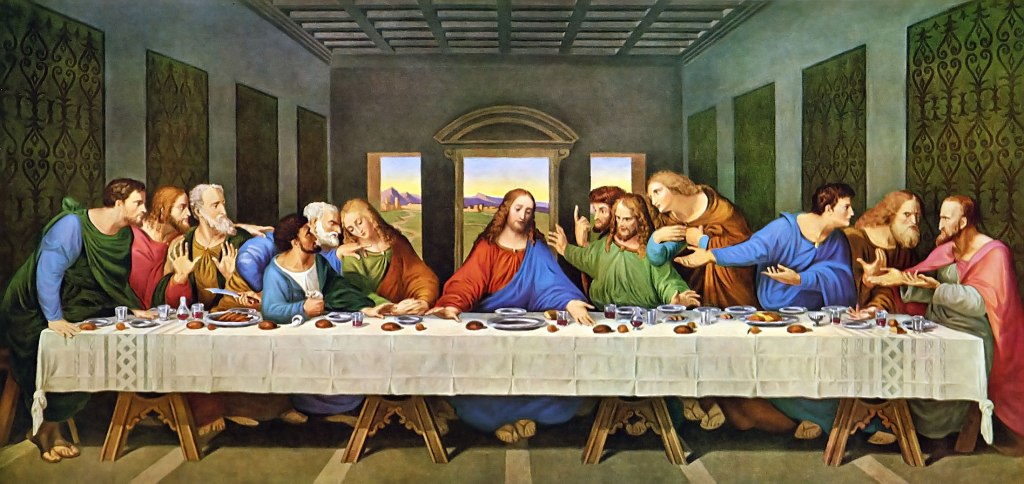
He hung out with people who believed in him or were going to believe and those who would not, including one of his own disciples—Judas Iscariot, who would betray him.
In today’s gospel reading in John, all of the disciples are hiding in fear in a locked room in Jerusalem in the evening of the discovery of Christ’s empty tomb, on the first day of the week. Thomas has a bad reputation for being the one who doubted, but the reality is that everyone deserted Christ in the end, and the empty tomb wasn’t enough for any of them to believe. Why else were they hiding in fear in a locked room?
They ALL needed to see him in his Resurrected Body. They needed LIVING PROOF!
“Maybe there are people who have never had a doubt,” says Pastor Brian R. Bodt in The Upper Room’s Disciplines. “Introduce me, please, because I’ve yet to meet one. Coming to authentic faith means wrestling with honest doubt…. We do not know why Thomas demanded tactile and tangible proof of the resurrected Christ before he would believe. Perhaps it was simply that he was not in the room when Jesus first appeared to the other disciples. Or perhaps he knew the other disciples too well and questioned their reliability.”
What we do know is that when he encountered the Risen Christ unexpectedly, he immediately declared his belief, “My Lord and my God.” Tradition holds that Thomas brought the gospel to India and died for his faith, once he was set free from fear with the other disciples, when Jesus breathes on them the breath of God, revealing he is ALIVE! “Peace be with you!” Jesus says. “Shalom!”
This Hebrew word means not just peace but safe and sound, whole and complete. Shalom is one of the names of God in Isaiah 9:6, “For to us a child is born, to us a son is given; and the government shall be upon his shoulder, and his name shall be called Wonderful Counselor, Mighty God, Everlasting Father, Prince of Peace.”
Shalom is revealed as the reconciliation of all things to God through Christ in Colossians 1:19-20 and Romans 5:1. Healed, reconciled and empowered with peace, Jesus sends out the disciples to bring peace to the world, commanding them to forgive people of their sins with his authority. “Here the Spirit is both the evidence of resurrection—that is, that Jesus is alive—and the empowerment of the disciples to do what he has just sent them to do.” –J. Ramsey Michaels
“The image of Jesus breathing on the disciples in verse 22 points … to the creation account and the Hebrew prophets. When God formed Adam out of the dust, God ‘breathed into his nostrils the breath of life’ (Gen 2:7). Similarly, when Ezekiel prophesied to the valley of the dry bones, Ezekiel concluded, ‘Come from the four winds, O breath, and breathe upon these slain, that they may live” (Ezek. 37:9). (John) … situates Jesus’ resurrection account within this larger Hebrew tradition. Jesus’ appearance and invocation of the Spirit inaugurates new life for followers of Christ.”—Johnathon L. Walton.
***
When Jim and I visited Cleveland Clinic on Friday, the presence of Christ was all around. The breath of God was blowing, “Jesus is alive!”
Christ was with the man who wore a funny hat and wanted to make people smile.Christ was with the lady in a wheelchair for 16 years who lost her leg and her husband to cancer.
It was a hard time, she said, dropping her voice to a whisper I could barely hear from across the room. He remarried within 2 weeks of their divorce. But she is ready and open to new relationships that God would have for her, she said. She has scars, but she is healing. She is at peace.
I thought of Thomas in our scripture today and how Jesus, though healed, still carried the scars of the crucifixion. This is how he would be recognized by those with fear and doubts. He would be known by his scars. I thought of how the Lord, who has numbered the hairs on our heads, knows every scar of our body, mind, and heart and the stories behind them.
“Cast all your cares on him,” says 1 Peter 5:7, “for he cares for you!”
The woman at the Clinic apologized for talking so much. She thanked me for listening.She didn’t know I was a pastor. I only told her my first name! But Jesus knew and had planned this meeting—for both of our sakes. For when we seek to be a blessing, we are the ones who are truly blessed!
She was grateful to receive her second COVID vaccination that day, she said. You know where she wanted to go after a year of isolation? She wanted to go to her church! She missed worship with the people of God!
The Lord wants to set us all free from our fears and heal our broken relationships—with Him and one another. Christ, who suffered and died for us, wants us to know the power of His resurrection and the joy of our new lives in Him! We are the redeemed of the God who knows us intimately, down to the tiniest scar.
The invitation is to all of us when Jesus says,“Do not doubt but believe.”
“Blessed are all who come to believe… In a single chapter, John has moved from a tiny cemetery filled with grief and a narrow church locked away in fear, to us today and beyond to the hopeful picture of Christ’s abundant life flowing out joyfully to all humankind.” – Thomas G. Long
The Lord wants to remove your fear and restore your hope in Him—not in yourself, your own strength and wisdom, or your own ability to struggle through your circumstances. We can trust in Jesus the Messiah, the Son of God. Through believing, we have life in his name!
Wherever you go, whatever you do, you who have not seen, but still believe, go and be blessed! And be a blessing!
Offer the Lord’s forgiveness! Be released from your burden and freed to serve a gracious and merciful God, slow to anger and abounding in steadfast love and faithfulness.
The breath of God is blowing! Jesus is alive!!!!
May all who come to know you come to see the Savior in you and know what God has done!
YOU are LIVING Proof!
Let us pray. Heavenly Father, thank you for the Risen Christ’s unexpected presence with us always—proof that you have raised him from the dead, with the promise that we, too, will be resurrected with Him. Thank you for your Spirit blowing into us new life as we pray…and for the peace of Christ that strengthens us through our days, days when there might be good news or bad news but always, always hope for tomorrow. Help us to break out of the comfortable spaces in which we dwell, as you send us out to share your steadfast love, faithfulness, grace and mercy with others who need to be reassured they are not alone in their suffering. Stir us to see your presence and to BE the presence of Christ for others. May we always be living proof of the goodness and grace of the Lord. In the name of the Triune God we pray. Amen.
Second Sunday of Easter
The Presbyterian Church, 142 N. 4th St., Coshocton, Ohio 43812
Pastor Karen Crawford
Mark Wagner, organist
Julie Wells, liturgist

Meditation on Mark 16:1-8
Pastor Karen Crawford
The Presbyterian Church, 142 N. 4th St., Coshocton, OH 43812
Easter Sunday: April 4, 2021
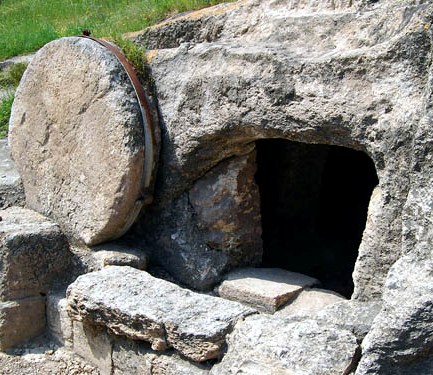
I visited three women from our church family on Good Friday who live at Windsorwood Village.
This was the first time I was able to go inside the senior living community in Coshocton since the pandemic forced its closure to visitors, including family and clergy. This was also the first time I had ever seen their apartments and been able to visit with each one separately, as well as meeting with them together in a private dining room.
What did we talk about—Jan, Velma, Margaret, and me? Well, we laughed and talked about the food—and how they serve large portions and put corn in Ziti! And we talked about new friends, such as Lula’s brother, Maurice, who knows how to tell a good story—and sings with a piano player who is 103! We talked about their families and Easter plans. When I visited their apartments, they shared personal stories and hopes for the future—when they may come and go more freely and return to worship with their church family. They miss their church!
I noticed in each of their rooms at least one special piece of furniture they had brought from their former homes and lives, along with framed family photos. It got me wondering what would be important for me to keep, if I were in their situation? What would I be willing to let go as unnecessary or even burdensome for my new life? Would I be able to get beyond the grief and loss so that I could, like these women, embrace the love, goodness and blessings all around them, in the present and future?
Christ tells us to be anxious for nothing in the Sermon on the Mount. Trust the God of eternity who provides for all the birds of the air and the flowers of the field—and loves us and provides for us so much more.
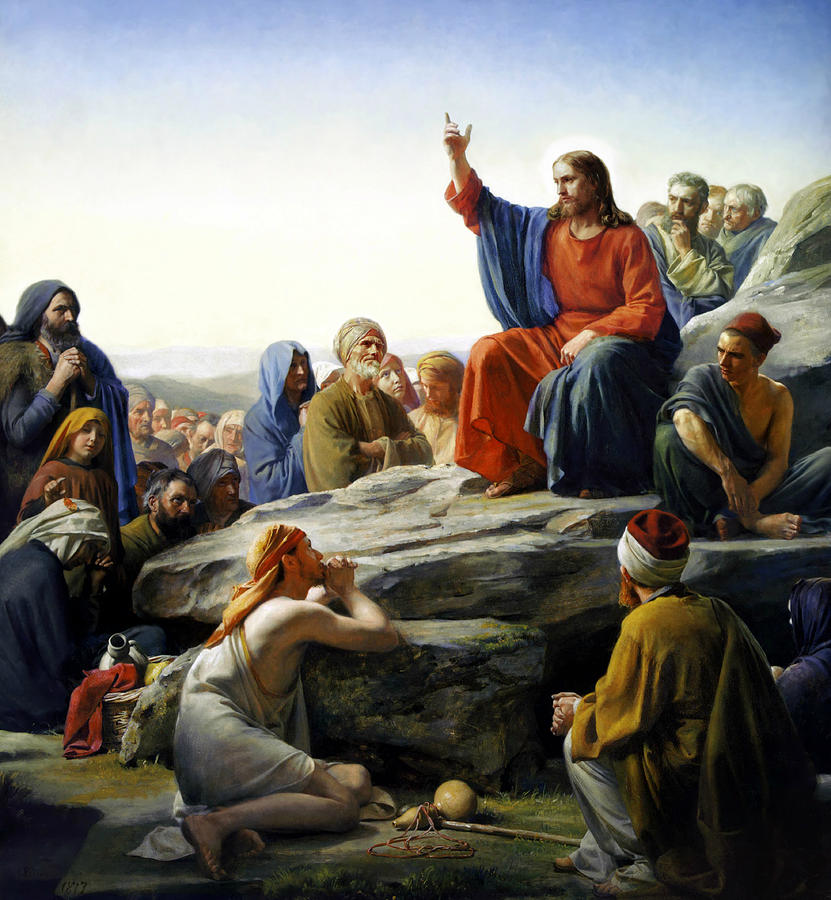
And yet human beings struggle with anxiety and fear.
I am praying that after this pandemic, we won’t be stuck in the past—replaying traumatic events and troubling memories. Sometimes I wish that we had a time machine, like Marty McFly in the Back to the Future movies.

What if we could travel back in time in Doc’s DeLorean and change the past, and prevent bad things from happening?
But how did that work out for Marty and Doc?

When they tried to change one thing to make things better, they ended up changing other things that had negative repercussions on the present and future. This pattern repeats itself in all 3 Back to the Future movies!
The answer to today’s struggles for the people of God isn’t found in our past. The answer is not to rehash all the mistakes of the last year or look for people to blame. No, the answer for followers of the Risen Christ is in living out our present hope of new, resurrected lives with Him today.
And don’t look back!
***
We encounter three followers of Christ—Mary Magdalene, Mary, mother of Jesus, and Salome—at Christ’s empty tomb, early in the morning on the first day of the week –after the one they loved had been crucified. They find the heavy stone rolled away and a man in white with a message from God.
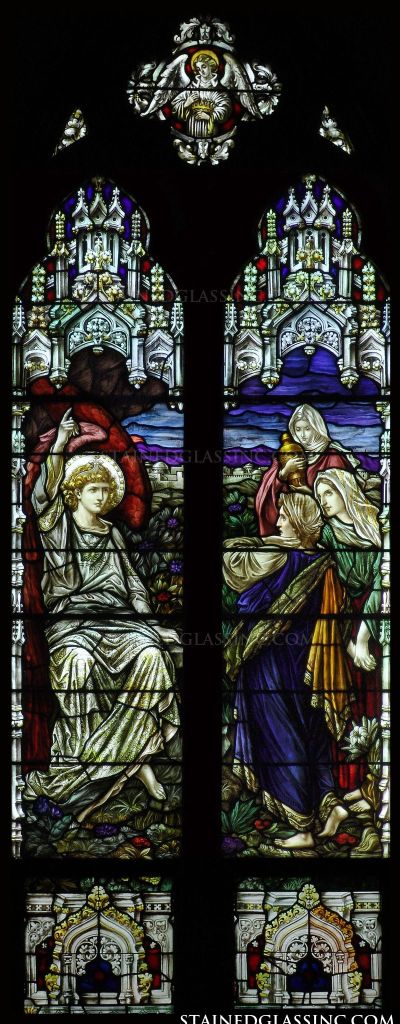
“Do not be alarmed,” the man in white says, “you are looking for Jesus of Nazareth, who was crucified. He has been raised; he is not here. Look, there is the place they laid him. But go, tell his disciples and Peter that he is going ahead of you to Galilee; there you will see him, just as he told you.”
And because this is Mark’s account and not John’s—with Mary seeing the Risen Christ and mistaking him for the gardener until he calls her by name—we are left hanging, with a most unsatisfactory ending. For the three women are unable to process the new information of the empty tomb and the angel’s message: “Jesus is ALIVE! You’re going to see him!”
“…They went out and fled from the tomb for terror and amazement had seized them; and they said nothing to anyone, for they were afraid.” –Mark 16:8
OK, now we get to the confusing part when we read the account of the resurrection from the gospel of Mark. If you look in your Bibles, you will see that the gospel appears to continue beyond verse 8 with something called “the shorter ending” and “the longer ending.” In these sections, we read about resurrection appearances and something of a Great Commission, Jesus telling the disciples to go and proclaim the good news to all creation—and there’s more.
But scholars tell us that the rest of the gospel after 16:8 was not written by Mark; it was added later by other writers. One piece of strong evidence for this is that the most ancient authority—the oldest version of Mark that we have—ends at 16:8. More evidence is that in the versions with the shorter and longer endings, the writing style and vocabulary are different in those parts from the rest of the book. And there are other details after 16:8 that don’t fit, such as when “Mary Magdalene is introduced in 16:9,” says theologian Mark Strauss, “as though the reader does not know her. Yet she has appeared in the previous three scenes (15:40, 47; 16:1)!” Then, there’s the mention in this later section of what scholars call “non-Markan elements, with references to picking up snakes, drinking poison and speaking in tongues (16:17-18)—themes not mentioned elsewhere in the Gospel.”
Having shared why we end our reading at 16:8 in Mark’s gospel leaves only one pressing question.
Why does Mark leave us with the women fleeing in terrified silence? Couldn’t he have thought of a better, happier ending?
And this is where I confess that I have never preached on Mark’s gospel on Easter; it’s only since the pandemic that his gospel has somehow connected with the state of my heart and mind. I don’t know about you, but I am still recovering from the trauma of all that has happened over the last year. And the trauma isn’t over, yet. The story is ongoing, incomplete, just like Mark’s gospel. How and when the pandemic will finally end is still a mystery to us.
For such a time as this, I believe Mark knew just what he was doing when he left us hanging with the women in terrified silence. He wanted us to imagine ourselves in the scene and encourage us that God isn’t through using us! His original readers are facing suffering, persecution and even martyrdom, says theologian Mark Strauss. “In many ways they are like the women at the tomb. They know the announcement of the resurrection. They have been called to faith and endurance. How will they respond? Will they retreat into silence and unbelief? Will they continue to boldly proclaim the message of salvation, whatever the cost? Will it be faith or fear?”
The author of Mark wants to stir us all to be courageous—and share our hope in the One who conquered sin and death and offers us a new beginning—despite the fear that grips the heart of every human being and is part of, well, being human, says theologian William C. Placher.
“All through Mark,” he says, “women have been faithful when men failed to be, and these women have come to the tomb to minister to Jesus’ body when the male disciples are long gone, but in the end no human beings are completely faithful. Fear captures us all.”
The answer to today’s struggles for the people of God isn’t found in our past. We don’t need to go back in time. The answer is in the present hope provided by the biblical witness of the empty tomb and the present promise of living new, resurrected lives with Christ, sharing our stories to encourage one another to endure in faith and faithfulness.
God wants us to get beyond the grief and loss of the last year so that we can embrace the love, goodness and blessings all around us. I need to tell you this. Some things are just too heavy a burden to carry, anymore, and don’t fit in the new life we have TODAY with Jesus Christ. What are the burdens God wants you to let go? Who do you need to forgive so that TODAY –on Easter—will truly be a new beginning, and we can move forward as Christ’s Church into the future God has planned for us?
“Mark throws the ball to us,” Placher says, “as he did to his first readers. The three women run away silent, but we have heard the story; it is up to us, in our lives and our testimony, to tell it and keep it alive.”
***
We don’t have to look any farther than our own congregation to find inspiring stories to keep our faith alive.
On Friday, when I visited Windsorwood, Velma showed me an old Beacon clipping with a photo of her younger brother, Cletus. He joined the service right after he graduated from West Lafayette High. He was killed in action. The bridge on County Road 9 crossing the Tuscarawas River just west of Newcomerstown is named in his honor.In the photo, young Cletus is home on leave, proudly wearing his Naval uniform. He is holding Velma’s eldest child, Carl. Velma would name her next son “Cletus” for him.

In all her almost 99 years, she has seen the hand of God in her life. She trusts the Lord in times of sorrow and suffering, knowing God is still with her and has a plan and purpose for her every day. When she was feeling down about not being able to leave WIndsorwood or have visitors during the pandemic, the Lord ministered to her through a new neighbor. Her face lit up when she told me about a man she met at Windsorwood, who said he knew her brother Cletus! They went to high school together and were the same age. They had been friends! Being able to talk to one of Cletus’ friends made her feel like her brother was with her, once again. She took this conversation as a gift of joy from the Lord.
Velma has hope in the Risen Christ and in her resurrection with Him! She is bold to share her faith, how she sees God in His beautiful Creation, with the spring flowers in bloom. She walks and talks with the Lord each day.
This stirred me to think of the refrain from a sweet, old-fashioned hymn as I drove home from my visit with three faithful women from our congregation:
“And he walks with me and he talks with me
And he tells me I am his own
And the joy we share as we tarry there
None other has ever known.” — In the Garden
Let us pray.
Holy One, we thank you for the empty tomb and witness of your first followers—the women who, though frightened and stunned into silence at first, were moved to share the good news: Christ is Risen from the dead! He is risen, indeed! Grant us a faith that will endure and will lead us to share our testimonies with others. Stir us to confess our sins and give you all our burdens, Lord, so that we aren’t stuck in the pain and trauma of the past. Help us to trust in you for a new beginning on this day that we celebrate your triumph over sin and death, reconciling human beings to yourself and one another—and the promise of our living new, resurrected lives through your Son. In His name we pray. Amen.
The Day of our Lord’s Resurrection!
The Presbyterian Church, 142 N. 4th St., Coshocton, OH 43812
Pastor Karen Crawford
Alice Hoover, organist
Barbara Snyder, liturgist
142 N. 4th St., Coshocton, OH 43812
Pastor Karen Crawford
Alice Hoover, organist
Debbie Clark, Jim Arganbright, and Ron Geese, liturgists
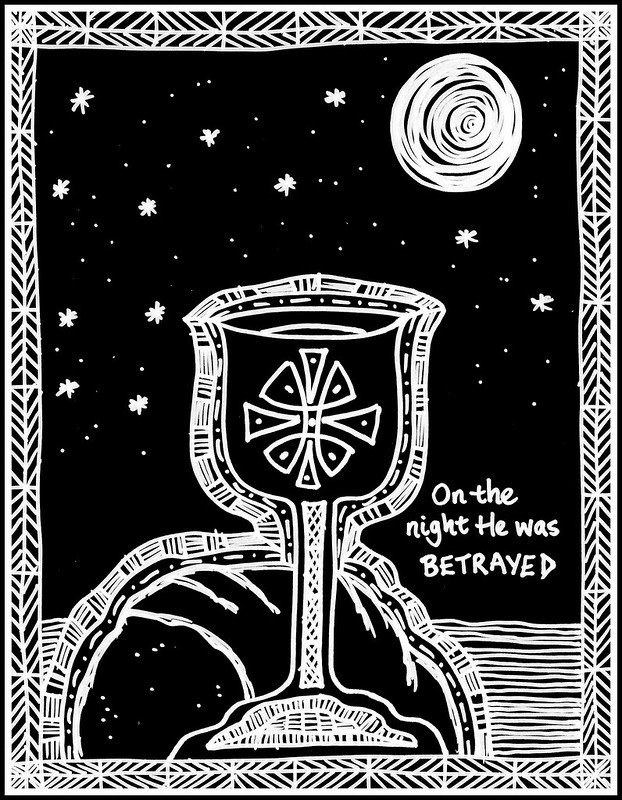
Meditation on Luke 19:28-42
Palm Sunday 2021
Pastor Karen Crawford
The Presbyterian Church, 142 N. 4th St., Coshocton, OH 4381

One of the small groups of our church that I really enjoy is Prayer Fellowship. I am so glad they continued meeting on Thursday mornings throughout the pandemic, switching from in person to conference call. They continue to share prayer concerns for the community, support one another and help carry each other’s burdens, offer words of comfort from Scripture and devotions, and they pray.
Last Thursday in Prayer Fellowship, we heard about one of our church families—the Emigs—who had a house fire. Laura Emig’s mother—Sue Olinger—requested prayer, especially for the children—9-year-old Owen and 5-year-old Kailyn, who have sung in our Cherub Choir for a number of years. The family was not hurt physically, but are grieving both the trauma of the fire and the loss of things that had special meaning to them.
Sue called me yesterday and shared more of the story. A week ago Friday, when the family was out of the house for work and school, a neighbor saw smoke and came to investigate. He saw flames coming out of their garage. His call for help saved their home and their dog, praise God! But gone was the 32-by-40 foot building that was much more than a garage to them —it was part of their home, a getaway and hangout for the family, as well as a storage area for special things. Owen’s baseball bag and 4-wheeler were there, as was a desk that Ryan, his father, had made in high school. There were baby clothes that Laura was saving from the kids, antiques, and much more.
Sue picked up the kids at school that day and tried to prepare them for the loss on their way home, though she had not yet seen it. “It was devastating to drive up the driveway and see nothing,” she said, but a charred pile of rubble. Only a few posts remained.
I am sharing their need with you as a prayer request and a challenge to serve. How will the Spirit move you to respond to bring hope, comfort, and healing to the family?
The call of the Gospel is to love and serve with kind words and deeds, all in the name of Jesus Christ our humble, self-giving King.
***
Jesus is revealed as the King of kings today in our Palm Sunday reading in the gospel of Luke. This account is in all 4 gospels—Mathew, Mark, Luke and John, with some different details. The message to us in all four is that this is no earthly ruler! This is the long-awaited Messiah, the Son who will suffer for the sake of the world.
The disciples still don’t understand that this is not their earthly king, though he has cleansed lepers, healed the sick and paralyzed, given sight to the blind. Jesus has never misled them, but they see him as they want to see him—and they want a king to replace the cruel and corrupt puppet kings of the Roman Empire.
“They celebrate his arrival in Jerusalem as if this were the beginning of his enthronement,” says theologian and historian Justo Gonzalez. “At this point of apparently impending victory, it is not just the inner circle of followers, but ‘the whole multitude of the disciples’ that acclaim the new king now marching toward Jerusalem.” Like soldiers and citizens welcoming and honoring a general returning from an exceptional victory, they are waving branches, laying down their cloaks on the road before him and praising God joyfully “with a loud voice for all the deeds of power that they had seen,” saying,
“Blessed is the king who comes in the name of the Lord! Peace in heaven, and glory in the highest heaven!” (Luke 19:38). This is an echo of Luke 2, when the heavenly host praise God and sing at Christ’s birth, “Glory to God in the highest heaven, and on earth peace among those whom he favors!”

In both of these passages in Luke, the emphasis is on the God who brings peace through His Son. As Paul says in Romans 5:1, “Therefore, having been justified by faith, we have peace with God through our Lord Jesus Christ” and Colossians 1:20, “and through Him to reconcile all things to Himself, having made peace through the blood of His cross; through Him, I say, whether things on earth or things in heaven.”
Christ on a borrowed donkey and not a chariot like an earthly king or a conquering general, claims for himself the prophecy of Zechariah 9:9, “Lo, your king comes to you; triumphant and victorious is he, humble and riding on a donkey, on a colt, the foal of a donkey.”
Gonzalez contrasts our humble, self-giving Jesus and his followers’ celebration of him to a worldly ruler in ancient times: “People acclaim him as earlier their ancestors acclaimed Alexander, or as the Romans acclaimed Caesar and Pompey. He does not wear a crown of laurel, but soon will wear one of thorns. Alexander rejoiced over his conquests; Jesus will weep over Jerusalem.”
Only in Luke do we find this detail of Jesus, when he comes near and sees the Holy City, and is overcome with grief for His people! He will once again emphasize the peace that he offers to those who believe in him. “If you, even you, had only recognized on this day the things that make for peace! But now they are hidden from your eyes.”
This is the second time in Luke that Jesus has lamented over Jerusalem. When Pharisees come and advise him to leave because King Herod wants to kill him, Jesus says, “Go and tell that fox for me, ‘Listen, I am casting out demons and performing cures today and tomorrow, and on the third day I finish my work.’” He is warning them of what is to come: the cross and resurrection and Christ’s work for salvation.
Not everyone will embrace God’s love shown in Jesus Christ. This brings the Savior of the world much sorrow. “Jerusalem, Jerusalem,” he says in Luke 13:34, “the city that kills the prophets and stones those who are sent to it! How often have I desired to gather your children together as a hen gathers her brood under her wings, and you were not willing! See, your house is left to you.” He is talking about his entrance into Jerusalem on a donkey that we remember on Palm Sunday, “And I tell you, you will not see me until the time comes when you say, ‘Blessed is the one who comes in the name of the Lord.’”
Sure enough, when Christ and his followers arrive in a noisy procession, coming down from the Mount of Olives, the Pharisees, who do not recognize “the things that make for peace,” are in the crowd. “The scene is politically charged,” Gonzalez says. “Judea is part of the Roman Empire. No one can claim to rule over it without the support of Roman authorities, yet Jesus’ disciples loudly proclaim him a king. It is no wonder that the Pharisees wish to silence them.”
“Teacher, order your disciples to stop,” the Pharisees say.
“I tell you, if these were silent,” Jesus says of his disciples, “the stones would shout out.”
His response is an echo of the psalms that tell of all God’s Creation praising the Lord, such as Psalm 96:11-12, “Let the heavens rejoice, let the earth be glad; let the sea resound, and all that is in it. Let the fields be jubilant, and everything in them; let all the trees of the forest sing for joy.”
His response reminds us of a hymn we sing at Christmas. “Joy to the world, the Lord is come. Let earth receive her king. Let every heart prepare Him room. And heaven and nature sing. And heaven and nature sing. And heaven, and heaven and nature sing.”
***
Friends, on this day that marks the beginning of Holy Week, a day that is both Palm and Passion Sunday as our worship service draws to a close, let us consider our humble, servant king, who calls us to be like him and to be bold, like his disciples, in declaring our faith, no matter the risk to ourselves. No matter the Pharisees who wish to silence us. How may we demonstrate God’s love and compassion, especially to people in need and those who don’t yet know “the things that make for peace?”
May the Lord open our eyes and bless us with opportunities to do God’s loving work. And may you and I keep in our hearts, minds, and prayers the Emig family, who have suffered the trauma of a fire and the loss of some things that were meaningful to them.
May we imitate the generosity of the Lord, who has made peace with God through His body and blood as we remember every time we partake of the bread and cup. Christ comes down to us, heals, restores, unites, and prepares us for ministry when we celebrate the Lord’s Supper, as we will in a few minutes. He will continue to do the work of transforming his new creation. We will be re-formed, renewed and refreshed, then, once again, sent out as Christ’s Body for the world.
The title, “King of the Jews” will lead to Christ’s arrest and charges. He will be sentenced to die. They will write on his cross the title given to him by the magi, Pontius Pilate, and the Roman soldiers.
What will happen to all his followers who enthusiastically waved branches, and laid down their cloaks as Jesus rode on a donkey to Jerusalem, fulfilling the words of a prophet?
Where will they be when Christ is scorned and rejected, tortured and crucified—those who shouted and sang a hymn of praise that long ago day, “Blessed is the king!”
Let us pray.
Heavenly Father, we cry out, like the earliest followers of your Son, “Blessed is the king who comes in the name of the Lord!” Help us, gracious God, to be faithful to the call to discipleship, no matter where it takes us and stretches us, no matter what work you have for us to do. Thank you for your love and forgiveness through your Son, who equips and transforms us by the Spirit so that we may be sent out as Christ’s Body for the world. Open our eyes to the needs around us and fill us with hearts of compassion to care for people as much as you do and give generously of ourselves to help others. We thank you for the neighbor who saw smoke and reported the fire at the Emig’s house—and that no one was hurt, including their dog. Comfort them in their grief. Bless them with joy. In the name of our King of kings and Lord of lords we pray. Amen.
The Presbyterian Church, 142 N. 4th St., Coshocton, OH 43812
Pastor Karen Crawford
Mark Wagner, organist
Sarah and Andrew Swigert, liturgists
Everyone has a calling. Ours is helping you.
Pastor Karen shares thoughts on faith, scripture, and God's love and grace revealed through backyard wildlife.
Fill up. Overflow. Run over.
Christian Lifestyle Blogger
The Joy of the Lord is our Strength
Church bulletin covers and other art by artist Stushie. Unique crayon and digital worship art
The Art and Craft of Blogging
The latest news on WordPress.com and the WordPress community.









 Sharing God's Love and Grace