Who Is My Neighbor?


Meditation on Luke 10:25-37

The Presbyterian Church of Coshocton

July 14, 2019


mercy

Just then a lawyer stood up to test Jesus. “Teacher,” he said, “what must I do to inherit eternal life?” 26 He said to him, “What is written in the law? What do you read there?” 27 He answered, “You shall love the Lord your God with all your heart, and with all your soul, and with all your strength, and with all your mind; and your neighbor as yourself.” 28 And he said to him, “You have given the right answer; do this, and you will live.”

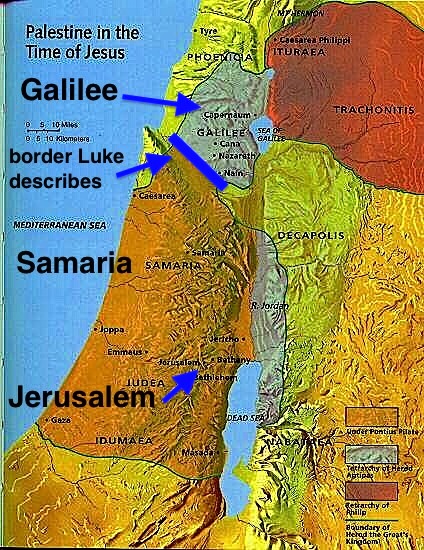
      29 But wanting to justify himself, he asked Jesus, “And who is my neighbor?” 30 Jesus replied, “A man was going down from Jerusalem to Jericho, and fell into the hands of robbers, who stripped him, beat him, and went away, leaving him half dead. 31 Now by chance a priest was going down that road; and when he saw him, he passed by on the other side. 32 So likewise a Levite, when he came to the place and saw him, passed by on the other side. 33 But a Samaritan while traveling came near him; and when he saw him, he was moved with pity. 34 He went to him and bandaged his wounds, having poured oil and wine on them. Then he put him on his own animal, brought him to an inn, and took care of him. 35 The next day he took out two denarii, gave them to the innkeeper, and said, ‘Take care of him; and when I come back, I will repay you whatever more you spend.’ 36 Which of these three, do you think, was a neighbor to the man who fell into the hands of the robbers?” 37 He said, “The one who showed him mercy.” Jesus said to him, “Go and do likewise.”

***

It’s another beautiful day in Coshocton! Jim and I have our air conditioning restored, so it is comfortable at 1626 Marion Drive, even when it is hot and humid outside. Actually, I was cold last night and was wearing a sweater in the house!!

More good news: I am enjoying my daily walks. Are you following me on Facebook? I post photos of lovely homes and yards that I pass as I am walking. Some friends respond by telling me who lives there. People really know the neighborhood! I also post pictures of flowers, birds, the occasional bunny, and pets that come up to greet me, such as a little black and white dog named Lily on Buena Vista and a grey, striped tabby cat with white paws on Marion.

I am happy to see church members as I walk in my neighborhood. Saw Kirsten and Anne and Lew on Monday. Saw Barb and Ari eating ice cream cones on their front steps Friday night. Others have walked with me for part of the way–Lisa Thompson, Linda Magness, and Dolores Millward with her dog Callie. I hope that more of you may want to walk with me, too.

Most of the time, I talk to strangers. My smile and wave often lead to curious questions—“Who are you? Where do you live?”—and some sharing of stories.

For that hour of walking, I let go of the problems of the day and have no other agenda except spiritual, mental, and physical well-being, and keeping alert to anyone who might want to talk and/or walk with me. This is my way of being more intentional about reaching out to my neighbors and seeking to be known and available to help people in need.

***

Jesus is ever patient with the expert in religious law in our reading in Luke 10. The man is trying to trap him into saying a word or phrase that can be misconstrued and used against him. He asks a seemingly innocent question.

“What must I do to inherit eternal life?” he asks. The question is flawed. Can anyone do anything to inherit something? An inheritance is a gift one receives after a relative or friend dies.

The subject of eternal life in First Century Judaism is a hotly debated issue. Everyone is talking about it. So Jesus asks the lawyer what he thinks about it. “What is written in the law? What do you read there?”

The lawyer quotes Deuteronomy 6:5 and Leviticus 19:18, essentially, “Love the Lord your God and your neighbor as yourself.”

Jesus answers, “You are correct. Do this—hold to these standards of loving God and neighbor and you will have eternal life.”

What’s the problem with what Jesus tells the lawyer? As Paul says in Romans 7, the problem isn’t with the law of God. The problem is that we aren’t able to keep it. “ I do not understand my own actions,” Paul says. “For I do not do what I want, but I do the very thing I hate. Now if I do what I do not want, I agree that the law is good. But, in fact, it is no longer I that do it, but sin that dwells within me. For I know that nothing good dwells within me, that is, in my flesh. I can will what is right, but I cannot do it. For I do not do the good I want, but the evil I do not want is what I do.”

The lawyer isn’t finished with his questions. He wants to justify himself. To be justified in biblical language means to be granted the status of one whom God accepts as one stands before God. He believes that he can satisfy the law’s requirements through his own goodness and intellect.

He asks Jesus, “Who is my neighbor?” He is counting on a narrow definition of   the neighbors whom God’s people are told to love. Leviticus 19:18 may seem to support his assumption, saying, “‘Do not seek revenge or bear a grudge against anyone among your people, but love your neighbor as yourself. I am the Lord.” The context of “love your neighbor” is “your own people.” But reading on to Leviticus 19:34, we find a broader definition of neighbor. “The alien or stranger who sojourns with you shall be to you as the citizen or native among you; you shall love the alien as yourself, for you were aliens in the land of Egypt: I am the Lord your God.”

Then, Jesus tells a parable, a spiritual teaching device that draws from images, attitudes, and real-life situations in his world. In the Parable of the Good Samaritan, robbers attack, strip and beat a man traveling the road from Jerusalem to Jericho. The assumption is the man is Jewish. They leave him for dead. Who is the first to find him? A priest. This is a hereditary position; the priesthood is a wealthy and elite class in Jewish society. If the wounded man were a Jew, the priest would be duty bound to help the man. But if he were already dead, then the priest would be ceremonially defiled if he touched him and would have to go back to Jerusalem and undergo a weeklong process of purification. It would affect his family and servants, and hold up the distribution to the poor. The priest, afraid to take the risk of becoming defiled, passes the man on the other side of the road, leaving him to die.

Next comes the Levite, who serves as an assistant to the priests. Since a priest in front of him has passed the man by, the Levite, seeing him, could also pass by in good conscience and not help the wounded man. Besides, if he rode into Jericho with the wounded man, he would be insulting the priest, who neglected his duties.

A third person comes along. Jesus’ audience is expecting this person to be a Jewish layman who will be the hero of the story, to help a fellow Jew in trouble. Not a Samaritan, a hated outsider! Those hearing the story would rather hear that a Jewish man would reach out and show compassion to a Samaritan than how a Samaritan helped a Jew. We get an idea of just how much the disciples hated Samaritans in chapter 9, after a Samaritan village refuses to receive Jesus. And James and John ask, “Lord, do you want us to command fire to come down from heaven and consume them?” But Jesus turns and rebukes them.

Kenneth Bailey, a professor of Middle Eastern New Testament Studies at an ecumenical seminary in Jerusalem, says that the Samaritan risks his own life to transport the wounded man to an inn within Jewish territory. A Samaritan wouldn’t be safe in a Jewish town with a wounded Jewish man strapped to the back of his riding animal. This may stir the community to take vengeance on him, even if he has saved the life of a Jew.

In the final scene of the parable, it is the following day.  The Samaritan gives the innkeeper two denarii, which would cover the bill for food and lodging for at least a week or two, so the wounded man would not be sold as a slave for not paying his bill, which was common practice. What the parable doesn’t say is if the Samaritan survived after he paid the bill. “Was there a crowd awaiting him outside the inn?” Bailey asks. “Was he beaten or killed?” We are left wondering.
And Jesus never answers the question, “Who is my neighbor?”

He answers a better one that the lawyer never asked. “What does it mean to become a neighbor?

      For being a neighbor has nothing to do with religion, ethnicity, language, or even geography. A neighbor is one who loves by showing mercy, being willing to risk one’s own life to save even an enemy.

Jesus says, “Go and do likewise.”

***

In this very familiar passage, sometimes preachers will ask us to put ourselves in the story. Are we feeling beaten and wounded in body and spirit, helpless and hopeless, longing for a compassionate neighbor to respond to our need?

Are we living in fear, like the priest or the Levite, allowing our concern for our own personal risk keep us from answering the call to love our neighbors and show mercy to those in need?

Are we like the lawyer, trying to find a way to justify ourselves? Looking to earn or achieve what is a free gift of eternal life, offered to all people, through the mercy and sacrifice of Jesus Christ?

Or are we ready to follow Jesus, who, like the good Samaritan, was the hated outsider, giving his own life to reveal the goodness and mercy of God.

The parable is for all Christ’s followers, who would like to be excused from loving and forgiving the people we struggle to love. The parable is for us, who, seeking to justify ourselves, might ask, “Who is my neighbor?” when a better question is, “How do we become a neighbor?”

By showing love and mercy, by being willing to take personal risks to help another.

Jesus says, “Go and do likewise.”


Let us pray.

Holy One, thank you for calling us your children, for forgiving us for our selfish ways, for not always wanting to help our neighbors and, in doing so, reveal your love and glory. Thank for your mercy and compassion for sinners and for sending your Son to die for our sins when we could not, not matter how hard we tried, justify ourselves or make ourselves right with you. Help us, Lord, to become good neighbors, to reach out right where we live and seek to help people in need. Give us courage, Lord, and strength to “Go and do likewise.” In Christ we pray. Amen.


Wash and Be Clean

Meditation on 2 Kings 5:1-14

The Presbyterian Church of Coshocton

July 7, 2019

     Naaman, commander of the army of the king of Aram, was a great man and in high favor with his master, because by him the Lord had given victory to Aram. The man, though a mighty warrior, suffered from leprosy.  2 Now the Arameans on one of their raids had taken a young girl captive from the land of Israel, and she served Naaman’s wife. She said to her mistress, “If only my lord were with the prophet who is in Samaria! He would cure him of his leprosy.”  4 So Naaman went in and told his lord just what the girl from the land of Israel had said. And the king of Aram said, “Go then, and I will send along a letter to the king of Israel.”

He went, taking with him ten talents of silver, six thousand shekels of gold, and ten sets of garments. He brought the letter to the king of Israel, which read, “When this letter reaches you, know that I have sent to you my servant Naaman, that you may cure him of his leprosy.”  7 When the king of Israel read the letter, he tore his clothes and said, “Am I God, to give death or life, that this man sends word to me to cure a man of his leprosy?  Just look and see how he is trying to pick a quarrel with me.”

But when Elisha the man of God heard that the king of Israel had torn his clothes, he sent a message to the king, “Why have you torn your clothes? Let him come to me, that he may learn that there is a prophet in Israel.” So Naaman came with his horses and chariots, and halted at the entrance of Elisha’s house. 10 Elisha sent a messenger to him, saying, “Go, wash in the Jordan seven times, and your flesh shall be restored and you shall be clean.” 11 But Naaman became angry and went away, saying, “I thought that for me he would surely come out, and stand and call on the name of the Lord his God, and would wave his hand over the spot, and cure the leprosy! 12 Are not Abana and Pharpar, the rivers of Damascus, better than all the waters of Israel? Could I not wash in them, and be clean?” He turned and went away in a rage. 13 But his servants approached and said to him, “Father, if the prophet had commanded you to do something difficult, would you not have done it? How much more, when all he said to you was, ‘Wash, and be clean’?” 14 So he went down and immersed himself seven times in the Jordan, according to the word of the man of God; his flesh was restored like the flesh of a young boy, and he was clean.

15 Then he returned to the man of God, he and all his company; he came and stood before him and said, “Now I know that there is no God in all the earth except in Israel; please accept a present from your servant.”


***


We endured another week without air conditioning. In spite of the heat, we had a good week and enjoyed some more Ohio firsts! We watched the Coshocton fireworks from our back deck and planted our first flower garden with Shasta Daisies, Black-eyed Susans, 2 kinds of Hosta, yellow daylilies, and a red rose.

I prayed for patience and saw the goodness of the Lord in the kindness of family and friends and the wonder of God’s Creation. For with the windows open wide, we can hear the birds singing in the trees during the day and the serenade of frogs at night. We can smell the freshness of the rain, bringing cool relief from the heat.

cardinals.jpg

We see God in the ordinary and extraordinary, the everyday and surprising sights, sounds and situations. Our God of compassion is always with us, always loves us, suffers with us and desires our healing.  We see the Lord with eyes of faith, believing in the one who sends us out, like Christ sent out his 70 to preach repentance, work for peace, heal the sick and cast out demons. To proclaim, “The Kingdom of God is drawing near.”


***


There’s so much surprising about our reading in 2 Kings. Naaman of Aram or Syria today is a mighty man, commander of the army of Aram, whose victories have earned his king’s favor. The first surprising thing is that God would grant Israel’s enemy victory. But this isn’t about God’s judgment on Israel; the overall message of this passage is God’s grace extended beyond the boundaries of a single nation or people—even those who act as God’s enemies. The story of Naaman foreshadows the New Covenant in Jesus Christ, opened to all, as Paul will say in Romans 5:10, that “while we were God’s enemies, we were reconciled to him through the death of his Son, (and) how much more, having been reconciled, shall we be saved through his life!”

Also surprising is that the great warrior suffers from leprosy. In the ancient world, leprosy is a sign of being spiritually “unclean” and would bar him from worship and from engaging in normal life in community. But Naaman is far from a social outcast, and there is no mention of the severe crippling, paralysis or blindness that can occur with the leprosy known today as Hansen’s Disease.

The most surprising thing of all is that a little Israelite girl, taken captive by the Aramaen army to serve Naaman’s wife, is the one who shows compassion for her captor and reveals great faith in the God of Israel working through Elisha. The little unnamed slave girl is the true heroine of the story, the agent of hope. She tells her mistress, who tells her husband, and Naaman, on the slave girl’s advice, decides to go into enemy territory to trust a prophet of Israel for his cure. He tells his king, who also comes to believe and writes a letter for Naaman to take with him, along with payment for prophetic services: ten talents of silver, six thousand shekels of gold, and ten sets of garments.

Naaman goes to the Israelite King, probably Jehoram, son of Ahab, who was killed in battle with the Aramaens. Jehoram, not surprisingly, sees this visit as the Aramaens’ attempt to provoke war with Israel, again. He tears his clothes in torment. Then Elisha sends a message urging Jehoram to let Naaman come to him, so that “he may learn that there is a prophet in Israel.”  Jehoram relents; he doesn’t like Elisha and he probably thinks it’s a good way to pass his problem onto him.

The commander goes with horses and chariots to the prophet’s house, but the one who said he wanted Naaman to learn that there is a prophet in Israel won’t come out to meet him! He isn’t impressed by his wealth and power, and he wants no payment! This, again, demonstrates the grace and mercy of God! The Lord only asks that we believe and live as a people of faith. Worldly wealth and power don’t impress the Lord! Elisha sends his servant to tell Naaman, “Go, wash in the Jordan seven times, and your flesh shall be restored and you shall be clean.” The Aramean army commander expects the prophet to do something dramatic to bring about his healing. He feels humiliated when told to “wash” in a river in Israel that very likely isn’t as broad or clean as the rivers in Aram. Filled with rage, the proud man almost misses the miracle healing that God has for him because it isn’t miraculous enough! It is too ordinary for such an extraordinary man. Wash and be clean, indeed!

We aren’t surprised, this time, when the servants are the voice of reason and that Naaman, once again, listens to and values the opinions of his servants. They persuade Naaman by flattering him that he would certainly do something difficult to be healed. Wouldn’t he try this simple thing?

Jordan River.jpg

So he goes to the Jordan. He washes and is made clean. He declares his faith in the God of Israel and returns home, to continue to serve as commander of the army of Aram. But he is a changed man, with a powerful story to share. His flesh has been restored to that of a young boy. He has come to believe in the Lord because of the faith of a little Israelite servant girl.

Jesus will use Naaman as an example of God’s care for Gentiles in his hometown sermon in Luke 4:27, angering his Jewish audience. “There were also many lepers in Israel in the time of the prophet Elisha,” he says, “and none of them were cleansed except Naaman the Syrian.”

jesus-reads-in-synagogue1.jpg

***

As it rained last night—keeping the air conditioning repairman away yet another day for fear of electrocution—I thought of how water is used for life and death in the Bible. How God destroyed much of life on earth in a flood and caused water to flow from a rock when the Israelites were thirsty. And how water is a symbol of the Holy, life-giving Spirit and how Jesus is Living Water for the Samaritan woman at the well. Each of us is washed and made clean in our baptisms, dying to sin and rising to new life.

Jesus-Baptized-07.jpg

The Lord showed us the way by being baptized in the Jordan, where the Israelites crossed over into the Promised Land and Naaman the warrior is humbled and washed clean of leprosy. And how in Revelation 22 the water of the river of life, as clear as crystal, awaits us, flowing from the throne of God and of the Lamb.

As rain fell gently on our back deck, the birds and frogs were silent, but the trees seemed to whisper, “The Kingdom of God is drawing near.”

Let us pray…

Holy One, we thank you for your gift of water, essential for all life, and for your Spirit, symbolized by water, that leads us to new life every day. Thank you for your love, for suffering with and for us, for your promise to be with us always, your desire to heal us of our diseases, and your claiming us in our baptisms. Lord, help us to see you every day in the ordinary and extraordinary, every situation, and not miss any blessing you have for us. Stir us to see and share the good news: Your Kingdom is drawing near. In Christ we pray, Amen.


Follow! Don’t Look Back!

Meditation on 1 Kings 19:15-16, 19-21

June 30, 2019

The Presbyterian Church of Coshocton

     Then the LORD said to him, “Go, return on your way to the wilderness of Damascus; when you arrive, you shall anoint Hazael as king over Aram. Also you shall anoint Jehu son of Nimshi as king over Israel; and you shall anoint Elisha son of Shaphat of Abel-meholah as prophet in your place. So he set out from there, and found Elisha son of Shaphat, who was plowing. There were twelve yoke of oxen ahead of him, and he was with the twelfth. Elijah passed by him and threw his mantle over him. He left the oxen, ran after Elijah, and said, “Let me kiss my father and my mother, and then I will follow you.” Then Elijah said to him, “Go back again; for what have I done to you?” He returned from following him, took the yoke of oxen, and slaughtered them; using the equipment from the oxen, he boiled their flesh, and gave it to the people, and they ate. Then he set out and followed Elijah, and became his servant.

***

Welcome to summer in Ohio. It’s hot! It seems like we are always talking about the weather. Last Sunday, we complained about the rain and flooding, and thanked God for the sunshine! On Monday, I was hiding in the downstairs bathroom with the dog, taking shelter after a tornado warning.

tornado.jpg

Did anyone else hunker down in the bathroom or the basement? Did any of you take your dog with you? Mabel our Pomeranian was comforting, though she was confused. She heard the wind, thunder, and crashing of breaking branches, and cocked her head as she looked at the closed bathroom door. I texted Jim at the library to make sure he was safe. He was with the staff in the basement, too. I worried about Melvyn, our cat, asleep upstairs in our bedroom. He wasn’t worried about the storm, but he eventually wandered downstairs, looking for a snack. When I opened the bathroom door, the expression on his face seemed to say, “Where did y’all go? Woke up and you were gone.”

I hesitated before leaving my shelter after the all-clear signal. Was it really over? Were we really safe? The thunder boomed and the rain poured down. I waited, wondering what my next adventure in Ohio might be.


***


Inside my basement shelter, I remembered the story of Elijah, hunkered down in a cave. He wasn’t afraid of a storm; he is running from the idolatrous Queen Jezebel, Ahab’s wife. She wants to kill him after Elijah kills 450 false prophets of Baal. Now he is running for his life, but also running from his call.

The prophet’s mantle had begun to weigh heavily on the one whose name in Hebrew, Eliyahu, means, “My God is the Lord.” Before hiding in the cave, he runs a day’s journey and stops to rest under a broom tree. He cries out to God, “It is enough, now, O Lord! Take away my life. For I am no better than my ancestors.”

Elijah.jpg

Like some other Old Testament prophets, Elijah suffers from depression and self-doubt. Moses, who led the Israelites out of slavery in Egypt, struggled with his call, too. He prays to God in Numbers 11:15, “If this is the way you are going to treat me, put me to death at once—if I have found favor in your sight—and do not let me see my misery.”

And then there’s Jonah. He tries to run away from God by boarding a ship headed in the opposite direction that God commands him to go. A violent storm comes up and threatens to break the ship apart. Jonah tells the frightened sailors, “Pick me up and throw me into the sea; then the sea will quiet down for you; for I know it is because of me that this great storm has come upon you.” Later, after a whale rescues him and Jonah preaches to wicked Ninevah as God commands, the city repents, and the Lord forgives them for their sins. Jonah cries out, “O Lord! Is not this what I said while I was still in my own country? That is why I fled to Tarshish at the beginning; for I knew that you are a gracious God and merciful, slow to anger, and abounding in steadfast love, and ready to relent from punishing. And now, O Lord, please take my life from me, for it is better for me to die than to live.”

The Lord uses Elijah, Moses, and Jonah, in spite of their weaknesses, to accomplish God’s purposes.

God sends an angel to feed Elijah and the food miraculously strengthens and nourishes him for a journey of 40 days and 40 nights—what does that remind you of?—to Horeb, also known as Sinai, the Mountain of God. He will meet God there and hear God’s voice, but not in the great wind, earthquake, or fire. God is in the silence. Elijah wraps his face in his prophet’s mantle, made of fur or hair, in the presence of the Lord. The mantle is a reminder that he has been claimed by God, set apart for holiness as a child of God, for a person in ancient times would throw his mantle on a child to adopt him.

God asks his prophet, calling him by name, “What are you doing here, Elijah?” God already knows why. The Lord wants Elijah to trust Him with his doubts and fears, pain and disappointment. Being obedient to God doesn’t mean we will be free of stress and pain and be popular and happy all the time. Following the Spirit often means trials and troubles, as it requires us to take a different path, the narrow road. Choosing the Lord’s way may bring sorrow and loneliness as it may mean leaving friends and family behind.

As Paul says to the Galatians in 1:10, “Am I now trying to win the approval of human beings, or of God? Or am I trying to please people? If I were still trying to please people, I would not be a servant of the Lord.”

Elijah, huddling in the cave, says to his God, “I have been very zealous for the Lord, the God of Hosts; for the Israelites have forsaken your covenant, thrown down your altars, and killed your prophets with the sword. I alone am left”—can you hear the loneliness and discouragement in his voice?—“and they are seeking my life, to take it away.”

God answers with confirmation of his prophetic call, in spite of his difficulties. This is where today’s reading begins. The Lord tells Elijah there’s more work to do. Elijah must go to the wilderness of Damascus and anoint Hazael king over Aram, which is Syria today, and anoint Jehu, son of Nimshi, King of Israel. And the Lord, knowing Elijah’s loneliness and weariness, sends him to anoint a helper, a kind of apprentice prophet or disciple. This is extraordinary, for a prophet doesn’t usually anoint another prophet. A community anoints a priest, prophet or king, as one who has been given authority by God.

Elijah never actually anoints Elisha. He finds him plowing a field with 12 yoked oxen in front of him. Elijah passes by the younger man, an unmarried farmer living with his parents, and throws his mantle over him. The simplicity of Elisha’s calling and his response makes me think of Christ walking on the beach, calling to a couple of rough fishermen, “Come. Follow me. And I will make you fish for people.” Elisha immediately leaves his oxen, just as the disciples drop their nets. Elisha, though, has a request. “Let me kiss my father and my mother,” he says, “and then I will follow you.”

Elijah instantly feels regret at the younger man’s loss. “Go back again,” he says. “For what have I done to you?”

Elisha does more than kiss his parents. He slaughters the oxen, starts a fire with the wood of their yoke, cooks the meat, and gives it to “the people to eat,” which sounds like he is leaving behind a community or at least a large household, and not just his parents. He is giving up his former life—his family’s farm that he would inherit and his occupation–for his vocation.

He accepts the call to follow and serve the prophet of the Lord. He doesn’t look back.


***

Friends, Elisha’s story speaks to me especially this summer, as I prepare to finally go and visit my parents in Florida a few weeks from now. As you know, it was very hard to leave them last December. But now, I can look forward to a visit, a time when I can tell my parents in person that I love them and kiss them both goodbye, once again. And assure them that God is with them.

I have peace in the call that I accepted years ago when I heard the Lord’s voice in the silence. I was 20 years old. I didn’t know what answering the call would mean, just as Elisha surely did not know what adventures he would experience serving Elijah, the prophet of the Lord. I didn’t plan on being a pastor back then. I am sure the thought didn’t cross my mind. But then, life is seldom what we think it will be. My life is better than I expected, and I give thanks to the Lord for His grace. I am sure God has a sense of humor!

The Lord used Elijah, Moses and Jonah, in spite of their weaknesses. And the Lord can and will use us, too, with all our weaknesses. The way to peace is when we can forgive and put the past behind us. Yesterday’s failures belong to yesterday.

We can rest in the knowledge that we don’t have to be perfect for God to love us. All of the prophets were flawed human beings that the Lord was pleased to use to bring about God’s good purposes. The Heavenly Father has thrown His mantle on all of us. We are our Creator’s children, chosen, adopted, saved, and set apart for a life of worship, love and service. The Lord has given us each other so that we may be servants of one another, like Elisha serves Elijah when he is depressed and discouraged, until one day, when Elijah rides a chariot of fire into the sky and Elisha will wear his prophet’s mantle for good.

We can do mighty things with our gracious and merciful God, slow to anger, and abounding in steadfast love. We serve a God of second chances. Today, we have another opportunity to respond with joy and faith to God’s call—to follow! And don’t look back!

Let us pray. Holy One, thank you for placing your mantle upon us and calling us your children. But we are afraid, sometimes, of our vocations, just as Moses, Elijah and Jonah were afraid. We don’t always want to take risks. We lack confidence in ourselves. Yes, sometimes we lack faith, just as your first disciples did. Forgive us, Lord, and send your Spirit to strengthen and renew us. We thank you that our weaknesses won’t keep you from loving us, growing us, shaping and reforming us, and using us for your good plans and your glory. Help us to seek your face and hear your voice in the silence and then reach out to share your love. In your Son’s name we pray. Amen.

Can These Dry Bones Live?

drybones.jpg

Meditation on Ezekiel 37:1-14

June 23, 2019

The Presbyterian Church of Coshocton

The hand of the LORD came upon me, and he brought me out by the spirit of the LORD and set me down in the middle of a valley; it was full of bones. He led me all around them; there were very many lying in the valley, and they were very dry. He said to me, “Mortal, can these bones live?” I answered, “O Lord GOD, you know.” Then he said to me, “Prophesy to these bones, and say to them: O dry bones, hear the word of the LORD. Thus says the Lord GOD to these bones: I will cause breath to enter you, and you shall live. I will lay sinews on you, and will cause flesh to come upon you, and cover you with skin, and put breath in you, and you shall live; and you shall know that I am the LORD.” So I prophesied as I had been commanded; and as I prophesied, suddenly there was a noise, a rattling, and the bones came together, bone to its bone. I looked, and there were sinews on them, and flesh had come upon them, and skin had covered them; but there was no breath in them. Then he said to me, “Prophesy to the breath, prophesy, mortal, and say to the breath: Thus says the Lord GOD: Come from the four winds, O breath, and breathe upon these slain, that they may live.”

    I prophesied as he commanded me, and the breath came into them, and they lived, and stood on their feet, a vast multitude. Then he said to me, “Mortal, these bones are the whole house of Israel. They say, ‘Our bones are dried up, and our hope is lost; we are cut off completely.’ Therefore prophesy, and say to them, Thus says the Lord GOD: I am going to open your graves, and bring you up from your graves, O my people; and I will bring you back to the land of Israel.
And you shall know that I am the LORD, when I open your graves, and bring you up from your graves, O my people. I will put my spirit within you, and you shall live, and I will place you on your own soil; then you shall know that I, the LORD, have spoken and will act,” says the LORD.


***

     I’ll say it again! It’s good to be home! After two weeks of intensive study and a time of listening for God’s voice in Pittsburgh, I’m glad to be back. By Friday afternoon, my colleagues in ministry and I were exhausted and a wee bit homesick. And it had rained almost every day—like it rained here.

We had engaged in conversations about our particular callings and congregations, and the struggles of the Church, in general. We prayed for all three. Elaine Heath writes, “A dark night of the soul is descending on the church in the United States. The signs are everywhere: a steady decline in church membership, especially among mainline denominations, a striking increase in the percentage of Americans who do not attend church, dropping numbers of young adults preparing for ordained ministry, and the loss of moral authority and credibility among clergy and churches due to widespread sex scandals and financial misconduct.” [1] Some Christians are alarmed, she says, and churches are putting forth “enormous effort to launch church growth programs to shore up membership, increase giving and keep denominational ships afloat.” But Heath reminds us that the Lord is in control. This is all part of God’s plan.

“On the margins of society,” she says, is where “the church will once again find its God-given voice to speak to the dominant culture in subversive ways, resisting the powers and principalities, standing against the seduction of the status quo.”  What is dark is not evil, she says; it is simply the unknown.

Other scholars, such as Walter Brueggemann, say that the Western church is “in exile, much like the Jewish people in Babylon long ago.” But remember, in exile, God is still with us. It is we are may be tempted to move away and have trouble finding our way back. In exile, we have the opportunity to grow in faith and learn to rely on the Lord.

Heath speaks words of hope for the future. “The church will once again become a prophetic, evangelistic, alternative community, offering to the world a model of life that is radically ‘other’—life-giving, loving, healing, liberating.”[2]

Jesus’s way does seem radically different than the American church ideals of bigger is better. That’s what Americans think, right? Bigger churches are healthier than smaller churches. Churches with more money are better than churches with fewer financial resources. Some people think that, right? But that’s not the way of Jesus. He sends out his 70 missionaries in pairs–2 by 2– in Luke 10 to proclaim the kingdom drawing near, to speak peace to the homes, towns and villages, heal people of their diseases, and cast out demons. He says to them, “‘The harvest is plentiful, but the laborers are few; therefore, ask the Lord of the harvest to send out laborers into his harvest. Go on your way. See, I am sending you out like lambs into the midst of wolves. Carry no purse, no bag, no sandals; and greet no one on the road.’” Don’t get distracted from what I am sending you to do!

Our conversation about the Church stirred one of my colleagues to ask, “Can these dry bones live?”  And we all got goosebumps. I’m getting them now!

***

Ray was quoting from Ezekiel 37 and the prophet’s vision in a valley of dry bones. The young priest, Ezekiel, is among a group taken into exile in 597 BC to Babylonia. He hears God’s call to be a prophet five years later. And he prophesies “doom for the city of Jerusalem and hope for the Israelites.”

The Israelites have sinned, proclaiming their allegiance to other gods and nations. But our Gracious and Merciful God, slow to anger and abounding in steadfast love, welcomes them back and promises renewal and cleansing from their idols and other sins. “A new heart I will give you,” the Lord says in Ezekiel 36:26, “and a new spirit I will put within you; and I will remove from your body the heart of stone and give you a heart of flesh.”

Hope awakens in us when the Lord asks Ezekiel in 37, standing in a valley surrounded by death, “Mortal” or “Son of Man, can these bones live?” I like it that the prophet doesn’t say no or yes. He avoids getting it wrong when he says, “Lord God, you know.” And God says, “Prophecy to the bones.” And the Lord gives Ezekiel the words to say. “‘Say to them: ‘O dry bones, hear the word of the LORD. Thus says the Lord GOD to these bones: I will cause breath to enter you, and you shall live.’”

Breath is ruach—Hebrew for breath, spirit or wind. This is the word in Genesis, in the beginning, when a wind (ruach) sweeps over the face of the waters and God creates the heavens and the earth with His powerful Word. He fashions human beings from dust and breathes his breath or wind (ruach) into them. And they come alive.

This is the promise of new beginnings for God’s people in Ezekiel 37.

From death to resurrection. Raised to new life.

***

I took a break from my Sunday preparations yesterday to take our dog, Mabel, for a walk. It was good to finally be out in the sun, if only for a little while. On the way in, I was surprised and delighted to see what I had not seen the night before when we returned from Pittsburgh—three beautiful, pink roses in bloom behind our forsythia bushes by the garage. I didn’t even know we had any roses planted in our yard! The funny thing is, I almost cut the bush down before I left for Pittsburgh because there wasn’t a leaf on it – just dry sticks coming from the ground. And I thought it was dead.

Rose in bloom.jpg

The roses seemed to me to be a gift of grace and beauty—like so many other gifts of grace and beauty that we encounter, but don’t always notice or think anything of, every day. The roses in bloom—bursting forth from ordinary, unenriched soil in the shade behind an overgrown bush—were signs of life and hope from Our Creator and Sustainer, the One whom Mary Magdalene mistook for the Gardener when she encountered her Risen Lord. And I thought, how many times have I missed what is lovely, beautiful, and good by choosing to look, instead, into the darkness—the strange and frightening unknown?

Sisters and brothers! Mortals! Listen to the Word of the Lord, spoken by Ezekiel. We no longer have hearts of stone; we have hearts of flesh. We have been cleansed and are being changed by a gracious and merciful God who, despite our sin and faithlessness, welcomes us home, back to the Lord where we belong.

When we dedicate our time capsule today, we won’t be seeking to memorialize our history or lift up our accomplishments. We will gather to pray for the people who will follow us, the Church of Jesus Christ that will continue on in this community for generations to come. This is an act of faith! We are saying the Church will continue on! In our prayer, we will say, “We come as a people of hope because of Jesus Christ, bringing these items to share with those who come after us not to celebrate what we have done, but in gratitude, humility and praise to you for what you have done in, with and for us, your beloved Church. We know not what the future will bring or who will be here to open this time capsule. We know not what our community and world will be like, this world that you created and still so love. Whatever challenges and opportunities the future will present for the people of God, we pray that those who open this time capsule will be people of commitment and compassion, full of faith and love.”

Come with me now. Let us draw closer to the Lord together. Open yourself to God’s ruach—the Lord’s Spirit, breath, or wind. Let’s join with the work of the Spirit among us and in our community. Because the Spirit is already at work in our community. We just have to join in! Let us follow Jesus’ example, seeking to serve and not be served, at the risk of losing our own life. For it is only in dying that we will rise. These dry bones will live a new life!

Let us pray…

Holy One, thank you for your word that continues to speak to your people through the ancient prophet, Ezekiel. We pray for the Church, Lord, in America, that seems to be in decline, walking in darkness, longing for your light. But we know you are working in, among and through us. Breathe in us, Lord, once again, with the same breath you breathed at Creation, the breath that empowered us at Pentecost, the breath, ruach, that will help us to live as Christians in this time of confusion and uncertainty, but also a time of beauty and delight. Strengthen and stir us to labor for you, to preach the good news of your present and coming Kingdom, heal the sick, cast out demons, and speak peace to homes, towns and villages. For we know the harvest is plentiful and the laborers are few. And when you return, as we yearn for your return, may you find us to be people of commitment and compassion, full of faith and love. In the name of the Father and of the Son and of the Holy Spirit. Amen.


[1] Elaine A. Heath, The Mystic Way of Evangelism, chapter 1, “Into the Night,” p. 25-27.

[2] Ibid., 26.

God’s Love Is in You!


Meditation on Romans 5:1-5

The Presbyterian Church of Coshocton

June 16, 2018

Trinity Sunday.jpg

Therefore, since we are justified by faith, we[ have peace with God through our Lord Jesus Christ, through whom we have obtained access to this grace in which we stand; and we boast in our hope of sharing the glory of God. And not only that, but we also boast in our sufferings, knowing that suffering produces endurance, 4 and endurance produces character, and character produces hope, and hope does not disappoint us, because God’s love has been poured into our hearts through the Holy Spirit that has been given to us.


***


Friends, I have missed you and my adopted hometown of Coshocton this week! I have been away at Pittsburgh Seminary beginning a new educational program for pastors. When I told one of the children that I would be away at school for 2 weeks, she said, “Grownups don’t go to school!”

Then, on the first day of school, when nothing seemed to be going right, I began to think that she had been prophetic! This grownup shouldn’t be going to school! The amount of prep work for these classes is substantial. We were assigned about a dozen books and another dozen articles to read and two papers to write before the first class meeting—a vocational memoir, sharing our stories, and a contextual analysis of our ministry, describing our particular church in our particular place.

On my first day of school last Monday, we learned that most of us had not finished the readings for the week. I had at least 4 more books to read. Some didn’t realize the papers were due before the class, so they hadn’t done them, yet. One didn’t know the books had to be read before the classes began, so he was in a panic. We were all in a state of high anxiety, feeling unprepared for the work ahead and worried about what would be required of us. Making things more difficult, we were tired from travel and the busy work of ministry the week before. Things are always harder when we are tired and anxious, aren’t they? It’s harder to have grace for ourselves, and we didn’t have a lot of grace for ourselves that first day of school.

But as the days passed, we began to get to know each other and our teacher through our worship and prayer, reading and writing, eating and conversation. We started to laugh and enjoy being together. The 15 of us have come from different ministry contexts—small congregations and larger, small towns and big cities, hills and valleys, on the beach and in the country. We are different ages—from early 30s to late 50s. Solo, associate and youth pastors, heads of staff, chaplains, church planters, spiritual directors, and ministry consultants. Baptists, Methodists, UCC’s, and Presbyterians. About as many women as men. We who have come together to study and discern God’s will want the same thing—to help our congregations face present and future challenges and be strengthened and transformed for the work of ministry to all the generations.

The Spirit exposes our gifts, our growing edges, and vulnerabilities; it comforts and heals us, unites us and builds our confidence. The Spirit fills our hearts with love.

***

If we are looking for an example of a servant leader in the New Testament, we need look no further than the Apostle Paul. Notice that he freely admits his own failings and weaknesses—even boasts of them, as he says in 2 Corinthians 12:9—so that the power of God at work in his life and person may be seen and others may come to know the Lord. Paul is confident in the man God has called and equipped him to be. Once a persecutor of Christians and a destroyer of the Church, he is no longer an enemy of God; in Christ, we are a new creation. “The old has gone,” he says in 2 Cor. 5:17, “The new is here.” He is led by the Spirit, which keeps him from preaching the Word in some places, we learn in Acts, but opens the way to share the gospel and plant churches in others. In Romans 1:16, he says, “For I am not ashamed of the gospel; it is the power of God for salvation to everyone who has faith, to the Jew first and also to the Greek.” Some estimate that Paul, with his fellow laborers for the gospel, may have planted 20 or more churches, and he didn’t stop there; he continued to pray for them and build them up through letters and visits, when possible.

In the first chapter of Romans, Paul assures the church how much he prays for them and thanks God for their faith and their “proclaiming it throughout the world.” It’s not clear if Paul, a citizen of the Roman Empire, planted the church in Rome. In any case, he tells them that he wants to visit them, build them up, and be built up in his faith. “For I am longing to see you,” he says in 1:11-12, “so that I may share with you some spiritual gift to strengthen you—or rather so that we may be mutually encouraged by each other’s faith, both yours and mine.”

Today’s reading in Romans 5 follows Paul’s discussion of God’s promise realized through Abraham’s faith. “Hoping against hope,” Paul says in 5:18, “he believed that he would become the father of many nations…(now verse 21) being fully convinced that God was able to do what he had promised.” But revisiting Abraham’s story in Genesis, we are reminded that Abraham is not always faithful and obedient. He isn’t always “fully convinced” or if he is, he isn’t always patient enough to wait for God’s promises to come to pass. He fathers a child with his wife’s slave, Hagar, at his wife, Sarah’s request. Later, he abandons Hagar and their son, Ishmael, when Sarah is jealous and demands that Hagar and Ishmael leave. Abraham’s story, more than revealing his steadfast faith, reveals God’s steadfast grace and faithfulness.

In chapter 5, Paul connects all that he has said at the beginning of the book about what God has done through Christ to this conclusion, reaffirming his call to share the gospel and his hope of being resurrected and glorified with Christ in the world to come. Therefore, since we are justified by faith, we have peace with God through our Lord Jesus Christ, through whom we have obtained access to this grace in which we stand; and we boast in our hope of sharing the glory of God.” The Greek word translated justification—dikaíōsis—means “divine approval.” We have God’s approval because of Christ’s suffering work on the cross! We are made right with God when we are justified through Christ. In Him, we are redeemed; we are no longer guilty for our sins! We have peace with God—and this peace isn’t just a warm, fuzzy feeling or absence of hostility. This peace is shalom­, reconciliation between God and human beings and human beings with one another. For if we are right with God, we are also right with each other. The Lord commands us in the Old and New testaments to love God AND neighbor. Jesus says in Mark 12:30-31, “There is no greater commandment than these.”

But we struggle to love, as God loves. The good news is that what is impossible for human beings is possible with the Lord’s help. This is true for Paul’s claim that suffering in our lives—not just physical or emotional pain, but trials and troubles—opens us to God’s transforming work and leads to the spiritual fruits of endurance, godly character, and hope. Especially hope! For suffering draws us closer to the Lord, to rely more fully on our Creator and Healer.

“And the Spirit (that lives within us) helps us in our weakness;” Paul says in Romans 8:26-27, “for we do not know how to pray as we ought, but that very Spirit intercedes with sighs too deep for words. And God, who searches the heart, knows what is the mind of the Spirit, because the Spirit intercedes for the saints according to the will of God.”

***

On Friday, one of the 15 pastors in the program with me at Pittsburgh Seminary was suddenly in tears as she shared her heart with us. But it wasn’t sadness. The week that started out to be overwhelming and frustrating had become an unexpectedly sweet blessing. She was grateful to God—and so was I—that we had the opportunity to gather for prayer, study, worship and important conversations about ministry.

Sisters and brothers, I know you have hurts, some that you haven’t shared with another soul! God knows your struggles and pain, your suffering, trials and troubles! You don’t have to hide them from the Lord or us! Like Paul, we can boast of our sufferings, so that in our weakness, God is strong! And the Lord will be faithful to use our suffering to bring forth spiritual fruit in us. This will be our witness to the world.

May the Spirit draw you ever nearer to your Creator, Redeemer, Sustainer and Source of all life. May you find healing and relief from anxiety, pain and worry as you seek God’s will for you and your family of faith.

I have so much hope for our ministry together. Will you pray with me that we will touch the lives of many people in our community in the years to come, and that they will touch our lives, too? Let us pray that the Lord would strengthen our ministry, especially to children and young families. Because this next generation really needs us and maybe no one else will reach out to them! Let us reveal to God and neighbor that we are not ashamed of the gospel! It is the power of God for salvation to everyone who has faith. They need to know the hope that doesn’t disappoint, our hope in Christ alone.

May the Lord stir our community to see what I see—what inspires me every time we gather for worship! And makes me want to cry tears of joy!

God’s love is here for us! For God’s love is in you!


Let us pray…


Holy, Triune God, thank you for our redemption in Jesus Christ, who on the cross did the suffering work of atonement for all our sins—the sins of yesterday, today and tomorrow. Thank you, Holy Spirit, for pouring your love into our hearts so that we would have the hope that would not disappoint and for interceding for us with God the Father, with sighs too deep for words when we don’t know how to pray. Thank you, Heavenly Father, for not waiting for us to come to you and recognizing our need for redemption, but loving us first, while we were yet sinners and sending Your Son to die for us. Thank you, Jesus, for revealing what leadership should be, for being our example of one who came to serve and not be served, one who lived courageously a humble, faithful life, in perfect obedience to God’s Word. In your name we pray. Amen.


The Spirit Brings Us Together

Slide73

Meditation on Acts 2:1-21

June 9, 2019

The Presbyterian Church of Coshocton

         When the day of Pentecost had come, they were all together in one place. 2 And suddenly from heaven there came a sound like the rush of a violent wind, and it filled the entire house where they were sitting. 3 Divided tongues, as of fire, appeared among them, and a tongue rested on each of them. 4 All of them were filled with the Holy Spirit and began to speak in other languages, as the Spirit gave them ability. 5 Now there were devout Jews from every nation under heaven living in Jerusalem. 6 And at this sound the crowd gathered and was bewildered, because each one heard them speaking in the native language of each. 7 Amazed and astonished, they asked, “Are not all these who are speaking Galileans? 8 And how is it that we hear, each of us, in our own native language? 9 Parthians, Medes, Elamites, and residents of Mesopotamia, Judea and Cappadocia, Pontus and Asia, 10 Phrygia and Pamphylia, Egypt and the parts of Libya belonging to Cyrene, and visitors from Rome, both Jews and proselytes, 11 Cretans and Arabs—in our own languages we hear them speaking about God’s deeds of power.” 12 All were amazed and perplexed, saying to one another, “What does this mean?” 13 But others sneered and said, “They are filled with new wine.”

14 But Peter, standing with the eleven, raised his voice and addressed them, “Men of Judea and all who live in Jerusalem, let this be known to you, and listen to what I say. 15 Indeed, these are not drunk, as you suppose, for it is only nine o’clock in the morning. 16 No, this is what was spoken through the prophet Joel: 17 ‘In the last days it will be, God declares, that I will pour out my Spirit upon all flesh, and your sons and your daughters shall prophesy, and your young men shall see visions, and your old men shall dream dreams.18 Even upon my slaves, both men and women, in those days I will pour out my Spirit; and they shall prophesy. 19 And I will show portents in the heaven above and signs on the earth below, blood, and fire, and smoky mist.20 The sun shall be turned to darkness and the moon to blood, before the coming of the Lord’s great and glorious day. 21 Then everyone who calls on the name of the Lord shall be saved.’

***

It’s good to be back! Jim and I traveled to Boston on Memorial Day to visit children and grandchildren. Our beautiful grand girls and their parents kept us busy and entertained. Jessie is a precocious 5 and a half. And Madeline, who was just a babe in our arms when we saw her last year, is nearly 21 months–walking and running, and learning to express herself with words. My favorite word that she says is, “Yessssssss.” Maddie, do you want to go for a car ride? “Yesssss.” And she’s putting on her shoes, only it’s her big sister’s shoes. Jessie doesn’t like that, of course. Maddie wants to do everything, play with everything, and wear everything that Jessie does. This creates some tension in the household. Jim and I witnessed a few knock down, drag out fights, and I want you to know, in case you are worried, that little Maddie is holding her own. She’s a tough little cutie pie.

On the plane ride to Boston, I worried that Jessie and Maddie wouldn’t remember us. That was true for Maddie, who was at first shy and clung to her parents. But when I pushed her on the swings and sang her favorite songs, she and I became pals. When I helped Jessie embroider a flower at the Boston art museum, I was OK in her book, too. Later, I showed her how to play Bubblewitch on my I-phone. She was impressed that old Grandma who sews the holes in ballet tights, crochets blankets, makes brownies, and paints Jessie’s fingernails could also help free the owls and kill the freezie frogs! I probably should have asked her parents before I got her hooked on video games.

The most important thing to Jessie, I discovered, wasn’t that I could do stuff with her. She wanted someone to listen to her, understand her, and care about her feelings. When I asked if she was making friends at her new school, she said yes, but NONE of them were boys. “They don’t listen!” she said, furrowing her dark brow and tossing her mop of curly hair. On our last night together, while we walked home pushing a stroller with a sleeping Madeline after a very full day of soccer, baseball, a picnic brunch at the playground, and a citywide festival in the evening, Jessie sobbed, “Daddy, you’re not listening!”

And I understood how the little girl felt and her need to be heard and understood by those near and dear to her. The spirit of love brings us together and draws us close, though we live at a distance, we live such different lives, and only see each other a few days out of the year. And although we are so tired when we leave and I can’t wait to be home in my own bed, I always feel, with each visit, that we have come to know and love each other a little bit more.

***

This week with our Pentecost readings, I thought of our basic human need to be heard and understood. We show our love for others when we listen with an open heart, without prejudice or suspicion or assumption that we already know what they are going to say. We listen well when we are fully present and listen seeking to understand and feel the same things that they do, though our life experiences, faith backgrounds, cultures, and languages and countries of origin may be different.

Jesus is all about going outside the boundaries of what society deems proper and breaking down barriers between people. Those who benefit from his ministry include lepers and prostitutes, scoundrels and criminals, Samaritans and the demon possessed. The actions of the Spirit, promised by our Lord before he ascends into heaven in Acts chapter 1, shouldn’t surprise us when it overcomes human barriers and includes all people in its benefits, just as the prophet Joel had said.

That Christ’s Spirit comes on the Jewish Festival called Pentecost, Greek for 50th for the fiftieth day from the first Sunday after Passover, is significant. Pentecost for Jewish people marks the giving of God’s Word, the Law, The 10 Commandments on Mount Sinai. The Commandments form, empower and unite a community of believers to live new, holy lives as God’s children, loving and serving God and neighbor. The Spirit’s powerful arrival on Pentecost brings to mind the drama of Exodus 20:18-19, when Moses comes down from the mountain and there’s thunder and lightning, the sound of a trumpet, and smoke on the mountain, and the people tremble with fear. They stay at a distance and say to Moses, “Speak to us yourself and we will listen. But do not have God speak to us or we will die.” The Commandments are given with one voice–God speaking through Moses–but the people hear multiple voices. Rabbinic tradition teaches that every person in all the tribes of Israel receive and understand the law in their own language.

The giving of Christ’s Spirit on Pentecost, like the Commandments of the Old Testament, forms a new, diverse community of believers, but those who are united and empowered by the Spirit of the New Covenant will be sent out to live new lives. They will learn, eventually, to overcome human barriers and to work for peace and justice to reveal God’s reign. They will reach out with love not just to Jews, but to Gentiles, too. They will be equipped through God’s Word (Peter’s preaching) and Spirit to offer the message of salvation through belief in the Risen Christ and the promise of being risen with Him.

For the grieving, fearful disciples on Pentecost, just seven weeks after the death and resurrection of Jesus, the Spirit’s coming isn’t just a moment of enlightenment or intellectual exercise; it’s a multi-sensory experience to forever remember. It brings inexplicable joy, so that when they are accused of being drunk on new wine, Peter the common fisherman, the rock on which Christ will build his church, makes a joke. “No, we aren’t drunk, because it’s only 9 in the morning.”

The Spirit reveals the power of God in the noise like the rush of a violent wind, and divided tongues, like fire, resting on them. The sound fills the entire house in which they are sitting and can be heard out on the street. I can only imagine it’s like the freight train sound of a tornado. It draws a large crowd of astonished and amazed neighbors as they hear, each in their own languages, the Galileans “speaking about God’s deeds of power.”

Not all will believe. But many will. And Christ’s Church, gathered, formed, and led by the Spirit, is born. This is the beginning of a new life, a journey that will span the globe and will mean suffering, hardship and persecution, but also miracles of healing, provision, rescue, and joy. I encourage you to read the book of Acts this week and be amazed!

Today, we will pray that the Spirit will claim Elijah Layton in his baptism. We will promise to help his family nurture him in the faith. He will have a new identity–child of God. And a new purpose–loving and serving the Lord with all the gifts God will give him.

If you ever feel anxious about the future of our church, don’t ever forget that we are not a building, made by human hands. We are not a human organization! We are the Church with a capital C, the Body of Christ in every time and place. Think of the sound at Pentecost, the roar of the rushing, violent wind and divided tongues, as of fire. Remember that we are a supernatural creation, being reconciled and re-created when we gather in His name. Every Sunday for Christians is like Pentecost! The God we serve understands us, like no other. Our God listens when we cry out! Hear this promise: all who call on the name of the Lord shall be saved! The Spirit that claims us never lets us go. The Spirit that brings us together is love.

Let us pray.

Holy One, thank you for sending your Spirit on Pentecost to empower the disciples to take the message of salvation in Jesus Christ to the world. Thank you for claiming us in our baptisms and your Spirit that continues to live in us and work in us today. Lord, we ask that your Spirit would pour more love in our hearts so that we have compassion for those who don’t know you. Stir us to take the message of hope, love, forgiveness, and new and abundant life through Christ to those still walking in darkness. Remind us, every day, especially if we feel anxious about the future, that the Church is not a human organization. We are a supernatural creation! And that we are your children; we belong to you! In Christ we pray. Amen.


Stand Up and Walk


Meditation on John 5:1-9

Graduation Sunday/Memorial Day Weekend

May 26, 2019

The Presbyterian Church of Coshocton


     After this there was a festival of the Jews, and Jesus went up to Jerusalem. Now in Jerusalem by the Sheep Gate there is a pool, called in Hebrew Bethzatha, which has five porticoes. In these lay many invalids—blind, lame, and paralyzed. One man was there who had been ill for thirty-eight years. When Jesus saw him lying there and knew that he had been there a long time, he said to him, “Do you want to be made well?” The sick man answered him, “Sir, I have no one to put me into the pool when the water is stirred up; and while I am making my way, someone else steps down ahead of me.” Jesus said to him, “Stand up, take your mat and walk.” At once the man was made well, and he took up his mat and began to walk. Now that day was a sabbath.


made well.jpg


Here it is, already, Memorial Day Weekend, and it’s been a busy one so far. Yesterday, I presided over my first wedding in Coshocton. Brittany Funk and Zach Barry drove from Cumberland, Ohio, to be married in our sanctuary. We worried about rain and heat. It didn’t rain, but it did get hot! I looked out at the congregation of more than 200 people fanning themselves. Alice Hoover played beautiful organ music for their service. John Addy worked hard Friday and all day Saturday, moving furniture and setting up fans, stairs, candelabras and lanterns on the pews. Afterward, he put everything away and set up for our worship today. Thank you, Alice and John!

Jim and I are leaving for Boston in the morning to visit our children and grandchildren. Ask me if we are packed. Not yet!

But since it’s nearly Memorial Day, you know what that means, ladies? We can wear white shoes! When you heard you were getting a female pastor, you had no idea, did you, that we would be talking about shoes in church?

When I was questioned for ordination 8 years ago this summer, a male pastor asked, “What is your most unorthodox belief?”  I couldn’t think of any. And I knew that no matter how I answered, he would try to make things difficult for me. I just had that feeling about him. He wanted to be able to say, “Aha! I knew she would have unorthodox beliefs, because, after all, she is a woman!”

I considered the leap of faith for my family and me to sell our home in York, PA, pack up 2 dogs, 2 college age kids and all our belongings and move to the flat, windy, prairie farm country of Southwest Minnesota, where winters are long and the temperature can fall to 20 below.  A better question for my colleague in ministry would have been why I believed God was calling me to serve a church so far out of my comfort zone. I decided to be open and honest. My most unorthodox belief, I said, is that we should be able to wear white before Memorial Day!  The room burst into laughter. The interrogation was over. I was accepted, with all my weirdness, and all my shoes for all the seasons.

I am still walking by faith, wearing my white shoes when the Spirit leads me, serving the Lord and Christ’s church in Coshocton, Ohio! We’re in this together. We’re here for one another. If ever you get discouraged, struggle with illness or grief, or stumble and fall on your journey of faith, you can count on us to hold out the healing hand of Christ and help you stand up and walk.

This is what one, unnamed, paralyzed man in the fifth chapter of the gospel of John needed—someone to help him in his illness and weakness. He has been sick for 38 years, and for a long while–we aren’t sure how long–he waits by a pool of water in Jerusalem called Bethzatha, Hebrew for House of Olive or Bethesda, House of Mercy; scholars aren’t sure which is correct. It is next to the Sheep Gate in the city’s northern wall and may have been the main entrance for bringing in sheep to be washed before they are sacrificed in the temple. The healing by the Sheep Gate is symbolic of Christ’s sacrificial work for his flock. Jesus will say in John 10, “Very truly I tell you, I am the gate for the sheep.”

The man lies by the pool, without the strength to go in, waiting for help. No one notices his suffering, or if they do, they don’t care. Imagine the isolation and helplessness he must feel as time goes by. The average lifespan is only 40 years old. He might be thinking, “I am going to die right here, beside the waters that could have healed me.”

Then a stranger comes along and speaks right to him, “Do you want to be made well?”

get-up.jpg


Jesus has come to Jerusalem for a pilgrimage festival—Passover, Tabernacles or Dedication. This is not random. This is God’s perfect timing. Jesus’ life and work are deeply embedded in his Jewish faith and practice, including the weekly Sabbath. He will be criticized for healing on the Sabbath, and he will say in v. 17, “My Father is still working and I am also working.” In verse 18, the religious leaders will respond by “seeking all the more to kill him,” for not only breaking the Sabbath, but “calling God his own Father, thereby making himself equal to God.”

Notice what doesn’t happen in this healing story. The man doesn’t ask for Jesus to heal or help him into the pool. Jesus doesn’t ask if he wants him to heal him. By the man’s answer, it’s obvious that he doesn’t know who Jesus is and will still not know after he is healed, as we read in verse 13, when Jesus “disappears into the crowd.”

The man doesn’t say, “Yes. Help me!” His response sounds defensive, as if he has been blamed for his illness and helpless situation before. “Sir, I have no one to put me in the pool when the water is stirred up; and while I am making my way, someone else steps down ahead of me.”

Speaking of “stirred up,” check out verse 4, if you have your Bible open. It’s a trick question; there is no verse 4 in the NRSV. It appears only in the King James and is thought to be a later addition, so that’s why it’s left out. Verse 4 in the KJV says, For an angel went down at a certain season into the pool, and troubled the water: whosoever then first after the troubling of the water stepped in was made whole of whatsoever disease he had.”

Jesus, our living water, doesn’t need water to heal this man. This reveals the divine initiative—the Lord being present in his time of need and graciously offering healing as a gift of love and mercy, not because of his faith, no strings attached. Not, “Take up your mat and follow me or tell the world about me.” His instruction, “Stand up, take up your mat and walk” is simply proof of the man’s healing and encouragement to live a new life, without obstacles or barriers—either real or perceived.

     Do you wonder what this man will do, now that he isn’t sick? We know what he won’t do. He won’t lie beside a pool of water, waiting and longing for someone to put him in. How will he live now that he has met Jesus, and he can stand without help, carry his own mat, and walk on his own two feet? Will he be joyful and want to share his joy? Will he help others who are lame or sick? Or will he be bitter for his 38 years of suffering, with no one to help him?

He has choices to make, but no matter what, he and his life are forever changed.

***

Some of you will be walking across a stage this afternoon or have already walked or will be walking soon for your graduation. Today, we celebrate you, as you are now, and thank God for you, while we joyfully anticipate who you will become. For we are always becoming something new in Jesus Christ. The steps you take across the graduation stage will mark the end of your long journey to this point and the beginning of a new journey, a path you will discover, step by step, breath by breath, with the Lord and the faithful people God has placed and will continue to place in your life. So, look for them and join them—the faithful ones, seeking to be transformed and change the world with love. But rest in God’s grace, especially when things get hard. If things are hard, that doesn’t mean that God isn’t with you or doesn’t love you. The Lord will always love you and be with you in your time of need, just as Christ was with the man who was sick for 38 years. Seek the Lord, make your requests known, and remember that we don’t earn God’s grace or favor. Even our faith is a gift from God!

Don’t worry if you don’t know, yet, where you will live and what you will do for work, how much money you will make, and who you will marry; all those questions are important. Especially the choice of a spouse! When Brittany walked down the white runner on the arm of her father yesterday to make her marriage vows with Zach, they were both taking a leap of faith! All of your questions will be answered in God’s perfect time.

Remember the Sabbath, when Christ chose to heal. This is a special day, the Lord’s day.

Remember-the-Sabbath

God made it to be a blessing to all human beings, not an obligation to fulfill for one hour, legalistically, but a time to recharge, renew, and strengthen your relationships with your God who loves you and your brothers and sisters in the faith. Trust, with every step you take, that the Lord has plans for you, for your welfare and not your harm, as God speaks through Jeremiah. You have a future, filled with hope.

Each one of us has been blessed by a gracious Lord who forgives, heals, and makes us whole, reconciling us to God and one another. The Spirit empowers us to live each day as a forgiven people, forgiving others, forgiving ourselves, and letting go of the struggles, sins, and sickness of the past. Every day, we have a choice. Don’t get stuck in anger, bitterness or regret. Don’t let any obstacle—real or perceived—keep you from moving forward and living the gracious life God wants you to enjoy.

Let us give thanks to the one who knows us intimately and will always be with us in our suffering and need. The one who will, through His Body—the Church—reach out a holy hand to help us when we feel too weak to “Stand Up and Walk.”

Let us pray….

Holy One, thank you for your love and mercy for us. We are at different points in our faith journeys. We have come from different places and experiences. You have brought us together in your perfect time so that we can live as your Church, made one in your Body. Bless our new graduates, Father, and their families in their new life. Comfort them if their nests will soon be empty. Reassure us, Lord, that you are with us in our suffering. May we feel your loving presence. Heal what is broken, Lord. Make us whole and reconciled to you and one another. Lead us on, step by step, so that we are taking your righteous paths together as a Church, forgiving others quickly for any hurts, forgiving ourselves. And when we are weak and tired, Lord, strengthen us to help one another to stand and walk in the way you want us to go. In Jesus’ name we pray. Amen.

A Strange New World


Meditation on Acts 11:1-18

May 19, 2019

The Presbyterian Church, Coshocton


11 Now the apostles and the believers who were in Judea heard that the Gentiles had also accepted the word of God. So when Peter went up to Jerusalem, the circumcised believers criticized him, saying, “Why did you go to uncircumcised men and eat with them?” Then Peter began to explain it to them, step by step, saying, “I was in the city of Joppa praying, and in a trance I saw a vision. There was something like a large sheet coming down from heaven, being lowered by its four corners; and it came close to me. As I looked at it closely I saw four-footed animals, beasts of prey, reptiles, and birds of the air. I also heard a voice saying to me, ‘Get up, Peter; kill and eat.’ But I replied, ‘By no means, Lord; for nothing profane or unclean has ever entered my mouth.’ But a second time the voice answered from heaven, ‘What God has made clean, you must not call profane.’ 10 This happened three times; then everything was pulled up again to heaven. 11 At that very moment three men, sent to me from Caesarea, arrived at the house where we were. 12 The Spirit told me to go with them and not to make a distinction between them and us. These six brothers also accompanied me, and we entered the man’s house. 13 He told us how he had seen the angel standing in his house and saying, ‘Send to Joppa and bring Simon, who is called Peter; 14 he will give you a message by which you and your entire household will be saved.’ 15 And as I began to speak, the Holy Spirit fell upon them just as it had upon us at the beginning. 16 And I remembered the word of the Lord, how he had said, ‘John baptized with water, but you will be baptized with the Holy Spirit.’ 17 If then God gave them the same gift that he gave us when we believed in the Lord Jesus Christ, who was I that I could hinder God?” 18 When they heard this, they were silenced. And they praised God, saying, “Then God has given even to the Gentiles the repentance that leads to life.”

OLGH-Holy-Spirit-Stained-Glass-001-crop

A group of campers came to our church for a special tour and organ concert with Alice Hoover on Thursday. Alice and I welcomed about 25 members of the Good Sam Club in our chapel.

After I introduced myself, I asked the group, “Are you church-going folks?”

They nodded. One said that on Sunday, today, they would be gathering for an outdoor worship service at the fairgrounds. Immediately, I felt a connection with them. I shared that before I was a pastor, I was a summer chaplain at Codorus State Park in Hanover, Pennsylvania. I led worship in an outdoor amphitheater.

After the tour and Alice’s concert, I couldn’t stop thinking about my congregation at the beautiful park, with a manmade lake and acres of campground sites thick with tall trees.

Everyone was welcomed to worship, just as they were. Flip flops, tank tops, pajamas or shorts, sunglasses and sunhats or rain jackets, when it poured. Presbyterians and Methodists. Lutherans and UCC. Mennonites and Episcopalians. Catholics and Jews.

Volunteers from local churches came to play hymns on guitar, autoharp, banjo and fiddle. Other volunteers taught children’s Sunday school on picnic tables. Others brought donut holes and juice for our fellowship hour.

One gentleman, a member of the Church of the Brethren, smiled and shook my hand after I preached on Genesis. “I didn’t know Presbyterians read the Bible,” he said.

The hardest part wasn’t leading worship or preaching. It was on Fridays when James, my middle-school-aged son, and I would walk around more than 100 campsites, passing out flyers and inviting people to church. Now, if you are wondering how I got my middle-school-aged son to do this with me, I’ll tell you. I paid him $20 a weekend! He also helped with children’s activities on Saturday mornings, set up and took down for me on Sundays, and operated the sound.

It isn’t that I don’t want to talk about my faith! I do! What’s uncomfortable is when people get that kind of frozen look as they see you approaching with your flyers. “Here comes the religious fanatic,” some of them are thinking. “Bothering us on vacation. I wonder if she’s a Jehovah’s Witness?”

At first, James used to wait for me on the campground road while I walked up the driveways to the RV’s, knocked on doors or called out hello. I think he was pretending that he wasn’t with me! He said, “What if someone I know sees me?”

As the summer went on and he saw how happy people were at worship and that many didn’t turn us away or turn a hose on us, his attitude started to change. People welcomed us to their campsites. They wanted to talk about their home churches. Many were grateful we had a church service at the park. Some shared their problems and asked for prayer.

One Friday night, James and I had been walking around for a couple of hours, and I was tired and hungry, and it was getting dark. We still had a 45-minute drive home. We approached a large group that had pulled up on Harleys and wore black leather fringe jackets or vests and helmets with spikes.

James said, “Mom, aren’t you going to invite them to church?” He added, “They need Jesus, too.”

I could think of a thousand reasons why I didn’t need to go to their campsites, but really, I was just scared. James said, “C’mon.”

So we walked up together and I timidly held out flyers and told them about our church service. They grunted in response. I didn’t expect to see them again.

On Sunday, our log pews were filled with our usual flip flop, sunglass clad campers—and a group of bikers. One played guitar and sang, “Amazing Grace.” The back of their jackets said, Christian Motorcyclists Association!

***

While no follower of Christ today would question that Jesus welcomes all people to receive his gift of forgiveness and reconciliation with God, it wasn’t a common assumption among the first believers that salvation is open to all. New believers were baptized with water in Jesus’ name and filled with the Holy Spirit. They also continued to live as Jews, maintaining ritual purity, following the dietary laws, and circumcising male infants. Jesus himself says in Matthew 5:18 that he has not come to abolish the law but to fulfill it. “For truly I tell you, until heaven and earth disappear, not the smallest letter, not the least stroke of a pen, will by any means disappear from the Law until everything is accomplished.”

So what is God doing now in Acts? It’s a strange, new world for the apostles! In the 10th chapter, we learn about a centurion of the Italian Cohort in Caesarea, a Gentile named Cornelius, a devout man who fears God with all his household. He gives alms generously and prays to God constantly. He sees a vision of an angel telling him to send men to Joppa and bring back a man called Peter to preach to his household. Peter sees a vision, too, and returns with the men, telling Cornelius and his household, “You yourselves know it is unlawful for a Jew to associate with or visit a Gentile; but God has shown me that I should not call anyone profane or unclean.”

He shares with them in Acts 10:34 about the God who “shows no partiality, but in every nation anyone who fears him and does what is right is acceptable to him.” While he is speaking, the Holy Spirit falls upon everyone and he is “astounded that the gift of the Holy Spirit has been poured out “even on the Gentiles.”

“Can anyone withhold the water for baptizing these people,” he asks, “who have received the Holy Spirit just as we have?” He orders them to be baptized in the name of Jesus Christ and he stays a few days with them.

Word gets out to the Jewish Christians in Jerusalem, pious guardians of tradition, in our reading in Acts 11. They ask Peter, “Why did you go to uncircumcised men and eat with them?” Now, before you think they sound like the Pharisees complaining about Jesus eating and drinking with sinners, remember that Peter also resisted going to the Gentiles and eating foods not permitted by the dietary laws. With the vision of the sheet of four-footed animals, beasts of prey, reptiles and birds, and the voice saying, “Get up, Peter; kill and eat,” Peter responds, “By no means, Lord; for nothing profane or unclean has ever entered my mouth.” The voice must tell him 3 times before he gets the message, “What God has made clean, you must not call profane.”

For Peter and the other circumcised Jewish Christians who have been taught since birth that Gentiles are unclean, this is a strange new way of life for the faithful. A strange new world.

***

Friends, this may feel like a strange new life for the faithful today as the Spirit of God continues to lead Christ’s followers forward in new, sometimes unexpected directions.

That first summer at Codorus State Park, when I was leading worship in an outdoor amphitheater with my flip-flop-clad flock, I could not have imagined that God would lead me here to love and serve this community of faith. But I have been willing to take risks and be open to change, for Christ’s sake. And the Lord has always brought me helpers—family, friends, mentors, teachers—so that I would be able to do what God was leading me to do. I could never have worked at the park those three summers without my son, James. And I would not have been a pastor at all without the support and encouragement of my husband, Jim.

We serve a God who shows no partiality and desires all to be saved. Paul says in Galatians 3:28, “There is neither Jew nor Gentile, neither slave nor free, nor is there male and female, for you are all one in Christ Jesus.”

Who are we to hold onto wrong attitudes, habits or traditions that have lost their usefulness? Who are we to hinder the work of God in our live?

There’s a new, astonishing breeze of the Spirit blowing through.

A strange new way of life for the faithful. A strange new world!


Let us pray.

Dear Lord, we praise you for your Spirit that is blowing through our congregation in a new way, and the Spirit that lives in every believer’s heart, guiding, empowering, transforming. Lord, give us your vision, as you did for Peter, so that we may see what you are doing in our midst and know how we can join you in this Kingdom work. Holy One, we want to touch the lives of children and young families today. Help us. We know that you desire all to be saved, healed and made whole. Strengthen us to trust you enough to let go of what we need to let go and be open to receive what you have for us. Keep us from hindering the work of your Spirit. Bless our efforts to love and serve in your name. In Christ we pray. Amen.

My Sheep Hear My Voice


Meditation on John 10:22-30

The Presbyterian Church of Coshocton

May 12, 2019

Mother’s Day


jesus-good-shepherd

My Sheep Hear My Voice

Meditation on John 10:22-30

The Presbyterian Church of Coshocton

May 12, 2019

Mother’s Day

            22 At that time the festival of the Dedication took place in Jerusalem. It was winter, 23 and Jesus was walking in the temple, in the portico of Solomon. 24 So the Jews gathered around him and said to him, “How long will you keep us in suspense? If you are the Messiah, tell us plainly.” 25 Jesus answered, “I have told you, and you do not believe. The works that I do in my Father’s name testify to me; 26 but you do not believe, because you do not belong to my sheep. 27 My sheep hear my voice. I know them, and they follow me. 28 I give them eternal life, and they will never perish. No one will snatch them out of my hand. 29 What my Father has given me is greater than all else, and no one can snatch it out of the Father’s hand. 30 The Father and I are one.”

***

I have been thinking about my mom all week, especially  because she has had some serious health struggles. I have been thinking about how amazing she is. How she cared for my father all these years with his many health issues and how she cared for us when my brother, sister and I were young. How strong she has always been for us. How she told us that she loved us and showed us her love.

My youngest memory of her working outside the home was when she was an emergency-room nurse and worked 3 to 11 p.m. shifts, but still had energy to shop, bake and cook, can and freeze vegetables and fruits, sew jumpers and shorts for my sister and me, knit afghans, play bridge, read books, clean house, and wash and iron clothes. She and Dad played games with us, nursed us when we were sick, chauffeured us to activities and appointments, took us on family vacations, bought us what we needed and many things we wanted, helped with homework. They took us to the library, the beach and community pool, zoos and museums, parks and picnics, fairgrounds and playgrounds, concerts and movies, restaurants and malls. And she took us to church and Sunday school.

I didn’t fully appreciate my mom and all that she did for us—and all that she taught me—until I became a mother of 3 myself and, well, it was overwhelming, to say the least. And I didn’t can, freeze, iron, sew or play bridge!

The memory of my mom that came to mind this week was when we were small and she took the 3 of us grocery shopping one day. My older brother decided to go off and explore –and I followed him. But then I got distracted, sat down and was looking at something. Next thing I knew, my brother was gone and my mother and the grocery cart were nowhere to be seen. Panic rose up inside of me and I started running up and down the aisles, calling, “Mom! Mom!”

And then I heard her calling my name in her distinctive voice. I was so relieved. It didn’t matter that her voice had that edge to it that mothers get when they are both frightened and angry. I was happy to see my sister and my annoying brother, who probably knew where I was all along, and didn’t bother to tell my mom. I am sure he was hoping she’d leave me at the store and there would be more Cap’n Crunch cereal for him!

I know I got a stern lecture that day, but I had learned my lesson. I never wandered that far from my mother again at the grocery store. Nothing felt better than when she took my hand and held it tight, like she would never let me go.

***

Our gospel reading in John 10 about Jesus the Good Shepherd and the love and security of being held in the clasp of his hand helped to stir this memory.

He comes under attack when he is walking in Solomon’s Portico—the outermost court of the Temple that is surrounded by magnificent covered colonnades or cloisters on all 4 sides. They are gathered in Jerusalem for one of the important pilgrimage festivals — the Festival of Dedication. It’s winter, the passage begins. It’s December; the festival is Hanukkah, Hebrew for dedication. The holiday commemorates the victories of the Maccabees after the Syrians had profaned the Temple for 3 years (from 167-164 BC) by erecting an idol, an oriental version of the Olympian Zeus on the altar of holocausts. The pollution of the holy place by the “abominable desolation” (Dan 9:27 and Matthew 24:15) ends when Judas Maccabeus drives out the Syrians, builds a new altar and rededicates the Temple. The Greek word in this gospel used to translate Hanukkah or “Dedication” actually means “renewal.”  This conjures images of the renewal of not just the altar and Temple with the re-consecration, but also the renewal of the people’s faith. Hanukkah is a time of great joy for the Jewish people.

So isn’t it ironic that this is the setting for the religious leaders to angrily attack Jesus? God has visited them in the Son, the Messiah, and they demand that he stop evading their questions; stop telling all these stories! They want him to answer their question plainly! And if he doesn’t say what they want to hear, they will pick up rocks and try to stone him in verse 31, but he slips out of their grasp.

“How long will you keep us in suspense?” they demand in verse 24. The literal translation is, “How long will you take away our breath of life?!” He is wasting their time and energy. “Are you the Messiah?!”

 I already told you, Jesus says, and you didn’t believe. You won’t. My works that I do in my Father’s name speak to who I am.

So far in John, Jesus has healed the sick, blind, lame, and paralyzed. He fed 5,000 hungry people, walked on water, turned water into wine and offered a Samaritan woman—someone outside his faith—to drink from his living water, so she will never thirst again. And yet, the religious elite of his own community refuse to believe—because they aren’t his sheep, he says. “My sheep hear my voice, and I know them, and they follow me.”

Let’s listen to the 3-fold promise again. 1. We can hear his voice and distinguish it from the other voices in our life. Some of the voices in our life are negative. They waste our time and drain us of energy, as the Temple Jews complain about Jesus. But we don’t have to listen to them, and we certainly shouldn’t be intimidated into following them! Paul in Romans 12:3 says, “ Do not be conformed to this world, but be transformed by the renewing of your minds, so that you may discern what is the will of God—what is good and acceptable and perfect.”

And 2, Christ knows us, like no person will know us! He is our Creator, the Mother of all. As John began his gospel in 1:3-4, “All things came into being through him, and without him not one thing came into being. What has come into being in him was life, and the life was the light of all people.”

And 3, we will follow him. That means we will come to know him as we love and seek him. We will become more like him! With following, we know his will for our lives and are doing what he says and what he does. And we will have his peace!

Christ’s yoke is easy. His burden light! So much lighter than the burdens we want to put on ourselves! Sometimes the negative voices aren’t coming from other people! They are coming from us and our own misunderstandings about what it means to belong to the Lord. To be Christ’s sheep. Not because of what we have done. But because of what was given and done for us and revealed through the cross and empty tomb.

Friends, we can be Christ’s voice for one another. How can we tell the difference between Christ and the world? We will know, for it will come from a place of love and understanding; it will help us to overcome difficulties, build up our faith, let go of sinful habits and attitudes that hold us back from being all that God wants us to be, and stir us to acts of kindness for others and ourselves. For God wants us to be kind to ourselves. Love your neighbor as yourself includes you in that love! We will know it is Christ’s voice because it will relieve us of shame and doubt and bring us joy and peace, even during times of suffering and grief. Christ’s voice brings healing and growth.

For Mother’s Day, let’s remember the life-giving voices of women in our lives, the ones whom Christ uses to guide, comfort and inspire us so that we are empowered to follow each day. I am blessed with many beautiful voices of women who speak into my life. My mom is one, but I have had other spiritual moms, daughters, and sisters in the Lord all along my faith journey. Some of my spiritual mothers are in their 90s! And they need to hear my voice, too, thanking and encouraging them.

Listen to the beautiful voices—not the negative ones! Surrender your will to the Lord and seek God’s will for your life. Let today be the Feast of Dedication or Renewal of faith for us. Let your love and commitment to the Lord be known and shown by the good works you do. Don’t be afraid to take risks and do something new!! You have nothing to lose! We who belong to Christ have received the greatest gift. We shall never perish! We live eternally, held in the firm, loving clasp of the Good Shepherd’s hand.

Let us pray.  Gracious God, thank you for sending your Son, the Good Shepherd, to gather lost sheep and bring us home. Please continue to speak to us, your sheep, by your Spirit in your Word and through the loving voices of people around us. Stir us to pray and open our ears to listen every day. Thank you for showing us your love and compassion and giving us a model for our lives through your Son’s works of peace, justice and healing, giving, feeding and teaching, rescuing and reconciling, dying and rising. Thank you for our biological and spiritual mothers, daughters and sisters. May we all come to know you more and faithfully obey, be loving voices for others, revealing your mercy and kindness. In the name of our Good Shepherd we pray. Amen.


Peace Be With You

cross22

Meditation on John 20:19-31

April 28, 2019

The Presbyterian Church of Coshocton, OH

19 When it was evening on that day, the first day of the week, and the doors of the house where the disciples had met were locked for fear of the Jews, Jesus came and stood among them and said, “Peace be with you.” 20 After he said this, he showed them his hands and his side. Then the disciples rejoiced when they saw the Lord. 21 Jesus said to them again, “Peace be with you. As the Father has sent me, so I send you.” 22 When he had said this, he breathed on them and said to them, “Receive the Holy Spirit. 23 If you forgive the sins of any, they are forgiven them; if you retain the sins of any, they are retained.”

    24 But Thomas (who was called the Twin), one of the twelve, was not with them when Jesus came. 25 So the other disciples told him, “We have seen the Lord.” But he said to them, “Unless I see the mark of the nails in his hands, and put my finger in the mark of the nails and my hand in his side, I will not believe.”

26 A week later his disciples were again in the house, and Thomas was with them. Although the doors were shut, Jesus came and stood among them and said, “Peace be with you.” 27 Then he said to Thomas, “Put your finger here and see my hands. Reach out your hand and put it in my side. Do not doubt but believe.” 28 Thomas answered him, “My Lord and my God!” 29 Jesus said to him, “Have you believed because you have seen me? Blessed are those who have not seen and yet have come to believe.”

   30 Now Jesus did many other signs in the presence of his disciples, which are not written in this book. 31 But these are written so that you may come to believe that Jesus is the Messiah, the Son of God, and that through believing you may have life in his name.

***


Don’t be alarmed, but there may be a squirrel in the sanctuary. That’s how I was going to start my message last Sunday. On Easter. I didn’t want you to be startled if some furry creature brushed by your feet or, God forbid, leaped from the balcony and landed on your head.

So what’s all this about a squirrel? Oh, it’s just another adventure at The Presbyterian Church.

About an hour before the Maundy Thursday service began in the chapel, I was walking down the hall to the main sanctuary, carrying my basket of candy for the children’s message on Easter. And I saw a dark shadow with a bushy tail and beady little eyes run across the carpet and go in. I hurried downstairs to the parlor kitchen and told the first person I saw. “Donna!” I said. “You’ll never guess! There’s a squirrel in the sanctuary!”

“Oh, no!” she said. “It’ll get into the Easter flowers!”

“Oh, no!” I said. “He’ll eat the candy for the children’s message!”

Donna called John Addy. But John had his doubts.

“In all my years,” he said, walking through the sanctuary with me, looking under the pews, “I’ve never seen a squirrel in the church!”

Then we had to leave for the Maundy Thursday service.

By Saturday, I still hadn’t heard anything about the squirrel, so I stopped at the church to see if there was any evidence of our furry visitor. Our beautiful sanctuary was decorated with live flowers, a feast fit for a squirrel! I asked Alice, who was practicing the organ, about the squirrel. And she didn’t know anything about him.

That’s when the doubts began to creep in. Had I really seen what I thought I saw? Was it just a figment of my imagination?

Then, Easter morning, at the breakfast, John was grinning. He told me that he and John Leppla had gotten my squirrel. They chased him down the hall outside the church office and out the door. Seeing IS believing.

But you know, just like chasing squirrels in a church, much of our faith journey is responding to the unexpected with grace and, whenever possible, humor. We don’t have the privilege of seeing what’s ahead; we can’t control the future. BUT… we have to keep moving our feet. Our walk is powered by hope in the marvelous plans that our loving God has for us, though we never know what they are. Trusting isn’t always easy.  It’s something we learn to do, through practice. Remember, courage isn’t the absence of fear; it’s taking the step forward, anyway, though we may be terrified that we are about to fall over a cliff.

I have done lots of things that are out of my comfort zone in ministry so far. The Community Choir is one of them! Yesterday, during our long rehearsal for today’s program, “Live Into Hope,” I had the feeling, several times, that I was drawing near to the edge of the cliff. But every time I felt scared, there was someone next to me, guiding and reassuring me. There was laughter. And peace would return.

We say yes to the call of Jesus Christ and the adventures begin.


***


On the day of the empty tomb, none of the disciples know what is going on. It doesn’t help that they are exhausted by grief and gripped by fear. Mary is the first to see the Risen Christ and she is sent out to witness to the disciples. She tells them, “I have seen the Lord!”

What do they do? They go to the tomb to see for themselves. And they don’t believe that Christ has risen from the dead.

That night, all the disciples, except for Thomas and Judas, are hiding behind locked doors for fear that the enemies of Christ would come for them. Then Jesus makes a dramatic entrance, coming through locked doors as no ordinary human being could, suddenly appearing to comfort, encourage and equip them for ministry.

He comes in the flesh; he’s no ghost. The marks from Christ’s wounds on the cross persuade the disciples that he is the Lord. They rejoice in the Risen Christ! Seeing leads to believing! Sounding very much like Mary, the disciples will tell Thomas, “We have seen the Lord!”

Jesus says 3 times for emphasis, “Peace be with you,” translated from the Hebrew Shalom. Shalom means more than just peace; it also means harmony, wholeness, completeness, prosperity, welfare and tranquility. It can also mean hello and goodbye. It is the first and last word. Peace, the opposite of the spirit of fear that has gripped them, is the message Christ urges his disciples to share with the violent world that has just crucified him. Jesus tells them to go and offer forgiveness for sins. Forgiveness for sins! How can they do that when they are too afraid to leave their hiding place? How can they forgive those who killed Jesus? How can they offer God’s grace to others who may persecute and condemn them to death?

“As the Father has sent me,” Jesus says, “so I send you.”

His Spirit will provide the power to overcome fear and doubt, just as it does for his followers today. He breathes on them, taking us back to Genesis, when God created human beings in his image—and breathed life into them. This second breath contains the promise of a new, grace-filled life, a second birth; a new creation in Jesus Christ.

As the apostle writes in Ephesians 2:13-15, “But now in Christ Jesus you who once were far away have been brought near through the blood of Christ. For he himself is our peace, who has made the two one and has torn down the dividing wall of hostility by abolishing in his flesh the law of commandments and decrees. He did this to create in Himself one new human being out of the two, thus making peace…

As I study this passage, I find myself wondering why Thomas wasn’t with them in the first place. Then I remember that everyone deals with grief differently. Some need to be with others. Others need time alone. He might have been angry—with himself and with the other disciples. Hadn’t they all let Jesus down? Didn’t they all say they were willing to take up their crosses and follow him? He might have been mad at those who crucified him and at God for allowing Jesus to be killed. And with him, all hope had died.

Thomas, before this, had been faithful to the Lord. In John 11:16, when Lazarus dies and the other disciples don’t want to go back to Judea with Jesus where some Jews have attempted to stone him, Thomas says, “Let us also go, that we may die with him.”

Thomas has courage to speak up when the other disciples are afraid or don’t know what to say. Jesus warns his disciples in John 14 that his hour has come; he will soon go to the Father, but will prepare a place for them and will come again to take them to himself. “And you know the way to the place where I am going,” Jesus says.

Thomas interrupts, “Lord, we don’t know where you are going. How can we know the way?”

When the disciple whose name means “twin” says he will believe only if he sees and touches the mark of the nails in his hands, this is the only time nails are mentioned in the gospels. Nails weren’t always used in crucifixion. Thomas provides a vivid detail that would be captured by the imagination of artists, composers, writers and theologians for thousands of years and would become integral to Christ’s story.

But Thomas won’t need to touch the marks from the nails to believe, after all. Christ’s offer of his body, broken and wounded, but now exalted and glorified, is enough. He joyfully proclaims, “My Lord and my God!”

Thomas responds faithfully to the call of Christ and is traditionally known as the first to take the gospel to India.


st-thomas-icon-756-1-960x300


***

Friends, on this Second Sunday of Easter, we can admit that we sometimes have doubts and fears, just like Thomas and the other disciples. We want to see Jesus, too. When you feel afraid, remember Thomas and how doubts didn’t disqualify him from being Christ’s disciple. The Spirit will keep coming to us in love, just as Christ came to Thomas, urging him to draw nearer and see with eyes of faith. “Do not doubt,” Jesus says, “but believe.”

We are the ones of whom Jesus spoke to Thomas—the ones who are and will be blessed and Spirit-led to do many things for the Lord. We are those who have not seen yet still believe in the Risen One.

In Christ, we are forgiven and freed to live as new, God-breathed creations!

When we trust in the Lord and let go of fear, we have his peace in the midst of the chaos of our world. Sisters and brothers, say yes to the call, once again, and let the adventures begin.

Listen! Can you hear Christ’s voice?

“As the Father has sent me, so I send you!”


Let us pray…

Holy One, we confess that we are not always faithful. Forgive us, Lord. We struggle with fear and are reluctant to step out of our comfort zones, let alone allow you to send us out to deliver your message of peace. Open our eyes so that we may see you more clearly and seek to be more like you. Fill us with your hope and joy. Build up our faith as we work to plant seeds and grow your Kingdom right here in our community. Help us to reveal your love and grace to the world. In Christ we pray. Amen.



Practical Resources for Churches

Everyone has a calling. Ours is helping you.

Consider the Birds

Pastor Karen shares thoughts on faith, scripture, and God's love and grace revealed through backyard wildlife.

F.O.R. Jesus

Fill up. Overflow. Run over.

Becoming HIS Tapestry

Christian Lifestyle Blogger

Whatever Happens,Rejoice.

The Joy of the Lord is our Strength

Stushie Art

Church bulletin covers and other art by artist Stushie. Unique crayon and digital worship art

The Daily Post

The Art and Craft of Blogging

WordPress.com News

The latest news on WordPress.com and the WordPress community.