Are You the One Who Is to Come?


Meditation on Matthew 11:2–11

For the Third Sunday in Advent

Dec. 15, 2019

The Presbyterian Church of Coshocton, Ohio


         2 When John heard in prison what the Messiah was doing, he sent word by his disciples and said to him, “Are you the one who is to come, or are we to wait for another?” Jesus answered them, “Go and tell John what you hear and see: the blind receive their sight, the lame walk, the lepers are cleansed, the deaf hear, the dead are raised, and the poor have good news brought to them. And blessed is anyone who takes no offense at me.”

     7 As they went away, Jesus began to speak to the crowds about John: “What did you go out into the wilderness to look at? A reed shaken by the wind? What then did you go out to see? Someone dressed in soft robes? Look, those who wear soft robes are in royal palaces. What then did you go out to see? A prophet? Yes, I tell you, and more than a prophet. 10 This is the one about whom it is written, ‘See, I am sending my messenger ahead of you, who will prepare your way before you.’ 11 Truly I tell you, among those born of women no one has arisen greater than John the Baptist; yet the least in the kingdom of heaven is greater than he.


***

I had the opportunity, despite my busy schedule, to watch one of my favorite Christmas movies this week. I saw the 1946 classic, It’s A Wonderful Life, with Jimmy Stewart and Donna Reed. Does anyone else like that movie?


wonderfullife-640x480

This was the first movie director Frank Capra and Jimmy Stewart made since coming back from serving in WWII. Stewart had been gone from the Hollywood scene for nearly 5 years and had served as a pilot, including 15 months in combat. And he was struggling with PTSD, only they didn’t call it PTSD back then. He flew his last mission in February 1945.

He had become obsessed with fear of making a mistake—and someone losing their life because of it. He had nightmares, shakes, and sweats. He couldn’t eat. He lost a lot of weight. He was grounded until August and then sent home to his parents in Indiana, Pennsylvania.

About 10 days later, he got up the courage to return to Hollywood and look for a job. He didn’t have a place to live, so Henry Fonda, who just got back from serving in the Pacific, offered him a room. Neither of them was getting any offers. While they were gone, other actors, such as Gregory Peck, had taken their place as leading men.

Finally, Stewart was offered the role of George Bailey in a movie written and directed by his good friend, Frank, with whom he had made other movies, such as Mr. Smith Goes to Washington. He didn’t relish the role of George Bailey, which may have felt too dark and too close to home when he was already struggling with depression. George Bailey was a young man on the edge of despair, contemplating suicide because his problems seemed unsolvable, his life out of control.

It was Christmas Eve. Uncle Billy had lost the $8,000 bank deposit from the Bailey Building and Loan that George managed, having reluctantly followed in the footsteps of his father. His dad had died of a stroke just as George was prepared to leave for college, shaking the dust of crummy old Bedford Falls, the small town in which he had grown up. He dreamed of traveling the world, and doing big, important things—building bridges and skyscrapers, not nickel and dime stuff in Bedford Falls, building homes at not much more than cost for first time buyers, many of them hardworking immigrants, paying high rents for shacks to Potter, the richest and meanest man in town. The loss of the $8,000 would mean scandal and possibly jail for George, who had a young wife and small children. But Billy, an absentminded old man, hadn’t really lost the money; he’d accidentally handed it to Potter at the bank, wrapped up in a newspaper celebrating the heroism of George’s younger brother, Harry, in the war.

Potter chooses not to reveal that he has the money. He sees an opportunity to get George out of the way and put the building and loan out of business. He wants revenge on the one who once called him a, “warped, frustrated old man.” After the movie premiered, audiences wrote Frank Capra, complaining about the story. It wasn’t an instant box office hit. They  wanted Potter to give the money back and feel badly about what he had done. But you know what? It is more believable, to me, that a man like Potter would keep the money and not care that he had hurt others to make himself wealthier, still. This would definitely fit his character.

George, after searching frantically for the lost money with Uncle Billy all day, goes home and has a breakdown, scolds his daughter’s teacher for her catching a cold, yells at his wife and kids for no good reason. This scene always touches me, especially now, knowing that Jimmy Stewart had PTSD. The feelings of frustration, sadness, and anger he was expressing seemed very real, didn’t they?  Then, when he realizes he has messed up, he leaves abruptly to go a bar, gets into a fight, and crashes his car into a tree. He ends up at a bridge, considering jumping into a river to take his life. But his guardian angel, Clarence, jumps in, stirring George to dive in and save him. Later, George confesses to Clarence that he wishes he had never been born.

Wonderful life clarence

And the angel second class, who hasn’t yet earned his wings, gives George a gift. He is able to glimpse what the world would have been without him. He sees how his life is intimately connected with every other life in his community, and, ultimately, the wellbeing of the little town of Bedford Falls.

How does one person’s life affect so many others? Friends, this is the way of the Lord. This is why we were created—to care for one another and nurture each other. This is how each one of us will grow to become what God has planned for us to be.

George finally realizes that he has made a grave mistake with his request. He is back on the bridge where he had contemplated taking his life, but now asks to live again. In the original, black and white film version, George prays, “Lord, I am not a praying man, but, please, give me back my life.”

The Lord answers his prayer, returning him to his former life, problems, disappointments, and all. And yet, his heart has changed. “Merry Christmas, Bedford Falls!” he calls out, laughing as he runs through the snowy streets. “Merry Christmas, you old Building and Loan!” He is ready to face his problems with joy, because it will mean being back with those he loves—and those who love him. For George really has had, as the angel had said, a wonderful life.

***


Today, we read of John in prison in our gospel in Matthew this week, asking Jesus through his disciples, “Are you the one who is to come or are we to wait for another?” I am, at first, confused by John’s sudden ambivalence about Jesus, when he had been so sure. Jesus was the one who would baptize with the Holy Spirit and FIRE, not just water for repentance, like John, he said. John wasn’t worthy to carry the sandals of this one who would come after him, the one who would separate the wheat from the chaff with his winnowing fork.

How could the one who protests when Jesus asks him to baptize him in Matthew 3, saying, “I need to be baptized by you, and do you come to me?” now change his mind? How could he forget that when he baptized Jesus, the Spirit of God descended on him like a dove and a voice from heaven declared, “This is my Son, the Beloved, with whom I am well pleased” ?

But now John is in prison. Could it be that he has sunk into despair when faced with his own execution? In chapter 14, we learn that Herod has arrested, bound and imprisoned him because of John condemning Herod’s adulterous relationship with Herodias, his brother Philip’s wife. John tells him, “It is not lawful for you to have her.”

In this moment of John’s weakness, if that is what it is, Jesus assures John and the disciples—and all of us in generations to come who hear the Word of God—that he is the one of whom the prophets spoke. The signs of the Kingdom are all around! “Go and tell John what you hear and see,” Jesus says. “The blind receive their sight, the lame walk, the lepers are cleansed, the deaf hear, the dead are raised, and the poor have good news brought to them. And blessed is anyone who takes no offense at me.”

Jesus assures John’s disciples that no one has arisen greater than John the Baptist, in spite of his doubts. And yet, the least in the kingdom of heaven, Jesus says, is greater than he.

I struggled with what he meant by that, too, and discovered that scholars don’t agree on his meaning here, either. What I think he may have been referring to is how human beings really get it wrong when we put a value on human life. We look judge some people as more valuable than others, depending on their looks, popularity, worldly status, wealth, accomplishments, or whatever we decide makes them good or better.  We get it wrong, sometimes, don’t we? But in the kingdom of heaven, when all that Christ has redeemed will gather for the great banquet feast, to sing praises for all eternity to the Lamb, only then will we know how God has used us—every one of us—to change the lives of others and, ultimately, to accomplish God’s good plans for the world.

As John 3:17 assures us, “For God did not send his Son into the world to condemn the world, but to save the world through him.”


***

Friends, like Jimmy Stewart’s character comes to understand at the end of what he would later say was his favorite movie, the one that put him on the road to healing from his PTSD, we all have a wonderful life! All of us are needed, and not just by friends and family. Because of the ways in which all of our lives are connected, our community and our community of faith’s wellbeing depends on each one of us. And our job—especially at this time of year when emotions are high and we are constantly reminded of our loved ones who are not with us—is to encourage one another. How’s that for a job? Build one another up! For as we build up one another, we are building up the Body of Christ.

For the health of the Body, we need to remind each other just how important we are in these last days, every day, as we wait and long for the one who is to come. And we occasionally may struggle, like John the Baptist, with doubts.

Hear what the Spirit is saying to the Church! Your life is important! You are not insignificant! Nor is the city of Coshocton! All of our gifts and talents matter—to the church, the world, the Lord.

Will you turn to your neighbor to the right, right now, and tell them, “You are a child of God!” Will you turn to your neighbor to the left and tell them, “You are needed!”

And will you turn to both of them and say, “You are loved!”


Let us pray.


Holy One, we come to you with gratitude in our hearts for the good plans that you have for this church, for all of us in the Body of Christ. Let us feel your loving presence with us—here, now, and when we leave this place. Let your Spirit speak to us, again and again, reminding us that each one of us have a wonderful life—because you have redeemed us by the blood of the Lamb. We are children of God, called to reveal the Kingdom of God, witnessing to the miracles of healing in our midst. Give us courage to work for peace and justice. Help us to be generous in our giving, not fearing for tomorrow, and share what we have. We pray, Lord, that all will have shelter from the cold this winter in Coshocton County. And all who are hungry now will be fed. Stir us to preach good news to the poor not just by our words but through acts of kindness and love. May we have your patience to endure in hope and faith for the coming of our Lord. In His name we pray. Amen.


The Kingdom of Heaven Has Come Near


Meditation on Matthew 3:1–12

For Second Sunday in Advent

The Presbyterian Church of Coshocton

Dec. 8, 2019

In those days John the Baptist appeared in the wilderness of Judea, proclaiming, “Repent, for the kingdom of heaven has come near.”  3 This is the one of whom the prophet Isaiah spoke when he said, “The voice of one crying out in the wilderness: ‘Prepare the way of the Lord, make his paths straight.’”

Now John wore clothing of camel’s hair with a leather belt around his waist, and his food was locusts and wild honey. Then the people of Jerusalem and all Judea were going out to him, and all the region along the Jordan, and they were baptized by him in the river Jordan, confessing their sins. But when he saw many Pharisees and Sadducees coming for baptism, he said to them, “You brood of vipers! Who warned you to flee from the wrath to come? Bear fruit worthy of repentance. Do not presume to say to yourselves, ‘We have Abraham as our ancestor’; for I tell you, God is able from these stones to raise up children to Abraham. 10 Even now the ax is lying at the root of the trees; every tree therefore that does not bear good fruit is cut down and thrown into the fire. 11 “I baptize you with water for repentance, but one who is more powerful than I is coming after me; I am not worthy to carry his sandals. He will baptize you with the Holy Spirit and fire. 12 His winnowing fork is in his hand, and he will clear his threshing floor and will gather his wheat into the granary; but the chaff he will burn with unquenchable fire.”

Melvyn

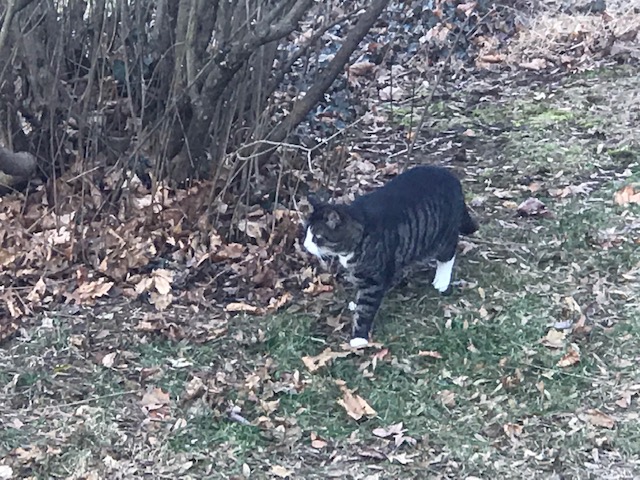
I had a little bit of difficulty working on my message yesterday. I think you should know the obstacles I face when I am preparing to share with you the Word of the Lord. You see, my cat, Melvyn, was really annoyed with me. I wrote this just after he glared at me from behind my computer, yowled, and took a bite out of the cover of my Bible commentary!

You might be surprised that his visual impairment didn’t keep him from trying to close the lid of my laptop. Then, he unplugged it with his paw, and gave it a shove. It came off my lap desk, and almost dropped to the floor. Then, after I repositioned it and restored the plug, he climbed into my lap, and lay down on top of my open Bible, making it very hard to read or type.

He had been trying to get my attention all day. Because the day before—on Friday—even when I was home, I was distracted, working at my computer or on the phone. Beginning Saturday morning, around 6:30, he had to make up for lost attention time. He jumped on our bed, walked across my body and onto the nightstand beside me, where there are ALL sorts of things he likes to knock off. My glasses. My watch. My phone. Books. Pens. A lamp. A cup of tea. If knocking things on the floor fails to gain my response, he thumps my glass water bottle with his head or pokes the lampshade with his nose. Bang! Bang! Bang!

Yesterday, what got my attention, finally, was when he stood on top of me, got up real close to my face, purred ferociously, and started licking my eyelids and cheek.

What it comes down to is this. Melvyn isn’t happy with my lifestyle. It doesn’t suit him. He wants me to change. He’s never going to stop trying to get my attention, and demanding an audience. He’s never going to stop pestering me when he has something important for me to do. Like feed him breakfast or give him a snack.

***

John the Baptist demands our attention, today, on this Second Sunday of Advent, and every day, if our heart is open to his message of change—in ourselves, our lives, the Church of Jesus Christ, the world.

We’ve heard this passage every Advent, so many times, it’s tempting to kind of skim it or snooze through it. Camel hair. Locusts. Honey. Vipers, unquenchable fire and all that. Why, he’s like the opening act and not the group that you paid good money for tickets to see. We want to hear about the baby born in Bethlehem and sing “Joy to the World.” Open our presents, eat Christmas dinner, hang out with family and friends. Maybe watch a football game. O-H! I-O!

brutus.jpg


In these weeks and days before Christmas, we don’t feel much like entering into a real or imagined wilderness space, where we are called to examine our hearts, the fruit of our lives, and confess our sins. Who here feels like confessing sins?

We only half listen when John cries out, “Repent, for the kingdom of heaven has come near.” But the word for “repent” is the Greek metanoia.  This doesn’t just mean turn away from your sin or turn back to God. It literally means take on a new mind set! Make a U-turn! Change course. John is telling his world and ours that participating in the kingdom of God is going to require more than just showing up at the Jordan. It is about being prepared to let go of what we used to be, and become someone new. Paul says to the Galatians in 2:20, “I have been crucified with Christ. It is no longer I who live, but Christ who lives in me. And the life I now live in the flesh I live by faith in the Son of God, who loved me and gave himself for me.”

But John says, himself, that he isn’t the important one. Not me, he says. The one coming after me. Now that’s the one to pay attention to! “I am not worthy to carry his sandals!” he says. “I baptize you with water for repentance. He will baptize you with the Holy Spirit and FIRE.”

John-the-Baptist-in-river

Yet, John’s cries are heard by the people of his time, as if he is a rockstar! When John baptizes, everyone in the region along the Jordan River, the big city folks of Jerusalem, and all of Judea are coming out to the wilderness. And they didn’t even have cell phones, a Jordan River Website with live streaming camera feed, Facebook, Instagram or Snapchat to let them know where and when! And the interesting thing is, to me, that he hasn’t come to reform a religious institution. He doesn’t show up in a synagogue or the temple, wearing Sabbath-best clothes. He’s outside! Far from the Holy City. Dirty and disheveled. Blunt and bold. Wearing a hairy mantle like the prophet Elijah, lifted up to a chariot of fire pulled by horses of fire in the sky.

John’s wilderness isn’t a bad place, not like the wilderness experience of the Israelites who had escaped slavery in Egypt only to be lost and wandering for 40 years. John’s wilderness is a safe space for people to leave their everyday problems, worries, fears, dangers, and distractions, and prepare their hearts to meet the Lord. But some who come to see John and be baptized, such as the wealthy, religious elites, come for an appearance of piety, and because they can’t risk ignoring him. He demands their attention, because he is a threat to their lifestyle– their wealth and power. John is drawing people away from the synagogues and institutionalized religion! And he’s telling the harsh truth about them, revealing who they really are. “You brood of vipers!” he shouts. “Who warned you to flee from the wrath to come?”

vipers

***

On this Second Sunday of Advent, we, too, like the people of Judea, Jerusalem, and the area around the Jordan, should listen to John with open hearts, so that the Word may accomplish its work in us and equip us for service. This is the violent, unjust world to which Christ will come, first as the infant, then again as our King. So, we wait and hope in Him. Our faith leads to transformed lives—to our bearing good fruit, as John commands us. But what we anticipate, what we live for in Advent, as one New Testament scholar says, is “the fulfillment of the transformative justice of the Kingdom, when right will be vindicated as right and wrong clearly identified as wrong.” Don’t we all long for that to happen?

According to John the Baptist, the day of judgment is not far off. The Lord, he says in the third chapter of Matthew, has already placed an ax against the tree, ready to cut down any that don’t bear good fruit. The winnowing fork is already in his hand.  Similar to a pitchfork, the winnowing fork is used to lift harvested wheat up into the air. The wind blows away the lighter chaff or husk surrounding the seed and other debris, while the edible grain falls to the threshing floor. The Lord will clear his threshing floor, John says, gather the wheat—those who reveal their repentance by their good works—into the granary, the Kingdom of God. The chaff will be burned with an unquenchable fire, the power of God.

But we have no fear. Our Judge is our Redeemer. Our merciful, loving Savior has claimed us in our baptisms. We belong to Him, just as Quinn and Laila will be claimed by him in their baptisms today. We are united by the Spirit as Christ’s Body for the world. Every day, the Spirit leads us and helps us bear good fruit.

Friends, I pray that the Spirit will stir you to boldly proclaim the gospel in word and deeds, like John! May the Lord grant you courage to always tell the truth and work for peace and justice.

May you be attentive to the voice of the one who cried out to all Judea and Jerusalem and speaks to us, still. Let go of your problems, worries, and anxieties. Resist the frantic busyness and materialism that the world says is good, especially this time of year.

Come with me, John says, to the wilderness. Come, just as you are. You don’t need to bring anything but you. It’s a place of safety and refuge. Honesty, trust and transformation. “Repent, for the kingdom of heaven is drawing near.”


Holy One, thank you for the words of the prophets, especially for John. He spoke the truth boldly, lived simply, and served you faithfully, even dying for you. Lead us, Lord, into the wilderness, where ever that place may be for each of us. Draw us into that space of safety and refuge, where we can leave all our problems, fears, and anxieties behind and learn to place our trust in you. Help us to be attentive to your voice. Give us repentant hearts that will lead to the transformation of ourselves, our lives, our church and world. Lead us to do the works that you want us to do, works in your name that will bear good fruit. Grant us patience and courage as we wait and hope for your Son’s return and the transformative justice of your Kingdom. In His name we pray. Amen.

He Is Coming Soon!

Meditation on Matthew 24:36-44

First Sunday of Advent

The Presbyterian Church of Coshocton

Dec. 1, 2019

behold-i-am-coming-soon.jpg


36 “But about that day and hour no one knows, neither the angels of heaven, nor the Son, but only the Father. 37 For as the days of Noah were, so will be the coming of the Son of Man. 38 For as in those days before the flood they were eating and drinking, marrying and giving in marriage, until the day Noah entered the ark, 39 and they knew nothing until the flood came and swept them all away, so too will be the coming of the Son of Man. 40 Then two will be in the field; one will be taken and one will be left. 41 Two women will be grinding meal together; one will be taken and one will be left. 42 Keep awake therefore, for you do not know on what day your Lord is coming. 43 But understand this: if the owner of the house had known in what part of the night the thief was coming, he would have stayed awake and would not have let his house be broken into. 44 Therefore you also must be ready, for the Son of Man is coming at an unexpected hour.


***


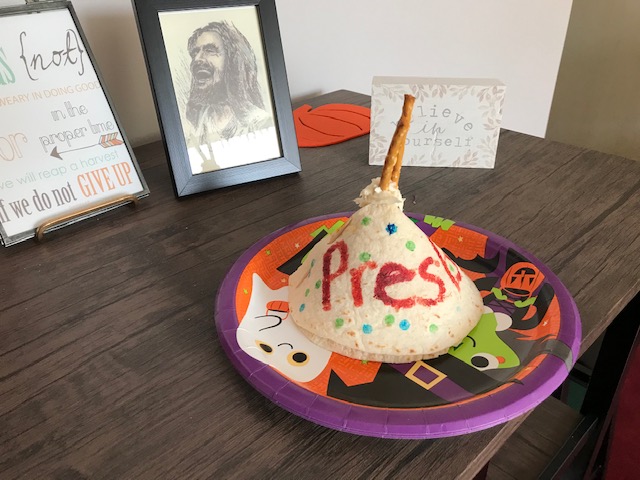
It was Taco Teepee Tuesday, and I didn’t even know it.  Mr. Gill and Mrs. Yost had invited me to spend time with their second graders at Coshocton Elementary on the Tuesday before Thanksgiving, since school would be closed on Friday, my usual day to read to the students and listen as they read to me. I said yes, though it meant changing my schedule and working at the church office on Monday, my usual day off. I was looking forward to sharing a message with Mrs. Yost’s class about the first Thanksgiving, like I did for the children’s message in church, making sure to emphasize, in the midst of our delicious Thanksgiving feasts, the importance of remembering to give God thanks for all his gifts to us.

Mr. Gill had just started making taco teepees with his class—and I had just finished my time with Mrs. Yost’s class, when the fire alarm went off! From the startled expression on Mrs. Yost’s face, I was pretty sure she wasn’t expecting a fire drill.

But she knew what to do—and so did her kids. She grabbed her class list and down the stairs we went, out the back door, and down more steps to a sidewalk, then, turning left, we walked all the way to the tennis courts, where the entire second grade was gathering. They moved quickly, with only a little talking, giggling, and shhh-ing—knowing their destination. They had practiced a number of times this school year and in kindergarten and first. Their teachers had taught them what to do—and how they shouldn’t be afraid, but that they should also take it seriously and be watching and listening for new instructions. Because you never know if it is a real emergency or just a drill!

Waiting with the children at the tennis courts, I had a moment to thank God, again, for making it possible for me to be there with them, when I had never planned on coming on Tuesdays, let alone THE Taco Teepee Tuesday.

taco teepee.jpg

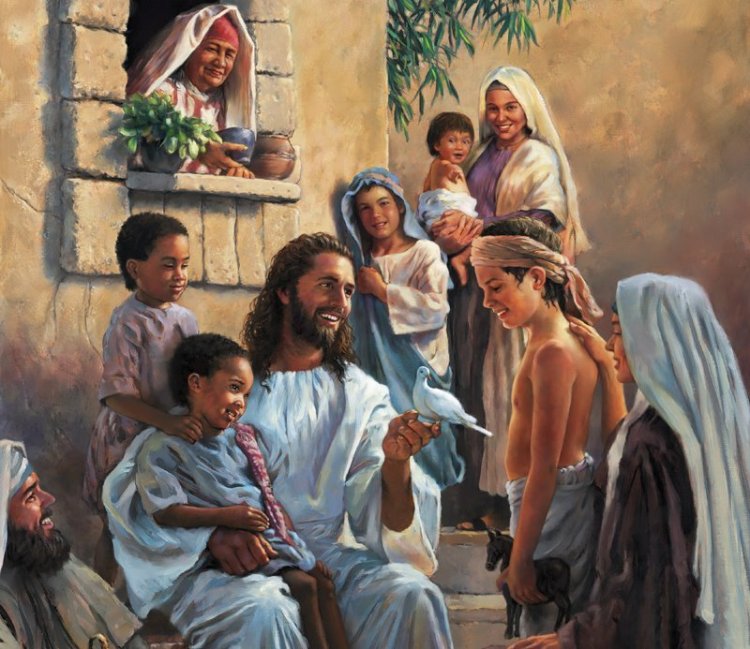
It was another opportunity to serve those whom Jesus had said, gathering the children to himself, as the disciples tried to shoo them away—to “such as these” the Kingdom of God belongs.


jesus-with-children-2302.jpg

As we waited for the all-clear signal, I thought to myself, what if instead of a fire alarm, it was the sound of a trumpet and Jesus had come back at that very moment—when we were with the children, talking about, of all things, prayer. That would have been a good time for Jesus to return! We were ready!

“Come, Lord Jesus,” I whispered as we walked back to our classrooms, remembering Christ’s promise in Revelation 22:20. “Surely, I am coming soon!”


***


On this first Sunday in Advent, we are reminded that we are living in the in-between times—getting ready to tell the beautiful story, once again, of our Savior’s birth and preparing our hearts for Christ’s return.

In our gospel reading in Matthew, why does Jesus emphasize our need to get ready and be alert? Because it is easy to let the things of this world distract and consume us—like they did in the time of Noah, when people were eating, drinking, marrying and giving in marriage—just living their lives, but living apart from God. They didn’t have a foundation of faith or a relationship with the Lord.

It’s not a coincidence that we read this Scripture on the first Sunday of Advent, in a season when we are SO busy. We just make it through Thanksgiving, and then it’s Black Friday, the biggest shopping day of the year. Our homes must be decorated, cookies must be baked, and the Christmas cards are waiting to be written. Is anyone else’s December calendar already full of activities and the month has barely begun? With all the good things you have planned, make sure you don’t forget your first love—the Lord—and that preparing our hearts to meet Him isn’t the same as getting ready for Christmas.

Another reason Jesus urges us to prepare our hearts for his return is to give us hope. We can become easily discouraged if we forget that this isn’t all there is!

We know Christ is coming. We just don’t know when. Jesus says not even the angels or the Son of Man himself know when he will return. Only God knows. Anyone who tries to tell you differently, Jesus says, is trying to lead you astray.  The image of his coming like a thief in the night here in Matthew is taken up by the Apostle Paul in 1 Thess. 5:2: “ For you yourselves are fully aware that the day of the Lord will come like a thief in the night.” And in Revelation 16:15, when Jesus says, “Behold, I am coming like a thief! Blessed is the one who stays awake…”

But we can be ready for him, as I felt so keenly this past Tuesday, when I was sure that where I was, was where I needed to be, and what I was doing was what the Lord wanted. Isn’t that a wonderful feeling when that happens? I felt a longing in my heart to see the One who will “come on the clouds of heaven with power and great glory,” as Jesus says in Matthew 24:30-31. “And he will send out his angels with a loud trumpet call, and they will gather his elect from the four winds, from one end of heaven to the other.”

Are you wondering what will happen to us when Jesus comes back? Scripture says that we will be transformed. The Apostle Paul says in 1 Cor. 15:51-52, “Listen, I will tell you a mystery! We will not all die, but we will all be changed, in a moment, in the twinkling of an eye, at the last trumpet. For the trumpet will sound, and the dead will be raised imperishable, and we will be changed.” John says in 1 John 3: “Dear friends, now we are children of God, and what we will be has not yet been made known. But we know that when Christ appears, we shall be like him, for we shall see him as he is.”

And what of the images of two being in the field—one taken, the other left? And two women grinding meal together; again, one will be taken, another left? How should we respond to these? Should we be afraid that we might be left? No, once you have said yes to the Spirit’s invitation and accepted Christ as your Savior, the Lord isn’t going to change his mind about you. Ephesians 1:4 says, “For he chose us in him before the creation of the world to be holy and blameless in his sight.” And Paul in Romans 10:13 says, “All who call upon the name of the Lord shall be saved.” Rather than fear or insecurity, the image of one being taken and another left should stir us to compassion for those who don’t know Jesus. It reminds us that we have an important job—and that’s allowing God to use us and speak through us, sharing the good news of Jesus and his love.

Being prepared for Christ’s return means having a firm foundation, having studied, worshiped, prayed and practiced our faith so well that we respond to the Lord as the children did to the fire drill—with confidence and without fear, being sure of our destination, always listening for the Spirit’s direction, looking for opportunities to serve, care for others and give of ourselves. We won’t know how many lives we have touched; how many people we have helped draw nearer to Him. But we HAVE touched lives. We ARE making a difference.

It is my prayer that when the Lord comes back, he will find us faithful—doing only the things he wants us to do and not wasting a single moment harboring hurt or holding onto the past, not when there are good works in Christ’s name to do.

For every time we give and care for someone in need, we are preparing our hearts to meet the Lord.

Friends, He is coming soon!


***

As I was leaving the elementary school last week, one of the ladies in the office asked, “Hey, do you have a minute?” I had an appointment to get to, but I stopped to listen, sensing it was important.

She wanted me to know about a gift from the women of our church, more than a year ago, of about $250. She used the money recently to buy sweat pants of all sizes—47 pairs—for children who fall down, tear their pants, or get dirty or wet at the bus stop, on the playground, or in school. The new pants are given to the children; they never ask for them back.

The lady who told me this story had tears in her eyes. “Will you tell the women that I said thank you?” she said.

I said that I would—and that I would encourage our church to help again whenever the children have needs.

For when we give and care for others, we are preparing our hearts for the Lord’s return. When he comes on the clouds of heaven with power and great glory, may he find us faithful.

Friends, He is coming soon!


Let us pray.

Holy One, thank you for the promise of our everlasting life with you and for your return for your beloved Church. Thank you for the plans you have for us, the works you have already ordained for us to do in your name, giving to others, caring for people in need, sharing the good news of your grace and love. Help us to keep you at the center of all our activities and celebrations this month. Lead us in your will so that we don’t try to do too much. Prepare our hearts, Lord, for your return. Stir us to remain ever watchful and ever faithful, not wasting time on things that don’t bring joy or build up your Church. Come, Lord Jesus. Come soon! In your name we pray. Amen.


Give Thanks


Meditation on Philippians 4:1-9

Nov. 17, 2019

The Presbyterian Church of Coshocton, OH

Therefore, my brothers and sisters, whom I love and long for, my joy and crown, stand firm in the Lord in this way, my beloved. I urge Euodia and I urge Syntyche to be of the same mind in the Lord. Yes, and I ask you also, my loyal companion, help these women, for they have struggled beside me in the work of the gospel, together with Clement and the rest of my co-workers, whose names are in the book of life. Rejoice in the Lord always; again I will say, Rejoice.  5 Let your gentleness be known to everyone. The Lord is near. Do not worry about anything, but in everything by prayer and supplication with thanksgiving let your requests be made known to God. And the peace of God, which surpasses all understanding, will guard your hearts and your minds in Christ Jesus.

Finally, beloved, whatever is true, whatever is honorable, whatever is just, whatever is pure, whatever is pleasing, whatever is commendable, if there is any excellence and if there is anything worthy of praise, think about these things. Keep on doing the things that you have learned and received and heard and seen in me, and the God of peace will be with you.

***

It was a different world in November 1956 when Margaret Towner was the first woman to be ordained in the northern branch of our denomination. “It was a watershed moment for women’s equality,” says Presbyterian Outlook in its Oct 7 issue, “for dismantling gender power structures within the church and for ordained ministry in the Presbyterian Church.” Thirty-six years had passed since the first overture to ordain women as elders and as ministers went before the General Assembly in 1920, the same year women were granted the right to vote in the United States.

Margaret’s ordination to serve God through First Presbyterian Church of Allentown was not, alas, a call to preach. That would come later, when she served other churches. Her first call was to be a minister of Christian education, overseeing the work of 60 teachers, with 910 students. The charge at her ordination has never been forgotten. “Be the shepherd of the flock and not their pet lamb.”

Towner-Margaretsm

Margaret’s ordination was covered by Life Magazine with a 5-page spread. The article, “A First Lady Minister in Robes of a New Role,” contains photos that play up her femininity. One features 31-year-old Margaret standing with arms outstretched in a borrowed black clergy robe as two ladies hem and shorten her sleeves to fit her 5-foot-2-inch frame. Another shows her kneeling before 7 men of the presbytery, clad in long black robes and white clerical ties with preaching bands. Another shows her smiling as she sticks her head in the door of a nursery, a small child peering back. Still another depicts Margaret laughing and the caption explaining that an old friend from college, where she had studied pre-med, reminded her that she had once said, “The one thing I will never do is go into church work.”

To the objection that the ordination of women “will be just another excuse for men to get out of the church,” Margaret told Life Magazine, “In my mind there is no ground for men’s fears that women will move in and take over their jobs. There is too much work to be done to allow any jealousy.” Her main worry is not being kept out of the pulpit, she says, for her ministry is with the children and teachers. What bothers her is that the church has a baseball team, “and it’s all men and they won’t let me play,” she says. “But they will call on me when they are in a tough spot in the league!”

Margaret would later choose not to marry, “acknowledging that her temperament wouldn’t allow her to serve both the church and a family.” I suspect that she realized she wouldn’t be able to do it all in an era in which women were expected –not only by men, but by other women—to do everything at home for her husband and children.

While church leadership has been open to women in the Presbyterian Church for more than 6 decades, gender discrimination persists, says the Oct. 7 issue of Presbyterian Outlook. Female ministers have encountered sexism in a variety of forms, including snide remarks and inappropriate evaluations of their bodies, their hair, and the pitch of their voices. It’s no secret that women have a more difficult time finding jobs in ministry and more often work in part time or temporary positions. The gender pay gap among ministers is wider than the national average for all jobs. It wasn’t until Margaret’s last call –decades after she was ordained—that she would receive equal pay with her male counterparts.

Margaret, now 94, in last month’s Presbyterian Outlook, recalls opposition from both men and women in the church. She did receive letters from minister’s wives who worried that women would take jobs away from their husbands and would be willing to be paid less. She also received letters from men who called her to repent and be saved. She chose not to answer those letters or “get into a dialogue with others about their opinions,” she says. “I felt that an example of women in ministry would help break down barriers rather than debate.” When things got tough, she says, her supporters “had her back. Successes and affirmations kept her going.”

“And I felt called,” she says. “Ordained ministry was my life’s work.”

***

In our Philippians reading today, we note that the apostle Paul is supportive of women in ministry. And, in spite of his situation of being imprisoned for the gospel, he says in 4:4, “Rejoice in the Lord always; again, I will say, Rejoice.” Later in chapter 4, he will go on to tell how he has heard of their concern for him and assure them that, “In any and all circumstances I have learned the secret of being well-fed and of going hungry, of having plenty and of being in need. I can do all things through him who strengthens me.”

Paul is concerned for unity and peace in the Philippian church. He does something that is unusual for him, in Philippians 4:2-3, and that is to name two women, leaders in the church, whom he has heard are not in agreement. This stirs him to urge Euodia (a Greek name meaning Success) and Syntyche (Greek for Lucky), “to be of the same mind in the Lord.” He doesn’t condemn any specific actions. And he doesn’t take sides! And, also unusual for Paul, he expresses a desire for a loyal companion of his—possibly Luke—to help them be reconciled. He claims them as colleagues in ministry who “struggled beside me in the work of the gospel, together with Clement and the rest of my co-workers,” he says, and that their “names are in the book of life.” This is the only time Paul mentions the heavenly “book of life,” in his letters, though it is a common belief from his Jewish heritage and will be mentioned numerous times in the NT book of Revelation. These two women, in Paul’s view, haven’t ceased to be among God’s faithful.

Women have been in leadership in the Philippian church in Macedonia from its beginnings, when Paul shared about Christ with some Gentile women–God-fearers—who met by the river on the Jewish Sabbath for prayer. In Acts 16, the Lord opens the heart of one of the God-fearers named Lydia, a dealer in purple, to listen eagerly as Paul shares about the Risen Christ. She and her household are baptized, and Paul, Silas and Timothy accept her hospitality and stay in her home a while.

The command to rejoice in the Lord follows Paul’s urging Euodia and Syntyche to have the same mind. In chapter 2, he had urged the church to be careful of their witness and “do all things without murmuring or arguing, so that you may be blameless and innocent, children of God without blemish in the midst of a crooked and perverse generation, in which you shine like stars in the world.” Here in chapter 4, he encourages the church again to remember to live so that they reveal their faith and to whom they belong. “Let your gentleness be known to everyone,” he says. “The Lord is near.”

Paul urges us all, then, to turn our worries into prayer and, with thanksgiving, bring our requests to God. We remain in the mind of Christ when we reject negative thoughts and think on what is true, honorable, just, pure, pleasing, excellent, commendable—anything worthy of praise.

And the promise for those who keep on doing what we have learned, received and heard and seen? “The God of peace will be with you.”

***

We rejoice as we welcome five new members in The Presbyterian Church of Coshocton today. We give God thanks and praise for you! We embrace you as you are. We hope that you feel God’s love here.

I am grateful for Margaret Towner and all the women in ministry, going back to Biblical times, whose stories inspire us to be open to the Spirit bringing change to our church and society. While it hasn’t been as much as Margaret, I have experienced some opposition to my ministry over the years. None of that is worth talking or even thinking about, as Paul says; it’s not honorable, excellent, pure, or praiseworthy. I, too, haven’t felt that entering into debate about women in ministry is helpful—not when there’s work to be done! The best thing is to be who we are meant to be and not be ashamed of who we are. I, too, have been strengthened by the support of family and friends, and the certainty that God has called me to this work.

I would add to Margaret’s list of things that keep her going a sense of gratitude to God for this call. Gratitude is a powerful thing! I give thanks to God for what he has done in my life and is doing in our church. One more thing I would add to the list is joy. The joy of the Lord is OUR strength. No one can take our joy away!

Let us make our requests known to the God who loves us and has a plan for us. And remember that in Christ’s Body, we are made one, in spite of our differences. Remember that your gentleness is part of your witness to the world.

Now, keep on doing the things that you have learned and received and heard and seen. Give thanks! And may the God of peace be with you!

Let us pray.

Thank you, Lord, for your love for us and for sending your Son to give His life for our sins—making a way to be reconciled with you and one another when there was no way. We were lost! Thank you for calling us all now by name to love and serve you and your people and for giving us joy for this journey, YOUR joy that no one can ever take away. Thank you for all the godly men and women, like Margaret Towner, who have heard your voice and accepted the call to serve as ministers, despite the opposition she faced. Grant us the mind of Christ so that we may all live in peace with one another, forgiving each other as we seek to do the work of your Church and reach out with your love to our community. Help us to think on things that are honorable, excellent, pure, and praiseworthy and to be a faithful witness through kindness and gentleness, shining like stars in a dark world. Amen.


Our Father in Heaven, God of the Living


Meditation on Luke 20:27-38

The Presbyterian Church of Coshocton

Nov. 10, 2019


27 Some Sadducees, those who say there is no resurrection, came to him 28 and asked him a question, “Teacher, Moses wrote for us that if a man’s brother dies, leaving a wife but no children, the man shall marry the widow and raise up children for his brother. 29 Now there were seven brothers; the first married, and died childless; 30 then the second 31 and the third married her, and so in the same way all seven died childless. 32 Finally the woman also died. 33 In the resurrection, therefore, whose wife will the woman be? For the seven had married her.”

34 Jesus said to them, “Those who belong to this age marry and are given in marriage; 35 but those who are considered worthy of a place in that age and in the resurrection from the dead neither marry nor are given in marriage. 36 Indeed they cannot die anymore, because they are like angels and are children of God, being children of the resurrection. 37 And the fact that the dead are raised Moses himself showed, in the story about the bush, where he speaks of the Lord as the God of Abraham, the God of Isaac, and the God of Jacob. 38 Now he is God not of the dead, but of the living; for to him all of them are alive.”


     I was already thinking that I was too busy. As our Mary and Martha study group would well understand, I was thinking I may have too many rocks in my wagon–and that maybe some of the rocks in my wagon weren’t rocks that the Lord had given me to carry for him. So when Tina texted me that the funeral home wanted me to do a memorial service for someone who wasn’t a member of our faith community, I called the funeral home with every intention of saying no.

You know what’s coming, right? The funeral director, a hardworking young lady with a gentle heart, told me that after meeting with the family, she thought that I would be a good fit for them. Something in her voice stirred me to say that I would talk with the family and see what I could do. As I waited for the phone to ring, I prayed, “Lord, if this is your will for me, show me how I can do this. Give me your compassion and joy.” Immediately, I remembered how my father didn’t have a church, either, or a pastor, when he died. And how we didn’t want just anyone to do his service.

When Linda called and told me about her mother, Joyce Selders, I knew this was, indeed, God’s plan. Especially when she said how she wanted her family to know that Joyce wasn’t suffering anymore–and that she was in a better place. What I heard in her plea was that she wanted me to bear witness to the resurrection, to comfort them with the hope that we have in Jesus Christ, who says to Martha after her brother Lazarus dies in John 11:25-26, “I am the resurrection and the life. Those who believe in me, even though they die, will live, and everyone who lives and believes in me will never die. Do you believe this?

Joyce, who had lived at Windsorwood for the past 5 years or so, died on Halloween at the age of 89. A widow since 2001, she had lived independently at her home on Adams Street until she was seriously injured while planting a rose bush in her yard. She suffered a massive stroke six months later.

She was born in Dresden in 1930, and while she had grown up in the Depression years, she would tell stories of a happy childhood, making do and learning to appreciate what they had. Money was scarce. They had stamps for sugar and flour. New shoes and clothes were luxury items. And the new shoes usually went to her younger brother, Bunk, first, and when he got new shoes, Joyce said, he would try them out by kicking her with his new shoes. For fun, their sister, Reva, would stop at the gas station and ask for “50 cents’ worth of Ethel” to drive them around town.

Joyce borrowed a dress to marry Dale Selders of Coshocton in early 1946, when she wasn’t quite 16. The young man had served in the U.S. Army in WWII. He borrowed a car, and they set out on an adventure that lasted 55 years together.

“I always knew that I was loved,” Linda says. She never questioned her mother’s love, for it revealed itself in acts of kindness and sacrifice, with all the little things that she did and the extra effort to make things special. Whether it was cooking noodles from scratch or making filled raisin cookies that was an all day process, her motto was, “If it is worth doing, then it’s worth doing right.”

She taught herself to do many things. She loved gardening, cooking, baking, sewing, quilting, ceramics, music and dancing. And she took time to play with her children, teaching Linda to roller skate and ice skate and joining in when the kids competed to see who could eat corn on the cob the fastest.

Linda used to wonder why her mother paid so much attention to the laundry, always ironing, cleaning house, and making sure dinner was ready every day at 5:30. Later, she understood that her mother had been on a mission her whole life to please her family in every way she could.

Linda’s stories of her mother reminded me of our Good Shepherd in John 10, who knows his sheep intimately and calls us each by name. “My sheep hear my voice,” Jesus says, “and they follow me.” In the greatest act of love, our Good Shepherd lay down his life for the sheep. We never have to question our Good Shepherd’s love.

***

Studying this scripture in the gospel of Luke this week, after celebrating the life of an amazing woman and bearing witness to the resurrection, I couldn’t help but be disturbed by the Sadducees’ question. So what about the childless woman who dies after becoming a widow 7 times, marrying the brothers of her first husband? This is according to the practice of Levirate marriage in Deuteronomy 25:5-6. A childless widow would have been poor, marginalized, and vulnerable, if there were no male relative to protect, provide and care for her. I found myself wishing that we knew more about this woman, if she did, indeed exist. What a sad thing to lose so many loved ones and to remain childless in a time when a woman’s value was tied to her children.

The question of the Sadducees is not innocent. They are determined to make a fool of this country rabbi called Jesus, who is a threat to them, though he lacks a formal education, money, prestige and political power. As Jesus is teaching in the temple in Luke 19:47-48, some people are “spellbound by what they heard”; others want to kill him. Others, in Luke 20:20, come asking questions to “trap him by what he said.”

The Sadducees, who may have taken their name from Israel’s high priest, Zadok, during the reigns of David and Solomon, control the temple, which is the center of religious and community life. They oversee formal affairs of the state; participate in Israel’s court called the Sanhedrin; they collect taxes; equip and lead the army; regulate relations with the Romans; and mediate domestic disputes. Not only do they not believe in the resurrection, they reject the notion of spirits or angels or an afterlife of any kind.

With their question, the Sadducees imagine that the resurrection of which Christ speaks must be merely an extension of the life we have today. But we know that’s not true! It will be a completely new existence, and we will be changed. Marriage, family, children–these characterize life in our age. We will be “like angels,” “children of God,”  “children of the resurrection,” says Christ about the future that we can hardly imagine, but one day will see.

The Sadducees profess belief in the 5 books of Moses–the first 5 books in the Bible, but not the remainder of the Scriptures. This is why Jesus, when he answers the Sadducees’ ridiculous question, mentions the story of the burning bush. This is God’s first encounter with Moses, when the Lord reveals himself to be the “God of Abraham, the God of Isaac and the God of Jacob.”

“Now he is God not of the dead, but of the living,” Christ declares, “for to him, all of them are alive.”

***

I am grateful that I was given the opportunity to share about the hope of the resurrection with the family of Joyce Selders–and to be inspired by her story. The Spirit of the Living God interrupts our plans and redirects us, continually, as we seek to be faithful to obey God’s will and have the Lord prepare us, more and more, for the Kingdom of Heaven. This is what I realized as we said the traditional Lord’s Prayer at the memorial service–that this is our welcoming our Father in Heaven to reign in our hearts and over our lives now and always–for “thine,” we say, or “yours” “is the Kingdom, the power and the glory forever. Amen.”

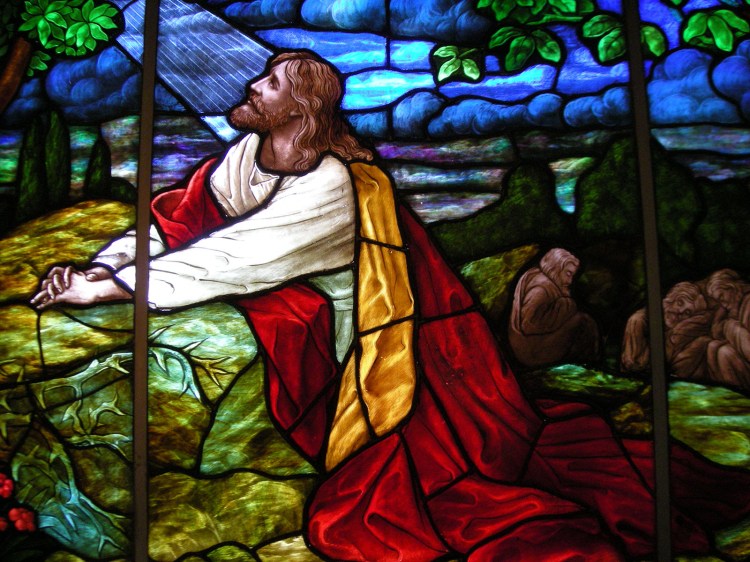
christ-praying-in-the-garden-of-gethsemane

We can trust the Lord to be in every future we can imagine, with the help of the NT. “For if we have been united with him in a death like his,” says Romans 6:5, “we shall certainly be united with him in a resurrection like his.” “For God so loved the world,” says John 3:16,  “that he gave his only Son, that whoever believes in him should not perish but have eternal life.” “We will all be changed, in a moment, in the twinkling of an eye, at the last trumpet, when the dead will be raised,” says Paul in 1 Cor. 15:51-52. And when “he is revealed, we will be like him, for we will see him as he is,” says 1 John 3:2.

Friends, we don’t have to wait till we die to live resurrected lives in Him. Today is the day Christ will make all things new. We will have a glimpse of the Kingdom as God’s people gather in faith to experience Christ’s presence and partake of the bread and cup. And the Holy Spirit will do its work, uniting us in Christ’s Body with all the saints, in every time and place. We who are broken and feel empty, will be strengthened, filled, and made whole. We who remember Christ’s body given and blood shed for the forgiveness of sins will be re-membered and sent out for the world, to comfort and share the hope we have in Jesus, who says to us in His Word, “I am the resurrection and the life. Those who believe in me, even though they die, will live, and everyone who lives and believes in me will never die. Do you believe this?”


Let us pray.


Holy One, we believe in you! Thank you for our faith. Help us when we struggle with unbelief. We trust that even though we will die someday, we will live forever with you. We know that you live in our hearts now and will never abandon us. We seek your help that we may be strengthened, filled and made whole. Comfort those grieving the loss of loved ones. Give us the hope of your resurrection and remind us, every day, of the promise of our resurrection with you. Give us patience and grace as your Spirit interrupts our plans and you provide ministry opportunities. Lead us to be faithful to share our stories with our community and to live new, resurrected lives, as we seek to be in your will. For thine is the Kingdom, the power and the glory forever. Amen.


I Lay Down My Life for the Sheep

Meditation on John 10:7-15

In Memory of Joyce (Bice) Selders

Nov. 4, 2019

Given-Dawson-Paisley Funeral Home,

Coshocton, OH

Jesus-Good-Shepherd-14.jpg

So again Jesus said to them, “Very truly, I tell you, I am the gate for the sheep. All who came before me are thieves and bandits; but the sheep did not listen to them. I am the gate. Whoever enters by me will be saved, and will come in and go out and find pasture.  The thief comes only to steal and kill and destroy. I came that they may have life, and have it abundantly.

      “I am the good shepherd. The good shepherd lays down his life for the sheep. The hired hand, who is not the shepherd and does not own the sheep, sees the wolf coming and leaves the sheep and runs away—and the wolf snatches them and scatters them. The hired hand runs away because a hired hand does not care for the sheep. I am the good shepherd. I know my own and my own know me, just as the Father knows me and I know the Father. And I lay down my life for the sheep. 


***

When Linda shared with me about her mom, the day after Joyce had gone home to be with the Lord at the age of 89, she told me how she always felt loved. And I thought to myself, what a wonderful way to be remembered—by our love! I can’t think of a nicer thing to say about a parent. She never questioned her mother’s love. In a day and age when so many homes are filled with strife, her family’s home was brimming with love. She knew her mother loved her not just because of what she said, but how she lived her life.

Linda saw love in the things her mother did—all the extra effort she would put into making things for friends and family. As Linda talked, I could almost smell the filled raisin cookies that her mother made that took her all day to make. I imagined her mixing the batter, rolling out the dough, cutting out circles, and then alternating circles of dough, with cooked raisin filling, before baking in the oven till golden brown. Nowadays, when drive-through fast food and carry out pizzas are all too frequent fare for today’s busy families, her mother prepared hot meals that her family ate gathered around the table at home. In addition to gardening, baking, and cooking, her mother enjoyed sewing and quilting, walking and line dancing, music, and making ceramics.

Born in Dresden in 1930 and growing up with three sisters and two brothers, Joyce married young. She and Dale Selders of Coshocton, a WWII veteran, tied the knot on Feb. 28, 1946. He was creative, too, and enjoyed hobbies, such as working on old cars, even rebuilding a 1930 Model T Ford. He learned how to lay brick, and together they built five homes. He retired from GE after working 39 years.

Family always came first for Joyce—caring for her husband; daughter, Linda; and son, Allen; though she did work for Pretty Products in Coshocton for a time. She continued to live independently at their home on Adams Street after Dale died in 2001, until about five years ago. A serious injury while gardening and a stroke six months later led her to move to the assisted living community Windsorwood Place.  Though her gardening and baking days were over, she continued to enjoy her friends and neighbors and, most of all, family gatherings, especially when they involved spending time with grandchildren and great grandchildren. I suspect, like Linda, all the rest of the family didn’t question Joyce’s love.

It is that way with Jesus, our Savior. We never have to question his love. He proves his love to us not just by words, but by acts of kindness and self-sacrifice. In the 10th chapter of the gospel of John, we learn that he isn’t just our Shepherd; he is the Good Shepherd. The Good Shepherd would stay to defend and protect the sheep from wolves, while the hired hand would run if he saw the wolves coming and leave the sheep to be snatched and scattered. “The hired hand,” Jesus says, “runs away because a hired hand does not care for the sheep.” The Good Shepherd calls us each by name; he claims us in our baptism; we belong to Him. And listen to this promise in John 10:27-28. “My sheep hear my voice,” he says. “and I know them, and they follow me: And I give them eternal life; and they shall never perish, neither shall anyone pluck them out of my hand.” Not only will the Good Shepherd stay with us, defend and protect us, he offers us abundant life through the sacrifice of his own.  “I lay down my life,” he says, “for the sheep.”

And when we love, like Joyce loved, then we bear witness to the love of our Good Shepherd, poured into our hearts by the Holy Spirit. When we love one another, we reveal to whom we belong, the one who claims us in baptism. He is the one who knows us better than we know ourselves as he knew us before we were born. He wants to give us life—so that we live abundantly. It is His voice that we hear and know. He calls us by name. He draws us nearer to Him, even now, gently whispering, “Come. Follow me.”

Let us pray. Heavenly Father, thank you for your Son, Jesus Christ, our Good Shepherd, who claims us in baptism. Thank you for your Spirit that has poured your love in our hearts and offers strength and comfort to us every day. Lead us, Lord, to bear witness to you by living abundantly, revealing to whom we belong by our love for one another. In Christ we pray. Amen.

 

For All the Saints

Meditation on Luke 19:1-10

The Presbyterian Church of Coshocton, OH

Nov. 3, 2019

All Saints’ Sunday

zacchaeus-1.jpg

He entered Jericho and was passing through it. A man was there named Zacchaeus; he was a chief tax collector and was rich. He was trying to see who Jesus was, but on account of the crowd he could not, because he was short in stature. So he ran ahead and climbed a sycamore tree to see him, because he was going to pass that way. When Jesus came to the place, he looked up and said to him, “Zacchaeus, hurry and come down; for I must stay at your house today.” So he hurried down and was happy to welcome him. All who saw it began to grumble and said, “He has gone to be the guest of one who is a sinner.” Zacchaeus stood there and said to the Lord, “Look, half of my possessions, Lord, I will give to the poor; and if I have defrauded anyone of anything, I will pay back four times as much.” Then Jesus said to him, “Today salvation has come to this house, because he too is a son of Abraham. 10 For the Son of Man came to seek out and to save the lost.”


It was a beautiful day. I was traveling to First Presbyterian Church in Cambridge on Wednesday for a special gathering of pastors in our presbytery, when I remembered the words of my husband, Jim. He said, “Don’t use the GPS.” And I said, “I won’t.” And then I did, anyway. I didn’t trust myself to find my way to Cambridge, a place I had never been before. Pretty soon, I realized that I was being led to take Route 541 all the way to I-77 South. And, in the famous words of Yogi Berra, it was “déjà vu all over again.” This was the same narrow, windy, hilly route the GPS had led us when Jim and I and Jacob, our cat Melvyn and dog Mabel, exhausted from 2 days of driving and weeks of packing and saying goodbyes, arrived in a 3-car caravan in the dark of night, cold of winter, deer peering at us from both sides of the road. But it wasn’t night, this time. Wasn’t cold. And I wasn’t tired or feeling rushed.

And I thought to myself, “If people in my church can drive this road all the time, I can learn to drive this road, too.” Of course, I didn’t meet but a couple of vehicles the entire way. One was a slow-moving tractor that I cautiously passed. Another was a large pickup truck that passed me going about 80 in a 45. Funny thing was that Elton John’s “Rocket Man!” was playing on the radio. God has a sense of humor! Amen?

As I drove this windy, hilly way, instead of the better road that Jim would have me take—and that I would choose on my way home, I thought of other journeys taken by saints who lived and loved among us. And I gave thanks to God for all the saints, the cloud of witnesses that surrounds us, still, and whose stories continue to inspire us to keep on running the race of faith.

I thought of Ivy Catrow, whose life we celebrated in October. She was a former Land Girl in England who labored to grow food to feed her country during WWII. She left home and all that was familiar and traveled on the ocean liner RMS Queen Elizabeth in November 1946. In New York City, she was directed to a train that took her to Pittsburgh. That’s where her fiance, George Catrow, who hadn’t laid eyes on her in a year, but had written love letters to her every other day, picked her up in his car and brought her to Coshocton. The Reverend Kiskaddon married them 10 days later in the parsonage. And she lived 73 more years of adventures and joy, loving the Lord, her family and her church, persevering in times of suffering. Then, four days after her 96th birthday, she traveled yet another journey, entering into the joy that Christ has prepared, hearing the words she longed to hear, “Well done, good and faithful servant. Well done!”

I got to thinking, what if she hadn’t risked leaving kin and country? Her life would have been different. We would be different, too! We are better because of all the saints—all of you!—who continue to gather to worship and grow in faith and friendship, welcoming one another, loving one another, demonstrating the hospitality of our Lord.

I thought of Ivy and all the saints—the Body of Christ in every age, living courageously, led and fed by the Spirit, choosing to follow Christ on the narrow, less traveled path of humble servanthood, laboring with love and compassion, kindness and generosity, building relationships rather than accumulating wealth and things on the wider, more traveled path of this world.

As I drove on, taking my very own fall foliage tour, I remembered Robert Frost’s poem, “The Road Not Taken.”


The-Road-Not-Taken.jpg


Two roads diverged in a yellow wood,

And sorry I could not travel both

And be one traveler, long I stood

And looked down one as far as I could

To where it bent in the undergrowth;

Then took the other, as just as fair,

And having perhaps the better claim,

Because it was grassy and wanted wear;

Though as for that the passing there

Had worn them really about the same,

And both that morning equally lay

In leaves no step had trodden black.

Oh, I kept the first for another day!

Yet knowing how way leads on to way,

I doubted if I should ever come back.

I shall be telling this with a sigh

Somewhere ages and ages hence:

Two roads diverged in a wood, and I—

I took the one less traveled by,

And that has made all the difference.


***


Zaccheaus has choices to make the day that Jesus is passing through Jericho on his way to Jerusalem. The rich tax collector, described as short in stature, in Luke 19 decides to risk making a spectacle of himself by running and climbing a tree because he wants to see Jesus. Scholars say that his stature may have more to do with his profession than his actual height. The crowd may have shunned or barricaded him because of what he did for a living. Jesus could have chosen anyone that day to single out and bless with his presence in their home. He chose no one in the crowd of decent, religious people. He chooses, instead, the one who is marginalized and despised by the crowd of decent, religious people. The tax collector is, like the one in the parable of the Pharisee and the tax collector in Luke 18:9-14, the example of faith and humility—having the right attitude before God. Zacchaeus’ wealth doesn’t prevent him from pursuing Jesus and entering the kingdom of God. He has a change of heart and obeys the Lord. Compare this to the account of the rich ruler in Luke 18:18-25, who is moved to sadness but doesn’t obey when Jesus tells him the way to inherit eternal life is to sell all that he has and give the money to the poor, building his treasure in heaven. Then, “Come,” he says. “Follow me.”

Jesus doesn’t wait for an invitation from Zacchaeus, for he knows his heart’s desire is to be with him. The Lord knows our hearts, too! And he calls us by name to leave our places of comfort and privacy to profess and demonstrate our faith. “Zacchaeus, hurry and come down; for I must stay at your house today.”

The tax collector immediately obeys and bears spiritual fruit; he welcomes Christ eagerly, ready to give up a life of wealth and accumulation. He is filled with joy, “happy” to give half of his possessions to the poor—not the tithe of 10 percent of the increase. He is anxious to right the wrongs that he has done. “If I have defrauded anyone of anything,” he vows, “I will pay back four times as much.”

Salvation has come to the house of one who lives as a son of Abraham and doesn’t just claim God’s favor because of his family tree.


***

Has salvation visited your home? Have you allowed Christ to stay, dwell in your heart, and change your life? Today is the day to choose the narrow, less traveled path. A road you may not have taken before. We won’t find peace in the pursuit of wealth, accumulation and self-gratification. Only knowing Christ and laboring with him in ministries of compassion will satisfy the longing in our hearts and relieve us from the heavy burdens we try to carry on our own. Our Lord offers hope and healing for the wounded and brokenhearted, order and calm amidst your chaos, help and strength in times of sorrow, sickness, loneliness, and loss.

Don’t be tempted to follow the crowd of seemingly religious people, who want to exclude, rather than embrace, all people as God’s beloved children.  That’s what the crowd did to Zacchaeus that day our Lord passed through Jericho on his way to Jerusalem. May we all be freed to show the radical hospitality of Christ to all people. Let us join with the Son of Man in His labor of love—to seek and save the lost. May we faithfully serve the one whose choice of friends stirred the crowd to grumble, “He has gone to be the guest of a sinner.”

Some of you are wondering how you will live without your loved one. Your grief is fresh. Some of you have been grieving a long time, feeling broken and longing to be healed and made whole. God knows your pain! God loves you! Christ is with you in your suffering. I am missing my dad, wondering how we will get through our first Thanksgiving and Christmas without him. It will be hard.

But Christ tells us not to worry about tomorrow! And he’s not just talking about material blessings; he is talking about provision for heart, mind, body, and soul. The Lord offers new mercies every morning, daily manna in our wilderness, nourishment to eternal life. Christ has promised, in His Word, to come again and take us to Himself so that where He is, we will be also. He is preparing a place for us in our heavenly home—with all the saints! One day, when we finish the good works that God has ordained, labors of love in this age, Christ will say to us, “Well done, good and faithful servants. Well done.”


Let us pray.

Heavenly Father, thank you for all the saints, all of our loved ones—those with us now and those we mourn as they are no longer with us. Thank you for calling us each by name. Reassure us, Lord, of your love for all your children and your good plans for us. Lead us to acts of radical hospitality, walking in Christ’s loving ways. Thank you for the promise of salvation by faith in Christ’s work on the cross and for Your Son’s preparing a place for each one us, with all the saints. Help us to feel you with us now and always; grant us strength and courage, help and healing, as we seek to obey your will and serve with you in labors of love. In Christ we pray. Amen.


You Know the Truth That Makes You Free


Meditation on John 8:31-36

Reformation Sunday

The Presbyterian Church of Coshocton

Oct. 27, 2019


He said to the Jews who had believed in him, “If you continue in my word, you are truly my disciples; 32 and you will know the truth, and the truth will make you free.” 33 They answered him, “We are descendants of Abraham and have never been slaves to anyone. What do you mean by saying, ‘You will be made free’?” 34 Jesus answered them, “Very truly, I tell you, everyone who commits sin is a slave to sin. 35 The slave does not have a permanent place in the household; the son has a place there forever. 36 So if the Son makes you free, you will be free indeed.                                                                                                     

***

We had a great time at our church picnic last Sunday! It was my first experience with a corn maze. For that matter, it was my whole family’s first experience with a corn maze. I was surprised they wanted to come with me when Courtney Snyder told us that we better bring cookies if we do the maze. It takes at least 2 hours, she said, and we would get lost. “I always do,” she said. So, we grabbed some cookies, and started the maze after watching the instructional video. Did any of you watch that? In the video, we were asked to repeat after the guide in reciting all the rules. The ones I recall went something like this: I will not run in the maze. I will not smoke. I will not damage the maze. I will stay on the path and not break through the ribbons. Jim, Jacob and I dutifully echoed all the rules. Mom, however, remained silent.

We split into pairs once we started the maze. Jacob and I had the map, with the questions and clues that I tried to fill in. Jim and my mom, who weren’t interested in completing the worksheet, went the shortest way they could possibly find. Pretty soon, we realized Courtney was right. It was going to take a while, and we were going to get lost. Several times. Good thing we ate cookies, first!

My mom pointed to where a ribbon was broken and an illegal path had been made. She was going to take a short cut. She was tired and had had enough of the maze.

And I said, “No. We can’t do that. We promised we wouldn’t break the rules.”

She said, “I didn’t promise.”

I said, “If we don’t follow the maze, they will throw us out.”

“Why didn’t you say so sooner?” she said. “I would have done it a long time ago.”

Have you ever noticed that rules only seem to work sometimes when there are unpleasant consequences, even when rules are made for the good of the people? There’s always someone who questions the rules and wants to do things a different way. But have you also noticed how hard it is to change the rules, even when people agree that they are unjust and need to be changed?

Sometimes, there’s a shortage of courage.


***

Today, we remember and honor those with the courage to study God’s Word and listen for God’s voice still speaking to Christ’s followers in every age. We give thanks for those who fearlessly walked by faith and were led by the Spirit to work to transform the Church and make it more faithful to Christ’s call.

On Reformation Sunday, Presbyterians are used to hearing about Calvin, Luther and maybe Knox or Zwingli. As my history professors at Princeton Seminary would say—dead white men. But in so doing, we leave out many important reformers—women who were faithful to work for reform in the Church long before John Calvin fled to Switzerland and wrote his Institutes of the Christian Religion in 1536.

john-calvin-20.jpg
John Calvin


And more than 100 years before Martin Luther hammered his 95 Theses to the door of The Wittenberg Church on October 31, 1517.

luther-4.jpg
Martin Luther

I would like to share with you about a theologian and author from the 14th century who was first an inspiration to me when I was in seminary in 2008. She is called “Julian of Norwich,” though we don’t know her real name. You see, she was an anchoress, a devout woman whose long life was lived in a small room attached to the church of St. Julian in Norwich, England.

St_Julian's_Church_Norwich.jpg

Because she was a woman, she would not have been permitted to speak her views in church, but she was able to share them with folks who came to her window for godly counsel and prayer each day.

julian-2.jpg


And she did the unthinkable. She wrote down what God had showed her through a series of visions on May 13, 1373 of Christ on the cross, when she was “30 and a half years old” and was so ill that a priest was brought to administer last rites. About 15 years later, she wrote a longer version of the book—86 chapters! Unlike Luther, it isn’t an academic treatise written in Latin for scholars and theologians to debate. Julian writes in English; her Showings or Revelation of Divine Love, is written “for all men,” she says, meaning all people. What a radical thing for a woman of the Middle Ages to say!

Revelation of Divine Love.jpg

Her work is thought to have been the first book written in the English language. The teachings God has shown her are meant to be a comfort to all her fellow Christians or “even Christians,” as she says. She lives in a dark time and had witnessed great suffering as a child of 6 when the Black Death swept through England in 1349 and all of Europe, taking the lives of 20 million people–more than 1/3 of Europe’s population.

When you think about the time in which she writes—when the Church was wealthy, powerful and corrupt–you can appreciate her courage. She wrote in English before reformer John Wycliff and his followers translated the Bible from Latin into Middle English in 1382, two years before he died of a stroke. Wycliff, an Oxford professor and priest who attacked the wealth of the Church, the selling of indulgences, prayers to saints, and the teachings on purgatory, believed that the Bible was the only reliable guide to the truth about God. He would be declared a heretic and his bones dug up, burned and scattered in the River Swift in 1428.

While Julian insists repeatedly that she agrees with all the teachings of “Holy Church,” the reality is that her beliefs are in sharp contrast to Roman Catholic beliefs and practices of her day. The Church taught that a close relationship with the Lord wasn’t possible for an ordinary believer. The Church threatened the wrath of God and eternal punishment for those who disobeyed the Church’s teachings.

Julian disagrees. The Lord shows her that God is all love and wants to be intimate with us, for we are his “bliss.” The woman who lives during the Hundred Years’ War between England and France says that the wrath is all on the side of human beings. It is through the Trinity and the perfect humanity of Christ and not the Church that she reaches God. “Julian sees man as a sinner,” writes one Medieval scholar. “Sin is an historical reality, a personal and a collective as well as a universal phenomenon, embracing everyone. Yet this sinner is forgiven and saved because God shared in his human condition – in his pain and in his joy.”

Julian isn’t shy about questioning the Lord. She wonders, in chapter 27, in the great wisdom of God that “the beginning of sin was not prevented. For then it seemed to me,” she says, “that all would be well.” Jesus answers, saying, “Sin is necessary, but all will be well, and all will be well, and every kind of thing will be well…. These words were revealed most tenderly,” she goes on, “showing no kind of blame to me or to anyone who will be saved. So it would be most unkind of me to blame God or marvel at him on account of my sins, since he does not blame me for sin. And in these same words, I saw hidden in God an exalted and wonderful mystery, which he will make plain and we shall know in heaven. In this knowledge, we shall truly see the cause why he allowed sin to come, and in this sight, we shall rejoice forever.”

Julian longs for greater intimacy with the Lord and calls God, at times, “Mother,” in the tradition of Christianity in the Middle Ages. “For God gave her life, his life, in his Incarnation and in his death,” explains a Medieval historian. “(She believes that) he nourishes us through the preaching of the Church; he makes us grow through his grace, adapting himself to each of us in his infinite love.”

In her 86 years of life, Julian never sees her book published. I am sure that she never imagines it would be! It isn’t until 1670 that her book would be published, but not widely read by Julian’s fellow “even Christians” until modern English versions are published beginning in the mid to late 20th century. I think she would be most pleased that the ordinary people for whom she originally wrote in the 14th century would finally have the opportunity to read her writings and find comfort in the assurance of God’s love.

Today, many Presbyterians may meet Julian of Norwich through a hymn attributed to her. “Mothering God, Who Gave Me Birth,” has been published in 13 hymnals, including our 1990 blue Presbyterian hymnal and the most recent Presbyterian Hymnal, Glory to God. (Listen to a beautiful version of this song at https://www.youtube.com/watch?v=UFac46KYThc)

Sisters and brothers, because the reformers courageously fought against the abuses of the Church of the Middle Ages, we have the freedom to organize, worship and live out our faith according to our convictions. We can read the Bible in our own language and hear the truth that makes us free! But we in the Reformed tradition believe that the Reformation isn’t over! The Spirit continues to change us, as we draw nearer to God and God draws nearer to us. Let us embrace the Spirit’s transforming work in our lives and our Church!

We know that it’s not through any righteousness of our own or any human works that we are saved, but by accepting God’s love and grace shown by His Son, our Lord and Savior, and pursuing an intimate relationship with him.

I urge you now to live courageously, as a forgiven people, walking by faith, desiring God and seeking God’s face, offering love and comfort to our fellow Christians, as Julian of Norwich did, and to those who don’t yet know the hope we have in Him.

Let your life shine for all to see… the truth that makes us free!


Let us pray.


Holy God, we thank you for your Spirit that illumines your Word for us and allows us to understand what you have done for us through the sacrifice of your Son on a cross. Thank you for the reformers, the men and women of every generation, who have worked to transform the Church, so that we would become, more and more, the people you desire us to be. Thank you that your Spirit continues to do its work of transformation in us. Forgive us, Lord, when we are reluctant to change because it is uncomfortable or we are afraid that others may be unhappy or it feels like too much work to try new things. Open our eyes, Lord, to what we cannot see—how the Church may be turning a blind eye to our neediest members and our neighbors in need and not doing enough to change the unjust structures in our society. Stir a longing in us for you, Lord, to be closer to you and dig more deeply into your Word. Empower us to share with others today and every day the truth that makes us free—salvation is a gift from God, received by faith. In Christ we pray. Amen.
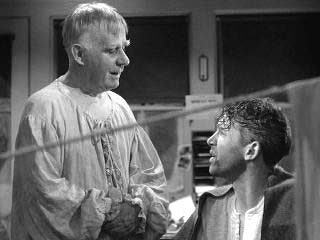
You Are Needed and Loved

Meditation on Hebrews 12:1-2

Shared at First Presbyterian Church of Uhrichsville

Thank-You Gathering for Retired Pastors

Karen Crawford, The Presbyterian Church of Coshocton

Oct. 24, 2019

bible-verse-christian-hebrews-12-1-2.jpg

Hello, dear friends!

I am honored to be here with you today at this special gathering of pastors. My name is Karen Crawford and I serve the Presbyterian Church in Coshocton. I am here to say on behalf of the Muskingum Valley Presbytery, “Thank you for your ministry.”

I look forward to meeting you all and getting to know you better. I want to hear your stories. I have a few to tell you, too. I am new to this presbytery and to Ohio. In fact, this is my first time at this church. I am not even sure that I am pronouncing the name of the town correctly. I used my GPS to get here. And that can be pretty scary in Ohio to trust GPS, as you well know, where the shortest way to get somewhere may be straight up a dirt hill, in a forest, with fog and darkness rolling in and deer leaping across the road. Did I mention that I know this from experience?

This is what happened when Jim and I and our son, Jacob, moved here from Melbourne, Florida, in January, for me to accept the call to the Coshocton church. We were a caravan of three cars, three adults, and a dog and a cat, and had been on the road for 2 long days. We took the 541 exit from 77 north, instead of continuing on up to the Newcomerstown exit. Next thing I knew we were heading straight up a hill on a dirt road. I was driving my mini-cooper and was pretty sure that I was going to get stuck. My first experience with my new church was going to be calling a member of the PNC with a tractor to come tow me out. Well, we went up a hill, down, up again, wound around, and came to kind of a clearing. And there was this adorable little white chapel in the woods. Don’t ask me the name of the church. And I still have no idea where we were. Jim, in the first car, paused in front of the chapel, and I wondered why we were stopping. Later he told me that he was tempted to get out of the car, then, and announce to Jacob, “We’re here! This is your mother’s new church!”

Our adventures continue.

When Matt Sklonik told me that our presbytery was planning a lunch for retired pastors, I had two initial thoughts. One was, “Isn’t that nice?” What a wonderful presbytery to show its appreciation for those who have touched hearts and changed lives in ways they could never know.  My other thought, when Matt asked me to come and speak today was, “I didn’t know pastors retired.” Every retired pastor I know continues to be faithful to God’s call to the ministry of word and sacrament long past what others might say was retirement age.

My husband, Jim, has been honorably retired for 10 years. When he told me that last night, I couldn’t believe it has been that long! But you wouldn’t know that he is retired. He is busy! He is sorry he couldn’t be here today. He is on his way to his high school class reunion in Myrtle Beach, South Carolina.  In his “retirement,” Jim has served Presbyterian and a few UCC congregations in Minnesota, Florida, Pennsylvania, and Ohio as interim or supply. He has preached and led worship for at least 5 churches in our presbytery since we arrived in January. He has been an active supporter of my ministry, assuring me of my gifts and calling, before I saw those gifts in myself. I wouldn’t be a pastor if he hadn’t encouraged and supported me. He has served with me in Florida as an unpaid parish associate, played guitar in a praise band and for my preschool chapel, taught adult Sunday school and assisted with new member classes, served as a liturgist, cooked and washed dishes for potlucks and helped to host dinners in our home.  He remains active in presbytery and has worked on presbytery committees, such as CPM, Finance, and Council. In addition to supply preaching where we are now, he works 20 hours or more each week at the Coshocton library.

john-8-vs-32.jpg

How fitting it is that we gather just a few days before Reformation Sunday, when some of us will read from John 8 and hear Christ’s reassurance that His followers will know the truth and the truth will make us free. This is the message I have to share with you today. We are still Christ’s beloved, you and I, saved by grace, through faith and not by our works, in case some of us might worry that if we are no longer working full time in a parish, then we are no longer valuable to the Lord and Christ’s Church. We are God’s handiwork and were created for good works that God has ordained. Those good works may be simple acts of kindness that the Spirit will lead us to do every day of our lives.

Yes, many churches are struggling today. We are not as big as we used to be, as a presbytery or denomination. We aren’t as wealthy as we used to be. The churches need us even more, but at the same time, have fewer resources to pay pastors and staff. Many of you have served smaller churches and have been willing to accept lower pay than you could have received leaving this area, because you love the Church and the Lord. This is a generous and gracious gift you have given and continue to give, those of you who serve, like my husband does, as interim or supply pastors, though you are technically “honorably retired.” But don’t small churches deserve excellent spiritual leadership, too? And doesn’t the call to follow Jesus as an ordained minister of word and sacrament last a lifetime?

We don’t know what tomorrow will hold. We don’t know the shape our ministry will take in years to come or the future of our small, but mighty country churches, ready to rescue new pastors driving minis, stuck on dirt roads in the forest, with fog and darkness rolling in. But we know that today, tomorrow and forever, we are a forgiven people, called to witness to the Kingdom of God by preaching justice, speaking up for the poor, hungry, marginalized, and oppressed, and sowing seeds of kindness and peace. Every day, we trust that our Savior has made his home in us and has a plan for us. We abide in him and he in us. And the Holy Spirit that is working to reform the Church of every age is still transforming each one of us, more and more.

My friends, God is not finished with you, yet!  And in this presbytery, you are wanted and needed for your wisdom and experience, knowledge and faith, humor and encouragement as colleagues in ministry, friends, storytellers, teachers and mentors, sisters and brothers, fellow laborers in the Lord.

I need you, because I am definitely out of my comfort zone! And I want to learn from you and hear your stories of perseverance through difficult times for the church—because more difficult times lay ahead.

You have made a difference! You are making a difference. Thank you for sharing your gifts and talents, nurturing hope, faith, love, and grace. Thank you for shepherding the Church of Jesus Christ in times of sorrow and joy, growth and loss, brokenness and unity, conflict and peace.

The Cloud of Witnesses that has surrounded us is still calling to us, cheering us on to keep running the race that has been set before us, following in the footsteps of the author and finisher of our faith, who for the sake of the joy that was set before him endured the cross, disregarding its shame. And has taken his seat at the right hand of the throne of God.

May you be blessed by today’s gathering of pastors. May you be embraced by new friendships and strengthened by renewed friendships. May you be refreshed by the Spirit and encouraged in your ministry for the Lord.


Let us pray. Holy One, thank you for gathering us together in your name to show our appreciation for those who have served you and continue to serve you faithfully. Thank you for your love and forgiveness for us sinners. Bless those who organized this luncheon and prepared our food. Help us to always honor your call on our lives and never forget the cost of our salvation—the price of the cross—and the promise of abundant and eternal life with you. May we continue to listen for your voice and gratefully obey, guided by Your Spirit to serve with joy for all of our days. In Christ we pray. Amen.

We Are All Sinners, Saved By Grace


Meditation on Luke 18:9-14

The Presbyterian Church of Coshocton

Oct. 20, 2019

42114-pharisee-tax-collector.800w.tn.jpg 

He also told this parable to some who trusted in themselves that they were righteous and regarded others with contempt: 10 “Two men went up to the temple to pray, one a Pharisee and the other a tax collector. 11 The Pharisee, standing by himself, was praying thus, ‘God, I thank you that I am not like other people: thieves, rogues, adulterers, or even like this tax collector. 12 I fast twice a week; I give a tenth of all my income.’ 13 But the tax collector, standing far off, would not even look up to heaven, but was beating his breast and saying, ‘God, be merciful to me, a sinner!’ 14 I tell you, this man went down to his home justified rather than the other; for all who exalt themselves will be humbled, but all who humble themselves will be exalted.”


Did I tell you my mom is here? Her name is Elaine. She arrived Tuesday night, and I have been taking her around town, eating at the Warehouse, The Mill, and Bob Evans, getting Buckeye ice cream at Medberry Market–$1.50 for a kid’s cone and it’s a lot of ice cream! Checking out the shops of Roscoe Village. Buying chocolate and peanut butter fudge at the General Store. Stopping at Aldi’s and Buehler’s, taking an awesome tour of the library. Coming to choir practice and doing home visits and home communion with me. And today, we will get to experience our fall picnic, corn maize, hayride, and campfire for the first time. I have heard we are back in the low 70s this afternoon! That’s going to feel good after a chilly week. Living in Florida for almost 3 decades, if it is below 80, Mom feels cold.

Weather aside, she understands, why I like it here so much–why Coshocton is good for me and my family.

Thank you for your warm welcome for her. I don’t think she expected that you would treat her like you already know her, though she is an outsider, a stranger. She has received many hugs. You don’t treat her like a stranger, because you know me.

She can see that I love you and that you accept me as your pastor and friend. You accept that my care and concern for you, for the whole church, are real. We are learning from one another as we hear each other’s stories. We have different views and expectations at times, just because we have lived in different places, have had different experiences and because we have different callings.

You know that I want to be a blessing to you—to help you heal from your wounds, find peace and comfort amidst the chaos of life, to challenge you with God’s Word and help you grow in love and service, faith and confidence in who you are in Jesus Christ. I want to help you take some risks and step out of your comfort zone, for the sake of the Lord and Kingdom growth and for your well-being and the well-being of your community. And you know that I need your help and support, so that I may be faithful to God’s call. And that we both must trust the Lord to lead us to minister together with love.

I have found kindness here. I have felt the grace of God in this place. You could have treated me like an outsider. That would be the human temptation when we meet a stranger who doesn’t know all our history and traditions and all our relationships, joys and losses. But the love and grace of God for us lead us to think and behave differently than the world would have us live. The Spirit changes us, more and more, as we embrace the God who is with us, helping us every day.

Our lives are intimately intertwined—you, me and our community. We have a common ancestry of dust, breathed into life by the same God. We are all sinners, in the hands of a loving God, changed and changing, made new! Saved by grace.


***


Today’s passage in Luke 18, beginning at verse 9 is about the importance of humble prayer, realizing our need for God’s grace and how we could lose sight of that and become prideful of our own religious practices, forgetting our faith–everything we have– is a gift from the Lord. It follows a parable about our need to be persistent in our prayer and never give up. The widow keeps asking for justice from the unjust judge—who turns her down repeatedly, until finally he gives in, saying, “Though I have no fear of God and no respect for anyone, yet because this widow keeps bothering me, I will grant her justice, so that she may not wear me out by continually coming.” And the Lord says, “Listen to what the unjust judge says. And will not God grant justice to his chosen ones who cry to him day and night? I tell you, he will quickly grant justice to them. And yet, when the Son of Man comes, will he find faith on earth?”

Today’s passage, starting at verse 9, begins by Luke explaining the purpose and meaning of the parable. “He also told this parable,” Luke says, “to some who trusted in themselves that they were righteous and regarded others with contempt.” Notice that the parable is for “some,” and yet here it is in the New Testament, which means the lesson is NOT just for some; it’s for the whole Church, for all people who sincerely desire to follow Jesus and be more like Him.

The Pharisee comes to the Lord’s House, in Luke 18, to be reassured that he is wonderful—better than other people—and have everyone see him as wonderful. Yet, he is disconnected, uncaring, standing apart from others he considers unclean. He believes that God favors him because he isn’t a thief, a rogue, adulterer, or the person praying next to him, “this tax collector.”

“I thank you, God, that I am not like other men,” the Pharisee says, but the Greek word translated men refers to “the people of the land”—unrighteous commoners despised by those who strictly observe the law. The Pharisees, says NT scholar Kenneth Bailey, “thought of the law as a garden of flowers. To protect the garden and the flowers, they opted to build a fence around the law,” going beyond the requirements to ensure that no part was violated…The written law only required fasting on the annual day of Atonement. The Pharisees, however, chose to fast two days before and two days after each of the three major feasts (or 12 days a year!) But this pious man announces to God and to others (as he is praying aloud) that he puts a fence around the fence. He fasts two days every week!

Also, the faithful in the OT were commanded to tithe, or give 10 percent of the increase, from their grain, oil and wine. In NT times, the rule became that the faithful must give 10 percent of the increase of everything that “was used for food, watched over, and grows from the soil.” But this Pharisee beats all others in his show of devotion and generosity to God; he tithes from all that he possesses!

But the way the Pharisee is speaking to God is not prayer as Jesus taught us. How we pray reveals what we believe about the Lord and the condition of our hearts. It shows whom we serve, and how we feel about ourselves and others.

Prayer, even for those whose hearts are in the right place, is as challenging for us as it was for the disciples in Jesus’ time. In Matthew 6:9-13 (NRSV): Jesus says, when his disciples ask for help, “Pray then in this way, ‘Our Father in heaven, hallowed be your name. Your kingdom come. Your will be done, on earth as it is in heaven. Give us this day our daily bread. And forgive us our debts, as we also have forgiven our debtors. And do not bring us to the time of trial, but rescue us from the evil one.

And in Luke 11:1-4 NRSV, Jesus “was praying in a certain place, and after he had finished, one of his disciples said to him, ‘Lord, teach us to pray, as John taught his disciples.’ He said to them, ‘When you pray, say: Our Father in heaven, hallowed be your name. Your kingdom come. Your will be done on earth as in heaven. Give us each day our daily bread.  And forgive us our sins, for we ourselves forgive everyone indebted to us. And do not bring us to the time of trial.’”

So, what of the tax collector, despised not just by this hypothetical Pharisee of a parable, but despised by many Jewish people? They are working for the enemy—supporting their families by collecting taxes from their neighbors for the oppressive Roman Empire. Many, in fact, are greedy and keep a large portion of what they collect for themselves. Luke’s earliest audience would have reacted with astonishment for a tax collector to be seen as a model of humility and made righteous because of his godly attitude and actions. Just as last week’s gospel featured an enemy of the Jewish people, a Samaritan, as the model of gratitude and humility as the only one of 10 lepers to return to Christ to offer his thanks and praise.

Sisters and brothers, Luke’s message is for all the Church and not just for some who might be tempted to trust in themselves, rather than trust in the Lord. We are not righteous because of what we do, our religious practices, which might lead us to arrogance. The love and grace of God for us lead us to think and behave differently than the world would have us live. The Spirit changes us, more and more, as we embrace the God who is with us, helping us every day to be gentle and merciful, as the Heavenly Father is gentle and merciful with us.

Our lives are intimately intertwined, connected—you, me and our community.

We are all sinners, in the hands of a loving God, changed and changing, made new! Saved by grace.


Let us pray. Heavenly Father, we thank you for the holy mystery of your grace, for sending your Son to be our Savior, when we were perishing in our sins. And then, for sending your Spirit to empower us to live as your people, showing mercy and grace to others. Help us to be faithful to the end, to serve you with our tithes and our lives, and to pray as the humble tax collector prayed, “God, be merciful to me, a sinner!” In Christ we pray. Amen.

 

Practical Resources for Churches

Everyone has a calling. Ours is helping you.

Consider the Birds

Pastor Karen shares thoughts on faith, scripture, and God's love and grace revealed through backyard wildlife.

F.O.R. Jesus

Fill up. Overflow. Run over.

Becoming HIS Tapestry

Christian Lifestyle Blogger

Whatever Happens,Rejoice.

The Joy of the Lord is our Strength

Stushie Art

Church bulletin covers and other art by artist Stushie. Unique crayon and digital worship art

The Daily Post

The Art and Craft of Blogging

WordPress.com News

The latest news on WordPress.com and the WordPress community.