Love Me and Keep My Commandments


Meditation on Exodus 20:1-17

March 4, 2018

Merritt Island Presbyterian Church

Slide38

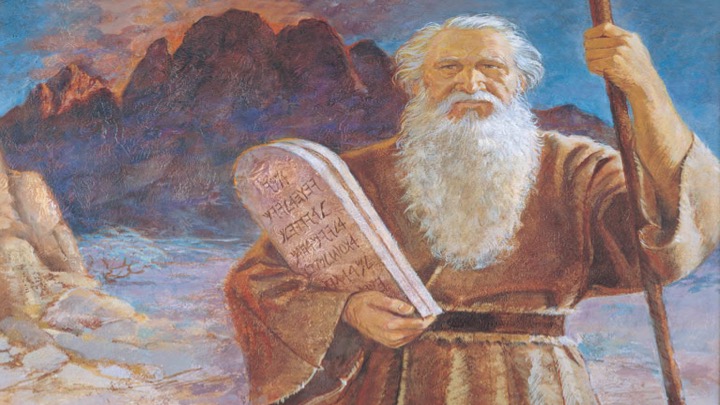
    20 Then God spoke all these words: I am the Lord your God, who brought you out of the land of Egypt, out of the house of slavery;  you shall have no other gods before[a] me.  You shall not make for yourself an idol, whether in the form of anything that is in heaven above, or that is on the earth beneath, or that is in the water under the earth.  You shall not bow down to them or worship them; for I the Lord your God am a jealous God, punishing children for the iniquity of parents, to the third and the fourth generation of those who reject me,  but showing steadfast love to the thousandth generation of those who love me and keep my commandments.   You shall not make wrongful use of the name of the Lord your God, for the Lord will not acquit anyone who misuses his name.  Remember the sabbath day, and keep it holy. Six days you shall labor and do all your work. 10 But the seventh day is a sabbath to the Lord your God; you shall not do any work—you, your son or your daughter, your male or female slave, your livestock, or the alien resident in your towns.  11 For in six days the Lord made heaven and earth, the sea, and all that is in them, but rested the seventh day; therefore the Lord blessed the sabbath day and consecrated it.  12 Honor your father and your mother, so that your days may be long in the land that the Lord your God is giving you.  13 You shall not murder.[c  14 You shall not commit adultery.  15 You shall not steal.  16 You shall not bear false witness against your neighbor.  17 You shall not covet your neighbor’s house; you shall not covet your neighbor’s wife, or male or female slave, or ox, or donkey, or anything that belongs to your neighbor.

*** 

The Preschool hosted a rummage sale Friday and Saturday.  They offered all sorts of things at bargain prices–glasses and wood or ceramic kitty cats; a clock that played Mozart or Vivaldi on the hour. Lamps and tables. Clothes and shoes. Toys and golf clubs and golf carts. An ice cream maker–barely used– or a waffle iron, still in its box. It was, as they say, “Everything but the kitchen sink,” only they had a kitchen sink, too, thanks to the Ritters!  So far, the sale has raised more than $400 for this important ministry to young families in our community.

Slide26

I went on Friday and marveled at the “treasures” that people choose to keep or give away. I dropped off my donations, and brought home a few more, much to my husband’s amusement. I bought a beautiful oriental carpet and a ceramic water pitcher with purple iris  that reminds me of my yard in York, PA, years ago and all the perennials, bulbs and iris that bloomed every spring.

The items are even more special to me because they belonged to friends.  I will always think of them affectionately when I see the carpet and water pitcher in my home.

I will keep them close to my heart.

***

The people of God spend 11 months at the foot of Mount Sinai  waiting for Moses to bring God’s Word to them. They arrive in the wilderness of Sinai on the “third new moon after the Israelites had gone out of the land of Egypt.” Time is marked by how long it has been since their release from captivity, just as the Lord identifies himself in our passage today by recalling what he has done for them thus far, I am the Lord your God, who brought you out of the land of  Egypt, out of the house of slavery.”

Slide45

     This is a God who hears the cries of his people and mercifully responds. In the chapter before this one, God compares himself to an eagle in his rescue of his people. He says, “You have seen what I did to the Egyptians, and how I bore you on eagles’ wings and brought you to myself.” The image of God as an eagle carrying His people is later picked up by the prophet Isaiah in 40:31– “but those who hope in the LORD will renew their strength. They will soar on wings like eagles…” Now, at the foot of Mt. Sinai, God is drawing his people closer to himself, asking them to listen to his voice and keep his covenant so they may have the promise of being his “treasured possession.”

    What we call The Ten “Commandments” are literally in Hebrew, “10 Words”– ha-d’varîm. The word for “keep” appears in both the Deut. 5 and Exodus 20 accounts of the giving of the Ten Commandments. This keepshamar in Hebrew– means “to  hold onto, care for, watch, guard and protect,” such as when God places a human being in His Garden in Genesis and tells him to  “till it and keep it.” Shamar appears again when Cain kills Abel. God asks Cain where Abel is. Cain answers, “I don’t know.  Am I my brother’s keeper?”

Slide53

When the Lord calls us to love him and keep his commands or words he doesn’t mean follow them halfheartedly, as we might follow laws made by human beings. These “words” are a covenant between God and his people; this is the way of life God desires for the health and wellbeing of the community. These 10 words, Jesus says in Matthew 22:34-40, are summed up in one word –LOVE.  Love God with all your heart, soul and mind, and love your neighbor as yourself.

The first commands reveal our relationship with the Lord–that he alone is the one we worship and love, most of all. Nothing in this world should ever take his place. The Sabbath figures prominently in this list, taking up what editors have divided into 3 verses. Not only are we to remember the Sabbath and keep it holy, we are told how we may not spend this day; we may not work! This places our relationship with the Lord above what we do for a living; for it is the Lord who has created all things. Everything we have has come to us from His grace. What’s more, we observe the Sabbath because God showed us the way; he rested on and “blessed” the seventh day.

The commands that follow the Sabbath reflect our relationships with others. First, our parents–honor them, with the promise of long life.  Then, our neighbors. The command not to murder means much more than that; we must do everything we can to guard and preserve our neighbor’s life.  For yes, Cain, we are our brothers’ and sisters’ keepers!  The command against adultery means we should love our spouses and hold sacred the covenant of marriage.  The command against “false witness”– means that we should be honest and kind in our communications with others,  only using our words for good. The warning against wrongful use of God’s name doesn’t just mean we shouldn’t swear; it means we should always have the right attitude toward God and speak of him with reverence, gratitude and humility.

It’s interesting that stealing and coveting are two separate commandments. They seem to me to stem from the same sin of greed. Jesus warns his followers to be on guard against greed in Luke 12:15. “Take care,” he says, “For one’s life does not consist of the abundance of possessions.” The one who steals acts on the sins of greed and coveting. It is also interesting that coveting is the last command on the list–a prominent position– and that there is so much detail about what not to covet– not your neighbor’s house, wife, male or female slave, ox, donkey, or ANYTHING that belongs to your neighbor. Wouldn’t it have been enough to say not “anything that belongs to your neighbor”? Coveting must be a big problem for the ancient people of God, as is idolatry, also in a prominent position at the top.  

      God’s people still struggle to live in obedience to His commands. Let us remember that keeping them is a matter of the heart. If we love him, we show our love by our obedience, as Jesus says in John 14:15.

There are blessings for those who keep His commandments. We have the promise of God’s love to the “thousandth generation.”  And there are other blessings, says Psalm 119, when we “delight” in God’s law and “rejoice in following his statutes as one rejoices in great riches.” We are strengthened and sustained. We receive wisdom and understanding, for God’s word is “a lamp unto our feet, a light unto our path.” We are kept from sinning when we “hide” God’s words in our heart and meditate on them. “How can a young person stay on the path of purity?” the psalmist asks. “By living according to your word. I seek you with all my heart; do not let me stray from your commands.”

***

I left the rummage sale Friday encouraged to see our congregation’s support of our preschool ministry. Thank you, friends, for your kindness and generosity! It’s not too late for folks to find a “treasure,” as Pat Smith says, to take home. The sale continues today in the fellowship hall after worship. The Ritters’ sink is still available!

Maybe you will find something that has special meaning to you. I hope that what you choose and keep close to your heart will remind you of this message about keeping God’s commands.

Let us delight in his teachings, his Words. Let us rejoice in them, hiding them in our hearts, as the psalmist did, so that we might not sin. When we obey the Lord, we show our love for Him.  He has always been faithful to us, hearing our cries, answering our prayers with mercy and grace. He has sent His Son to rescue us and reconcile us with Him. He will love us always– to the “thousandth generation!”  And when we are weary, he will lift us up on wings like eagles.  And we will soar with Him.

Let us pray.

Holy One, we confess that we are often disobedient. We don’t feel like loving all our neighbors all the time. We often struggle with discontentment, coveting what others have, wanting more. Forgive us, Lord. Thank you for your love and mercy and for using ordinary people to do your work. Thank you for the power and guidance of your Spirit and the generosity of volunteers and staff who give of themselves and their resources so that your kingdom may grow. Thank you for the children you have brought to our preschool. Please, Lord, we would welcome even more for our preschool and church! Thank you for the Scouts and the Academy with whom we share our facilities and campus. May we be a blessing to one another and dwell together in peace and unity.  In Christ we pray. Amen.

I Will Bless Her


Meditation on Genesis 17:1-7, 15-16

Feb. 25, 2018

Merritt Island Presbyterian Church


When Abram was ninety-nine years old, the Lord appeared to Abram, and said to him, ‘I am God Almighty; walk before me, and be blameless.  2And I will make my covenant between me and you, and will make you exceedingly numerous.’ 3Then Abram fell on his face; and God said to him, 4‘As for me, this is my covenant with you: You shall be the ancestor of a multitude of nations.  5No longer shall your name be Abram, but your name shall be Abraham ; for I have made you the ancestor of a multitude of nations.  6I will make you exceedingly fruitful; and I will make nations of you, and kings shall come from you.  7I will establish my covenant between me and you, and your offspring after you throughout their generations, for an everlasting covenant, to be God to you and to your offspring after you.15 God said to Abraham, ‘As for Sarai your wife, you shall not call her Sarai, but Sarah shall be her name.  16I will bless her, and moreover I will give you a son by her. I will bless her, and she shall give rise to nations; kings of peoples shall come from her.’


Slide29


Are any of you swimmers? I used to be on a community swim team when I was young. Much to my mother’s disappointment, I don’t really swim anymore.

Something stirred me this week to remember learning how to do a back dive. Can any of you do a back dive? We were lined up at the high diving board in the deepest end of the pool. The coach taught us how to do the dive, step by step, with one of the students modeling each position. Then, one of the lifeguards climbed the ladder and demonstrated a magnificent back dive.

Slide25

And then it was our turn to climb the ladder, one by one. Each of us went out to the end of the board where one of the lifeguards waited to serve as our spotter. She or he made sure that we were in the right position before we dove to keep us from hurting ourselves. One of the lifeguards waited in the pool for us at the ladder–ready if one of us may be in trouble in the deep water.

Slide26


Well, my legs shook every step up that ladder. I really didn’t want to do the back dive, for one, because I am afraid of heights. Just doing a regular dive off the high dive was hard enough for me. But also because there is a moment right before and after you jump that you really can’t see what is below when you do a back dive. You don’t have the same wide vision or control of a dive going straight ahead. You really have to have a lot of confidence that everything is going to be all right before you jump off a diving board backwards.

I thought of my diving experience when I was studying our gospel lesson this week. This reminds me of Jesus’ call to follow him — to take up our crosses, as he took up his cross for all of us. He has given us our mission–to bring the hope of his salvation to the world and to obedient to his will, though it might mean taking some risks, doing some things that are not easy, things we don’t even know how to do, yet, and may not think are possible. To reject the mission is to seek only what is comfortable, safe, pleasant and personally profitable for us. To reject the calling is to allow our hearts to be seduced into loving the things of this world more than God. The temptation is always for us to be people pleasers, as Paul says in Galatians 1:10, instead of God pleasers.

Slide32

But like the lifeguard who modeled the back dive, Jesus has already gone ahead of us and shown us how to live. He has already experienced everything we will experience–and more. We can trust him to be with us now and always to guide us every moment, every step — not just at the top on the diving board– or just watching from the side of the pool.

And if we flounder in deep waters–or maybe I should say, “when we flounder,” we will not be lost. Isaiah 41:10 says, “Fear not, for I am with you; be not dismayed, for I am your God; I will strengthen you, I will help you, I will uphold you with my righteous right hand.”


***

In our Genesis reading today, we are reminded that the God of the Old Testament hasn’t changed in his faithfulness or his expectations for his people to live in obedience to his Word. We learn that the God who requires Abram to walk “blamelessly” before him– to commit his way to the Lord–also longs to bless him.

Abram hears the voice of God and believes his promise, accepting the new identity God gives him–Abraham–the ancestor of a multitude of nations, though he is 99 years old and not yet a father. And he accepts the new name God has given Sarai, his 90-year old wife. She shall be Sarah and will give rise to nations and kings of peoples, though she has not yet been able to conceive.

Slide42

Abram believes the Lord when God says, “I will bless her and I will give you a son by her.”

He believes, in spite of the human impossibility and despite the many years of waiting he has already endured. For nothing is impossible with God!

The Lord first makes the promise of a child to Abram when he is 75, but before the blessing, he must go to a land that the Lord will show him. He leaves most of his family in his hometown of Ur, bringing only his wife and his brother’s son, Lot.

Abraham will continue to believe the Lord, though there will be more divine messages before the promise is fulfilled. Sarah finally gives birth to Isaac, a name meaning “He laughs.” “For God has brought me laughter,” she says, “everyone who hears will laugh with me.”

But God has a much bigger blessing in mind when he calls Abram and blesses him–just as God has a reason for his calling and blessings to us. God intends Abram to be a blessing to the world. This is what the Lord intends for us!

God tells Abram in Gen. 12, “I will make of you a great nation; And I will bless you; I will make your name great, And you shall be a blessing….And in you, all the families of the earth shall be blessed.”

The God of the Old Covenant and New remains faithful to us, showering us with blessings to share and be empowered to serve in Christ’s name. Paul in 2 Cor. 9:8 says, “And God is able to provide you with every blessing in abundance, so that by always having enough of everything, you may share abundantly in every good work.”

This is a God who longs to bless everyone. Jesus says in John 10:10, “I came that they may have life, and have it abundantly.”

***

My swim team days are over. Did I ever do the dive? Yes, once or twice. That was enough for me! I was happy to find this week that my old community swimming pool in Damascus, MD, is still going strong.

Slide57

Slide58


The swim team, the Damascus Dolphins, actually looks larger than when I was a kid.

     But is it my imagination, or does the world seem different today? Has it become a more dangerous, violent place for children?

The biggest thing I worried about in high school was doing my homework, passing math, and finding time to be with my friends. I never once thought a shooter would come and take the lives of classmates and teachers. But this scenario has played out, over and over, in my own children’s lives. Columbine High School in 1999.

Slide59

Slide60Slide61

Virginia Tech in 2007.

Slide62Slide63


Sandy Hook Elementary in Dec. 2012.

Slide64Slide65

A community college in Roseburg, Oregon in 2015.

A high school in Parkland, FL on Ash Wednesday.

Slide69Slide70

In dark days like these, the Church needs to remember Christ’s call to take up our crosses and follow Him. What is the cost of discipleship? That means risking our very lives to do what Christ would have us do. Is our thinking and what we value so firmly rooted in the things of this world that we can no longer hear the voice of God, crying out for us to change? We have to take responsibility for who we have become, and stop looking for someone to blame. We are a society who would rather fight than reconcile. We embrace divisiveness. Brokenness has become our normal. We would rather “solve” our conflicts by ending the relationship instead of listening, learning from each other, and forgiving one other.

Slide71

     Listen to the words of Paul to the Philippians in 2:3, “Then make my joy complete by being of one mind, having the same love, being united in spirit and purpose. Do nothing out of selfish ambition or empty pride, but in humility consider others more important than yourselves. Each of you should look not only to your own interests, but also to the interests of others.…”

Slide78

Psalm 127:3 says every child is a gift, a blessing from the Lord! May we never take life for granted! One child–Isaac, a name that means “He laughs”–made Abram Abraham, the father of many nations. One little boy made Sarai Sarah and gave rise to nations.

Our God who raised Jesus from the dead can do much more than what we know is possible! God LONGS to bless us, as he did Abraham and Sarah, with new identities. In Christ, we are a new creation. He offers each one of us new lives by his transforming grace. May God grant the Church the strength, wisdom and courage to truly be the blessing God has called her to be– for all the families of the earth, an instrument of reconciliation, healing, and peace.

Slide79


Let us pray. Holy one, we have become an angry, violent people, embracing conflict and brokenness. Forgive us, for this isn’t your will for us. It isn’t the way of the cross. Give us humble hearts, seeing others as more important than ourselves. Teach us how to listen and learn from one another, how to love and forgive. Heal what is broken in our homes, schools, churches, and communities, especially in the wake of another tragic shooting. We thank you for your love for us and your longing to bless us and make something beautiful of our lives, new creations in Jesus Christ. Lead us to be a blessing, as Abram and Sarai were, for all the families of the earth. In Jesus’ name we pray. Amen.

Angels in the Wilderness

Meditation on Mark 1:9-

Feb. 18, 2018

First Sunday in Lent

Merritt Island Presbyterian Church


9 In those days Jesus came from Nazareth of Galilee and was baptized by John in the Jordan.  10And just as he was coming up out of the water, he saw the heavens torn apart and the Spirit descending like a dove on him.11And a voice came from heaven, ‘You are my Son, ‘the Beloved;  ‘with you I am well pleased.’ 12 And the Spirit immediately drove him out into the wilderness.  ‘13He was in the wilderness for forty days, tempted by Satan; and he was with the wild beasts; and the angels waited on him. 14 Now after John was arrested, Jesus came to Galilee, proclaiming the good news of God, 15and saying, ‘ ‘The time is fulfilled, ‘and the kingdom of God has come near;  ‘repent, and believe in the good news.’ 


***

They sang about two birds on a hill. One named Jack. One named Jill. Fly away Jack. Fly away Jill. Come back, Jack. Come back, Jill! Then they were teapots. “Tip me over and pour me out!”

Slide028

Our Tuesday morning chapel with the 3, 4 and 5 year olds was the highpoint of my week. We finished our month-long study of Joseph with motion songs and prayer.

Slide029

Then teachers, other staff and volunteers from the church joined with me to lead the children to make “Joseph coat” crafts with grocery bags, paper plates, and color by number sheets.

We even made Joseph puppets on tongue depressor sticks. I was so blessed on Tuesday with the children and all those who wanted to teach them about God’s love and faithfulness. It felt as if angels were all around!

The children learned through drama, storytelling and crafts how Joseph suffered many challenges and dark days–his own brothers’ stealing the special coat that was a symbol of his father’s love. They throw him in a pit and leave him for dead. Then Joseph is sold into slavery and taken to Egypt. While there, though he serves his master faithfully, he is falsely accused of a crime and thrown into jail where he languishes for years in another kind of wilderness. But it is all part of God’s plan to move him into a position where he can interpret Pharaoh’s dreams, with his God-given gift. He warns of years of great famine to come. He saves the lives of thousands, including his own brothers, who come to Egypt for help. And Joseph, with God’s gift of mercy and grace, is able to forgive his brothers, saying in Genesis 50:20,

20 Even though you intended to do harm to me, God intended it for good, in order to preserve the lives of many people, as he is doing today.”

***

The wilderness is a place of suffering and testing for Joseph–and for Jesus in our gospel in the first chapter in Mark today. Jesus goes to the wilderness to be baptized in the Jordan by John. Like the account in Luke and unlike the baptism in Matthew and John, the voice that speaks, speaks directly to Jesus, assuring Jesus of his relationship to God the Father, who says, “You are my Son, the Beloved; with you I am well pleased.”

Slide055


Christ’s identity as the Son is declared from the opening first verse of the book of Mark, “The beginning of the good news of Jesus Christ, the Son of God.” His identity is proclaimed at his Transfiguration on the mountaintop, and finally, at the cross, when a centurion watches him die, and says, “Surely this man was the Son of God!”

What follows the baptism is the Greek word for “immediately” —euthys— the first occurrence of one of Mark’s favorite words. He uses euthys 41 times, while the word is only found 10 other times in the entire New Testament. You won’t be able to count the 41 uses of euthys ­in the English text of Mark because translators have used other synonyms or phrases to avoid Mark’s constant repetition of the same word.

But this actually takes away from that sense of speed, urgency and movement that Mark is trying to convey. Jesus is immediately driven by the Spirit into the wilderness. The strong verb for driven will be used again when Jesus drives or casts out evil spirits from the possessed. Jesus is already in the wilderness for the baptism, but now he is in the wilderness, deeper still.

Slide062

He is separated from all human beings. This is no refreshing retreat, no sweet time with God. It is the opposite–a time when he feels far from God as he is “tempted” by Satan. This is usually when temptation comes–when we feel separated from the Lord. These 40 days are a test to prepare him for his ministry and to show us how to withstand temptation and trials. Hebrew 4:15 tells us, “For we do not have a high priest who is unable to sympathize with our weaknesses, but we have one who in every respect has been tested as we are, yet without sin.”

Slide063

These 40 days take us back to Noah’s ark in Genesis, when water covered the earth. The frightening, wilderness experience leads to God’s covenant with every living creature, and the sign of God’s promise never to destroy all flesh on earth again–a rainbow.

The 40 days take us back to the story of Elijah in 1 Kings 19:8, who was fed with bread from heaven, but then journeyed through the wilderness without any food for 40 days to the mountain of God.

Slide069

Christ’s 40 days of testing take us back to the Israelites’ exodus from captivity in Egypt to wander in the wilderness for 40 years.

Slide070

The wilderness is a dangerous place for the Israelites and Jesus, who are with “wild beasts.” Deut. 8:15 says, “He led you through the vast and dreadful wilderness, that thirsty and waterless land, with its venomous snakes and scorpions.” Christ’s testing moves us forward to “a new Exodus, a new way of salvation,” a gracious gift from the same loving God who never leaves the Israelites, though they feel abandoned. In Exodus 17:7, they ask Moses, “Is the Lord among us–or not?” After experiencing the parting of the Red Sea and God feeding them with manna and quail, they still complain bitterly to Moses in Exodus 17:3, “ Why did you bring us out of Egypt, to kill us and our children and livestock with thirst?” God responds with gracious provision in 17:6-7, causing water to come from a rock so that all may drink.

Slide077

Absent from Mark’s account of Jesus’ testing is his fasting and the dialogue with Satan we remember from Matthew and Luke, beginning when Satan says, “If you are the Son of God, command these stones to become loaves of bread.”

Jesus answers Satan’s tests with God’s Word, as we should. “Man does not live by bread alone, but by every word that comes from the mouth of God.’ Jesus says. And, “Do not put the Lord your God to the test.” And, “Worship the Lord your God, and serve only him.”

What touches my heart in this brief, swiftly moving passage that starts with baptism and ends with Christ’s proclamation that the Kingdom of God has come near, is when Satan leaves and a weary Jesus is waited on– by the angels. You may not imagine angels as anything more than God’s messengers. Eternal beings, yet created by God, they were present when God created the world. In Job 38, the Lord answers Job out of a storm, saying, “Where were you when I laid the earth’s foundation? … while the morning stars sang together and all the angels shouted for joy?” While only 3 angels are named in the Bible — Gabriel, Michael and Satan, the fallen angel, angels are too numerous to count. Hebrews 12:22 speaks of “thousands upon thousands of angels in joyful assembly” in the heavenly Jerusalem of Mount Zion. Angels, in obedience to God, protect us from harm. Psalm 91:11-12 says, “He will command his angels concerning you to guard you in all your ways.”

What is meant by the angels “waiting on” Jesus in our Mark passage? The Greek word is diakonein; from which comes our word “deacon.” Bible scholar Joel Marcus says diakonein describes “the waiter’s task of supplying someone with food and drink,” though the word comes to mean ‘to serve’ more generally.

It makes me feel good to know that Jesus, whom God made a little lower than the angels when he emptied himself and took on our fragile human form, needed help from heavenly beings in the wilderness. And the angels were all around.

Slide084


***
Friends, we have begun our 40 days of Lent, a season when we seek to know God more and grow in love and grace.

Slide094

We scrutinize our overly busy routines and start carving away what we don’t really need to do. Come on, you know you are doing too much! As Jesus says to his friend, Martha, who demanded that Mary help her in the kitchen when Jesus came over for dinner, “Martha, Martha, you are worried and upset about many things, but few things are needed—or indeed only one.” Let us carve out times of quiet devotion, delightful moments with the Lord and His people.

Slide098

Let us also add on time to bless and serve–to minister like the angels that were with Jesus in the wilderness. And the angels that are always with me, especially during our preschool chapel. I am sure there are things you have wanted to do for the Lord, but you say that you don’t have time or energy to do them. Why not?

We live in a wilderness, now. The time between the resurrection and the fullness of God’s Reign. A time of joy and abundance, resting in God’s promises and steadfast love. But also a time of testing, hardship, and suffering. The good news is that the wilderness, as Israel discovered long ago, is where God is. For all our needs, for everything, we can trust Him. And his angels all around.

Slide107


Let us pray.

Holy One, we thank you for sending your Son, who experienced all the temptations and suffering that human beings can possibly experience, and yet did not sin. Come to us now in our wilderness journeys. Heal us body, mind and soul. For those who feel as if you are far from them, make your presence known. For those who feel you with them, reassure them of your love. Thank you for your angels all around us, protecting us from harm, at your command. Draw near to us, Lord, as we seek to draw closer to you throughout this Holy Season of Lent and beyond. Show us how we might change our routines so that we do only the things that you want us to do. Help us carve away the excess busy tasks and carve out more sweet, peaceful, healing time with you. Nourish us with your Word and Spirit. Stir us to bless and serve one another and reach out with your love and grace to children of all ages. Let us wait on them as if we are the angels who restored Jesus when he was weary in the wilderness. In Christ we pray.

The Power of the Beloved

Meditation on Mark 9:2-9

Feb. 11, 2018

Merritt Island Presbyterian Church

Slide004

2 Six days later, Jesus took with him Peter and James and John, and led them up a high mountain apart, by themselves. And he was transfigured before them,  3and his clothes became dazzling white, such as no one on earth could bleach them.  4And there appeared to them Elijah with Moses, who were talking with Jesus. 5Then Peter said to Jesus, ‘Rabbi, it is good for us to be here; let us make three dwellings, one for you, one for Moses, and one for Elijah.’ 6He did not know what to say, for they were terrified. 7Then a cloud overshadowed them, and from the cloud there came a voice, ‘This is my Son, the Beloved;  listen to him!’ 8Suddenly when they looked around, they saw no one with them any more, but only Jesus. As they were coming down the mountain, he ordered them to tell no one about what they had seen, until after the Son of Man had risen from the dead.

***

Slide018

Martin Luther King, Jr., loved to sing! His mother, Alberta, was the organist and choir director of Ebenezer Baptist Church, in Atlanta where her husband, Martin’s father, preached.

Slide019

The church was a short walk from their home at 501 Auburn Ave.  

Slide020

Alberta would take him to sing in other churches beginning when he was very young, receiving praise for, “I Want to Be More and More Like Jesus.”

Slide022

In 1939, he sang with his church choir at the Atlanta premiere of Gone With the Wind.

Slide023

When he was little, Martin befriended a neighbor boy who was white. When they started school at 6 years old, Martin had to go to a school for African Americans; his friend went to a “whites-only” school. Martin lost his friend soon afterward when the child’s father no longer wanted the boys to play together.

Martin suffered from depression much of his life. He struggled with his faith. His father was a harsh man who whipped him regularly. When he was 13, he told his Sunday school teacher that he didn’t believe in the bodily resurrection. After that, “doubts began to spring forth unrelentingly,” he said. Years later, he would say that the Bible has “many profound truths which one cannot escape.” Martin attended Morehouse College at 15, skipping 2 grades in high school. He earned a bachelor’s in sociology in 1947 when he was 18.

Slide027

He decided to pursue the ministry to “answer an inner urge to serve humanity.” He attended Crozer Theological Seminary in Chester, PA. While there, he fell in love with the daughter of a German immigrant woman. His friends talked him out of marrying her, saying, “an interracial marriage would provoke animosity from both blacks and whites” and would damage “his chances of ever pastoring a church in the South.” He broke off the relationship.

He married Coretta Scott on June 18, 1953, in Heiberger, Alabama.

Slide029

They had 4 children.

Slide032


At 25, he was called as pastor of the Dexter Ave. Baptist Church in Montgomery, Alabama.

Slide034


He pursued graduate studies in systematic theology at Boston University, earning a doctorate in 1955.

Slide035

In December of that year, the Rev. Dr. King would lead the Montgomery bus boycott after Rosa Parks, a young African American woman, refused to sit in the back of a city bus.

Slide036


The boycott lasts 385 days, ending when a U.S. District Court rules against segregation on all Montgomery public buses. Following the boycott came years of speeches and traveling, organizing and participating in protests and marches, working for Civil Rights for African Americans, including the right to vote and attend school with whites.

Slide038


He was arrested and jailed 29 times and stabbed in the chest by a letter opener in 1958 when signing his book, Stride Toward Freedom.

Slide041

Slide042

Slide043

His sermons criticized racial injustice and emphasized “man’s need for God’s love.” But more than his sermons, his speeches, filled with allusions to Scripture, will be long remembered. In his “I Have A Dream” speech, delivered in Washington, D.C., in 1963, he imagines a world where “justice is a reality for all God’s children.”

Slide046

“I have a dream that my four little children,” he says, “will one day live in a nation where they will not be judged by the color of their skin, but by the content of their character.” This bears echoes of Hebrews 4:12, The Word of God “judges the thoughts and attitudes of the heart,” and 1st Samuel 16:7, “For man looks on the outward appearance, but the Lord sees the heart.” Martin also quotes Amos 5:24, “We will not be satisfied until justice rolls down like waters and righteousness like a mighty stream.” He alludes to Isaiah 40:4-5, imagining a future when “every valley shall be exalted, every hill and mountain made low. The rough places will be made plain and the crooked places made straight. And the glory of the Lord shall be revealed, and all flesh shall see it together.”

While the “I Have A Dream” speech is the most famous of his speeches, his “Mountaintop” speech has strong connections with the Transfiguration account in Mark. Martin has received a “mountaintop-like” vision that has strengthened him to trust in the Lord for whatever may come. He makes this speech in Memphis, TN, in 1968, the night before his assassination.

Slide057

“We’ve got some difficult days ahead,” Martin says to those gathered in the Mason Temple, headquarters of the Church of God in Christ. He has just told them about the bomb threat on his plane that delayed his flight. “But it doesn’t matter with me now. Because I’ve been to the mountaintop. And I don’t mind. Like anybody, I would like to live a long life. Longevity has its place. But I’m not concerned about that now. I just want to do God’s will. And He’s allowed me to go up to the mountain. And I’ve looked over. And I’ve seen the promised land. I may not get there with you. But I want you to know tonight, that we, as a people, will get to the promised land. So I’m happy, tonight. I’m not worried about anything. I’m not fearing any man. Mine eyes have seen the glory of the coming of the Lord…”

Slide058

***

The disciples in our gospel today, have already seen Christ’s miracles- – the deaf can hear, the blind can see, the paralyzed begin walk. He casts out demons, feeds a hungry crowd with a couple of loaves and fish. Walks on water. Calms a storm. But still, his disciples don’t understand who he is and why he has come. The divine encounter follows Peter declaring that Jesus is the Messiah, but then rebuking Jesus when he foretells his own death and resurrection. The point of the vision is not to strike terror in the disciples’ hearts, though it does make them very afraid, but to reveal Christ’s identity and power as God’s Beloved Son.

Mountains are a biblical symbol for a holy place. Moses receives the 10 Commandments on a mountain. Elijah, in 1 Kings 19:17, in a time of despair, goes back to the mountain, and after wind, earthquake and fire, he encounters God in “a sound of sheer silence.” On the mountain with Peter, James, and John, Jesus’ clothes become a “dazzling white,” as he speaks with Moses and Elijah, reminding us of the radiance of Moses’ face in Exodus 34:29-35, when he had been talking with God– so bright that he has to cover it with a veil when he speaks to the Israelites.

Slide064

Peter, frightened and confused, doesn’t know what to say–but neither do the others. He is the only one with the courage to speak. And when he does, he asks what he can do to serve the Lord, Moses and Elijah with his gifts and talents. He offers to build 3 “dwellings” or “tabernacles” — holy places where each may be worshiped. That’s when the cloud overshadows them and things get even scarier.

Slide068

Clouds are symbols of life and hope in semi-desert regions. The Lord appears in a pillar of cloud in Exodus, leading the Israelites through the desert. Now in Mark, a voice comes from the cloud telling the disciples that Christ is “God’s Son, the Beloved.” This reminds us of his baptism, when Jesus comes up out of the river, the “heavens are torn apart,” the Spirit descends “like a dove,” and a voice declares, “You are my Son, the Beloved; with you I am well pleased.”


Slide070

But now the voice coming from the cloud commands the disciples to “listen to him.” Because they haven’t been listening, not in the full sense that it is meant. They haven’t believed what Jesus has said about what is to come. They haven’t always trusted him enough to do what he has said. Remember how Peter sinks in the water when he attempts to walk to Jesus?

Slide071


Jesus scolds them frequently for having so little faith. They will need help, even after this divine vision on the mountaintop, to trust and obey. They will have it when the Power of the Beloved comes to them at Pentecost like a mighty, rushing wind, with tongues of fire.

***

We pray for the Power of the Beloved as we ordain and install deacons and elders today, charging them with the work of loving and serving the Lord by loving and serving people. Your leadership isn’t like that of those elected to serve on boards of non-profits and businesses. Your job is to strive to be the greatest servant of all, imitating Christ.

Slide073

It’s a big responsibility. People will look up to you as an example. It will be a humbling experience, sometimes a thankless job. You will pour your whole self into it, investing all your heart, and you will get tired sometimes. Listen for God’s voice every day, study His Word, and pray you will learn to trust and obey the Lord.

You are not alone. Though you may still feel fearful and confused at times, like Peter, James and John on the mountaintop, The Power of the Beloved–our Savior– will strengthen and guide you as you seek to walk in His ways. Allow yourself to be transformed by Him. You will also have the power of the Beloved–all of us–who will surround you with our love and prayers. We are in this together.

Don’t try to make the church into a human institution. That’s always a temptation. Don’t measure its health or vitality with human measuring sticks, such as dollars in the bank. We are the Body of Christ; we belong to Him. Like Martin Luther King, Jr., our work goes beyond the walls of a church building. We sow seeds; we work for peace, justice, equality and reconciliation in our world. We are the voice for the voiceless, stewards of the gospel of grace.

***

Martin Luther King, Jr., loved to sing.

Slide075

His last words before he was shot on his hotel balcony on April 4, 1968, were spoken to his musician, Ben Branch, scheduled to perform that night at an event King planned to attend.

Slide076


“Ben, make sure you play “Take My Hand, Precious Lord” in the meeting tonight,” Martin said. “Play it pretty.”

This slideshow requires JavaScript.

Let us pray.

God of the mountaintop, Lord of the valleys, sea and sky, we praise you and thank you for Your Son, The Beloved, who has taken our sins away with his death on a cross. Thank you for the new and abundant life you offer to all who trust in Him. Thank you for your power that lives in and among us and guides and strengthens us to do your will. Help us, Lord, to listen, really listen to you, and be all that you desire us to be as a church and as individuals. Forgive us for living each day, not always in faith, but in fear and trembling, like the 3 disciples on the mountaintop with Jesus. Lead us to be your servants, stewards of your gospel of grace, working to right wrongs in the community, country and world– correct injustices, fight bigotry, oppression and discrimination, labor for human rights, and speaking up as the voice for the voiceless. In Christ we pray. Amen.


Listen to Your Children Praying

Meditation on Mark 1:29-39

Feb. 4, 2018

Merritt Island Presbyterian Church

***

As soon as they left the synagogue, they entered the house of Simon and Andrew, with James and John. Now Simon’s mother-in-law was in bed with a fever, and they told him about her at once. He came and took her by the hand and lifted her up. Then the fever left her, and she began to serve them. That evening, at sunset, they brought to him all who were sick or possessed with demons. And the whole city was gathered around the door. And he cured many who were sick with various diseases, and cast out many demons; and he would not permit the demons to speak, because they knew him.

      In the morning, while it was still very dark, he got up and went out to a deserted place, and there he prayed. And Simon and his companions hunted for him. When they found him, they said to him, ‘Everyone is searching for you.’ He answered, ‘Let us go on to the neighboring towns, so that I may proclaim the message there also; for that is what I came out to do.’ And he went throughout Galilee, proclaiming the message in their synagogues and casting out demons.

***

Kent Whitaker lay in his hospital bed fantasizing about vengeance on the man who had broken into his home, shot him in the chest, and shot and killed his 51-year-old wife, Tricia, and 19-year-old son, Kevin. He kept replaying the event in his mind, seeing the vague, ski-mask-wearing figure inside his darkened home.

       “All I could feel for this man was an incredibly deep and powerful hatred,” the 69-year-old Houston man says in a Feb. 2 story in The Washington Post. But he was a Christian and he knew the Lord wanted him to forgive.

Bible verses pushed into his thoughts, but brought little comfort. “We know that in all things God works for the good of those that love him,” he remembers. And, “Vengeance is mine; I will repay, saith the Lord.”

So he prayed.

“All I could do was ask God for help,” he says in a Jan. 12 story in American-Statesman. “When I did, the strangest thing that ever happened in my life occurred. I felt a warm glow flow over me. It lasted only a couple of seconds, but when it left, all the desire for revenge, all the hatred disappeared.”

Police initially believed that the Dec. 10, 2003 shooting was the work of a burglar interrupted during a break-in. But it was Kent’s older son, Bart, shot in the arm to divert suspicion, who had orchestrated the shooting with two friends. One was the getaway driver and the other pulled the trigger.

Slide19

On the night of the shooting, Bart invited his family to go out to dinner with him to celebrate his upcoming college graduation. But he wasn’t attending college. He wasn’t even enrolled—something he had hidden from his parents. It was a ruse to get them out of the house so that his friends could enter the house and lie in wait for their return.

For seven months after the shooting, Bart lived at home with his father, despite the police telling Kent that his son was a suspect and that his life may be in danger. Bart continued to deny involvement in the shooting and Kent didn’t know what to believe, at first. He told the police, “If I see something, I am going to tell you. But I am not going to abandon my son. I am going to stand with him through all of this even if he’s responsible.”

Slide20

Bart was convicted of 2 counts of first-degree murder and sentenced to death. His motive, the prosecution maintained, was a million dollar inheritance. His two friends were also convicted. The shooter was sentenced to life in prison. The getaway driver got 15 years.

Before the shooting, Kent had a good relationship with Bart, he says. They enjoyed long-distance bicycling– sometimes going on 100-mile hauls together. “Tricia and I were active parents,” he says. “We didn’t ignore things.”

Bart has struggled to explain why he did what he did. Untreated mental illness is the most likely explanation.  “I wanted revenge for being alive,” he told 20/20 in 2009. “And I blamed them for that. I blamed them for who I was instead of blaming me.” He went on.  “In order for me to be the person that my parents would love or that they did claim to love, I had to be better than I was…There was an idealized version of me and then there was me… So every time I failed at reaching that goal of mine, I felt like a failure.”

The plot with his friends was like a game of chicken, he said. He was waiting to see “who would back out before the final act.” No one did.

Slide23

Bart, now 38 years old, has been a model prisoner on death row. He earned a bachelor’s degree in English literature by mail, his father says, and is close to finishing his master’s degree with Cal State. But his thesis is in committee and probably won’t be cleared before he dies. The school has promised to award his degree, even posthumously.

His execution is scheduled for Feb. 22.

Slide29

Kent and members of his wife’s family are urging prosecutors to choose a life sentence instead of the death penalty. But time is running out. He says he can’t imagine “the last living part” of his family executed by the state. He says that his wife and other son would not have wanted Bart to be executed.

Kent says, “I have seen too much killing already.”


Slide13

***


Hearing Kent’s story brought tears to my eyes. It confirms what we know to be true—that mental illness even strikes good, Christian families, with parents who love their children. 

Slide31

Mental illness, in its many forms, is often a chronic disease that those who suffer with it –and those who love them—will have to deal with for the rest of their lives. Mental illness may have a genetic component and can run in families. While medical research has greatly improved diagnosis and treatment over the years, there’s still so much the medical community doesn’t know. But this we know for sure—left untreated, mental illness may devastate people’s lives.

Still, Kent’s story brings me hope that families torn apart by violence and wounded by mental illness can find healing, wholeness and purpose for every day through their faith and by serving the Lord.

Slide32

Simon Peter’s mother-in-law, living in his household, is suffering from a fever and bedridden in the first chapter of the gospel of Mark. What we would call a “shut-in” today, she misses Jesus’ teaching in the synagogue, when the people are amazed at his authority, unlike the scribes, and his power to cast the demon out of a man. In Peter’s day, people believed that fevers were caused by demons. This is why we hear how the fever “left her” when she experiences healing with the touch of the Master’s hand.

Slide33

No words are uttered in this healing scene, though we know that Simon and Andrew speak to Jesus about Simon’s mother-in-law as soon as they enter the home. This is a sign of their hope and faith that Jesus, indeed, can heal the sick and cast out demons, as they witnessed in the synagogue and will see many times as they follow Christ.

Her response to her healing is that she is compelled to serve the Lord, not because he tells her so, but because she is happy and believes that Jesus has made her well! Scholars say she becomes the first “deacon”—waiting on the Lord and his followers. If only the Bible would tell us her name!

Slide34

After Jesus casts the demon out of the man in the synagogue and heals the women with a fever, word gets out. The next thing we know, “the whole city” comes to Simon Peter’s home. Jesus casts out demons and heals many more.

Slide36

What follows is the most important thing–what I want you to remember from this message—the importance of prayer for God’s children. For God listens when we pray and he desires that we pray. Jesus rises early, while it is still dark, and without telling anyone where he is going, he walks to a deserted place to be alone with God. Even the Son of God needs the power of God for wisdom, healing, love, mercy and grace.

Slide37


Only after prayer alone, in a deserted place, is Jesus empowered to obey God’s will. As he teaches on the Sermon on the Mount in Matthew 5:5-7 that when we pray, it shouldn’t be as the hypocrites do—all show and fancy words to impress people. “But when you pray, go into your room, close the door and pray to your Father, who is unseen. Then your Father, who sees what is done in secret, will reward you.”

Jesus says to Simon and the others when they find him, “Let’s go to the neighboring towns, so that I may proclaim the message there also; for that is what I came out to do.’” Everywhere he goes, Jesus transforms lives—preaching, healing and casting out demons.

Slide45


***

Christ’s Spirit continues to transform hearts and lives today. We learn from Christ’s example that to make time to be alone with God in prayer is to be empowered to love, heal and proclaim the message of hope we are called to do. From Kent Whitaker’s testimony, we know that God can grant us the power to do what we cannot do in ourselves, including the power to forgive someone who has taken the lives of our loved ones.

Slide46

The bedrock of the clemency petition filed for Bart Whitaker is Kent’s forgiveness that came as a gift when Kent prayed. The petition argues that Bart has “changed his life” on death row. It includes multiple letters from death row inmates arguing on his behalf. One inmate says Bart has a “special affinity for helping guys with mental illness.” Another says Bart has an “uncanny ability to calm others on death row” and has inspired him and others to better themselves. Another says, “He is one of the best liked inmates on this farm by the guards and other inmates, and he has worked the hardest to rehabilitate himself. Killing him would be a crime because the system needs men like him out on the farms keeping everyone calm and looking forward.”

Kent says he is proud of the man his son has become in prison. If the Feb. 22 execution date is not lifted, Kent promises to be there, behind the glass partition at the Huntsville death chamber.

 “As he goes to sleep, I want him to be able to look at me, “ Kent says of his son, “and see that I love him. I really want him to know that I forgive him.”


Let us pray.


Loving Lord, we thank you for your mercy and grace–for forgiving us for all our sins, when we have done nothing to deserve your forgiveness. We confess that we have judged others as more sinful than ourselves and refused to forgive others when they have hurt us. Thank you for listening to your children when we pray and for your desire for us to come to you so that we may be empowered with your gifts and able to do your will. We lift up those in prison now–inmates and guards. We ask that you draw them closer to yourself and that your Spirit would do its transforming work. And we pray for Kent Whitaker and his family, that they would be comforted and healed, your justice would be done, and that your love would reign in every heart. In Christ we pray. Amen.

What is this? A new teaching!


Meditation on Mark 1:21-28

Jan. 28, 2018

Merritt Island Presbyterian Church


     21 They went to Capernaum; and when the sabbath came, he entered the synagogue and taught. 22 They were astounded at his teaching, for he taught them as one having authority, and not as the scribes. 23 Just then there was in their synagogue a man with an unclean spirit, 24 and he cried out, “What have you to do with us, Jesus of Nazareth? Have you come to destroy us? I know who you are, the Holy One of God.” 25 But Jesus rebuked him, saying, “Be silent, and come out of him!” 26 And the unclean spirit, convulsing him and crying with a loud voice, came out of him. 27 They were all amazed, and they kept on asking one another, “What is this? A new teaching—with authority! He commands even the unclean spirits, and they obey him.”  28 At once his fame began to spread throughout the surrounding region of Galilee.

***

We had two friends from church over our house for dinner on Friday night. We had a delicious meal, prepared by my wonderful chef husband, Jim. Hot spinach artichoke cheese dip for an appetizer. Chicken Francais as the main course with green beans almondine, pasta with a spinach sauce, and apple pie with ice cream for dessert. I set the dining room table on Grandma’s blue tablecloth covered with lace.

Slide30

Slide31

We don’t usually eat fancy meals, and we hardly ever sit at the dining room table. More often, we are eating a simple meal on stools pulled up to our kitchen counter.


These friends had never been to our home before, though we had been talking about having them over for some time. We have all sorts of excuses why we don’t have guests very often– mostly how busy we are. But it isn’t just our full schedule that keeps us from having people over. It’s the time and work involved getting ready for guests.

A few hours before our friends arrived, we still had the Christmas tree up

Slide33


and our beige carpet needed some serious vacuuming.


Slide34


In the kitchen, newspapers were stacked high and dirty laundry overflowed their baskets. The bathroom needed a thorough cleaning and de-cluttering.


Slide37

Why do we stress out about cleaning our homes before guests come over? We don’t want people to see our homes messy, even though some of us have houses that look lived in most of the time. And we don’t want people to see us when we look a mess, either, just like people don’t post photos of themselves on Facebook unless they look good.

Slide38

On Sunday morning at church, our need to show our most attractive self to the world continues.

Slide39

We wear our Sunday best, rather than the more informal clothing we wear at home. But we hide our true feelings, too. When people greet us with, “Hi, how are you?” we almost always answer, “Fine!” even when we might not really be feeling our best or are troubled by a family problem or a strained relationship with a friend, or worried about a loved one struggling with illness.

We don’t want everyone to see our messiness, brokenness and vulnerability, even though every one of us is messy, broken, and vulnerable–and loved by God, just as we are.

***

Picture this: it’s Capernaum, a small fishing village on the north end of the Sea of Galilee. It’s the Sabbath, a day set apart for worship, prayer, and studying God’s word. The entire community is gathered for a holy encounter in the synagogue.

Slide43


And they are listening to the best teaching they have ever had.

Slide44

They are astounded at this uneducated young man named Jesus, a nobody, the son of a carpenter from a tiny village with a bad reputation. As Nathanael will say to Phillip in John 1:46, “Nazareth! Can anything good come from there?” (NIV)

The people of Capernaum don’t know the Son of God is bringing the message that, strangely enough, isn’t recorded in Scripture. You’d think that something so amazing would be retold and written down. But it’s not the message that matters this time but the way he is preaching–and what happens when he does. He is teaching with “authority,” “unlike the scribes.” The scribes weren’t just copiers of Scripture; they were educated teachers and interpreters of God’s Word. This Greek word for “authority” —exousia —may also be translated “power.” It was often applied to kings but was also associated with what the Lord will have when His reign has fully come. But what is this “new teaching” they keep talking about?

Well, as the people, dressed and behaving in their Sabbath best, are listening to Christ’s amazing preaching, Just then, there was in their synagogue a man with an unclean spirit” yelling at Jesus. “Unclean spirit” is Jewish terminology for a demon. “What have you to do with us, Jesus of Nazareth?” says the demon. “Have you come to destroy us? I know who you are, the Holy One of God.”

It isn’t clear if the man with the demon suddenly enters the synagogue or if he has been there all along, undetected by the people. It’s also not clear if there is more than one demon in the man, since the demon says “us”–or if the demon is speaking for all demons everywhere, challenged by Christ’s exousia. The demon uses “fighting words,” revealing his insecurity, fear and unwillingness to give up his power over the man. Evil rejoices in suffering, brokenness and lies, and seeks to “destroy” what belongs to God–all of us.

Christ speaks to the demon directly, rebuking him in vs. 25, “Be silent, and come out of him! 26 And the unclean spirit, convulsing him and crying with a loud voice, comes out…” The words translated with a more polite,   “be silent” are slang and more like our less polite,   “Shut up!” Jesus isn’t messing around.

This exorcism in the synagogue IS the new teaching that will bring Jesus fame throughout the “surrounding region of Galilee.” Christ’s “authority” won’t sit well with the religious leaders. Christ’s exousia is always used for God’s glory and for the good of human beings. Religious leaders will question and challenge his exousia –his power to heal and, and most of all, his authority to forgive.

Slide62

But now, the people at the synagogue are amazed by Christ’s display of power. They say to one another, “What is this? A new teaching—with authority! He commands even the unclean spirits, and they obey him.”  We will hear echoes of this exclamation in Mark 4:41, when Jesus calms the storm. “Who then is this,” his disciples will ask in awe, “that even the wind and the sea obey him?”

***

I found myself replaying, over and over, this dramatic scene of an exorcism in a holy, worship space this week. Not having any experience with exorcism or spiritual warfare, this passage speaks to me as a revelation of Christ’s power used for an act of kindness and healing. Jesus accepts this man, just as he is–messy, sinful, offensive, broken and vulnerable, for all the community to see. But Jesus isn’t about to leave him held captive by evil.

As Paul says in Ephesians 6:12, 12  “For our struggle is not against enemies of blood and flesh, but against the rulers, against the authorities, against the cosmic powers of this present darkness, against the spiritual forces of evil in the heavenly places.”

Christ isn’t afraid of demons, just as we are taught to “fear no evil” in Psalm 23, for our loving Shepherd is always with us.  Only one person is healed on that day, as the community gathers around God’s Word. The message that they fail to hear and see, in their amazement over Christ’s power, is that those who are outcasts from the community, the obviously unclean and offensive, are still loved and cared for by God.

Slide75

Christ does not withhold his grace and mercy from this man, in such great need of healing. Neither should we withhold grace and mercy from others.

Nor should we ever hide our true selves from one another or God –or else we who are broken and sinful will not experience the spiritual healing and peace that Christ alone can give.

Slide76

On Friday, when Jim and I gathered with two Christian friends around a delicious meal, blessed by the Spirit, the surroundings faded into the background as we shared our private joys and hidden sorrows with one another. It didn’t matter if we were in a clean or a messy house. It didn’t matter whether we were wearing our Sunday best or our most informal attire. Our gracious and merciful God used us–willing though cracked vessels– to be instruments of his healing love.

Slide78

We are the ones being sent out for Christ’s sake. For the Savior’s exousia that God gave to him has been given to us to use for Him. Jesus says in Matthew 28:18-20a, “All authority in heaven and on earth has been given to me. Therefore go and make disciples of all nations, baptizing them in the name of the Father, and of the Son, and of the Holy Spirit and teaching them to obey everything I have commanded you.”

To be a witness for Him, we allow others to see us as we truly are, giving God all the glory! We are fearful and vulnerable but confident and courageous in Him. We are weak and broken but strong and whole in Him. We are sinful but forgiven and being transformed by Him, day by day.

Slide80

And when we encounter evil, we need not fear. The exousia never runs out.  As Christ assures his disciples at the end of Matthew’s gospel, “Remember, I am with you always, to the end of the age.”

Let us pray….

Heavenly Father, thank you for your Son, Jesus Christ, who, with all the power you gave to him, used it for your glory and for the good of human beings, even those who are on the margins or are outcasts from society. Thank you for loving us just the way we are–messy, sinful, vulnerable, weak– and forgiving for all our sins through your Son’s work on the cross. Thank you for your promise to transform us into His likeness, day by day. Use us, Lord, broken vessels, to be instruments of your healing and grace in our communities. Help us, Lord, to be unafraid to confront evil and injustice with your power, the power of love, evils such as racism, prejudice, hatred, greed, selfishness, and discrimination. May we feel your loving presence with us always as we seek to follow you. Give us your vision of the peaceable Kingdom, when your reign has fully come. In Christ we pray. Amen.

 

Follow Me


Meditation on Mark 1:14-20

Jan. 21, 2018

Merritt Island Presbyterian Church


14 Now after John was arrested, Jesus came to Galilee, proclaiming the good news of God,15 and saying, “The time is fulfilled, and the kingdom of God has come near; repent, and believe in the good news.” 16 As Jesus passed along the Sea of Galilee, he saw Simon and his brother Andrew casting a net into the sea—for they were fishermen. 17 And Jesus said to them, “Follow me and I will make you fish for people.” 18 And immediately they left their nets and followed him. 19 As he went a little farther, he saw James son of Zebedee and his brother John, who were in their boat mending the nets.  20 Immediately he called them; and they left their father Zebedee in the boat with the hired men, and followed him.

***

The day we went to the aquarium in Boston, 4-year-old Jessie announced that she was going to wear her Wonder Woman costume. No, she was going to BE Wonder Woman. As we put on our shoes and packed the diaper bag, she paced back and forth, asking, “Who can I help?” She was ready to save the world from all evil.

While we waited for the elevator in the hallway of their 4th floor apartment, Wonder Woman practiced flying, arms outstretched, tiny feet pounding the carpet, sound effects spilling out. Wooooooshhhhhh!

“Is my cape going out?” she wanted to know.

“Yes!” we encouraged her. She was surely flying.

In one of the wide sweeps, her gold hat fell off. She bent down and picked it up. Placed it on her dark, curly hair. Ta-daaaaa! Wonder Woman, again.

As her daddy drove us to the aquarium with her baby sister, Maddie, and Grandpa Jim, Wonder Woman, next to me in her car seat, said that I was no longer Grandma Karen. I was Bat Girl. No, Supergirl, she corrected herself.

Slide041


She told me what Super Girl would be wearing, if I had a Supergirl costume. Together, we Super heroines would save the world.

Slide042

At the New England Aquarium, Jessie saw penguins–diving and splashing in the water, climbing on rocks. She courageously stuck her hand in a tank with stingrays and petted them. She couldn’t wait to see the 90-year old giant sea turtle named Myrtle. She kept asking for, “Yertle the turtle.”

But Wonder Woman hadn’t slept well the night before. Or taken a nap that morning. As the afternoon wore on, she became more and more tired, cranky, and uncooperative. Her daddy gently put her up on his shoulders, and carried baby Maddie, too.

Slide053

After some rest on her daddy’s shoulders, a more subdued Wonder Woman walked out of the aquarium on her own. Supergirl was tired, too, so I lagged behind the stroller, pushed by Grandpa Jim, as we trudged to the car in the cold rain.

The wind lifted Wonder Woman’s cape. And for a moment, she appeared to be flying.

Slide056Slide057


She fell fast asleep in the car on the way home.

***

The fishermen Jesus called to be his disciples will all become weary in their journeys of faith. They will all be tempted to walk away when the going gets tough, when they realize that Jesus means it when he says, in Mark 8:34: “Whoever wants to be my disciple must deny themselves and take up their cross and follow me.”

But in the beginning of Jesus’ public ministry, when he is walking beside the Sea of Galilee, four common fishermen will “immediately” drop their nets. They don’t hesitate to walk away from the only way they know to make a living and provide food for the families. They heed Christ’s call when he beckons, “Follow me.”

Slide060

No one but the Lord speaks in this passage. I would ask questions. Wouldn’t you? Questions such as, “Where are we going?” “How long will we be gone?” And I might say, “Wait, let me pack my things and say goodbye to my family.” I am sure I would have asked, “What do you mean, ‘fish for people’?”

The NRSV translation makes us think that Jesus is inviting them to change what they are doing. But what he really says is, “I am going to change who you are. You were fishermen. Now, you will be “fishers of men” or “people,” as we say in modern, inclusive language.

Christ’s call to those God has claimed for his salvation and ministry is so compelling, they can’t resist. Why did Christ call fishermen for first disciples? Do you ever wonder that? Why not shepherds? Moses, David, and Jacob were all shepherds that God calls as prophet, king and patriarch. The Old Testament is full of sheep/shepherd metaphors for God and his people. Psalm 23– “the Lord is my shepherd.” Psalm 100 calls us “the sheep of his pasture.” Psalm 95:7 says, “for he is our God and we are the people of his pasture, the flock under his care.”

But shepherds wouldn’t fit the metaphor of the mission. Shepherds don’t catch new sheep–that’s sheep stealing! The fishermen will gather believers that God has chosen to draw nearer to Himself. The harvest isn’t with bait and hook–no tricks! Believers will come like schools of fish that swim into the disciples’ net.

The Old Testament does use the imagery of fish for people, but it is not a comforting image. Ecclesiastes 9:12 b says, “Like fish taken in a cruel net, and like birds caught in a snare, so mortals are snared at a time of calamity when it suddenly falls upon them.” Isaiah 19:8 is anything but encouraging “Those who fish will mourn; all who cast hooks in the Nile will lament, and those who spread nets on the water will languish.” Very few Israelites were fishermen before Jesus’ time. And there was only one word in ancient Hebrew for fish, and it sounds like our word, “dog.” What we call Jonah’s “whale” was actually a great fish: “dag gadol.” No fish is mentioned by name in the Old or New Testament.

Slide081

On the other hand, in the Early Church, the symbol for being a Christian wasn’t a cross; it was a fish. The Greek word for fish–ichthus–came to represent Jesus’ name. It’s an acronym or acrostic. The first letters of the Greek words for “Jesus Christ, God’s Son, Savior” spell “ichthus.”

Slide082

The character of fishermen in Christ’s time may have been part of the reason for Jesus’ choosing of them. They are down to earth, hardworking people, not afraid to get their hands dirty and smell like, well, fish. They don’t give up easily, though they become tired, frustrated and discouraged. They spent entire nights fishing and not catching anything at all, as Simon says in Luke 5:5. They are not wealthy, though James’ and John’s father, Zebedee, didn’t rely solely on his sons for his fishing business; he had “hired men.” Christ sees riches as a hindrance to serving the Lord, telling his disciples in Mark 10:25, “It is easier for a camel to go through the eye of a needle than for someone who is rich to enter the kingdom of God.”

The Lord himself was willing to live among the lowly and become one of us, for our salvation. Paul says in the Philippians 2:6-8, Christ was “in the form of God, (but) did not regard equality with God as something to be exploited, but emptied himself, taking the form of a slave, being born in human likeness. And being found in human form,  he humbled himself and became obedient to the point of death—even death on a cross.”

One of my seminary professors, Lee Barrett, writes that John Calvin “popularized this passage as a paradigm of the calling of all Christians.” Calvin thought that Christ purposefully called these four fishermen–Simon, Andrew, James and John– “rough mechanics” to show that none of us are called “by virtue of his or her own talents and excellences.” “Like those disciples who misunderstood and failed Jesus at every turn, we too are sinners in need of forgiveness for our multiple betrayals.” However, like them, we have the promise of being transformed by Christ into his followers, though some days, we may feel like 4-year old Wonder Woman, needing to be lifted up on the shoulders of our loving Heavenly Father–when we are weary and our faith grows weak.

Slide020

Yesterday, 35 people–children, teens and adults– came to our church workday. Pat Smith, our preschool elder, says, “So much was accomplished!” The annex and kitchen ceilings were painted, as was the men’s bathroom. The Memorial Garden was weeded. At the preschool, a cubby, 6 sets of bookcases, one classroom, 3 and 1/2 bathrooms, and the outside steps were painted. Baseboards were installed and the sandbox got a new shingle roof.

Sterling Smith emailed photos of the workers–smiling, I suspect, not because painting and the other work was really fun, but because they were enjoying fellowship, working together in shared mission for the Lord and His Church. And you know, we do have the promise in Matt. 18:20 that wherever 2 or 3 are gathered in His name, Christ is with us! The Preschool is a great example of a ministry that raises up modern day disciples and equips them to “fish for people.” Some of those whose faith is being nourished are as young as my granddaughters. There are blessings when we hear Christ’s voice–and immediately, without question or hesitation, answer the call.

This slideshow requires JavaScript.

“Follow me!”


Let us pray. Heavenly Father, thank you for choosing us to be Christ’s disciples–to hear your voice and answer the call to share your good news. Help us when we are weary or discouraged. Build our faith. Fill us with joy. Let us feel your presence always and stir us to love others as you love us. Lord, transform us, as you promised your first disciples–fishermen– so that we may be “fishers of people” and enlarge your Kingdom, drawing near. In Christ we pray. Amen.

“Looking for Jesus”


Meditation on Matthew 2:1-12

Jan. 7, 2018

Epiphany of Our Lord

Merritt Island Presbyterian Church


In the time of King Herod, after Jesus was born in Bethlehem of Judea, wise men from the East came to Jerusalem, asking, “Where is the child who has been born king of the Jews? For we observed his star at its rising, and have come to pay him homage.” When King Herod heard this, he was frightened, and all Jerusalem with him; and calling together all the chief priests and scribes of the people, he inquired of them where the Messiah[was to be born. They told him, “In Bethlehem of Judea; for so it has been written by the prophet:  6 ‘And you, Bethlehem, in the land of Judah, are by no means least among the rulers of Judah; for from you shall come a ruler who is to shepherd my people Israel.’” Then Herod secretly called for the wise men and learned from them the exact time when the star had appeared. Then he sent them to Bethlehem, saying, “Go and search diligently for the child; and when you have found him, bring me word so that I may also go and pay him homage.” When they had heard the king, they set out; and there, ahead of them, went the star that they had seen at its rising, until it stopped over the place where the child was. 10 When they saw that the star had stopped, they were overwhelmed with joy. 11 On entering the house, they saw the child with Mary his mother; and they knelt down and paid him homage. Then, opening their treasure chests, they offered him gifts of gold, frankincense, and myrrh. 12 And having been warned in a dream not to return to Herod, they left for their own country by another road. 

***

About a month before the Kids Klub Christmas show, our performing arts director was working on props. She asked for my help.

“What is myrrh?” she asked.  “What did it look like? And, how would the 3 kings have carried it?”

And I thought,  “Oh no, I am going to ruin the show.” As gently as possible, I would tell her there weren’t 3 kings, despite the wonderful song we sing on Epiphany,  “We 3 Kings of Orient Are.” The Bible doesn’t say they are kings and, although there are 3 gifts, the Bible doesn’t say there were 3 men carrying them.

“What?!” she protested.“But they have names!”

Slide33   I hated to tell her they are legend–shaped by Christian artists and writers over the centuries, Hollywood movie producers, and greeting card companies. But the wise men could have been kings. They could have had cool names like Gaspar, Melchior and Balthazar, one of the important characters in our Kids Klub Christmas show. Here’s Balthazar. He leads the video game obsessed hero–and all of us—to find the real treasure and meaning of Christmas–the baby, our Savior, Jesus Christ.

Slide34

She took it pretty well after her initial disappointment. She made a sparkly bag of myrrh for the “bandit” to hold up as the “ancient treasure of myrrh.”  Here’s Ben. 

Slide37

I showed the director the only New Testament passage that talks about the wise men looking for Jesus–our gospel reading today in Matthew. The “king” language isn’t in Matthew’s account, but Christians may have assumed the wise men were kings because of other Scriptures in the Old Testament. Psalm 72:11 says, “May all kings fall down before him.”

Isaiah 60 also mentions kings of all nations bringing their gifts of gold and frankincense (but not myrrh) to the Lord, bowing down to worship him and proclaiming his praise. Isaiah 60:1-6 is traditionally read in churches on Epiphany, along with Matthew’s account of the wise man. The word Epiphany comes from the Greek word epiphaneia, meaning the shining forth of God’s glory in human form at the birth of Christ. Epiphany is Christ’s first appearance to the Gentiles.

Slide41

The passage in Isaiah is a compelling vision of hope for the exiles returning from Babylon, about 500 years before Christ is born. They find their Holy City is a mess of crumbling buildings, corrupt authorities, and people apathetic to the faith of their ancestor Abraham. The returning exiles are devastated. Isaiah encourages them, foretelling how God will reveal his glory to Israel and all the nations. For God is still with them, though they can’t see him or see the wonderful things that are yet to come. The “kings” of other nations will see God’s light reflected by His people–and come to worship him. Isaiah urges Israel to see with eyes of faith. “Lift up your eyes and look around,” for their sons from far away will return, and they shall all “see” God’s glory and “be radiant.” Their hearts shall “thrill and rejoice.”

“Arise, shine,” Isaiah assures God’s people, “for your light has come.”


***

It is a light from God– the star of Bethlehem–that leads the first Gentiles to Jesus, the Light of the World, in Matthew. The wise men or “magi” come to Jerusalem, to Herod, looking for “a child” who has been born “king of the Jews.”

Slide48

 Being from the East, the “wise men” are probably from Persia, Arabia and Sheba or what is now today Iraq, Iran, Saudi Arabia and Yemen. They practice a mystical craft handed down from ancient Sumerians that predates Moses. They discern the fates by studying the stars.

Slide49


They are the magi, from the Greek magos, from which our English word magician is derived. Jews and later Christians will regard their mystical arts as deceptive and dangerous.

This is the first time Herod and the scribes and chief priests have heard of Christ’s birth. No wonder Herod is frightened, for his rule will be opposed and challenged. But did you notice that “all Jerusalem with him” is afraid? Why? A fearful, insecure leader will rule by intimidation, deception and cruelty, instilling fear in his people to keep his power and wealth. They may be afraid because in their experience, when the king is fearful, people die.

Herod calls the wise men to a secret meeting, wanting to know exactly when the star appeared so he can determine the child’s age.

Slide57

Then he gives them a real whopper of a lie. He sends them to search “diligently” for the child in Bethlehem–6 miles from Jerusalem–and come back and tell him so Herod may go and pay him homage. Are they worried that if they don’t obey, they will die? Surely they must know that Herod would never bow down to worship someone who would replace him as king.

Doesn’t it seem odd that Herod doesn’t send soldiers to kill the child, right then, or go to Bethlehem himself? Or why don’t the scribes and chief priests go looking for the child? If they are believers and study God’s word, wouldn’t they want the Messiah to come? Their lack of joyful response to the news of his birth reveals their hearts. They want the status quo. The wealthy and powerful will resist anything that threatens their wealth, power and status.

They aren’t looking for Jesus. They aren’t hoping in him.

***

The star again appears to the wise men as they leave Herod and leads the Gentiles looking for Christ, hoping in the one no longer an infant in a manger, but a “child” in a “house”–to the little town of Bethlehem.

Slide58

They are struck with joy in the presence of the child, with his mother, Mary. They respond by opening “treasure chests” and giving precious gifts: gold for the king of kings, frankincense (an incense) as a symbol of deity and his priestly role, and myrrh (an embalming oil) foreshadowing his death so that we would be made holy and righteous through him.

The story ends with the wise men being warned in a dream not to return to Herod. And they go back home–to their own country–by “another road.” They disappear from the text as suddenly and mysteriously as they appear.

Do you wonder why the Lord might choose these astrologers, these Gentiles, to reveal himself to them?  Here are some observations about these mysterious men:

Their hearts were open to hearing from the Lord–and worshiping him.  They were already looking for the Lord, not just in books, but in God’s great creation! Bringing their gifts, they had hope that they would, indeed, meet him and were ready to give to him.  They made time in their lives for him and allowed God to lead them, following his star, though they did not know the God of the Israelites very well, if at all. They had not even studied Hebrew scripture, or they would have known that the child was born in Bethlehem, as Herod’s scribes will tell him, quoting the prophet Micah.

They won’t return, but Herod will be furious in vs. 16 when he learns that the wise men have “tricked him.” He orders the massacre of every child “in and around Bethlehem,” who are 2 years old or younger. But Jesus has escaped with his parents to Egypt, after Joseph is warned in a dream.

The Bible doesn’t tell us what happens to the wise men after they go home. Their lives, after seeing Christ face to face, must be forever changed. Others may have come to know the Lord, too, if they share their joy with them. I imagine they continue to live, looking for Jesus and hoping in him.

Are you, friends, looking for Jesus? You haven’t forgotten the joy of the Lord–so soon after Christmas, have you? Are you hoping in the God who is always with us–as exiles or free? Arise! Shine!  Your light has come.


Let us pray. Light of the World, Shine your light on us and through us, so all the world–Jew and Gentile–may see your love. Touch our hearts, Lord, so we feel your comforting, strengthening presence with us always, through times of discouragement or grief and times of joy. But at the same time, stir our hearts to always be looking for you in your word and all around your creation, listening for your voice, following your star just as the wise men did long ago. Lead us to hope in you and to walk in your way of peace. In Christ we pray. Amen.
Embrace Your Calling!


Meditation on Luke 2:22-40

Dec. 31, 2017

Merritt Island Presbyterian Church


     22 When the time came for their purification according to the law of Moses, they brought him up to Jerusalem to present him to the Lord 23 (as it is written in the law of the Lord, “Every firstborn male shall be designated as holy to the Lord”), 24 and they offered a sacrifice according to what is stated in the law of the Lord, “a pair of turtledoves or two young pigeons.”

Slide07

     25 Now there was a man in Jerusalem whose name was Simeon;   this man was righteous and devout, looking forward to the consolation of Israel, and the Holy Spirit rested on him. 26 It had been revealed to him by the Holy Spirit that he would not see death before he had seen the Lord’s Messiah. 27 Guided by the Spirit, Simeon came into the temple; and when the parents brought in the child Jesus, to do for him what was customary under the law, 28 Simeon took him in his arms and praised God, saying, 29 “Master, now you are dismissing your servant in peace, according to your word; 30 for my eyes have seen your salvation, 31 which you have prepared in the presence of all peoples, 32 a light for revelation to the Gentiles and for glory to your people Israel.” 33 And the child’s father and mother were amazed at what was being said about him. 34 Then Simeon blessed them and said to his mother Mary, “This child is destined for the falling and the rising of many in Israel, and to be a sign that will be opposed 35 so that the inner thoughts of many will be revealed— and a sword will pierce your own soul too.”

Slide08

   36 There was also a prophet, Anna the daughter of Phanuel, of the tribe of Asher. She was of a great age, having lived with her husband seven years after her marriage, 37 then as a widow to the age of eighty-four. She never left the temple but worshiped there with fasting and prayer night and day. 38 At that moment she came, and began to praise God and to speak about the child to all who were looking for the redemption of Jerusalem.

Slide14

     39 When they had finished everything required by the law of the Lord, they returned to Galilee, to their own town of Nazareth. 40 The child grew and became strong, filled with wisdom; and the favor of God was upon him.

***

I had a nice, peaceful Christmas Day at home with my family. Did you? My cat let me sleep a few hours later than usual, then we had coffee and opened presents as the lights on our Christmas tree twinkled.

Slide18Slide19


I made waffles and watched two of my favorite Christmas movies—It’s a Wonderful Life and A Charlie Brown Christmas.

Slide20

   The day after Christmas, my son, James, arrived from Minnesota with his girlfriend, Andrea. When they got on the plane in Minnesota that morning, the temperature was below zero. Thinking of James and my other children and stepchildren, I am reminded of one of the roles God has given me to serve in His Kingdom—I am a mother. Even when my children and stepchildren are grown and have kids of their own, I am still their mom. One of my newest roles is Grandma!

Slide22

On Friday, I took James and Andrea to Cocoa Beach. Living all her life in Minnesota, Andrea hadn’t been to the ocean but once as a small child. Her family’s vacations have been to the lakes in Minnesota, and to Duluth on the coast of Lake Superior, which seems as big as the ocean when you are standing on the shore.

Slide23

Even the birds looked cold at Cocoa Beach on Friday! It was in the 50s, cloudy and windy. I went back to the car to get my jacket, and when I returned to the beach, Andrea and James had gone into the water to take a photo and had gotten their pants’ legs wet up to their knees! Neither had a towel or change of clothes. What were they thinking?

I was a mother that day, too, but I tried not to scold. It was nice to have them stay with us. It was hard to say goodbye after only a few days, not knowing when we will be able to see them again. It had been almost 2 years since our last visit. I worry about them living so far away on so little money and not eating enough vegetables and fruits.

While I have other roles in the Kingdom of God, I am always a mother. I wish I could do more to help my children. Sometimes, prayer doesn’t seem enough. But I know it is the most loving thing I can do.

***

Even with my challenges as a long distance mom, I can’t imagine how difficult it must have been to be Mary and Joseph, raising her firstborn son, Jesus, the Messiah. Our reading in Luke provides details about Jesus’ family and 2 other people with unique roles in his childhood. Luke emphasizes the importance of his family, their faith and the temple in Jerusalem, to which they traveled 90 miles one way from Nazareth every year for the Feast of the Passover.

Slide30

But they are visiting the temple in Jerusalem for a different purpose on this occasion. Luke in 2:22 begins this passage with, “when the time came …” We can only guess the time; Jesus may have been 35 or 40 days old. But where were Mary, Joseph and Jesus staying from the time of his birth in Bethlehem, his circumcision at 8 days, to the presentation at the temple on this day? Did they go back home to Nazareth? Travel to Jerusalem would be time consuming, physically demanding, especially for a woman who just gave birth, and costly for a poor carpenter who may not be able to afford to stay in an inn for one or more nights. We only know that they “returned to Galilee, to their own town of Nazareth” (in 2:39) “when they had finished everything required by the law of the Lord.”

The presentation, with a sacrifice of two turtledoves or young pigeons, was required for every firstborn son to be redeemed—bought back—from God. This is based on the story of Passover, when the angel of the Lord brought death to all the firstborn among the Egyptians, but passed over the houses of the children of Israel, whose doors were sealed with the blood of the lamb. As a result, God claimed possession of every firstborn male in Israel, according to Numbers 3:13.

Let’s think about this. Luke is telling us that our Redeemer has to be redeemed—bought back—not because he sinned, but simply because he is a firstborn son in Israel, belonging to God.

Now, did you catch that Luke grants Joseph the important role and title of father, though he is not the biological father? Joseph will disappear from Luke’s gospel after he and Mary lose 12-year-old Jesus in Jerusalem after the Passover and find him later in the temple. Mary will say, “Child, why have you treated us like this? Look, your father and I have been searching for you in great anxiety.” (Luke 2:48)

Slide37

A prophet named Simeon plays another leading role here. Luke says the “Holy Spirit rested on” Simeon and that the Spirit revealed to him, that “he would not see death before he had seen the Lord’s Messiah.” (2:26) This doesn’t tell us how long Simeon had been waiting, hoping and praying to see the Messiah– only that he was old and near death when the promise is fulfilled. Simeon looking forward to the “consolation of Israel” has echoes of Isaiah, such as 40:1, “Comfort, comfort my people, says your God” and 49:13, “Shout for joy, you heavens; rejoice, you earth; burst into song, you mountains! For the LORD comforts his people and will have compassion on his afflicted ones.”

Simeon bears good news of salvation for Jews and Gentiles but also a word for Mary about her son’s pain and her own suffering to come. He says, “A sword will pierce your own soul, too.”

A prophetess named Anna also figures prominently in this passage. This is the only place in the New Testament where Anna appears and anyone is called a “prophetess,” though the NRSV translates the word “prophet.” Being a woman in the Bible, she is identified by her relationship with men. She is the daughter of Phanuel of the tribe of Asher and was married seven years before becoming a widow. She spends the rest of her life—living to be at least 84!– wholeheartedly serving God—never leaving the temple, worshiping with “fasting and prayer night and day.” After seeing Jesus, she, too, praises God but then, unlike Simeon, shares the news of “the child to all who (are) looking for the redemption of Jerusalem.”

If there is one thing I wish I could change about this passage, it’s that it ends so abruptly. Luke sums up the first 11 years of Jesus’ life in one sentence. He says, “The child grew and became strong, filled with wisdom; and the favor of God was upon him.”

I wish Luke told us more about Mary and Joseph and what it was like being parents of the Messiah, the child who brought God’s salvation to the world– a light for the Gentiles and for the glory of Israel. Did Mary worry about Jesus? Did she ever feel like prayer wasn’t enough?


Slide48

***

While I have other roles in the Kingdom of God, I am always a mother. What about you? I see mothers and grandmothers and great grandmothers. I see fathers, grandfathers and great grandfathers. I see brothers, sisters, aunts and uncles. I see children of God, loved by God, blessed with many gifts and unique roles in His Kingdom.

This year, I challenge you that instead of making resolutions that might discourage you if you aren’t able to keep them, why not choose to embrace your calling?

     Treasure the person God has made you! Pray faithfully for your family! It is the most loving thing you can do!

Let us pray. Lord God, we thank you for your salvation–a light for the Gentiles, glory for Israel! We believe in Jesus the Messiah though we haven’t, like Simeon, yet seen him with our own eyes. We believe that you are with us and hear our prayers and that your Spirit speaks to us and changes us when we pray. And that when we cannot think of the words to say, your Spirit prays for us! Thank you for using us in many roles and ways to build your Kingdom. Bless our families and friends, Lord, especially those in need of your healing, guidance wisdom, and provision. In the name of our Messiah, Redeemer and Lord, the Light of the World, we pray. Amen.

No Room

Meditation on Luke 2:1-14

Fourth Sunday in Advent (Christmas Eve morning 2017)

Merritt Island Presbyterian Church


       In those days a decree went out from Emperor Augustus that all the world should be registered.  This was the first registration and was taken while Quirinius was governor of Syria. All went to their own towns to be registered.  Joseph also went from the town of Nazareth in Galilee to Judea, to the city of David called Bethlehem, because he was descended from the house and family of David. He went to be registered with Mary, to whom he was engaged and who was expecting a child. While they were there, the time came for her to deliver her child. And she gave birth to her firstborn son and wrapped him in bands of cloth, and laid him in a manger, because there was no room for them in the inn.

     8 In that region there were shepherds living in the fields, keeping watch over their flock by night. Then an angel of the Lord stood before them, and the glory of the Lord shone around them, and they were terrified.  10 But the angel said to them, “Do not be afraid; for see—I am bringing you good news of great joy for all the people:  11 to you is born this day in the city of David a Savior, who is the Messiah, the Lord.  12 This will be a sign for you: you will find a child wrapped in bands of cloth and lying in a manger.” 13  And suddenly there was with the angel a multitude of the heavenly host, praising God and saying,14 “Glory to God in the highest heaven, and on earth peace among those whom he favors!”

***

“Pastor Karen! Pastor Jim!” the children call out from the playground when they see us walking toward them from the parking lot. They anticipate our happy greeting to them and the Pajama Party Breakfast with Santa soon to begin.

Slide17

They line up along the chain link fence, wiggling, giggling and all talking at once.

Slide18Slide19


Do I like their pajamas? I do –very much. I see owls, penguins, Mickey and Minnie Mouse, elves and a miniature Santa suit.

They like my pink, Hello Kitty pajamas, too.

Little Jacob had asked one of the preschool teachers if the Santa that was coming was the real Santa or the fake one. She didn’t know how to answer that, she said.

Now he asks me, “Are there gonna be games?”

“I don’t know,” I answer truthfully, leaning over to give him and the others a hug.

Slide20

“Go check,” he says. It is my cue to exit. I head to the fellowship hall to join preschool staff and volunteers hard at work in the kitchen, flipping pancakes, and frying bacon and eggs.

Slide21

Slide22

Slide23Slide24

Slide25

Slide26


I had lots of other work to do on the Thursday before Christmas Eve, as does every other member of our church staff. But when Tammy, the preschool director, told me what she was planning, I canceled the usual Thursday morning staff meeting and said, “I’ll be there.” I encouraged other staff to come, if they had time. Leslie, our church secretary and Praise Band director, came–and, among other things, she washed all the pots and pans! I went to the breakfast knowing that saying, “yes” to one thing means saying, “no” to other good things. I said yes, knowing how easy it is to fill up my schedule, especially at this time of year. But that I must listen for the Spirit to make sure that what I am doing is truly God’s desire for me. This is something I am not always good at. I am a work in progress! I have to ask myself every day–have I made and guarded that sacred space in my heart and life for the things of God? Because, when we give up that sacred space, we lose our peace! This is always a temptation for us–to leave no room for Him.


***

Luke tells us that the timing of Jesus’ birth coincides with a decree from Emperor Augustus that all must return to the hometown of their ancestors to be registered. This decree forces Joseph with his young wife, Mary, to travel 90 grueling miles from Nazareth to Bethlehem in her third trimester of pregnancy.

Augustus, whose great uncle was Julius Caesar, is the first emperor of Rome. Born Gaius Octavius Thurinus in 63 BC, he is a shrewd leader during the tumultuous time following Caesar’s assassination in 44 BC. He combines military might, institution building, and lawmaking to become Rome’s sole ruler, laying the foundations for what will be called “Pax Romana”–200 years of so-called “Roman Peace.” The Roman Senate gives him the title “Augustus,” meaning “exalted one,” around 26 or 27 BC, at the beginning of his 40-year reign.

It’s not a good time for the Jewish people. They struggled against Syrian domination before the rise of the Roman Empire. Now their land is ruled from Syria by a governor, Quirinius, appointed by Rome. The census for “all the world”– all the Roman Empire–has sinister implications. They aren’t just counting people to see how many they are. In ancient times, a census is an inventory of all the wealth in a region–its people, animals, crops–so the government can tax the people to the maximum. A census will mean exploitation. The poor shepherds keeping their flocks at night are now threatened by a greater danger than wolves. The predator is Rome, who will come and take their flocks and call it a “tax.” The campfire talk as they try to stay awake may very well be venting anger, frustration and fear for the darker times to come, as the rich get richer and the poor, poorer still.

Then, suddenly, an angel in a bright light appears.

Slide08

Slide09

They are terrified, not just because they don’t understand what is happening, but because they are living during an oppressive regime, when bad things happen to anyone who speaks against the government.

But the one who startles them in the dark tells them not to be afraid. The angel brings “good news of great joy” for God’s people. He sends them to go and find the child who is the Savior, the Messiah and Lord. This is the only place in the New Testament we find these 3 titles together. “Savior” from the Hebrew Scriptures, had always meant one whom God sends to liberate Israel. But rulers misuse the term, calling themselves “Savior,” and claiming special power over their subjects. Messiah or “Christ” in the Greek means “anointed one.” The term was used for kings and priests in Israel as a sign of divine approval and authority. By the time of Jesus’ birth, God’s people had begun to hope for one Messiah, sent by God to bring about God’s final reign and Israel’s final victory over all its enemies.

This baby is not the Messiah they expected. The angel calls the child “Lord”–YHWH, the sacred, unpronounceable name of God from the Hebrew Scriptures. This is Emmanuel, God come to us, as one of us. The heavenly hosts –an angelic army– declare God’s glory and praise. They leave in Luke 2:15, and the shepherds say to one another, “Let us go now to Bethlehem and see this thing that has taken place, which the Lord has made known to us.”

Funny thing is that Scripture doesn’t tell us what happens to their flocks. They couldn’t possibly have taken all of the animals with them. Maybe the encounter with angels stirs them to shift their priorities–worry less about the things of this world and think more about the things of God.

They go “with haste” and find Mary and Joseph, and the child lying in the manger.

Slide42


***

On Thursday morning, the children gather in the fellowship hall for a hot, delicious breakfast. I pour maple syrup and watch some of the kids down 2, 3 or more pancakes.


Suddenly, a man in a red and white suit appears.

“Santa!” the children squeal with delight, though some are a little afraid, at first.

One girl assures me, “I’m not scared. I already saw Santa at the mall!” Children begin lining up to talk with him. He asks each one if they want something special for Christmas. A doll. A penguin. Power Ranger toys. He asks them if they say their prayers and encourages them to keep on praying. They nod, “Yes.”

He asks each one if they have been good this year. Most say, “Yes,” but one little boy looks down silently. A little girl waiting in line bursts out, “No! He hasn’t been good!”

I play elf and give out Santa’s gifts — a picture book and a big candy cane. Santa is gracious. Even the little boy who might not have been good receives a present.

One child on Santa’s lap says that Santa wrote him a letter.

“He did?” Santa asks, before laughing and correcting himself, “I did?”

One boy with a serious expression asks Santa, “Where’s your reindeer?” Santa answers, “Oh, they’ll come when I’m ready to go.”

After visiting with each child and a few adults,

Slide80

Santa and I read aloud the picture book, ‘Twas the Night Before Christmas. The children excitedly point to St. Nick and yell, “It’s you!!”

Slide72

The little boy who asked where Santa’s reindeer was stands up and points to a picture of the sleigh on a roof. “There’s your reindeer,” he says.

Afterward, Santa and I visit the babies and toddlers in their classrooms.  

I am grateful to our Santa for putting on a hot, furry suit, complete with beard, boots, and hat, to bring joy to so many little children. And some adults, too! And I am glad that I went to the Preschool Pajama Party Breakfast, though I could have been doing all sorts of things last Thursday morning. The whole time I was there, I felt God’s presence, God’s peace. I knew that I was where the Lord wanted me to be.

I have to make room in my heart and life for Him.

Won’t you make room for Jesus, too?


Let us pray.


Holy One, we thank you for your good news of great joy to all people, declared by the Heavenly Hosts. Your Son, Christ the Savior, is born! Thank you for sending your Son to take our sins away and to lead us back to you when we had gone astray. Lord, help us to make room in our hearts and lives for serving you every day. Speak so that we may hear your voice. Lead us in your will. Grant us your peace as we seek to obey. Strengthen us with hope that although we may live in dark times, your light has come. Give us courage to share your light so that all the world may see and come to know you. In Christ we pray. Amen.


Practical Resources for Churches

Everyone has a calling. Ours is helping you.

Consider the Birds

Pastor Karen shares thoughts on faith, scripture, and God's love and grace revealed through backyard wildlife.

F.O.R. Jesus

Fill up. Overflow. Run over.

Becoming HIS Tapestry

Christian Lifestyle Blogger

Whatever Happens,Rejoice.

The Joy of the Lord is our Strength

Stushie Art

Church bulletin covers and other art by artist Stushie. Unique crayon and digital worship art

The Daily Post

The Art and Craft of Blogging

WordPress.com News

The latest news on WordPress.com and the WordPress community.