Our Refuge, Our Strength

Slide03

Meditation on Psalm 46

Oct. 29, 2017

Reformation Sunday

Merritt Island Presbyterian Church

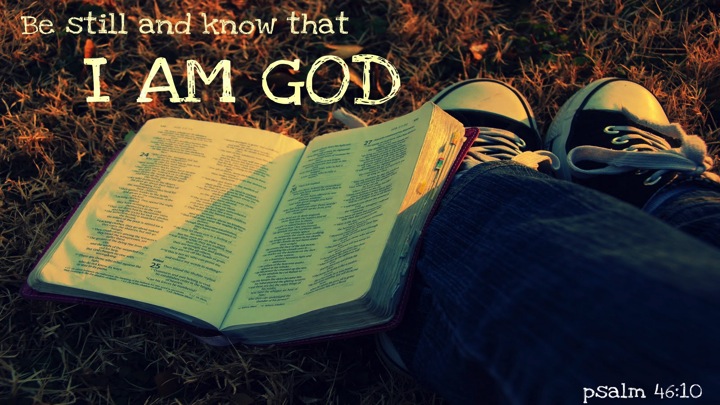
1 God is our refuge and strength, a very present help in trouble.  Therefore we will not fear, though the earth should change, though the mountains shake in the heart of the sea; 3 though its waters roar and foam, though the mountains tremble with its tumult. 4 There is a river whose streams make glad the city of God, the holy habitation of the Most High. 5 God is in the midst of the city; it shall not be moved; God will help it when the morning dawns. 6 The nations are in an uproar, the kingdoms totter; he utters his voice, the earth melts. 7 The Lord of hosts is with us; the God of Jacob is our refuge. 8 Come, behold the works of the Lord; how he has brought desolations on the earth. 9 He makes wars cease to the end of the earth; he breaks the bow, and shatters the spear; he burns the shields with fire. 10  ‘Be still, and know that I am God! I am exalted among the nations, I am exalted in the earth.’ 1 The Lord of hosts is with us; the God of Jacob is our refuge.

***

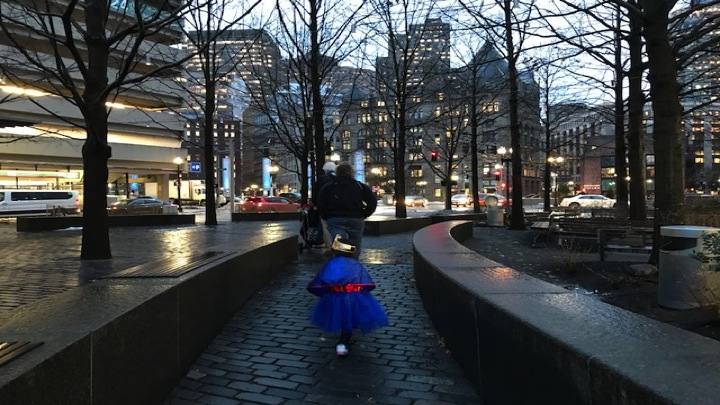
The rain didn’t keep them away. They came last night to our church. White Rabbit and Vampires. Red Queen and Football players. Angels and Pirates. Witches and Waldos.

This slideshow requires JavaScript.

Those were just some of the adults who came to our Fall Festival at Merritt Island Presbyterian Church. They came with love and joy to share. They came to bless the children, many of whom attend our preschool. There were skeletons. Bears. Police officers. And many others.

Slide47Slide48

Slide49Slide50Slide51Slide52Slide53Slide55Slide56


Those who serve the Church, no matter what job they are doing are doing it for the Lord…making hot dogs, decorating cookies, applying temporary tattoos, playing games and doing crafts with little hands.


We are the priesthood of all believers. The Church today embraces the idea of vocation–that everyone is called to minister with all their gifts, talents and resources in the work God has called them to do. Ministry is not just for clergy. But this was not taught by the Church of the Middle Ages. Not until Martin Luther, who thought it was time for the Church to change.

Today is Reformation Sunday, when we remember and give thanks to God for the transformation of the Church that began with a few brave souls, standing up for their convictions. And we pray for the Spirit to give us courage and faith to embrace the changes that God will lead us to in the future. For God’s work of sanctification isn’t finished in us. We are still being transformed into the Church God wants us to be.

Slide65

Martin’s Reformation story begins at around 2 p.m. on October 31, 1517, on the eve of All Saints Day, when he walked to the main north door of the Castle Church in Wittenberg, hammer in hand. In his Ninety-Five Theses, Martin protests the Church’s practice of selling certificates called indulgences.

Slide66

These papal certificates promised forgiveness for the sins of the buyer and for their loved ones who had died and were waiting in purgatory.

Slide67

The indulgences, in actuality, were a fundraiser for a massive building campaign. Pope Leo X wanted a new basilica in Rome.

Slide68

Martin saw this as an abuse of the Church’s power, not just because the Church was stealing money from poor people who could barely afford food to eat, but because freedom from God’s punishment for sin could not be bought.

Martin had personally wrestled with the question of God’s forgiveness for years, asking himself, “Am I good enough?” Studying Paul’s letter to the Romans led him to an answer that truly changed everything for him. He was saved by faith in the righteousness of God, not by any good deeds he could do. Paul writes in Romans 1:16-17, 16 For I am not ashamed of the gospel; it is the power of God for salvation to everyone who has faith, to the Jew first and also to the Greek. 17  For in it the righteousness of God is revealed through faith for faith; as it is written, “The one who is righteous will live by faith.”

Before Luther, a professor of theology at the University of Wittenberg, posted his protest on the church door, no one in the Church had publicly challenged the authority and office of the pope.

Slide75


Luther’s writings, many of them scathing criticisms of the Church, were meant for the masses; they were published in German, the language of the people, and distributed across Europe through modern printing technology.

Slide76

Summoned to appear before Pope Leo X and the Holy Roman Emperor Charles V in 1521, Martin refused to recant his views. He said, “Unless I am convicted by Scripture and plain reason — I do not accept the authority of popes and councils, for they have contradicted each other — my conscience is captive to the word of God. I cannot and I will not recant anything, for to go against conscience is neither right nor safe. God help me. Amen.” The printed document released afterward also contained the famous words, “Here I stand, I can do no other.”

Slide77

Pope Leo X condemned him as a heretic and excommunicated him from the church, but he had some support amongst the German princes. Frederick the Wise of Saxony

Slide79

staged a “kidnapping” and took Martin to Wartburg castle, where he hid for 10 months, during which time Martin grew a beard and took on an assumed name.

Slide80

More importantly, he translated the New Testament, formerly only in Latin, into German. Later, he would translate the entire Bible, with help from others. Now, the people could read and understand Scripture for themselves–and know the gospel of grace.

Slide81

Historians now say that Martin’s radical ideas for the Middle Ages, were not so radical, after all, considering the changing political, social, technical, and educational climate of his day. Humanists, artists and poets of the Renaissance offered the poor and oppressed new understandings for human existence and spiritual truth. Copernicus redefined the earth’s position in the universe.

Slide82

Columbus landed in the New World.

Slide83

Da Vinci’s contributions to art and science are too numerous to name.

But struggling peasants made up 90 percent of the population, with most of the wealth and land held by the nobility and the church! It was time for change!

***

Luther’s additional contributions to the church included creating a catechism to empower parents to teach their children the faith at home.

Slide86

In worship, Scripture was read, sermons were preached and songs were sung in German, where formerly all had been Latin. At last, people could learn how they may apply God’s Word to their daily lives. Luther also composed 36 hymns, the most popular of which is, “A Mighty Fortress is Our God.”

Slide87

Historians don’t know when Luther wrote it, but some think it may have been written in Oct. 1527 as the plague was approaching. It became the battle hymn of the Protestant Reformation, sung in churches, in the streets, and by martyrs as they went to their death.

The hymn is based on Psalm 46, a celebration of God’s sovereignty, in an unstable, dangerous world that nevertheless still belongs to him. He is the divine warrior, the Lord of Hosts of Heavenly beings who battle against cosmic and human foes to maintain his rule. We need not fear, for we trust in Him. The City of God will not be shaken. Our God has chosen to be with us, in relationship with us, if only we would be still….and know our God. Our home is not in a place. Our home is dwelling with God; he alone is our refuge. But this is a God of power and might, who “has brought desolations on the earth.” Yet God’s desire is for wars to end; he “breaks the bow, shatters the spear; burns the shields with fire.” This hymn carries a promise of peace, in that day of God’s choosing. He is exalted among the nations. Exalted in the earth.

The hymn became closely associated with Luther and seemed, historian Louis Benton says, to embody his character–“bold, confident, defiant in the face of opposition.” The English version we know was written in the 19th century by a New England Unitarian minister and Transcendentalist, Frederic Henry Hedge:

A mighty fortress is our God, a bulwark never failing; Our helper He, amid the flood of mortal ills prevailing: For still our ancient foe doth seek to work us woe; His craft and pow’r are great, and, armed with cruel hate, On earth is not his equal.

“Did we in our own strength confide, Our striving would be losing. Were not the right Man on our side, The Man of God’s own choosing. Dost ask who that may be? Christ Jesus, it is He; Lord Sabaoth is His name, from age to age the same. And He must win the battle.

“And though this world, with devils filled, should threaten to undo us, We will not fear, for God hath willed His truth to triumph through us; The Prince of Darkness grim, we tremble not for him; His rage we can endure, for lo, his doom is sure, One little word shall fell him.

“That word above all earthly pow’rs, no thanks to them, abideth; The Spirit and the gifts are ours through Him Who with us sideth; Let goods and kindred go, this mortal life also; The body they may kill: God’s truth abideth still, His kingdom is forever.”

Let us pray.

Holy One, we thank you for your patience with your Church and your faithfulness to continually work in us to reform, remake and transform us. Remove all fear and doubt from us. We give ourselves to you for we belong to you. We offer all we are now, all that we have, and all that we will become. Help us to be obedient to your call to every person to serve you and the church through our labors. Give us hearts to give so that you may minister through us in this place for generations to come. In Jesus name we pray. Amen.


Heart to Give

Slide20

Meditation on Matthew 22:15-22

Oct. 22, 2017

Merritt Island Presbyterian Church

***

15 Then the Pharisees went and plotted to entrap him in what he said.16So they sent their disciples to him, along with the Herodians, saying, ‘Teacher, we know that you are sincere, and teach the way of God in accordance with truth, and show deference to no one;  for you do not regard people with partiality. 17 Tell us, then, what you think. Is it lawful to pay taxes to the emperor, or not?’ 18But Jesus, aware of their malice, said, ‘Why are you putting me to the test, you hypocrites?  19Show me the coin used for the tax.’ And they brought him a denarius. 20Then he said to them, ‘Whose head is this, and whose title?’ 21They answered, ‘The emperor’s.’ Then he said to them, ‘Give therefore to the emperor the things that are the emperor’s, and to God the things that are God’s.’22When they heard this, they were amazed; and they left him and went away.

***

Mary used to be the kind of person who greeted you with a hug. Always smiling, laughing, talking, moving around. She was small, maybe 5 feet tall. Her husband, Chuck, looked like a giant next to her.

Slide21

Her size and personality fit perfectly with her career choice. Mary was a teacher of young children. She didn’t want to be anything else. She wanted to be a teacher ever since she was a little girl. She was born in 1934 in Bronx, NY, to Irish immigrants. Her parents, Margaret and Daniel,

Slide22

were charter members of Eastchester Presbyterian Church in the Bronx.

Daniel was superintendent of the Sunday school for 25 years. His two children never missed church or Sunday school.

Mary first got to practice her teaching skills on her little brother, Jim, who was 10 years younger, though she may not have always wanted him around. Her mother took Mary to piano lessons at a woman’s home. After the lesson, Mary and her mother walked home, leaving Jim, asleep in his baby carriage, in the woman’s backyard. The piano teacher called when they got home to say, “Come get your baby.” Mary knew they had left him–and didn’t say anything.

Yes, Jim was kind of a nuisance to Mary, especially as he got older. She always said he put his pet turtle in her bed.

Slide26

 Jim swears that he doesn’t know how the turtle got in her bed. That’s the story, and he’s sticking to it. Then, one day, Jim came home from the pet store with a hamster.

Slide27

Mary paid Jim for the hamster and marched him back to the pet store to give the hamster back. She probably thought the hamster would end up in her bed, too. It probably would.

Then there was the business about the chair. Both Jim and Mary claimed ownership of this little white, antique chair.

Slide28

When Jim and I got married 12 years ago, he had the chair. I suggested, since we weren’t using the chair, that we repaint the chair and give it to her as a present. But she didn’t really want the chair back. She wanted Jim to acknowledge that the chair belonged to her all along. He didn’t. The argument continued.

Mary earned a bachelor’s degree from New Paltz State Teachers’ College in New Paltz, NY, in 1956.

Slide29

She taught kindergarten in Larchmont Avenue School in Mamaroneck, NY, for about 10 years, marrying Chuck in 1958. She had met Chuck through a church youth group. When Chuck got a job working for IBM in Poughkeepsie, they moved to Hopewell Junction. She taught kindergarten in an historic, one-room schoolhouse because the Wappingers Central School District was overcrowded.

Slide30

They moved to Pelham Manor, NY, in 1970, after the birth of their second son, Kenny, in 1969. Mary was a teacher, then director, of the First Presbyterian Church of New Rochelle’s preschool until 1998.

Slide31

 At 64, she became a permanent sub for Willmot Ave. School, showing up every morning, prepared to work wherever the principal sent her.

Why would she retire? She asked Jim and me on one of our visits to NY. What would she do? She continued to work, though she had pain in her back, knees and hips, especially when she climbed up and down stairs. She didn’t want to travel. She never went on a cruise. She got on an airplane once to go to Ireland to visit her relatives, but after that, didn’t want to get on an airplane again. She took the auto train once to Florida. She and Chuck came to our wedding in York, PA.

Slide32

They came to my graduation from Princeton Seminary. They always traveled by car–and couldn’t wait to get home. She didn’t care about what she wore, didn’t worry about remodeling their old home, which didn’t have air conditioning. Mary gave of herself–all that she had, all that she was, for the passion God had put inside her to care for children. She had a heart to give.

***

Our gospel lesson today, on the surface, seems to be about money and the question of paying taxes.

Slide33

But it’s also about loyalty and obedience. The Pharisees and the Herodians, two political groups within Judaism, play an important role in the passage; they don’t usually get along, but they share a common enemy– Jesus, who is questioning the status quo, stirring the oppressed to hope for change, performing miracles, and criticizing the wealthy and arrogant religious leaders. The Pharisees want independence from Rome; some advocate armed revolt; others don’t want bloodshed and favor a “live and let live policy.” The Herodians are supporters of Rome and act in its interests, hoping for the restoration of the Herodian dynasty, which owed its power to Rome.

The Pharisees send their “disciples” to question Jesus. Isn’t that a curious thing? Perhaps it makes the encounter seem more innocent–students learning from the “teacher,” as they call Jesus, trying to manipulate him with flattery, get him to let down his guard. He is “sincere,” they say. He teaches “the way of God in accordance with truth” and shows “deference to no one; for you do not regard people with partiality.”

Jesus isn’t fooled. He knows their malice, he says in 22:18. As 1 Samuel 16:7 says, “God sees not as people see, for people look at the outward appearance, but the LORD looks at the heart.” Before this passage, in Matthew 21:45-46, the chief priests and Pharisees want to arrest Jesus when he says their kingdom will be taken away from them and given to a people “that produces the fruits of the kingdom.” But they fear the crowds because they believe Jesus is a prophet.

Jesus will be in trouble whether he answers yes, it is right to pay the tax or no, it isn’t. If no, he will be accused of sedition. If yes, he sets aside the law of God. Jesus asks to “see” the coin used to pay the poll tax. “Show me,” he says, for this is an object lesson.

Slide37

The poll tax is a “direct tax levied on every adult Jew (including women and slaves). But Jesus and his disciples don’t have this coin. The Herodians or the Pharisees’ disciples bring him the coin, and the fact that they have it, confirms they are “hypocrites,” as Jesus calls them; carrying and using the emperor’s money, which they want Jesus to say is a violation of the Torah. The coin asserts Rome is “favored of the gods,” bears the image of Rome’s emperor, proclaims him to be son of the “divine, high priest Augustus.” The coins are “instruments of propaganda,” reminders “of the emperor’s political power.” They symbolize “defeat and humiliation” for the Jewish people.

Jesus amazes everyone with an answer as tricky as the question. He says, “give” or “give back,” which more closely reflects the verb’s meaning, “give back, therefore, to the emperor the things that are the emperor’s” (the coin with the emperor’s image) “and to God the things that are God’s.”

He doesn’t advocate civil disobedience or armed revolt, disappointing some. What belongs to the emperor is simply the tax, the payment for benefits received from the imperial government. The Pharisees and Herodians have already acknowledged this government’s legitimacy by carrying and using the emperor’s money. But that’s all the emperor is due.

What, then, belongs to God? The psalmist joyfully sings in 24:1, “the whole earth is the Lord’s and everything in it, the world, and all who live in it.” WE belong to God, but so does every person of every nation, in every time and place. This is the world God so loves, the one into which God sent His Son to save those who were perishing in their sins and give them eternal life with Him.

***

My sister in law, Mary Crawford Amann, will be 83 on Oct. 31.

Slide42

This year has been especially hard. Chuck died in February. Her family moved her to an assisted living center and hired a caregiver to stay with her. She is too vulnerable on her own. Mary suffers from a form of dementia, a disease that steals your loved one, bit by bit. She remembers some things from long ago, but can’t recall words that have just been said. She still knows and loves her baby brother, Jim. And she always asks about me, he says, and my church, when he calls. She says she is sad because we live so far away.

Like Mary, God gave me a passion for ministry to children and young families. But I have discovered also a desire to encourage and help equip our preschool teachers. For they have a very demanding and important yet undervalued job– touching the lives of young children for good.

I know Mary would approve that Jim and I would like to give money to start a scholarship fund in Mary’s name here at MIPC to help our teachers of young children pay for continuing education. Many of our preschool teachers live paycheck to paycheck and also have families to support. It is a hardship for them to pay for professional development that is essential to effectively meet the needs of children in today’s rapidly changing world. They would all profit from networking with other teachers and learning about the latest developments in educational research and best methods for teaching children, particularly those with special needs. You might like to help the teachers, too, or perhaps start a memorial scholarship fund for families struggling to pay for childcare while they work. Perhaps God has given you a passion for another ministry opportunity at MIPC. I invite you to start something new, if you see a need. Follow your passion. The important thing is that you actively participate in ministry, obeying Christ’s command to offer to God the things that belong to God.

You are God’s own! All that you are, all that you have, all that you will become are gifts from God to use for Him. So that leaves only one lingering question.

Do you have a heart to give?

Slide46

Let us pray.

Holy One, we thank you for your many gifts to us, pouring your Spirit into our hearts, transforming them so that you may use us for your loving purposes. Help us, Lord, to be more generous with ourselves, obeying you by sharing the blessings of time, talent, and resources, including money, to build up your Kingdom right here in this community. We pray for the teachers of young children and the families who have entrusted the children to us to nurture in the faith. We pray for Mary, Lord, that you would touch her and heal what is broken in her. Give her peace and joy. Comfort her in her grief. Give us all, Lord, hearts to give so that we may change the world. In Christ we pray. Amen.

Don’t Look Back

Meditation on Philippians 3:4-14

Oct. 8, 2017

Merritt Island Presbyterian Church

       … If anyone else has reason to be confident in the flesh, I have more: circumcised on the eighth day, a member of the people of Israel, of the tribe of Benjamin, a Hebrew born of Hebrews; as to the law, a Pharisee; as to zeal, a persecutor of the church; as to righteousness under the law, blameless.  Yet whatever gains I had, these I have come to regard as loss because of Christ. More than that,  I regard everything as loss because of the surpassing value of knowing Christ Jesus my Lord. For his sake I have suffered the loss of all things, and I regard them as rubbish, in order that I may gain Christ and be found in him, not having a righteousness of my own that comes from the law, but one that comes through faith in Christ, the righteousness from God based on faith. 10 I want to know Christ and the power of his resurrection and the sharing of his sufferings by becoming like him in his death,  11 if somehow I may attain the resurrection from the dead.12 Not that I have already obtained this or have already reached the goal; but I press on to make it my own, because Christ Jesus has made me his own. 13 Beloved,[ I do not consider that I have made it my own; but this one thing I do: forgetting what lies behind and straining forward to what lies ahead, 14 I press on toward the goal for the prize of the heavenly[call of God in Christ Jesus.

***

     New Zealand runner Nikki Hamblin lay dazed on a track, curled in a fetal position after taking a fall at the 2016 Summer Olympics in Rio.

Slide30

The 28-year-old’s hopes of an Olympic medal, a dream since she was 15, were dashed. Suddenly, she felt a hand on her shoulder. She heard a voice saying,

Slide31

 “C’mon. Get up. We have to finish this.” The one who had come to her aid was not from New Zealand; she was a competitor, a stranger from the U.S.A. Olympic team. Twenty-four-year-old Abbey D’Agostino.

Nikki doesn’t know what caused her fall in a crowd of runners, with 2,000 of a 5,000-meter race still to go. Abbey stumbled and fell after Nikki went down heavily on her shoulder. Seeing the New Zealander crying, Abbey bent down and put her arms under her shoulders and gently urged her to her feet. As both runners resumed the race, no one suspected that Abbey was the one more seriously injured.

Abbey doesn’t remember falling the second time, a short while later.

Slide32

This time, Nikki came to Abbey’s rescue,

bending down and helping her to her feet. But soon it was obvious that Abbey wasn’t able to continue running. She urged Nikki, “Keep going. Keep going.” Nikki went on to run the 5,000 meters. As she crossed the finish line, she looked back and saw to her amazement that Abbey was still running, despite a torn ACL and meniscus. Nikki waited at the finish line and gave Abbey a hug after she came in last place.

Slide36

Nikki will always be grateful to Abbey, she told ESPN.

Slide37

She will never forget that arm on her shoulder, that voice in her ear, telling her to get up–keep on running the race.

Slide38

At the time, just finishing the race was the goal. Not giving up when the going gets tough. They knew they weren’t going to win any Olympic medals for the event. But they would earn an Olympic award that was more rare than an Olympic medal and arguably more special. They were honored with an Olympic sportsmanship trophy that only 17 people before them in Olympic history had ever earned.

Slide39

The world took notice of Abbey and Nikki’s goodwill. President Obama said their actions were “exactly what the Olympic spirit and the American spirit should be all about.”

***

The Apostle Paul urges us all to keep on running the race to the finish in his letter to the Philippians. Paul dispels all notions of the Christian thinking becoming a believer is all there is to being a Christian; getting saved is not the destination! Believing is the beginning of our journey of faith–the destination is a personal relationship with Jesus– knowing him, sharing in his sufferings, Paul says in 3:10. Knowing in our hearts and minds the “power of his resurrection,” meaning accepting the grace God offers us through His Son and living out a life of grace. He has come to understand that what he learned from his Jewish community before he became a follower of Christ–all that gave him identity, purpose, and self worth– was worthless. “Yet whatever gains I had,” (he says in vss. 7 and 8) these I have come to regard as loss because of Christ. More than that, I regard everything as loss because of the surpassing value of knowing Christ Jesus my Lord.” Paul is worried the church at Philippi may be infiltrated by Jewish Christians. This happened to the Galatian church a few years before. They insisted that Gentile coverts must follow the Jewish law or remain outsiders–“dogs” as Jews called them. They needed to perform the good works of the Torah; they needed, above all, to be circumcised.

Right before our passage today, Paul says in verse 2,  “Watch out for the dogs! Watch out for the evil workers. Watch out for those who mutilate the flesh”–those who teach adherence to the Torah. While our society today loves our pet dogs and treat them like members of our family, calling someone a dog in ancient times was an insult. He goes on in vs. 3, “For it is we who are the circumcision, who worship in the Spirit of God and boast in Christ Jesus and have no confidence in the flesh…” He isn’t just talking about actual flesh, as in the mark of circumcision. “Flesh” to Paul is whatever things gave him status and identity in his former life. He is sharing a powerful personal testimony from his life as a Pharisee, a “zealous persecutor of the church,” before his dramatic conversion. 

Slide48

Tracing one’s ancestry back thousands of years to the patriarchs and knowing which of Jacob’s 12 sons from whom they were descended was a major source of pride in ancient Judaism. Paul boasts that he is a member of the tribe of Benjamin. Boasting turns to confession. What he valued before knowing Christ as his Lord and “being found in him” is worthless, he says in vs. 7. He actually says a bad word translated “rubbish, refuse or filth.” It could mean human waste or the foul-smelling street garbage that dogs forage through. This would be aimed at the Jewish Christians he calls “dogs” –the ones who insist on circumcision for the Gentiles who wish to join the church.

Then, Paul describes his own spiritual growth and maturity as incomplete. In verse 10, he says, “I want to know Christ and the power of his resurrection and the sharing of his sufferings by becoming like him in his death, if somehow I may attain the resurrection from the dead.” He isn’t wondering if he is saved. Our resurrection with Christ is a gift received by faith, as he will say in vs. 16, “Only let us hold fast to what we have attained.”

He uses the metaphor of a footrace to talk about the Christian walk, when every day we encounter trials and obstacles as we seek to follow Christ.

Slide54

Tracing one’s ancestry back thousands of years to the patriarchs and knowing which of Jacob’s 12 sons from whom they were descended was a major source of pride in ancient Judaism. Paul boasts that he is a member of the tribe of Benjamin.

Boasting turns to confession. What he valued before knowing Christ as his Lord and “being found in him” is worthless, he says in vs. 7. He actually says a bad word translated “rubbish, refuse or filth.” It could mean human waste or the foul-smelling street garbage that dogs forage through. This would be aimed at the Jewish Christians he calls “dogs” –the ones who insist on circumcision for the Gentiles who wish to join the church.

Then, Paul describes his own spiritual growth and maturity as incomplete. In verse 10, he says, “I want to know Christ and the power of his resurrection and the sharing of his sufferings by becoming like him in his death, if somehow I may attain the resurrection from the dead.” He isn’t wondering if he is saved. Our resurrection with Christ is a gift received by faith, as he will say in vs. 16, “Only let us hold fast to what we have attained.”

He uses the metaphor of a footrace to talk about the Christian walk, when every day we encounter trials and obstacles as we seek to follow Christ.

To do this, we must put the past behind us and stop trying to bring back the old church of 30 or 40 years ago, when we had more young families and more children in Sunday school. To judge the church as somehow lacking because we don’t have a large children’s Sunday school would be dismissive of the powerful ministries we have, including our ministry to children and families through our preschool and Kids Klub.

To say that we are somehow lacking as a church because we have more people older than 50 than younger than 50 is being somewhat like the Jewish Christians who thought the Gentiles needed to be circumcised. That’s the old way of thinking of church. Churches come in all shapes and sizes. We are a healthy, vital church as long as we seek to be led by the Spirit to minister to our community and world and share our gifts, talents, and resources for Christ’s sake. We are healthy and vital as long as our identities are found not in our achievements, possessions or other worldly status– anything that Paul would call “flesh.”

When Paul tells us, “Don’t look back”– forget what lies behind– he doesn’t mean our personal testimonies. He models the importance of sharing our stories by sharing his. But he acknowledges that rising up from the disappointments of the past requires effort and vision — straining forward to what lies ahead.” We must press on, for the goal is the prize of the heavenly call, the resurrection life made possible through a relationship with Jesus Christ.

Slide60

For nothing compares to the value of knowing Jesus and being found in him.

***

After reading about Abbey and Nikki in Rio, I wondered what made Abbey help a competitor who had fallen on the track, after all her Olympic training and ambitions. Then I read an ESPN article from two months ago in which Abbey talked about her faith. She has a powerful testimony and says she has “taken joy in sharing it with people in speaking engagements and at clinics…” After tearing the ACL in her right knee in the 5,000-meter race, she kept running by “praying all the way.” Of the moment at the finish line, when the two women from opposing teams hugged, she says, “For both of us to be able to finish despite our dreams of what the race could have looked like, shattered, you know — to just celebrate the good that came out of it–that moment together was just unbelievable.”

Slide61

She had prepared for the event, not just through physical conditioning, but by participating in Bible study and meeting with her team chaplain. She wrote Ephesians 3:20 on her hand for inspiration before the race, “Now to him who is able to do far more abundantly than all that we ask or think, according to the power at work within us.”

Friends, we all have powerful testimonies to share. Remember what God has done for you and how he has been faithful to you. Don’t let past disappointments get you down or hold you back from pursuing the good that God has planned for you. Don’t look back! Our identities are found not in our achievements, status or possessions– anything Paul would call “flesh.” Strain forward to what lies ahead…. Press on for the prize– the heavenly call, the resurrection life.

Slide64

Nothing compares to the value of knowing Jesus and being found in him.

Let us pray. Heavenly Father, thank you for your gracious gift of salvation through faith in Jesus Christ, our Redeemer and Lord. Thank you for allowing us to hear his call to follow Him and to want to know him more. Thank you that each of us have a powerful testimony of your faithfulness to share with others so that they may come to know and love you, too. Help us, Lord, to put aside our worldly ambitions and status–all things Paul would consider flesh– and seek to be holy and acceptable to you in all that we say and do. Give us your vision for our good future that you have planned. Teach us to forget what lies behind and strain forward to what lies ahead, empowering us by your Spirit to live resurrection lives. In Christ we pray. Amen.


In Memory of Hugh Williams


This slideshow requires JavaScript.

Meditation on 1 Corinthians 13:1-13

Oct. 1, 2017

Merritt Island Presbyterian Church

   13If I speak in the tongues of mortals and of angels, but do not have love, I am a noisy gong or a clanging cymbal. 2And if I have prophetic powers, and understand all mysteries and all knowledge, and if I have all faith, so as to remove mountains, but do not have love, I am nothing. 3If I give away all my possessions, and if I hand over my body so that I may boast, but do not have love, I gain nothing. 4 Love is patient; love is kind; love is not envious or boastful or arrogant5or rude. It does not insist on its own way; it is not irritable or resentful;6it does not rejoice in wrongdoing, but rejoices in the truth. 7It bears all things, believes all things, hopes all things, endures all things. 8 Love never ends. But as for prophecies, they will come to an end; as for tongues, they will cease; as for knowledge, it will come to an end. 9For we know only in part, and we prophesy only in part; 10but when the complete comes, the partial will come to an end. 11When I was a child, I spoke like a child, I thought like a child, I reasoned like a child; when I became an adult, I put an end to childish ways. 12For now we see in a mirror, dimly, but then we will see face to face. Now I know only in part; then I will know fully, even as I have been fully known. 13And now faith, hope, and love abide, these three; and the greatest of these is love.

***

Linda and Hugh met while they were working for the City of Cocoa. Hugh was the assistant city manager. Linda worked across the hall from him as an administrative secretary in the building department. Linda kept bumping into him outside the office–by accident. One day, she was at a mall in Titusville and saw Hugh. She had heard it was his birthday, so she offered to take him out to eat. He said yes. They went out. Then Linda discovered she didn’t have any money with her. Hugh happily paid the bill.

On Oct. 19, 1997, they were married at Trinity Presbyterian Church in Satellite Beach. Hugh had 3 sons from a previous marriage. Linda, 2 daughters.

Hugh was a big man, with a big smile. Linda was his “Lovely Linda,” “Lady Linda,” and “Dollface.” He was an incurable romantic. Every week, he brought her flowers. He left love notes all over the house for her to find–in drawers, in the bathroom, in the closet, on the magazine rack– scrawled on tiny bits of notebook paper, folded up several times. “Good morning, Lovely Linda,” they might say. One day, he heard music playing when they were at a mall. He swooped her up and they danced down the aisle. He was a dancer. Fast dances. Slow dances. He knew all the old songs from the 40s and 50s. Sometimes, he packed a bottle of wine, two glasses, and a blanket, and they went to the beach to enjoy the sunset together. They enjoyed traveling. s

They planted flowers together–he took such pride in the yard. He loved mowing the lawn. He was good at fixing things, taking apart the lawn mower, the vacuum cleaner. He made Adirondack chairs and tables with his many, many tools in his workshop in the garage. He was a boater, not a fisherman.

They were active together for years in the Presbyterian Church in Satellite Beach. Hugh was always volunteering. They hosted a Bible study in their home and the folks brought canoes so they could all go canoeing afterward.

Hugh was born in York, PA. He sold pretzels on the street as a boy. When he was young, he worked on a chicken farm. As a result, Linda never knew Hugh to eat poultry of any kind. Some of his family is Amish; others are Quakers. He liked bright pink and he used to say, “Real men wear pink.” He didn’t wear stripes or flowers.

He never yelled. He liked ice cream and had to eat it every day. Any flavor will do. He liked Moon Pies and whoopee pies, too.

He liked to golf and bought Linda her own set of clubs so she could play with him. Linda was bored to death with it, but she did it, anyway.

As Linda shared all these tiny, but important details with me last week, I thought, “That’s love. Knowing your spouse so well that you know all their likes and dislikes, their gift, talents, and hobbies. You have things you both enjoy and want to do together. And things that only your spouse likes, but you choose to go along, just to be with them, to make them happy.”

That’s love.

***

The First Corinthians reading, also known as the “Love Chapter,” is often read at weddings. But it is always appropriate to talk about love–what love is and what it isn’t, as Paul taught a community of faith, torn apart by divisions. The apostle had left the Corinthian community in relative harmony, but now he has learned, much to his dismay, that quarrels were splitting the church. Paul views these egotistical divisions, arguments over baptism and the Lord’s Supper, leadership, and the practical living out of one’s faith as scandalous. “I appeal to you, brothers and sisters, that all of you be in agreement and that there be no divisions among you, but that you be united in the same mind and the same purpose.” He has heard that they have become arrogant, and tells them in 1 Cor. 5:6, “Your boasting is not a good thing.” They have had grievances with one another and taken each other to court, rather than solve their own differences within the believing community. He cautions them against sexual immorality and the worship of idols. Everything you do, he tells the church, do to the glory of God. “Give no offense to Jews or Greeks or to the church of God, just as I try to please everyone in everything I do, not seeking my own advantage, but that of many, so that they may be saved. Be imitators of me, as I am of Christ.”

Then, he talks about the spiritual gifts. They have been given to each member of the Body of Christ for the benefit of the Body. No gift, no member is more or less important than another. Except for the one gift that is given to all, the gift that without which, none of the other gifts have any value. Jesus tells us in John that this gift given to his disciples will be the mark of His followers, the sign for the world that they belong to Him. The gift is love.

The love Paul is talking about is the love of God. He tells us in 14:1, “Pursue love.” Isn’t that interesting? God’s love is given to us by the Holy Spirit, but it is also something we must intentionally pursue. This is a gift that we should request from the Lord every day. Wouldn’t the world be a very different place if everyone lived according to Paul’s teachings on love? Imagine, if everyone pursued love–seeking this most excellent gift from God– every day. The love of God is not: envious, boastful, arrogant, rude. It doesn’t insist on its own way or rejoice in wrongdoing; it’s not irritable or resentful. The love of God is patient and kind. It bears, believes, hopes and endures all things. It rejoices in the truth.

God’s love NEVER ends. You know, I have read this passage many times, but yesterday, when I read “love never ends,” I realized that Paul isn’t just talking about lasting over time, that it continues on forever. He also means that it never runs out; it is like the overflowing cup that David talks about in Psalm 23. The more you try to empty your cup of love, the more your cup fills up. The love that the Holy Spirit pours into our hearts– flows on and on and on.

***

This unconditional, unending flow of love strengthens us to endure the trials of this world, which have a godly purpose. Paul says enduring suffering is a way to be like Christ–and to do it for his sake. Paul says (Philippians 3:8-11): “Indeed I count everything as loss because of the surpassing worth of knowing Christ Jesus my Lord. For his sake I have suffered the loss of all things, and count them as refuse, in order that I may gain Christ and be found in him, not having a righteousness of my own, based on law, but that which is through faith in Christ, the righteousness from God depends on faith; that I may know him and the power of his resurrection, and may share his suffering, becoming like him in his death, that if possible I may attain the resurrection from the dead.”

***

Hugh experienced physical and emotional pain in his lifetime. At the age of 15, he learned he was adopted by the man he thought was his birth father. The discovery shook him to the core. He felt as if he had been lied to, his life not what he thought it was. He learned that his mother had given birth to him out of wedlock. He never met his biological father but he did discover at the age of 65 that he had a half sister in Pennsylvania named Patricia. He contacted her. They visited one another and became close. Then she passed away 2 years ago.

About 5 years ago, Hugh was diagnosed with dementia. He wasn’t able to do many things that he was used to doing, that he liked to do. He was often discouraged, frustrated, sad, when he had not been a person given to bouts of sadness before. About 3 years ago, Linda needed more help with his care, and though it upset them to be apart, Hugh moved into an assisted living home. Linda had to adjust to living on their own. Linda found a new family of faith here at Merritt Island Presbyterian Church. Hugh went home to be with the Lord on the morning of Sept. 20. He would have been 84 next month.

It is because we love that we experience the pain of grief when our loved ones are not with us. But it is never wrong to love. It would be a mistake to stop seeking to make new friends. When you might be tempted to withdraw, and not allow yourself to be vulnerable again, remember that love is the most excellent spiritual gift, the one without which none of the other gifts have any value. God’s love compels us to keep on loving, more and more. God’s love is graciously and generously given to us so that we will share it with the world God so loves.

Love is patient. Love is kind. It bears all things, believes all things, hopes all things, endures all things. Love never ends.


God is at Work in You!

Meditation on Philippians 2:1-13

Oct. 1, 2017

World Communion Sunday

Merritt Island Presbyterian Church

      If then there is any encouragement in Christ, any consolation from love, any sharing (or fellowship) in the Spirit, any compassion and sympathy,  2make my joy complete: be of the same mind, having the same love, being in full accord and of one mind.  3Do nothing from selfish ambition or conceit, but in humility regard others as better than yourselves. 4Let each of you look not to your own interests, but to the interests of others.  5Let the same mind be in you that was* in Christ Jesus, 6 who, though he was in the form of God, did not regard equality with God as something to be exploited,  7 but emptied himself, taking the form of a slave, being born in human likeness. And being found in human form, 8   he humbled himself and became obedient to the point of death—even death on a cross. Therefore God also highly exalted him and gave him the name that is above every name, 10 so that at the name of Jesus every knee should bend, in heaven and on earth and under the earth, 11 and every tongue should confess that Jesus Christ is Lord, to the glory of God the Father. 12  Therefore, my beloved, just as you have always obeyed me, not only in my presence, but much more now in my absence, work out your own salvation with fear and trembling;  13for it is God who is at work in you, enabling you both to will and to work for his good pleasure.

***

I am at a new dentist and the hygienist, a woman in her late 20s/early 30s, maybe, had her fingers in my mouth, positioning pieces of cardboard so she could take X-rays. She makes small talk, but I can’t answer because she is putting things in my mouth… I am nervous, because I haven’t been to the dentist in 3 years, well, maybe 4, and I love candy. I’m thinking, “How long is this going to take? How much will this cost?”

She asks where I work, what I do. I manage to tell her I am a pastor, hoping that’s enough, and I can get home before dark. Then she starts sharing her personal testimony. Normally, I relish this sort of conversation. But I am feeling vulnerable–wishing I were anywhere else but in the dentist chair. Still, I listen and nod as she tells me how much she loves her new church. She attends “Elevation Church.”

Slide24

The pastor is wonderful. Young!

Slide25

He preaches messages that really speak to her, with catchy phrases that are easy to recall, such as “When it Rains, God Reigns.” She doesn’t know the denomination. She goes to the Gleason Performing Arts Center at FIT and watches the service on a big screen. She doesn’t know other people there, though greeters welcome her when she arrives and someone introduces the program. If she is tired on Sunday morning or isn’t free to attend the service in person, she watches it on the Web. There’s an Elevation Church ap for your cell phone!

Slide27

That evening, Jim and I check out Elevation Church on the Internet. They have an amazing website, with video clips of nice-looking young people, worshiping in a darkened auditorium, with professional lighting, sound, and so forth.

The mega, multi-site church is based in Charlotte, NC, and though I can’t find it at the church’s website, it’s Southern Baptist. Thirty-seven-year-old Pastor Steven Furtick founded Elevation Church in 2006.

Slide31

He has written some books, and he and his wife, Holly, live in a 16,000 square foot home that has made national news.

Slide32

The church has at least 17 locations where you can, sure enough, go and watch the service on theater-type screens–Raleigh, Roanoke, Greater Toronto, Winston-Salem and 9 in Charlotte. This doesn’t count the many Southern Baptist Churches, such as one about a mile from our home, which host an Elevation service video on a weeknight, in addition to traditional services Sunday mornings. Elevation Melbourne, where my hygienist goes, offers two “weekend worship experiences,” the website says, at 9:30 and 11 a.m. Sundays. Chad Cooper is the “campus pastor” but he doesn’t preach or lead worship.

Slide33

Jim, peering over my shoulder at Elevation’s website, shakes his head. I am drawn to click on the tab with the online store where you can shop for T-shirts, sweatshirts, baseball caps, Pastor Furtick’s books, and other stuff.

Slide34

I have mixed emotions. First, I am happy the church is effectively reaching out to young adults. I am also worried. Is this what young adults are looking for– a “worship experience”? This seems like marketing Christianity as entertainment, rather than discipleship. This doesn’t fit with Christ’s humble, self-giving example for His Church, united in Him, called to love and serve God, one another and the world. You can’t be the Church without building relationships, spending time with people, growing in love and service together. But the Church in the 21st century, I am sad to say on this World Communion Sunday, is scandalously divided. The walls between denominations and other Christian groups are a far cry from Christ’s prayer that His disciples would be one.

***

Living out your faith in Christ’s humble example, dwelling in unity, is Paul’s message to the Philippians. Unity is a recurring theme in his letters. He says, “make my joy complete, be of the same mind, having the same love, being in full accord and of one mind.” Of all his letters to churches, Philippians is the most affectionate and least critical. In 2:12, he says, “you have always obeyed me, not only in my presence, but much more now in my absence.” Compare this tone to his letter to the Galatians, in 3:1, “You foolish Galatians! Who has bewitched you?”

In his urging of the Philippians to live in unity, some think that they might have been struggling to carry on without Paul. For the church that he founded in 49 CE was enduring persecution. Paul probably wrote this letter of friendship in the early 60s CE while he was on house arrest in Rome. This was the first church founded in Europe.

The key to living in unity, says Paul, is this: imitate the humility of Christ. I’m always touched by this passage. It seems to me that if everybody lived this way, it would be the end to all conflicts. This love is divine; it does nothing from “selfish ambition or conceit” as Paul says in v. 3. This love regards others as better than ourselves. He goes on in v. 4, “Let each of you look not to your own interests, but to the interests of others.”

This divine love is possible through the Spirit– living in us, changing our hearts, changing our minds. At the beginning of this passage, Paul says, “If then there is any encouragement in Christ, any consolation from love, and sharing or fellowship in the Spirit, any compassion or sympathy…” This “if” is more like “since.” This is assurance that the Church has all these things in Jesus Christ. We have access to the “same mind” as Jesus Christ, as Paul teaches in v. 5. We can know God’s will for the situations we find ourselves in! We hold on to promises such as Philippians 2:13–that God is at work in us, even when we can’t see any progress in ourselves! God is at work in you! He will enable us to do his will–and be pleasing to him!

Now, notice how the text looks different beginning in v. 6? Paul may be quoting from a hymn that he or another person wrote. This beautiful hymn tells of our God who humbled and emptied himself to become human, like us, and died on a cross, suffering in human form for our sake. Then we see a glimpse of the heavenly realm. Christ, our King of Kings, exalted on the throne of God. Name above all names, every knee shall humbly bow, every tongue confess: “Jesus is Lord!”

***

I was tired and still had 2 meditations and s to finish when I went to “Gift From the Sea,” the Women’s Retreat yesterday at Riverside Presbyterian. I didn’t want to miss the blessings! I didn’t want to miss the joy! I knew that gathering with other Christian women would bring me comfort and strength. I knew it would help me to put aside my own worries and problems and look to the needs and interests of others. I would feel refreshed, renewed. I also wanted to be a blessing to others. Maybe I could lift up someone who felt down.

Slide54

We experienced the fellowship of the Spirit.

Slide64


Slide60

We laughed at a skit about Jesus bringing peace in the storms of our lives. We played games, and made sand dollar necklaces.


Slide64

We heard personal testimonies, telling the story of a channeled whelk, protecting itself by withdrawing into its shell.

Slide67

We learned that it might be easier for us to wear a mask, rather than be vulnerable, taking risks by opening ourselves to new friendships. And the moonshell, a reminder to take time to just breathe, be still, draw in the love of God so that we may share it with others. I am continually reminded when I am with my sisters that the Church is all about building relationships, growing in love.

Slide68

Friends, trust in the promise that God is at work in us!

     God is at work in you!

     He will enable us to do his will–and be pleasing to him!

Let us pray.

Holy One, thank you for humbling yourself, emptying yourself of divinity and taking on a fragile human form because you love us. Thank you for suffering and dying on a cross so that we could be forgiven and be restored to a right relationship with you and one another. Lord, we pray for the Church on this day when we celebrate our unity in Christ, but also confess and repent from our divisions, our tendency to put up walls, separate ourselves from other congregations, denominations, and other church groups. Humble us, Lord. Help us to think of the interests and needs of others, rather than always our own. Let us regard others as better than ourselves. Send your Spirit to refresh and renew us, changing our hearts and minds so that we might live in obedience to Christ, so that we might all be one. In his name we pray. Amen.

Our Gracious and Merciful God

Slide06

Meditation on Jonah 3:10-4:11

Sept. 24, 2017

Merritt Island Presbyterian Church

10 When God saw what they did, how they turned from their evil ways, God changed his mind about the calamity that he had said he would bring upon them; and he did not do it. 4But this was very displeasing to Jonah, and he became angry. 2He prayed to the Lord and said,  ‘O Lord! Is not this what I said while I was still in my own country? That is why I fled to Tarshish at the beginning; for I knew that you are a gracious God and merciful, slow to anger, and abounding in steadfast love, and ready to relent from punishing. 3And now, O Lord, please take my life from me,  for it is better for me to die than to live.’ 4And the Lord said, ‘Is it right for you to be angry?’ 5Then Jonah went out of the city and sat down east of the city, and made a booth for himself there. He sat under it in the shade, waiting to see what would become of the city.

6 The Lord God appointed a bush, and made it come up over Jonah, to give shade over his head, to save him from his discomfort; so Jonah was very happy about the bush. 7But when dawn came up the next day, God appointed a worm that attacked the bush, so that it withered. 8When the sun rose, God prepared a sultry east wind, and the sun beat down on the head of Jonah so that he was faint and asked that he might die. He said,  ‘It is better for me to die than to live.’ 9 But God said to Jonah, ‘Is it right for you to be angry about the bush?’ And he said, ‘Yes, angry enough to die.’ 10Then the Lord said, ‘You are concerned about the bush, for which you did not labor and which you did not grow; it came into being in a night and perished in a night. 11And should I not be concerned about Nineveh, that great city, in which there are more than a hundred and twenty thousand people who do not know their right hand from their left, and also many animals?’

***

I was born in 1965.

Slide36

My country was deeply wounded, still recovering from the assassination of President John F. Kennedy 2 years before.

Slide37

 My country was divided over civil rights issues, though it had been 9 years since the Supreme Court struck down the “separate but equal” doctrine that formed the basis for state-sanctioned discrimination.

Slide38

Two weeks after I came into the world, the federal government passed the Voting Rights Act, aimed at overcoming legal barriers states had set up to prevent African Americans from voting.

Slide39

When I was 3,

Slide40

President Lyndon B. Johnson signed into law The Civil Rights Act of 1968, also known as the Fair Housing Act, during the riots that followed the assassination of the Rev. Dr. Martin Luther King, Jr.

Slide41

The “landmark…legislation provided for equal housing opportunities regardless of race, religion, or national origin.”

And for the first 10 years of my life, my country was embroiled in the Vietnam War. Every night at 6 o’clock, shocking images and news of casualties were broadcast on our living room TV while my parents silently watched and chewed their food. I often had to look away.

The disturbing images stayed in my mind sometimes, returning in my childhood dreams. I don’t recall ever talking about the war with my family. If my parents, who were Navy veterans, discussed it in front of me, it went over my head. I kept playing with my Sunshine Family dolls with pop up camper and country craft shack; my older sister, her Barbies; my older brother, GI Joe.

Jim and I have been watching Ken Burns’ and Lynn Novick’s 10-part documentary, “The Vietnam War.”

Slide48

It is, at times, painful and upsetting to watch. But I am learning a lot– not just about the American history I never learned in school, but the first hand experiences of the Vietnamese people–soldiers and civilians, many of whom were children or teenagers at the time. Slide49

Watching the third episode of the documentary on Friday, I grieved with an American family who lost their son at barely 18 years old. Hearing his mother and sister tell his story,

Slide50

 I was angry at the enemy who stole this boy’s life! I was angry at the enemy, watching an American veterans’ eyes fill with tears as he recalled his buddies dying–and how he is still afraid of the dark and needs a night light because the enemy is still out there, waiting to ambush them –in the dark.

Slide51

We also heard stories from Vietnamese people who lost sons and daughters, brothers and sisters, in the war. I couldn’t believe how many Vietnamese girls were being used for the war effort, some staying up all night, using shovels to fill in craters left by American bombs on the Ho Chi Minh Trail, the main supply route for the Viet Cong from the north to the south.

Slide53

Slide52

I was angry at the enemy! But by the third episode, I wasn’t sure who the enemy was. I wanted someone to hate for the atrocities that were done. I needed someone to blame. But who?

Then I remembered Jonah. And God asking him–twice–“Is it right for you to be angry?”

The first time, Jonah falls silent and just pouts, sitting down under a booth he made for shade to watch what would happen to the great city he despised. Jonah callously replies the second time, when he cares more for a bush that provides shade then the lives of human beings and animals,“Yes,” he says defiantly to the Lord, “angry enough to die.”

***

The story of Jonah is a parable for God’s people, Israel, who have been repeatedly conquered, killed or enslaved by enemies. Those who say the God of the Old Testament is a God of wrath hasn’t read the little book of the minor prophet, tucked between Obadiah and Micah– or at least, they haven’t read all the way to the end, where our lectionary passage takes us today. Jonah, an 8th century BCE prophet or “anti-prophet” hates Ninevah;

Slide56

it is the capital of the Neo-Assyrian Empire; they are pagans whose brutality was renowned. They are responsible for the annihilation of the northern kingdom (Israel) in 722 BCE (2 Kings 18:9-11).

Jonah’s story begins with God’s call to “go at once to Ninevah (in modern day Northern Iraq) “that great city, and cry out against it; for their wickedness has come up before me.”

Slide57

Jonah runs from “the presence of the Lord”–or tries to. He boards a ship and goes the other way, heading to a place called Tarshish, which he never reaches. There’s a storm.

Slide59

Frightened sailors ask Jonah who he is and what he has done. Jonah admits that he is the cause of their trouble. “I am a Hebrew,” he says.  “I worship the Lord, the God of heaven, who made the sea and the dry land.” The sailors are even more frightened, then, knowing he is running from God. They toss Jonah into the sea, at his urging. A great fish swallows him; sailors and ship are spared as the sea immediately becomes calm. In the belly of the fish for 3 days and 3 nights, Jonah prays to the Lord “his God.” “Then the Lord spoke to the fish, and spewed Jonah out upon the dry land.”

Slide61

So Jonah sets out for Ninevah, does according to God’s word, and the people believe God; they proclaim a holy fast and everyone great and small–even the animals– put on sackcloth. The king himself sits in ashes and commands that all cry out “mightily” to God. “All shall turn from their evil ways and from the violence that is in their hands. Who knows?” the king wonders aloud. “God may relent and change his mind…”

He does.

And this is what makes Jonah mad. But this time, instead of running away, he trusts God with his innermost feelings. He prays. “O Lord! Is not this what I said while I was still in my own country? This is why I fled to Tarshish at the beginning…” For I know how you are!!! You are “a gracious God and merciful, slow to anger, and abounding in steadfast love, and ready to relent from punishing.” Next time you hear someone say the God of the OT is a God of wrath and the God of the NT is a God of love, you can quote Jonah 4:2!

While Jonah’s example is not always one to emulate, we can learn from him. When we are mad at God, and let’s be honest, sometimes we are, we should not be afraid or hesitate to draw near to the Lord and pray.

Slide69

God wants us to trust him completely and share everything with him–our fears, sorrows, anxieties, and even our anger! But it isn’t enough to be obedient to the Lord–to go through the motions. Our hearts must be in the right place. One must love the Lord; one must love people, too.

And not just people who are like us and near us– our families, neighbors and friends. We are called to love people of other countries, cultures and religions. We are called to love those who declare themselves our enemies, threaten our way of life and our very lives. People like ancient Ninevah, whose wickedness and violence did not escape God’s notice–and was offensive to Him.

So how do we do this? How do we love our enemies, as Jesus commands us to do? And what does this mean for us today? It means we have to rely on God’s Word and Spirit to lead and teach us how to live.

Slide71

We have to trust the Lord for the transformation of our hearts that will come–as Paul assures in Philippians 1:6, “I am confident of this, that the one who began a good work among you will bring it to completion by the day of Jesus Christ.”

But it means we will always struggle as the people of God, a light in this dark world,

Slide74

wrestling with difficult decisions, including decisions about going to war, all the while, pursuing Christ’s loving ways. As the apostle Paul tells us in Romans 12:18, “If it is possible, as far as it depends on you, live at peace with everyone.”

These decisions will always be hard for us–and they should be–for we belong to God and we must trust Him for what we don’t understand, and humbly walk with Him, day by day. We trust God’s eyes of eternity for the future God has planned. As the prophet Jeremiah prays in 10:23, “LORD, I know that people’s lives are not their own; it is not for them to direct their steps.”

We will always strain our ears to hear God’s voice in the noise, busy-ness, chaos and temptations of this world, temptations such as the desire to be angry, hate, and blame. But with the Spirit’s help, we will become more like the God of the OT who is the same God of the New–Our Gracious and Merciful God that Jonah knew intimately. Our God who is slow to anger Slide06and abounding in steadfast love.

Let us pray. Heavenly Father, thank you for your grace and mercy that you have made a way for sinful human beings to come to you–cleansed from sin–through belief in your Son, Jesus Christ, and his work on the cross. Thank you for your steadfast love –the way you delight in us and want us to come closer to you–to love and worship only you. Help us to put you first in our life, Lord, and to learn to love people — all cultures, religions, and nations– as your children, the world you so love, though they may consider us enemies and seek us harm. Give us wisdom to discern right from wrong and courage to always walk the right path, following in the footsteps of Jesus Christ. In Him we pray. Amen.

Love From a Neighbor

Meditation on Romans 13:8-14

Sept. 17, 2017

Merritt Island Presbyterian Church 

     8 Owe no one anything, except to love one another; for the one who loves another has fulfilled the law. 9The commandments, ‘You shall not commit adultery; You shall not murder; You shall not steal; You shall not covet’; and any other commandment, are summed up in this word, ‘Love your neighbor as yourself.’  10Love does no wrong to a neighbor; therefore, love is the fulfilling of the law. 11 Besides this, you know what time it is, how it is now the moment for you to wake from sleep. For salvation is nearer to us now than when we became believers; 12the night is far gone, the day is near. Let us then lay aside the works of darkness and put on the armor of light;  13let us live honorably as in the day, not in reveling and drunkenness, not in debauchery and licentiousness, not in quarreling and jealousy. 14Instead, put on the Lord Jesus Christ, and make no provision for the flesh, to gratify its desires. 

***

       These last 2 weeks have been kind of a blur for me. Have they been that way for you? I remember just before the storm, visiting my dad in a hospital in Orange City, with blood filling his lungs. We are hoping that he will be healed enough to be discharged tomorrow!

I remember our office staff and volunteers preparing the church for Hurricane Irma. We were bagging our computers, phones and other electronics, taking things off the floor, covering the copier with plastic, all the while not knowing if what we were doing was going to help in the event of a catastrophic storm!

We talked about whether we were staying in our homes or leaving the area. We struggled with that question. Did you have those conversations, too?   Did anyone prepare to evacuate, pack up and drive somewhere, only to discover that you may have put yourself right into the path of the storm? Did any of you turn around and come back to your boarded up homes, deciding that staying was the best choice for you and your family?


Slide32

Slide34

Did any of you leave town–go to family or friends– after the storm when you lost power and had no water? Did any of you stay in a hotel–nice or not so nice– just to get out of the heat and be able to flush a toilet without using water from your pool or from a bathtub filled before the storm?

I don’t think it was easier for native Floridians to make the decision about leaving than it was for relative newcomers like Jim and me. For a storm of Irma’s size is rare, even in this part of the country, where we have a time of year that we actually call “hurricane season.”

Slide33

While living in Minnesota, I learned about packing cold weather kits for our cars, but here in Florida, I have learned that we need a hurricane kit that includes flashlights or lanterns and batteries , enough bottled water and nonperishable food for at least 4 days.Slide37But you also need hammers and nails and boards to cover windows and doors, towels and rags for soaking up water in the house, and plastic bags and duct tape, just because.

Slide39

What we didn’t know was that we should have hurricane recovery kits of rakes and brooms, a wheelbarrow, and a man or woman with a chainsaw , preferably with a pick up truck or trailer to haul yard debris away.

Slide42


He hasn’t abandoned us! He isn’t punishing us! He strengthens and guides us through all the troubling events and storms of life.

Slide43

But it also helped that everyone in our congregation was preparing for the storm, too. I didn’t feel alone. I had the Lord, I had my family, and I had God’s people–someone to call for help, if we needed it. That encouraged me a lot. Staying connected through prayer, email, Facebook and text messages was helpful, too. I had to laugh at the Facebook photos of “hurricane snacks.” I never thought of that! Jim did! He bought us mint Milano cookies and peanut M&M’s!! But I kept craving brown sugar cinnamon pop tarts, after seeing the Neihouse’s stash! Do you have any left?

Did neighbors, friends, or family invite you to come and stay with them, when Merritt Island was ordered to evacuate? Did you feel loved? I hope so! Did any of you welcome into your home extended family, friends, neighbors? Other people’s pets? I know you did!  Were you blessed by surprising acts of kindness? I was! A young man who lives across Cone Road from the church showed up on Wednesday while Cheryl and Fred Mahan were raking leaves and dragging branches to the road! He worked for a long time with Cheryl, Bev Larsen, Leslie Mitchell and me in the sweltering heat, bringing his own wagon and rake. He continued to work after the rest of us gave up for the day.

His kindness encouraged us and stirred us to visit him and surprise him with an act of kindness on Thursday. Leslie and I brought him brownies, a Heavenly Handmade crocheted angel, and a card thanking him for being our angel on Wednesday. He hugged us, wolfed the brownies without sitting down, and returned my plate while his roommate, John, a Marine Corps veteran, spoke candidly about the ups and downs of his Christian walk. His ministry includes playing rugby with a Marine Corps group to raise money for families of veterans in need. We encouraged him to keep on walking his journey of faith. Later, I thanked God not only for Desmond’s kindness, but for the opportunity to share God’s love.

***

Did you notice that Paul, in his letter to the Romans, echoes Jesus’s teachings on love? Jesus answers a question about the “greatest commandment” in Matthew 22:37-40, ‘You shall love the Lord your God with all your heart, and with all your soul, and with all your mind.’ 38 This is the greatest and first commandment. 39 And a second is like it: ‘You shall love your neighbor as yourself.’ 40 On these two commandments hang all the law and the prophets.”

Paul lists 4 of the Ten Commandments in 13:9, summing them up as “Love your neighbor as yourself.” They are: thou shall not commit adultery, murder, steal and covet. Then Paul does something that reminded me of John Calvin when he discusses the Ten Commandments in his Institutes of the Christian Religion in 1559. Paul says, “Love does no wrong to a neighbor; therefore, love is the fulfilling of the law”–“law” meaning, we suppose, the whole of the Ten Commandments, but perhaps every OT law, including those in Leviticus.

Slide55

Calvin says this about the 6th Commandment–“Thou shalt not kill.”“The purport of this commandment is that since the Lord has bound the whole human race by a kind of unity, the safety of all ought to be considered as entrusted to each. In general, therefore, all violence and injustice and every kind of harm from which our neighbor’s body suffers, is prohibited. Accordingly, we are required faithfully to do what in us lies to defend the life of our neighbor, to promote whatever tends to his tranquility, to be vigilant in warding off harm, and, when danger comes, to assist in removing it.”

In Romans 13:13, Paul lists behaviors that violate the love command. The works of darkness followers are urged to “lay aside,” with the help of the Spirit, putting on the “armor of light,” “putting on Jesus Christ,” are “reveling and drunkenness, debauchery and licentiousness, quarrelling and jealousy.” He emphasizes the last two–quarreling and jealousy– by their position at the end of the sentence!

This also reminds me of Calvin, as he continues his discussion of “Thou shalt not kill,” which we may mistakenly believe is limited to the actual act of taking a life. Calvin says, “this commandment, therefore, prohibits the murder of the heart, and requires a sincere desire to preserve our brother’s life. The hand, indeed, commits the murder, but the mind, under the influence of wrath and hatred, conceives it. How can you be angry with your brother, without passionately longing to do him harm?”

     What may be confusing for us about this passage in Romans is that it follows Paul urging us to live in freedom from the bondage of the law of sin and death. So, do we have to follow the OT laws– or not?

Paul’s answer: yes, we are obligated to follow the law of love as we follow our Savior. Our passage begins, “Owe no one anything, except to love one another, for the one who loves another has fulfilled the law.” This is a segue from his earlier teaching in chapter 13 on Christ’s followers being good citizens, paying taxes and honoring their debts. In 13:8, Paul returns to the subject begun in chapter 12– how to live a Spirit-transformed, mind-renewed life, revealing Christ to our fallen world by our “genuine love” and “mutual affection” for one another (Romans 12:9-10). He sounds like Jesus, again, doesn’t he, when the Lord gives us a new commandment, which really isn’t new, if you consider the sum of the law and the Ten Commandments is “love.” Jesus says in John 13:34-35, “This is my commandment–that you love one another. Just as I have loved you, you also should love one another.  35 By this everyone will know that you are my disciples, if you have love for one another.”

***

Friends, it is definitely our love for one another that is helping me through Irma’s aftermath. Is it helping you, too?

Slide63

We aren’t alone! Others are struggling, impatient and frustrated, too, but also feeling blessed by God–because our losses could have been so much greater! We have each other–and we have the Church. Even if the building were lost to us, we would still BE the Church! We are Christ’s Body, empowered and united by His Spirit to minister with all our different gifts and talents. Do you need help now? Do you know of others who need help? Please let me, an elder, or a deacon know.

Slide64

Have you been blessed by acts of love from a neighbor? I look forward to hearing your stories of grace.

Let us pray.

Heavenly Father, we thank you for caring for us throughout the storms of our lives, strengthening and guiding us to endure frightening times. Thank you for your love and your Spirit that unites our congregation and the Body of Christ! Help us to love one another and reveal Christ’s love to the world. Thank you for giving us this place to gather for worship and ministry in your name. Thank you for the many acts of kindness and love from neighbors during and after Hurricanes Irma and Harvey. Bless the rescue workers and volunteers who continue to help people in need. Please, Lord, help those with great losses recover and heal. May we all be moved to love you and our neighbors around the world through acts of kindness, more and more. In Christ we pray. Amen.


My Cross to Bear


Meditation on Matthew 16:21-28

Sept. 3, 2017

Merritt Island Presbyterian Church

Slide01

21 From that time on, Jesus began to show his disciples that he must go to Jerusalem and undergo great suffering at the hands of the elders and chief priests and scribes,

Slide02

and be killed, and on the third day be raised.

Slide03

22And Peter took him aside and began to rebuke him, saying, ‘God forbid it, Lord! This must never happen to you.’ 23But he turned and said to Peter, ‘Get behind me, Satan! You are a stumbling-block to me; for you are setting your mind not on divine things but on human things.’ 24 Then Jesus told his disciples, ‘If any want to become my followers, let them deny themselves and take up their cross and follow me.  25For those who want to save their life will lose it, and those who lose their life for my sake will find it.  26For what will it profit them if they gain the whole world but forfeit their life? Or what will they give in return for their life? 27 ‘For the Son of Man is to come with his angels in the glory of his Father, and then he will repay everyone for what has been done. 28Truly I tell you, there are some standing here who will not taste death before they see the Son of Man coming in his kingdom.’

Slide17

***

We were leaving for an anniversary party last Sunday after church, when I got a text from a man named Don that I met last June at a funeral reception. He was a long time friend of Gail Buchanan. He invited me to go on a gator hunt.

Slide19

I had expressed interest while he was showing me photos of Gail posing next to huge reptiles dragged from Florida swamps.

I didn’t know this side of Gail, though certainly she was a risk taker as a devoted Christian. You have to be, if you want to follow Jesus!

Gail’s multi-faceted ministry included raising 3 children and nurturing them in the faith with her husband, Jimmy, and then continuing on as a single parent after he died of cancer at the age of 39.

Slide23

She loved this church! She labored on fellowship committee, served as a deacon, taught parenting classes, and gathered with a circle of friends every Monday night for prayer and spiritual encouragement for more than 3 decades. Belonging to Jesus meant worshiping with her sisters and brothers in the Lord on Sunday and taking the gospel to the community and world with acts of kindness, love and generosity. She served on the Board of the Sharing Center, as a member of the Junior League of Central and North Brevard, and President of the Friends of the Library. Being a Christian meant serving her country in the U.S. Navy, earning the rank of captain, and coordinating medical services during Desert Storm. These skills and experiences, along with her training in Occupational Therapy and Clinical Psychology, helped equip her for medical mission work in Haiti and Nicaragua.

Her greatest passion was for helping needy children and families. She was instrumental in the founding of an early intervention program, the “Lab School” at Brevard Community College, now Eastern Florida State. She fostered self-esteem, teaching children and parents “the great joy of being God’s special creation.”

Everything she did was all about sharing Jesus and helping others, using her gifts and talents to build up the Kingdom and redeem lost souls. At the reception, Don told me he respected Gail’s religion as a part of who she was– an important part–without embracing her religious beliefs. I know this saddened Gail–that her close friend didn’t have a relationship with the Lord. She wanted him to have what she had!

Reading his text, I felt that Gail must be smiling down at me from heaven–still reaching out to him, prompting him to draw ever nearer to the Lord. I didn’t tell Jim right away about the text from this man I hardly knew and Jim didn’t know at all. I could just imagine his response when I asked him if I could go on a gator hunt–for Jesus’ sake. And you have to know this about me. I have never been on any kind of hunting trip before–and never wanted to. The thought of being that close to alligators in a mosquito-infested swamp fills me with dread.

“Is this God’s will for me?” I wondered, definitely feeling out of my comfort zone. And yet, wanting to please the Lord, knowing that it isn’t easy or always “safe” to follow Jesus.

I decided to wait and talk to Jim about it on the ride home.

***

Jesus urges the disciples to take up their crosses and follow him in our reading in Matthew 16 today. The invitation comes after he rebukes Peter for not understanding what Peter himself has just declared in verse 16–that Jesus is the “Messiah, the Son of the Living God.” Peter, in Matthew, is the first to call Jesus, “Messiah” –in Greek, ho Christos (the Christ.) After Peter declares Jesus’ true identity, the narrative shifts; the shadow of the cross falls upon them, though the ministry of teaching, preaching, loving and healing continues. Matthew says in 16:21, “From that time on, Jesus began to show his disciples that he must go to Jerusalem and undergo great suffering at the hands of the elders and chief priests and scribes, and be killed and on the third day be raised.”

This is the first of 3 times in Matthew that Jesus will attempt to teach his disciples about the cross that is his destiny. They won’t understand what it means to be the Messiah, of which the Old Testament spoke, until after his resurrection. They don’t recognize that Jesus is the suffering servant of Isaiah 52 and 53 and Psalms 69 and 22, who will say on the cross, “My God, my God, why have you forsaken me?” This is no triumphal earthly king or warrior that the disciples will defend or protect, the one who will put down Israel’s enemies, as Peter may believe. He infers this with his rebuke to Jesus when he speaks of his suffering death to come, “God forbid it, Lord. This shall never happen to you.” This word, “never” expresses Peter’s sentiment that to have the Messiah suffer and die is unthinkable. As Paul says in I Cor. 1:23, the message of Christ crucified is “foolishness to Greeks” (or Gentiles) and a “stumbling block to Jews,” including Peter, who loved him.

Jesus says to Peter now, “Get behind me, Satan! You are a stumbling block to me; for you are setting your mind not on divine things but on human things.”

His rebuke is especially painful because he has just promised that he will use Peter–his nickname for him that means “rock”–to be the “rock” on which he will build his church. Jesus uses similar language in chapter 4 when he rebukes the devil in the wilderness for tempting him to use his special relationship with God for his own gain.

That it is God’s will for His Son to suffer and die is probably more confusing to Peter because Jesus’ ministry is about alleviating suffering; he’s healing the sick, binding up broken hearts, feeding the hungry, casting out demons and lifting up the poor. And the idea of anyone being raised from the dead, well, it seems pretty farfetched to the disciples. But God’s own suffering through His Son, the Christ, is God’s plan for the redemption of the world. It is divinely necessary, as Jesus says in verse 21. He “must” go to Jerusalem, and suffer and die, and on the third day, be raised.

But what is all this about losing our lives, for Christ’s sake, so that we may find them? This is a difficult concept to grasp–and it was hard for the disciples, too. For human beings naturally do things out of self-preservation. We seek to avoid difficult and dangerous things; we don’t want to get hurt or feel pain–emotional or physical.

Only the Spirit helps us see things differently, and we learn to trust that God has something better for us than living simply for ourselves, being safe and comfortable. What’s challenging is to give up our own expectations that life must be for us a certain way, or else we may miss the blessings that come with total reliance on God. These blessings the Spirit offers us each day include faith and hope, love and joy, patience and a peace that surpasses human understanding. Our blessings are meant to be shared. As Jesus sends out his disciples in Matthew 10:8, he says, “Freely you have received; freely give.” It’s in the giving of who we are in Jesus Christ that we experience abundant life!

***

I did talk to Jim about gator hunting on the way home from the anniversary party on Sunday. He took it surprisingly well. He told me calmly that he would rather I didn’t go. Not because he was worried about the gators, really. He was more concerned about me being alone in the wilderness with strange men. But he left it up to me.

I have a feeling that I won’t be gator hunting this week. I’m pretty busy with ministry at MIPC. The storms heading this way may make the decision for us. If I do go, it will be to reach out with kindness to Gail’s friends and family, who are still mourning their loss. And to share Christ’s comfort and a peace that surpasses human understanding. But it won’t be because I feel that gator hunting is “my cross to bear.”

People use that phrase sometimes when they have to endure something disappointing, unpleasant, or even tragic. But that’s a misunderstanding of this passage. God may give us trials– not as a cross to bear, but to build godly character. As Paul says in Romans 5:3-5, “suffering produces endurance, and endurance produces character, and character produces hope, and hope does not disappoint us because God’s love has been poured into our hearts through the Holy Spirit that has been given to us.” Jesus never asks us to carry his cross or force us to take another’s. He doesn’t expect us seek hardship or suffering, for hardship or suffering’s sake. Our loving Savior doesn’t desire us to be miserable! He beckons us to deny ourselves and resist the temptation to live a “safe” and comfortable life, not allowing ourselves to be vulnerable to others. He invites us to pick up our own crosses and let go of worldly ambitions, fears, self-absorption and self-protection–and live a courageous, self-giving, deeply satisfying life. He desires that we follow in his footsteps–in his loving ways, which is much more rewarding than, say, hunting alligators!

Slide24

How we will answer Christ’s call as a church? Will we be courageous? Generous? Compassionate? Loving? Will you choose the way to abundant life? Do you hear Christ’s voice beckoning to you now?

“Take up your cross and follow me.”


Let us pray.


Holy One, we thank you for taking up your cross and being willing to suffer and die when we were perishing in our sins! Thank you for the hope of your resurrection– that we, too, will be raised to live eternally with you. Thank you for the promise of abundant life in this world as we seek to follow you and deny ourselves, resisting the temptation to choose only a safe and comfortable life, rather than taking risks, living dangerously, and being vulnerable for your sake. Help us, Lord, to be more loving, giving, compassionate, and generous. Use us to build your Church, reaching out to lost souls with your love, mercy and grace. In Christ we pray. Amen.

Renewable Resource


Meditation on Romans 12:1-8

Aug. 27, 2017

Merritt Island Presbyterian Church

 Slide18

I appeal to you therefore, brothers and sisters, by the mercies of God, to present your bodies as a living sacrifice, holy and acceptable to God, which is your spiritual worship.  2Do not be conformed to this world, but be transformed by the renewing of your minds, so that you may discern what is the will of God—what is good and acceptable and perfect. 3 For by the grace given to me I say to everyone among you not to think of yourself more highly than you ought to think, but to think with sober judgment, each according to the measure of faith that God has assigned. 4For as in one body we have many members, and not all the members have the same function, 5so we, who are many, are one body in Christ, and individually we are members one of another. 6We have gifts that differ according to the grace given to us: prophecy, in proportion to faith;  7ministry, in ministering; the teacher, in teaching; 8the exhorter, in exhortation; the giver, in generosity; the leader, in diligence; the compassionate, in cheerfulness.


***

I missed you all last weekend! I was disappointed that I wasn’t able to join you for the preschool workday on Saturday. More than 30 volunteers, including some Scouts, gathered to weed, trim and tidy the grounds, paint, clean, and prepare for the new school year.

Slide80

Thank you so much!!

This slideshow requires JavaScript.


I was studying for and taking exams for two courses–“Rules and Regulations for Childcare Centers” and “Identifying and Reporting Child Abuse.”

Millions of children suffer abuse and/or neglect each year that impact their cognitive, physical, and emotional development. The United States has the highest rate of child abuse of any industrialized country. An average of 4 to 7 children die each day from child abuse in America. As a member of the clergy, I am a mandated reporter for child abuse. But did you know that in Florida, every adult is required by law to report any suspected abuse or neglect? Failure to report suspected child abuse is a third degree felony.

Our country didn’t always have laws to protect children. The general attitude in America up through much of the 19th century was what went on in a family should be kept in the home. Children were possessions of their fathers. Child abuse and neglect were tolerated, ignored. But there were some people, such as a Christian woman named Etta Angell Wheeler, who was deeply concerned about unloved children.

Slide31

While Etta’s husband, Charles, worked long hours reporting for the New York Daily News, Etta served her community and the Lord as a missionary for St. Luke’s Mission in NYC. She visited the sick, lonely, poor and shut in, bringing meals, supplies and donations. She was assigned two routes: between West 38th Street and West 42nd Street and between 47th Street and 53rd Street. These areas of Manhattan later became known as Hell’s Kitchen. Etta extended her care to people who were not part of the church.

Slide32

The story of a little girl, cruelly treated, came to her from a quiet, reserved Scots woman, who sought her out while she was making her rounds. Etta says this in her testimony, at the American Humane Association’s website, facesofchildabuse.org. The woman had heard the cries of a girl, perhaps 5 or 6 years old, locked in an inner room of a rear tenement with windows darkened, alone, sometimes, for entire days. Etta knocked at the door of an apartment adjoining the rooms where the child and her family lived, not knowing what reason she would give for coming; she met a young German immigrant woman who was very ill. Etta sat on the side of her bed and listened as the woman poured out her story, then asked about her neighbors. The woman had heard crying and worried the child may be ill. Etta promised to visit the German woman, again, then knocked at the door of the apartment next door. “A woman’s sharp voice asked my errand,” Etta says, and she began talking about the sick and lonely woman that lived next door, until the door opened, and she was in the apartment and could see the child briefly. She was “pale, thin, barefoot” and wore a thin, scanty, tattered dress. And it was December, 1873. The weather was bitterly cold.

Slide34

Small for her 9 years, Mary Ellen McCormack stood on a low stool washing dishes “struggling with a frying pan about as heavy as herself. Across the table lay a brutal whip of twisted leather strands and the child’s meager arms and legs bore many marks of its use. But the saddest part of her story was written on her face… the face of a child unloved, of a child that had seen only the fearsome side of life… I went away determined, with the help of a kind Providence, to rescue her from her miserable life.”

But how was this to be done? Etta spoke to her pastor and was told they could not interfere. Weeks and months passed. Easter Sunday came. Etta went to church, with thoughts of the dying German woman and the child weighing heavily upon her. She brought altar flowers to the woman, and they spoke of “Christ and the Resurrection,” “of the glorious meaning of Easter Day, and … the child alone in the darkness.” They prayed for her release. At the suggestion of Etta’s niece, Etta then approached Henry Bergh, founder of the SPCA–Society for Prevention of Cruelty to Animals–for help. “She is a little animal, surely,” the niece said.

Slide39

Bergh agreed to pursue the case. After the well-publicized trial, the Supreme Court ruled to remove Mary Ellen from her abusive home, and sentenced her guardian to a year in jail. Then Henry Bergh and Elbridge Gerry, the prosecutor of Mary Ellen’s case and grandson to former Vice President Elbridge T. Gerry, worked to establish The New York Society for the Prevention of Cruelty to Children.

Slide41Slide42

***

The first 2 verses of Romans 12 are some of the best known in the NT. This is the Christian response to the gracious gift we have in Jesus Christ. The first 11 chapters of Paul’s letter to the Roman Church lead to this point, when Paul builds on his teaching of how to live as the faithful people of God, to walk a different path, as he says in chapter 6, in “newness of life.” In Romans 12:1-2, Paul begins, “Therefore, I exhort you, brothers and sisters, through the mercies of God, to present your bodies as a living sacrifice.” He is intentionally using Old Testament language to contrast this new covenant in Jesus, who is, as John’s gospel proclaims in 1:29, “the lamb of God that takes away the sin of the world.” Done are the animal sacrifices for atonement. No more! This sacrifice is giving up old ways and attitudes and living in such a way that that is holy and pleasing to God, guided by the spirit, led by faith, powered by love. This new life we are called to is our “spiritual worship or service,” as this word is also translated.

Then we reach the main point of the passage. “Do not be conformed to this world, but be transformed.” What is going to cause this transformation that God expects? The “renewing of our minds!” We can’t think like the rest of the world, just as Etta Wheeler refused to look the other way when she learned of a child being cruelly abused during a time when it wasn’t against the law–and frankly, not many people cared what happened to other people’s children. Most didn’t want to interfere, as Etta’s pastor advised, in someone else’s family business.

If what Paul says in verse 2 is true, then it is also true that if our thinking conforms to the thinking of the world, and we are not transformed by the renewing of our minds, then we are not in the will of God. We are not doing what is “good and acceptable and perfect.”

So, here it is–how we can know that we are in the will of God: we are using the spiritual gifts the Lord gives every member of the body of Christ to love and serve others. The spiritual gifts are not given to us so that we may claim a certain status or importance in our community! The gifts should HUMBLE us and make us so grateful to the GIVER that we want to serve God even more.

This is what Paul means when he says, “don’t think of yourself more highly than you ought to think.” Everyone is important and necessary. You know this. You’ve heard it many times, not just in Romans but also 1 Corinthians 12. But do you believe it? “Not all the members have the same function,” Paul says, “so we, who are many, are one body in Christ and individually members of each other.”

Our differences should not lead us to draw lines in the sand, but we do it anyway. Christians do it! We embrace some people who think like us and exclude others we decide not to like, let alone love. Our spiritual gifts and the renewing power of God’s love will lead us to overcome whatever threatens to divide us! Don’t give in to the world’s thinking!

Listen to the promise in Paul’s words: “We who are many, are one!”

***

Mary Ellen McCormack, a little girl so cruelly abused, lived a very different life after the trial of 1874.

Slide57

The New York State Supreme Court verdict didn’t completely change the way people thought about children; it didn’t end child abuse. But it stirred awareness and compassion in some for the plight of abused and neglected children. Dozens of private child protection groups sprang up in the decades to come. When hearts and minds were changed, lives were saved! Eventually, child protection legislation was passed and government agencies charged with seeing to the welfare of children.

Mary Ellen spent the rest of her childhood with Etta Wheeler’s family, living first with her mother in the country, learning to play and not be afraid. Then she moved in with Etta’s sister, Mary, when her mother died. She went to school, church and Sunday school. At 24, she married a man with 3 children; the couple had two more daughters and adopted an orphan, another girl. Their children’s joyful childhood, by all accounts, was in sharp contrast to Mary Ellen’s first 9 years. She died in 1956 at age 92.

Slide58

Like Etta Wheeler, MIPC also has a heart for children. We want to help them play, learn and grow to know Christ and His love.

We want them to feel safe and never afraid. This Tuesday night, we will have another opportunity to love children, help families, and serve the Lord with our gifts when the preschool hosts an open house and potluck. The congregation is invited! As we share food and fellowship, hearts will be transformed. Minds renewed. We will be reminded, once again, that we, who are many, are ONE!

Slide09


Let us pray. Holy one, thank you for the renewing, transforming power of your love. We are offer ourselves–our bodies and minds–as a living sacrifice to you. Thank you for the gifts you have poured into this congregation–the many human resources that we have, gathered in this place of worship, poised to love and serve God and neighbor. Stir us to acts of kindness and compassion and to advocate for the rights and protection of all children. And remove all anxiety and temptation, when it comes, to draw lines in the sand, liking and embracing only some people, excluding others. Remind us, each day, of your grace, revealed in Jesus Christ. Move us to humility and gratitude. Remind us that we who are many, belong to YOU! Make us ONE. In Christ we pray. Amen.

“Walkin’ on Water”


Matthew 14:22-33

Aug. 13, 2017

Merritt Island Presbyterian Church

Slide07

       22 Immediately he made the disciples get into the boat and go on ahead to the other side, while he dismissed the crowds. 23 And after he had dismissed the crowds, he went up the mountain by himself to pray.


Slide08When evening came, he was there alone, 24  but by this time the boat, battered by the waves, was far from the land, for the wind was against them.


Slide2125 And early in the morning   he came walking toward them on the sea. 26 But when the disciples saw him walking on the sea, they were terrified, saying, “It is a ghost!” And they cried out in fear. 27 But immediately Jesus spoke to them and said, “Take heart, it is I; do not be afraid.” 28 Peter answered him, “Lord, if it is you, command me to come to you on the water.” 29 He said, “Come.” So Peter got out of the boat, started walking on the water, and came toward Jesus.


Slide1830 But when he noticed the strong wind, he became frightened, and beginning to sink, he cried out, “Lord, save me!” 31 Jesus immediately reached out his hand and caught him, saying to him, “You of little faith, why did you doubt?”


Slide20 32 When they got into the boat, the wind ceased. 33 And those in the boat worshiped him, saying, “Truly you are the Son of God.”

***

June 1, 1940. A story in the UK Guardian, begins….In the grey chill of dawn today in a south-eastern port, war correspondents watched with incredulous joy the happening of a miracle. By every canon of military science the BEF (British Expeditionary Force) has been doomed for the last four or five days. Completely out-numbered, out-gunned, out-planed, all but surrounded, it had seemed certain to be cut off from its last channel of escape. Yet for several hours this morning we saw ship after ship come into harbour and discharge thousands of British soldiers safe and sound on British soil. As the sun was turning the grey clouds to burnished copper, the first destroyer of the day slid swiftly into the harbour, its silhouette bristling with the heads of the men packed shoulder to shoulder on its decks. One watched them with a pride that became almost pain. They had passed through nights and days of hunger, weariness and fear, but nearly every man still had his rifle and a clip of ammunition; nearly all had brought their full kit with them – and what an agony its weight must have been. They were still soldiers and still in good heart. They were of all units and ranks. Some were in the position of the gunners whose battery had been shelled out of existence …, because our overworked fighter planes had had no time to deal with the German reconnaissance planes.

Slide25Slide26Slide27Slide28

     Their battery commander had told them to do the best they could for themselves, and they had walked 30 miles to Dunkirk. It is a stretch of level sand backed by dunes. The sea in front of it is shallow for some way out, so that ships cannot come close in. Many of the men have spent up to four days on this beach, hiding in hollows scratched in the sand, from the German planes which have scourged them with bomb and machine-gun. Every now and then, among the men who climb the gangplank into England, one sees stretcher-bearers carrying a still form, its face bloodless and remote. Yet [others] survive in their thousands and are able to joke and sing. In no time the ship is ready to return to Dunkirk. But before it is ready, another has drawn up alongside. British ships and French and Dutch, warships, drifters, trawlers, yachts, barges, they bring their loads across the hostile Channel and then go back undaunted into the inferno.

     Jim and I went to see Dunkirk, the movie, a couple of weeks ago. The film follows a young British soldier who is among more than 400,000 Allies in WWII, fleeing German forces and trapped for days in May 1940 on the shores of Dunkirk in Northern France. The young soldier’s enemies are all around– German ground troops are advancing and the Luftwaffe is raining bombs and bullets on them as they crouch in the sand or wait for hours in shoulder-deep water for a ship to come in. His enemy and salvation is also the furious sea, when the naval ship he boards is bombed and sinks, taking hundreds of Allied lives and threatening his own. The greatest enemy is his fear. He does everything he can to survive, without concern for others until he makes friends with a young soldier, a Frenchman, who saves his life. The British soldier’s response to this act of kindness is to return the kindness–to seek to save the Frenchman’s life.


Fear is also the enemy of the disciples in our passage in Matthew today. Jesus sends away the crowds that he has miraculously fed and the disciples to their little boat, telling them “go ahead to the other side” while he goes to “the mountain” to pray. A stormy sea stirs the disciples’ fear, and brings to our minds the storm that Jesus calms in Matthew 8:23-27, when he is with them in their boat. Now they are battling wind and waves at night in a tiny sailing craft, without Jesus, and the “wind is against them.” They are unexpectedly “far from land.” For fishermen, the sea is a source of sustenance, a way to eat and make a living. The sea is a common mode of travel in ancient, coastal communities. But water is not always a friend. Remember Noah and God’s power revealed in the flood in Genesis 9 that destroys life on earth. Remember Pharaoh’s soldiers in Exodus 14:21 that drown in the Red Sea after it parts for the Israelites, led by Moses, to cross on dry land.

The fearful disciples fail to recognize Jesus when he comes to them in an unexpected way –walking on water in the stormy sea. They cry out, “It’s a ghost!” Jesus seeks to calm their fears and overcome their doubts with assurance of the divine presence. He says “Take heart; it is I.” In Greek, “Eigo eimi.” This is the divine name given to Moses in Exodus 3:14–YHWH, translated, “I am.”

While the Jesus walking on water account appears in Matthew, Mark and John, only Matthew tells us about Peter’s experience. His first response is to doubt and demand another “sign,” more proof of his identity. “Lord, if it is you, command me to come to you on the water.” Notice it’s not Jesus’ idea for Peter to walk on water. But he goes along with it. “Come,” he says. Peter steps out of the boat and moves toward Jesus, but what happens? He takes his eyes off Christ and he looks around! Faith is replaced by fear. And he sinks!

But when he cries out to the Lord for help, Christ grabs him by the hand. Unlike the first story in Matthew of Jesus calming the storm, which ends with the disciples wondering, “Who is this that even the wind and the waves obey him?”, this time, the disciples worship him and say, “Truly, you ARE the Son of God.”

The message for us today is GRACE. God wants us to step out of the boat and leave our comfort zone, but when we do, like Peter, doubts and fear will come. But then we need to cry out to the Lord and remember the divine presence in our lives. Christ continually beckons us to draw closer to Him, while at the same time, he is drawing near to us, with an outstretched hand. As Hebrew 12:1-2a tells us, with the great cloud of witnesses who have gone before us, let us keep on running the race, “looking to Jesus the pioneer and perfecter of our faith, who for the sake of the joy that was set before him endured the cross, disregarding its shame.”

As long as we keep our eyes on Jesus, we’ll be walkin’ on water-

-with Him!


Not knowing the story of Dunkirk before seeing the movie, I was surprised to discover the recurring theme of grace. The young, British soldier, on a train after the evacuation reads a newspaper story of the event he has lived through. He expects to be branded a coward, with all who retreated from Dunkirk. But that’s not what happened.


The evacuation of more than 335,000 Allied troops is seen as a miracle inspiring hope. When British naval ships cannot make it to Dunkirk or are sunk by German aircraft on the way, more than 700 little ships–civilian owned and manned vessels–cross the English Channel to bring the troops to safety. Considering our gospel lesson alongside the miracle of Dunkirk, I can see Jesus, extending his hand by using ordinary people, to take risks and step out of their comfort zones to help others. Ordinary people walkin’ on water–with Him.

During our staff meeting Thursday, I shared the story of Jesus walking on water and stilling the storm. They shared times when they stepped out of the boat to follow Jesus, uncertain where the journey might take them, or when they felt Jesus taking them by the hand, calming and leading them through the storms of their lives.

I asked myself when had I stepped out of the boat and left my comfort zone to follow Him? And when had Jesus taken my hand during a storm of my life? The answer came quickly: Every day! Every day is a leap of faith. Every day, I need God’s grace! I need to feel the touch of Jesus’ hand, a reminder of the divine presence with me! I need to hear Christ’s reassuring voice, “Take heart! It is I! Eigo eimi.”

An image flashed before my eyes of the hands that hold me–the hands of Jesus are the hands of my staff, congregation, friends, family. They are the hands of the Body of Christ, in every time, in every place–the great cloud of witnesses, in Hebrews 12, helping us run the race that is our lives of faith!

Slide85

As I finished this message last night, I heard of the tragedy in Charlottesville–the hatred and loss of life. I know what Jesus would do — he would speak out against the hatred, bigotry and violence. If those in power, friends, are not modeling righteousness, truth and love, it’s up to us to do it! Get out of the boat and go boldly, out of your comfort zone! Speak up for the victims, the voiceless and their families. We can do this if we pray and trust Jesus, who is with us now and always during the storms of our lives. His hand is outstretched! And when you are afraid, cry out to the one perfect example of self-giving love, the one who says, “Come!” As long as we keep our eyes on Jesus, we’ll be walkin- on water–with Him!

Slide88

Let us pray. Holy One, thank you for your Word that assures us of your divine presence with us always! Thank you for inviting us to come to you, with all our burdens and fears, during the stormy times of our lives. For telling us that we belong to you, that you love us. Forgive us for our violent ways, for our anger, selfishness and divisiveness in our country. Thank you for hearing our cries of, “Lord, save us!” when we feel as if we are sinking, just as you heard Peter’s cries and grabbed him by the hand. Help us, Lord, to be that hand of Christ for others–loving people as much as you love us! Build up our faith. Give us strength and courage to follow you, believing in your miracles. Help us to keep our eyes fixed on Jesus as we seek to serve him each day. In His name we pray. Amen.

Practical Resources for Churches

Everyone has a calling. Ours is helping you.

Consider the Birds

Pastor Karen shares thoughts on faith, scripture, and God's love and grace revealed through backyard wildlife.

F.O.R. Jesus

Fill up. Overflow. Run over.

Becoming HIS Tapestry

Christian Lifestyle Blogger

Whatever Happens,Rejoice.

The Joy of the Lord is our Strength

Stushie Art

Church bulletin covers and other art by artist Stushie. Unique crayon and digital worship art

The Daily Post

The Art and Craft of Blogging

WordPress.com News

The latest news on WordPress.com and the WordPress community.