Act of Love in a Violent World

Meditation on Matthew 14:13-21

Aug. 6, 2017

Merritt Island Presbyterian Church

     13 Now when Jesus heard this, he withdrew from there in a boat to a deserted place by himself. But when the crowds heard it, they followed him on foot from the towns.

 14When he went ashore, he saw a great crowd;  and he had compassion for them and cured their sick. Slide0515When it was evening, the disciples came to him and said,  ‘This is a deserted place, and the hour is now late; send the crowds away so that they may go into the villages and buy food for themselves.’ 16Jesus said to them, ‘They need not go away; you give them something to eat.’ 17They replied, ‘We have nothing here but five loaves and two fish.’ Slide1118And he said, ‘Bring them here to me.’ 19Then he ordered the crowds to sit down on the grass. Taking the five loaves and the two fish, he looked up to heaven, and blessed and broke the loaves, and gave them to the disciples, and the disciples gave them to the crowds.  Slide1320And all ate and were filled; and they took up what was left over of the broken pieces,  twelve baskets full. 21And those who ate were about five thousand men, besides women and children.

***

When I first visited Jim, his Shetland sheepdog, Molly, met me at the door to his home–ears pricked up, wagging her tail. She let me pet her thick coat, with colors like Lassie.

Slide18

She loved my 3 children instantly and was patient, even when Josh chased her around and around the kitchen island, teasing her. Jim said Molly wandered all over the house looking for us when we left that night. Molly was Jim’s therapy dog, a pup given to him after he had surgery. He walked her several times a day. She loved her walks. She never seemed to get tired.

After Jim and I married, she and Jim moved into my house, and she slept on the floor by my side of the bed.

She came with me to Princeton Seminary for 2 years, keeping me company and easing my homesickness. She traveled in the back seat for a 2 hour and 15 minute commute one way, every week, including one summer when I took 6 or 8 weeks of intensive Greek.

Slide19

Jim and the boys stayed in York, where Jim was a pastor and Jacob and James attended high school. Molly and I walked together every day for miles–sometimes an hour in the morning and an hour in the late afternoon.

I learned some of her likes: rawhide bones, chicken, hot, baked bread and cottage cheese. I learned her dislikes: loud noises, bicycles, skateboards, basketballs, maintenance men with power tools, and rain. She hated when I left her each day. She slept on my backpack at night–worried I might sneak out without her knowing.

When I accepted a call to ministry in Minnesota, Molly came with us and visited me at the church office, next door to our home. Here is a picture of her and I that appeared in the local newspaper.

Slide20

 I was the only “lady pastor” in town. And she may have been the only Shetland sheepdog. I know for sure, she was the most the beautiful dog in town.

She came with us to Florida in 2015. Her thick hair was too heavy for long walks in the heat of the day.

A new hairdo helped and the walks grew more frequent. She would get excited and pace the living room while I laced up my walking shoes.

Slide24

That was the only time she minded Melvyn, our cat. Molly would lunge at him, barking, if he approached me while I was getting ready for a walk, as if she were saying, “My mommy! Go away!”

Slide25

On Friday, I took Molly for a short walk around the outside of the house before supper. Her legs and hips had grown so week, she struggled with every step. I gave her a bath when we came in, wrapped her in towels. Jim laid her in her crate to dry off. She immediately fell asleep. After supper, when I went to remove the wet towels, she didn’t respond. Jim said that she was gone.

***

We humans hide our grief, though sorrow and loss is something we all share. We have all lost loved ones, not just our pets, but close family and friends.

Scripture tells us that Jesus experienced loss and grief and all the emotions that we experience. He cried when his friend, Lazarus, died. The community sees and comments, in Luke 11:36, 36 “See how he loved him!”

In today’s gospel, we sense his grief for his friend, John the Baptist. The passage immediately follows Jesus’ disciples coming to tell him that John is dead, executed by Herod, a corrupt, client ruler of the Roman Empire. Our reading begins at Matthew 14:13, “Now when Jesus heard this, he withdrew from there in a boat to a deserted place by himself.” For this is a natural reaction to grief. We need our friends and family’s support, and we need our time alone to process our grief and rest, for grief can be exhausting! We imagine that Jesus has gone to seek God the Father in prayer– to be comforted and strengthened for the work of ministry and his own suffering ahead.

I imagine Jesus is remembering John and his baptism at the beginning of his public ministry.

Slide33

In Matthew 3:14, Jesus approaches John at the Jordan, John protests, “I need to be baptized by you, and do you come to me?” John doesn’t care what people think of him; he shuns the luxuries of his day, choosing to live in the wilderness, dining on locusts and wild honey.

Slide35

 He boldly calls out to the crowds who have come to be baptized in Luke 3, telling them what they should do if they sincerely repent from this sins–share what they have with the poor. “Anyone who has two shirts should share with the one who has none, and anyone who has food should do the same.”

Herod had first imprisoned John for saying Herod should not be sleeping with his brother Philip’s wife, Herodias. He would have killed him then, but he worried the people might rise up against him, for they regarded John as a prophet. But then Herod, at his birthday party, promises to give Herodias’ daughter, who danced for him, anything she wanted.

Slide38

She asks for the head of John the Baptist, for her mother has coached her. Herod is compelled to do as the girl requests–or lose face.

Afterward, Herod’s fear increases. He says to his servants, when he hears about Jesus’s deeds of power in 14:2, “This is John the Baptist; he has been raised from the dead.”

Jesus isn’t off by himself for long. The crowd finds out where he has gone in 14:13– and follow him on foot. They have no faith that Herod will help them. But they have heard about Jesus, and they have hope.

Jesus sees the crowds in 14:14, and though his heart is breaking because of what happened to John, “he has compassion for them and cured their sick.” He responds to the violence in his world–as we should respond to the violence in our world today– with an act of love. Rather than allowing the disciples to send the crowd off to buy food in the villages, Jesus says in vs. 16, “You give them something to eat.” Notice, he doesn’t say, “I will give them something to eat.” Then follows the miracle story–the only one that appears in ALL 4 gospels. The disciples reply from a position of scarcity, seeing only the present and not the future, with endless possibilities. We have that same problem. We see what we have–rather, we look around and see what we don’t have–and we think the situation cannot change and if it does, it’s only going to get worse. Though we say we profess faith in Jesus Christ, we don’t believe God’s miraculous provision is for us!

The disciples, thinking they will surely starve, do the same thing. They look at their food supply and see it for less than it is. They call it “nothing!” “We have nothing here but five loaves and two fish.” At the same time, they don’t want to give it up, because Jesus has to say to them, “Bring them here to me.”

Slide15

Now don’t miss this point! God’s provision comes when the disciples are willing to share ALL that they have, in obedience to Christ, believing that God will provide for them and for others through them. His plan for the disciples is the same plan he has for us– to serve and give. To be Christ’s hands and feet.

Slide46


***


On Friday, when Jim told me Molly was gone, I took her out of her crate, wrapped her in a satin sheet and laid down on the floor beside her. I stroked her head, wishing I had taken her for more walks when she was young and never seemed to get tired. I wished I could have just a little more time with her. But then, as Jim says, she had a good home, a good life for 15 years.

The funny thing about love is that it’s like the loaves and fish miracle story in all 4 gospels–the more we give, the more we have to give, and the more we want to give. God’s love poured into our hearts never runs out. It’s like David says in Psalm 23, “Our cup overflows!”

I find myself wandering around the house, looking for Molly, maybe like when the boys were little and we came to visit her and Jim. When I go in the living room, I expect her to be curled up in front of the door, where she often slept, waiting for another walk.

Slide48

I don’t know what heaven is like for dogs. The Bible doesn’t say. But I imagine Molly is loved and cared for by the God who created her, the same God who created and loves us, too. She is running free in endless meadows–no more suffering, fear or pain. Every day is sunshine; there’s no more rain.

Slide49

She has all the rawhide and cottage cheese, and chicken–or something that tastes like it– to eat. I am certain she will be the most beautiful dog there–or at least she will seem that way to me, if ever again we shall meet.

Let us pray.

Heavenly Father, thank you for the gift of this day and every day we have in this world to love and serve you and love and serve our neighbors. Thank you for our family, friends, and our beloved pets, who bring us so much joy and reveal a glimpse of your unconditional love. Help us to be more loving and generous, Lord. Stir us to see what we have not as just a few loaves and fish, as the disciples did, but as a cup that runneth over–blessings that never end from a God whose love never ends. Lead us to give and give and give–and then want to give some more, without worrying that there will be enough for our own needs and desires, trusting you for all our tomorrows, trusting in our future filled with hope. May we learn to be unselfish, like your Son, who gave Himself up for the world–so that we might be forgiven for all our sins and have abundant and everlasting life with Him. In Christ we pray. Amen.


“All Things for Good!”


Meditation on Romans 8:26-39

July 30, 2017

Merritt Island Presbyterian Church

     26 “Likewise the Spirit helps us in our weakness; for we do not know how to pray as we ought, but that very Spirit intercedes with sighs too deep for words. 27And God,  who searches the heart, knows what is the mind of the Spirit, because the Spirit intercedes for the saints according to the will of God. 28 We know that all things work together for good for those who love God, who are called according to his purpose. 29For those whom he foreknew he also predestined to be conformed to the image of his Son, in order that he might be the firstborn within a large family. 30And those whom he predestined he also called; and those whom he called he also justified; and those whom he justified he also glorified. 31 What then are we to say about these things? If God is for us, who is against us? 32He who did not withhold his own Son, but gave him up for all of us, will he not with him also give us everything else? 33Who will bring any charge against God’s elect? It is God who justifies.  34Who is to condemn? It is Christ Jesus, who died, yes, who was raised, who is at the right hand of God, who indeed intercedes for us.  35Who will separate us from the love of Christ? Will hardship, or distress, or persecution, or famine, or nakedness, or peril, or sword? 36As it is written, ‘For your sake we are being killed all day long; we are accounted as sheep to be slaughtered.’  37No, in all these things we are more than conquerors through him who loved us.  38For I am convinced that neither death, nor life, nor angels, nor rulers, nor things present, nor things to come, nor powers,  39nor height, nor depth, nor anything else in all creation, will be able to separate us from the love of God in Christ Jesus our Lord.”

***

Slide28

I began visiting Jane and her husband, Bailey, in their Rockledge home not quite 2 years ago. They were hungry for news from the church for they were unable to attend because of Jane’s health. Although she used a walker, then a wheelchair later on, Jane always managed to be a gracious hostess. She offered me a comfortable chair in their formal living room and less formal sitting room, when she got to know me better. She always offered refreshments. Then, she’d send Bailey off to the kitchen to fetch us cookies and cold drinks. He was her legs and her eyes, when her vision grew dim. They had been married since 1947.

Both were from Atlanta. They met in Tennessee at a Presbyterian youth conference at Maryville College when they were just 16. They shared a love for the Lord and a commitment to the Church at an early age. It wasn’t love at first sight, Jane said. They didn’t start dating till years later when they met in person again, “by chance.” God had a plan and purpose for them from the very beginning!

After high school, Jane earned a bachelor’s degree from the Florida State College for Women in Tallahassee (now FSU) and taught music in public schools in Atlanta. After she and Bailey married and moved to Knoxville, TN, Jane continued to teach music, but when she saw the low literacy levels of her students, she felt stirred to teach reading.

Slide33

Years later, after they moved to Florida and had five children of their own — Rena and Joy, twins Richard and Bill, and Betsy, the baby– Jane taught 3rd grade at St. Mark’s Episcopal Church School in Cocoa.

Seeds sown in her heart as a child stirred Jane to love God’s Word. She studied it faithfully on her own, using a Giant print Bible in later years. She’d ask Bailey, “Did you read your Bible today?” When she and Bailey joined Merritt Island Presbyterian Church in the 1970s, she poured herself into children’s ministries. She was ordained an elder and served as Sunday school superintendent. She played piano at the Sunday school opening, songs like, This Little Light of Mine. Jesus Loves Me. I Love You, Lord. And This is the Day.

***

Meeting with the family after Jane’s death, they brought me an envelope in which she had written directions for her funeral. She didn’t want fuss or to be a burden to the church she loved so much. And she didn’t want the service to be all about her. She chose two favorite hymns–Onward Christian Soldiers and Here I Am, Lord. And what amazed me was that one of the scriptures she chose: Romans 8:38-39, I was already planning to preach on! It is part of our lectionary readings for today and comes up only every 3 years! I am sure it was all part of God’s plan. God’s Word still speaks to us a message as life giving as it was for believers thousands of years ago.

Slide40

Paul wrote his letter to the Roman church while he was on house arrest. His crime? Sharing the good news of God’s love, revealed when he “did not withhold his own Son,” as he says in Romans 8:32, but “gave him up for all of us.” He assures us that God’s Spirit lives in our hearts and helps us through our most troubling times. Can’t you just imagine how Paul feels? How discouraged, frightened, lonely and weary he is, when he speaks of the Spirit that will pray for us in our weakness, when “we don’t know how to pray as we ought” ? Paul is admitting to his own brokenness. We are comforted to know that “God searches the heart” and “knows the mind of the Spirit” that lives within us, when words escape us. When we are weak–grieving, lonely, scared, in pain–the Spirit of our gracious God who did all the work for our salvation continues to intercede for us so that we may do the will of God. We are predestined, Paul tells those who have heard Christ’s call and chosen to follow him in 8:29. We will beconformed” by the power of the Spirit–not through our own wisdom or strength — changed, into the “image of His Son.” He will make us like Jesus!


Because of God’s plan and power within us, “all things work together for good,” Paul declares in 8:28, “for those who love God and are called according to his purpose.” But the meaning must be teased out of an awkwardly phrased Greek sentence. Making things more difficult, ancient manuscripts were hand copied, so they often use different words as scribes made changes; some omit the word “God” entirely! Possibilities for translation and interpretation include God being the subject, as in the New American Standard Bible’s “God causes all things to work together for good.” Or the NIV: “in all things God works for the good of those who love him.” Or “things” could be the subject, as in the NRSV: “all things work together for good for those who love God.” Or the King James’: “And we know that all things work together for good to them that love God…”

The key point to be gained from this verse is that God is sovereign! He is the directing force behind all the events of our lives. God is in control! It doesn’t mean that everything that happens is good! But God can use something humans intend for evil for God’s good purposes, such as in the story of Joseph, whose jealous brothers throw him into a pit and leave him to die, but Joseph rises to become a powerful man in Egypt. He forgives his brothers, saying in Genesis 50:20, “You intended to harm me, but God intended it all for good. He brought me to this position so I could save the lives of many people.”

The second problem with this verse is what does Paul mean by “all things?” Going back to verse 18, we may conclude that Paul is speaking of our sufferings. He says, “I consider that the sufferings of this present time are not worth comparing with the glory about to be revealed to us.” And then in verse 35, he lists “things” that God is working in and through for His purposes: 35Who will separate us from the love of Christ? Will hardship, or distress, or persecution, or famine, or nakedness, or peril, or sword?” And in v. 37 : 37No, in all these things we are more than conquerors through him who loved us.”

Then, we arrive at the end of this passage–Paul’s summation–and the scripture that Jane chose to encourage those who may be grieving the loss of their loved ones, those who may worry that this life is all there is and that death could mean separation from not just our families and friends, but from the God we love and serve. “For I am convinced,” Paul says, “that neither death, nor life, nor angels, nor rulers, nor things present, nor things to come, nor powers,  39nor height, nor depth, nor anything else in all creation, will be able to separate us from the love of God in Christ Jesus our Lord.”

Slide71

***

When our congregation heard that Jane had passed away, people came to me with stories of how she had reached out to them, encouraged them to take risks and follow their calling. She was a good listener, a compassionate friend to many.

Mary Lou Tipton, our performing arts ministry director, said she would not be doing the ministry she is doing now with the children and youth if it hadn’t been for Jane. Just before directing her first Sunday school musical program, Mary Lou felt anxious. Jane clasped her hands and said, “You can do this, Mary Lou! And I will play piano.” Not long afterward, Kids Klub and the MIPC players were born.

Leslie Mitchell, our Praise Band Director, shared how she had begun attending MIPC with her little boys when she saw Jane playing praise songs on the piano for the Sunday school opening. Leslie asked if Jane ever needed a substitute. “Oh, yes,” Jane said, enthusiastically. Later, Jane asked her, “When are you going to join the church?” So she did.

Friends, the Spirit of God is alive in our hearts, helping us every day. Be encouraged that in our weakness, the Spirit prays for us and is working in and through us, changing us into the image of God’s Son. Be a compassionate friend. Be a good listener. Don’t be afraid to take risks as you seek to find your calling and serve others with the gifts God has given you. And remember, today and always: nothing can separate us from God’s love in Christ Jesus our Lord.

Let us pray. Holy One, thank you for not withholding your only Son and for your promise to give us everything we need as we seek to walk in your loving ways. Where there is doubt, give us confidence to take risks and to share our gifts and resources for the sake of building your Kingdom. Stir us to serve our Savior with our lives as He gave himself up for all of us. Remove all fear from us. Strengthen our faith so that when others seek to persecute or condemn us, we remember that you have had a plan for us since before we were born and that you will use ALL things for your good purposes. Thank you for your Spirit that lives in our hearts, that intercedes for us when we can’t find the words to pray, and is working in and through us, conforming us into the image of your Son. And thank you for the gift of our dear sister Jane, that her suffering and pain have ended, and she is in your presence, embraced by your everlasting love. In Christ we pray. Amen.


Hope That is Seen is Not Hope


Meditation on Romans 8:12-25

July 23, 2017

Merritt Island Presbyterian Church

        12 So then, brothers and sisters we are debtors, not to the flesh, to live according to the flesh— 13 for if you live according to the flesh, you will die;  but if by the Spirit you put to death the deeds of the body, you will live. 14 For all who are led by the Spirit of God are children of God. 15 For you did not receive a spirit of slavery to fall back into fear, but you have received a spirit of adoption. When we cry, “Abba! Father!” 16 it is that very Spirit bearing witness with our spirit that we are children of God, 17 and if children, then heirs, heirs of God and joint heirs with Christ—if, in fact, we suffer with him so that we may also be glorified with him.

     18 I consider that the sufferings of this present time are not worth comparing with the glory about to be revealed to us. 19 For the creation waits with eager longing slide for the revealing of the children of God; 20 for the creation was subjected to futility, not of its own will but by the will of the one who subjected it in hope 21 , that the creation itself will be set free from its bondage to decay and will obtain the freedom of the glory of the children of God. 22 We know that the whole creation  has been groaning in labor pains until now; 23 and not only the creation, but we ourselves, who have the first fruits of the Spirit, groan inwardly while we wait for adoption, the redemption of our bodies. 24 For in hope we were saved. Now hope that is seen is not hope. For who hopes for what is seen? 25 But if we hope for what we do not see, we wait for it with patience.

***

What a week we’ve had at MIPC! We had a taste of another culture for VBS 2017: Passport to Peru.

Slide27Slide28

We learned a little Spanish–“Hola!”  And “Gracias!”

Slide30Slide31Slide32


We learned how God gives us good gifts : comfort, patience, peace, love and joy. About 50 children came over the 5 days.

We were blessed with a small army of hardworking volunteers–teens and adults. Thank you to all who helped!

I taught the Bible lessons with Miss Mary Lou and Gertrude the duck.She wore a Peruvian costume, made especially for the occasion. The duck, that is! Not Mary Lou.

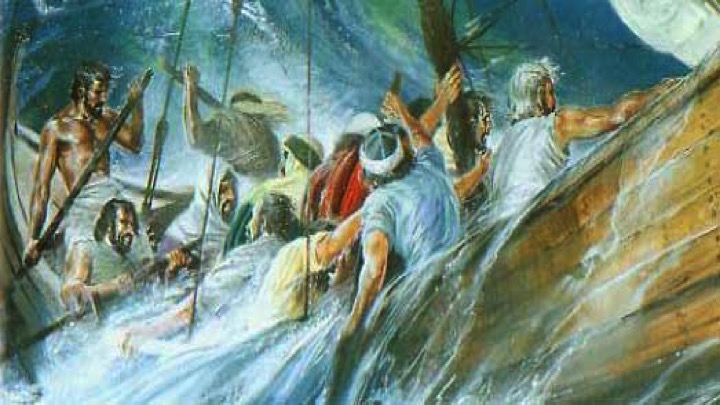
On Monday, we learned about David the shepherd, who wrote Psalm 23. Tuesday, we learned about Simeon and Anna waiting patiently for the Messiah. Wednesday, we acted out Jesus calming the storm. The children squeezed into a cardboard boat before sailing on a blue tarp Sea of Galilee.

Slide53

The hardest part was getting them all inside as they yelled, “He’s smooshing me!” And then getting them out, without destroying the boat. We made our own sound effects of the wind and waves and sprayed the children with water from squirt bottles.

At the end of each day of VBS, I was tired! All of the volunteers and staff worked really hard for Vacation Bible School–because it matters SO much! We want to share our hope, a hope that saves us, a hope in something that we cannot see and yet we believe! Our hope is in the Lord.

***

This is the message of Paul to the Romans–that we are saved, forgiven, in Jesus Christ. “There is, therefore, no condemnation for those who are in Christ Jesus,” says Romans 8:1. This life is different than the life we had before knowing Jesus–when we lived for ourselves. But this spiritual transformation isn’t a once and done thing. It is a process that we actually participate in with God. This is what Paul means when he talks about the desires of the flesh. This is a daily battle, an inner struggle, between the Spirit living in us and our flesh–what we feel like doing. Sometimes, the flesh wins! As Paul says in 7:19,  “For I do not do the good I want, but the evil I do not want is what I do.” This is the “groaning inwardly” of creation and ourselves, in Romans 8:22-23, while we “wait for adoption, the redemption of our bodies.”

In Romans 8, Paul urges us to live intentionally, relying on the Spirit within us. “Set your minds” on the “things of the Spirit.” Don’t dwell on the things of this world–your worries or fears, for to do so “is death. But setting our minds on the Spirit is slide “life and peace” (Romans 8:5-6).” Those who do this are called “children of God.”

OK, I know what you are thinking.  Hey, but we are saved by grace! Yes, the apostle assures us this in Ephesians 2:8-9! But then in Romans 8:12, Paul calls Christians “debtors,” and you might say, “What???” He doesn’t mean what you might think he means. This is a good kind of debt owed to the one who has done something wonderful for you that you cannot do for yourself! This makes me think of that old hymn by Elvina Hall: “Jesus paid it all. All to him I owe. Sin had left a crimson stain. He washed it white as snow.” This is the debt we all owe of humble, grateful service, understanding that we are all sinners and fall short of the glory of God, as Paul says in Romans 3:23. We can’t take credit for the good we do or the blessings we have. They are gifts from the God who loves us, unconditionally–even though we struggle to be faithful. God calls us his children, anyway!

This is the God who knows us intimately, but doesn’t remember our sins, as Hebrews 8:12 assures us, let alone hold them against us. This is the God we call “Abba!” or “Daddy” as Paul says in Romans 8:15, the same God to whom Jesus cries in Mark 14:36 as he prays in the Garden of Gethsemane. This is the God who wants us to live without fear. The God who has given us a hope that the world cannot take away, a hope we cannot see, but we wait for patiently. Our hope is in the Lord.

***

Thursday was the most challenging Bible lesson for me at VBS. It was a tough message! So I brought in my bedspread for the kids to sit on and invited them to take off their shoes. The adults asked, “Do I have to?” The children asked, “Can we take off our socks, too?” As one group settled in, a child wrinkled up her nose. “Peeeeuuuuu!” she said.

Slide67

What’s that smell?” It was feet! “Maybe we should keep the socks on,”  I said.

On Thursday, I had to tell the story of Jesus’ betrayal, arrest, death, and resurrection to reveal God’s love and the promise of eternal life. I had 20 minutes! I used slides, being careful not to use images that were too graphic. I didn’t want to frighten them or give them nightmares! Some of the younger kids demanded, “Where’s the blood?” One girl insisted, “My mommy says I can see the blood!” That lesson stirred all sorts of thoughtful questions.  “Why did they hate Jesus?!” “Were they bad guys?” “How did he stay on the cross?” “How did he die?” “Who took the rock away from the tomb?” “How did he rise from the dead?”


On Friday, the children wanted to take their shoes off again. “No,” I said, remembering the smell. I told them they were apostles now–sent out to share the good news that Jesus is alive! He is risen from the dead! I told them that it was dangerous to be a Christian in the early days. Christians could get beaten–or worse. Gertrude, wearing her hat upside down like a helmet, met the children at the door to my darkened office.  “Are you Christians?” she asked sternly.

Most of the children smiled and said yes. Then Gertrude sent them to “jail”–my comforter draped over my table and chairs, like a tent.

Slide52

Slide51

But my last group–the little ones who demanded to see the blood –were scared when I told them of the dangers of being a Christian. When Gertrude asked if they were Christians, they shook their heads. “NO! I’m not a Christian!” said one little girl, trembling and taking my hand. I told her everything was going to be OK. Then I led her and the group into the “jail” to tell them all about Paul and Silas, whose joy in the Lord was their strength during their times of suffering. The kids were squealing so loud, I had to say in my most indignant voice, “You are having WAY too much fun in jail!”

Slide81Slide84

The children learned about Paul and Silas’ hope that they could not see, a hope that endured, though they were beaten and thrown in jail. They sang hymns as they waited on God, who would send an earthquake that would set them free from their shackles. The guard and his family would come to know Jesus through their witness.

Our hope is in the Spirit, friends, still working in us, helping us to live as children of God. Set your mind on the things of the Spirit! Don’t dwell on the things of this world. Let go of worry, fear and sadness. May God lead you to new life in His Son. May God grant you His peace.

Someday, our patient wait will be over. And our hope will no longer be hidden. We will see him face to face.

Let us pray.

Holy One, we thank you for loving us, and calling us your children, forgiving and redeeming us, though we still struggle with sin. Thank you for encouraging us to draw nearer to you and call you “Abba! Daddy!” Help us to be patient, Lord. Build up our faith as we wait and hope in You. Transform us, more and more, so that we are more like your Son, led by His Spirit that lives in us. Grant us new life. Give us your peace. And thank you for this wonderful week of VBS–for all the volunteers, for all the children, for their families who love you and want their children to hope in You, too. Bless them, watch over them and keep them in your tender care today and always. In Christ we pray. Amen.

Rocks, Thorns and Hungry Birds

Slide28

Meditation on Matthew 13:1-9, 18-23

July 16, 2017

Merritt Island Presbyterian Church


     13 That same day Jesus went out of the house and sat beside the sea.

Slide09

Such great crowds gathered around him that he got into a boat and sat there, while the whole crowd stood on the beach. And he told them many things in parables, saying: “Listen! A sower went out to sow. And as he sowed, some seeds fell on the path, and the birds came and ate them up. Other seeds fell on rocky ground,  where they did not have much soil, and they sprang up quickly, since they had no depth of soil. But when the sun rose, they were scorched; and since they had no root, they withered away. Other seeds fell among thorns, and the thorns grew up and choked them. Other seeds fell on good soil and brought forth grain, some a hundredfold, some sixty, some thirty. Let anyone with ears listen!”…

18 “Hear then the parable of the sower. 19 When anyone hears the word of the kingdom and does not understand it, the evil one comes and snatches away what is sown in the heart; this is what was sown on the path. 20 As for what was sown on rocky ground, this is the one who hears the word and immediately receives it with joy; 21 yet such a person has no root, but endures only for a while, and when trouble or persecution arises on account of the word,  that person immediately falls away. 22 As for what was sown among thorns, this is the one who hears the word, but the cares of the world and the lure of wealth choke the word, and it yields nothing. 23 But as for what was sown on good soil, this is the one who hears the word and understands it, who indeed bears fruit and yields, in one case a hundredfold, in another sixty, and in another thirty.”

***

I was a journalist covering the election of a new synod bishop of the Evangelical Lutheran Church in America (ELCA) when I met Carol Hendrix. Slide29 Carol was elected on June 9, 2001 to the office of bishop of the Lower Susquehanna Synod of the largest group of Lutherans in North America. She was the first female bishop for a synod that was in the top 5 largest of the 65 ELCA synods; it covered nine PA counties, the cities of York, Harrisburg, and Lancaster and the borough of Gettysburg; 134,381 members attended 271 Lutheran congregations.

Though I was quite content being a journalist back then and not thinking about becoming a minister, her accomplishment and her gracious attitude toward me had an effect on me. She had done it–this 60-year-old who didn’t start seminary until after her two children graduated high school!  She was ordained in 1984, a year after she graduated from Gettysburg Seminary. She served 3 small churches–a dual parish in Heidlersburg, PA,  and Hampton, PA,  and St. John Lutheran Church in Fairfield, PA. She earned a master of sacred theology degree in 1991, and ministered as assistant to the bishop before being chosen from 113 nominees at the synod’s assembly at Gettysburg College.

She had broken the proverbial “stained glass ceiling”

Slide35


 that prevented most female clergy from being chosen to lead “tall steeple” congregations and surely not synods or entire denominations! Or at least, that was how it used to be.

What was amazing to me was that she had grown up in the Lutheran Church with no female role models in ordained ministry!

Slide36


Lutheran women were not permitted to be ministers in North America until the Lutheran Church in America ordained the Rev. Elizabeth Platz in 1970.

What I wanted to know was how did Carol get to this point–that she would become a bishop? What led her to decide to become a minister?

She had an answer.

She said it was going to Lutheran camp every summer when she was a child and teen. She got to see pastors in a different light. At camp, they wore shorts and T-shirts; played ball and Frisbee and other games; sang; laughed; made crafts; and ate camp food with the kids. She didn’t mention Bible lessons learned; they faded from memory long ago. But she recalled how they were real people.

Seeds were sown! Slide39

Oh, there were plenty of other seeds sown in Carol before she knew God was calling her to be a pastor. She grew up in a Christian household and attended church, Sunday school, and youth group. She had read her Bible and been taught to pray. Family and friends all helped to nourish her faith from childhood.

But that’s not what she talked about with me. It was what happened one week every summer– her camping experiences with other Christian children and adults, who might never know how they affected the course of Carol’s life.

I thought of Carol as I anxiously prepared for Vacation Bible School this week.

Slide41

It starts tomorrow! I am not ready, yet! I have worried about this for several busy weeks. But studying our gospel this week, I keep thinking of the opportunities for sowing seeds that we will have these next 5 days, when the kids will come expecting something really special –and the Spirit will meet us all here.

God will be faithful, whether we feel ready or not!

The boys and girls will get to see us in a different light; not in our Sunday best. They will meet us as we truly are– ordinary, imperfect people, trying to follow Christ with our lives. They will see us in T-shirts and shorts or jeans and probably sweating a lot! They will see their pastor, who cares about them so much and also happens to be a woman. Sharing Bible stories with Mary Lou and her puppet, Gertrude. Learning about Jesus the Messiah–how he lived and died and rose again so that all who would believe on him would live forever with him.

We’re gonna sow seeds of hope and faith. And ask the Sower for more hope and faith to fill our minds and hearts.

***

Receiving, understanding and embracing a faith that endures is what our lesson in Matthew is about. It is about how we respond–what we do with the faith that has been given to us by the Sower who lovingly gives to all, regardless of their response. What is our level of commitment to the Lord? Yes, this passage is about stewardship!

In this familiar, “Parable of the Sower,” it’s less about the Sower and more about where the seeds end up–the 4 types of ground. Slide43 Three of the conditions fail to result in a strong, enduring faith and fruitful life. The obstacles to following Christ are the rocks, thorns and hungry birds. The sower is probably using his hand to scatter wheat or barley, the two main crops of Palestine at the time. But the disciples struggle to understand the meaning of the parable, so Jesus explains to them privately, when they have left the crowd.

The seed that falls on the beaten path and is gobbled up by birds– this is anyone who “hears the word of the kingdom, but doesn’t understand it. The evil one comes and snatches away what is sown in the heart.” What is sown on rocky ground is those who hear the word and receive it with joy, but it endures only for a little while, for their faith has no root. When trouble or persecution comes, the person falls away.

What is sown among thorns

is when “the cares of this world and the lure of wealth choke the word, and it yields nothing.” What are the cares that threaten to choke the word in our lives today? So many things can be discouraging for us!

“The lure of wealth” is a sin we might not recognize in us, but it is a temptation for the rich and poor and in between. Worrying about money is so commonplace in our culture, whether we have a lot or a little! We never think we have enough and worry we might lose what we have. This is a powerful obstacle to discipleship.

What is left is the seed sown on good soil–vs. 23–Slide47 “the one who hears the word and understands it.” This is not merely an intellectual understanding! The seeds of faith are sown into our hearts, as he says in verse 19! But how can we know the seeds of faith have found good soil in us?

In verse 23, we read another condition for good soil–hearing the word, understanding it and bearing fruit that yields “a 100-fold, 60 and 30.” What is Jesus talking about?

Scholars don’t agree on what the numbers mean; 30 fold could mean 30 bushels harvested for every bushel sown. Some say this is a good crop but not a huge one; others argue that even a four or fivefold yield would be more usual in Roman Palestine. But 100 fold is much more than a farmer could hope for. In fact, when Isaac, in Genesis 26:12, reaps a 100-fold, it is because the Lord has blessed him.

Jesus is not promising material prosperity. BUT He is challenging us to believe in God’s abundance as we seek to be faithful to Christ’s call. We will bear fruit “a hundredfold” as we share God’s word with others, as we share seeds of hope and faith, though we might not see the fruit right away.

***

I can’t say that after meeting Bishop Hendrix that I decided, then and there, to become a pastor. It took a few more years–and a whole lot more seeds sown on me. But I think I will write her a letter of thanks and encouragement–scatter some seeds her way–tell her how she inspired me and helped me become who I am today!

This is my prayer for you–that you will keep your heart open to receive the seeds of hope and faith God has for you. They will come from your brothers and sisters in the faith. So keep on loving them. Scatter seeds of hope and faith on them, too. And don’t forget the children in Vacation Bible School!

     Since Carol’s election to synod bishop, a bigger story broke when Elizabeth Eaton was elected the first female presiding bishop of the 3.7 million-member ELCA in 2013.

Slide48

At an ELCA celebration of 45 years of ordaining women in 2015, Elizabeth said, “I give thanks for my sisters who were the first women pastors. I give thanks for all women in ministry.” The Rev. Jessica Crist, bishop of the ELCA Montana Synod, preached, “We are here today because somebody somewhere scattered a bunch of seeds. They didn’t all grow; they didn’t all survive, but some did. That’s why we are here. Look around. Look at some of the plants that have grown out of that random seed scattering. Look at these people. Look at the congregations they come from. Look at the ministries they represent. What a wild and wonderful community garden that has grown up from those scattered seeds.”

“We are called to be sowers… Scatterers of seeds…And we have the promise of the harvest to top all harvests. We may be out there seeing no hope of return. It doesn’t matter. We may get our hopes up again and again, only to be disappointed. It doesn’t matter….What matters is that we sow together.”


Let us pray. Thank you, God, for loving us so much that you you’re your son to live among us, minister to us, and show us the way back to you when we were lost in sin. Thank you for sowing the seeds of hope and faith into our hearts and for stirring us to want to hear your word and follow you! Thank you for the promise of abundant life through faith in Christ. Help us to keep on seeking you in these next five days to fill us with more hope and faith that we might share with the children and families of Vacation Bible School. Open the hearts of the children so that they might receive the seeds of hope and faith and cause them to grow to maturity so that someday, they may all be sowers, too. Bless the VBS volunteers with joy and energy, creativity and love as we all seek to be a blessing to others and to bear good fruit. In Jesus’ name we pray. Amen.


Ministry of Welcome

Slide04Meditation on Matthew 10:40-42

July 2, 2017

Merritt Island Presbyterian Church


40 “Whoever welcomes you welcomes me, and whoever welcomes me welcomes the one who sent me.  41 Whoever welcomes a prophet in the name of a prophet will receive a prophet’s reward; and whoever welcomes a righteous person in the name of a righteous person will receive the reward of the righteous; 42  and whoever gives even a cup of cold water to one of these little ones in the name of a disciple— truly I tell you, none of these will lose their reward.”


***


     I just started following a new blog; it’s called “Petals from the Basket,” by Brenda Strohbehn Henderson.

Slide07

Brenda isn’t a famous speaker and writer. She is an ordinary person who lives in Indiana and seeks to share her hope in Jesus with the world. She has written a number of books, including several collections of her devotions from her blog.

One of her posts begins with the intriguing title, “Why You Should Never Welcome Missionaries Into Your Home.” In it, she says that she and her husband, Joe, eagerly signed up to be hosts when her church sought homes for missionaries coming for a conference. They offered both of their guest rooms. “Big mistake,” she says. “BIG mistake….” Though she grew up in a home where missionaries and pastors often stayed, as Brenda and her husband pulled out of their driveway, headed for the final day of the conference, Brenda had tears streaming down her cheeks. She said to Joe, ‘We’re never hosting missionaries again.’ He readily agreed.” Brenda goes on to say that because she cares about us — her “sweet faith friends”–she feels it is only fair to warn us why we should never welcome missionaries into our homes.

Here are her reasons:

  1. “They broaden your burden for lost souls.” “My ‘mission field’ may not be in England or Africa,” she says, “but the dedication of our guests to fulfill God’s command to share the glorious gospel of Christ…was a rebuke to me to have that same driving desire to see my community, my city, my state, my nation hear the good news of salvation. Their fervor, zeal, determination and willingness to forego earthly comfort and pleasures pricked my heart’s natural tendency to put things, schedules, and personal needs before the eternal souls of those around me. My heart was stirred. My affections were refocused. My burden was renewed.”
  2. “They lengthen your already-long prayer list.” Oh, how I wish we could give full financial support to each missionary we come into contact with. It would be awesome to write a ginormous check and rapidly get them to the region to which God has burdened them to go. But in most cases, He will allow us to give toward their work through the gifts of our prayers….My prayer list grew a little longer this week,” she says. “My greatest prayer is that the God who hears and answers these prayers will draw others to Himself through the work of the missionaries I came to know and love while they were in our home.”
  3. “They take a piece of your heart with them when they leave.” “I cried tears of love, joy and gratitude,” Brenda says, “when the missionary couples drove away, feeling as if I were sending my “children” off to face an uncertain but blessed future, and my heart was touched…Through our evening times of fellowship around chocolate chip cookies and milk and our breakfasts of coffee cake and scrambled eggs, we shared not only food and laughter; we shared a bond in Christ that wove its way into our hearts…”

Slide14


***


Jesus also talks about benefits for those who “welcome” those he sends out to minister in his name in our gospel reading today. With “welcome,” Christ means those who offer food, shelter and other support. These few verses in Matthew bring to a close a long passage of instructions to his followers stretching the length of chapter 10. The prologue to the commission begins in 9:35, as Jesus shows the disciples what ministry is. He travels about “all the cities and villages, teaching in synagogues, proclaiming the good news of the kingdom and curing every disease and sickness.” His ministry is stirred by the heart and not done with some sense of duty or obligation, just as the disciples’ should be led by love and a desire to help. In 9:36, Jesus sees the crowds and has “compassion for them, because they were harassed and helpless, like sheep without a shepherd.” He asks his followers, before he sends them out, to pray for more missionaries. “The harvest is plentiful,” he says in 9:37, “but the laborers are few;” “Therefore ask the Lord of the harvest (pray!) to send out laborers into his harvest.”

At the beginning of ch. 10, Jesus summons his 12 and gives them his authority–the power that God has given Him–to cast out unclean spirits and cure sickness and disease. They may take little else with them on this journey. No gold, silver or copper — no money!

Slide23

No bag, extra clothing or shoes. They are to go out to the villages and stay in homes of those they find “worthy.” The disciples must rely on the hospitality of strangers. “If it (the household) is not worthy, let your peace return to you,” Jesus says in 10:13-14. “If anyone will not welcome you or listen to your words, shake off the dust from your feet as you leave that house or town.”

Those who respond to the disciples or his “little ones,” as Jesus calls them, are in effect responding to Christ himself, not just because they are his representatives and ambassadors, but because he is one of them and will always be with them, as he says at the end of Matthew. After warning of the persecution they will suffer because of him, Jesus assures them that they will find people who will be kind to them and places of refuge as they seek to follow in his loving ways.

“Whoever welcomes you welcomes me,” Jesus says, “and whoever welcomes me welcomes the one who sent me.” He continues on this theme in Matthew 25:35-40, when he tells them, “for I was hungry and you gave me food, I was thirsty and you gave me something to drink, I was a stranger and you welcomed me, I was naked and you gave me clothing, I was sick and you took care of me, I was in prison and you visited me.”


37Then the righteous will answer him, “Lord, when was it that we saw you hungry and gave you food, or thirsty and gave you something to drink?  38And when was it that we saw you a stranger and welcomed you, or naked and gave you clothing?  39And when was it that we saw you sick or in prison and visited you?”  40And the king will answer them, “Truly I tell you, just as you did it to one of the least of these who are members of my family, you did it to me.”

Slide29

When Jesus talks about welcoming a “prophet” and receiving “a prophet’s reward” and welcoming a righteous person and receiving “the reward of the righteous,” he is still talking about his disciples. He will again call them “prophets” in 23:34, when he warns the scribes and Pharisees of “woes” to come and the suffering of his followers. “Therefore I am sending you prophets and sages and teachers. Some of them you will kill and crucify; others you will flog in your synagogues and pursue from town to town.” He calls his disciples “prophets” in the Sermon on the Mount, when he also speaks of “reward,” a recurring theme in this gospel. Jesus says in 5:12, after telling them they are blessed when they are persecuted and others say evil things about them: “Rejoice and be glad, for your reward is great in heaven, for so they persecuted the prophets who were before you.”

But what does Jesus mean by “reward”? Well, he isn’t talking about earning our way into heaven. Salvation is a gracious gift from God received by faith. Jesus is talking about the blessings of being in a loving relationship with God. Have you noticed that the more you serve and give, the more your relationship with the Lord and God’s people grows?

Slide48

This is the treasure in heaven of which Jesus speaks in Matthew 6:19-21:  “Do not store up for yourselves treasures on earth, where moth and rust consume and where thieves break in and steal; 20 but store up for yourselves treasures in heaven, where neither moth nor rust consumes and where thieves do not break in and steal.  21 For where your treasure is, there your heart will be also.”

Slide16

Serving Christ’s disciples–the “little ones” and “least of these”– wouldn’t necessarily require much wealth or effort. It could be as simple as offering a “cup of cold water,” so precious in the climate in which Jesus lives.

Slide50

When Jesus mentions the “cup of cold water,” are you thinking what I am thinking? I am remembering when Jesus is hot and tired in John 4 and he stops at Jacob’s well in the middle of the day. Who comes along, but a Samaritan woman, all by herself? He asks her for a cup of water– and she receives much more than she gives–“living water,” in which she would “never thirst again.” Then she becomes a missionary for Christ in a dry and thirsty land.

Slide51


***

Many of you have opened your homes to missionaries and pastors, including Jim and me. You have opened your homes to one another. Shared meals, laughter and tears. Keep on doing the good works the Lord leads you to do–visit the sick and lonely, those living in poverty and those in prison, those who feel the Lord has forgotten them. Those who don’t know the Lord’s love and mercy! Give food and clothing to the needy. Send cards and emails to encourage those who are struggling or suffering. Give a smile, a hug, a kiss to a fellow laborer for God’s harvest. You will blessed when you do!

Slide56

And when you feel down and wonder how God could possibly use you because of the life situation you find yourself in, remember that what you have to give or what you can do is never too small to mean a great deal to someone else. And you can ALWAYS pray!

Remember: every act of kindness is like a cup of cold water in a dry and thirsty land.


Let us pray. Thank you, Lord, for your great kindness to us, for forgiving us for all of our sins through your Son’s suffering work on a cross. Move our hearts to compassion, Lord, for people in need so that we respond to Christ’s call to go out and share your gospel through acts of kindness and love. Teach us, Lord, to pray for one another and encourage each other daily. Lead us to give generously of ourselves and our resources to strengthen our ministry to the community and world. Raise up missionaries in our midst, those who are bold enough to leave our comfort zones and take your hope beyond our borders. May we desire to help the stranger and Christians who are struggling and suffering in countries where Christianity is illegal and your followers fear for their lives. Empower us to reach out to missionaries around the globe–particularly those who serve in our denomination–and offer them kindnesses that are to them as cups of cold water in a dry and thirsty land. In Jesus’ name we pray. Amen.

His Eye is on the Sparrow


Slide27

Meditation on Matthew 10:24-39

June 25, 2017

Merritt Island Presbyterian Church

****

24 ‘A disciple is not above the teacher, nor a slave above the master; 25it is enough for the disciple to be like the teacher, and the slave like the master. If they have called the master of the house Beelzebul, how much more will they malign those of his household!

26 ‘So have no fear of them; for nothing is covered up that will not be uncovered, and nothing secret that will not become known. 27What I say to you in the dark, tell in the light; and what you hear whispered, proclaim from the housetops.  28Do not fear those who kill the body but cannot kill the soul; rather fear him who can destroy both soul and body in hell.  29Are not two sparrows sold for a penny? Yet not one of them will fall to the ground without your Father knowing.  30And even the hairs of your head are all counted.  31So do not be afraid; you are of more value than many sparrows.

32 ‘Everyone therefore who acknowledges me before others, I also will acknowledge before my Father in heaven; 33but whoever denies me before others, I also will deny before my Father in heaven. 34 ‘Do not think that I have come to bring peace to the earth; I have not come to bring peace, but a sword.  35 For I have come to set a man against his father, and a daughter against her mother, and a daughter-in-law against her mother-in-law; 36 and one’s foes will be members of one’s own household.
     37Whoever loves father or mother more than me is not worthy of me; and whoever loves son or daughter more than me is not worthy of me; 38and whoever does not take up the cross and follow me is not worthy of me.39Those who find their life will lose it, and those who lose their life for my sake will find it.


***

I was preparing for my children’s message when Jim interrupted to tell me that he didn’t want to upset me. But he had just seen a snake.

“It was only a little black snake,” he said quickly, seeing fear on my face.

“Where?” I asked in horror.

It was curled up under a faucet on the outside of our house, he said. “It took one look at me and said, ‘You’re not a mouse!’ And took off.”

“Which way did he go?” I asked. What I wanted to know was, “Where is he now?!” For what is worse than seeing a snake in your yard is knowing the snake is still there, without knowing where.

“Out by the wall,” he said, gesturing vaguely, meaning he really didn’t know.

The coincidence was that I had been studying animals of the Bible, including snakes, for my children’s message. When the Bible mentions wildlife, it offers us a glimpse into the natural world in which the people of God lived thousands of years ago. We are brought closer to the ancient people, when we consider the many species of wildlife in the Bible that still dwell in the world today.

Slide35

We read about bats in Leviticus (11:19) and Deuteronomy (14:18); 14 species of which still exist in Israel! We read about bees. For the land of the promise is described in Exodus 3:8 as a land “flowing with milk and honey.” Bears are abundant and dreaded for their ferocity. To dare a bear was a mark of uncommon courage in 1 Samuel 17:34-36. And yes, we find 10 different varieties of snakes in the Bible, such as the one Jim discovered yesterday.

Snakes have always had a bad reputation, beginning with the incident in the Garden.

Slide40

Jesus calls the scribes and Pharisees snakes and “You brood of vipers,” in Matthew 23:33. John uses the same expression in Matthew 3:7 for the hypocritical Pharisees and Sadducees coming to the Jordan to be baptized.

A viper’s bite is deadly and would often come unexpectedly–for the snake hides and strikes quickly its unsuspecting victims. This is what happens to the apostle Paul, when he is shipwrecked and is making a fire in Acts 28:3-6. A viper comes out of the pile of sticks and fastens itself on Paul’s hand.

Slide42

The natives see the creature hanging from Paul’s hand, and think he must be a “murderer” for this to have happened after he was saved from the sea. But he shakes the creature off into the fire and suffers no harm. “They were expecting that he was about to swell up or suddenly fall down dead. But after they had waited a long time and had seen nothing unusual happen to him, they changed their minds and began to say that he was a god.”


***

While snakes are a symbol of evil, birds are usually a symbol of good. In Isaiah 40:31, those who “hope in the Lord” will be renewed in strength. They will “soar on wings like eagles.”

Slide47

In Genesis 8:8, a bird is again a symbol of hope when Noah sends out a dove to see if the land is dry enough to leave the ark. The Holy Spirit, when Jesus is baptized, “descends like a dove.”

Slide48Slide49

Jesus points to the birds in Matthew 6:26 when he teaches the disciples not to worry about food or clothing for God knows what they need. The Lord will provide. Trust in God’s steadfast love and care.  “ 26 Look at the birds of the air, for they neither sow nor reap nor gather into barns; yet your heavenly Father feeds them. Are you not of more value than they? 27  Which of you by worrying can add one cubit to his stature?”

Slide50

In today’s reading in Matthew 10:34-38, Jesus uses birds to teach his disciples, again, about God’s love. He is preparing them for the difficulties of ministry, warning them that he is sending them out “like sheep in the midst of wolves,” and saying that they should be “wise as serpents and innocent as doves.”


Then he tells him that the persecution will come from the ones closest to them. Jesus has come, he declares in vs. 34-36, “not to bring peace but a sword,” to “set a man against his father, and a daughter against her mother, and a daughter-in-law against her mother-in-law; one’s enemies will be members of one’s own households.”

This speech is disturbing, especially if we take it out of context. Jesus is not advocating violence and broken homes. He is trying to prepare his beloved for the suffering to come when they are apostles–the ones sent out to bring his message of hope to the world. When Jesus says that he has not come to bring peace, he is speaking of the pain and harsh reality of discipleship. Not everyone will embrace the Good News; many will oppose them and be ashamed of them, including members of their own families. The sword is a metaphor, as the writer of Hebrews says in 4:12, “For the word of God is alive and active. Sharper than any double-edged sword, it penetrates even to dividing soul and spirit, joints and marrow; it judges the thoughts and attitudes of the heart.”

Slide57

The apostle Paul also uses military language in Ephesians 6, beginning at v. 10 to describe the spiritual battle that is discipleship.

Slide59

10 Finally, be strong in the Lord and in the strength of his power.  11 Put on the whole armor of God, so that you may be able to stand against the wiles of the devil. 12 For our struggle is not against enemies of blood and flesh, but against the rulers, …. authorities, … the cosmic powers of this present darkness, … the spiritual forces of evil in the heavenly places. 13 Therefore take up the whole armor of God, so that you may be able to withstand on that evil day, and having done everything, to stand firm…” Then, in vs. 15-16, he says 15 As shoes for your feet put on whatever will make you ready to proclaim the gospel of peace. Take the helmet of salvation, and the sword of the Spirit, which is the word of God.”

At the end of today’s passage–verses 37-39–Christ sums up his main points. Discipleship means loving Him more than anyone, including your own family, which would have been shocking to the culture into which Christ was born that valued the bonds of family above all else. The other is that discipleship means sacrifice, being ready to give up anything and everything to follow as Christ leads you. Give up your worldly ambitions. Give your life to Him, and he will give you new, abundant life in Him. The cross that was the worst sort of death for the worst sort of criminals would become, with Christ’s resurrection, a symbol of God’s love and power and the hope of our resurrection with Him.

Slide26

“Take up your cross,” Jesus beckons us, meaning trust in God’s power and love and the hope of everlasting life. Then, “Follow me.”

Embedded in this passage about persecution and pain for Christ’s followers is the assurance that we need not be afraid of those who “kill the body but cannot kill the soul.” Don’t be afraid of people who might wish you harm–people who might be closest to you. But do trust the one who is your Savior, Redeemer and Lord.

Slide63

Jesus tells us to consider the sparrows. The Hebrew word for sparrow, tzíppôr, appears more than 40 times in the Bible and is a name for a category of small birds, of which 150 species live in the Holy Land today. They are so plentiful and little that they are sold 2 for a “penny”–a Roman copper coin, worth about 1/16 of a silver denarius and less than a quarter in U.S. money today. In Luke 12:4-7, we learn that if we bought 4 of them, the seller might throw in another for free. The poor who could not afford to buy a sheep or a goat for the priest to sacrifice in the temple could buy a couple of sparrows, instead. They also ate them roasted and skinned; each one was only a mouthful.

And yet God knows when a single sparrow falls from the sky. Just as he knows us and values us even more, though we might think we are not valuable. I think that’s why we have such a hard time sometimes in our walk with God. We are afraid that He doesn’t care about us because we are not worth caring about. But we are mistaken! God our creator knows us so intimately that he knows what is impossible for human beings to know– the number of hairs on our head!

Slide64

Jesus stirs us to think on the tiny sparrow not just because it is small and prolific but because they are social creatures that like to build nests where people work and live. They inhabit much of the world today! So we don’t have to look very far to find the reminder of God’s loving care- his assurance that we need not be afraid of the persecution that will surely come to all Christ’s followers, though we won’t know from whom or when our persecution will come. His Spirit will strengthen us through the most difficult times, such as when persecution comes from those closest and dearest to us–our families and friends–the ones we love.

As Civilla Martin wrote in a song, after visiting a bedridden friend, who said, when Civilla asked if she ever felt discouraged, “Why should I feel discouraged? Why should the shadows come, why should my heart be lonely and long for Heaven and home, when Jesus is my portion? My constant Friend is He: His eye is on the sparrow, and I know He watches me.”

Slide65


Let us pray.


Lord God, thank you for your powerful Word that created all life on this earth–all creatures–creeping and swimming things, birds that fly in the air. Thank you, God, for creating all of us and calling your Creation, including us, “Good.” Thank you for sending your Son to us to reveal your love and to teach us to love and then to equip us for compassionate ministry –and send us out! Help us, Lord, to not be afraid of the persecution we experience in this world–sometimes from strangers, but often from people who are close to us. Take our lives, Lord, and let us walk with you this journey of faith. And whenever we see the animals of your creation, especially the tiny, seemingly insignificant sparrows, take away all our fear. Open our eyes to see our value in your eyes and appreciate your redeeming love. In Christ we pray. Amen.

Celebration of Life: Remembering Gail Buchanan

Picture_Funeral

Meditation on Romans 5:1-5

June 20, 2017

Merritt Island Presbyterian Church


Therefore, since we are justified by faith, we have peace with God through our Lord Jesus Christ, 2through whom we have obtained access to this grace in which we stand; and we boast in our hope of sharing the glory of God. 3And not only that, but we also boast in our sufferings, knowing that suffering produces endurance, 4and endurance produces character, and character produces hope, 5and hope does not disappoint us, because God’s love has been poured into our hearts through the Holy Spirit that has been given to us.


***

When I accepted the call to minister here at MIPC, I was anxious to communicate with my new congregation on Facebook. And that is how I met Gail, before I met most of the church. She was the creator and administrator of our congregation’s FB page, and she and her daughter had designed the original MIPC website. Communication via social media was just one of her many talents and skills, I would soon find out. In a flurry of emails, back and forth, she welcomed me to Florida and the church and answered many questions. I felt an immediate connection with her, though she was in Maryland and would be for a while. She regretted not being at the church to welcome me in person, she said, or to attend my installation. She told me she was undergoing treatments for cancer. But when I expressed concern and sadness at her news, she assured me that she was “feeling well most of the time.”

She was as wonderful as I expected when I met her in person some months later–an intelligent, strong woman of faith who loved the Lord and loved this church, so much that she suggested we walk around the building and pray for the Spirit to cover this place, to be poured out on God’s people so that we may be changed and the ministry built up and protected from evil.

At our first meeting, Gail seemed to be glowing. People who hugged her in the Narthex after worship exclaimed, “Gail, you look great!” If she hadn’t told me she had cancer, I would never have known it. Her face shone with joy as she greeted longtime friends, fellow laborers for the Lord. She had the peace of Christ that surpasses all understanding!

God had a plan and a purpose for her life. She had endured not only physical illness but the pain of intense grief and loss. I didn’t know until a few weeks ago that she had lost her husband to cancer when he was only 39. Gail, a longtime, active member of our congregation, trusted in God’s love and His promise, as Paul writes in Philippians 1:6, to complete the good work in us that He has begun. She took seriously Christ’s call to follow him, sending out into the world those he equipped to do compassionate ministry. In Matthew 5:16, Christ tells his disciples, “Let you light shine before others so that they may see your good deeds and glorify God in heaven.”

Gail raised her 3 children to know God’s love and encouraged their participation in Kids Klub, Praise Band, Sunday school, and other activities with our congregation. She served as a deacon, on fellowship and outreach committees, and taught children’s church, parenting classes and Life Study Classes. She went on numerous mission trips, including one in 2013 to an orphanage in Haiti. She was an active volunteer in the community, serving on the Board of the Sharing Center, as a member of the Junior League of Central and North Brevard, and as President of the Friends of the Library. She earned the rank of captain in the U.S. Navy and served her country as a coordinator of medical services during Desert Storm. Then, she used her skills and experiences for medical mission work in Haiti and Nicaragua.

Her greatest passion was for helping needy children and families. She earned a bachelor’s in Occupational Therapy and a doctorate in Psychology. She served as a counselor/therapist at Merritt Island Christian School and was instrumental in the founding of an early intervention program, the “Lab School” at Brevard Community College, now Eastern Florida State. She taught parents and their children the great joy of being God’s special creation and fostered self-esteem.

Her one, uncompleted goal was to write a book on Conscious Discipline for the people of Haiti. But in the sharing of her passion with others, another Christian educator/therapist is committed to finishing the work, so that Gail’s dream will come true–and many children will be blessed.

Gail was a rock and inspiration to many. She continued to encourage and serve others while she was very ill, traveling to North Carolina to care for her mother last year. But even as she was a rock and inspiration, she was also supported and sustained by a circle of friends at her special Monday night Prayer Group for more than 3 decades. She believed in the power of prayer and the importance of staying connected to the community of faith.

When I asked Gail how she was feeling that day I met her–when she was glowing in the Narthex, she turned the conversation to the future. She thanked us for our prayers. She was making plans. She anticipated God’s healing. For, as the prophet Jeremiah assures God’s people living in exile, Gail had a future filled with hope.

***

Friends, Romans 5 speaks to those of us who mourn the loss of loved ones and for those who are enduring suffering and struggling to keep the faith. As I studied Paul’s letter, I realized that the apostle is teaching about suffering because he, too, has struggled and is worried for others who will suffer and be persecuted–because of their faith.

Paul in 2 Cor. 11 describes some of what he has endured, beginning at v. 24:  “Five times I have received from the Jews the forty lashes minus one. 25 Three times I was beaten with rods. Once I received a stoning. Three times I was shipwrecked; for a night and a day I was adrift at sea; 26 on frequent journeys, in danger from rivers, danger from bandits, danger from my own people, danger from Gentiles, danger in the city, danger in the wilderness, danger at sea, danger from false brothers and sisters; 27 in toil and hardship, through many a sleepless night, hungry and thirsty, often without food, cold and naked.”

But Paul concludes in 2 Cor. 12 that he will “boast” of his weakness and sufferings because they have a purpose. In his “weaknesses, insults, hardships, persecutions, and calamities for the sake of Christ” is where Paul finds his strength!

In Romans 5, Paul tells us, again, to boast of our sufferings for they have a purpose; suffering shapes our character and produces, of all things, hope!! HOPE is what gives wings to our faith and carries us through the most difficult and painful times. Hope is what keeps us walking each day, clinging to our faith, loving God and neighbor, as the Lord calls us to do, whatever our situation, in times of health and illness; in times of joy and sorrow.

Remember, hope isn’t something we conjure up with our own willpower. It is a gift from the Lord that we receive by grace in the community of faith. We don’t earn hope, just as we can’t earn our salvation. We can only open our hearts and pray the Lord will fill us up. “For hope does not disappoint us, because God’s love has been poured into our hearts through the Holy Spirit that has been given to us.”


***

The Spirit poured a variety of gifts into Gail that she sought to develop and share with the world, just as God has given all of us gifts He wants us to use for him. She took advantage of many opportunities to serve and help others, sharing from all that God had made her and all that he had given to her. She listened to her Savior, who tells his beloved in Matthew 10:8, “Heal the sick, raise the dead, cleanse those who have leprosy, drive out demons. Freely you have received; freely give.”

When we hear the stories of what Gail did for others–the countless lives she touched –we can easily imagine the Lord’s greeting of, “Well done, faithful one,” in the early morning hours of June 5, the dawning of a new day. That’s when she experienced the answer to all our prayers for her–complete healing, wholeness in Him.

All the faithful have this hope, not because we believe in ourselves and trust in our good deeds, intellect or accomplishments, but because we believe in the one who gave himself for us, who died so that the world may obtain access to God’s grace. We endure suffering and loss, as Gail did, trusting in our loving God and listening for His Word, knowing that suffering will shape us into the people God wants us to be. And that it will produce hope, which gives wings to our faith and “does not disappoint us. For God’s love has been poured into our hearts through the Holy Spirit that has been given to us.”


Old Father Abraham

Genesis 18:1-15 and 21:1-7

June 18, 2017

Merritt Island Presbyterian Church

Slide15

     18The Lord appeared to Abraham by the oaks of Mamre, as he sat at the entrance of his tent in the heat of the day. 2He looked up and saw three men standing near him. When he saw them, he ran from the tent entrance to meet them, and bowed down to the ground. 3He said, ‘My lord, if I find favor with you, do not pass by your servant.  4Let a little water be brought, and wash your feet, and rest yourselves under the tree.  5Let me bring a little bread, that you may refresh yourselves, and after that you may pass on—since you have come to your servant.’ So they said, ‘Do as you have said.’ 6And Abraham hastened into the tent to Sarah, and said, ‘Make ready quickly three measures of choice flour, knead it, and make cakes.’ 7Abraham ran to the herd, and took a calf, tender and good, and gave it to the servant, who hastened to prepare it.8Then he took curds and milk and the calf that he had prepared, and set it before them; and he stood by them under the tree while they ate.

9 They said to him, ‘Where is your wife Sarah?’ And he said, ‘There, in the tent.’ 10Then one said, ‘I will surely return to you in due season, and your wife Sarah shall have a son.’ And Sarah was listening at the tent entrance behind him. 11Now Abraham and Sarah were old, advanced in age; it had ceased to be with Sarah after the manner of women. 12So Sarah laughed to herself, saying, ‘After I have grown old, and my husband is old, shall I have pleasure?’ 13The Lord said to Abraham, ‘Why did Sarah laugh, and say, “Shall I indeed bear a child, now that I am old?”  14Is anything too wonderful for the Lord? At the set time I will return to you, in due season, and Sarah shall have a son.’ 15But Sarah denied, saying, ‘I did not laugh’; for she was afraid. He said, ‘Oh yes, you did laugh.’

21The Lord dealt with Sarah as he had said, and the Lord did for Sarah as he had promised. 2Sarah conceived and bore Abraham a son in his old age, at the time of which God had spoken to him.  3Abraham gave the name Isaac to his son whom Sarah bore him. 4And Abraham circumcised his son Isaac when he was eight days old, as God had commanded him. 5Abraham was a hundred years old when his son Isaac was born to him. 6Now Sarah said, ‘God has brought laughter for me; everyone who hears will laugh with me.’ 7And she said, ‘Who would ever have said to Abraham that Sarah would nurse children? Yet I have borne him a son in his old age.’

***

Ministers are notoriously bad drivers. Jim told me this on one of our first dates. He said this as he was driving his car with one hand, cleaning his glasses, and looking through a pile of CDs, asking me what music I wanted to hear. I was staring straight ahead, praying we wouldn’t crash or roll into a ditch. I married him, anyway, scary driver that he was. Then, 6 years later, I became a minister and a scary driver, too.

I was thinking about this Wednesday, as I drove to Heavenly Handmade, our needlecraft group. I was running late, so I took a short cut, went North Tropical Trail and discovered the road was closed.

Slide34

I followed the detour through a housing development that was like a maze; it led me southeast to a congested part of Courtenay Parkway. No light. No left turn.


I turned right and went to the first light that permitted U turns. I waited an eternity. Then the light turned green and I was headed north, again. At the barge canal I encountered road construction. More delays!

Slide40

Slide42

Finally, I crossed the bridge and drove what felt like a long way. I forget sometimes how far north Pat lives! Just when I thought the Georgia border must be near,

Slide46


I turned into the grassy path that is Pat and Gary’s driveway. I pulled up in front of the house. Got out and rang the bell.

Slide48

No one was home! I was in the wrong place! Peggy was hosting Heavenly Handmade at her house, south of the church. I was already 30 minutes late, and it would take me another 25 minutes to get there. The group would probably be preparing to leave as I pulled up in her drive!

I started to laugh. What else could I do?

My drive to Peggy’s was very different from my drive to Pat’s. It seemed to take no time at all. I relaxed and enjoyed some precious quiet, taking in my surroundings, thanking God for my blessings. I sensed the presence of Christ that is always with us and the joy that is ours when we know Him and seek to share our hope in Him.

On my way to Peggy’s, my phone went “Ding!” I picked it up and read the text, thinking, once again, how ministers are terrible drivers. Someone should take my keys away!

The message was from Peggy, wondering where I was.

Your HH awaits you!”

Soon, I reached Peggy’s house.

Slide53

I looked forward to seeing my friends, whatever time was left with them. We might call ourselves a “needlecraft group,” but that isn’t all. We come together for the fellowship.

Slide54

We tell stories. We laugh, and we never judge! What happens in HH, well you know the rest… My close friends in the Lord are, at times, like angels in disguise, speaking hope and encouragement into my life.

Slide55


***

Abram is 75 years old when the Lord says, “Go forth from your native land! Leave your father’s house and go to a land that I will show you.” God promises to be with him always and to bless him with a new homeland. God will give him offspring as numerous as the stars that will be a blessing to all the families of the earth.

Slide57

But Abram doesn’t have any children. Not one. He longs for a son, a desire that God placed inside him but would take many, many years to fulfill. Hearing the Lord’s voice for the first time, Abram believes in God’s promises. He and his wife, Sarai, and nephew, Lot, begin their journey into the unknown, leaving their old life behind, relying on the Lord for their life ahead.

Ten years pass, and Sarai is still childless. Impatient, she persuades Abram to have a child with her Egyptian slave, Hagar. But this isn’t what God meant when he promised Abram numerous offspring. Thirteen more years pass. Abram is 99! The Lord makes a covenant of circumcision with him, and gives him a new name– Abraham. “I will make nations of you,” the Lord says in Gen. 17, “and kings shall come from you.” God gives Sarai a new name, as well–Sarah–and says, “ she shall give rise to nations; kings of people shall come from her.” Abraham falls on his face and laughs, “Can a child be born to a man who is 100 years old? Can Sarah, who is 90 years old, bear a child?” God assures him, “Your wife, Sarah, shall bear you a son and you shall name him Isaac,” or Yitzchaq in Hebrew, meaning “He will laugh; he will rejoice.”

Then we come to today’s reading, beginning in Gen. 18. Abraham is still waiting for the promised child. “The Lord” appears to Abraham by the “oaks” or “terebinths of Mamre”–at “Hebron,” where Abraham pitches his tent and builds an altar to the Lord in Gen. 13:18. Terebinths are a source of turpentine, and Terebinth resin is used as a wine preservative in ancient Israel and the Near East.

Slide64


Hebron, Hebrew for “friend,” is named for Abraham. He is called a “friend of God” in Isaiah, 2 Chronicles, and James ch. 2.

Abraham, though he is waiting on the Lord, doesn’t know in Gen. 18 that the Lord has come. He sees only “three men.” But the humble hospitality he shows to the strangers is remarkable. He runs to meet them, bows and calls them, “my lords,” (small l) a title of respect. He brings them water to bathe their feet, invites them to recline in the shade. He tells Sarah to knead and make fresh bread out of choice flour and chooses a tender calf for a servant to prepare. Abraham isn’t wealthy. And calf is a “rare delicacy and a sign of princely hospitality among pastoralists.” (Sarna) He serves curds (yogurt) and milk, which is “highly esteemed in the ancient Near East and offered to the gods.” (Sarna) It is believed to be a “source of vitality” and to possess “curative powers.” (Sarna) Abraham doesn’t eat with his guests. He generously gives his best, then stands, ready to serve and satisfy their requests.

After they are welcomed, one of the strangers–sometimes called “the Lord,” and sometimes “an angel” or “a man”–tells Abraham that he will return in a year and, “Sarah shall have a son!” Sarah, listening in, laughs to herself. Is it amazement? Unbelief? The “Lord,” reading her mind, asks Abraham why Sarah laughs. Fearfully, she denies it.

To make sure the hearer understands the miracle that will take place, the word “old” is used 3 times in this passage–first by the narrator in vs. 11 to describe Abraham and Sarah, who are also “advanced in years.” Sarah calls herself “withered” and her husband “old” in verse 12. Then the “Lord,” in v. 13, asks Abraham why Sarah thinks she is too old to bear a child. The Lord leaves out the part about her saying Abraham is too old, too.

The divine being asks, “Is anything too wonderful for the Lord?

***

We can learn many things from Abraham. Here are some of them. His life of service to the Lord didn’t start until he turned 75. So those of you who might be feeling old, well, don’t! Keep on serving—doing the things God wants you to do! Don’t be afraid to try new things!

Abraham’s life of service comes from a heart of love. He is known in Scripture–Old Testament and New–to be a “friend of God.”

We can learn from Abraham’s faith–holding on to the hope of the promised child, though both he and his wife were long past childbearing years. Old Father Abraham is 100 when Sarah gives birth to Isaac, named for the joy he will bring!

We can learn from his remarkable hospitality to strangers–giving generously of what is his best, though he is not wealthy–his choice flour, his most tender calf and milk–a feast fit for princes. As the writer of Hebrews 13:2 reminds us, “Do not forget to show hospitality to strangers, for by so doing some people have shown hospitality to angels without knowing it.”

Another important thing that occurred to me when I read this passage is that God can use each one of us to be “angels” in disguise –speaking hope and encouragement to one another.

Slide70

And if we begin to doubt that God can make something lovely out of what seems to us to be chaotic, confusing, hectic lives, remember how the Lord answered Sarah’s doubts about the miracles of God:

“Is anything too wonderful for the Lord?”


Let us pray.

Holy One, we thank you that nothing is too wonderful for you. We thank you that, as the angel tells the Virgin Mary at the annunciation, that nothing is impossible with you! Give us the faith of Abraham, Lord, so that we serve you with our lives, giving generously from our best. Stir in us the heart of Abraham, whom you called “Friend,” that clings to hope and believes in your promises, despite the long time we may have to wait to see their fulfillment. We thank you for always being with us in Spirit and leading us each day. Thank you for sending angels to dwell among us and bring us words of encouragement. We look forward, Lord, to your Son’s return in glory–and to the fulfillment of the promise of your everlasting Kingdom–a new heaven, a new earth. When we see our loving Savior, face to face! In His name we pray. Amen.


“Planet Fitness”


Meditation on Matthew 28:8-20

Trinity Sunday: June 11, 2017

Merritt Island Presbyterian Church

Slide06

     8So they (the women) left the tomb quickly with fear and great joy, and ran to tell his disciples.  9Suddenly Jesus met them and said, ‘Greetings!’ And they came to him, took hold of his feet, and worshipped him. 

10Then Jesus said to them, ‘Do not be afraid; go and tell my brothers to go to Galilee; there they will see me.’

11 While they were going, some of the guard went into the city and told the chief priests everything that had happened. 12After the priests had assembled with the elders, they devised a plan to give a large sum of money to the soldiers, 13telling them, ‘You must say, “His disciples came by night and stole him away while we were asleep.” 14If this comes to the governor’s ears, we will satisfy him and keep you out of trouble.’  15So they took the money and did as they were directed. And this story is still told among people in Judea to this day.

   16 Now the eleven disciples went to Galilee, to the mountain to which Jesus had directed them. 17When they saw him, they worshipped him; but some doubted. 18And Jesus came and said to them, ‘All authority in heaven and on earth has been given to me.  19Go therefore and make disciples of all nations, baptizing them in the name of the Father and of the Son and of the Holy Spirit,  20and teaching them to obey everything that I have commanded you. And remember, I am with you always, to the end of the age.’

Slide15

***

My personal trainer persuaded me to go with him to work out at the gym on Monday. Usually, I come up with excuses why I can’t go with my husband to work out– I don’t have time.” I’m busy.” I’m tired.” But I also know how good it is for my physical and mental health, my energy, strength, and state of mind. So Jim and I went to Planet Fitness together.Slide24

Now Planet Fitness will tell you that there IS something different about their program; they proclaim a different message than other fitness clubs.

Slide25

Their logo is, “Planet Fitness, home of the Judgment Free Zone.”

Slide26

At the entrance to the Rockledge club, a sign commands us to “leave egos here”–meaning outside the building.

Slide27

The message of welcome, belonging, and acceptance of all people no matter where you are on your physical fitness journey–or how much money you have–is proclaimed in all their advertising and on the inside and outside of their facilities.

You can’t go to a Planet Fitness without getting the message–no matter if your workout is 20 minutes on a treadmill going turtle speed or 2 hours lifting, running and laboring at weight machines.

The Planet Fitness target customer, a Business Insider article says, is someone just getting used to working out–or people who “really, really hate exercising.” Hence, no frills. No classes. No yoga, Pilates or Tai chi. No free weights above 80 pounds. There’s actually a “lunk alarm” when people exert themselves with too much machismo. A “lunk” is defined as one who “grunts, drops weights or judges.”

Planet Fitness understands that even though people want to get healthy and lose weight, they also like eating. And I think they understand that when people eat together, relationships are built. They serve free pizza on the first Monday of every month and bagels on the second Tuesday.

I haven’t made it for the free pizza, yet, or the bagels. But I have visited the Tootsie roll bucket a few times.

I always leave with a smile on my face from this welcoming, accepting, informal and diverse environment. I think to myself, “I want to go back again,” though it is hard to find the time and energy to go very often.

I leave Planet Fitness marveling at the number and diversity of people who will get up early to drive to a fitness club and work out, sometimes before they go to a job or school. And I wonder how we can better communicate the joy, welcome, love and acceptance of Christ so that more people would want to get up early and come to our church for worship and fellowship on Sunday mornings. And our church would GROW!

I know the answer. We need to GO!

We need to go and make disciples!

Slide40


We return to the empty tomb in our gospel reading today and the risen Christ commissioning first Mary and Mary Magdalene and then all of his disciples, when he appears to them on the mountain or “in the hills,” as some translations say, of Galilee. Jesus is back to his home territory, where his own ministry was launched.

Slide50

This isn’t the first time he has sent his disciples out to minister in his name. He sends them out in Matthew 10:5, with these instructions, “Go nowhere among the Gentiles and enter no town of the Samaritans, but go rather to the lost sheep of the house of Israel. As you go, proclaim the good news, ‘The kingdom of heaven has come near.’ Cure the sick, raise the dead, cleanse the lepers, cast out demons.”

But before the women reach the other disciples to pass on Christ’s message, we read about a priestly conspiracy that only appears in this gospel. The guards posted at Christ’s tomb return to Jerusalem to report “all that had happened” to the chief priests and scribes. The religious leaders respond to the news by attempting to conceal the truth of Christ’s resurrection from the people –for fear they will lose their powerful positions. They offer the soldiers a “large sum of money” as a bribe and tell them to lie! “Say, His disciples came by night and stole him away while we were asleep,’” they say. They tell the soldiers not to worry if the governor finds out, for they will “satisfy him.” What does that mean? They will pay him off–another bribe! The confidence they have that the governor won’t be upset by their lies, bribes, and deception, as long as he receives his payment, paints a picture of rampant corruption among political and religious leaders.

What do the guards do? What would you do? Probably, they would be killed if they did not obey their orders. Verse 15 tells us, “So they took the money and did as they had been taught.” Matthew adds, “And this story has been spread among people in Judea to this very day.”

So you get an idea of what the disciples are up against–the lies and bribes of political and religious leaders–and certain persecution if they try to share the truth of Christ’s resurrection.

Then, we are in the hills of Galilee with the disciples, waiting for the risen Christ. Some worship him, when they see him. But others are hesitant to believe. Does it surprise you that even amongst Jesus’ faithful disciples, there are seeds of doubt?

Slide41

Jesus doesn’t call attention to those who doubt; he seems to expect them to react that way. He proclaims all authority “in heaven and on earth” that has been given to him, presumably by the Father. He commissions all of them–even those who may have doubts– with, “Go!” For their mission will require leaving Galilee and what is familiar and comfortable. The mission extends beyond but also includes “the lost sheep of Israel. ” Jesus says now, “Make disciples of all nations.”

Jesus defines making disciples with 2 participles. “Baptizing” is the first. This is not John’s baptism of repentance, a symbol of new beginning for Israel. This is a baptism of power from above! Baptism will now have a Trinitarian formula. Father, Son and Spirit are one “name,” as we say when we baptize, “In the name of the Father and of the Son and of the Holy Spirit.” Curiously, this is the only place we see a Trinitarian formula for baptism. In Acts, the apostles say, “in the name of Jesus.”

Slide54

“Teaching” is the second part of “making disciples.” This is also new; Jesus has been their teacher up to now. They will share “all” that Jesus has taught them about living as God’s people, loving God, loving neighbor and one another, challenging the arrogant and powerful, speaking up for the oppressed, caring for the sick and needy, feeding the hungry, and bringing “good news to the poor.” Teaching requires a commitment of time and heart, as Jesus loved his disciples and called them his children.

Slide58

Then, we come to the end of Matthew and Jesus promises his presence, just as God in the OT promises the patriarchs and prophets who feared what God was calling them to do.

“Remember, I am with you always,” Jesus says, “to the end of the age.”

***


Friends, Christ’s commission to his first disciples is our commission, too! Let us go and reach out to our neighbors, near and far, as the Lord commands us to do. Don’t wait for people to come to church. Go and find them! Be courageous! Go beyond what is comfortable and familiar. And remember, discipleship takes a commitment of time and heart!

Slide67

Look for ways you can get more involved in your communities so that you may form new relationships. Share your faith. Tell people what you like about your church and what activities you are involved in. Invite them to come with you and maybe enjoy a meal together afterward. Most people who are members now will say that they came to MIPC because a friend, neighbor or colleague invited them or that when they visited the first time, someone reached out and befriended them. They felt welcomed, loved, and accepted, no matter where they were on their spiritual journey.

We should always feel comfortable being ourselves here, too, and not be afraid to be vulnerable. Transformed and empowered by the Spirit, we are a “lunk-free,” “judgment-free zone.”

Slide68

We are all sinners, in need of God’s mercy and grace. There’s no place for egos at the foot of the cross as we worship the Lord, grateful for all that He has done.

Slide69

Go! Make disciples! Don’t be afraid!

For Christ is with you, to the end of the age.


Let us pray.


Holy One, thank you for sending Jesus to show us the way back to you when we were lost in our sins. Thank you for your sacrifice of your Son for our sakes and your gift of faith that has brought us into right relationship with you. Thank you for Christ’s promise to be with us always and his assurance that we need not fear for the future. Forgive us for our excuses why we don’t need to cultivate new relationships to share our hope with those who don’t know you. Draw us nearer to you and stir our hearts to compassion for people who haven’t yet heard your voice. Lead us to go beyond what is comfortable and familiar. Empower us by your Spirit to go, as you urge us to do, and share all that you have taught us. And keep on teaching us your ways. Grant us wisdom to discern your will for our congregation and courage to obey. Help us to grow in faith, Spirit, and number. In Christ we pray. Amen.

You are filled!

Meditation on Acts 2:1-21

June 4, 2017

Pentecost at Merritt Island Presbyterian Church

Slide02     2When the day of Pentecost had come, they were all together in one place. 2And suddenly from heaven there came a sound like the rush of a violent wind, and it filled the entire house where they were sitting.3Divided tongues, as of fire, appeared among them, and a tongue rested on each of them.  4All of them were filled with the Holy Spirit and began to speak in other languages, as the Spirit gave them ability.

Slide03

5 Now there were devout Jews from every nation under heaven living in Jerusalem. 6And at this sound the crowd gathered and was bewildered, because each one heard them speaking in the native language of each.7Amazed and astonished, they asked, ‘Are not all these who are speaking Galileans?  8And how is it that we hear, each of us, in our own native language? 9Parthians, Medes, Elamites, and residents of Mesopotamia, Judea and Cappadocia, Pontus and Asia, 10Phrygia and Pamphylia, Egypt and the parts of Libya belonging to Cyrene, and visitors from Rome, both Jews and proselytes, 11Cretans and Arabs—in our own languages we hear them speaking about God’s deeds of power.’ 12All were amazed and perplexed, saying to one another, ‘What does this mean?’ 13But others sneered and said, ‘They are filled with new wine.’

   14 But Peter, standing with the eleven, raised his voice and addressed them: ‘Men of Judea and all who live in Jerusalem, let this be known to you, and listen to what I say.  15Indeed, these are not drunk, as you suppose, for it is only nine o’clock in the morning. 16No, this is what was spoken through the prophet Joel:
17  “In the last days it will be, God declares,
that I will pour out my Spirit upon all flesh,

Slide10
and your sons and your daughters shall prophesy,
and your young men shall see visions,
and your old men shall dream dreams.  

Slide11


18 Even upon my slaves, both men and women,
in those days I will pour out my Spirit;
and they shall prophesy. 

Slide12
19 And I will show portents in the heaven above
and signs on the earth below,
blood, and fire, and smoky mist.

Slide14
20 The sun shall be turned to darkness
and the moon to blood, 
before the coming of the Lord’s great and glorious day.
21  Then everyone who calls on the name of the Lord shall be saved.”

***

Dan Bowman, the son of American missionaries, was raised in Japan. I met him while he pastored two small, country churches in southwestern Minnesota. He was a local legend, admired as the man who “played the saw.” How he could make beautiful hymns come out of an ordinary handsaw held between his knees and touched with a violin bow was a mystery to us all.

At one of our ministerium meetings, the Spirit spoke through Dan as he shared with us the ancient Japanese art of kintsugi, repairing broken pottery with a resin or glue mixed with silver or gold, thus highlighting and celebrating the broken places and at the very least, treating them as part of the history of the object, rather than something to disguise. The repaired pottery would then be more valuable than the original, before it was broken and mended with silver or gold.

Slide17Slide19Slide20

This is so unlike modern Western or ancient Greek thinking that views perfection as the ideal for human bodies, art objects and material possessions. Our Western ideal, based on ancient, pagan Greek beliefs (not Christian!), sees imperfection–flaws or weaknesses– as taking away from the value of a person or object. Brokenness, therefore, is something that renders the item worthless and if the object were repaired, it would have much less value than the original. Here are more examples of kintsugi.

Slide18

Slide22

Slide21


You know where I am going with this, right?

I was feeling broken and thinking that brokenness was a bad thing until I listened to Dan’s devotion about kintsugi. The Presbyterian church I was serving was going through a seemingly endless conflict over the placement of the communion table. I knew Jesus would be grieved over a church fighting about the table that is a reminder of His shed blood and broken body for our sakes and a symbol of our oneness in Him. I later learned that it was a fight they had been having for years before I arrived; it wasn’t really about the table–but over which family had the power and authority to make decisions in the church. Looking back, I think the brokenness I felt was a good thing. It humbled me and made me realize, more and more, my own reliance on the Savior and need for God’s grace and mercy, God’s forgiveness and unconditional love.

The words of Psalm 51 come to mind, when the repentant writer asks the Lord to “create in him a clean heart.” “For you have no delight in sacrifice; if I were to give a burnt offering, you would not be pleased. The sacrifice acceptable to God is a broken spirit; a broken and contrite heart, O God, you will not despise.”

   The church is not ours to make in our image or to keep as it has always been; it belongs to the Lord, and as Psalm 127:1 says, “Unless the Lord builds the house, those who build it labor in vain.” Sometimes Christians lose their way; they forget to whom they belong and the reason for their existence. Ephesians 2:10 reminds us, “For we are God’s handiwork, created in Christ Jesus to do good works, which God prepared in advance for us to do.”

Pastor Dan understood my feeling of brokenness, for he had weathered conflict in one of his small, rural congregations, Rock Valle in Echo, in 2010.

Slide32

The church voted 34 to 31 to leave the ELCA when the denomination began permitting gay and lesbian pastors in committed relationships to serve its congregations. While the vote did not reach the required 2/3 majority, those who voted to leave the denomination left the church. Dan remained to pastor the 31 who stayed and comfort the grieving– preaching hope and rebirth. But it was difficult. It led him to pray for the church every day, he said, and rely on his faith to see the way through it. Then, last July 23, Dan encountered another trial in ministry, when the larger church he pastors–Hawk Creek in Sacred Heart–was struck by lightning; the 140-year old building burned to the ground.

But Dan saw God’s providence at work, even as the fire burned. His mother prayed that the altar area would be spared as a witness to the world that God is still in charge. The altar was untouched.

Slide35

The congregation of 203 voted unanimously in January to rebuild. “How often do you get a unanimous vote with that many people?” he asks, in a Star Tribune article Jan. 29. “What this tells me is that this had to be led by the Holy Spirit.” They have been worshiping with, you guessed it, the little congregation at Rock Valle in Echo since the fire.


***


On the Day of Pentecost, a Jewish pilgrimage festival 50 days after Passover, Christ’s followers gather for prayer in a house in Jerusalem. Hoping in Christ’s promises, they seek the one who said in John 14:18, “I will not leave you as orphans. I will come to you!” They obey his instructions in Luke 24:49, to gather, wait and pray in the city, until they are “clothed with power from on high.” These 120 followers have seen “convincing proofs” of the risen Christ over a period of 40 days, learned about the kingdom of God and heard that they will “receive power when the Holy Spirit” comes upon them for a divine purpose. “You will be my witnesses,” he says in Acts 1:8, “in Jerusalem, in all Judea and Samaria, and to the ends of the earth.”

The same Spirit that hovers over the dark waters of Creation in Gen. 1:1

Slide40

and breathes life into human beings in Gen. 2:7

Slide41

fills Christ’s followers on Pentecost and stirs them to proclaim the gospel. The Spirit grants them the ability to speak in the native languages of the “devout Jews from every nation” living in Jerusalem, thus beginning the fulfillment of the promise that they would be Christ’s witnesses–“to the ends of the earth.” But all who hear the gospel in their language are not convinced. 7Amazed and astonished, they ask,Are not all these who are speaking Galileans?  8And how is it that we hear, each of us, in our own native language? And, “What does this mean?” Some sneer, “They are filled with new wine!”

Peter responds to the accusation of drunkenness by preaching his first sermon, beginning, as many modern preachers do, with a joke. “Indeed, these are not drunk, as you suppose,” he says, for it is only nine o’clock in the morning.” In other words, come back later. THEN you’ll see us drunk.

Much like Jesus’ sermon in Nazareth, when he reads Isaiah and declares the scripture fulfilled, Peter quotes Joel, and declares prophecy fulfilled with the coming Spirit. He assures everyone that if they call upon the name of the Lord–cry out to him in prayer–they will be saved.

As I read through Peter’s sermon that continues beyond our lectionary reading, I am struck by how confident and eloquent this uneducated fisherman has become. Is this the same Peter who sank into the sea for lack of faith when Christ beckoned him to walk on water with him?

Slide49

Is this Peter who denied Christ 3 times before the cock crowed, though he promised to lay down his life for him?

Slide50

This is he! But also the Peter to whom Jesus tells in Matthew 16:18, “You are Peter and upon this rock I will build my church,” confirming to us, yet again, that God uses broken vessels to accomplish His will. He uses flawed, imperfect people, but with hearts to love and serve him.

Slide51

As the people hear Peter preach, they are “cut to the heart.” They ask Peter and the other apostles what they should do. Peter answers in 2:38, “Repent and be baptized everyone of you in the name of Jesus Christ so that your sins may be forgiven and you will receive the gift of the Holy Spirit. For the promise is for you, for your children, and for all who are far away, everyone whom the Lord our God calls to him.”

Slide52

I imagine Peter often experienced brokenness as he struggled to follow Christ, even after Pentecost, when he was empowered by the Spirit to proclaim the gospel–and 3,000 accepted Christ that day. I have come to believe that when we experience feelings of brokenness, it may actually be that the Spirit is at work in us, healing us, making us whole and complete in Him.

Slide53

     Friends, we all have wounds of the heart and mind that God alone can repair. You are God’s work of art, His kintsugi!

Slide54

Embrace and celebrate your broken places! For they are filled with something more precious than gold or silver! For you are filled with the Spirit! In your testimony of what the Lord has done for you, God’s healing love will come shining through!


Slide56

Let us pray. Holy One, thank you for your Spirit, which filled 120 followers on Pentecost and fills each one of us now. We ask that your Spirit would refresh and renew us, heal us and make us whole. Grant us peace, confidence and courage to proclaim your gospel right where we live, work and go to school. Empower us to take the Good News of your Son to the ends of the earth to which each of us has been sent. Change our hearts, Lord, so that we humbly obey your commands, repent from our sins of fear and doubt and take risks, giving generously from all the resources you have given us. Lead us to do things we might never have done before to reveal your love to one another and the world. We pray that you would add to the church in this place, Lord, as you did on the day of Pentecost! Use us broken vessels for your glory and to the praise of your holy name! In Christ we pray. Amen.


Practical Resources for Churches

Everyone has a calling. Ours is helping you.


Consider the Birds

Pastor Karen shares thoughts on faith, scripture, and God's love and grace revealed through backyard wildlife.

F.O.R. Jesus

Fill up. Overflow. Run over.

Becoming HIS Tapestry

Christian Lifestyle Blogger

Whatever Happens,Rejoice.

The Joy of the Lord is our Strength

Stushie Art

Church bulletin covers and other art by artist Stushie. Unique crayon and digital worship art

The Daily Post

The Art and Craft of Blogging

WordPress.com News

The latest news on WordPress.com and the WordPress community.