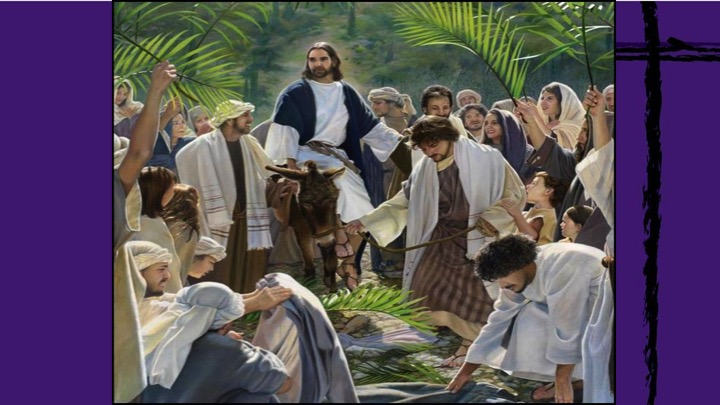
Seeking Christ in the Dark

Slide45

Meditation on John 3:1–17 (18-21)

March 12, 2017

Merritt Island Presbyterian Church

   Now there was a Pharisee named Nicodemus, a leader of the Jews. He came to Jesus by night and said to him, “Rabbi, we know that you are a teacher who has come from God; for no one can do these signs that you do apart from the presence of God.” Jesus answered him, “Very truly, I tell you, no one can see the kingdom of God without being born from above.” Nicodemus said to him, “How can anyone be born after having grown old? Can one enter a second time into the mother’s womb and be born?” Jesus answered, “Very truly, I tell you, no one can enter the kingdom of God without being born of water and Spirit.  What is born of the flesh is flesh, and what is born of the Spirit is spirit. Do not be astonished that I said to you, ‘You must be born from above.’ The wind blows where it chooses, and you hear the sound of it, but you do not know where it comes from or where it goes. So it is with everyone who is born of the Spirit.” Nicodemus said to him, “How can these things be?” 10 Jesus answered him, “Are you a teacher of Israel, and yet you do not understand these things? 11  “Very truly, I tell you, we speak of what we know and testify to what we have seen; yet you do not receive our testimony. 12 If I have told you about earthly things and you do not believe, how can you believe if I tell you about heavenly things? 13 No one has ascended into heaven except the one who descended from heaven, the Son of Man. 14 And just as Moses lifted up the serpent in the wilderness, so must the Son of Man be lifted up,  15 that whoever believes in him may have eternal life. 16 “For God so loved the world that he gave his only Son, so that everyone who believes in him may not perish but may have eternal life. 17  “Indeed, God did not send the Son into the world to condemn the world, but in order that the world might be saved through him. 18 Those who believe in him are not condemned; but those who do not believe are condemned already, because they have not believed in the name of the only Son of God. 19  And this is the judgment, that the light has come into the world, and people loved darkness rather than light because their deeds were evil. 20 For all who do evil hate the light and do not come to the light, so that their deeds may not be exposed. 21 But those who do what is true come to the light, so that it may be clearly seen that their deeds have been done in God.”

***

Seventy-five years ago this month Japanese Americans living on the West Coast began being “relocated” to internment camps. About 120,000 people were forced to leave their homes, schools, jobs and businesses shortly after President Roosevelt signed Executive Order 9066 on Feb. 19, 1942–two months after Japanese troops attacked Pearl Harbor.

Slide28

The order authorized the War Department to create military areas from which any and all Americans might be excluded, and to provide for the “necessary transport, lodging, and feeding of persons displaced from such areas.”

Slide27

Those of Japanese ancestry living in California, Oregon, Washington and Arizona, were gathered into trains, trucks, and automobiles and taken to 10 internment camps. Most of those deported to these military-style camps for the duration of the war were American citizens.

I find the most upsetting photos from this time are those of the children. Some are pictured sitting with suitcases and bedrolls, wearing what looks like luggage tags on their clothing.


I wonder what the photographers were they thinking when they looked through the camera lens? I wonder what led our country to this extreme measure? Racism has been blamed.

Slide42

But mostly I think it was fear.

I didn’t learn about the internment of Japanese Americans when I was in grade school. That dark secret was left out of our textbooks. The topic was barely mentioned in U.S. History when I was in college in the 1980s, even though it was a contemporary issue by then. In 1980, President Carter opened an investigation to “determine whether the decision to put Japanese Americans into internment camps had been justified by the government.” The investigation concluded that there was no evidence of Japanese Americans’ disloyalty. President Reagan, the year I graduated from college, signed into law the Civil Liberties Act of 1988, apologizing for the internment on behalf on the U.S. government and authorizing payment of $20,000 to each camp survivor—or their heirs. For many internment camp survivors had, by then, passed away.

Slide43

The last of the work camps closed in March 1946—4 years after the executive order was signed. Some families lived in those camps 4 years! When they were released, they didn’t have homes, jobs, money or businesses to return to.

A small, blurry photo of a Caucasian man smiling and shaking hands goodbye to his Japanese American neighbor moves me to question, “Why didn’t he–why didn’t we–speak up for the voiceless?”

Slide44


We were afraid.

We chose what was easy–to say and do nothing– rather than what was right.


***


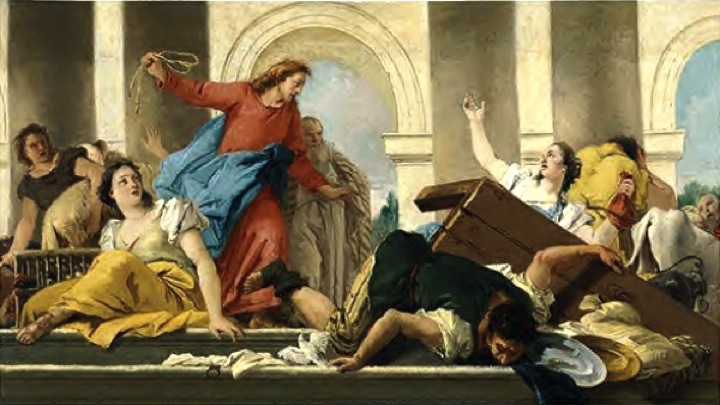
Today’s gospel tells of another dark time in history—when the Son of God came to bring light to a world darkened by evil and sin. Nicodemus’ coming at night symbolizes his own spiritual ignorance and his desire not to be seen by others, despite his protest that he and others know that Jesus is “a teacher who has come from God.” He isn’t ready to be seen talking with the one who, just a little while before, was “cleansing the Temple”– overturning tables, pouring out the coins, cracking a whip and driving out all the cattle and sheep and the moneychangers, who were turning the Father’s house into a “marketplace.”

Slide46

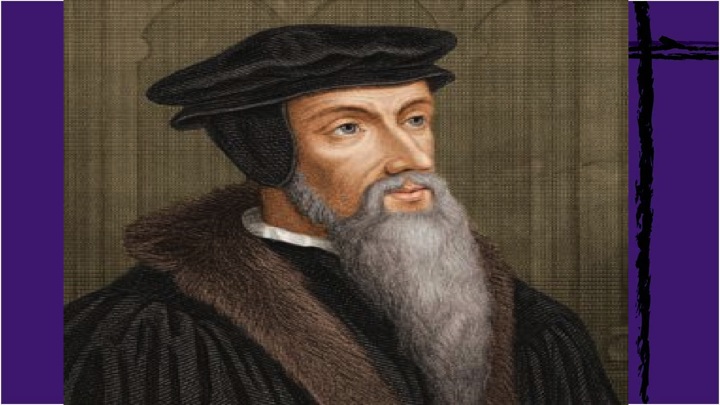
Nicodemus has endured Christian criticism over the centuries. John Calvin, in the 16th century, was scornful of those who sympathized with the movement for reform of the church but would not publicly be identified with it. He called them “Nicodemites.”

Slide47

Scholars today sometimes infer a rude tone in Nicodemus’ line of questioning in this passage, saying he is sarcastic when he asks in v. 4 how someone can be reborn—re-enter a mother’s womb– when they have grown old? But I don’t think a man, a respected teacher and leader, who would get up in the middle of the night to go and see Jesus in secret would be sarcastic. I think he really wants to know what Jesus means by this talk of being “born from above,” possibly even to distinguish this spiritual rebirth from reincarnation, a central tenet of Buddhism and Hinduism, ancient religions that predate Christianity.

Slide48

Jesus speaks in vs. 3 and 5 of seeing and entering the kingdom of God—something only possible by the grace of God and the empowerment of the Spirit; it is the Lord who chooses us! Jesus uses the same word when he talks about the “Spirit” and the “wind.” The Greek word for Spirit or wind is pneuma, just as the Hebrew ruach in Genesis means Spirit, wind or breath. “The wind blows where IT chooses,” Jesus says of the Spirit. “You hear the sound of it, but you do not know where it comes from or where it goes.”

Slide49

I also don’t think Jesus is being sarcastic or rude, either, when he asks in 3:10, “Are you a teacher of Israel and yet you do not understand these things?” I think he is teaching, as he often does, about the wisdom of this world–versus the wisdom of God! The apostle Paul will later say in 1 Cor. 2:14-15, “the natural man does not receive the things of the Spirit of God, for they are foolishness to him; nor can he know them, because they are spiritually discerned.”

“Very truly, I tell you,” Jesus says in John 3:11, “we speak of what we know and testify to what we have seen; yet you do not receive our testimony. 12 If I have told you about earthly things and you do not believe, how can you believe if I tell you about heavenly things?”

Jesus illumines for Nicodemus God’s plan for redemption. The reference to Moses comes from Numbers 21:9, when Israel wandered through the wilderness and was totally reliant on God for their daily survival. “So Moses made a bronze snake and put it up on a pole. Then when anyone was bitten by a snake and looked at the bronze snake, they lived.”

Slide56

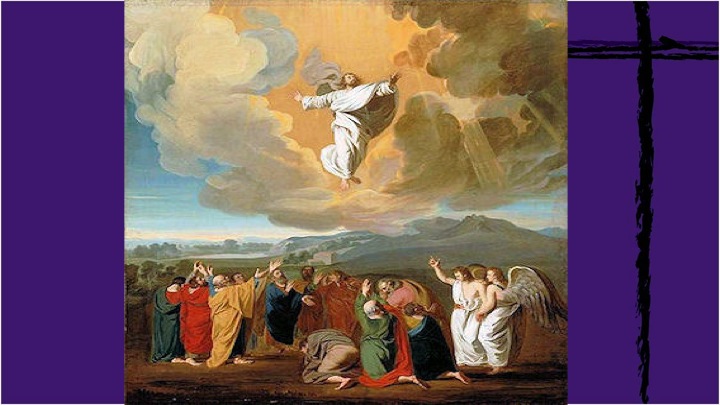
Jesus connects Israel’s salvation to the new covenant that will be opened to all—when the Son of Man will be “lifted up” (foreshadowing Jesus’s death on a cross, his resurrection and ascension).

Slide57

Jesus comforts us–and Nicodemus –with assurances of God’s love and grace in 3:16-17. God is not exclusive in His love for certain people that we may decide to dislike. God’s love is for ALL. God “did not send the Son into the world to condemn the world, but in order that the world may be saved through him.” It is true that not everyone will receive this message, Jesus tells Nicodemus. He is warning him of things to come and challenging Nicodemus, perhaps drawn to Christ by the Spirit, to make good choices–“do what is true.” What is right!

“The light has come into the world,” Jesus says, “and people loved darkness rather than light because their deeds were evil.” But those who “do what is true,” he says in 3:21, “come to the light, so that it may be clearly seen that their deeds have been done in God.”

Nicodemus disappears abruptly from the text after his incredulous question in v. 9, “How can these things be?” We are left to ponder what his response will be. He will reappear briefly at Jesus’ interrogation in ch. 7 and then at the cross, with Joseph of Arimethea, another secret disciple of Jesus–for fear of the Jews.

Slide64

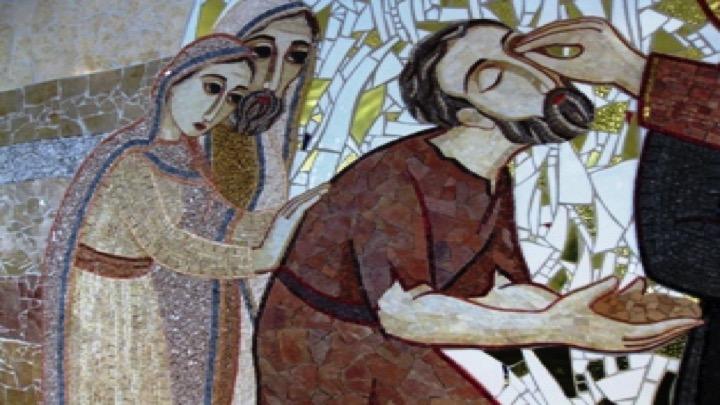
Nicodemus will anoint Christ’s body with an extraordinary amount of spices and oil–100 pounds, Scripture says! They will wrap Christ’s body with cloth and lay him in a garden tomb.

Slide65


Nicodemus’ journey of faith may stir us to consider our own stories–times when we were faithful and times when we relied on ourselves, and stumbled and fell. We are all sinners, redeemed by grace! We are left to our own response to Christ’s assurance of God’s love for the world. And the invitation for us all to “come to the light” so that others may see our good deeds done in God–and be saved.

In these 40 days of loving service, drawing ever nearer to Christ, let us come to our Savior with our darkness–confessing our sin and doubt. May the Spirit from above that has chosen us to believe on Christ and receive eternal life grant us a vision of God’s just and peaceful kingdom.

Slide66

May the same Spirit dispel our fears and empower and unite us to do not what is easy–to say and do nothing–but what is right.


Let us pray.

Holy One, we thank you for your love for the world and the gift of your Son, forgiveness of all our sins, and the promise of everlasting life with you. Forgive us for not wishing to admit our mistakes and reveal our weaknesses, even to you. Humble us. Forgive us for our pride. Forgive us for choosing to say and do nothing. Thank you for catching us when we stumble and start to fall, holding us firmly in your loving hand. Grant us a vision for your just and peaceful kingdom. Teach us to walk in your ways. In Christ we pray. Amen.


“40 Days of Service”


Meditation on Matthew 4:1-11

March 5, 2017

Merritt Island Presbyterian Church


           Then Jesus was led up by the Spirit into the wilderness to be tempted by the devil.  He fasted forty days and forty nights, and afterwards he was famished. The tempter came and said to him, “If you are the Son of God, command these stones to become loaves of bread.” But he answered, “It is written, ‘One does not live by bread alone, but by every word that comes from the mouth of God.’” Then the devil took him to the holy city and placed him on the pinnacle of the temple,  saying to him, “If you are the Son of God, throw yourself down; for it is written, ‘He will command his angels concerning you,’ and ‘On their hands they will bear you up, so that you will not dash your foot against a stone.’” Jesus said to him, “Again it is written, ‘Do not put the Lord your God to the test.’”  8 Again, the devil took him to a very high mountain and showed him all the kingdoms of the world and their splendor; and he said to him, “All these I will give you, if you will fall down and worship me.” 10 Jesus said to him, “Away with you, Satan! For it is written, ‘Worship the Lord your God, and serve only him.’ 11 Then the devil left him, and suddenly angels came and waited on him.

***

Slide10


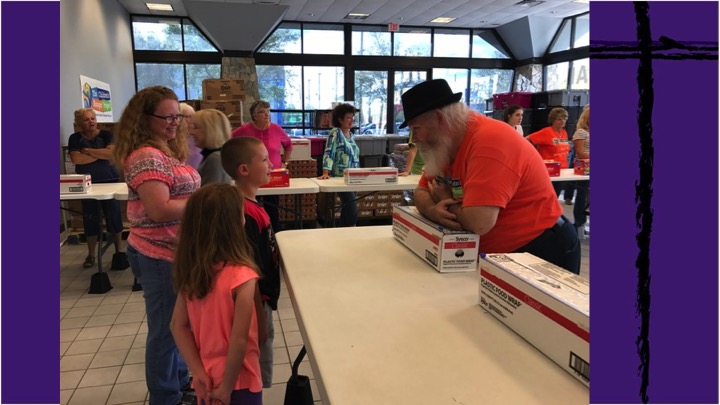
We had such a great turnout for our Church Work Day yesterday! With at least 30 volunteers, Herb said it was the largest number of participants for a Church Work Day that he can remember. He was wearing a cap with a C on it for Chicago Cubs, but Debra, who must have put in at least 30 hours of calling and organizing teams of volunteers before yesterday’s event, says the “C” stands for “CHEERLEADER.” His job was to walk around and lift everyone up with his kind remarks and gentle sense of humor.

Slide11


On Saturday, beginning at 8 a.m., workers painted walls and fences, power-washed walls and walks, dug up plants and planted new ones, and weeded and pruned back what was overgrown. When I arrived around 9:30, folks were climbing ladders to hop on the roof to make repairs and to cut down large tree limbs, hanging over parking areas.

One guy, perched confidently on a tree limb overhead invited me to “come on up!” He seemed quite at home on his tree limb, as did the others working with him, filling up the back of a red pick up truck.


What a great time of fellowship it was! It was the perfect way to start off the first weekend in Lent.

People walking or driving by took notice of the commotion outside the church–cars and trucks parked all over the grass, the noise and smoke of power tools mingled with talking and laughter. They must have wondered, “What’s going on with the Presbyterians today?”

Slide61


***

We look inward and reach outward in the season of Lent that has just begun. We examine our hearts and lives to see how we might be more faithful to God’s call. We are also reminded of how much we need God’s grace and unconditional love!

Slide33


The word Lent comes from the Middle English word “lente” meaning springtime and from the Old English word meaning “to lengthen” as in the lengthening of daylight hours in spring. In the early church, Lent became the name for the 40 weekdays before Easter, beginning with Ash Wednesday. This was a time when new converts would study the faith in preparation for baptism the night before Easter. It was a time of penitence for those already baptized and to make a sacrifice, such as giving up meat, in honor of the Lord’s 40-day fast, when the Spirit led Him into the wilderness to be with God–and be tempted by the devil. Some traditional folks still observe Lent by giving up something pleasurable to eat.

In the past few years, Presbyterians have been challenged to observe the holy season differently than just giving up a food that we enjoy. Donald McKim writes in a 2015 article in Call to Worship of other possibilities for Lenten spiritual practices. We could, instead, give up something that is more harmful to us and the Church, such as negative attitudes and bad habits. Then, add on something new that IS good– new attitudes and practices, new friendships, and new ways of serving in our churches and communities. “We never know,” McKim says, “what the insights and prompting of the Holy Spirit will provide!”

The important thing is that the spiritual practices of giving up and adding on– whatever they might be, should bring us nearer to the Lord, and build on our relationships with others. Others should see God’s grace in us. Others should experience God’s love.

The “40 days and nights” in our gospel reading today connects our Savior’s story–and the New Covenant God offers to all in Jesus Christ– to the Hebrew Bible. While the rain coming down for “40 Days and 40 nights” in the Noah’s Ark account is the first incidence of that phrase (Gen. 7:4, 12:16; 9:8-16)

Slide35


the “40 days and 40 nights” in Matthew 4 is probably meant to connect Jesus’ wilderness experience with Moses and Elijah. In Exodus 34:27-28, Moses fasts alone in God’s presence on Mount Sinai as he receives the Ten Commandments.

Slide36


in 1 Kings 19:17-12, Elijah fasts for 40 days and nights as he flees to Mount Horeb (also known as Sinai), where he encounters God.

Slide37


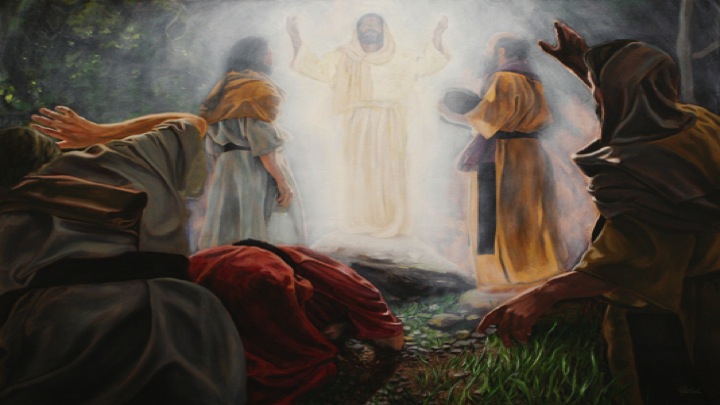
Matthew will connect the three again–Jesus, Moses and Elijah– in Matthew 17 with Jesus’ transfiguration.

Slide38

Three gospels share Jesus’ fasting/temptation/wilderness experience. While Luke’s account is similar to Matthew’s, Mark’s gospel, the briefest and probably the oldest, tells the story in 2 verses! Mark 1:12-13 says, “The Spirit immediately drove him into the wilderness. And he was in the wilderness 40 days, tempted by Satan, and he was with the wild beasts; and the angels ministered to him.”

The 40 days in the wilderness immediately follows Jesus’ baptism. The Spirit that comes upon Jesus in his baptism is already guiding him to do God’s will. Chapter 4 begins, “Then Jesus was led up by the Spirit into the wilderness to be tempted by the devil.” Another connection with the baptism passage is when the devil begins each of his questions to Jesus by addressing him, “If you are the Son of God…” At Jesus’ baptism, a voice from heaven declares Jesus’ identity as the Son of God.

This “if” is more like “since.” The tempter isn’t questioning his identity. He questions Jesus’ allegiance. Jesus models for us that when we are tempted, God’s Word and Spirit will strengthen us to do God’s will.

All of Jesus’ responses come from Deuteronomy, the most quoted book of the Torah (the first 5 books of the Bible) in the NT. This first temptation is for Jesus to put his own physical needs and desires ahead of God’s Will for Him. Jesus answers, “One does not live by bread alone, but by every word that comes from the mouth of God.” He is quoting Deuteronomy 8:3–a reminder of Israel’s complete reliance on God in the wilderness for 40 years. “Yes, he humbled you by letting you go hungry and then feeding you with manna, a food previously unknown to you and your ancestors. He did it to teach you that people do not live by bread alone; rather, we live by every word that comes from the mouth of the LORD.”

The “devil” then transports him to the holy city to the pinnacle of the temple, probably in a vision, saying, “If you are the Son of God, throw yourself down.” A fall from the pinnacle of the temple surely would be fatal. This is the temptation for Jesus to assert his power and will, again, over God, challenging God to save His life when he attempts to end it. The devil quotes from Psalm 91:11-12, taking it out of context when he says, “He will command his angels concerning you, and ‘On their hands they will bear you up, so that you will not dash your foot against a stone.” The passage is a promise of protection for all who have “chosen to live in the shelter of the Most High,” but not an assurance of safety for Jesus if he tries to force God’s hand. Later, in Matthew 27:40, when Jesus suffers on the cross, he will be tempted by a similar way of thinking.

Slide39


“Those who passed by him hurled insults at him, shaking their heads. ‘You who are going to destroy the temple and build it in three days, save yourself! Come down from the cross, if you are the Son of God!’”

The devil’s third temptation is the human desire for earthly power and prestige. He offers to “give” Jesus all the kingdoms of the world and their splendor” if Jesus will fall down and worship him.

Jesus quotes Deut. 6:13, changing the word from “fear” to “worship,” saying, “Worship the Lord your God, and serve only him.”


***


Thinking about how successful and joyful our Church Work Day was yesterday on the first Saturday in Lent, here’s my challenge to you. What other creative ways can we worship and serve the Lord throughout these 40 days? What do we need to give up? What habit or attitude is getting in the way of our wholehearted worship and service? What does the Lord want us to add on? What ministry, spiritual practice or acts of kindness are the Lord leading us to do? May others see God’s grace in us. May others experience God’s unconditional love.


This slideshow requires JavaScript.


Let us pray.


Holy One, thank you for your Word and Spirit that strengthened and guided your Son when he was in the wilderness 40 days. Thank you that he modeled for us that when we are tempted by the devil, we, too, should cling to your Word and Spirit, for you will guide us on our way. Lord, thank you for your grace that covers all our sins and for our faith in Your Son’s suffering work on the cross that has brought us into right relationship with you. Show us throughout these 40 days, Lord, what attitudes or practices we need to give up–and what new, creative ministry activities and spiritual disciplines you might want us to add on. Lead us to be more like your Son. In His name we pray. Amen.

“It’s A Good Thing We’re Here!”

slide41

Meditation on Matthew 17:1-9

Feb. 26, 2017

Merritt Island Presbyterian Church

     Six days later, Jesus took with him Peter and James and his brother John and led them up a high mountain, by themselves.

slide07

 2And he was transfigured before them, and his face shone like the sun, and his clothes became dazzling white. 3Suddenly there appeared to them Moses and Elijah, talking with him.  4Then Peter said to Jesus, ‘Lord, it is good for us to be here; if you wish, I will make three dwellings here, one for you, one for Moses, and one for Elijah.’ 5While he was still speaking, suddenly a bright cloud overshadowed them, and from the cloud a voice said, ‘This is my Son, the Beloved; with him I am well pleased; listen to him!’ 6When the disciples heard this, they fell to the ground and were overcome by fear. 7But Jesus came and touched them, saying, ‘Get up and do not be afraid.’ 8And when they looked up, they saw no one except Jesus himself alone. 9 As they were coming down the mountain, Jesus ordered them, ‘Tell no one about the vision until after the Son of Man has been raised from the dead.’


***

I was mostly on my own this week, taking care of our two high maintenance dogs and a slightly spoiled cat. Jim was away in Boston, visiting our granddaughter, Jessie, son, Daniel, and daughter-in- law Hiu-fai. Jim also spent two emotional days in New York, visiting his brother-in-law, Chuck, hospitalized with pneumonia and a hip broken beyond repair, and his sister, Mary, who suffers from dementia and was recently moved to a memory care wing of an assisted living center. In addition to his concern about Chuck and Mary’s health, Jim was worried that I wouldn’t take good care of our Pomeranian and Sheltie! He kept asking me, “How are the dogs??” But he never once asked about the cat! Probably because Melvyn always manages to make his needs and desires known–and persuade someone to feed him, pet him, or let him sleep in their lap. To help reassure Jim that everything was OK, I texted him photos each day. They helped him feel more connected to what was going on at home. Seeing, like the old saying goes, is believing.

Jim also sent me texts and photos so I could feel more connected to him and what was happening with the family. I felt badly about not being able to go with him to see Chuck and Mary. And I felt badly about missing an opportunity to see Danny, Hiu-fai and little Jessie, who at 3, seems to be changing every day.

When it wasn’t enough to see photos and read texts and we had time, we talked on the phone. I put Jim on speakerphone so Mabel the Pomeranian could hear his voice and he could hear her shrill barking when she wanted to get in my lap or when she wanted me to keep on petting her–and never stop!

slide38slide39

We are comforted to see and hear the ones we love, though I did long to touch them, too. I kept saying, “Tell Jessie I love her and give her a big hug!” And then, yesterday, Jim surprised me by texting me a recording Jessie’s voice, so I could hear her and feel closer still.


***


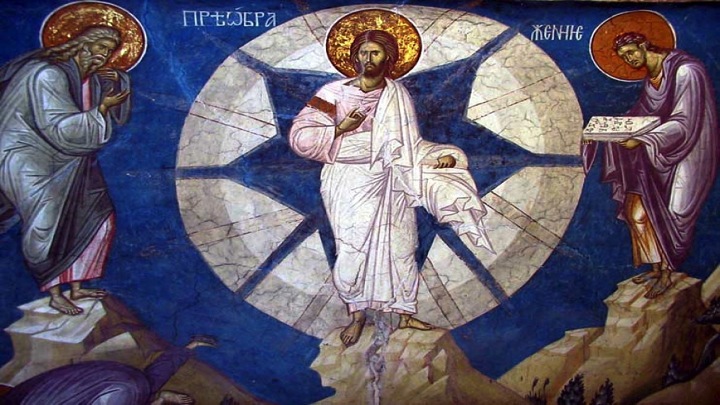
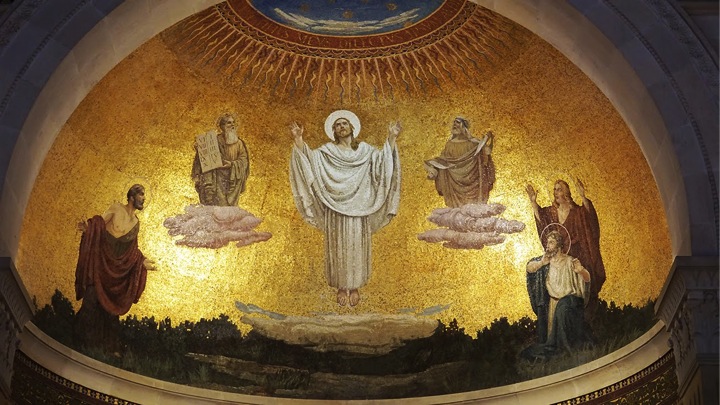
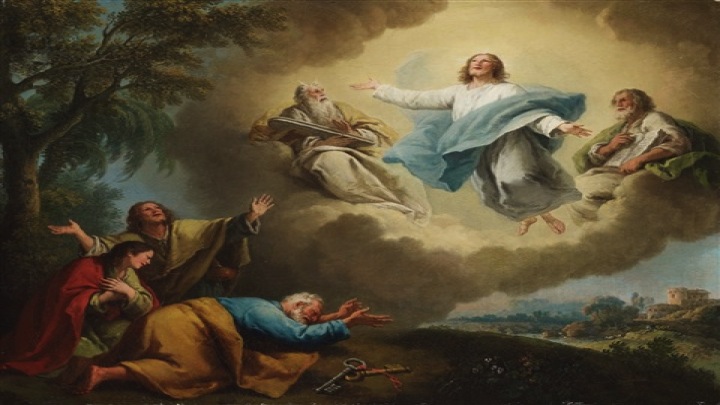
We encounter the familiar story of the Transfiguration — the metamorphosis–of our Lord in our gospel lesson in Matthew 17 today. The Transfiguration, which appears in 3 of our gospels, reveals Christ’s true identity in a vision shared by 3 disciples on a mountaintop. Important aspects of this passage disclosing his identity include the change in Jesus’ appearance– his face shining “like the sun” and his clothing a “dazzling white”, recalling other biblical descriptions of heavenly beings who appear among humans. Another key aspect is his association with Moses and Elijah — representing the “Law” and the “Prophets” and demonstrating his messianic role. And, finally, the voice from heaven–presumably the voice of God. This is the third time we have heard this proclamation in Matthew’s gospel so far. The first is at 3:17, at Jesus’ baptism in the Jordan. The second is in chapter 16–6 days before the Transfiguration. They are at Caesarea Philippi and Jesus asks Peter, “Who do you say that I am?” Peter says, “You are the Messiah, the Son of the living God.”

Jesus responds by saying that Peter is blessed. “And I tell you, you are Peter,” Jesus says, referring to the Greek name that Jesus gave Simon when he called him to be his disciple; Peter (Petros) means “stone” or “rock.” “And on this rock I will build my church,” Jesus says. But then he foretells his death and resurrection and Peter rebukes Jesus, saying, “God forbid it, Lord! This must never happen to you.” Jesus “turns” on Peter, then, and says, “Get behind me, Satan! You are a stumbling block to me, for you are setting your mind not on divine things but on human things.” Then he foretells the disciples’ suffering and persecution. “If any want to become my followers,” he says, “let them deny themselves and take up their cross and follow me.”

slide50

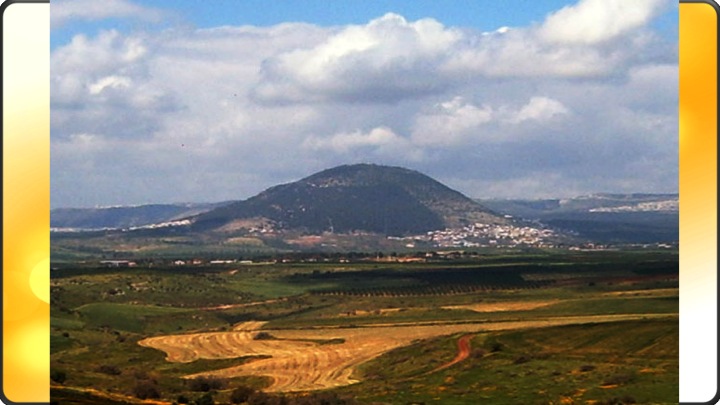
The mountain where Jesus leads Peter, James and John to climb to the top could be Mount Tabor in southern Galilee, with an elevation of 588 meters. Mount Tabor could be easily reached in six days from Caesarea Philippi. But it could also be Mount Meron, the highest mountain in Galilee, with an elevation of 1208 meters.


As I read this passage, Peter’s response to seeing Jesus transfigured and speaking with Elijah and Moses stands out to me. He says, “Lord, it is good for us to be here; (“It’s a good thing we’re here to help you, Jesus!) If you wish, I will make three dwellings (or shelters or booths) here, one for you, one for Moses, and one for Elijah.”

Peter sounds like us! He wants to do the right things. But he only knows to do what he has already done before. He can’t imagine what is to come–just as we have no idea what the future holds and why things happen as they do. We can only trust that God has planned for us a future with hope, and will guide us in His will.

Peter’s response is firmly rooted in everyday life. He is practical, pragmatic. If Jesus, Moses and Elijah are going to have a meeting on top of a mountain, they will need shelter from the heat of the sun, probably made with branches and leaves, like those regularly made for the Feast of the Tabernacles. But why would three heavenly beings need “dwellings” or “shelters?” They wouldn’t. Peter is making a mistake similar to the one he made 6 days earlier, when Jesus rebukes him for being a stumbling block to him. “You are setting your mind not on divine things, but human things,” I hear Jesus say, again.

But I am also moved by Jesus’ grace for Petros, his “rock.” He isn’t rebuked this time for not understanding what God has planned for the salvation of the world. This vision, which involves all of the senses, is an unforgettable event; it will stay with Peter for the rest of his life. How could he ever doubt when he saw with his own eyes, heard with his own ears, and had the vision confirmed by two other close friends?

slide42


Reading this passage in the context of God’s love, mercy and grace, I am reassured that God–who created human beings, gave us an earthly life to live, and offers us the gift of eternity with Him, understands our limitations. God knows how we long for the concrete–to see with our own eyes, to hear God’s voice, to be touched by His love and feel His comforting presence with us, especially when we are feeling anxious and afraid.


slide43

Friends, we have been to the mountaintop with Jesus and His disciples! We have heard God’s voice declaring Jesus His Son, His Beloved. And we have seen His glory. Live each day with the confidence that the God who came to us as one of us still desires to be with us and use us for His loving purposes. “Who do you say that I am?” I hear Jesus ask, again, as he does in Matthew 16:15. And I hear a God who wants to be known–a God who was willing to suffer and die on a cross so we would be forgiven from our sins–and need never fear or feel ashamed again. Remember God’s grace and mercy for you — just as God had grace and mercy for Peter. Petros, the Rock, came to be a strong leader of the Church. But as Jesus’ disciple, he often got things wrong.

Our God desires that we draw nearer to Him in prayer, listen–really listen– to His Word, and consider what it means for us today. We shouldn’t make the same mistake that Peter made–thinking God would want him to do what he has always done, because it is what he knows how to do and likes doing. Heavenly beings don’t need shelters or dwellings on a mountaintop!

slide57

Jesus comes to the 3 disciples–the ones he chose to be his leaders– as they tremble and shake. He touches them, compassionately, like when he touches and heals the sick, lame, deaf, blind and those possessed by demons. “Get up,” he says, and I imagine his voice is gentle. “Don’t be afraid.” They look up and are relieved to find that they are alone with him, once again. Christ tells them to share what they have seen and heard and now know to be true. But not until this thing that God has called Jesus to do has taken place–and the Son of Man has been raised from the dead.

Years later, Peter says nothing about his fear or misunderstanding on the mountaintop with Jesus and two other disciples when he recalls what happened that day. He writes in 2 Peter 1:16-18 to persuade us of the promise of Christ’s Second Coming. He writes as a man transformed by experiencing God’s glory with his own eyes and ears. “For we did not follow cleverly devised myths when we made known to you the power and coming of our Lord Jesus Christ, but we had been eyewitnesses of his majesty.  17 For he received honor and glory from God the Father when that voice was conveyed to him by the Majestic Glory, saying, “This is my Son, my Beloved, with whom I am well pleased.”  18 We ourselves heard this voice come from heaven, while we were with him on the holy mountain.”

slide58

Let us pray.

Holy One, we thank you for Jesus, your Son, the Beloved, whom you sent to suffer and die for our sins so that we may live as a forgiven people. Help us to hear your voice and really listen–obeying your Word every day. Stir our hearts to love and compassion, showing mercy for people in need, just as Jesus was never afraid or reluctant to reach out and touch those who were sick, poor, grieving, or otherwise needy. Thank you, God, for the gift of this life and that we are blessed by families and friends. We ask that you be with Mary, Jim’s sister, losing her husband of so many years yesterday morning. Welcome Chuck into your heavenly home. Comfort Mary, her children, and grandchildren in their grief. Bring her new friends and more people she can love and be loved by. Remind her of your love. Thank you for knowing our limitations and using us for your glorious purposes in spite of our weaknesses. In Christ’s name we pray. Amen.

“You Shall Be Holy, for I am Holy”


Meditation on Leviticus 19:1-2, 9-18 & 33-34 & Matt. 5:38-48

Feb. 19, 2017

Merritt Island Presbyterian Church


     The Lord spoke to Moses, saying: Speak to all the congregation of the people of Israel and say to them: You shall be holy, for I the Lord your God am holy. When you reap the harvest of your land, you shall not reap to the very edges of your field, or gather the gleanings of your harvest. You shall not strip your vineyard bare, or gather the fallen grapes of your vineyard; you shall leave them for the poor and the alien: I am the Lord your God. You shall not steal; you shall not deal falsely; and you shall not lie to one another. And you shall not swear falsely by my name, profaning the name of your God: I am the Lord. You shall not defraud your neighbor; you shall not steal; and you shall not keep for yourself the wages of a laborer until morning.  You shall not revile the deaf or put a stumbling-block before the blind; you shall fear your God: I am the Lord. You shall not render an unjust judgement; you shall not be partial to the poor or defer to the great: with justice you shall judge your neighbor. You shall not go around as a slanderer among your people, and you shall not profit by the blood of your neighbor: I am the Lord. You shall not hate in your heart anyone of your kin; you shall reprove your neighbor, or you will incur guilt yourself.  You shall not take vengeance or bear a grudge against any of your people, but you shall love your neighbor as yourself: I am the Lord….When an alien resides with you in your land, you shall not oppress the alien. The alien who resides with you shall be to you as the citizen among you; you shall love the alien as yourself, for you were aliens in the land of Egypt: I am the Lord your God. (Lev. 19, selected verses)


‘You have heard that it was said, “An eye for an eye and a tooth for a tooth.” But I say to you, Do not resist an evildoer. But if anyone strikes you on the right cheek, turn the other also;  and if anyone wants to sue you and take your coat, give your cloak as well; and if anyone forces you to go one mile, go also the second mile.  Give to everyone who begs from you, and do not refuse anyone who wants to borrow from you. ‘You have heard that it was said, “You shall love your neighbor and hate your enemy.” But I say to you, Love your enemies and pray for those who persecute you,  so that you may be children of your Father in heaven; for he makes his sun rise on the evil and on the good, and sends rain on the righteous and on the unrighteous.  For if you love those who love you, what reward do you have? Do not even the tax-collectors do the same? And if you greet only your brothers and sisters, what more are you doing than others? Do not even the Gentiles do the same?  Be perfect, therefore, as your heavenly Father is perfect.       (Matt 5:38-48)

***     


I struck up a conversation with a gentleman sitting next to me at our presbytery meeting last December. We were on a mid-morning break and like most Presbyterians gathered at Good Shepherd in Melbourne, we were eating! The conversation started with how we shouldn’t be eating so many sweets!

slide35

The man was the Rev. Dr. Lucas de Paiva Pina, pastor of Cocoa Presbyterian Church. Here he is with his wife, Marta.

slide36


Lucas was raised in the Presbyterian Church of Brazil. Since his ordination in 1980, he has served Presbyterian churches in Brazil and the United States. He earned a doctor of ministry degree from Columbia Seminary in 2007 and served as Immigrant Ministries Coordinator for three Georgia presbyteries. He has written several books, including Ministering with the New Immigrants: The Challenges that Mainline Churches Face and Church: Finding our Way Again, published last year.

slide37

     Lucas talked with me about a teaching English as a Second Language program his congregation is trying to start. When I expressed interest, he handed me his business card and invited me to call him. Two months passed, and still I had not contacted Lucas. Fear of commitment–and over-commitment, perhaps– held me back.

I kept remembering my experience with Gloria, a native Spanish speaker from Colombia whom I tutored in English for 10 months when Jim and I lived in York, PA. Gloria, who had married an American and lived in the U.S. for a number of years, worked in a factory. Although her children, who took ESL in American public schools, could speak English perfectly, Gloria couldn’t speak hardly any English at all. She earned minimum wage, lifting heavy boxes on and off a conveyor belt. She didn’t have a driver’s license–you needed English for that in York. She lived a mostly isolated existence, avoiding going to places that would require speaking English. She was embarrassed, convinced she was stupid.

I met with Gloria once a week in a Roman Catholic Church that she attended. Her goal was to improve her English so she could get a better job and earn a living wage. I used a thematic, hands-on approach. When she learned about clothing, I brought a bag of clothing, taking out each item, naming them one by one. Later, I took her to the grocery store and to restaurants to practice her English.


On Thanksgiving, our two families gathered around our dining room table and said The Lord’s Prayer in English and Spanish before we enjoyed our feast. The meal, along with traditional American foods, included a custard flan she had made for dessert.

slide40


Then we began reading children’s picture books in English and Spanish, such as The Jacket I Wear in the Snow. Her favorite book was Harry the Dirty Dog or in Spanish, Harry, El Perrito Sucio. She laughed and laughed! Her skills and confidence grew!


But, in the end, I broke her heart when I accepted a call to a Minnesota church in June 2011. For there was no one else helping her but me! If only the ESL program had been hosted by a church, where someone else could have taken my place. I feel, even now, that I failed her, since her English was still not proficient enough for her to get a better job. “You are my good teacher!” she said, as we cried and hugged goodbye. “You are my pastor! You are my friend!”


***

Our lectionary readings today include a passage from the Beatitudes in Matthew 5 and from Leviticus. This reading in the 19th chapter of Leviticus comes up only once every 3 years, and since it is always paired with the Beatitudes’ reading–when Jesus’ commands us to “love your enemies”– the Leviticus reading is often overlooked. And yet, we cannot understand what Jesus means in Matthew 5 when he says, “You have heard it said…” unless you have read this chapter in Leviticus, which is, in fact, an exposition on the Ten Commandments. The Lord, speaking through Moses, tells Israel that they shall be holy, for the Lord their God is holy. The word “shall” is both a command and a promise. Israel SHALL be holy because Israel’s God is holy. God’s people seek to be like the one whom they worship! God will help us to do His will–when we seek Him!

What follows the command to be holy is a description of what one must do to live a holy life, just as Jesus in the Beatitudes tells His followers what they must do to be “children of your father in heaven” and to be “perfect as your heavenly father is perfect.” To be holy and to be “perfect,” as Jesus says, requires treating people with the love and mercy that our gracious Lord has shown us. Praying for those who hate and persecute us instead of seeking vengeance are godly characteristics. “Father, forgive them,” Jesus says in Luke 23:34 from the cross as the soldiers cast lots for his clothing. “For they know not what they do.”

Here in Leviticus 19 we find the commandment against stealing broadened to include not to deal falsely or defraud one’s neighbor, such as holding back payment of a day’s wages for a laborer.

slide16

Holiness requires just and kind treatment of all people in the community, including those with special needs, such as the blind and the deaf. Holiness demands that one never has hate in one’s heart for one’s kin, which Jesus also talks about in Matthew 5.

What is notable is that the first holiness teaching in Leviticus 19 is about giving and caring for the poor and the alien. Being first in position means that God is emphasizing what is of utmost importance! One cannot be holy unless one is generous and gives to those in need. In biblical times, there were no more needy than the widow, orphan, and “alien.” Holiness in this agricultural society demands that the Israelites NOT reap to the very edges of the fields, but, instead, leave some of their crops untouched.

slide13


They aren’t to gather what has fallen on the ground during the harvest, either. Likewise, they are to not strip their vineyards bare, but they must leave fruit on the vines and the ground so the poor and the alien may be fed.

slide45


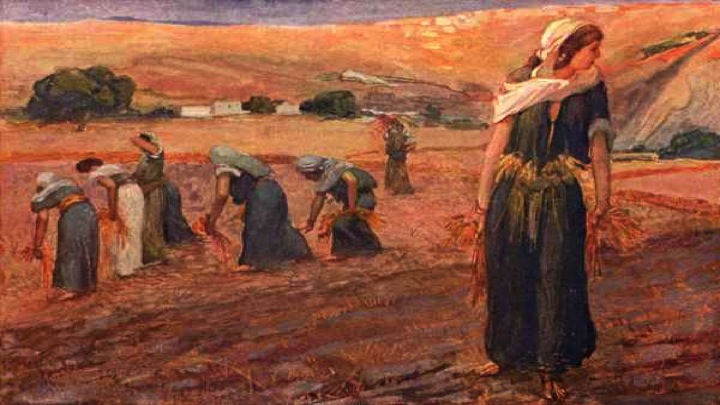
This reminds us of Ruth, the Moabite–the alien widow who came to Bethlehem with Naomi, her Israelite mother-in-law, when there was famine in Moab. She and Naomi survived because Boaz, a wealthy Israelite landowner, allowed Ruth to glean in his field behind his laborers and keep what she had gleaned. Boaz showed his holiness or righteousness by treating her–the alien– kindly and giving her even more grain to take home to Naomi than what Ruth had gleaned!

slide46

Even those who choose to read Leviticus once every 3 years may miss two of the most significant verses of the chapter as they fall beyond the lectionary excerpt. Verses 33 and 34 provide the why for Israel’s command to show compassion to aliens and even to love them as much as they love themselves–gratitude to God! For the Israelites were once aliens–slaves!– in the land of Egypt. And God sent Moses to set them free!

slide47


***

Knowing that I was preaching on God’s command to love the aliens in our land as much as we love ourselves stirred me to finally contact Pastor Lucas. I sent him an email yesterday afternoon. He replied right away!

“I am glad that you are still thinking about our ESL,” he says. Ten students have contacted the church looking for ESL classes. But they haven’t started, yet. “We are still struggling to put the program together,” he says. “We are looking for someone who can lead it.”

His closing words convicted me of having too little faith–and not trusting that our Holy God, who requires that we be holy and promises that we SHALL be holy, would help us care for the poor and aliens in our midst–if we seek His wisdom and help!

“Probably,” Pastor Lucas says, “we need to pray more.”

slide48

Will you pray with me?

Holy God, we thank you for your command and your promise that we shall be holy–as you are our Holy God. Forgive us for not always seeking your help and not desiring to be obedient to your commands. Forgive us for struggling to love our enemies and turn the other cheek, rather than seeking to hurt those who have hurt us. Help us to be kind and gracious, Lord, as you are so kind and gracious to us! By your Spirit, transform us, more and more, into the perfect likeness of Christ so that we may be the Church you want us to be. And Lord, please help Gloria, wherever she is, so that she never feels stupid or like an outsider. Bless her with all that she needs to provide for herself and her family. Build up her faith. And we ask that you help Pastor Lucas and Cocoa Presbyterian Church as they seek to begin a ministry of teaching English to speakers of other languages. Send more volunteers, including someone to lead the program and train volunteer tutors. Bless the students who come. Show us, Lord, how we might also participate in this ministry and give of ourselves and from our resources so that the aliens among us are cared for and loved as much as we love ourselves. In Christ we pray. Amen.


You are Salt and Light!


Meditation on Matthew 5:13-20

Merritt Island Presbyterian Church

Feb. 5, 2017

slide04

‘You are the salt of the earth; but if salt has lost its taste, how can its saltiness be restored? It is no longer good for anything, but is thrown out and trampled under foot. ‘You are the light of the world. A city built on a hill cannot be hidden. No one after lighting a lamp puts it under the bushel basket, but on the lampstand, and it gives light to all in the house. In the same way, let your light shine before others, so that they may see your good works and give glory to your Father in heaven. ‘Do not think that I have come to abolish the law or the prophets; I have come not to abolish but to fulfill. For truly I tell you, until heaven and earth pass away, not one letter, not one stroke of a letter, will pass from the law until all is accomplished. Therefore, whoever breaks one of the least of these commandments, and teaches others to do the same, will be called least in the kingdom of heaven; but whoever does them and teaches them will be called great in the kingdom of heaven. For I tell you, unless your righteousness exceeds that of the scribes and Pharisees, you will never enter the kingdom of heaven.

***

   Jim was busy emptying bookshelves this week preparing for the installation of new flooring in two rooms of our house. (We had a plumbing issue last summer.) We discovered that we have even more books than we thought we had.


Poor Molly could barely get to her water bowl.

slide15

Jim said we needed to get rid of some of our books. He picked up one of mine and asked, “Why do you need 7 — no 9 copies!– of I am a Muslim?” I used the book for a study group in my last call–in rural, Renville, MN. The book is a kind of faith memoir written by Asma Gull Hasan.

slide17


The young American woman, a Denver lawyer, speaker, and author of a number of books, is the daughter of Muslim, Pakistani parents.

slide18

She grew up in Pueblo, Colorado, where many of the local population mistook her and her family, including her physician father, for Hispanics because of their brown skin. The book was published in 2004 when the mention of “9/11” stirred horrifying memories of the 2001 terrorist attacks on the World Trade Center and Pentagon and the airliner crash in Shanksville, PA; nearly 3,000 Americans lost their lives.

Asma, in her introduction, writes, “I have never been ashamed to be a Muslim, not even after 9-11, and not now. I know that many non-Muslims do not understand Islam but want to learn more. I also know that some Muslims carry out violent acts in Islam’s name and use Islam to justify many un-Islamic things. … I have been Muslim my whole life and I cannot imagine being anything else…The Islam that I practice is not the one depicted by Osama bin Laden or by Al Jazeera, cable news, or the fear-mongers. I am not a member of a secret society of terrorists nor do I plot the death of non-Muslims. What Islam is really about is so different from the many misconceptions–about women, about other religions and about even the concept of Jihad. Islam does not preach violent aggression against one’s “enemies.” The Qur-an and the core values of American society are “strikingly similar…” she says.

slide19

Asma, who chooses not wear the hijab, argues that Islam is a “woman’s religion.” The Prophet Muhammad was a feminist, she says; he worked to advance women’s rights. He ended the practice of female infanticide and he encouraged women to participate in politics. He encouraged the tradition of women keeping their maiden names after marriage. And the Qur-an teaches that women have the right to own property and to seek an education.

slide20

I decided to lead the book group because I was concerned about the fear, prejudice and anger nursed by some of my flock in rural Minnesota. They knew very little about Islam. They were suspicious of their nearest Muslim neighbors–the Somali refugees living in Wilmar, a town of about 20,000 people, 25 miles north of Renville, population 1,300. Willmar is the retail, restaurant, banking and medical hub for those living in the surrounding countryside. Rural folks see but don’t interact much with Somali-immigrant families when they shop, bank and go to the doctor. And they don’t see Somalis in their homes or at school. If they did, they would see children and teens behaving much like American-born children and teens.  

I admired the brightly colored clothing the women wore; sometimes the fabric was draped over blue jeans, snow boots or running shoes and worn under winter coats–because it was Minnesota, after all. How difficult it must be for them, I remember thinking as I sat alongside them in doctor’s office waiting rooms. They are so far from their former home, in a much colder climate, living amongst a population, many of whom had little understanding of their language or culture, except from what they pick up if they venture into a Somali grocery store or restaurant in Willmar.

Getting to know some Muslim American women while I worked as a journalist in York, PA, I came to admire their commitment to their faith that affects so many aspects of their lives. They can’t help but think about their faith every day. They wear the hijab despite the curious or suspicious looks they receive; they pray 5 times a day; they attend weekly prayer services at the mosque; they fast 30 days during Ramadan, and they faithfully give to the poor–one of the 5 “pillars” of Islam.

***

Living out our faith so that the world can see and know our Triune God is the subject of this passage in Matthew 5. This is a hard passage; it’s about our witness! What does the world see and hear about us? Does the world see a difference in those claiming to be followers of Christ? We talk about loving God and neighbor, but are we working to make the world a more loving, just and peaceful place? Do our lives give glory to God?

Jesus in Matthew 5:13 tells his disciples, “You are the salt of the earth!” Salt in the ancient world is a prized preservative; without it in a warm climate without refrigeration, food spoils quickly. Salt is a coveted culinary item; it brings out the flavor in foods and makes bland food tastier! Jesus has just told his disciples that they are blessed when they are meek, poor in spirit, merciful, pure in heart, and when they are peacemakers, hunger and thirst for righteousness, and are persecuted for His sake. Now he adds, not only are you blessed when you embrace these qualities of life, the world will be blessed when you do!!

But even salt can lost it flavor, Jesus warns. And then it’s worthless.

“You are the light of the world!” Jesus says. “A city built on a hill cannot be hid.” Christianity isn’t some private, secret faith, lived in isolation from the world. “Let you light shine before others,” he goes on, “so that they may see your good works and give glory to your Father in heaven.” Don’t hide the light meant to shine in the darkness of the world!! This is how the Lord draws more people to Himself.

What is meant by “good works?” Don’t misunderstand! We aren’t talking about earning our salvation. Ephesians 2:8-9 says, “For it is by grace you have been saved, through faith– and this is not from yourselves, it is the gift of God, not by works, so that no one can boast.” We aren’t talking about salvation in this passage; we are talking about our witness as Christ’s disciples, called to reveal the Kingdom here and now.

Jesus reveals His own good works through his self-giving life, by being obedient to God, seeking the Heavenly Father humbly in prayer, and demonstrating his love and concern through his compassionate ministry to the suffering and otherwise needy–preaching Good News to the poor, casting out demons and healing people of sickness and disease.

The “law” that will never pass away of which he speaks beginning in v.17 goes much deeper than the “shalts” and “shalt nots” of the Ten Commandments. In verses 21-24, he shows that he expects more than just the letter of the law like the scribes and Pharisees attempt to do. Jesus expects his disciples to live out a law of God written on our hearts, as Paul says in Romans 2:15. This means, for example, as Jesus teaches in Mathew 5, that you have broken the commandment, “Thou shalt not murder,” when you are angry at your brother or sister. If you are angry with someone, first be reconciled with them before returning to the altar to offer your gift to God.

***

I can’t say that my Islam book study really made any difference in attitudes toward Muslims. But as a follower of Christ, I have to try and shine light in the darkness of fear, prejudice, and ignorance in this world. For God calls us to love our neighbors as much as ourselves; some of our neighbors happen to be Muslim! By the way– I am a Muslim–is an easy read for teens or adults. And I have 7 or 9 copies to give away!

I would like to close with some happy news about some of our Muslim neighbors in need. I read in the Minneapolis Star-Tribune yesterday about a 4-year-old Somali refugee, who had been living in Uganda. She was reunited with her family in the States this week–after more than 3 years apart! Little Mushkaad Abdi’s mother, Samira Dahir, and her two older sisters have been living in Minnesota since 2013. Lutheran Social Service of Minnesota agreed in August to sponsor Mushkaad. The little girl was due to arrive at Minneapolis-St. Paul International Airport Jan. 31–4 days after the executive order that temporarily bans refugees and travelers from 7 predominantly Muslim nations, including Somalia, from entering the United States. Two senators fought for Mushkaad’s return. One called the U.S. Homeland Security Secretary. Mushkaad arrived safely at Minneapolis Airport on Thursday, by way of Abu Dhabi and Chicago.

slide35slide36

Be salt! Be light! And give all the glory to the Lord!


Let us pray.


Holy One, we lift our hearts to you in thanks and praise for the light of your Son, Jesus Christ who lives in and among your people. Help us to remember always that your light is with us and will empower us to do the good works you lead us to do. Humble us as we serve you, recalling with joy and gratitude that everything we do is for you and your glory. Thank you for your love, mercy and grace and that we have forgiveness of our sins and new life through your Son as a gift from you! Stir us to examine our own hearts and lives so that we may be a more faithful, loving witness for you and your just kingdom. Forgive us for neglecting the needs of our neighbors and for sometimes harboring fears and prejudice against people who adhere to a different religion. Empower us to courageously shine your light in this dark world! Use us to draw more people nearer to you. In Christ we pray. Amen.

slide37


“Making Peace”

slide14

Meditation on Matthew 5:1-12

Jan. 29, 2017

Merritt Island Presbyterian Church

When Jesus saw the crowds, he went up the mountain; and after he sat down, his disciples came to him.  Then he began to speak, and taught them, saying: ‘Blessed are the poor in spirit, for theirs is the kingdom of heaven. Blessed are those who mourn, for they will be comforted. Blessed are the meek, for they will inherit the earth. Blessed are those who hunger and thirst for righteousness, for they will be filled. Blessed are the merciful, for they will receive mercy. Blessed are the pure in heart, for they will see God. Blessed are the peacemakers, for they will be called children of God. Blessed are those who are persecuted for righteousness’ sake, for theirs is the kingdom of heaven. Blessed are you when people revile you and persecute you and utter all kinds of evil against you falsely on my account.  Rejoice and be glad, for your reward is great in heaven, for in the same way they persecuted the prophets who were before you.

slide34


***

I start my message today by expressing my gratitude to my husband, Jim, who preached last Sunday for me, with permission from our session. This was so I could have a few days of vacation during the week and go with my mom on a 5-day cruise.


I hadn’t been on a cruise before, and I was nervous. I am someone who gets motion sickness very easily. But Mom wanted me to go. She gave the cruise to me as a Christmas gift after asking me for years to go with her. I always had a reason why I couldn’t go. This year was the first time I saw it as her need to get away and rest from being a caregiver for my dad.

slide25

I haven’t always gotten along with my mom. As a teenager, we argued. I felt she wasn’t there for me when I needed her. In my 20s, when I got married, had children and struggled to juggle career, school, family and self-care, I realized she was just doing the best she could—trying to provide for her family. But she was there for me during and after my divorce, calling me and encouraging me every day. As the years slipped by, my mom started to have some serious health problems. More and more, I began to see her not just as a mother but a friend.

The trip was for me an act of faith. I worried not only about getting sick, but that being together so much would put a strain on our relationship. I asked God to help me be a peacemaker so that our past hurts would continue to heal. God, I believe, granted my request.

Scripture tells us that peace isn’t something just to enjoy for ourselves; it is something to be freely given (as Christ gave it to us), to be made and to be pursued; it isn’t just an absence of conflict but a loving way of life. Peace— εἰρήνη in Greek –is from the Hebrew shalom — meaning “wholeness, harmony, completeness, health and well-being.” Peace is a decision.  “Let the peace of Christ rule in your hearts,” we say just before we share the peace during worship, “since as members of one body you were called to peace.” (Col. 3:15) The writer of Hebrews urges in 12:14, “Make every effort to live in peace with everyone and to be holy.” Likewise, Paul in Romans 12:18 writes, “If it is possible, as far as it depends on you, live at peace with everyone.”

***

Today, in our reading in Matthew 5, we hear the command to make peace, with a 2-fold promise. “Blessed or happy are the peacemakers,” Christ says in Matthew 5:9, “for they will be called children of God! This familiar passage marks the beginning of the Beatitudes or the “Sermon on the Mount,” although “into the hills” may better fit the topography of the area and the Greek expression translated, “up the mountain.” Jesus sat down and taught his disciples, along with a crowd that had followed him from “Galilee, the Decapolis, Jerusalem, Judea, and beyond the Jordan.” The word “beatitude” comes from the old Latin version of the Bible, the Vulgate. Beatitudo means “happiness” and it has come to mean a statement that begins “Blessed or happy is/are” followed by a description of a quality of life or thinking that is to be commended.

Some translators now favor “happy” for the Greek adjective makarios over the traditional “blessed.” The Greek word for “blessed” is eulogetos, not makarios. But this may alter the meaning for some of us who are used to “blessed.” And maybe it confuses us, too, to use the word “happy.” How can we be “happy” while we are mourning, poor in spirit, and persecuted? And God doesn’t desire us to be insincere about our feelings or hide our suffering from our brothers and sisters in Christ. Scholar R. T. France defends the use of “happy”: “No English word fully captures the sense of makarios in this traditional form of beatitude,” he says. He uses it “despite its inappropriate psychological connotations as the least inadequate option in current English.” He goes on to explain that markios doesn’t mean someone feels happy, but that they are in a “happy situation.” I think it helps to see the beatitudes as a window into the future–when the Kingdom of God has fully come. We live with this vision, looking through this window that is Scripture, not fully understanding, but always trusting the Lord and doing God’s will. We children of God seek not just to experience God’s peace but to make peace with others, as Christ calls us to do.

***

Today we ordain and/or install 3 ruling elders and 1 deacon. They will be charged with loving the Lord and God’s children through servant leadership in our congregation. They are mature, compassionate Christians with diverse backgrounds and many gifts and talents. We are happy and blessed that they are willing to serve! All 4 witness to their faith by being peacemakers, understanding that this is God’s will for us and Christ’s gift to the Church.

Heidi Dutter — was born in Denver, Colorado, and lived there until 1978 when she moved to Merritt Island, Florida. Her mother and father were Presbyterians, and after moving to Florida they joined Riverside Presbyterian Church where Heidi was baptized in 1981 by Reverend Pedlow. At Riverside she served as a greeter and usher, and helped with Vacation Bible School. Heidi and her mother were founding members of the Riverside Presbyterian Church bell choir and watched the program thrive. Heidi was married to Keith Dutter on October 13, 2001. They have two children, Tyler and Alecia. Keith and Heidi transferred their membership to Merritt Island Presbyterian Church in December 2004 because they felt it had the programs and caring members that their family needed. Their daughter, Alecia, was baptized in 2005 and their son, Tyler, was confirmed April 1, 2007. Heidi has served on a PNC and as a Deacon. She has taught Sunday school and Children’s Church, played bells with the Ringers of Tomorrow, and helped with Kids’ Klub and Vacation Bible School. Heidi says, “My favorite part of the day is taking Bandit for a walk with Alecia.  I love listening to the events of her day as we walk.”

slide39


Robert (Bob) Willett was born and raised in Chicago. He entered the service in June 1944 at 17 and went to France for a year after the war. “I was to be in the invasion of Japanese Kyushu on Nov 1, 1945,” he says. “The War ended August 6, 1945. I was happily discharged in Nov. 1946.” Then in Nov. 1950 he was called to serve in Korea before being discharged in Nov. 1951. He has been married nearly 60 years to Donna whom he met in Michigan. The Willetts moved to Merritt Island in 1977 and have been members of MIPC since 1982. He is a retired banker, historian and author of several books. He is currently on assignment to Air and Space Smithsonian. He has been a Presbyterian since the early 1960s, and served as an elder in the First Presbyterian Churches of Grand Haven, Alpena and Howell, all in Michigan. Donna is a pianist who has played at MIPC services and most recently at our ice cream social. They have 3 adult children and 7 grandchildren; his daughter, Leslie Mitchell, is our church secretary and director of the Praise Band. Bob and Donna live in Rockledge; they enjoy traveling and have been on at least 100 cruises!

slide40

June Hutchinson has been an active member of MIPC since she joined us in 2001. She was born at MacDill Air Force Base in Tampa, and moved around the world as a child of a career Air Force man. She attended Merritt Island High School, Brevard Community College, and University of Florida.   At MIPC, she has served twice as a Deacon, and played hand bells in the Ringers of Tomorrow. She has volunteered as a Kids Klub helper, office angel, and usher. She played roles in two MIPC productions– Joseph and the Amazing Technicolor Dreamcoat and Footloose. She lives on Merritt Island and enjoys hanging out with her cat Wallie. June says MIPC is her family. She also says, “Go, Gators!”

slide41

Patricia (Pat) Smith and her husband, Sterling, were born in Easton, PA, and attended the same high school, but did not start dating until just before she left for college at Penn State.  He was attending Lafayette College.  They got married 3 years later after Pat graduated with a degree in Kindergarten and Elementary Education. They have been married 53 years in July and have 3 grown children–Pam Poland, Scott Smith, and Sara Root–and 5 grandchildren. Pat worked as a teacher until they moved to Merritt Island in January 1997 from Annapolis, MD, when Sterling was transferred to Kennedy Space Center from NASA Headquarters in Washington, D.C. They joined MIPC in April 1998. She was ordained an elder in January 2002 and a deacon in 2011, serving 2 terms. She has been a Sunday school teacher, VBS leader, MIPC tutor, Kids Klub Craft Leader, Chair of the Christian Education Committee, chair of deacons, and on the planning team for women’s retreats. Pat says, “I have always been involved in the church.  I grew up in the Reformed Church, which became United Church of Christ, where my dad was extremely active in all areas of the church and my mom was a Sunday School teacher. As a child and teenager I had 10 years of perfect attendance at my church! As a reward, I got to church summer camp several times for free.” She loves reading, working in her yard and doing her art, especially working with watercolors. Sterling and Pat enjoy spending time with family, traveling, and birding. One of her favorite sayings is, “ The love in your heart wasn’t put there to stay; love isn’t love, ‘til it’s given away.” Thank you, Bob, Heidi, June and Pat, for answering Christ’s call to serve! God bless you with joy and peace!

slide42


This slideshow requires JavaScript.

Let us pray.

Holy One, we thank you for your gift of peace and call to us to be peacemakers. Thank you that by your grace you call us your “children”! Please teach us and strengthen us to make peace in a community and country so divided and a world so in need of your love and grace. Where do we begin, Lord, when the world is such a broken place? Help us to find our common ground in the foundation of our faith–our savior, Jesus Christ, who is our peace. Heal us and make us whole. And Lord, thank you for Bob, Heidi, June and Pat. Help us to support them, always, and build them up so that they may discern your will for and help us to obey. Stir us all to be more faithful to give and serve you and your people all of our days. In Christ we pray. Amen.

A Light to the Nations


Meditation on Isaiah 49:1-6

Jan. 15, 2017

Merritt Island Presbyterian Church

slide02

Listen to me, O coastlands, pay attention, you peoples from far away! The Lord called me before I was born, while I was in my mother’s womb he named me.

slide03


He made my mouth like a sharp sword, in the shadow of his hand he hid me; he made me a polished arrow, in his quiver he hid me away. 

slide04


And he said to me, ‘You are my servant, Israel, in whom I will be glorified.’ But I said, ‘I have labored in vain, I have spent my strength for nothing and vanity; yet surely my cause is with the Lord, and my reward with my God.’ And now the Lord says, who formed me in the womb to be his servant, to bring Jacob back to him, and that Israel might be gathered to him, for I am honored in the sight of the Lord, and my God has become my strength— 6 he says, ‘It is too light a thing that you should be my servant to raise up the tribes of Jacob and to restore the survivors of Israel; I will give you as a light to the nations, that my salvation may reach to the end of the earth.’ Thus says the Lord, the Redeemer of Israel and his Holy One, to one deeply despised, abhorred by the nations, the slave of rulers, ‘Kings shall see and stand up, princes, and they shall prostrate themselves, because of the Lord, who is faithful, the Holy One of Israel, who has chosen you.’ 

***

slide16  


Mary Jackson is one of three African American women whose stories are featured in the movie, Hidden Figures, based on Margot Lee Shetterly’s book of the same name. Mary, Katherine Johnson and Dorothy Vaughan were exceptionally talented women.

slide17

They graduated from college with degrees in math in an age when few women–let alone African American women–graduated college. They taught in black schools in the segregated South before they landed jobs working for NACA (a precursor of NASA) at the Langley Memorial Aeronautical Laboratory in Hampton, VA. They worked in the little-known women’s all black “West Computing Group” where they functioned as human “computers.”

slide18

Mary Jackson graduated with degrees in math and physical science and taught school in Maryland before coming to work at the West Computing Group in 1951 at the age of 26. Two years later, she was sent to the East Side Group, to work alongside several white computers. The first day on the job, writes Shetterly in her book, Mary asked the other women where the bathroom was. They giggled. “How would they know where to find her bathroom? The nearest bathroom was unmarked, which meant it was available to any of the white women and off limits to the black women…. Angry and humiliated, she stormed off on her own to find her way to the restroom….In the moment when the white women laughed at her, Mary had been demoted from professional mathematician to a second class human being.” Still fuming as she made it back to the West Computing Group later that day, she ran into a good-natured aeronautical engineer who worked in the Four by Four Supersonic Pressure Tunnel. “Kaz” as people called him, was white. He listened as she told him what happened. Then he said, “Why don’t you come work for me?” It was a turning point in her career.

slide19

Eventually, she would take additional courses and join a special training program that led to her promotion to “aerospace engineer” where she analyzed data from wind tunnel experiments and real-world aircraft flight experiments. She worked with flight engineers at NASA, writing or co-authoring 12 technical papers for NACA and NASA.

slide20

Mary Jackson did not only achieve success that had not been achieved by African American women before her. She looked beyond herself and sought to help other women and minorities advance in their careers. She advised them how to study so that they could change their titles from “mathematician” to “engineer” and increase their chances of promotion. After 34 years at NASA, she reached the highest level of engineer that was possible without becoming a supervisor and then decided to take a pay cut and change positions to become an administrator in the Equal Opportunity Specialist field. She returned to Langley where she worked to make changes and highlight women and other minorities who were accomplished in the field.

***

The prophet Isaiah, thousands of years ago, urges God’s people to do the same–to look beyond themselves–their own wellbeing, even when God’s people were themselves a struggling minority, a people without a homeland. This section of Isaiah was probably written in the 6th century during the Babylonian exile. Ch. 49 begins by identifying the audience as not just God’s people who have been dispersed around the world but all “peoples.” “Listen to me, O coastlands (or islands), pay attention, you peoples from far away!” He emphasizes Israel’s special calling and relationship to the Lord, a calling that was ordained before their birth. This is not an individual call story to a single, reluctant prophet, as we find with other Old Testament accounts of Moses, Jeremiah, and Jonah. The prophet is speaking for all Israel and for us, who have been grafted in through Jesus Christ, saying to the world, “The Lord called me before I was born, while I was in my mother’s womb he named me.”

These are promises we can claim today! God has made our mouths like a sharp sword to proclaim the truth–God’s Word, which is compared to a sword in the New Testament. Ephesians 6:17, “Take the helmet of salvation and the sword of the Spirit, which is the Word of God.”


Hebrews 4:12 calls the word of God, “alive and active. Sharper than any double-edged sword, it penetrates even to dividing soul and spirit, joints and marrow; it judges the thoughts and attitudes of the heart.” We are hidden, protected, safe “in the shadow of his hand.” We are made powerful to do God’s work, but consider the imagery of being God’s “polished arrow”– who is the one who guides and empowers us? God!

slide26


Who is the one who sends us out and chooses where we should go? God! We are assured that in us, God will be glorified.

But now, Isaiah acknowledges that Israel hasn’t always done what is right or been obedient. God’s people haven’t done the right things for the right reasons. ‘I have labored in vain, I have spent my strength for nothing and vanity,” Isaiah says. Still, God will continue to be faithful to God’s people in ancient days, just as the Lord is faithful to us today as we seek to do His will, and not making idols of anything in this world. “Yet surely my cause is with the Lord,” Isaiah says, “and my reward with my God.” God is not ashamed of Israel or us. We are “honored” in his sight. He is our “strength.”

Israel is comforted that although they are scattered and exiled and are feeling wounded and forgotten, they are still God’s “servant.” God will gather them, once again, and bring them back to Himself. Jesus uses this same language of oneness with His disciples when he prays for them–and for all His followers to come– as a witness to the world in John 17:20-21: I ask not only on behalf of these, but also on behalf of those who will believe,  in me through their word, 21 that they may all be one. As you, Father, are in me and I am in you, may they also be in us, so that the world may believe that you have sent me.”

This passage in Isaiah reminds us of Jesus’ promise to His disciples in John 14 that although he is going soon to be with the Father in heaven, he will not leave His followers “orphaned.” He will come again! “If I go and prepare a place for you,” Jesus says in 14:3, “I will come back and take you to be with me that you also may be where I am.”

And sounding very much like the Great Commission in Matthew 28:19, “Go, therefore, and make disciples of all the nations,” we hear God’s people Israel being called to share God’s salvation with the world. What is particularly touching to me is that Israel is God’s gift to the world–just as we are God’s gift to the world.

God speaks through Isaiah, “It is too light a thing that you should be my servant to raise up the tribes of Jacob and to restore the survivors of Israel; (so) I will give you as a light to the nations, that my salvation may reach to the end of the earth.”

Isaiah uses the familiar language of the messenger being “light” in the darkness, just as we hear Jesus saying in Matthew 5:14, “You are the light of the world. A city set on a hill cannot be hidden.”

slide41


But we are only “light” because we have Christ living in us. “I am the light of the world.” Jesus says in John 8:12. “Whoever follows me will never walk in darkness, but will have the light of life.” We cannot be a light to the nations and a force for social change in our communities, country and world if we do not have faith that Christ can do this work through us. We cannot do this in our own strength! We can take courage in knowing that we can rely on the One who guides and sends us out like powerful, polished arrows, but at the same time, keeps us safe from harm, hidden in the “shadow of his hand.”

***


Katherine Johnson worked at the segregated West Computing Group from 1953 until 1958, when the colored computing pool was disbanded, and she became an aerospace technologist. In her career with NASA, she calculated the trajectory for the space flight of Alan Shepard in 1959 and the launch window for his 1961 Mercury mission. She plotted backup navigational charts for astronauts in case of electronic failures. And in 1962, when NASA used electronic computers for the first time to calculate John Glenn’s orbit around Earth, officials called on her to verify the computer’s numbers when Glenn asked for her personally and refused to fly unless she verified the calculations. President Obama mentions this and some of her other accomplishments, just before awarding her with the Presidential Medal of Freedom on Nov. 24, 2015. She was 96 years old.

slide46

“Growing up in West Virginia, Katherine Johnson counted everything,” Obama said. “She counted steps.  She counted dishes.  She counted the distance to the church.  By 10 years old, she was in high school.  By 18, she had graduated from college with degrees in math and French.  As an African-American woman, job options were limited — but she was eventually hired as one of several female mathematicians for the agency that would become NASA.  Katherine calculated the flight path for America’s first mission in space, and the path that put Neil Armstrong on the moon.  She was even asked to double-check the computer’s math on John Glenn’s orbit around the Earth. So if you think your job is pressure-packed — hers meant that forgetting to carry the one might send somebody floating off into the Solar System. In her 33 years at NASA, Katherine was a pioneer who broke the barriers of race and gender, showing generations of young people that everyone can excel in math and science, and reach for the stars.”


slide63slide64slide65


slide69

slide70

Let us pray. Lord God, thank you for your love for us and for your promise to gather us one day all to yourself. Thank you that you have given us the gift of your Son, who is our salvation, so that we may live new lives in Him and be made ONE in him. Help us, Lord, to live each day as your humble servants, grateful for all that we have and all that we are and working to correct the injustices in our society. Forgive us, Lord, that we have been selfish and haven’t loved our needy neighbors around the world as we should, that we haven’t sought to set the oppressed free and given voice to the voiceless. Stir us, Lord, to give ourselves to you fully and surrender our lives to your will. Send us out by the power of your Spirit so that we may be polished arrows, carrying the sword that is Your Word. May we truly be a light to all the nations so that all may come to know your salvation. In Christ we pray. Amen.

In Memory of Stanley Niven Keller

Meditation on John 14:15-27

Jan. 12, 2017

Merrit Island Presbyterian Church

stan-keller-photo


If you love me, you will keep my commandments. And I will ask the Father, and he will give you another Advocate to be with you forever. This is the Spirit of truth, whom the world cannot receive, because it neither sees him nor knows him. You know him, because he abides with you, and he will be in you. ‘I will not leave you orphaned; I am coming to you. In a little while the world will no longer see me, but you will see me; because I live, you also will live. On that day you will know that I am in my Father, and you in me, and I in you. They who have my commandments and keep them are those who love me; and those who love me will be loved by my Father, and I will love them and reveal myself to them.’ Judas (not Iscariot) said to him, ‘Lord, how is it that you will reveal yourself to us, and not to the world?’ Jesus answered him, ‘Those who love me will keep my word, and my Father will love them, and we will come to them and make our home with them. Whoever does not love me does not keep my words; and the word that you hear is not mine, but is from the Father who sent me.

    ‘I have said these things to you while I am still with you. But the Advocate, the Holy Spirit, whom the Father will send in my name, will teach you everything, and remind you of all that I have said to you.

     Peace I leave with you; my peace I give to you. I do not give to you as the world gives. Do not let your hearts be troubled, and do not let them be afraid.”

***

One day last October, I was working in the church office when there was a knock at my back door. I opened it and was surprised to find Stan and Dorcas come to visit, unannounced, bearing gifts. The occasion was my one-year anniversary at MIPC. The gifts–and the kindness of those who brought them to me– gave me a warm feeling inside. One of the gifts was a beautiful, peaceful, snowy scene Dorcas had painted, complete with a little white, country church. Moving from rural Minnesota, I felt welcomed and appreciated. The other gift was for the church; their daughter, Faye Margaret, who had brought it back from Italy for them. It was a wooden statue of St. Frances, a friar and founder of religious orders, a peacemaker and animal lover who lived in the 12th and 13th centuries. He took a vow of poverty and led a humble, simple life. The statue of St. Frances features him lovingly holding a bird in his hand; he was known to occasionally preach sermons to the birds.

Stan carried the gifts and helped Dorcas out of their car and up the tricky step into my office. He was gentle and patient, not in a rush. He was apologetic that they had come unannounced and that the gifts had come a couple weeks after the Sunday that was my official anniversary. They had been unable to make it to church that day. They weren’t feeling well.

I knew of Dorcas’ battle with cancer. I didn’t know about Stan’s persistent hip pain and his sciatica. But I knew the pew where they always sat together in church for the 11 o’clock service, week after week, in spite of their health challenges.

He, Dorcas, and 9-year-old Faye moved to Merritt Island in 1972 after Stan retired from the Air Force after 20 years of service. They joined MIPC in 1973. Stan was ordained an elder in our church and served on session from 1974-77. He and Dorcas taught Sunday school.

Stan was stationed in Newfoundland in the Air Force when he met and fell in love with Dorcas, a Newfoundland native. She wasn’t interested in American men, she says, especially those serving in the military. Her parents didn’t approve. He managed to charm her, picking her up in his black Ford and taking her to the Paramount Theater, then dancing at the clubs–the Piccadilly, Crystal Palace, Old Mill, Old Colony–and at the base, though he didn’t like to dance. Oh, he could manage the Fox Trot and the Waltz, but really it was just about being with Dorcas. He persisted. Finally, she agreed to marry a man who would, inevitably, take her away from her family and all that was familiar and comfortable. They married in 1955 at the oldest church in North America–the Cathedral of St. John the Baptist in St. John’s, Newfoundland. As Stan continued to serve in the Air Force, they lived in California, Pennsylvania, Japan, and Patrick Air Force Base on Merritt Island. Dorcas lived in base housing at Patrick when Stan went to Vietnam, earning a gold medal in ‘69 and a bronze star in 1970.

With all that Stan endured in his years of military service and with the years of persistent pain in his hips and legs, the most difficult trial of his life was still the loss of Faye Margaret, their only child, in 2014. She was 51. Nothing hurts us more than the suffering and loss of our loved ones. But surely nothing in this world prepares us for the loss of our own child! It is only by trusting in God’s loving, everlasting presence with us in the Body of Christ that we are able to deal with the pain of such a loss and continue on, walking with the Lord, clinging to Him! Moment by moment. Day by day.

***

Jesus’ disciples are confused and more than a little distressed when Jesus tries to explain in the gospel of John, chapter 13 what will happen to him and to them. He is leaving them, he says. Where he’s going, they cannot come. He’s talking about the cross and the work of salvation that only he can accomplish for our sakes. He will later assure them of the dwelling places he will prepare for his disciples in His father’s house in the world to come. But first He gives them a “new commandment” to live by. Really, it’s just a new twist on an old commandment. For “love the Lord your God” and “love your neighbor as your self” are Old Testament laws. The new thing is for the disciples to love one another as Christ has loved them. The love Jesus has for the world is revealed by his obedience to God and willingness to give up his own will and his own life so that others who believe on Him may have everlasting life. This self-giving love is how the world will recognize Christ’s followers–and more will come to know Him and His salvation.

So now, in John 14:15, when Jesus says, “If you love me, you will keep my commandments,” he is talking primarily about the new commandment –this self-giving love in what the Apostle Paul will call the Body of Christ. The problem is that it isn’t humanly possible for us to love that way. Not without God’s help. So what does Jesus do? He promises to send help–the “Advocate,” the “Spirit of Truth” to His disciples. When the Spirit comes, Christ Himself will live in them and they, Christ says, will be able to see Him and know He is with them FOREVER.

“I will not leave you orphaned,” he says to them. “I am coming to you. In a little while the world will no longer see me, but you will see me.”

Not only will Christ’s followers be able to see Him, they are promised resurrection –eternal life with Him. “Because I live,” Jesus adds, “you also will live.”

Friends, the world is crying out in fear and sorrow for help and hope. The answer is almost too simple and straightforward for some. God is ready to give the gift of Himself–His loving Spirit–to all who desire to receive Him. We are obedient to God when we love one another, putting others’ needs before our own. Christ is revealed to the world by our love. When we seek to be obedient to the Lord and live in love, the Spirit will guide and strengthen us to carry on, persevering through trials and suffering, trusting in His everlasting, loving presence with us in the Body of Christ. Walking with the Lord. Clinging to Him! Moment by moment, day by day.

Trust in the One who has made his home with us. The One whom we will see, someday, face to face.

Jesus says, “The … Holy Spirit… will teach you everything and remind you of all that I have said to you. Peace I leave with you; my peace I give to you. … Do not let your hearts be troubled. Do not be afraid.”


Let us pray.


Holy One, thank you for sending your Son to take all our sin upon Himself so that we may be forgiven not by our works, but by your love, mercy and grace. Thank you for your Word that reveals our Savior and shows us how you want us to live, trusting in you and persevering through trials, moment by moment, day by day. Thank you for Your loving Spirit that dwells in and with us, the Church, the Body of Christ, empowering us to love one another in a way not humanly possible and be strong–and not afraid. Help us to keep your commands and be obedient to your Word. Thank you, Lord, for granting us your peace that is so unlike what the world gives. Lord, we long to see you, face to face. In Your son’s name we pray. Amen.


“Remember Your Baptism”

slide09

Meditation on Matthew 3:13-17

Baptism of our Lord Sunday

Merritt Island Presbyterian Church

slide04

Then Jesus came from Galilee to John at the Jordan, to be baptized by him.  John would have prevented him, saying, ‘I need to be baptized by you, and do you come to me?’ But Jesus answered him, ‘Let it be so now; for it is proper for us in this way to fulfill all righteousness.’ Then he consented. And when Jesus had been baptized, just as he came up from the water, suddenly the heavens were opened to him and he saw the Spirit of God descending like a dove and alighting on him. And a voice from heaven said, ‘This is my Son, the Beloved, with whom I am well pleased.’

slide07


     Did you all take down your Christmas decorations this week? What is the tradition for your family, if you are still putting up Christmas decorations? Put them up Thanksgiving weekend and take them down on New Years or the day after? I really liked taking walks at night throughout Advent in our neighborhood and seeing all the lights.


We didn’t have a lot of Christmas decorations outside–just a small Nativity scene, a fresh wreath for the front door and the lights from our Christmas tree shining through the window.

slide18


Any of you still have your Christmas tree up? I do. I love to see my Christmas tree all lit up in my living room at night, and the Nativity scenes make me feel all warm inside. They are a sign to us that God is still with us!

slide19

God loves us so much that he became one of us; he emptied himself of his divinity for our sakes (Phil. 2:5-8) — to experience all that we experience as human beings, and become a slave for us. When we were perishing in our sins, God came to save us! God came in an unexpected way — as a humble baby in a manger.

slide22


During Advent, we have the freedom to boldly witness to our faith, without seeming like religious fanatics. Lots of people display their Christianity for all to see during Advent by decorating their homes and yards, giving gifts, writing cards, and coming to worship the Lord on Christmas Eve and sometimes even Christmas Day.

slide23

January can be a hard month –is it a hard month for you? Not just because of the cooler temperatures and relative darkness of winter. But because the outward beauty of the Christmas season and the freedom to openly share our faith disappears. If you are still talking about Jesus in public in the middle of January, people think you are weird–or you are just trying to get them to come to your church. When we go back to the ordinary routine of our daily lives after Christmas, and without the outward signs of the Christmas season, we may forget the wonder of God’s love and the beauty of our salvation. We may forget to keep looking for signs that God is with us. Every day, there are signs of His love and tender care–and the newness of our lives in Christ– our redemption from our sins.

One of the most important signs of God’s covenant with us in Jesus Christ is something we encounter and experience every day. That sign is WATER.    


***

Today, as we recall John’s baptism of Jesus, we encounter all 3 persons of “the Trinity” — Father, Spirit and Son, just as we are baptized in the “name of the Father and of the Son and of the Holy Spirit.” This is part of God’s plan for salvation as Jesus teaches in Matthew 28. He makes it clear that baptism is necessary for Christ’s followers and to grow the Church, which is open to all people in every land. And that baptism is a reminder of Christ’s everlasting presence with those who believe on him and seek to be pleasing to him.

In Matthew 28:18-20 , the risen Christ comes to his disciples, some of whom are having doubts, and he says, “All authority in heaven and on earth has been given to me. 19 Go therefore and make disciples of all nations, baptizing them in the name of the Father and of the Son and of the Holy Spirit,  20 and teaching them to obey everything that I have commanded you. And remember, I am with you always, to the end of the age.”

Immediately after Jesus is baptized in Matthew 3, God responds with blessings for Jesus, John, and all who are there to witness the theophany — the supernatural happening. The heavens open, the Spirit descends like a dove on Jesus, and God proclaims Jesus to be God’s Son, “the Beloved, with whom I am well pleased.”

slide30

The significance of the Jordan as the place where Jesus is baptized is that Joshua led the ancient Israelites across the Jordan River into the land of the Promise.

slide37


Crossing the river, with the priests and the ark of the covenant leading the way, they leave behind their old identities just as we die to ourselves in baptism so we may live as Christ. Crossing the Jordan, the Israelites are no longer slaves of the Egyptians, just as we are no longer slaves to sin but by faith new creations in Him.

slide38

The Israelites are no longer a wandering, homeless band of aliens; they are heirs to the land God has given them– “children of the Promise.” Some theologians believe that Jesus–which came from the Hebrew Yeshua or Joshua in English — is the “new Joshua”– leading the people of the New Covenant to eternal life in God’s Heavenly Kingdom.

We discover John’s reluctance to baptize his cousin, God’s Son, in this passage. Does that surprise you that John didn’t at first want to be obedient to the Lord’s request? It brings to mind the scene in John 13 when Peter refuses, at first, to allow Jesus to wash his feet. And Jesus answers in verses 8-9, “Unless I wash you, you have no part with me.” And Peter responds, “Then Lord, not only my feet, but my hands and my head as well!”

slide41


Before Jesus asks him to baptize him, John expresses his unworthiness to the crowd. He says in Matthew 3:11, “I baptize you with water for repentance. But after me comes one who is more powerful than I, whose sandals I am not worthy to carry. He will baptize you with the Holy Spirit and fire.” John’s humility comes from his understanding that he is in the presence of holiness, and he, like all human beings, is sinful, no matter how good he tries to be. But Jesus insists, for this is God’s way — to “fulfill all righteousness.” John relents.

slide36

Baptism in water is key. Water has been a symbol of life since ancient times. Modern science tells us that human bodies are about 70 percent water, but even the ancients knew that one could not survive long without drinking water, especially in the arid climate in which Jesus lived.

slide45


What’s more, water is the symbol for God in ancient Judaism. God is “the spring (or fountain) of living water” in Jer. 2:13 and 17:13. In Isaiah 55:1, God invites all to come to Him with, “Ho, everyone who thirsts, come to the waters.” Isaiah also speaks of salvation using the language of water in 12:2-3, saying 2 Surely God is my salvation; I will trust, and will not be afraid, for the Lord God is my strength and my might; he has become my salvation. 3 With joy you will draw water from the wells of salvation.”

David uses the metaphor of God supplying water for the soul in Ps. 63:1 when he prays, “O God, you are my God, earnestly I seek you; my soul thirsts for you, my body longs for you, in a dry and weary land where there is no water.” The psalmist in 42:1-2 also sings, “As the deer pants for streams of water, so my soul pants for you, O God. My soul thirsts for God, for the living God. When can I go and meet with God?”


slide40

After Jesus is baptized, he will beckon others to come to the Father through him to satisfy soul thirst. Jesus, in John 4, asks a Samaritan woman at Jacob’s well to give him a drink. Surprised, she asks, “How is it that you, a Jew, ask a drink of me, a woman of Samaria?”… 10 Jesus answers, “If you knew the gift of God, and who it is that is saying to you, ‘Give me a drink,’ you would have asked him, and he would have given you living water.”

slide54

11 The woman said to him, “Sir, you have no bucket, and the well is deep. Where do you get that living water?… 13 Jesus said to her, “Everyone who drinks of this water will be thirsty again, 14 but those who drink of the water that I will give them will never be thirsty. The water that I will give will become in them a spring of water gushing up to eternal life.” Jesus professes to be the living water, again, in John 7. After the officers are sent to arrest Jesus, he cries out, ‘Let anyone who is thirsty come to me, 38and let the one who believes in me drink. As the scripture has said, “Out of the believer’s heart shall flow rivers of living water.”

***

Today, we, too, will come to the living water, in response to Christ’s invitation. We are coming to remember our baptism, though for some of us, it was long ago! We come to remember that we were baptized and what that means–how the Spirit claims us and fills us with spiritual gifts –and still fills, refreshes and equips us for God’s work today. How the Church has welcomed us and promised to nurture us as a child of God, a brother or sister in the faith. We come to remember how our gracious God forgave us for all our sins and still forgives us. Through one baptism in the name of the Father, Son and Holy Spirit, God forgives the sins of yesterday, today and forever!

slide55


We come to the living water to be strengthened and united as the Body of Christ, made one in Him. We come not because we are worthy, but because we understand, like John, that we cannot make ourselves worthy for God. We come because, like the Samaritan woman, we thirst for the living water to nourish our souls to eternal life, because salvation is a gift from God by faith in Jesus Christ, not something we could ever do for ourselves. We come not just to receive God’s blessings but to be a blessing to one another and be pleasing to Him. We come with joy as God’s beloved so that we may be inspired to tell the world that God loves them, too!

slide57


Let us pray.

Holy One, our Living Water, we thank you for leading your Son, Jesus Christ, to the Jordan River to be baptized by John and show us the way back to you. Thank you, Lord, for beckoning us, even now, to come to you and remember our baptisms. Stir us to recall today and always that we belong to you–NOT the world! Move us to joy at the thought of what you have done for us every time we see water of any kind– that we have been cleansed from our sin. Help us to recall each day, especially when we might be tempted to be discouraged or doubt, that we have received the gift of your Spirit, equipping us for every good work you have ordained for us to do. Teach us to be obedient to you. Reassure us that we are your beloved–now and forever. In Christ’s name we pray. Amen.
 

“Give Yourself Away”


slide01

Dec. 4, 2016

     For whatever was written in former days was written for our instruction, so that by steadfastness and by the encouragement of the scriptures we might have hope.  May the God of steadfastness and encouragement grant you to live in harmony with one another, in accordance with Christ Jesus,  so that together you may with one voice glorify the God and Father of our Lord Jesus Christ. Welcome one another, therefore, just as Christ has welcomed you, for the glory of God. For I tell you that Christ has become a servant of the circumcised on behalf of the truth of God in order that he might confirm the promises given to the patriarchs, and in order that the Gentiles might glorify God for his mercy. As it is written, ‘Therefore I will confess you among the Gentiles, and sing praises to your name’; and again he says, ‘Rejoice, O Gentiles, with his people’; and again, ‘Praise the Lord, all you Gentiles, and let all the peoples praise him’; and again Isaiah says, ‘The root of Jesse shall come, the one who rises to rule the Gentiles; in him the Gentiles shall hope.’  May the God of hope fill you with all joy and peace in believing, so that you may abound in hope by the power of the Holy Spirit. 

***

slide12

I am happy to see the children and families from the childcare center today in worship! We are so blessed that the 3 and 4 year olds came to sing and share your joyful spirit and energy with all of us! We love you! We pray for you! We want to be a blessing to you! If you are not a member of a local congregation and you are seeking a place to worship and have friendships with other Christians, we invite you to join with us. You are already one of the MIPC family!

slide13

We were so pleased when some of you came to our Rally Day activities in September.


Then, more of you came to our Fall Festival in October, dressed in costume and ready for more games, food, fellowship and crafts!     


  Then, we invited you and some of you came to our Thanksgiving Dinner a couple of weeks ago! It was so nice to share in that very special meal with you!


If you have 4-year-old children or grandchildren in VPK, we are blessed when they come to our church for chapel twice a month.


We are so glad when you join us for Tuesday night suppers! I


am looking forward to getting to know you better in the months to come. Our suppers will start up again January 17 with macaroni and cheese and fried chicken, thanks to the dedicated, hardworking volunteers on our Fellowship committee!

***


The Apostle Paul, in writing to the church in Rome, is concerned that some Jewish Christians don’t want to eat with or associate with Gentile Christians who don’t observe the Old Testament food laws. He says in Romans 14:14, “Nothing is unclean in itself” and that the important thing is to not let your convictions about diet stir you to judge others and disturb the peace of the community. Paul says in Romans 15:5, “May the God of steadfastness and encouragement grant you to live in harmony with one another, in accordance with Christ Jesus,  so that together you may with one voice glorify the God and Father of our Lord Jesus Christ.”

Paul quotes Old Testament Scripture to show that it still shapes and unites the community of faith–Jew and Gentile–that seeks to worship and obey the same God. In the new covenant, the food laws and circumcision are not necessary. For love of the world, God graciously sent His Son, our Emmanuel, to give up his life so we may be forgiven from our sins and have everlasting life with Him. Paul emphasizes that Scripture is the source of our hope and comfort, to help us endure suffering and remain faithful to our faithful God. He quotes from Deuteronomy 32:43, “Rejoice, O Gentiles, with his people” and Psalm 117:1, “Praise the Lord, all you Gentiles, and let all the peoples praise him.” He quotes the prophet Isaiah with the verse about the Root of Jessie who will rule over the nations and be the hope of the Gentiles.

slide08

Paul encourages Christians to eat together as a sign of their unity in Christ and their love for one another. He says in 15:7, “Welcome one another, then, as Christ welcomed you, for the glory of God!” The word “welcome” may also be translated, “accept” and “receive.” This kind of welcome isn’t just, “Hello, how are you?” and shaking hands with a stranger or neighbor. This kind of welcome is the one where you open your heart and your home and you put the needs and desires of the other person before your own. This kind of welcome means you give yourself away, as Christ gave himself for us.

slide54

Paul using Jesus as the perfect model of hospitality–giving and receiving it–fits the Jesus we know from the gospels. Jesus liked to eat and drink at other people’s houses. His ministry was intimate and personal and often involved food. He didn’t wait for an invitation to supper at the home of Zacchaeus the tax collector to reward and encourage him for his faith.

slide55


He ate with his friends, Mary and Martha, who didn’t always agree on who should do the work.

slide56


He ate with people who didn’t like or trust him and would oppose him–Pharisees and Scribes. He asked for water from a Samaritan woman not respected in her community and offered her living water so she would never thirst again.

slide57

He ate with rich and poor, powerful and powerless as he drew others nearer to God through belief on Him and preached life in the Kingdom.

He taught his disciples to follow his example for personal and intimate ministry. He sent them out to stay in people’s homes and accept their hospitality. Those who opened their homes and fed them would be blessed. He told the 12 in Matthew 10:40-42: 40 “Anyone who welcomes you welcomes me, and anyone who welcomes me welcomes the one who sent me.  41 Whoever welcomes a prophet as a prophet will receive a prophet’s reward, and whoever welcomes a righteous person as a righteous person will receive a righteous person’s reward.  42 And if anyone gives even a cup of cold water to one of these little ones who is my disciple, truly I tell you, that person will certainly not lose their reward.”

Jesus, sending off the 70 in Luke 10:5-9, says “When you enter a house, first say, ‘Peace to this house.’ If someone who promotes peace is there, your peace will rest on them; if not, it will return to you. Stay there, eating and drinking whatever they give you, for the worker deserves his wages. Do not move around from house to house. “When you enter a town and are welcomed, eat what is offered to you. Heal the sick who are there and tell them, ‘The kingdom of God has come near to you.”

Jesus welcomes people by feeding them–body, mind, heart and soul. When his disciples are going to send away a crowd who have listened to Jesus teach all day, he feeds the multitude with a few loaves and a couple fish, given by a child and multiplied by God.

slide68


At the Last Supper, Jesus blesses the bread and breaks it, giving it to his disciples, saying, “Take and eat. This is my body, given for you.” He encourages them to continue to gather to eat and feed one another when he says, “Do this in remembrance of me.”


slide69


In Luke 24, two disciples walk along a road with the risen Christ, not knowing who he is. They invite him to their home and don’t recognize him till they sit down to eat a meal and he “breaks the bread.”


slide70

Jesus doesn’t shy away from cooking, either. The risen Christ is on the seashore cooking bread and fish over a charcoal fire in John 21, while his disciples are out fishing one day. They don’t know who he is until a miraculous catch opens their eyes to his identity. He says to them, ‘Bring some of the fish that you have just caught’ and  ‘Come and have breakfast.’  After the disciples’ bodies are nourished, he feeds their hearts and souls, too, offering Peter, who denied him 3 times, another chance to get it right–to give of himself, for the sake of Jesus Christ. Then he charges him to minister as He did–nourishing heart and mind, body and soul of others.

slide71


Jesus says to Peter, using his formal given name and not the nickname that he had given him, ‘Simon son of John, do you love me more than these?’ Peter says, ‘Yes, Lord; you know that I love you.’ Jesus says to him, ‘Feed my lambs.’ 16A second time Jesus says to him, ‘Simon son of John, do you love me?’ Peter says, ‘Yes, Lord; you know that I love you.’ Jesus says, ‘Tend my sheep.’17Jesus says a third time, ‘Simon son of John, do you love me?’ Peter feels hurt because he has asked him three times if he loved him. And Peter says, ‘Lord, you know everything; you know that I love you.’ Jesus says, ‘Feed my sheep.’


***


slide76


The bake sale after worship today will feed your body and bless the souls at the childcare center, which is in need of trikes and a stroller that would hold 4 or more babies. Thank you to all who made cookies and other sweets to sell at the sale! But before you shop for goodies, please take some time to enjoy fellowship and refreshments in our Narthex, the lobby of the church. It will be a perfect time to “welcome one another, as Christ has welcomed you.” But remember, “welcome” means much more than just saying, “Hi, how are you?” It means opening your heart and home.

slide77

It means putting the needs and desires of your neighbors before your own. It means give yourself away as Christ gave himself for us.

slide78


Let us pray.

God of Hope, we give you thanks for the welcome you have given us, receiving us through the sacrifice of your Son, Jesus Christ, and every day, holding out your arms to us and beckoning us to come. Thank you for your love and grace, covering all our sins, and for providing for our needs each day–body, mind, heart and soul. Help us, Lord, to minister as Jesus did–to seek to be welcoming to one another and to the stranger in need. Teach us to open our hearts and love without fear–to give ourselves away, as your Son gave Himself for us. In His name we pray. Amen.

slide79

Practical Resources for Churches

Everyone has a calling. Ours is helping you.

Consider the Birds

Pastor Karen shares thoughts on faith, scripture, and God's love and grace revealed through backyard wildlife.

F.O.R. Jesus

Fill up. Overflow. Run over.

Becoming HIS Tapestry

Christian Lifestyle Blogger

Whatever Happens,Rejoice.

The Joy of the Lord is our Strength

Stushie Art

Church bulletin covers and other art by artist Stushie. Unique crayon and digital worship art

The Daily Post

The Art and Craft of Blogging

WordPress.com News

The latest news on WordPress.com and the WordPress community.