Healing Stories: In the Wilderness

Meditation onMark 1:9-15 (Pastor)

First Presbyterian Church of Smithtown, NY

Pastor Karen Crawford

First Sunday in Lent

Feb. 18, 2024

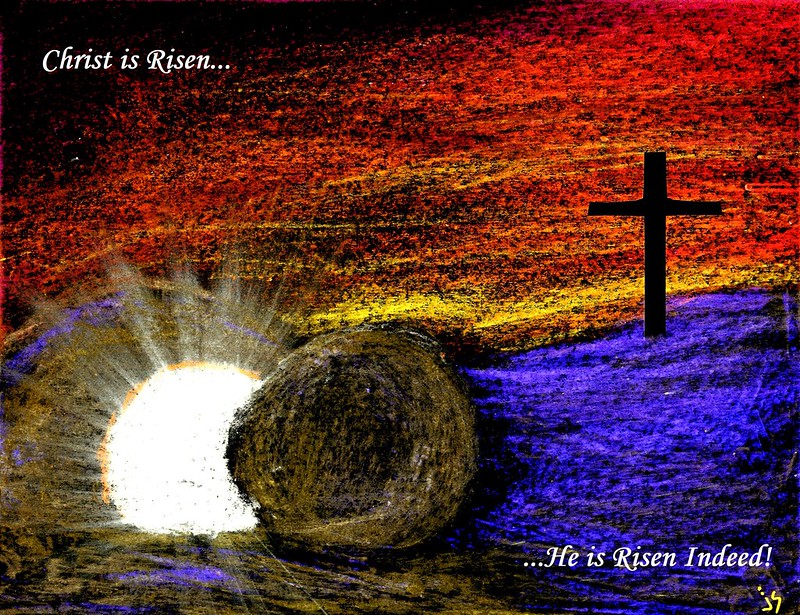
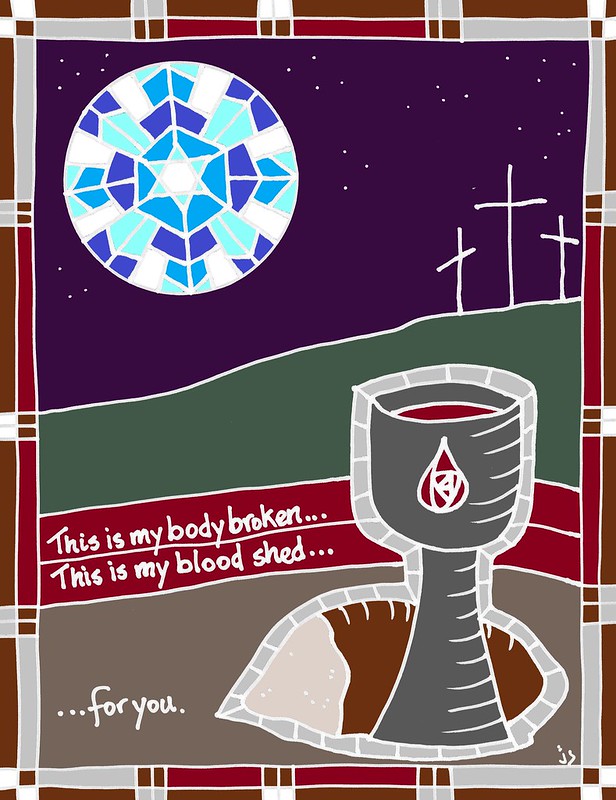
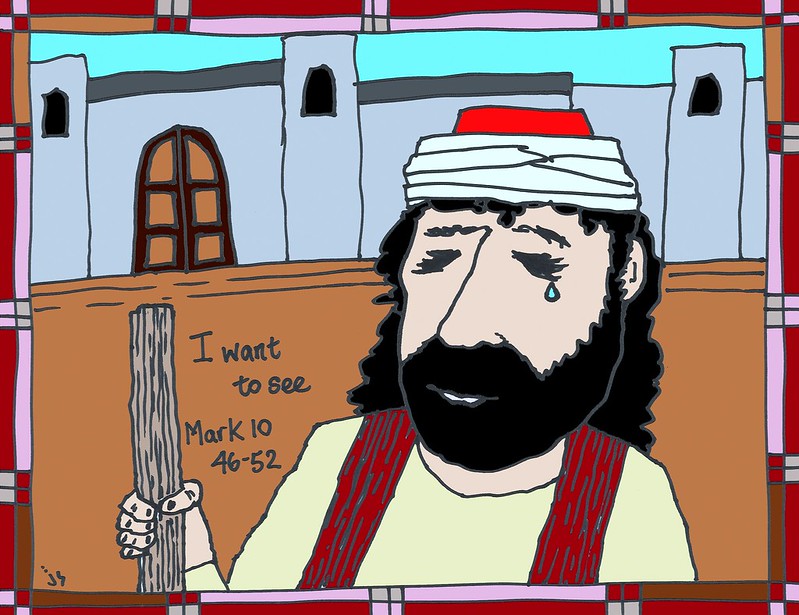
Art by Stushie, used with permission
Healing Stories: In the Wilderness by Pastor Karen Crawford, Art by Stushie, used with permission

It was like a winter wonderland walking around the neighborhood yesterday. The trees and shrubs were blanketed with freshly fallen snow. There was a moment when the sun pushed through the clouds and everything sparkled! It was just beautiful!

I was surprised not to see any children playing in my neighborhood. It was Saturday, after all.  

Researchers say that children (and adults) today don’t have the same connection with the natural world that other generations have had. Richard Louv, the author of Last Child in the Woods, sees the lack of connection as something essential to their growth and development that has been lost. “Many members of my generation,” he says, “grew into adulthood taking nature’s gifts for granted; we assumed (when we thought of it at all) that generations to come would also receive these gifts. But something has changed.” [1] Louv sees the “emergence” of something he calls “nature-deficit disorder.” [2]

He started his research in the 1980s, interviewing thousands of children and parents in urban and rural areas. [3] He thinks often of a “wonderfully honest comment made by Paul, a fourth-grader in San Diego,” who said, “I like to play indoors better, ’cause that’s where all the electrical outlets are.” [4]  One mother lamented that when their family did plan trips to enjoy the wonders of nature together, the children needed something more to entertain them. She recalls a family ski trip, on a “perfect, quiet day, the kids…skiing down the mountain—and they’ve got their headphones on.” [5] The issue of safety came up. “ ‘My parents don’t feel real safe if I’m going too deep in the woods,’” said one boy. “ ‘I just can’t go too far. My parents are always worrying about me.’” [6] Another boy said “computers were more important than nature because computers are where the jobs are. Several said they were too busy to go outside.” [7]

Louv offers examples of famous creative people nurtured by nature as young children. Ben Franklin “lived a block from Boston Harbor when he was a boy… His love of water and his bent toward mechanics and invention merged and led to one of his earliest experiments. One windy day, Ben was flying a kite from the bank of the Mill Pond, a holding area for water from high tide. In a warm wind, Ben tied the kite to a stake, threw off his clothes and dove in. “The water was pleasantly cool, and he was reluctant to leave it, but he wanted to fly his kite some more,’ …. ‘He pondered his dilemma until it occurred to him that he need not forgo one diversion for the other.’ “Climbing out of the pond, Ben untied the kite and returned to the cool water. ‘As the buoyancy of the water diminished gravity’s hold on his feet, he felt the kite tugging him forward. He surrendered to the wind’s power, lying on his back and letting the kite pull him clear across the pond without the least fatigue and with the greatest pleasure imaginable.’” [8]

Others influenced by early experiences in nature were Joan of Arc, who “first heard her calling at age thirteen, ‘toward the hour of noon, in summer, in (her) father’s garden.’”  Two- year-old Jane Goodall “slept with earthworms under her pillow.” [9] “John Muir described ‘reveling in the wonderful wildness’ around his boyhood home in Wisconsin. Samuel Langhorne Clemens held down an adult job as a printer at fourteen, but when his working day ended at three… he headed to the river to swim or fish or navigate a “borrowed” boat. One can imagine that it was there, as he dreamed of becoming a pirate or a trapper or scout, that he became ‘Mark Twain.’ The poet T. S. Eliot, who grew up alongside the Mississippi River, wrote, ‘I feel that there is something in having passed one’s childhood beside the big river which is incommunicable to those who have not.’” [10]

 “‘As Eleanor Roosevelt passed from childhood to adolescence, the beauty of nature spoke to her awakening senses.’ … ‘The changes of the seasons, the play of light on the river, the color and coolness of the woods began to have the profound meaning to her that they would retain throughout her life. When she was a young girl, she wrote a half century later, ‘there was nothing that gave me greater joy than to get one of my young aunts to agree that she would get up before dawn, that we would walk down through the woods to the river, row ourselves the five miles to the village in Tivoli to get the mail, and row back before the family was at the breakfast table.’ She disappeared into the woods and fields for hours, where she would read her books and write stories filled with awe and rooted in the metaphors of nature.” [11]

Beatrix Potter, children’s book author and illustrator, along with her brother, “smuggled home innumerable beetles, toadstools, dead birds, hedgehogs, frogs, caterpillars, minnows and sloughed snake-skins. If the dead specimen were not past skinning, they skinned it; if it were, they busily boiled it and kept the bones. They even on one occasion, having obtained a dead fox from heaven knows where, skinned and boiled it successfully in secret and articulated the skeleton.” Everything they brought home, they drew or painted, and sewed the pieces of drawing paper together to make their books of nature. The depictions were realistic for the most part, “but here and there on the grubby pages fantasy breaks through. Mufflers appear round the necks of newts, rabbits walk upright, skate on ice, carry umbrellas, walk out in bonnets . . .” [12]

Today’s reading in Mark is a good example of how so much of Jesus’ ministry happens outside. Did you ever notice that? The wilderness temptation has echoes from Israel’s past—connecting the long-awaited Messiah with the people of God wandering in the wilderness for 40 years in Exodus; the rain that fell for 40 days in the story of Noah’s ark in Genesis; and Elijah being fed by ravens and angels in his 40-day wilderness journey in 1 Kings.

Jesus goes out to be baptized by John and, as he comes up out of the water, he “sees the heavens torn apart and the Spirit descending like a dove on him.”  “The relationship between heaven and earth has been permanently changed” with the tearing of the heavens, theologian William Placher writes. “The image of the dove evokes the dove that returned to the ark with a freshly plucked olive leaf (Gen. 8:11) to signal to Noah the floodwaters had subsided and there was now solid ground bearing vegetation.”  [13] The tearing of the heavens at Christ’s baptism foreshadows the tearing of the veil or curtain of the temple when Christ breathes his last on the cross in 15:38.

Verses 12 and 13 capture my attention. Mark, the oldest surviving gospel account, is known for his brevity, which, at times, I find refreshing. Others, such as author and rector Elizabeth Felicetti, serving St. David’s Episcopal Church in Richmond, says she misses “the scenes with the devil in Matthew and Luke,” while, at the same time, being “intrigued,” with Mark’s use of “satan,” rather than the devil.[14]  The Dictionary of Judaism in the Biblical Period says “satan is a member of the heavenly court whose primary adversarial function is to accuse in legal dispute. The noun usually appears with the definite article, indicating a role rather than a personal name.” The Greek diabolos or English devil is used more frequently in the New Testament and as a proper name—usually as a tempter rather than an accuser. [15]

Scholars talk about the language of the Spirit that came on Jesus “like a dove” in his baptism and “drives” Jesus deeper into the wilderness “immediately.”  (This is the first of 41 occurrences of the Greek word “euthys” in Mark, which creates a sense of urgency and movement.)  [16]  Felicetti wonders if the Spirit “driving” Jesus into the wilderness means that he doesn’t enthusiastically embrace his wilderness testing experience. [17]

I see something different. The Spirit gives us the passions of our heart and wants us to act on them. Jesus is compelled by the Spirit to go deeper into the wilderness, a place to which he will return, again and again, throughout his ministry to hear from God, rest, and slip away from the sometimes clueless disciples and demanding crowds. This is why I have included this message in my Healing Stories series. The wild places will continually replenish and heal Jesus spiritually, emotionally, and physically and prepare him for the ministry God has ordained.

The problem with the passage, as I see it, is the question of the “wild beasts.” Some see the “wild beasts,” like satan, as an adversary to Jesus, in “satan’s employ, menacing Jesus over the 40 days.” [18] The wilderness can be a “dangerous place, undomesticated, unsafe, the abode of demons (Isaiah 34:14), says another theologian, “yet Israel remembered the wilderness as the place where they had been closest to God (Jer. 2:2). [19]

Others think that Mark is purposefully leaving the question of the wild beasts up in the air. Are they threatening? Or are they like the angels, waiting on him in his time of need? The verb translated “waiting on” has the same root as the word “deacons.”

I imagine Jesus with the wild animals as friendly beasts, foretold by Isaiah 11, when,

“The wolf shall live with the lamb;
    the leopard shall lie down with the kid;
the calf and the lion will feed together,
    and a little child shall lead them.”

Jesus is our faithful model with his temptation in the wilderness. As Hebrews 4:15-16 assures us, For we do not have a high priest who is unable to sympathize with our weaknesses, but we have one who has been tempted in every way, just as we are—yet he did not sin.  Let us then approach God’s throne of grace with confidence, so that we may receive mercy and find grace to help us in our time of need.”

I had the sudden urge to make a snow person after my walk yesterday. It was harder to pack the snow than I remembered. Then, when I went inside, I felt stirred to read The Snowy Day by Ezra Jack Keats, from 1962. I felt sad as I thought about how children and adults today may be missing that life-giving, healing connection to the natural world, maybe even suffering from “nature deficit disorder.”

Peter, dressed in a red snowsuit, goes “crunch, crunch, crunch” as his feet sank into the snow. He drags them “s-l-o-w-l-y” to make tracks, finds a stick just right for smacking a snow-covered tree. Snow falls “plop” on his head. He joins a snowball fight, but he’s too little. He makes a smiling snowman and angels, pretends to be a mountain climber, sliding all the way down. He puts a snowball in his pocket for tomorrow.

Then he goes into his warm house, tells his mother all about his adventures while she takes off his wet socks. And he thought and thought and thought about his adventures, while taking a bath in a pink tub with legs. Before he gets into bed, he looks in his pocket. It’s empty!

“The snowball wasn’t there. He felt very sad. While he slept, he dreamed that the sun had melted all the snow away. But when he woke up…the snow was still everywhere. New snow was falling!

After breakfast, he called to his friend across the hall, and they went out together into the deep, deep snow.” [20]

Let us pray.

Holy one, thank you for the beauty of your Creation, for the sun that sparkled on the fresh snow yesterday that blanketed our community. Thank you for your Son’s faithful response to temptation in the wilderness and his willingness to suffer and give his life for the sake of the world you so loved. Help us to be strong and faithful when we are tempted. We lift up the children and families today, who are so busy and stressed. Draw them outside, dear Lord, by your Spirit, as you drove Jesus into the wilderness in the gospel of Mark. Give young and older people opportunities to grow in creativity and connection to You and your Creation and find joy, healing, peace, and refreshment in the wild places that may be right outside our front and back doors. In the name of our Triune God we pray. Amen.


     [1] Richard Louv, Last Child in the Woods (Algonquin Books, Kindle Edition) 10.

     [2] Louv, 10.

     [3] Louv, 10.

     [4]  Louv, 10.

     [5] Louv,  12.

     [6] Louv, 13.

     [7] Louv, 13.

    [8] Louv, 71-72.

   [9] Louv, 90.

  [10] Louv, 90.

  [11] Louv, 90.

    [12]  Louv, 91-92.

    [13] William Placher, Mark, (Louisville: Westminster John Knox, 2010) 22.

    [14]  Elizabeth Felicetti, Christian Century, February 2024, 28.

    [15] Jacob Neusner and William Scott Green, editors, Dictionary of Judaism in the Biblical Period (MA: Hendrickson Publishers, 1996) 552-553.

     [16] William Placher, Mark, (Louisville: Westminster John Knox, 2010) 27.

     [17] Elizabeth Felicetti, The Christian Century, Feb. 2024, 28.

     [18] Felicetti, 28.

     [19] Placher, 27.

    [20] Ezra Jack Keats, The Snowy Day (NY: Puffin Books, 1962).

A Season of Giving and Prayer

Meditation on Matthew 6:1–6, 16–21

First Presbyterian Church of Smithtown, NY

Pastor Karen Crawford

Ash Wednesday

Feb. 14, 2024

Ash Wednesday Art by Stushie, used with permission

A few nights ago, I received the shocking news of an unexpected death of a friend.

She had served as a Sunday School teacher for the youngest class at my congregation in Coshocton, Ohio, since her son, Lukas, now a young adult, was small.  Janice started work at the town’s public library in 2013 as a page shelving books and transporting materials between the main and branch libraries. The library’s Facebook page says, “Janice’s work ethic, customer service skills, and ambition led her to work her way to becoming Page Supervisor and Youth Services Coordinator.” One of the things she did was teach early literacy Lapsit classes for parents to bring their infants. “She was the face behind the children’s desk, and the staff member of many other programs. Her decorations in the children’s room often drew compliments from those visiting the space. She prepared StoryWalk books and visited preschools, daycares, and other schools throughout the county each month.” [1]  

The Coshocton County Library system was closed on Monday for the staff to process their grief and attend the funeral.

Janice and her husband, Jeff, served as videographers for our worship. She was ordained and installed as a brand new elder on the Session during my pastorate there. I remember a lunch we shared at Bob Evans and how we talked about our vision for ministry. She was all about children and youth. She served as the elder for Faith Formation, formerly Christian Education.

In her work for the church and her Lord, she led an awesome evening Summer Vacation Bible School during the pandemic. She empowered volunteers to use their gifts and talents and created an evening program on a water/beach theme. Every child brought their favorite beach towel. They ate snacks and listened to Bible stories sitting on their towels under a shade tree in the front yard of our downtown church. I read to the children, at her invitation, a picture book of Moses leading God’s people across the parted sea on dry land, with the Egyptian armies behind them, their chariot wheels getting stuck in the mud. We made crafts on tables on the church lawn and played games with balls across the street on the Courthouse lawn. A volunteer, a retired teacher who sang in the choir, taught them songs.

At the end of VBS, Janice wrote thank you notes to every volunteer and gave gift cards to a local ice cream shop. She used her own money. She made other people feel appreciated.

Yesterday, I found a video that Janice made with her husband, Jeff, and son, Lukas. It was one of the first in a series of family features that we did during the pandemic. We were trying everything to bring one another joy and the feeling of closeness and intimacy when the church was fragmented. People felt lonely, isolated, and depressed. We showed the video clips in the worship space and at my blog for others to watch at home. Here is a link to that 2020 video. (Click on Meet Our Church Family: The Sycks)

Other things that I appreciated about Janice were her intelligence and her prophetic gift. She always spoke the truth, no matter how hard it was for others to hear. She was bold. She stood up for what she believed was right, even if it meant that other people might not agree with her or be happy with her opinion. At the same time, kindness ruled with Janice. She taught her son to be kind and loving, as she herself was kind and accepting to all people. I believe that her faith shaped her into the person that she became. She was always loyal to the ones she loved, including her family, her community, her Lord, and Christ’s church.

On this day, when we read, once again, about Jesus holding up an example of bad behaviors by certain people–telling a crowd of would-be disciples how NOT to be, I am offering to you, my brothers and sisters in the Lord, a contemporary model of faithfulness. Janice would be embarrassed if she heard me hold her up as a model! She was one of the most unassuming but, at the same time, expressive and sensitive people I have ever met. She was a what-you-see-is-what-you-get person—no pretenses. She had no need to be the center of attention. She was down to earth, pretty, vivacious, creative, and feminine. She was human in every way. She had a quirky sense of humor. I suspect that that her sense of humor and the love of family and friends gave her strength to persevere through the hard times that she experienced.

Janice wasn’t at all like the Pharisees, who seemed to have impure motives for their religiosity and did many attention-seeking things to impress people of their holiness and perhaps superiority.

The one thing that has always troubled me about this passage in Matthew is how we interpret it to be angry at or mock a group of people whom Jesus asks us NOT to be like. We put our focus in the wrong place—on this group rather than on ourselves and doing the good things that Jesus urges us to do. Jesus never tells his disciples to dislike the Pharisees or to be unkind. He crossed many societal boundaries to reach out to people, often those who were marginalized and despised. He sought to heal and encourage them in their faith. The motive of our Savior, for all his teachings, all his acts of sacrifice and self-giving, was always to convey God’s love for the whole world. Jesus says in Matthew 5:43-48, in the passage immediately preceding today’s reading,

 “You have heard that it was said, ‘Love your neighbor and hate your enemy.’ But I tell you, love your enemies and pray for those who persecute you, that you may be children of your Father in heaven. He causes his sun to rise on the evil and the good and sends rain on the righteous and the unrighteous. If you love those who love you, what reward will you get? Are not even the tax collectors doing that? And if you greet only your own people, what are you doing more than others? Do not even pagans do that? Be perfect, therefore, as your heavenly Father is perfect.”

One word in this passage that has caused confusion is the word we translate “hypocrites.” It doesn’t mean in English exactly what the more ambiguous Greek word, hypokrites meant. In English, it “generally refers to people who say one thing but do another, whether the inconsistency is conscious or unconscious.” [2]   “In the Greek translation of the Hebrew Bible, it means a godless or wicked person,” says Lawrence Wills, a professor of biblical studies at Episcopal Divinity School in Cambridge, MA. “But in the larger Greek world it meant the actor in a play, and therefore the sense of pretense or acting and the two-part personality of an actor who plays a part come to the fore.” [3] Therefore, Matthew could have meant, with his use of this word, “one who is godless and wicked,” one who “pretends to be one thing but consciously acts contrary to that,” or one “who pretends to be one thing but unconsciously acts contrary to that.” [4] Wills challenges us to look inside ourselves with his question, “Does the sin of hypocrisy in Matthew consist in consciously deceiving others or in being in denial about one’s own sin?”

The news of Janice’s death came late at night, from a friend traveling in Thailand. After hearing the news, I was up for hours with my memories and my grief. I can still hear her voice and her sweet laugh! What makes me so sad now is imagining the grief of her family—her husband, Jeff, and son, Lukas—and all her good friends in Coshocton, including her church family. One of her closest friends, Judy Addy, had been planning to take Janice out and celebrate her birthday with her on the very night that Janice suddenly went home to be with her Lord. She was just 42.

My grief for losing a friend and sister in the Lord and knowing the grief of her family, church family, and friends, leads me to be bold, like Janice, and encourage us to see the Ash Wednesday message in a positive light. Don’t waste a single day in regret. God loves you with an unconditional love! Today! You are FORGIVEN, in Jesus Christ.

So what will you do now, in this Holy Season of Lent, to live into your forgiven self? I pray that you will be generous in this season of prayer, giving, and forgiving! This is a time to be reconciled with your neighbor and to seek to heal brokenness in your relationships. Where will you get your strength and wisdom? Go into that inner room—all by yourself—and don’t be afraid to be completely yourself and let the Spirit do its work.

We may have started out as dust but look what God can do with dust! Look what God can do with human beings who humbly turn away from their fallings and failings and see only the perfect, sinless life of God’s Son, Jesus Christ! He is our highest model! Look at what God’s unconditional love and forgiveness has done for all of us! I close my message for Ash Wednesday with the words of Jan Richardson in her poem, “Blessing the Dust”: [5]

All those days
you felt like dust,
like dirt,
as if all you had to do
was turn your face
toward the wind
and be scattered
to the four corners

or swept away
by the smallest breath
as insubstantial—

did you not know
what the Holy One
can do with dust?

This is the day
we freely say
we are scorched.

This is the hour
we are marked
by what has made it
through the burning.

This is the moment
we ask for the blessing
that lives within
the ancient ashes,
that makes its home
inside the soil of
this sacred earth.

So let us be marked
not for sorrow.
And let us be marked
not for shame.
Let us be marked
not for false humility
or for thinking
we are less
than we are

but for claiming
what God can do
within the dust,
within the dirt,
within the stuff

of which the world
is made
and the stars that blaze
in our bones
and the galaxies that spiral
inside the smudge
we bear.

Amen!


     [1] Coshocton County Library Facebook site. Thursday, Feb. 8, 2024 at https://www.facebook.com/plugins/post.php?href=https%3A%2F%2Fwww.facebook.com%2Fphoto.php%3Ffbid%3D799178308906410%26set%3Da.455660839924827%26type%3D3&show_text=true&width=500

     [2]Lawrence M. Wills, “Scribes and Pharisees, Hypocrites! In the Gospel of Matthew” in Not God’s People: Insiders and Outsiders in the Biblical World (NY: Roman and Littlefield, 2008) 115.

    [3] Lawrence Wills, 115

    [4] Lawrence Wills, 115.

     [5] Jan Richardson, “Blessing the Dust, for Ash Wednesday” in Circle of Grace (Orlando, FL: Wanton Gospeller Press, 2015) 89.

Up a High Mountain with Jesus

Meditation on Mark 9:2–9

First Presbyterian Church of Smithtown, NY

Pastor Karen Crawford

Feb. 11, 2024

Art by Stushie

   I was at home preparing my message yesterday, when I felt a longing to be on the mountaintop with Jesus, Peter, James, and John. “What was that like?” I wondered, from the comfort of my second-floor office with a view of Oakfield Road.

    I have never climbed a mountain before. I have seen pictures of snow-capped Mount Hermon, the likely setting for today’s gospel story, though we don’t know for sure. None of the gospel writers who tell the Transfiguration story—not Mark, Luke, or Matthew—tell us anything more than being led up a “high mountain.”

   In my mind, I can envision the whistling wind of Mount Hermon, which straddles the border of Syria and Lebanon, and rises to 9,232 feet above sea level. I can imagine the terrifying cloud engulfing the disciples after they reach the summit and can’t believe their eyes as Jesus is transformed before them, his clothes shining with “a whiteness that no laundry on earth could match,” as one modern translation says. [1]

    Mark doesn’t tell us that Jesus and his three chosen disciples—Peter, James, and John, all fishermen—climb the mountain to pray. He doesn’t say why the three of them go up the holy mountain, other than to be “by themselves.” Neither does Matthew. We assume this detail from Luke’s account.

    This story makes me wonder, “What do fishermen know about mountain climbing?” Even if they had the right clothing and equipment, I am sure they were out of their comfort zone.

    And why were they chosen from the 12? All we know is that Jesus led them away from the others so that they could be alone for a divine revelation. He trusted them, though they were as ordinary as ordinary can be.

     In their journey with Jesus so far, he had preached and taught through parables; he calmed a storm when they were in a boat at sea. They had seen him bless children, heal people, and cast out demons. They were with him for the miraculous feeding of 5,000 people. They had seen Jesus rejected when he preached in his hometown of Nazareth. He had walked on water and raised a little girl from the dead. He had sent them out on a mission, giving them authority over unclean spirits. They cast out demons and anointed the sick with oil—and cured them.

   But they still didn’t know who Jesus really was. They didn’t know God’s plan for salvation.

    Just before Jesus led Peter, James, and John up a high mountain, he had begun to say things that upset them. They were shattered and baffled when he began to teach them that the “Son of Man must undergo great suffering, and be rejected by the elders, the chief priests, and the scribes, and be killed, and after three days rise again. He said all this quite openly.” “That seemed to them the complete negation of all that they understood of the Messiah.” [2]

     Peter, the most passionate of Christ’s followers, couldn’t just sit back and listen to Jesus talk about his suffering and death. He took Jesus aside and rebuked him. Jesus responds by rebuking Peter with the strongest possible language, “Get behind me, Satan! For you are setting your mind not on divine things but on human things.”

    Was the mountaintop experience meant to help Peter, James, and John, set their minds on divine things? What were they expecting on this day, not quite a week after his foretelling his death and resurrection?  In any case, they weren’t expecting what happened.

    My favorite part of the passage is when Peter reveals how overwhelmed he is by the experience, and yet his heart is still to serve the Lord with his gifts and talents. He SO wants to be useful! And he wants the experience to last, despite his fear. He doesn’t know what to say, Mark tells us, so he says to Jesus, “Teacher, it is good for us to be here; let us set up three tents: one for you, one for Moses, and one for Elijah.” 

     If you aren’t sure what to make of this familiar passage that we read every year at this time, be encouraged. You are not alone! The Transfiguration is still cloaked in mystery, even for Bible scholars.  

    “What happened, we cannot tell,” writes William Barclay. “We can only bow in reverence as we try to understand…Mark tells us that the garments of Jesus become radiant.  The (Greek) word he uses (stilbein) is the word used for the glistening gleam of burnished brass or gold or of polished steel or of the golden glare of the sunlight. When the incident came to an end, a cloud overshadowed them.” The presence of God in Jewish thought “is regularly connected with the cloud. It was in the cloud that Moses met God. it was in the cloud that God came to the Tabernacle. It was the cloud which filled the Temple when it was dedicated after Solomon had built it. And it was the dream of the (Jewish people) that when the Messiah came the cloud of God’s presence would return to the Temple. The descent of the cloud is a way of saying that the Messiah had come.”

     The appearance of Moses and Elijah with Christ serves to connect the history of God’s people with the future the Lord has planned. With the sharing of this divine vision, we are given a glimpse of eternity on the holy mountain, where heaven and earth come together at the summit. And where there is no death, no sorrow, no suffering or tears, but only life everlasting, in the presence of God and the Beloved Son.

    It will be a long time before the disciples begin to grasp the meaning of the mysterious event, which is probably why Jesus tells them, as they descend the mountain, to “tell no one about what they had seen, until after the Son of Man had risen from the dead.”

    Our lectionary reading ends here—but the story continues with the disciples—and with us. The disciples DO keep the matter to themselves, for the time being, but they can’t help but question “what this rising from the dead could mean.”

    The experience will strengthen Peter’s testimony and help him be faithful to Christ’s call as he waits for the Savior’s return. He tells the Church in 2 Peter 1:16-19, “For we did not follow cleverly devised myths when we made known to you the power and coming of our Lord Jesus Christ, but we were eyewitnesses of his majesty. For when he received honor and glory from God the Father, and the voice was borne to him by the Majestic Glory, ‘This is my beloved Son, with whom I am well pleased,’ we ourselves heard this very voice borne from heaven, we were with him on the holy mountain.”

   Dear friends, we, too, have been chosen to climb a high mountain with Jesus, Peter, James, and John. It doesn’t matter if we have ever climbed mountains before. Our faith is all we need. Let us allow the Spirit to interrupt us in our routines, stir us to pause from whatever we are doing, whatever we are thinking and feeling, wherever we are—and take us out of our comfort zones, much like the three fishermen, as ordinary as ordinary can be.

    May the Spirit of wonder and the mystery of the mountaintop fill your heart with awe and grant you peace. May it encourage and strengthen you when you are feeling weary or worried. May the Transfiguration story embolden us to shine the light of Christ for all the world to see. As we come to the end of the Holy Season of anticipation and encounter that is Epiphany and prepare to walk the Lenten road, let us hold onto the beautiful image of the shining Christ on the summit of snow-capped Mount Hermon with this blessing for Transfiguration Sunday.

      This is “Dazzling,” by Jan Richardson. [3]

Believe me, I know

how tempting it is

to remain inside this blessing,

to linger where everything

is dazzling

and clear.

We could build walls

around this blessing,

put a roof over it.

We could bring in

a table, chairs,

have the most amazing meals.

We could make a home.

We could stay.

But this blessing

is built for leaving.

This blessing

is made for coming down

the mountain.

This blessing

wants to be in motion,

to travel with you

as you return

to level ground.

It will seem strange

how quiet this blessing becomes

when it returns to earth.

It is not shy.

It is not afraid.

It simply knows

how to bide its time,

to watch and wait,

to discern and pray

until the moment comes

when it will reveal

everything it knows,

when it will shine forth

with all it has seen,

when it will dazzle

with the unforgettable light

you have carried

all this way.     

Amen!


     [1] N.T. Wright, Mark for Everyone (Louisville: Westminster John Knox Press, 2004) 113.

     [2] William Barclay, The Gospel of Mark (Philadelphia: Westminster Press, 1975) 210-211.

[3] Jan Richardson, “Dazzling” from Circle of Grace: A Book of Blessings for the Seasons (Wanton Gospeller Press, 2015) 83.

Healing Stories: Simon’s Mother-in-Law and Others

Meditation on Mark 1:29–39

First Presbyterian Church of Smithtown, NY

Pastor Karen Crawford

Feb. 4, 2024

Art by Stushie, used with permission and paid subscription
Healing Stories: The Healing of Simon Peter’s Mother-in-Law and Others
Art by Stushie

Everything is going well with Jim’s healing journey. Thank you for your prayers, cards, and words of encouragement.

People have given me good advice about “caring for the caregiver.”

The reality is that it just isn’t possible for every caregiver to get the rest and relief they need, especially if there is no other close family member to help them. I see this often in my ministry. My heart goes out to the spouses and adult children caring for loved ones, not just recovering from surgery for a month or two, as is my case, but loved ones struggling with ongoing, progressive, life-altering illness and disease.

The one thing that has kept my spirits up and has had a healing power on me was, the last few days, being able to take time for some quiet walks of 20 or 30 minutes in my neighborhood. Sometimes I bring my toy poodle, bundled in her winter jacket! Sometimes, I go by myself. I go during the day or in the evening, after the supper is put away and the dishes are done.  I carry a lantern flashlight. I love looking up at the trees in the dark shadows and orange glow of the lights at night. You can see all the twists and turns of their bare branches. They look like hands, with fingers reaching out to one another and up to God the Creator above.

Outside, in this urban area, when I am alone walking, despite the noise of neighbors and trains and traffic rushing by, I sense God’s loving presence. I know that I am not alone. The Lord God still has a hand in all the tiny and not so tiny details of my life. I believe in the One God, as Ephesians 4:6 assures us, who is “Father of us all…above all.. through all, and in all.”

The healing of Simon Peter’s mother-in-law is one of my favorite healing stories. This same story appears in three gospels, with slightly different details. Often, those whom Jesus heals are strangers in a public place, encountered along his journeys. Not so, here. This healing takes place in the privacy of home and family. This is a person intimately known to the one whom Jesus will give his special nickname, Peter or “Petros,” Greek for “Rock.” He will make this promise in Matthew 16:18, “And I tell you that you are Peter (Petros) and on this “rock” I will build my church, and the gates of Hades will not overcome it.”

So many details are worth noting. This is the first healing story involving a woman in Matthew and Mark. Jesus, a man, crosses many borders to heal this woman, most likely a widow. She is “other” to Jesus, marginalized because of her gender and because she is older, past childbearing age. [1] In her culture, women find their identity and purpose in their roles of wife and mother. Why the gospel writer doesn’t offer her name—just her relationship to Simon Peter—is a mystery to me. The editors of my NRSV Bible fail to mention her in the heading above this passage, though her healing is the most important thing of this passage. Check your Bibles when you go home. Mine says, “Jesus heals many at Simon’s home.” At least Simon was mentioned!

A word about their home. It isn’t like ours! “It was (probably) the sort of courtyard house that was typical of urban areas in Syro-Palestine at the time.”  [2] So, Jesus didn’t just walk through the front door and see Simon’s mother-in-law lying in a bed. He enters the home and THEN Simon and Andrew tell Jesus about her “at once” or “immediately” as this Greek word, “euythus,” is translated. (Mark, who isn’t known as a great writer, is fond of “euythus,” using it 41 times!)  

Jesus goes to her and heals with a touch of his hand—another border crossing for a religious man in his culture. He “lifts her up.” This fever is more serious without the medical advances of today. This verb, “egeiro,” is also translated “to rise up” and is the same word Jesus uses when he predicts his own raising from the dead. The same “power by which God will raise Jesus from the dead is…at work in this woman’s healed body … Healing, then.. brings new life and anticipates the new life in Christ that transcends death.” [3]

More evidence of this woman’s “otherness” to Jesus and those sharing and hearing this account is that no dialogue is recorded. Did he really say nothing to her? Did she really say nothing to him?

Jesus will continue to cross societal borders to minister to other women and girls. The women won’t always be silent, like Simon’s mother-in-law, and they won’t always be Jewish. A Syrophoenician woman will follow Jesus into a house that he thinks is deserted. He is reluctant to help her, but she begs him to cast the unclean spirit out of her daughter. He doesn’t go to her home or touch her or the child. But when she returns home, she finds the child lying on the bed and the demon gone.

The detail that stands out in this passage and stirs much conversation is what happens after Simon’s mother-in-law’s fever leaves her. She begins to serve them! One feminist writer says, “Many women snort under their breath at the detail in Mark 1:31 about her ‘serving them.’ (Jesus has healed her) “just in time for supper.” [4]

Others point out that “a first century matriarch would have been ashamed not to be in charge when guests came to her home.” [5] My personal experience with women who are sick, struggling with mobility, or recovering from surgery is that they long to be able to do the ordinary domestic tasks that they did for themselves and their families before they were sick. They look around and see the cleaning that is needed. They want to be able to drive their cars, go shopping and go to church, and cook their own meals. We all want to be useful and to serve the Lord with our gifts and talents.

 The important thing in this action of service is the word translated “serve”— “diakonei.” This where our word “deacon” comes from. Raise your hand if you have been ordained a deacon. Thank you for your service! This is a church office created in Acts to “supervise the distribution of food among Christians, though most English translations render it ‘deacon’ when applied to men and ‘servant’ when applied to women.’ ” [6] Is this more evidence of the continued “otherness” of women, whose gifts for ministry are not always recognized or appreciated as actual “ministry” for the Lord and His Church?

Friends, this isn’t just a healing story. This has all the elements of a call story, much like the call of Simon, her son-in-law, the fisherman. Her form of service as a deacon is “appropriate to one who follows the Lord.” [7] We will discover, as we continue to take a close look at some healing stories of Jesus that sometimes a healing and the call to discipleship go hand in hand. Is this part of your testimony? Did your gratitude for the Lord’s healing lead you to say YES to following and serving the Lord and God’s people?

Whew! What a long day it’s been for Jesus and his disciples, beginning with the exorcism at the synagogue. It isn’t over, yet. As the sun goes down, the whole city of Capernaum, a village of about 1,500 people,[8] bring “all who were sick and possessed by demons.” Jesus cures many of the sick and casts out demons, who are not permitted to speak—not like the one in the synagogue earlier that day—because they know him. From the first verse of Mark, “there is not a reader unaware of the identity of Jesus. …Only the demons name Jesus for who he is, but no one in the story seems to hear them or pay them any attention.” [9]

 The part of this passage that speaks to me in my situation today comes at the end, when Jesus rises while it is still dark and goes to a deserted place to pray. Simon and his companions come looking for him. They scold him, “Everyone is searching for you.”

Jesus doesn’t apologize for these moments or hours when he is off by himself. He tells them what’s next for his ministry, after having spent time alone, listening for God’s voice. “Let us go to the neighboring towns,” he tells them, “so that I may proclaim the message there, also; for this is what I came out to do.”

This will be a regular practice for Jesus throughout his ministry on earth, to go off by himself to the wilderness or a mountain. His disciples will continue to wonder where he is and what he’s doing while he is gone.

Dear friends, our Lord was fully human—and a caregiver, as are many of us, in seasons of our lives. Walking and praying alone, in the outdoors, brought him clarity of purpose; he was refreshed and renewed!

This is my prayer for you who serve the Lord as healers and caregivers, for days, weeks, months or years. May you be blessed in your ministry with joy, peace, hope, and strength. May you find the miracle of time to walk and breathe in the outdoors and sense God’s loving presence with you. May you know for certain that you are not alone. May the Lord provide others to help you and protect YOU from harm. May you who are weary and worried find peace and rest for your body, mind, and soul. May you grow in your trust in the God who has a hand in all the tiny and not so tiny details of our lives, the Lord whose love for you and your loved one will never end. The God who is Father of us all. Above all, through all, and in all.

Let us pray.

Divine Healer and Caregiver, thank you for your Son who showed compassion and didn’t hesitate to cross societal boundaries to bring healing to those in need. Thank you for his example of taking time to be alone with you in your beautiful Creation, to walk and pray and enjoy being in your presence. Bless our caregivers, dear Lord, those who heal as a calling in the medical profession and those who heal as a calling more privately, caring for their families. Give them strength and peace to carry on. Grant them hope in your good future and your hand in the tiny and not so tiny details of our lives. Thank you for your love for us, dear God and Father of us all, who is above all, though all, and in all. Amen.


[1] Lawrence M. Wills, Not God’s People: Insiders and Outsiders in the Biblical World (NY:Rowman & Littlefield, 2008) 40. Wills writes, “We have so far considered the construction of the foreign nations as Other in the biblical tradition, but in every culture there are also, from the point of view of the dominant group, internal Others, such as Other races or classes, Other genders, Other sexual orientations, Other level of ability…In the Hebrew Bible and in the New Testament, public discourse was almost always from the point of view of the free, propertied, male head of household with a particular kinship lineage; this is generally the voice that speaks in the text, and is almost always the audience who is directly addressed. Thus projecting the woman or slave as Other presumes this arrangement. If there are any exceptions in the Bible, they are rare.”

 [2] Walter T. Wilson, Healing in the Gospel of Matthew: Reflections on Method and Ministry (MN:Fortress Press, 2014) 70. Wilson was quoting Elaine Wainwright in Women Healing/Healing Women: The Genderization of Healing in Early Christianity (London: Equinox, 2006), 106.

 [3]  Walter Wilson, 69.

 [4]  Deborah Krause, “Simon Peter’s Mother-in-Law,” in a Feminist Companion to Mark, ed. Amy-Jill Levine (Cleveland: Pilgrim Press, 2001), 39.

[5]  William C. Placher, Mark (Louisville, KY: Westminster John Knox Press, 2010), 39.

[6] William Placher, 39.

[7] Walter Wilson, 77.

[8]https://www.touristisrael.com/capernaum/7636/#:~:text=History%20of%20Capernaum&text=It%20was%20a%20vibrant%20and,Capernaum%20on%20the%20Via%20Maris.

[9] Gary W. Charles, Feasting on the Word Year B, Vol. 1, ed. By David L. Bartlett and Barbara Brown Taylor,( Louisville: Westminster John Knox Press, 2008), 335

What Is This?!

Meditation on Mark 1:21–28

First Presbyterian Church of Smithtown

Pastor Karen Crawford

January 28, 2024

Art by Stushie
Healing Stories: What Is This? (Stushie Art)

It was pouring rain, dark, and foggy when we drove to South Shore University Hospital in Bayshore on Thursday morning. We left the house at 5:36 a.m.  It had been for me a night of mostly staring into the darkness, wondering what the next 48 hours would bring. Jim’s bag was packed with a change of clothes and two books for an overnight stay. My briefcase was filled with books, files, and my computer.

 I knew that I was going to have a long day of waiting at the hospital.

Jim rolled into the O.R. around 8 a.m., after a quick prayer. The surgeon called around 10:30 a.m. to tell me everything went smoothly. I was able to see Jim in recovery by around 1 o’clock and in his hospital room sometime after 2.

It felt good to stand and stretch and walk the long way to his room from the place where I had been waiting. He was looking at a menu and considering possibilities for dinner when I arrived. I suggested lemon sorbet and rice pudding.

 “Maybe, since you are a big man,” I said, “they will let you eat two desserts.” It felt good to laugh.

I have vivid memories of his first knee replacement in Ohio a few years ago. And I will be honest, those memories haunted me when we were preparing for this surgery. Still, we went into this with hope, knowing we are older and wiser; this was a different surgeon, different hospital, different protocol, and yes, simply a new day.

In order to heal in the present, we have to leave the past in the past, Amen?

Learning from our struggle after Jim’s surgery in Ohio, we reached out to our son, Danny, this time, and asked for help.

We all like to be independent. But the work of healing is done through community. It isn’t just one healer these days, and an instantaneous cure, but a team of medical professionals, in a variety of settings.  The Lord uses many people –some of them strangers, some of them family and friends, to care for us when we are in need of healing.

The story of the man with the unclean spirit in the first chapter of Mark today is the first of a number of healing stories that I will be sharing from now throughout Lent. This is part of my work for the Doctor of Ministry program, and it’s also a passion of mine—the whole question of healing for those who are sick in body, mind, or soul.

My main concern is the question of how separation affects those who are sick or struggling with mobility—how they may feel as if they are on the margins or on the outside. You can have this strange, almost out of body experience when suddenly you are in the hospital, rehab, or in a nursing home. You may feel isolated, lonely, and homesick.

When Jesus heals in the New Testament—it isn’t just a physical cure, but it often has social implications, such as a restoration of the person to their family and faith community. But not always….

Today, we know so little about the man with the unclean spirit. We don’t know his name—as is sometimes the case when Jesus heals. He heals named friends and unnamed family members of friends. He heals the rich and poor. He usually heals members of his own faith, but not exclusively. He heals strangers with names and strangers unnamed. The man with the “unclean spirit” is a person unknown to the biblical writer, possibly unknown to Jesus and the disciples, whom he has just called and they dropped their nets to follow him in the preceding passage.

They have gone to Capernaum, an ancient city on the north shore of the Sea of Galilee. It is the setting for numerous miracles of healing in the New Testament. In Matthew, Jesus makes his home there right after his temptation in the wilderness. He will preach there regularly in the synagogue; he will give his sermon on the Bread of Life in John. This is where he cures the Roman officer’s servant of palsy and raises the daughter of Jairus from the dead.

Sometimes, the faith of the person interceding on the behalf of the afflicted is named and praised by Jesus. Sometimes, the faith of the person being healed is named and praised.

Sometimes, faith has little or nothing to do with the healing.

In the healing of the man with the unclean spirit in today’s passage, there’s no one interceding on his behalf. No family or friends that we know of. And the man himself never speaks. The demon living inside him does all the talking, much to the surprise of probably everyone there!

Theologian William Placher says, “A man with an unclean spirit did not belong in a synagogue. He was ritually unclean, and this was sacred space. …He promptly disrupts things by yelling his head off….Evil spirits never have any problem knowing who Jesus is.” [1]

James 2:19 says, “the demons believe and shudder.”

This is a passage where the English translation fails to adequately convey the original Greek meaning. Our Bibles in the pews—the NRSV—say that Jesus rebuked the unclean spirit, saying, “Be silent and come out of him!” What he says may be closer to “Shut up!” “Muzzle it!” and “Get out!” [2]

The unclean spirit convulses the man, crying out with a loud voice, before it comes out of him. All of this takes place within a worship service; there are many witnesses who actually stay and watch the whole thing, without running away. Mark says the people are “amazed.” In our English translations, they say, “A new teaching—with authority!” Well, some of us are wondering what the “new teaching” is. Who knows what the subject of Jesus’ teaching was that day? All anyone remembers is the casting out of the demon. I am pretty sure we would remember that, too, if that happened here.

This word translated “authority” is exousia! It is often “applied to kings and was especially associated with what God would have when his reign came.” [3] Exousia meant divine power, in contrast to the classically trained teachers and leaders of the faith, who were Jesus’ teachers when he was a young boy, full of questions. That word—exousia—appears twice in this passage—near the beginning in verse 22, “ They were astounded at his teaching, for he taught them as one having authority—exousia, divine power—and not as the scribes.” And verse 27, They were all amazed, and they kept on asking one another, ‘What is this? A new teaching—with authority! (exousia, divine power). He commands even the unclean spirits, and they obey him.”

What happens to the man after he is cleansed of the unclean spirit? We don’t know. Is he restored to his community, his home and family? We don’t know. Maybe. The entire focus of this healing story is not on the man needing spiritual cleansing, but on the revelation of the exousia, the divine power, that possesses Jesus. After this, Jesus becomes famous throughout the surrounding region. Soon, he can’t go anywhere without folks bringing those who are sick or possessed by demons to be healed.

He cures many, but not all. The work of healing the world isn’t over, yet. That’s where WE come in.

Today, we will ordain and/or install our elders and deacons. We will pray for God’s exousia to fill, guide, and protect them as they seek to serve our congregation with energy, intelligence, imagination, and love. But let us remember that the ministry of healing belongs to the entire community. It’s not just the job of elders and deacons. We all have the authority to heal! Christ’s power, exousia, by faith!

N.T. Wright explains, “On the cross, (Jesus) completed the healing work he began that day in the synagogue. When the church learns again how to speak and act with the same authority (exousia), we will find both the saving power of God unleashed once more and a similar heightened opposition from the forces of darkness….They can still shriek, but since Calvary, they no longer have authority. To believe this is the key to Christian testimony and saving action in the world that, despite its frequent panic and despair, has already been claimed by the loving authority of God in Christ.” [4]

After worship today, I will be hurrying home to say goodbye to our son, Danny. He will be on the road to Cambridge, MA, this afternoon. A wintry mix of precipitation is expected.

I am glad we asked him to come. He was a BIG help! And it was so nice to see him. I know he lifted our spirits. I was surprised to hear him say that it was a nice “break” to come and see us. He could sleep in without being awakened by his young daughters jumping on him and his routine of caring for them. He had a little time to read and do some work on his computer. He had a nice walk by himself on Friday and a bike ride yesterday, while Jim slept and I prepared for worship.

You see, those who help are blessed as they serve others, just as those who need the help are blessed when others serve them! Remember that, dear friends, when you hesitate to ask for help, for fear you may be a burden.

One thing I learned from this experience is that in order to heal in the present, we have to leave the past in the past, Amen?  And that the work of healing is done through the community, through the gifts of all the members of the Body of Christ. Through YOUR gifts!

The Lord uses many people –some of them strangers, some of them family and friends, to care for us when we are in need.

Let us pray.

Holy One, Gracious and Loving Healer, thank you for the way you care for us in community—through medical professionals, through strangers, family, and friends. We lift up those in need of your healing right now, those who are recovering from surgery, those who are sick with viruses or bacteria infections, those who are battling cancer and other diseases. We lift up those grieving the loss of loved ones and those who are lonely and feel far away from their home, family, and church family. Send your exousia, dear Lord, so that we may bring comfort, wholeness, and healing to your church and the world you so love. In the name of our Triune God we pray. Amen.


     [1] William Placher, Mark (Louisville, KY: Westminster John Knox Press, 2010) 37-38.

     [2] Placher, 38.

     [3] Placher, 37.

         [4] N.T. Wright, Mark for Everyone (Louisville, KY: Westminster John Knox Press, 2004) 11.

Fishers of People!

Meditation on Mark 1:14–20

First Presbyterian Church of Smithtown

Pastor Karen Crawford

Jan. 21, 2024

Art by Stushie

I’m back! It’s good to be home with my flock. How have you been?  Traveling to Austin was, once again, an adventure. It was sleeting on the morning I left from MacArthur Airport. I couldn’t see out my window on the plane, at first. We de-iced, took off, landed at BWI.

I changed planes, but they were running behind schedule because of weather. When I landed at the Austin airport, and took an Uber to the seminary, I arrived about an hour later than I expected. It was night, and I was worried that I would be stumbling around a deserted campus, fumbling for the security codes for the doors, and struggling with my suitcase up and down dark stairwells. I had reached out to a classmate from Canada who arrived the day before. She said she would meet me. But she wasn’t there where we agreed to meet because I was so late. She had gone back to her room.  When I stepped out of the Uber, a man in the shadows asked, “Can I help?”

I said yes, without thinking, without knowing who he was. I was just so grateful! He came closer and I introduced myself as a Doctor of Ministry student looking for my housing. We stepped into a lighted doorway, and I realized he was the president of the seminary! He was one of the angels watching out for me last week!

He unlocked the doors and led me to where I needed to be—and there, at the table with our nametags and directions, was a fellow student whom I knew from Minnesota, with my friend from Canada, waiting for me. More angels would help me on that night—and on other occasions that week, when I felt a little lost.

They escorted me to my housing—one took charge of my rolly bag down a steep flight of stairs. My room was a converted garage that was nice, except for the large cockroach that visited me in the bathroom. But it made for a great story, shared with my classmates, one of whom had stayed in the same converted garage last year—and was also visited by a large cockroach!

I enjoyed my teacher, Dr. Jeong, a New Testament scholar. He is from Korea. He shared a story about his two young children—one born in Korea and the other in New Haven, CT, when he was a grad student at Yale. His daughter was jealous of the son born in this country because he was an American citizen. When Dr. Jeong and his wife questioned her more about her desire to be “American,” they discovered that what she really wanted was to be like the other girls in her class; she wanted to be “white.” My teacher said that before he came to the United States to study, earn his Ph.D., and teach, he had never been considered a “person of color.” He didn’t think of himself that way. “In Korea,” he said, “Everyone looked like me! We were all the same!”

This is how our class, “Wonder and Relationships: Living with Others,” began. This was one of the best classes I have had in the program! I was challenged with our Bible study and exposure to the most recent scholarship on biblical interpretation. And I learned a few more things about myself. I realized that my confidence and passion come from my faith and my call—that’s good, right? But that I am not always aware of the gifts God has given me. I am able to see and appreciate God’s gifts in other people, but I don’t always notice them in me.

At an evening reception for teachers, staff, and doctoral students that week, one of my favorite professors talked with me for a long time and asked why I was so “self-diminishing”? I told him that I am always afraid I am not going to be able to do the work. In the end, it always works out; I do well. “You can write,” he said and laughed heartily, as he often does. “I don’t know what you are worried about.”

As I prepared this message for today, I was thinking about what he said—and how my faith story is probably closer to Jonah’s—at least the beginning part when he runs the opposite way—than to the fishermen in the gospel of Mark. I probably wouldn’t have abruptly left my job and family, no matter how compelling and charismatic our Savior could be. Would you?

Jesus had come to Galilee after John the Baptist, his relative, was arrested—and he wasn’t proclaiming a message of revenge for the injustice that was happening. Scripture says he was “proclaiming the good news of God,” calling people to repent and believe! He was totally focused on the purpose for which the Lord had sent him—calling people to turn away from “prior trusts and loyalties,” return to their faith and their God, “for the kingdom is at hand.” (Rev. Dr. Lee Barrett, Feasting on the Word, 286.)

The four fishermen drop their nets, immediately, to follow him; James and John, sons of Zebedee, leave their father and family business without so much as a “Goodbye, Dad.” It’s a sacrifice not just for the disciples who leave, but the families left behind.

It’s remarkable that the disciples don’t say anything in this passage. Simon will be talking more later, so much so that we might wish, at times, that he would stop talking. But here, he and the others are silent, showing, perhaps, that the important thing is what they do and not what they say. Only the words of Jesus are recorded. Lee Barrett, a theology professor at Lancaster Theological Seminary and a friend, says, “Drawn by his summons, they follow Jesus BEFORE he has performed any spectacular miracles that could serve as validating credentials.” (Feasting on the Word, 286). As Swiss Reformed theologian Karl Barth wrote, they are “elected to discipleship simply through the fact that Jesus claims them.” They aren’t anything special! Not really. They don’t have any education, training, or experience to be Christ’s followers, to join him in his ministry. They know how to fish, that’s all! And there were many fishermen like them living on the Sea of Galilee.

Professor Barrett says, “When Jesus declares that now they shall be fishers of people, their new status is anchored in the fact that Jesus has fished for them; Jesus is the ultimate fisher, and they are the netted fish. In the obedient responses of the two sets of brothers the reign of God is actualized in the present.” (286)

God’s Kingdom is breaking in—when ordinary folk answer the call to discipleship. French theologian John Calvin said these guys were, “rough mechanics.”  God called “rough mechanics like Simon, Andrew, James, and John in order to show that none of them are called by virtue of his or her own talents or excellences.” (288)

Friends, “Jesus met the disciples right where they were every day, out by the sea, doing their jobs.” Sometimes we think we have to listen for God’s call “only in special places. We think we will meet God only at a special retreat …or on the top of a picturesque mountain. We … don’t think to listen for God in the ordinary moments of everyday life. This passage reminds us that God is calling to us right here and right now. God shows up in the work we do every day. Jesus even uses familiar language when he calls the first disciples. He doesn’t strip them of their entire identity as fishermen. Jesus uses what they already know and understand and shows them that they can use those skills to bring a new kind of life into the world.” (Daily Disciplines, Jan. 20, 2024.)

Away in Austin, I had time to consider my call and my strengths and weaknesses at night in the converted garage with the occasional cockroach visitor. I have thought about what my professor said since then, about my self-diminishment in the classroom. And I have decided that it has been useful for me in ministry. Seeing others as more important than I makes me a better pastor, a more caring and compassionate person. Doesn’t Christ call us to deny ourselves? If we become puffed up, arrogant, and proud, then our ministry is about US and is no longer ministry.

Today, after worship, we will have the honor of voting for those whom the Nominating Committee has prayerfully chosen and invited to serve our congregation as servant leaders. Our elders, deacons, and trustees have answered the call to follow Jesus by serving our congregation. This is my message for you—our elders, deacons, and trustees.  You are not alone in your service. There are angels who will help you in the darkness all along the way, especially when you are frightened, insecure, or generally out of your comfort zone. It’ll happen! But God will provide for you. You will be able to do what the Lord has called you to!

And if you become discouraged or frustrated, ask for help. Tell someone you trust how you feel, then let them help you. Remember the fishermen whom Jesus selected to be his disciples. Jesus didn’t just call one fisherman. He called 4.  With the calling of the first 12 disciples, the first Christian community was formed. In the gospels, Jesus never sent out any of his disciples to minister alone!

Although I chose “Fishers of People” for the title of this message several weeks ago, I now prefer the image of discipleship as net mending, not fishing for people. When Jesus called the first disciples, two of the brothers were mending nets on the shore. We aren’t trying to bait and hook or toss a net to capture souls. We are seeking to repair what is broken with relationships in the world, beginning with ourselves, our families, our church family, our communities.

Net menders are peacemakers in a world that so often desires to categorize and label, create divisions and factions, and stir hatred, animosity, and prejudice. We don’t want to be like THOSE people, we say. But we are called to find our identity and unity in Christ alone, not by comparing ourselves to other people, but seeking to be like Him. Christ prayed that his disciples would be one and urged them to love.

My friend, Lee Barrett, offers this as we seek to be faithful in today’s world:

 “Like the (first disciples), we are called not to the enjoyment of a private salvation but to a public vocation…Like them, we can find our inadequate attempts at ministry transformed by grace…Just as it did for the disciples, the command, ‘Follow me’ points to the way of the cross for us. Just as it did for the disciples, the ominous reference to the arrest of John the Baptist warns that we, too, are called to a life of risk, insecurity,” and self-denial. (288)

Christ invites us to join with the earliest disciples—four who fished on the Sea of Galilee—as menders of nets, healers of brokenness, shiners of Christ’s light, and laborers for peace, justice, and reconciliation. You and I: we are netted fish! Christ, the ultimate fisher, has claimed us as His own!

Let us pray.

Thank you, dear Lord, for claiming us! The work isn’t always easy; yes, sometimes it’s scary and uncomfortable. We are grateful that we have your everlasting presence, and we have each other; we are never alone in this calling. We pray for those who haven’t yet felt you claim them, haven’t yet experienced your peace or that sense of belonging to a church family. Give us opportunities to minister to them. Help us, Lord, to shine your Light and be our best selves, reaching out to neighbors with kindness. Make us to be menders of nets, laboring for the healing of the world. Amen.

My Peace I Leave with You

Meditation on John 14:1-7, 15-18, 25-27

In Memory of Zena “Sue” Nunziata

November 9, 1934 – December 27, 2023

Pastor Karen Crawford

First Presbyterian Church of Smithtown, NY

I didn’t remember her name was “Zena” on my first visit to Sue at St. James Rehab, more than a year ago.

Wearing a clerical collar, holding my conspicuous bag with Communion elements and a Bible, identifying myself as Sue’s pastor, the person at the front desk was only following protocol when she asked, “Do you know her by another name?”

She let me pass when I gave the name of her husband: Tom. Everyone knew Tom, who visited her every day after lunch, stayed till after supper, and made his presence known to staff and residents, alike.

Tom and Sue. Sue and Tom. They were almost always together—just as Tom had predicted when he saw her walking across the Quad at Hofstra in 1952. Tom, a football player in his sophomore year, was sitting with one of his pals in front of a building when he called out to Sue, wearing her freshman beanie and a poodle skirt.

“You’re going to the party with me after the game,” he said.

 She said yes!

He told his friend that he was going to marry her someday.

She was Protestant. He was Catholic. She had grown up in Hempstead. He was from the village of Westbury. They married in August 1956, at the chapel at Mitchell Air Force Base. They made their first home together in Westbury, where he was a schoolteacher and a coach. They moved to Hauppauge in 1965 and raised three children—Martha, Tommy, and Paul.

Sue was born Zena Serka Zentrich to parents Anthony and Helen in New York, NY.  Zena’s brother, Peter, was the first to call her “Sue.” The nickname stuck.

Her father was Lutheran and a professional musician. He played string bass at Carnegie Hall. One of Sue’s passions was classical music. She traveled by train with her cello for lessons in the City. She would later introduce her close friend, Carol Link, to classical music by taking her downtown to hear the New York Philharmonic.

Sue, with her bright, curious mind and spirit of adventure, had dreamed of being an archeologist. But it was the 1950s. That would have been an unusual career path for most women. After graduating from Hofstra, she worked as a secretary for a lawyer and for the Tandy Company. Her favorite job was working at Smithtown Library, shelving books, typing cards for the card catalog, and helping preserve local history through the Long Island Room.

The one who had dreamed of being an archeologist would become a member of the philanthropic organization, P.E.O., to help other women achieve their highest aspirations through educational scholarships, grants, and low interest loans.

Sue was a lover of nature. She fed the birds. She fed the squirrels! She grew flowers and tomatoes. When she completed her training as a Master Gardener with Cornell Cooperative Extension, she was one of the first in Suffolk County to do so. She enjoyed sharing her knowledge and love of plants with fellow gardeners via a radio show. Listeners would call in with their questions—and the woman who would never throw away a drooping poinsettia when the Christmas season was over but would cover it and nurture it to bloom the next Christmas–would enthusiastically help others solve their plant problems.

When her children were grown, Sue started attending the little white Presbyterian church across the street from the library. She joined the church on May 13, 1992, and was ordained a deacon on June 13, 1993. Three years later, she was ordained an elder and served another 3 years, without a break.  She returned and was installed to serve another 3 years as a deacon on June 17, 2007.

One member, Isabel Buse, recalls how she made her feel welcome when they served together on deacons. She can picture her sitting by the Giving Tree in our Narthex in Advent, where people make donations for campus ministry at Stony Brook University. Timmi Nalepa, a member who has moved out of the area, remembers Sue fondly. She says that she was a “wonderful, vibrant and intelligent woman,” often with “an interesting story to share at Presbyterian Women circle meetings or on retreats.” She was a faithful person who “loved Bible study and had such great insights to share.”

In addition to her serving as an elder and deacon and being active with Presbyterian Women, the one who dreamed of being an archeologist used her God-given gifts and talents for the Lord as our longtime church historian. On the dedication page of the (2010) Second Edition of Church and Community: The Story of the First Presbyterian Church of Smithtown, New York (1675-1975) are four names: Dorothy Mehalick, Bradley Harris, Noel Gish, and yes, “Zena S. Nunziata for editing this history.”

She was an excellent bridge player, playing with neighborhood groups as well as the church group that meets on Saturdays. She had a warm smile and a good sense of humor.

She was there when a friend needed her. She rode with Carol Link to Philadelphia when Carol’s mother passed away. “She was my closest friend for many, many years,” Carol says. “I can’t tell you how many gallons of tea were drank at her table and at mine.”

When Sue was hospitalized in November 2022, it was the beginning of the longest separation Tom and Sue had ever experienced. He held onto hope that Sue would regain her strength and return with him to their Hauppauge home. But he gradually came to accept this new chapter of their lives. Her 400 days or so at St. James Rehab would turn out to be a blessing. The other residents would become like family to Tom and Sue. And Sue was able to continue to use her gifts for compassionate ministry.

 She who struggled with language, memory, and mobility would hold the hands of those who were homesick and crying. “Sue was on a mission to comfort them,” Tom says.

This scene in the gospel of John is an intimate and emotional moment between friends. Jesus is trying to break the news of his imminent death as gently as possible to those who have become like family; they have traveled and ministered with him for three years.

He urges them to continue to love one another, as he has loved them, so the world will know that they are his disciples– by their love. The concerns of four of his disciples are recorded here. Why? To reassure us who sometimes have questions and doubts along our journey of faith that it’s OK to bring our questions to the Lord. Not only that, but Christ wants us to cast our burdens onto him.

Simon Peter says, “Lord, where are you going?”

Jesus says, “Where I am going, you cannot follow me now; but you will follow me afterward.” He tells them about his Father’s house with many dwelling places—plenty of room for all! And how he is going to go and prepare a place for them. He promises that he will come again and take them to himself, so that where he is, they will be, also.

Thomas breaks in with a second question. “Lord, we do not know where you are going. How can we know the way?” Jesus assures them that he is the way, the truth, and the life.

Philip speaks next. He says, “Lord, show us the Father and we will be satisfied.” This stirs a long passionate answer from Jesus, beginning, “Have I been with you all this time, Philip, and you still do not know me?”

Judas (not Iscariot) asks the final question, “Lord, how is that you will reveal yourself to us and not to the world?”

Jesus answers with these beautiful words. Hear them now and let them be a comfort to you who are wondering where God is in your life right now. Do you feel far away from the Lord? Listen! “Those who love me will keep my word,” Jesus says, “and my Father will love them, and we will come to them and make our home with them.”

This is a promise to all of us—that God is with us now, living in our midst, dwelling in our hearts, guiding us in our walk of faith, day by day.

I believe this is what Sue and Tom experienced during the chapter of their lives with Sue staying at St. James Rehab. They experienced a strong sense of being “home” when they were together yet not physically in their home. Others noticed their comfort level—may I call it faith?

On her 89th birthday on Nov. 9, about 20 people in wheelchairs circled around Sue, a balloon tied to her chair. A new resident and her son and daughter-in-law stayed at her birthday party for nearly two hours! They all wanted to be near Sue—and her kindness. She had a way of bonding with people at the rehab and making them smile, even the grumpy ones whom others may have found hard to love.

May we all continue to reveal that we are Christ’s followers by our love for one another—and for the stranger and those who come into our lives who may be more difficult to love.

May we cling to the hope of life eternal in the father’s house with many dwelling places—after Christ comes to take us there himself, so that where he is, we will be, also.

Here is Christ’s gift, offered to his first disciples long ago, and to all who trust in him, now and always. This is a gift that never runs out, just as our Savior’s love for us is unconditional and everlasting.

 “Peace I leave with you; my peace I give to you,” He says. “I do not give to you as the world gives. Do not let your hearts be troubled, and do not let them be afraid.”

Amen.

Mary Treasured All These Words, Pondered Them in Her Heart

Meditation on Luke 2:1–20

Pastor Karen Crawford

First Presbyterian Church of Smithtown

Christmas Eve

Dec. 24, 2023

Christmas Eve art by Stushie

I have to ask. Who here also came to our morning worship service? Thanks for coming back!

I have to make a confession. When I woke up this morning, my head wasn’t connected to my body. I had made such a big deal about how the morning service on Christmas Eve would have the children’s story. I said that repeatedly during announcements in worship and in our newsletter.

When I arrived at church this morning, my hands were filled with bags—including two huge bags with goodie bags for the children. But no story. I had left the picture book I planned to read to the children at home.

I discovered this about 15 minutes before the worship service was set to begin. I toyed with the idea—very briefly—of going back home to get the book. Of course, there wouldn’t be enough time.

I had worked so hard choosing a children’s Christmas story to read aloud. The perfectionist in me chose a book called, ‘Twas The Evening Before Christmas, but I had changed the ending and had all these sticky notes on pages that I wasn’t going to read, but that I would just show the pictures. Because the story was wrong! That bothered me.

On the last page of Twas the Evening Before Christmas, Mary whispers, “Merry Christmas to all and to all a good night!” There was no Christmas when Jesus was born. There were no Christians! And Mary was Jewish!!

All of this is cluttering my mind –and it’s 10 minutes before 10 a.m. Soon the bells would be chiming.

Well, I will just tell the story of Christ’s birth, I decide, using one of the nativity scenes in my office. I carry it into the sanctuary, set up it on a table—and then I notice that someone is missing. Joseph! There is NO Joseph!

So, I run back to my office looking to borrow a Joseph figurine from one of my other nativities. Guess what? My other nativities didn’t have a Joseph, except for one where he was glued into the scene. That wasn’t going to work. I needed to be able to move him around with the story.

I felt sorry for Joseph for about 30 seconds, until I remembered how in Matthew, he finds out Mary is pregnant before they are married—and he decides to break it off quietly, as if they were never engaged. In Mary’s time, a young Jewish girl would have been considered marriageable when she was 12 years and 6 months. Every marriage was preceded by a betrothal, after which the bride legally belonged to her bridegroom—so she belonged to Joseph, though she didn’t live with him and wouldn’t until the marriage was celebrated about a year after she became engaged.

If an angel hadn’t appeared to Joseph in a dream and confirmed Mary’s story of her pregnancy by the Holy Spirit, the Christmas story would have been completely changed. She may not have been traveling the long, arduous journey of 90 miles by foot over the hilly Judean countryside when the emperor decreed that all must be registered for the census in the father’s or husband’s ancestral place of birth. It was Joseph who was descended from the house and lineage of David, who was from Bethlehem. It IS possible that Mary, too, was descended from David, but we don’t know for sure. Luke tells us that Mary was a relative of the formerly barren Elizabeth, who was pregnant with John when Mary became pregnant with Jesus and went to visit her. Elizabeth was “of the daughters of Aaron,” and she and her priest husband, Zechariah were “righteous before God, walking in all the commandments and ordinances of the Lord blameless.”

At about 5 minutes before 10 this morning, I decided that a shepherd would have to stand in for Joseph in the children’s story. I used a sheep figurine to tell the part of the shepherds coming to see Jesus, Mary, and Joseph.

The Christmas story, when you think about it, while so familiar and comfortable to us who have been Christians for a long time, is full of strange twists and turns. Here is this travel weary couple, the young woman gives birth to her firstborn son without her mother or a midwife to help her. She lays him in a manger—an animal feeding trough—proof enough to me that there must have been farm animals witnessing the birth, though no animals are mentioned in Luke’s account.

We don’t know exactly where she gives birth—whether it was a stable or a cave. The Bible doesn’t say. The Church of the Nativity in the Holy Land was built over an ancient cave, they say, that was the place that Christ was born. But it’s still a mystery.

 The manger scene that I grew up with had horses, camels, donkeys, cows, a dog, chicken, and, of course, some sheep. They had come with the shepherds when they made haste after the angels told them about the infant born in the small town of Bethlehem, overcrowded with exhausted travelers like Mary and Joseph because of the emperor’s decree. The sign that he was the long-awaited Messiah, our King of kings? The babe would be wrapped in strips of cloth, lying in a manger.

Cynthia Rigby, a theology professor at Austin Presbyterian Seminary and one of my favorite teachers in the Doctor of Ministry program, writes,

“Mary and Joseph make a home where there is no home; Jesus nestles in the manger and is nurtured in his parents’ arms; the shepherds tell the story of the angels, gathered in the dim candlelight of the stable, as if they are with old friends.”

 I have considerable relief when Cindy goes on to validate my sentimental view of the manger scene, the Christmas story that we tell, again and again, in the greatest of detail. “There is something theologically correct about our nostalgic portrayals of the nativity,” she says. “The happy family and guests huddled ‘round the manger made of straw, a warm brown cow looking on, softly chewing. What is right about this is that there is a home—a home whose hearth is Jesus Christ himself. He is the center of Mary and Joseph’s life, the song of the angels, the mission of the shepherds. Where the Christ child lays, the story tells us, is home. This child is born for ‘all the people.’ He is our Savior and Messiah, the one in whom our unsettledness gives way to great joy and peace.”

As I read this entry in a 2008 commentary, today—after the Christmas Eve service this morning that was less than perfect, for a number of reasons—my mind holds an image of my beautiful teacher—younger than I and struggling with early onset Parkinson’s, recently diagnosed.

A year ago June, when she co-taught a seminar on wonder and creativity at Ghost Ranch, New Mexico, her hand shook so badly when she talked that the water she held in her paper cup would spill out on the floor. The once eloquent theologian, still passionate preacher, and prolific author, who urged us to write books while we still can and share our words with the next generations, struggled to finish her lectures and meals with us. Her uneaten food lay on her plate as she so graciously answered question after question that we asked. Cindy, a former journalist with the Dallas Morning News, is also a perfectionist—and I can only imagine how this terrible, frightening progressive disorder is turning her life upside down.

I was hoping to see her and her husband, my other favorite teacher, in a few weeks when I travel to Austin for another seminar. But she has taken a year off on sabbatical after not being well enough to teach her scheduled seminar last June.

If the Christmas story teaches us anything, it’s that if something can go wrong, it will. But that there are always divine surprises in low places, that it is always darkest before the dawn, and that our God cares about and values the lives of ordinary people, such as shepherds who are engaged in the most ordinary of all work for their time—watching over flocks by night—when they receive the extraordinary message from the heavenly host. “It is to us—ordinary people—that a son is born,” Cindy writes. “He is finally born, on this very evening, to we who have been waiting for the Messiah to come and change the world.”

Contrary to the expectations of many, “he does not seem to have come with the purpose of being a revolutionary. He is, as it turns out, just a baby. Surrounding the stable at Bethlehem, the forces of the empire that have orchestrated a census will soon make plans to murder newborn sons and will systematically crucify those who challenge conventional understandings of divine and human power. They, like us, are not expecting a threat to come from something so ordinary.

“Who suspects that this baby born today in the city of David will save us? That this baby born to Mary will bring us peace? That this baby’s consistent, persistent, habitual, ordinary obedience to God will have an extraordinary revolutionary impact?

“With the shepherds, we should tell what we know about this child.” This is my hope for you—for us—that we will tell what we know about this child and what we love about him and how he loves us! “With those who hear, we should stand amazed. With young Mary, we should treasure the extraordinary ordinary things of Christmas, pondering them in our hearts.”

Let us pray.

Holy One, thank you for sending Your Son to be our Savior and Messiah, the one in whom our unsettledness gives way to great joy and peace. We invite your Spirit to make its home in our hearts and guide us in our lives all our days. Stir us to treasure these strange but familiar words of the Christmas story and take time, with Mary, not just on Christmas Eve and Christmas Day but every day to ponder the words of angels, shepherds, and magi in our hearts. Help us to be part of the change in this world, the light in the darkness that began to shine when your Son was born and laid in a manger–because there was no room at the inn. In his name we pray. Amen.

What the Angel Didn’t Say

Meditation on Luke 1:26-38

Pastor Karen Crawford

First Presbyterian Church of Smithtown

Fourth Sunday of Advent/Christmas Eve

Dec. 24, 2023

Art by Stushie

In Nazareth today, two separate holy sites commemorate the annunciation. Sometimes more than one holy site commemorates the same event because two different communities claim their stretch of land is the place where a given story really happened.

Well, that’s not the case with the annunciation. This is according to Katie Kirk, a scholar living in the interfaith context of Jerusalem and studying at St. George’s College (Christian Century, Dec. 2023). One site is near an ancient well, she says in Christian Century this month, and the other is just down the hill in the traditional location of Mary’s house. 

So, why two separate sites? Because “some traditions tell the story this way: the first time the angel Gabriel appears to Mary is while she is gathering water at a well. When he starts his announcement with ‘Greetings, favored woman,’ Mary is so startled that she runs all the way home. Despite what holiday cards and Christmas pageants may have entrenched in our collective memory, Gabriel was probably not an Italian painting’s angel with great hair,” Katie says, “nor was he garbed in a floppy surplice and crooked pipe-cleaner halo. I would be startled, too. What’s more, some versions of the story say that the angel follows her. The angel Gabriel follows her to her house, eventually making it all the way through his announcement, at which time Mary agrees to be the mother of God.”

In these 12 verses, Luke describes Mary as “favored, perplexed, thoughtful, and afraid.” She “questions, believes, and submits” to her calling, to her vocation! This is the first time reading this passage that I have thought about Mary having a calling to be the mother of God. This thought came to me while reading an article by Cynthia Rigby, a theology professor at Austin Presbyterian Seminary. Cindy co-led my Doctor of Ministry course a year ago June in New Mexico.

Cindy, like Katie, also considers how Mary has been depicted somewhat inaccurately in artwork. “Some show Mary and Gabriel talking as two old friends sharing a secret,” she says. “Others show Mary sitting at Gabriel’s feet in submission, agitated by the news he is sharing.” (Feasting on the Word, Year B, Vol 1, 2008, pp. 93-95.) Neither one of these images really fit the story in Luke—when she is perplexed, thoughtful—pondering what his words mean because she doesn’t understand!—and afraid. So much so, that the first thing the angel says after greeting her and telling her the Lord is with her is, “Do not be afraid!”

I can picture Mary dropping her water jar and running home from the well to escape the angel, only to be more terrified when she discovers that he has followed her home!

Somehow, the realistic image of Mary painted in Luke as being doubtful, questioning, and afraid—rather than being chosen by God because she is sinless and perfect—makes ME feel better about Mary, her calling, and my calling, which was NOT accompanied by an angelic visit, but is something that has unfolded over the years and is still unfolding as I imperfectly seek to be obedient to God’s will.

Protestant Theology, unlike the belief of our Roman Catholic neighbors, is that the extraordinary thing about Mary isn’t her SINLESSNESS or PERFECTION, but her sheer “ordinariness”! She, like us, “is a member of the ‘priesthood of all believers’ who emulates for all of us sinful, embodied saints the mysterious reality that we are integrally included in the work of God.” (Feasting on the Word, Year B, Vol 1, 2008, p. 94)  Reformer John Calvin “rejects the idea that Gabriel’s identification of Mary as ‘favored’ suggests that she is ‘worthy of praise.’ Rather, Gabriel recognizes Mary as the ‘happy one’ who has received the undeserved love of God, who alone is to be adored.”

Mary is the one who says YES—after fear and doubt dissipate, after her question of HOW it will happen is answered. She says YES! After the terrifying angel tells her about Elizabeth’s miraculous pregnancy and says, “For nothing will be impossible with God.”

Mary says YES. “Here am I, the servant of the Lord; let it be with me according to your word.”

The angel departs. And I can’t help but marvel at all the things the angel didn’t say.

He didn’t tell her how difficult it would be to share the news with her betrothed—Joseph, who would consider calling off the engagement, quietly, when he learns she is pregnant. But then an angel of the Lord appears to him in a dream and confirms what she has said. He didn’t say that there would be a long, hard journey for young Mary to make in her 9th month of pregnancy when the emperor decrees that all the world must be registered for a tax. She and Joseph will walk—she had no donkey to ride, contrary to our Christmas cards– about 90 miles in four days, averaging a 2.5-mph pace for roughly eight hours a day. He didn’t tell her that when they finally arrive in Bethlehem, the town is completely overwhelmed by travelers forced to return to register for the census. There will be NO place to stay. He didn’t tell her that she would give birth to Jesus in a stable, far from her home and family, including her mother. And that a manger of hay would serve as her firstborn son’s cradle. He didn’t say that King Herod would be seeking to kill the child who would be King of the Jews. And that Mary and Joseph would have to flee with Jesus to Egypt for a time—even farther from their home and family. 

The angel also didn’t tell her about all the good things that would happen when Mary would see evidence of the angel’s promise coming true– when the 12-year-old boy Jesus is found in the temple, astounding his teachers. When Jesus preaches the good news in the synagogue, on a mountain, and from a boat pushed off from shore. How he heals the sick and casts out demons, stills a storm, and feeds a multitude with a few loaves and fish. How he turns water into wine, eats with sinners and opens wide God’s salvation to all people. How he forgives people of their sins, including those who persecute him cruelly at the end.

The angel didn’t tell her about the cross—or the empty tomb. Not when Mary said YES.

Today, on the morning of Christmas Eve, we welcome 9 new members. Today, we say YES as a church of Jesus Christ to their request to be more formally one of the flock. All have answered the call to discipleship with this particular congregation. Though they have been Christ’s followers for years—and our sisters and brothers– most were strangers when they first came. Since coming, they have become our friends.

We rejoice and give thanks that 9 people have said YES. We don’t take credit for the growth, for it is by the grace of God, who uses ordinary, imperfect people, trying their best to follow Christ each day.

Some of our new members may have had some doubts and fears before making the commitment to join with us. They might have been hurt by churches, Christians in the past. They may need our help and God’s help to experience healing and to discover their gifts for ministry.

Doubts and fears, as Mary models for us, are natural and normal in our journey of faith. Doubts and fears don’t make null and void our call to be Christ’s disciples! They are part of it! They help us seek answers and grow in peace, hope, love, faith, and witness. We might wonder, sometimes, what we were thinking when we said YES to God and YES to a particular church when we see some of our imperfections up close. Fear and doubt will fade as we learn to trust our gracious God, prayerfully, together. God will help us!

As Mary was Christ’s faithful disciple from the moment she said YES to the angel, despite what he didn’t say that would come to pass, may the Lord strengthen us to be Christ’s faithful disciples, no matter what surprises and challenges God has planned for our future.

May we wake up every morning and say to God, as Mary did on that long ago day to a terrifying angel, “Here am I, the servant of the Lord; let it be with me according to your word.”

Let us pray.

Gracious God with Us, thank you for your love and mercy for imperfect people, seeking to follow you. Thank you for choosing and using ordinary people to do extraordinary things, like Mary, who acted freely when she offered herself as a servant of the Lord, embraced the call to be the mother of God, and became Your Son’s first disciple. Help us to believe and live out our faith in your everlasting presence with us and that with You, nothing is impossible. Amen.

Joy at the Heavenly Banquet!

Meditation on John 2

In Memory of Michael John Robinson

Jan. 31, 1957 – Sept. 13, 2023

First Presbyterian Church of Smithtown, NY

Pastor Karen Crawford

Dec. 9, 2023

He was outgoing, friendly, funny, lighthearted. He never lost his silly, child-like sense of humor.

As we celebrate his life today, we remember his joy and love for his family.

Mike was born and raised in Babylon. He had three brothers. One was a twin named Tommy, whom he gave a kidney when they were 18 or 19 when he was ill. He graduated from North Babylon High School in 1975. He confessed to his children that he was a class clown. There are plenty of stories of him and Tommy getting in trouble for their antics. He was creative. There was that frog dissection incident in middle school. Mike and Tommy cut the frog’s head off and put it on the water fountain.

He loved to play games and was passionate about sports—especially hockey. He was a diehard Rangers fan. He enjoyed nature—being in the great outdoors. He found peace while kayaking.

After high school, he worked as a computer programmer for a bank and met his former wife, the first Linda, there. They married in 1978 at St. Margaret’s Episcopal Church in Plainview. They had three children—Jennifer, Sean, and Patty.

Mike’s outgoing personality and gifts of hospitality led him to find work as a bartender for Old Street Pub in Smithtown.

When he went home to be with the Lord in September, he was living in Mooresville, North Carolina, where he had settled with his late partner, the second Linda, Linda Mansfield, who, sadly, passed away five years ago. They had enjoyed their life together in the country—going kayaking, attending a Baptist church, and Facetiming and texting with the children and grandchildren.

The scene from the Wedding in Cana at Galilee came to mind when Mike’s daughters described his silly sense of humor, his love for people, his work as a bartender, and his gifts of hospitality.

This is the first of the signs that Jesus will do in the gospel of John that point to his identity as the Messiah, the Son of God and Savior for all people. But Jesus appears to be reluctant to do this miracle when his mother takes him aside at the wedding. She says, “They have no wine.” Meaning, “Do something!” The wedding would be a disaster—a huge embarrassment to the entire family and community—if they were to run out of wine before the celebration came to an end. Back then, wedding receptions could go on for days!

 He says, “Woman, what concern is that to me and to you? My hour has not yet come.”  In other words, “Mom, this isn’t any of our business! Not now!”

This is where the story becomes humorous. She ignores his protests and tells the servants to do whatever Jesus tells them to do. She places her trust in her firstborn son, the one of humble birth—the one she laid in a manger, a feedbox for animals—because there was no other place for her and Joseph to stay in Bethlehem, at the time of the census.

Jesus tells them to fill the purification jars with water. The stone jars are used for the ritual washing of the people of faith as they prepare themselves to come before a holy God in worship.

The servants obey. Without any fanfare, they draw some water out and take it to the man in charge of the wedding banquet; it has suddenly, mysteriously, been changed to wine. And not just any old wine. Fine wine—finer than the wine served at the beginning.

If he were attending the wedding at Cana today with Jesus, Mary, and the disciples, I can imagine Mike in the role of the person in charge of the banquet. In my mind, he is the one who tasted the water that Jesus had turned to wine and did not know where it came from (though the servants who had drawn the water knew). The person in charge calls the bridegroom to compliment him on his choice of vintage and unusual generosity, “Everyone serves the good wine first and then the inferior wine after the guests have become drunk. But you have kept the good wine until now.”

This passage is full of the joy of the Spirit of the day—a wedding in a peasant Jewish community in antiquity is a celebration of love, family, and faith. And it makes us laugh every time we read it—because we know that the choice wine was only water, but in a blink of an eye, became so much more with the help of the Lord—and better than the wine served before.

We laugh at Jesus’s relationship with his mom! He gives her a hard time, just like grown children often give their parents a hard time. And his mother ignores his ridiculous answer because she knows he is not going to let the wine run out at the wedding that he, his disciples, and his mother are attending! He isn’t going to let that happen—not now, not at the beginning of his ministry of healing, feeding, and proclamation of the good news of the kingdom of God that is drawing near.

We laugh with joy because this is the first of Jesus’ signs of the Kingdom where all who hunger will be filled and there will be food leftover, like the feeding of the 5,000! We laugh at the thought of wine being as plentiful as water—and as Jesus being our host at the Heavenly Banquet Table, when we join with his followers from every time and place who have come from east and west, north and south, to feast with him in glory.

We laugh as we imagine Jesus, the true host at the wedding in Cana at Galilee. After the wine is served, we can picture him laughing and dancing with the guests, without spilling the beans that the wine is merely water, after all. At least, it started out that way.

We laugh because it is the miracle of the water that becomes wedding wine that reveals the Glory of the Lord and persuades the disciples to believe in him and commit to following him–he who promises to be with us always and to fill us with his living water, so that we may never thirst again.

We laugh because we believe in the power of the Spirit to heal and transform us from ordinary to extraordinary so we might be used for God’s healing, transforming purposes, too.

As we celebrate Mike’s life today, at the same time, we are sad! We miss him and will miss him—his silliness, his childlike sense of humor and his great love for his family, especially the children and grandchildren. We remember his sadness and deep loneliness after the loss of his partner Linda from cancer and the loss of his twin brother, Tommy, last November. But he would want us to remember his love and joy—his greatest spiritual gifts—and the love and joy he is experiencing now in the Father’s house of many rooms. Mike would want us to know the joy of the heavenly banquet in everlasting life with Christ, our host. A banquet for all eternity that is open to all who come to believe, like his first disciples who saw his glory in water turned to wine at the wedding in Cana of Galilee.

Amen.

Practical Resources for Churches

Everyone has a calling. Ours is helping you.

Consider the Birds

Pastor Karen shares thoughts on faith, scripture, and God's love and grace revealed through backyard wildlife.

F.O.R. Jesus

Fill up. Overflow. Run over.

Becoming HIS Tapestry

Christian Lifestyle Blogger

Whatever Happens,Rejoice.

The Joy of the Lord is our Strength

Stushie Art

Church bulletin covers and other art by artist Stushie. Unique crayon and digital worship art

The Daily Post

The Art and Craft of Blogging

WordPress.com News

The latest news on WordPress.com and the WordPress community.