One Brave Voice

Meditation on Esther 7:1–6, 9–10; 9:20–22

First Presbyterian Church of Smithtown, NY

Pastor Karen Crawford

Sept. 29, 2024

We had a women’s picnic at the manse on Wednesday. All of the women of the congregation were invited. We had a great time of food and fellowship. Many thanks to my husband, Jim, for his grilling of the hamburgers and hot dogs. The women who came decided that we should, indeed, do it again next year.

We were celebrating three important milestones: Peg Holthusen’s 102nd birthday, and the anniversary of my ordination on Sept. 25, 2011 and my installation to ministry at Smithtown on Sept. 25, 2022.

I was terrified on the day of my ordination in 2011. I didn’t know what to expect with ministry, but I knew that it would be challenging in every way, that I would need to learn how to do it and keep on learning and growing. Ordination would require me to pour myself into ministry as a calling. It wasn’t going to be like any job I ever had.

I didn’t expect to be the first woman to serve as pastor at three of my congregations.

I didn’t know that every church would need to upgrade their sound system after I arrived so that everyone could hear and become accustomed to a woman’s voice!

I didn’t know that I would come to enjoy preaching—though it has never ceased to humble me and bring butterflies to my stomach. The pulpit remains a sacred place for me, not one to utter casual or careless words or to promote a political or social agenda. Even while I may share personal stories, the message is never about me. It’s FOR you and an offering to the Lord.

When I open my mouth to share what God is teaching me, I always hope that it will be a message to strengthen and heal you, to help build the church, and draw us closer together. May you feel loved and accepted here, my flock. May you feel that you are one of a tightknit faith community—friends who care about you. May you know that you are one of the family!

May my little act of courage each Sunday morning, when in fear and trembling I share yet another message with you, give you courage to use your words and actions in God’s timing, when the Lord calls you to be brave.

This is what the book of Esther is about—one brave voice! She risked everything to save her people during a dark and violent time.

Esther is one of only two books of the Bible named for women. The other is Ruth. But Esther is nothing like Ruth.  I don’t know that I have ever preached on Esther before, while I have often preached on Ruth. Esther comes up only once in the 3-year lectionary cycle of scriptures.  I find it to be a difficult and strange book, but an important one to read and seek spiritual understanding and application for today.

John Calvin didn’t like the book of Esther. He left it out of his biblical commentaries.

Martin Luther didn’t like Esther. “I am so great an enemy to Esther,” said Luther, “that I wish it had not come to us at all.” [1] He didn’t like the epistle of James, either, and that’s one of my favorite books.

Esther became a Jewish heroine, but “she’s not your typical saint.” This is Debbie Blue speaking in Christian Century Magazine (January 20, 2016 issue). Debbie is pastor of House of Mercy Church in St. Paul, Minnesota, and author of the book, Consider the Women (Eerdmans). But she also says Esther is meant to be a comedy, though “Esther’s comic aspects aren’t contained in a few jokes… It’s a timeless sort of farce, full of men behaving badly,” especially the king of the Persian Empire.

At the start of the book, he is throwing a “preposterously lavish party” that lasts for six months! During that time, the drunken king summons his queen, Vashti, to parade in front of his guests wearing nothing but her crown. She refuses. “His advisors suggest that perhaps a harem of the most beautiful young virgins might brighten things up a bit,” says Pastor Blue. “They will gather them from far and wide.” Each night, the king will have a different one visit him, and whichever one he likes best will become his new queen. This is definitely not a story for the Sunday School! Before the young woman are sent to him, they must go through an elaborate beautifying ritual, something that takes an entire year.

Esther, a Jewish orphan raised by her uncle Mordecai, wins the contest and becomes the Persian king’s next queen. The irony is that his new love interest is, well, Jewish, at a time when the king has been persuaded by Haman, an evil prince in his court, into killing the Jewish people.

Mordecai persuades Esther to use her voice and talk to the king. The only problem is that one cannot go in to see the king uninvited, unless one has a death wish. Esther, who hasn’t been summoned by the king for a month, has to wait until he holds out his golden scepter, which could be days, months, or not at all. Mordecai doesn’t tell her that God is calling her to this mission. God isn’t mentioned in the book of Esther! He says, “Who knows? Perhaps you have come to royal dignity for just such a time as this.”

Dear friends, yesterday was the first Synod-Sponsored Mission Day at Shinnecock Presbyterian Church. Though there were some work projects chosen by the church in the afternoon, the whole point of the day was to build relationships between the small, now elder-led congregation and the sister churches in our presbytery and synod. At least three presbyteries were represented. But only 26 people in all the synod registered for the event. The good news is that five of the 26 people who came were from our church!

Praise the Lord!

One of the organizers said that many people in the presbytery and synod didn’t know of the existence of the Shinnecock church, which is the oldest continuously worshiping Reformed Indigenous Congregation in the United States. Or they might know about it but have never been there or met any of the members. The second was true for me. It would also be a time for the Shinnecock church to show “radical hospitality,” said its former pastor. And they did!

A phrase that one of the organizers used caught my attention. She said, “This is a new endeavor in this time and place.” I thought of Esther and Mordecai’s question, that maybe she had come to be queen in such a time and place for a reason—to do something brave and terrifying and, in the end, save the lives of the Jewish people.

Sisters and brothers, I invite you all to join with me in a celebration of my ordination and God’s faithfulness. My life and ministry are a testimony to whatever the Lord calls you to, the Lord will empower you to do it! I have just finished 13 years in Presbyterian ministry! I look forward to the next 13 years or more, Lord willing, with you! I have peace with this life, with what God has called me to do, despite the challenges. I have never worked this hard—so many hours every week, doing many different things.

But I have the peace that is a gift of Christ. A peace that surpasses human understanding. A peace he offers as a gift to you, as well.

I can’t wait to see what else the Lord has planned for us, all the new endeavors in this time and place that will certainly keep on shaping us into the strong, faithful people of God the Lord wants us to be. May God give us courage to use our words and actions in God’s timing, when the Lord calls us to be brave.

Let us pray. Holy God, thank you for the example of Esther, a woman chosen in such a time and place to use her voice and save the lives of many people. Thank you for your gift of peace to all believers who seek to serve you. Thank you for the Mission Day at Shinnecock that built friendships and helped with cultural understandings. Deepen our relationships with our Presbyterian neighbors, dear Lord. Help us all to grow in faith and faithfulness, sharing the gospel, communicating your love. Give us courage, like you did for Esther, to use our words and actions in your timing, when You call us to be brave. In the name of your Son we pray. Amen.


      [1] Debbie Blue, Christian Century Magazine, Jan. 20, 2016 issue.

I Am the Resurrection

Meditation on John 11:17-27

In Memory of Harriet Yost

October 8, 1931-September 19, 2024

First Presbyterian Church of Smithtown

Pastor Karen Crawford

   Harriet Yost was a middle child before psychologists were talking about middle child syndrome—you know, the quiet child that is overlooked, excluded or neglected because of their birth order. That wasn’t Harriet! She might have been right smack in the middle of her siblings—4 brothers and 4 sisters—born to Harold & Edna Harman on Oct. 8, 1931. But she wasn’t shy or timid about telling her siblings what to do.

    She grew up with her large, closeknit family in an apartment in Queens. On Sundays, her family attended First Presbyterian Church in Jamaica. The little white, historic congregation traces its roots to 1662.

No wonder she felt right at home when she and her husband, Henry, moved to Hauppauge and found their new church family at First Presbyterian Church in Smithtown in 1965, when Rev. William Brown was pastor. The congregation, chartered in 1675, still gathers for worship in its little white 200-year-old sanctuary with a clock tower that looks an awful lot like the church in Jamaica.

     But I’m getting ahead of myself.

     You probably want to know how they met—Harriet and Henry. They met at a wedding. This is where it gets complicated. Harriet’s older brother, Fred, was marrying Henry’s younger sister, Irene, sometime around 1947. Henry, 8 years older than Harriet, had served in Italy with the United States Army Air Forces in World War II. He was also Catholic.

    He asked to date Harriet. She said, “No.” She was too young—only 16—and hadn’t yet graduated Jamaica High School.

    So, he waited a couple of years before asking her, again.

    Sometime after she graduated in 1948, they dated. They were married on September 14, 1952—in the Presbyterian Church in Jamaica. Henry became a Presbyterian. He wanted to make Harriet happy. They lived in Queens Village, Elmont, Hicksville, and finally Hauppauge for the last 60 years. They had three children—Cathy, Debbie, and Ken—and remained close with the rest of the family. There were family gatherings on Saturdays and Sunday dinners with Grandma.

    Henry worked for auto dealerships and later the IRS. Harriet didn’t work outside the home until her youngest was in high school—and then she worked for a bit in the accounting office at the dealership where her husband worked. Mostly, she enjoyed being home—being a wife and mother. She made good meatloaf, chicken cutlets, lasagna—both Italian and Hungarian-style food. And she sewed, something she had done since she was a child, growing up in a large family, without a great deal of money. She could sew anything! She sewed her daughters’ clothing when they were teens; she made drapes, shades, shower curtains, and bedspreads. She reupholstered furniture. One of her favorite pastimes was going to fabric stores to buy fabric. She also enjoyed making crafts and going to craft fairs, selling her wreathes, floral arrangements, Father Christmas items, angels, and miniature Christmas scenes.

      She and Henry remained active with the Presbyterian church in Smithtown. Harriet served as a deacon in the 1980s and attended Presbyterian Women’s circle meetings at night.

     But after Henry went home to be with the Lord on Oct. 14, 2015, she was lonely. She still liked being independent. She lived alone and watched police shows like Blue Bloods and mysteries, such as Father Brown and Midsomer Murders. She enjoyed Saturday lunches out with Ken and was still driving herself up until just before the pandemic.

     And then, four years after she lost Henry, she experienced another great loss—her daughter, Debbie, passed away in 2019 at the age of 63. It was almost too much to bear.

    When I met her, a little over two years ago, she had been in and out of the hospital and had suffered with COVID numerous times! Ken had moved back home, and a kind woman named Clover was helping with her care while he worked.

    In my first phone call with her, we talked about her health struggles and her concern for the church. She wasn’t sure about the new pastor, she said. A woman! She was worried that she wouldn’t be able to talk to the new pastor like she was able to talk to her other pastors. She missed the Rev. Jimmy Hulsey, who retired.

    At this point, she asked me who I was, once again. I told her that I was her new minister, calling to introduce myself. We had been talking for about a half hour on the phone and never seemed to run out of things to say!

    I would later meet her with carolers at her home at Christmastime in 2022 and 2023. We sang for her, Ken, Clover, and Harriet’s beloved cocker spaniel, Chloe. Another member of the church came with me in summer to celebrate Home Communion.

   The last time I saw her was at St. Catherine’s. She was miserable. Everything was out of her control! She didn’t want to eat. The food was disgusting, she said. “Please help me,” she said, as I held her hand and prayed for her healing. She was in pain. She wanted to go home. This was NOT the way her life was supposed to be.

    Ken told me later that she was missing Henry—and wanted to be with him.

    A strong, grieving woman like Harriet is featured in our reading in John 11. Martha, a friend of Jesus, had opened her home to him and his disciples and had prepared them meals, with not as much help as she would have liked from her younger sister, Mary. She is upset with Jesus—that he didn’t respond right away to her cry for help when her brother, Lazarus, was seriously ill. He waited before making his way to their village. By then, Lazarus had been in the tomb for days! The Jewish community had showed up to grieve with and comfort Mary and Martha. And where was Jesus? Out healing strangers, but why wasn’t he there when they needed him? When they wrote and begged him to come?

    Martha meets Jesus on the edge of town, and says, without so much as a greeting, “Lord, if you had been here, my brother would not have died.But even now,” she goes on, “I know that God will give you whatever you ask of him.” She hasn’t given up hope!

    Jesus says to her, “I am the resurrection and the life. Those who believe in me, even though they die, will live and everyone who lives and believes in me will never die. Do you believe this?” 

       She responds, before he raises her brother from the dead, “Yes, Lord, I believe that you are the Messiah, the Son of God, the one coming into the world.”

      Here in John 11 is the passage where we find comfort in our Savior weeping, joining Mary and the community weeping for Lazarus, even when he knows that the dead man will be brought to life. We find reassurance in this passage that we are not alone in our suffering and anguish, when the world feels so out of our control—and it is.

     This is the day that we remember how our stories are interwoven with Harriet’s and Martha’s and Mary’s and with the one whom Jesus loved—Lazarus, whom he called forth from the tomb, still wrapped in grave clothes. We realize, once again, how we are all connected—united in our struggles and in Christ’s body as a great family in the faith, with the cloud of witnesses of believers in every time and place. They are surrounding us now, in this very place, and Harriet is with them—cheering us on, encouraging us to let go of anything that will hold us back from running the race of faith. We are all connected to the life of Jesus, our Savior, through the manger, cross, and empty tomb. His Spirit has come to live in and among us, guiding us as we walk through all the uncertainties and mysteries, joys and sorrows, surprises and challenges in the road ahead.

       It’s in his resurrection story, the Father’s grace and unconditional love, and the promise of eternity that we find our hope and purpose for every day. For THIS day.

     I leave you with the most important question—the words of Jesus to a strong woman whom he loved, a woman who felt out of control and let down by her good friend and wise teacher, the one who was and is “Jesus the Messiah, the Son of God, the one coming into the world.”

     “I am the resurrection and the life,” he says. “Those who believe in me, even though they die, will live, and everyone who lives and believes in me will never die. Do you believe this?” 

Amen.

Who Is the Greatest?

Meditation on Mark 9:30–37

First Presbyterian Church of Smithtown, NY

Pastor Karen Crawford

Sept. 22, 2024

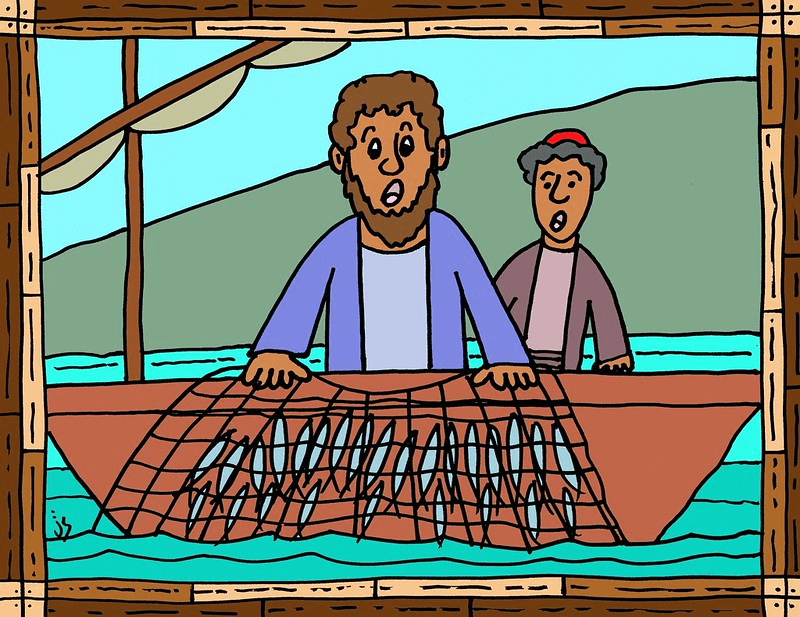
Art by Stushie, used with permission

Our presbytery met at Shelter Island yesterday.

Jim and I sat near the back of the old white church, next to the Rev. Candace Whitman, my former seminary classmate, and in front of the Rev. Emily Fowler, pastor of the Port Jefferson church.

Legos were scattered on the pew and floor behind us. Emily had brought her 4-year-old son, Avery. It was to be an adventure weekend for him, she said. Avery, who just started kindergarten, turns 5 tomorrow.

In case you’re wondering, we don’t usually have children at our presbytery meetings. There isn’t a rule against bringing small children to presbytery meetings. Just most people wouldn’t bring them.

Maybe it’s one of those unwritten rules we have, that during a presbytery meeting, only one person is allowed to speak at a time. When one person is speaking, the rest of us are required to be quiet and sit still and not make any disturbances. We are Presbyterians, after all! We like everything decent and in order.

Having Avery there made the meeting infinitely more interesting for Rev. Candace and me, who immediately fell in love with him. Avery sang along with the hymns. And he sang and hummed to himself when we weren’t singing. He clutched his Sonic the Hedgehog stuffie and sang, “Row, Row, Row Your Boat,” when the speaker was talking about something serious. Maybe it was about the budget, or per capita, or a new policy. I don’t remember. I do recall, however, “Row, Row, Row Your Boat,” which was fitting for the occasion, since we all had to take a small ferry to get to Shelter Island. And there was a banner with a boat hanging on the right side of the sanctuary. Another banner hung on the left, with the saying, “Jesus, Pilot Me.”

Avery joined us when we voted on the motions. Our presbytery moderator would say, “All in favor, please say Aye.” And Avery would say, “Aye.” And then the moderator would say, “All opposed, please say neigh.” And Avery would say, “Neigh,” probably thinking that he was making the sound of a horse.

Each time he said, “Neigh,” he would let out a little giggle.

Candace and I couldn’t help but look at each other and smile, too.

A couple more votes went by. Avery voted “Aye” and “Neigh,” though his mother gave him a fierce look, saying “be quiet” with her eyes. Maybe you’ve seen that look before. Maybe you’ve given that look before!

The moderator was startled by all the Neighs. People assured him not to worry about it. The vote wasn’t “official,” one man said, with a smile. A man in front of us added, “Not yet.” Someone else said he fit in with the Presbyterians. Always a contrarian in the group, they joked.

At the break, the Rev. Candace and I and others talked with Avery, asking him how he liked school. At lunch, he sat at our table and named his bus driver and kindergarten teacher and told us how much fun he was having, already. And he pointed out one of the volunteers at the church serving food. She was his new friend, Allison, he said. He was already making friends and influencing people.

Our table sang “Happy Birthday” to Avery when we finished our lunch. Others joined in.

When we left the presbytery meeting, I kept thinking about Avery. I am proud of our presbytery! No one shushed him. No one, but his mom, gave him so much as a be quiet look.

We welcomed him, just as Jesus taught us.

The lesson of welcoming a small child comes up in Mark’s gospel today. Jesus had just told his disciples of his pending betrayal, death, and resurrection. And they didn’t know what to say. They don’t understand, and they are too afraid to ask him to explain.

Jesus will tell his disciples three times in Mark what is to happen to him. In 8:31, he will suffer and be rejected. In 9:31, he will be betrayed; and in 10:34, he will experience mocking, spitting, and flogging.

And now the disciples are arguing on the road to Capernaum. When they get to the house, Jesus asks them what they had been arguing about. And they are silent. It’s like children acting up in the back seat of the car. When you ask them what’s happening, they aren’t going to say—because they know they were doing something wrong, and they don’t want to get in trouble. Right?

Jesus already knows what they were arguing about. He heard them, though he doesn’t say. They were arguing over who was the greatest. He has just told them that he will have to suffer, and they didn’t understand what he was telling them. Now they are competing to be the greatest, perhaps the most valuable to him. Jesus, thinking quickly, uses their argument as a teaching moment for the first lesson that they didn’t get!

Are there any teachers or former teachers of young children here? You know what I mean by “a teaching moment,” don’t you? This isn’t something on your lesson plan, but something that comes up spontaneously during the class or school day. You recognize it as an opportunity, not to scold, but to teach the class an important lesson with the perfect, unplanned illustration that just landed in your lap.

Jesus sits down with the 12, because when teachers had something important to say back then, they didn’t stand up, they sat down to teach. He sits down with the 12 and says to all of them, “Whoever wants to be the first must be last of all and servant of all.”

And there just happens to be a little child nearby. He places the child among them and takes them in his arms before he tells them the most important piece of his lesson. Whoever welcomes the child, welcomes him, and whoever welcomes him, welcomes the one who sent him.

I really like it that Mark doesn’t tell us if the child is a boy or girl. It doesn’t matter! They are both equally precious to God, while in their society, in ancient Israel, “children had no social status whatsoever.” [1]  Theologian Peter Paris says that he is “clearly stating a reversal of the social order by making the least first and the first last…His messianic kingdom would establish a new social ethic by reversing the social and political fortunes of the dispossessed and restoring health to those who were sick and disabled, as well as dignity and value to children, women, and the outcasts.” [2]

We still have another chance to get it right, dear friends—to listen to the young people of our faith community and try to see the Church and the world through their eyes.

Another young person attended the presbytery meeting yesterday in Shelter Island. He served as our YAAD, a Young Adult Advisory Delegate, to General Assembly in Salt Lake City in June. He shared during a question-and-answer session with the ruling elder and teaching elder commissioners to GA how the YAADs were concerned about one issue, in particular. They spoke up passionately in favor of the overture for our denomination’s divestment from fossil fuels. The overture passed, but then the decision was overturned. The YAADs felt like no one had listened to them, he said. And YAADs are just “advisory” delegates. They have no vote.

No one at the presbytery meeting immediately responded to his heartfelt sharing, though several did thank him for his service. Some may have spoken with him afterward. I hope so! I wished that I had taken the time to encourage him. But maybe it’s not too late.

I have been thinking that I want to write that bright, young man a letter and thank him for his work at General Assembly.  I want to tell him to not grow weary of doing good, as Paul says in Galatians 6:9, “for in due season we will reap a harvest, if we do not give up.” I will tell him that we need him and all the other young adults and youth in our denomination to care about the way we do church and challenge us when we need to change. That how we invest and spend our money as a denomination speaks volumes about what we believe.

Brothers and sisters, the One who was betrayed, suffered, and was raised tells us, “Whoever wants to be the first must be last of all and servant of all.” And that to welcome the children and all without voice or status in our society in Christ’s name is to welcome Jesus himself.

And those who welcome him are welcoming the One who sent Him.

Let us pray.

Holy One, thank you for sending your Son to show us the way back to you when we, like sheep, went astray. Your Son was betrayed, suffered, died, and was raised for us so that we may live new lives for Him. Teach us—in this world where accomplishments, wealth, and power mean everything, and humility is seen as weakness—to understand what it means to be the greatest servant of all. Lead us, day by day, to live out our faith and welcome children, youth, and young adults into the Church. Open our ears and hearts to really listen to them and take them seriously. Stir us to encourage them when they don’t see the changes they want right away. Give us the right words to say, such as “Don’t grow weary of doing well. The harvest will come, if we don’t give up!” In the name of our Triune God we pray. Amen.


     [1] Peter J. Paris, Connections: A Lectionary Commentary for Preaching and Worship, Year B, Vol. 3, Season After Pentecost (Louisville: Westminster John Knox, 2021), 334.

     [2] Peter J. Paris, 334.

Learn from Horses, Ships, Forests, Fig Trees, Beasts, Birds, Springs & Seas

Meditation on James 3:1–12

First Presbyterian Church of Smithtown, NY

Pastor Karen Crawford

Sept. 15, 2024

Art by Stushie, used with permission

Today, I am filled with gratitude. Today is the first day of Sunday School!

We have families bringing young children to church, helping us to be true to our vow and our calling to nurture the children in faith, hope, love, and service. Praise God!

And we have volunteers willing to make the commitment to teach the children about God’s love, through our curriculum, which connects with our lectionary scriptures each week. And through their example, the way they walk the walk and talk the talk. Through the way they live their lives!

I don’t have to tell you that it’s hard to find Sunday School teachers these days. Will you raise your hand if you have ever helped with Sunday School or Vacation Bible School? Thank you for your service! It’s a big commitment, isn’t it, especially when it means, in our situation, that our teachers will teach every week and not be able to join with their church family in the second half of worship? Our teachers always miss the message, the music, the pastoral prayer and sharing of joys and concerns. They miss the sacraments—Baptism and Communion.

I don’t have to tell you that fewer young adults are attending church with their children than, say, in the 1960s, when our congregation had grown with the town of Smithtown and built the Christian Education wing. They completed it in 1963, when the Rev. William Brown, Jr. was minister here. For a number of years, says our Church and Community (Second Edition)history book, the church claimed the highest Church School enrollment in the Long Island Presbytery.

Who was here in the 1960s, when the congregation was overflowing with children and youth? That must have been amazing! By 1972, however, there was a downward trend in enrollment. Listen. “In the age group 2 years through 6th grade, there were 400 registered in 1972. This dropped to 365 in 1973 and at the end of 1974, there were 302 registered. A dedicated teaching and support staff of 80, including 37 teenagers, is required (by 1975) to conduct classes at both 9 and 11 o’clock each Sunday.”

From Church and Community: 1675-1975, The Story of the First Presbyterian Church of Smithtown, New York (Second Edition(

Times are a little different now, aren’t they?

But today isn’t the day to mourn what we no longer have. Today is the day to count our blessings.

Today, as we commission Sunday School teachers and bless the children and their backpacks, we celebrate and appreciate the Lord’s goodness and our beautiful church family. We give thanks for the gifts of the Holy Spirit poured into the flock, for the loving relationships that abound, and our growing in faith and faithfulness.

James tells us in our reading today that not many of us should be teachers because God will judge those who teach with a greater strictness. Of course, he is preaching to a congregation of teachers because every disciple of Jesus Christ is called to teach. The Lord tells us this in Matthew 28!  The risen Christ returns to his followers and says to them in verses 18 through 20, “All authority in heaven and on earth has been given to me. Go therefore and make disciples of all nations, baptizing them in the name of the Father and of the Son and of the Holy Spiritand teaching them to obey everything that I have commanded you.”

Yes, we are all called to be teachers and share the gospel with the world around us, with our congregation, families, neighbors, people we work with, people we run into at Stop and Shop, Trader Joes and Whole Foods….

And what is the one thing that every teacher needs to teach? In James’ time and community, there were no curriculum guides, printed materials, or video clips, of course. They only had their faith as it had been taught and modeled to them; the Scripture they had learned in the synagogue, for we believe that James’ congregation was Jewish; their own stories of what God had done in their hearts, minds, and lives; and their own voices, their speech!

James, possibly the James in Acts 15 who was a half brother of Jesus and led the Church at Jerusalem, includes himself with all the other disciples when he says, “For all of us make many mistakes” with our speech, with our teaching. He urges us to be “perfect” and not make any mistakes with our speech.

At the same time, he assures us that it is impossible to be perfect in our speech!

He uses some concrete examples as lessons for us—as if he, too, is a Sunday School teacher with an object lesson. He does this in the example of Jesus, who often used object lessons to help us in our understanding and obedience to God’s word. Jesus used all sorts of familiar images and objects from his world, such as a camel going through the eye of a needle; a coin with Caesar’s picture on it to answer a question about taxes; a fish with a coin inside its mouth to show how God provides for the disciples to pay taxes; a sower, seeds, soil, rocks, and weeds to talk about the faithful being patient and persevering; birds that are fed and flowers with fine clothing, and God seeing a sparrow dropping from the sky to illustrate how lovingly God cares for all Creation and especially for us; fig trees that, like those who are called to follow Christ, bear good fruit; a candle and a bushel basket and a lamp on a stand to urge us to share the gospel and let the light of Christ shine on the world.

James opens a window into First Century Christianity when he teaches us to tame our tongues, as if we were horses, keeping our bodies in check with a bridle. He tells us to look at ships, a popular mode of travel in ancient times, especially when you live on the water. We can almost hear the wind blowing when he says, “Though they are so large that it takes strong winds to drive them,” but they are guided by only a small rudder, “wherever the will of the pilot directs.” The tongue is a small member, as well, yet “boasts of great exploits.”

My image of a dry, rocky, desert region in the biblical world is set aside when he uses the metaphor of a forest fire—set ablaze by the tongue, which is a fire. It’s as if James truly is talking to us—in our time and place. All of us can imagine a forest fire!

Friends, this message from James cannot be more relevant, particularly in a presidential election year. Amen?

Everything we say, dear ones, can never be unsaid! We can’t take it back, though we can ask for forgiveness and vow to be more careful in our speech so as not to hurt anyone. Everything we listen to on the 24-hour cable news, ROKU, Youtube, Satellite radio, or a podcast cannot be unheard. Our ears, minds, and hearts hold onto these powerful words that can build up, encourage, and bring life, healing and wholeness, or break down, cause resentment, and destroy relationships and a person’s sense of self, strength of character, and purpose.

Words can do all that and more!

Words can divide and stir conflict and unrest in a family, church, community, nation, world.

Words can also bridge divides, mend what is broken, put out fires, bring unity and peace.

The next images carry us back to Genesis, when God created “every species of beast and bird, reptile and sea creature,” and invited the human being to name and tame them, be a steward of God’s Creation. These wild animals can be tamed, but not the tongue, James says.

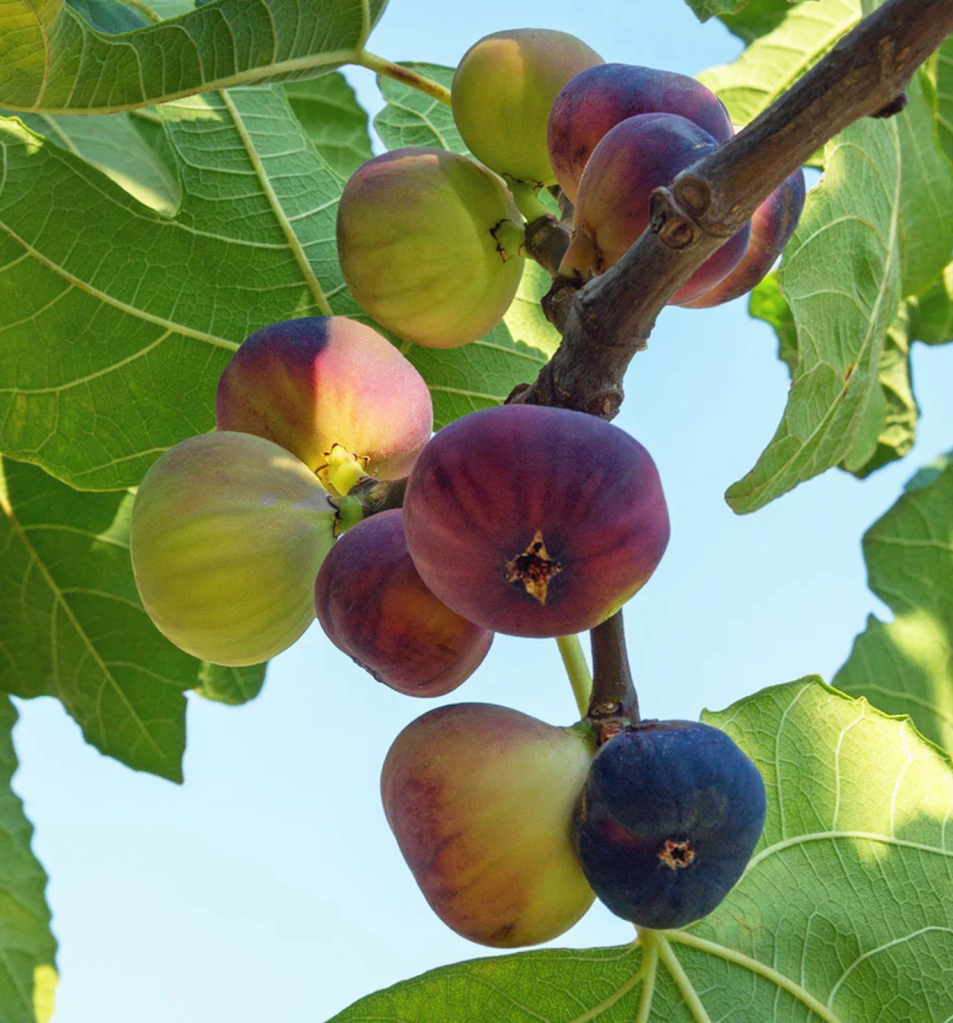
“No one can tame the tongue—a restless evil, full of deadly poison.” With it, we both curse and bless the Lord and Father. From the same mouth comes curses and blessings! A spring cannot pour forth both fresh and brackish water. A fig tree can’t yield olives or a grapevine figs. He might be gesturing toward the sea when he says, “No more can saltwater yield fresh.”

Dear friends, I am so happy that we HAVE children in our church family! I am OVER THE MOON. I can’t tell you how happy I am that God has entrusted us with children and youth to guide, bless, care for, learn from, and love. And I am so glad and thankful that we have good and kind people, willing to take up the cross and follow Jesus, though it means a weekly commitment to nurture our church’s children in the faith.

But, sisters and brothers, they need our help. They need our encouraging words, our prayerful support. We need more adult and teen helpers, perhaps taking turns, on a rotating basis. We need substitute teachers. We need someone to give our teachers a break on Easter Sunday, so they can worship with their families.

And here’s what else we can do, even if we cannot all be in the classroom. Let us remember that we are ALL teachers! Every time we open our mouths, we are teaching someone something. We are revealing who we are and what we believe. Every time we speak to our children and youth, greet them as they come into church or leave for Sunday school or eat with us in parish hall. Or, every time we fail to greet them or eat with them in the parish hall. Every time they hear us talking to each other, telling stories about our church, families, vacations, and places of work, they are watching and listening. They are learning from us!

The question is, what are they learning? Is what they hear and see helping them with their journeys of faith?

The good news is that we have assistance with this important labor of love. We are not alone in this difficult task of teaching and discipling, with a call to be perfect in our speech, when NO ONE is perfect in speech—because the tongue cannot be tamed!

The risen Christ promises his disciples, after commanding them to baptize and teach the nations what he has taught them, “I am with you always, even to the end of the age.”

Will you pray with me?

Let us pray.

Holy One, thank you for being our example of perfect, self-giving love and grace for sinners, who cannot tame our tongues. Thank you, Lord, for the promise that you are with us always, even to the end of the age. Help us, Lord, to speak life and shine light into the darkness with our tongues, to use words to build up, heal and make whole what is broken, and unite and bring peace where there is strife and conflict. We thank you for your blessing of Sunday School, for our children and young families, and for the good and kind volunteers who are willing, able, and available to teach. We ask that you help us raise up more volunteer leaders so that we may continue to be faithful to nurture our children and youth and grow in faith and faithfulness. Strengthen and guide us, Lord, your Church, as we seek to take up our crosses and follow you. Amen.

Ephphatha! Be Opened!

Meditation on Mark 7:24–37

First Presbyterian Church, Smithtown

Pastor Karen Crawford

Sept. 8, 2024

Art by Stushie

Jim and I went to the powwow at the Shinnecock Nation on Labor Day. This was the 78th year for this Labor Day Weekend event that includes a host of Indian nations and draws thousands of people. We went to celebrate Native American peoples, their histories and cultures, traditions and ways of life, languages and beliefs.

I had heard about the Shinnecock Presbyterian Church being involved with the event. I learned how the church is the oldest continuous Indian congregation in the U.S. and has served the Shinnecock people since the late 1600s. The powwow guidebook describes the church as “a place to gather and offer prayers of thanksgiving and hope for the continued health, prosperity, and unity of the people.”

The former pastor led the opening prayer each day. Women in native clothing danced to a dramatic reading of the Lord’s Prayer in a Native American translation. Then, the Lord’s Prayer was led in one of the native languages. It was quite moving to see and experience. From our lawn chairs, Jim and I listened to the native songs, heard the stories, and watched the native dances performed by people of all ages.

Then there came a moment when I felt extremely uncomfortable. Visitors—with my skin color—were asking to pose with Native Americans in ceremonial garb wandering through the gathering. It was as if they were being treated like Disney characters and not real people, our Long Island neighbors.

Those who live on the reservation have children and grandchildren who attend Southampton public schools and pursue higher education and careers, just like our children and grandchildren. The powwow guide featured photos and descriptions of their students pursuing Arizona Sheriff Training or studying Aerospace Engineering, Business, Healthcare Administration, Kinesiology, Accountancy, Computer Information Systems, Early Childhood Education, and 2D graphic design, to name a few areas of study. One young lady dreams of working in television at NBC and is studying Media, Culture, and Communication at NYU.

There were other people profiled, as well, adorable babies born since the last powwow and children and adults recognized for excellence. Congratulations were offered to Officer Kedi Goree on her promotion to Detective with the Southampton Town Police Department. She is the first female Shinnecock member on the Southampton Police Department. Three young Shinnecock men are pictured in uniforms as new members of the Southampton Fire Department.

And how can we not celebrate and give thanks for Rosemary Graham Rogers, who served 40 years as the organist and music director for the Shinnecock Presbyterian Church, introducing a variety of musical styles and organizing all the annual holiday programs and children’s performances? She developed a program to teach tribal members piano and voice. The 94-year-young woman loves drawing and painting and has sold her handmade greeting cards at the powwow.

I left the event both happy and sad, as we drove by homes on the reservation where our Native American neighbors reside, many who live below the poverty line. I was glad we didn’t have to see the multi-million-dollar mansions of the rich and famous surrounding them on what was once native lands and still would be, if the world was a fair and just place.

As Jim drove us home from the powwow, I closed my eyes and heard the music we had listened to, saw the colorful clothing of the ceremonial dress, and the beautiful dances we had watched as I drifted in and out of sleep.

I wondered, as we start a new school year, how the children from the reservation are treated in Southampton schools. Are they ever made to feel, I don’t know, like they are outsiders or don’t belong there, when, in fact, their ancestors have lived on Long Island for about 13,000 years?

Our culture isn’t the only one plagued by prejudice and unequal treatment of people.

In our reading in the second chapter of James, the writer is scolding the young congregation for showing favoritism based on wealth and status. “My brothers and sisters,” James writes, “do you with your acts of favoritism really believe in our glorious Lord Jesus Christ? For is a person with gold rings and in fine clothes comes into your assembly, and if a poor person in dirty clothes also comes in, and if you take notice of the one wearing the fine clothes and say, ‘Have a seat, here, please,’ while the one who is poor you say, ‘Stand there,’ or ‘Sit at my feet,’ have you not made distinctions among yourselves, and become judges with evil thoughts? Listen, my beloved brothers and sisters. Has not God chosen the poor in the world to be rich in faith and to be heirs of the kingdom that he has promised to those who love him?’”

Then, in our gospel reading in Mark, we are horrified to hear Jesus dismissing the Syrophoenician woman’s request to heal her little daughter, possessed by an unclean spirit. She begs for help, and he says the unthinkable. “Let the children be fed first, for it is not fair to take the children’s food and throw it to the dogs.” He is essentially calling the woman and her people “dogs,” which was the worst kind of insult back then when dogs were not the cute pets we treat like family members today.

Jesus marvels at her persistence for her daughter’s sake, as she responds, “Sir, even the dogs under the table eat the children’s crumbs.” He tells her to go home; he has healed her little girl because of her faith. Scholars debate why Jesus treats this Gentile woman this way. Some say that Jesus reacts badly to a request for healing from a Gentile because he is weary from ministry and annoyed that she has sought him out when he is taking some time for himself. Others say that we misunderstand his tone of voice, that he was merely stating a fact and not being cruel. Still others say this underscores the reality that Jesus didn’t heal everybody who was sick. And he didn’t fix everything that was broken in his world, as others expected him to do.

Honestly, we can’t know why Jesus said what he did. But I can’t help but question why the original editors would include this story in two of the gospels (Mark and Matthew, where she is called the Canaanite woman), if not to highlight something important to us. I think we need to know that even Jesus struggled with his own cultural prejudice, probably learned from childhood. As a human being, he would struggle with all the same feelings and temptations that we do in the context of his ancient world. And yet, when the woman confronts him about his bad attitude, he recognizes that he was wrong! He changes his mind, and he changes his behavior! From that moment on, he is different.

We see evidence of this change when he returns from the Gentile region of Tyre and continues to the region of the Decapolis, a center of Hellenistic and Roman culture. Some people bring him a man who is deaf, with impaired speech, and beg for Jesus to lay hands on him and heal him. He responds by taking the Gentile man away from the crowd. He puts his fingers in his ears and uses his own saliva on the man’s tongue to heal him. Jesus looks up to heaven, lets out a great sigh, and says, “Ephphatha!” or “Be opened!” as Mark translates.

The man’s hearing is restored and his tongue “released.” From now on, he can speak “plainly.” He is returned to life to the fullest in his community and is no longer without voice.

This “Ephphatha” or “Be opened!” moment captures my imagination, as it comes after he almost blunders with a woman seeking the healing of her little girl, possessed by a demon. It’s as if Jesus himself has gained a new understanding of who he is and what he is called by God to do. His mind has been opened and never again will he see things the same way.

And it’s like this with you and me, my friends. When we worship, study the Bible, and seek to walk with Christ each day, we begin to see things in a different way. In this Season of Creation, we are becoming more aware, with the Spirit’s help, of our broken relationships with our human and non-human neighbors. We cannot help but be persuaded to have a change of mind and heart—to look inside ourselves and to hope and act with Creation, seeking to mend what is broken, heal what is hurting, and work for peace and reconciliation.

Maybe it’s coincidence, or maybe it’s the Spirit’s timing. This week we received an email inviting us to join in our synod’s mission to help with home repairs on the Shinnecock reservation. Even if we are not able to attend and physically help them on September 28, I have included information about the mission in our bulletins for you to share with others and as a reminder for us to hold the Shinnecock people in our prayers, just as the Presbyterian church on the reservation does every week—offering prayers of thanksgiving and hope for the continued health, prosperity, and unity of the people.

May we continue to have these moments, my sisters and brothers, along our faith journeys, moments of “Ephphatha!” or “Be opened!” that will change our hearts, minds, and lives forever, just as it did for the Gentile man whom Christ healed in the gospel of Mark –and for all who witnessed the healing or heard the story later, though Jesus asked them to keep it a secret.

May we be moved to share our testimonies and proclaim the goodness of our Lord, as those who were astounded beyond measure, saying, “He has done everything well; he even makes the deaf to hear and the mute to speak.”

Let us pray.

God our Creator, thank you for your love for us and for the example of your Son, who struggled with many of the same feelings and temptations with which we struggle. Thank you for your grace, when we don’t always get things right the first time. Open our eyes to what we need to see about ourselves and our relationships with human and nonhuman creatures. Help us to hear your voice clearly and find the right paths for our lives. Transform our hearts and minds so that we may be used as vessels of healing and instruments of your peace. In our name of your Son we pray. Amen.

Do Not Let Your Hearts Be Troubled

Meditation on John 14 and Revelation 21

In Memory of Jamella Charlene Carr Farley

June 11, 1943 – September 5, 2024

First Presbyterian Church of Smithtown

Rev. Karen Crawford

Sept. 7, 2024

Jamella was 18 when Jim proposed to her on the Empire State Building.

She had been raised in Catholic school and had graduated from Cathedral High School in New York City.

Jim had attended public school. He was 4 years older. He was a police officer and had served in the U.S. Army.

They met at a dance. He swept her off her feet.

She said, “Yes,” that memorable day on the Empire State Building. “But don’t give me the ring!” she said. “My mother will kill me.”

She went to her half sister, Dodie, for help persuading her parents that she hadn’t lost her mind, that she was making the right choice. James Wakefield Farley was destined to be her husband. This was the one thing she wanted in life. She was sure that she wanted to be a loving wife to Jim.

They were married in the Catholic Church, 10 days before Jamella’s 20th birthday. Six years later, she and Jim were the parents of four children: Melissa, Allison, James, and Brian. She stayed home with them until her youngest went to kindergarten. Then, she found work at Dorne and Margolin for many years. Although she never went to college herself, she was determined to help provide that opportunity for her children.

Jamella was not an adventurer. She didn’t long to travel the world. She found her happiness in spending quiet time at home. She and Jim moved into the Bohemia house in 1965. She loved reading. She enjoyed watching Hallmark movies. She loved the color yellow. She drank red wine. A special treat was eating cheesecake for lunch with her sister-in-law or friend. She didn’t like crowds and was often the first one to leave a party. But she loved her family and was proud of Jim, who had followed in his father’s footsteps and became a NYC firefighter.

When Jim developed serious heart and lung problems and retired on disability, she was his caregiver. Jim passed away in 1997. He was only 57. She was suddenly a widow at 53.

After Jim’s passing, the four-bedroom home in Bohemia was too large for one person and held too many memories. Her children moved her into a two-bedroom condo in Holbrook. For the first time in her life, she lived alone. And though she missed the love of her life, she learned to like being on her own, having her own place, her privacy, freedom, and independence. She fell into a new routine.

But then came a health crisis—a stroke in 2013. Doctors prepared her family to accept that she would never be able to function as she had before. She was living in an assisted living facility—and hating it. Hating her loss of independence, privacy, freedom, and quiet. Hating her loss of her home. Her family, concerned about the future, listened to medical experts and sold the condo to pay for their mother’s care in assisted living.

And then, she surprised everyone. She gradually recovered much of what she had lost to the stroke. While her right side remained weak, she could walk and talk. Swallowing food was difficult, so she drank Ensure. She was never able to drive again, which really bothered her. She was plagued by seizures, beginning in 2015. Still, she was determined to grow strong and live on her own. Her family moved her from assisted living into an apartment, which she embraced as her new home, and she began to rebuild her life, with continued, loving support from her children.

There came a time when she could no longer live alone. Her health went into sharp decline. She was in and out of the hospital, back in rehab. Her family was fighting for 24-hour home health care. Allison had just assured her mom that it wouldn’t be much longer. She read her the emails from a lawyer, who was helping her case.

Her mother clung to hope.

And then Allison received the call early Thursday morning. The Lord had called her to her heavenly home.

This is the promise in John 14—that our Savior has gone to prepare a place for each of us in his Father’s house of many rooms. He prepared a place, made a way for us to return home to God through Christ’s death and resurrection, as he promised his first disciples on that sorrowful day, thousands of years ago. This promise is still true for Christ’s followers. One day, we don’t know when, the Risen and Ascended Christ will come again and take us to himself, so that where he is, we will be also.

We anticipate that day to come, when, as John shared in his vision, we are finally dwelling with God, face to face. He will wipe every tear from our eyes. “Death will be no more; mourning and crying and pain will be no more, for the first things have passed away.”

Like Thomas, we know the way to where we are going, even if we don’t know that we know it. The way there is through trusting in Christ, trusting in the power of God’s love, mercy, and grace. The way there is living today a new life, trying to live out, with the Spirit’s help, the loving ways of Christ. For he promised not to leave us orphaned—that wherever we are right now, even in this very room, the One Christ sent to us has already come and made a home in every heart that welcomes him.

We spend a great deal of time worrying about tomorrow and where we will live, if we are not able to live on our own in this world. Who can blame us for worrying about these things as we grow older? We spend a great deal of time making anxious plans, rather than resting in yet another promise for the faithful that Christ has made—the gift of his peace, not just in the world to come, but here and now. In the present. In this place.

“Peace I leave with you,” Christ is saying to us now, at this very moment. “My peace I give to you. I do not give to you as the world gives. Do not let your hearts be troubled, and do not let them be afraid.”

Amen.

To Hope and Act with Creation

Meditation on James 1:17–27

Pastor Karen Crawford

First Presbyterian Church of Smithtown

Aug. 27, 2024

I have begun my interviews for my doctoral project! It is so fun to hear your stories and see your gardens. I am learning a great deal from my fellow gardeners!

The conversation invariably turns to some of our challenges with gardening—and the complicated relationships we have with the wildlife in our communities.

Take the rabbits for example. They are SO cute! Except when they are eating all the new green shoots from the seeds that we have sown in hope. Gardeners are always people of hope.

Other creatures can present challenges to gardeners. Bugs, insects, mold, and fungus! Voles and moles and groundhogs. Rats and chipmunks, squirrels and raccoons, to name a few!  One of our gardeners has relocated a couple of hundred squirrels and a couple of raccoons in humane traps. You have to drive them at least 6 miles away, she says, or they will come back.

Some of the gardeners have complained about deer eating their plants, shrubs, and trees. Fences and wire cages are the norm in my neighborhood if you don’t want them to devour just about everything growing in your yard. But one says she has never seen a deer where she lives, and she has lived there more than 50 years. She knows they are in the community, however, because one deer visited a beauty salon not far from her home.

Journalist Nick Caloway of CBS News shared the story:

“Walk-ins are welcome at the BeYouTiful salon in Lake Ronkonkoma,” the story begins, “but this isn’t what owner Jenisse Heredia had in mind.

“‘At first, I thought it was a car coming in the window, and when I turned around, I realized it was a deer,’ she said. Heredia can be seen on security camera video giving a customer a haircut Saturday afternoon when the deer crashed through the front window of her shop, sending shards of glass flying. It was a very close call for a woman waiting on the couch. She was kicked by the buck as it jumped over her. The deer spent less than 30 seconds inside, but like a bull in a china shop, a buck can do a number on a hair salon. ‘It was crazy. I’ve never seen anything like that in my life,’ witness Edward Preuss said. He was getting a haircut as the wild animal came crashing in.”

The owner said she had never seen a deer in the area before. She guesses it “came from some nearby woods and lost its way before plowing into her salon. Most of the mess had already been cleaned up by Sunday afternoon, with a boarded-up window the only sign something went terribly wrong. As it careened out the front door, a hair straightener was tangled around its antlers. ‘Right now it’s on the house,’ the beauty salon owner joked. ‘Actually, my assistant found it, and it’s totaled.’ As for the deer, it was long gone by the time police showed up.”

This day that we mark an ecumenical World Day of Prayer for the Care of Creation is a good day to consider our relationships—with God and one another, and the nonhuman creatures that live as our neighbors, too!

The World Day of Prayer for the Care of Creation was started by the Ecumenical Patriarch Bartholomew in the Orthodox Church in 1989. It signals the beginning of the Season of Creation, which also has its roots in the Orthodox Church, and will conclude on the Feast of Saint Francis of Assisi on October 4.

The Anglican Communion, which includes the Episcopal Church, joined the World Day of Prayer for the Care of Creation in 2012. The Roman Catholic Church adopted it as a day of prayer in 2015. Today, the list of those participating in this Day of Prayer and Season of Creation has expanded to include numerous denominations and organizations, such as Lutheran World Federation, World Methodist Council, World Council of Churches, and the World Communion of Reformed Churches, of which the Presbyterian Church (U.S.A.) is a member.

An Associate for Sustainable Living and Earth Care Concerns in the Presbyterian Hunger Program, Jessica Maudlin, writes at the Presbyterian Mission Agency’s website, “It is a special season where we celebrate God as Creator and acknowledge Creation as the divine continuing act that summons us as collaborators to love and care for the gift of all that is created. As followers of Christ from around the globe, we share a common call to care for Creation. We are co-creatures and part of all that God has made. Our well-being is interwoven with the well-being of the Earth. We rejoice in this opportunity to safeguard our common home and all beings who share it…As people of faith, we are called to lift the hope inspired by our faith, the hope of the resurrection. This is not a hope without action but one embodied in concrete actions of prayer and preaching, service and solidarity.”

The theme for 2024 is “Hope and Act with Creation,” drawn from Paul’s Letter to the Romans (8:19-25) where he explains what it means to live according to the Spirit,

    “For the creation waits with eager longing for the revealing of the children of God,for the creation was subjected to futility, not of its own will, but by the will of the one who subjected it, in hopethat the creation itself will be set free from its enslavement to decay and will obtain the freedom of the glory of the children of God. We know that the whole creation has been groaning together as it suffers together the pains of labor, and not only the creation, but we ourselves, who have the first fruits of the Spirit, groan inwardly while we wait for adoption, the redemption of our bodies. For inhope we were saved. Now hope that is seen is not hope, for who hopes for what one already sees? But if we hope for what we do not see, we wait for it with patience.”

Our reading in James echoes this theme of hope that leads to faithful action, which includes life-giving speech. One of my favorite verses is at the beginning of this passage—that every good and generous act of giving comes from God, is a gift from God. This means that when we are generous with one another and our church, we reveal the generosity of God, who is the Giver. This God is “the Father of Lights,” hinting at the Creation story in Genesis 1:3 and 4, when the Lord said, “Let there be Light, and there was light. And God saw that the light was good.”

James doesn’t have a high opinion of people who say they are religious, but their lives fail to reveal their faith. James says, “Be doers of the word and not merely hearers who deceive themselves.”

It’s easy to say we love God, we love our neighbors, and we love Creation. We all would agree with that statement. None of us ever wants to hurt anyone or anything or disappoint the Lord. But it’s a lot harder to have our words and actions reveal the love of God for our families, neighbors, friends, and the natural world around us.

The love of God is revealed when we are kind to all creatures, not just when it is convenient for us. We must be intentional with our kindness, and not just have it be random acts when opportunities present themselves. We must pursue kindness and reconciliation, which is a difficult work and a radical thought, in this world. Think about it in our context, in an election year, that kindness, generosity, and life-giving speech are to be pursued, and that this is the true calling of Christ’s followers. We are going against the example of the world, since the garden of Eden, really, when we don’t pursue power or control over the land, and all the people and animals who live in it.

Where does our power come from, that is, the power to pursue our calling, to pursue kindness, generosity, and life-giving speech?  It comes from prayer—and the sacrament of Communion, gathering with the people of God at the Lord’s Table.

In a few moments, I will invite you to come to the Table to celebrate our Communion with one another and our Savior, the Son, through whom all things were made. When we partake of the elements, I urge you to remember that they came from the earth, and all started from seeds. Imagine the bread as grains of wheat, the juice as grapes on the vine. Our sacrament had its beginnings with the soil—the same soil from which God formed the first human being and breathed into him life.

Knowing that the sacrament had its beginnings with the soil, and that we had our beginnings with the soil, how can we not see that every step we take on earth, we are walking on holy ground? In Luke, the risen Lord revealed himself to two of his disciples in the breaking of the bread at their table, after walking with them on the dusty road to Emmaus.

Dear friends, may we see and experience the love and grace of God as we partake of the bread and cup together.

May we see one another as the Lord sees us—as precious children of God. Forgiven, freed, loved, indeed! May the Body (all of us) be refreshed, renewed, reconciled, and re-membered. Healed. May we be reminded that we never walk alone. The Lord who feeds us at his Table goes with us as we leave His church.

May we be strengthened in our faith to nourish all we meet on Bread for the world.

Let us pray!

Lord God of Creation, thank you for caring for us. Thank you for your call to care for your Creation that is groaning in labor pains—all the peoples, animals and plants, land, water, and air. We pray for the healing of the Earth. Help us to love others and your Creation, dear God, as you love us. Empower us, especially in this Season of Creation, to pray daily, and hope and act with Creation, for our well-being is interwoven with the well-being of the Earth. Lead us to pursue kindness, generosity, and life-giving speech and to share the hope inspired by our faith, the hope of the resurrection. Let us be doers and not just merely hearers, deceiving ourselves. In Christ we pray. Amen.

Prayer Garden Ministry

First Presbyterian Church of Smithtown, NY

Pastor Karen Crawford

Aug. 25, 2024

Art by Stushie, used with permission

One of our gardeners, Betsy, drove me to meet Sister Mary Lou Buser at her garden ministry in Brentwood a little more than a week ago.  She was an “expert” interview as part of my doctoral research on the spirituality of gardening. I was emailing with Sister Mary Lou and the garden manager, Heather Bolkas, before I realized the connection between Mary Lou and Betsy’s mother, Pat. Pat and Mary Lou are good friends, who have known each other for decades, going back to when Mary Lou lived in an apartment at Sweetbriar Nature Center in Smithtown. Pat and Mary Lou, both master gardeners, were volunteers there working to restore Mrs. Blydenburgh’s garden. Pat was on her way to garden with Mary Lou at Sweetbriar on a September morning in 2001 when she heard on her car radio about the terrorist attack on the World Trade Center.

Mary Lou is the founder of the Sisters of St. Joseph Garden Ministry. Have you heard of it? The Ministry seeks to “model organic agricultural principles but also to teach children their connection with the earth and to foster a community spirit among adults.” They offer eco-contemplative experiences and embodied prayer in the garden, such as Yoga and Tai Chi for teens and adults and nature courses for children, such as “Hands on Earth Play” and “My Grown-Up and Me in the Big Outdoors” for ages 4-7, and “Soil, Worms and Compost” for the upper grades. What interested me is “The Spirituality of Bread Making,” a retreat for adults in February, in which they go from soil to sacrament, making bread in an outside brick oven from the winter wheat they have grown in the garden.  

Garden Ministry of Sisters of St. Joseph headquarters in Brentwood.

I first learned about the ministry when I heard about the sisters’ Thursday morning prayer gatherings in the garden throughout the summer. I reached out for details, and the next thing I knew, I was scheduling a time when Betsy and I could come and hear Heather and Sister Mary Lou’s stories.

The Garden Ministry of Sisters of St. Joseph in Brentwood

As Betsy and I arrive on Aug. 16, a chicken greets us in the yard. The chickens have names such as Cleo, Carol, Boots, and Wheezy.

A chicken greets us at the garden ministry.

“It’s easier to ask for forgiveness,” Mary Lou quips, “than ask for permission.” A volunteer carrying a bunny interrupts our interview to say that it has escaped its pen. Again. “That happens all the time,” Mary Lou says. “Probably dug a hole.” There are other animals who have found a permanent home with the garden ministry—honeybees for pollination and honey in hives built by a volunteer—and goats over the years—Lamanchas, Nubians, and Nigerian Dwarfs with names such as Austin, Hamilton, Fiona, Elsa, and Eloise. A lady takes them for a walk every night, and they follow her.

Betty Deerfield and Sister Mary Lou with goats at the Garden Ministry.

The garden property includes twenty-four 4 by 16-foot community garden plots, where neighbors may plant, water, tend, harvest, and consume their own produce and enjoy their own flowers, without paying a fee. They have an annual community picnic at the garden, in which all are invited to bring a “tasty dish” to share. The same families return, year after year.

Community Garden Plots at Garden Ministry.
Cheese Pumpkin Patch at the Garden Ministry

I can’t explain it, but it feels like we are on Holy Ground. Maybe because of all the love and generosity practiced. Maybe it’s because of all the prayer. Maybe it’s simply because of God’s grace.

“It’s grounding, healing, connecting with the earth,” Heather says. “The embodied work (of the garden) is lifegiving and necessary for survival.” The preschool on the campus, Shepherd’s Gate, offers hands-on nature programs and even a full nature immersion program that connects with the garden ministry. Before the tour following our interview, Heather apologizes for the weeds that have overwhelmed the garden and volunteers this year. Vegetables, picked 7 days a week in season, are offered at what looks like a farm stand, but without price tags or someone minding the counter. A wooden sign above says, “The Sharing Table.” The table has a cooler, donation box, and fresh floral bouquet. The motto is, “Take What You Need/Give What You Can.” “Vegetables served 11,500 meals last year,” Heather says. “Chickens shared 6,000 eggs.”

The Sharing Table, open 7 days a week at the Garden Ministry of Sisters of St. Joseph.
“Take What You Need/Give What You Can.”
“Vegetables served 11,500 meals last year,” Heather Bolkas says. “Chickens shared 6,000 eggs.”

As we prepare to leave, a calico cat darts out from underneath Betsy’s car. “That’s why they don’t have voles,” Betsy says, and we laugh. Betsy has voles in her garden! Time has passed quickly, and I am sad to leave. My mind circles back to Mary Lou’s humble story.

The ministry started with a love for the earth, cultivated at home. When she was a child, her father planted a Victory Garden during the Second World War. “Dad planted tomato seeds,” she says, “and we watched them come up.” Mary Lou, who has served as a science teacher at Holy Family and a physical therapist, said she was listening to a man named James Hansen in the 1980s talk about global warming. Hansen, with degrees in physics, math, and astronomy, was Director of the NASA Goddard Institute for Space Studies when he testified to Congress in 1988, advocating action to avoid dangerous climate change.

Mary Lou said to herself, “We better do something about it now.” So, she decided to plant an organic garden. She was aware of how food was grown in “Big Ag,” she said, and that this was a cause of global warming. She thought, “If I could start a little garden, I can make a difference.”

She started with a few tomato plants, peppers, cucumbers, and beans. The garden grew. “I was a little ahead of my time in the 80’s,” she says. “I had two sisters who helped me.” The first plot was 15 by 15 or 20 by 20. They had to put a fence around it, not because of deer, but because of the horses on the property that would get into it. Whatever the garden produced, Mary Lou put on a little table for anyone to take. The garden expanded every year. Chickens came later, and the eggs went on the table, too. People dropped off rabbits no longer wanted after Easter—and the ministry grew to include them, as well.

Bunny hut and chicken coop at Garden Ministry, with Sister Mary Lou.

Mary Lou knew a beekeeper, and one day in church, she asked him to make a beehive for them. Heather came in 2011, offering to help Mary Lou by weeding one hour a day. Her responsibilities and hours grew, too.

Garden Ministry staff and some regular volunteers.

But the journey from the first small, garden plot in the 1980s to the thriving garden ministry today was a difficult one. Mary Lou had no encouragement, at first. “The other sisters thought I was crazy,” she says. She worked in the garden in the evenings, after working her day job. “I am glad I started it, and I am glad I stuck with it,” she says. Since she began the gardening ministry, her faith has changed. She has come to know and “believe in a different God,” she says, than when she was growing up. “I can feel God’s presence with me more in a garden (than anywhere else),” she says. “I am glad that I know this God now. God who creates all the time. God who loves.”

Today, following our worship in the sanctuary, we will go to an outdoor sanctuary—out in God’s creation—to dedicate our new prayer garden. The garden is a generous gift of Daniel Davidsen to bless the church for his Eagle Scout Project. It is my hope that this garden will be USED and TENDED by our church and community and not forgotten. There’s nothing sadder than a garden that is neglected. It is my hope that this garden will thrive and grow, for years to come, and will stir our members to plant their own gardens at home and share the produce, as Judy Michon does on the hallway table. It is my hope that the garden, like Sister Mary Lou’s, will be organic—that whatever will be used to care for our prayer garden, will be kind to the earth and healthy for human beings and non-human creatures.

We will ask for God’s blessing on this holy space and on all hands that, with God, will co-create with it. May all who come and spend quiet time on the bench or labor with hands in the soil—planting, weeding, watering, pruning—meet the God of the garden there.

The God who creates all the time. The God who loves.

Will you pray with me? Let us pray.

Holy One, God our Gardener, thank you for the gift of this wonderful life on your beautiful earth. Stir us to love your Creation, more and more, and to take better care of it—till it and keep it, as you charged the first human being in your Garden of Eden. We ask a blessing on Sister Mary Lou, Heather, and the garden ministry in Brentwood. Thank you for their example of perseverance. May they touch even more hearts, souls, and lives in years to come, feeding people with produce and prayer. And we ask a blessing on Daniel Davidsen, and our new prayer garden. We give you thanks! May it become a holy space for each of us, a place where we meet you, where faith is strengthened and renewed, where we experience afresh your unconditional love, and are moved to share it with others. In your Son’s name we pray. Amen.

New Ways for the Beloved Children of God

Meditation on Ephesians 4:25—5:2

Pastor Karen Crawford

First Presbyterian Church of Smithtown, NY

Aug. 11, 2024

Just got back from my trip to Denver to see my son, Jacob, on Friday night. My plane was delayed. Then we flew through storms that made my flight kind of like an amusement park ride that you wished you had never gone on.

The plane rocked back and forth, back and forth. It bumped up and down, up and down.

I had bought a salad to eat on the plane, but the ride was so uncomfortable, I didn’t bother to take it out of my bag.

A little boy – maybe 2—was taking his first ride on a plane with his family. He was sitting right behind me. It wasn’t the seat I had purchased online, but at the last minute, the flight attendant called me to the desk and asked if I wanted a “comfort row seat.” Jim had put me on the waiting list, without my knowledge.

I said yes. I am sure it was God’s will! There was a lesson to be learned.

Right from the beginning, the boy didn’t want to wear his seatbelt. He told his dad that he couldn’t see out the window if he had his seatbelt on. His dad tried to reason with him. He told him that if he didn’t wear the seatbelt, he might fly out of the plane. (I was smiling at that.)

The fight over the seatbelt went on a bit more, and then the boy started crying out for his mom. If Dad doesn’t say yes, maybe Mom will. Mom and Dad switched seats so Mom could be sitting right beside him. She gave him snacks and toys, comforted and tried to distract him, while he was wearing his seatbelt. He was OK for a while. But this was a 4-hour flight. And it was like an amusement park ride gone bad.

The pilot gets back on the P.A. when we have been in the air for about an hour. He tells us that we will have to remain seated, with seatbelts on, for the entire flight because, and I paraphrase, he was going to do some fancy flying to get around the storms, and we were still going to encounter rough air. The whole time, the passengers remained calm, except for the little boy—scared out of his wits when the plane started bucking like a Bronco.

“Let me out of here! Let me out of here! Let me out of here!” he cries. His mother tries to calm him down from the seat next to him, but there’s no calming him down, this time.

I start to pray– for the parents and the frightened boy. Within moments, she unsnapped the seatbelt and took him into her lap. He stopped crying.

We all sighed with relief. That rule—wearing the seatbelt throughout the flight when there might be rough air—it was made with good reason. It’s a good rule—to keep people safely in their seats, when they might fall if they try to walk around.

That rule was broken so that the higher law of love, kindness, and compassion that the Lord requires of us could be kept. It was God’s grace!

We encounter new rules, new ways for living as Christians in our passage in Ephesians today. This letter—written with long, beautiful Greek sentences and some different vocabulary and language than we find in letters confirmed by scholars to be, without a doubt, written by Paul—may have been written by a later disciple of Paul, strongly influenced by his teachings. Scholars first came to this conclusion doing a close study of the Greek letter in the 1790s. Many believe this to be the case today.

This doesn’t make it any less inspired, any less Holy Scripture! By the middle of the Second Century, Ephesians had a wide circulation, passed from church to church, and was accepted as an official book of the Bible—canonical. The focus is on the Body of Christ—the Church. Three main themes in the letter are: 1. Christ has reconciled all creation to himself and to God; 2. Christ has united people from all nations—Jews and Gentiles—to himself and to one another in his church; and 3. Christians must live as new people. The third one is the message of our passage today—new ways for the beloved children of God and why we should embrace them.

It’s interesting to look at the old ways as a kind of a window into the past. Who were these new Christians, the saints “in Ephesus” as the letter says, who are “faithful in Christ Jesus”? I wish we knew more about them. They may have been Gentile Christians—and this was the assurance they needed that they were as welcome as Jewish Christians and the teaching they needed for what that new way of life would look like, when they weren’t living with the same culturally accepted behaviors and emotions as their unbelieving neighbors.

In the new life, there’s no place for falsehood. Some ancient cultures actually saw lying as a good character trait—if you were a good liar. Now, we must speak the truth with our neighbor. Lying hurts the family of God. Then, a discussion of anger. It’s complicated. Anger can be good and bad for the faithful. “Be angry but do not sin” – so, be angry for the things that would upset the Lord, such as injustice, violence, suffering, and cruelty. But then, those familiar words of wisdom, “Do not let the sun go down on your anger.” Let go of your anger when it’s time to sleep, followed by the warning that if you hold onto your anger, you may be opening yourself to temptation to sin.

The grace and mercy of the Lord is evident with, “Those who steal must give up stealing.” Are those who have committed crimes welcome in the community of faith? Yes, of course, but just like everyone else, they must turn from their sinful ways.

This next part is intriguing to me. The new life in Christ means to continue to work for a living, in ordinary jobs of the time, but let it be good work that we do with our own hands. I can’t imagine the writer saying this to extremely wealthy people, who don’t work for a living, so I can imagine the congregation as being more ordinary people—farmers, tradespeople, craftsmen—who have learned certain skills for their occupations. But the labor now has a new purpose. This is important for us to remember today. We don’t work just so that we have a comfortable life for ourselves and our families but so that we “have something to share with the needy.”

The list of bad behaviors goes on, but now we are getting to the meat of the teaching. He’s building to a climax. “Let no evil talk come out of your mouths,” he says—this is something that has always been a struggle for the people of God. Use your words, he is saying, to bring life to the world. Say “what is good for building up, as there is need, so that your words may give grace to those who hear.” This reminds me of Psalm 19:14, “Let the words of my mouth and the meditation of my heart be acceptable in your sight, O Lord, my rock and my redeemer.”

We put away these next behaviors that grieve the Holy Spirit, which sealed us for salvation. Remember—God loved us first and chose us. The Holy Spirit stirred us to accept Christ’s call and faith is a gift. Things to put away now: Verse 31,“bitterness and wrath and anger and wrangling and slander, together with all malice.”

Finally, this is what our new life in Christ looks like. Verse 32: kindness. Tenderheartedness. “Forgiving one another as God in Christ has forgiven you.”  Think about how this would be received by ancient cultures, those who value taking revenge if they or their loved ones are hurt by someone. Even ancient Israel lived “an eye for an eye.”

This has all changed, now in Christ. We have the power by the Holy Spirit to forgive those who have hurt us.

Ephesians 5:1 sums up the teaching. The children of God are called to be “imitators of God, walking in love, as Christ loved us and gave himself up for us, a fragrant offering and sacrifice to God.”

About a half hour before my plane landed at JFK, the pilot’s voice came on the P.A. telling us to put away tray tables and electronic devices and pass our trash to the flight attendants without delay, as the conditions were going to be too rough for them to be walking the aisles. They needed to fasten their seat belts, too.

The little boy began to cry, once again, as his parents urged him to follow the directions, for his own safety. He kept insisting that if the plane were landing, then he WOULDN’T need to wear his seatbelt anymore! “We’re landing! We’re landing!” he kept saying, assured he was winning the argument

And I thought about this passage—and how we want to argue with God, when God’s rules  for the new life in the Body of Christ don’t seem to work for us in our given situation. We want to hold onto anger. We want to hold onto unforgiveness. We want the tenderness of God for ourselves, but it’s a lot harder to be the tenderness of God for one another, all the time—to walk in humble, sacrificial love, all the time, as Christ loved us and gave himself up for us.

I didn’t turn around to see the little boy for the next 30 minutes or so because we were being bounced around in ways that I have never experienced on an airplane before. When we finally touched down, I was surprised the whole plane didn’t burst into applause. I was praising God.

I looked behind me when we finally made it to our gate, and I stood to gather my belongings. That’s when I caught the eye of the mother. I smiled at her, and she smiled at me. The little boy, face flushed from crying, was sound asleep in her arms. He was so cute when he was sleeping!

I thought, again, about the love, mercy, and grace God has for sinners like us. For people who try to live by the rules for the new life, who are grateful for all that Christ has done, and yet we fall back into the old ways that are comfortable and easier, especially when we are stressed.

 We cry and yell and resist what God wants us to do—for our own good and for the good of the Body of Christ. And our tenderhearted God never stops loving us. The Spirit never gives up on us.

Let us do the same for one another, loving one another tenderheartedly, forgiving one another. May our words build up and bring life to the world as we imitate our kind and compassionate God, who never stops welcoming us back into the Lord’s embrace.

Will you pray with me?

Holy, merciful, and compassionate God, thank you for your grace for sinners, who struggle to walk in the new ways we are called to walk, now that we are living new, resurrected lives in Jesus Christ. Thank you for the example of our Lord, who gave himself up for us and for the world, a fragrant sacrifice and offering to God. Strengthen us, when we are tempted, to put away all the old bad behaviors that aren’t good for us or for our families, neighbors, and the Body of Christ. Help us to use our words to build up and bring life and so that others see your loving ways in us. In Jesus’ name we pray. Amen.

“Give Us This Bread Always”

Meditation on John 6:24–35

Pastor Karen Crawford

First Presbyterian Church of Smithtown, NY

Aug. 4, 2024

Art by Stushie, used with permission

I am getting ready to leave town for a few days to see my son in Colorado.

My husband, Jim, will be taking care of my important daily chores while I am away—watering plants and feeding and watering my cat, Liam, and, of course, caring for the birds, the most difficult of all tasks. I probably have 7 or 8 different kinds of feeders that handle a variety of food for different species of birds and other wildlife, including chipmunks and squirrels—suet, seed, and raw peanuts, shelled and in the shell.

In my backyard, there’s something for everyone. All are welcome.

My favorite birds of all? The blue jays. You always know when they are around; they are noisy and a tad bit aggressive. I always think they have leadership qualities. They are also smart, handsome, and fun to watch, with all their playful antics.

We have had a family of blue jays each summer now and have been blessed to watch them grow in all their stages, from fledglings to juveniles to young adults. Every morning, when I go downstairs, the jays are looking in our windows that open to the backyard, as if to say, “Where ARE you? We’re WAITING!” When I walk outside, they flap their wings and make SO much noise, as if they are saying, “Yippee! Breakfast!”

As soon as I sprinkle the shelled peanuts over the sunflower and safflower seed in the trays, they start swooping down, even with me standing there or close by. They stuff three, four, or more shelled peanut halves into their beaks until they can’t close their mouths. Then, they fly off to the trees or dive into the bush beside the feeders to eat them on the ground.

I had a thought yesterday, as I watched them eat, “I wonder what they think of me?” I am definitely a food source for them. They probably see me as the peanut and sunflower seed lady. But I am starting to think there may be something more to our relationship—that isn’t just, “Give us this food, always.”

Sometimes, they watch and follow me around when I am gardening, after they have eaten their fill, and there is still more food in the trays. The youngest blue jays especially seem attached and, well, curious, as if they are wondering, “Whatcha doing?” If I go in the house briefly and leave my gardening tools outside, I have seen them sitting on my deck chairs or on the shepherd’s crooks, looking around, as if they are waiting for me to come back out and play.

Today’s gospel lesson is the beginning of a heated debate with Jesus and the crowd. The people have been following him ever since the miracle feeding of the 5,000 with a couple of bread loaves and some fish. Jesus and his disciples are on a mission to the towns along the western shoreline of the Sea of Galilee for the past two days. The people have tried to force him to be their king, but he manages to escape to the hillside. This time they commandeer a boat to find him on the other side of the sea. “Rabbi, when did you come here?” they ask.

Jesus confronts the motives behind their questions, answering with a double Amen for emphasis! That’s what “very truly” is. Verse 26, he’s saying, “Amen, amen, I tell you, you are looking for me, not because you saw the signs, but because you ate your fill of the loaves.” The miracles each reveal an aspect of Jesus’ divine identity, and though they have experienced something miraculous in the multiplication of the bread, says theologian Max Lee, “the crowds have no idea who Jesus truly is.” [1]

Jesus challenges three wrong ideas “held by the crowds that keep them in a state of unbelief.” [2] First, they don’t understand the significance of the multiplication of the bread. Jesus wants them to focus on the spiritual food, which lasts forever, rather than on the actual bread, which is only temporary—fills us one day or for one meal, and then we need more. His scolding of the crowds reminds us of that conversation Jesus has with Peter in Mark 8:33, when Jesus predicts his own death and Peter rebukes him. Jesus says, “You do not have in mind the things of God but only human things.” [3]

Second, the crowd doesn’t understand the works they must do. Is it the works of the Law, required by ever pious Jew? Is it specific works to “trigger the arrival of God’s Kingdom,” [4] perhaps banding together as revolutionaries? No, Jesus says. The one thing they need to do is BELIEVE. V. 29: “The true work of God is to believe in the one whom the Father has sent.” This belief is not just an intellectual activity—I believe in Jesus, some people say, but then go about their lives their own way, not caring about the purposes of God and how Jesus may want them to live. This belief is “an abiding trust in, and allegiance to, Christ. The crowds are shocked that Jesus would ask a total commitment from them, and so they demand” more signs, more evidence to prove his identity as the Messiah before they will believe. [5]

And finally, they misunderstand the source of the manna during the 40 years of wilderness wandering. They think the source is MOSES! Jesus wants them to know that it isn’t Moses who feeds God’s people with bread from heaven. It is the LORD! The other misunderstanding about the manna is that they think it is only food to nourish their physical bodies. In the Jewish tradition of interpretation, the manna is also symbolic of heavenly food—spiritual nourishment. “It is the metaphor for consuming and living out the Torah. By consuming heavenly food and wisdom, that is, by faithfully obeying the Law of Moses, Israel sought to experience eternal life and God’s sustaining presence.” [6]  

In a little while, we will pray the Lord’s Prayer, saying “Give us this day our daily bread.” When we pray this, we aren’t just asking for the Lord to nourish our bodies every day—give us food, always. We are asking for heavenly food, spiritual sustenance for another day in our journeys of faith.

This passage stirs me to think about my relationship with the Lord, and how we, too, can fall into the pattern of just seeking God when we want something or more of something God has given us. OR something we absolutely need, such as healing for ourselves, a member of our family, or church family. We eagerly seek God for healing and provision!  

None of these things are wrong—just as it wasn’t wrong for the people to hunger for more actual bread and seek the source. That’s what we would do, too! What’s wrong is when we forget that our relationship with God in Christ means so much more than the promise of peace in a world to come and provision for our needs in this world.

You and I—we have a hunger for spiritual things. That’s why we are here in worship today! You could have been many other places! But you have come here to meet the Lord and receive God’s love from your pastor and other sisters and brothers in Christ.

Every human being has a longing for spiritual things, without necessarily being aware of it. The Lord God, who breathed into us the breath of life at Creation, has placed a hunger inside of us that only a loving relationship with God can satisfy, a space that only God can fill. As St. Augustine so famously said, “Thou has made us for thyself, O Lord, and our hearts are restless until they rest in thee.” [7]

While I am not exactly sure about my relationship with the blue jays—am I “peanut lady” or something more?—I have no question in my mind that my cat, Liam, will grieve when I’m not home this week. It isn’t just about food with him.

Jim, who gets up earlier than I do, often goes down to do the chores in what he calls “Liam’s Lair” in the basement. He sets up the food, cleans the box. But Liam waits for me to walk downstairs with him and stroke him until he purrs and rolls on his back in contentment. Then, he will eat a few licks of his canned cat food before taking a few bites of the dry. If I try to go upstairs before he is finished, he grabs me with his paws, hoping I will stay a little longer and spend more time with him.

Every time Liam does this, reaches for me and wants a little more of me, I remember how the Lord is jealous for my time and attention, as well. That I need to SLOW down and make more time for God and me alone. But of course, we are juggling the many tasks and responsibilities of our daily lives, too. Summers are busy!

In a few moments, we will celebrate our spiritual Communion with our Lord and one another. This is an OPEN Communion table, where all are welcome! Only one food—the BREAD OF LIFE that nourishes us to live new lives in Him—will be needed and served.

 This is the time to SLOW down, dear friends, and remember that our faith is not in an institution or religion. It’s not in a building or rituals and traditions, boards and committees.

The foundation and center of our faith is Christ himself, the one whom God sent for love and mercy for the world. He IS the Bread of Life and the only Bread of Life, the one who gives us the food that endures for eternal life.

Our redeemer.

The one who hears our cries and responds.

The one who makes what is broken whole.

The one who longs for us to recognize and enjoy his presence with us, forevermore.

Will you pray with me? Let us pray.

Bread of Life, feed us, now, with the food that endures for eternal life. While we worry so much about material and temporary things of this world, we are also hungry for you, for spiritual things, for the things of God. Strengthen our commitment to you, dear Lord, so that every day is lived for you, to glorify you, and be a witness of your humble, loving ways. Remind us when we are rushing around foolishly and anxiously that our hearts were restless until we found our rest in you. Thank you for the gift of faith to believe in the works you have done—how you gave yourself on a cross for the sake of the world. Open our eyes to your presence with us when we celebrate Communion today and when we walk with you each day. Amen.


     [1] Max J. Lee, Connections: A Lectionary Commentary for Preaching and Worship, year B, vol. 3 (Louisville: Westminster John Knox Press, 2021), 209.

     [2] Lee, 209.

     [3] Lee, 210.

     [4] Lee, 210.

     [5] Lee, 210.

     [6] Lee, 210.

     [7] St. Augustine, Confessions, 1, 1.5.

Practical Resources for Churches

Everyone has a calling. Ours is helping you.

Consider the Birds

Pastor Karen shares thoughts on faith, scripture, and God's love and grace revealed through backyard wildlife.

F.O.R. Jesus

Fill up. Overflow. Run over.

Becoming HIS Tapestry

Christian Lifestyle Blogger

Whatever Happens,Rejoice.

The Joy of the Lord is our Strength

Stushie Art

Church bulletin covers and other art by artist Stushie. Unique crayon and digital worship art

The Daily Post

The Art and Craft of Blogging

WordPress.com News

The latest news on WordPress.com and the WordPress community.