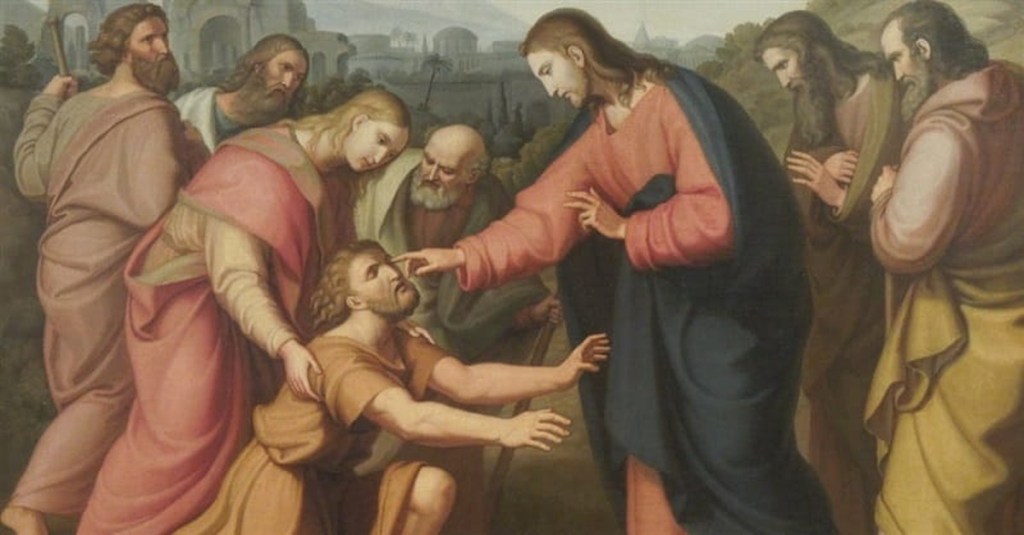
For God, All Things Are Possible

Meditation on Mark 10:17-27

Pastor Karen Crawford

Oct. 10, 2021

Link to live streamed service with message:

https://fb.watch/8BrvB_1QCv/

Download Bulletin:

I’ve been unhappy with my furniture lately. I find myself admiring the furniture in other people’s homes and feeling dissatisfied with mine. That ever happen to you?  Jim and I have had conversations about his big, green, leather recliner. Sure, it’s comfortable. I’ll give him that.

But it doesn’t go with any of our other furniture or the dark brown carpeting. And it’s well- worn from years of use. The leather is cracking on the seat. Every time we move, I tell him, “We’re not going to bring the green chair.”

He gets a kind of pained expression on his face.  “Do you know how much they cost?” he always asks me. Next thing you know, we are moving the green chair.

And I am admiring other people’s furniture, again… Wishing for more…

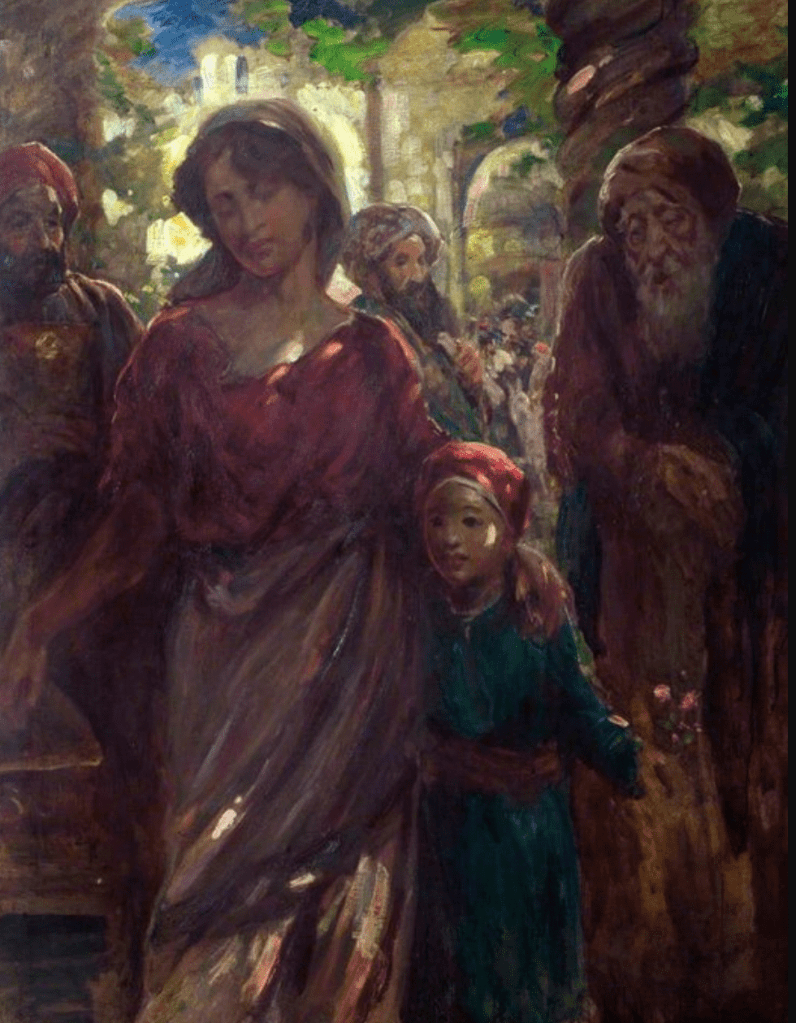
We encounter a man in the gospel of Mark today who is eager to meet Jesus and find answers to his questions. I confess that this passage convicts me, for his one problem is, shall I say, close to home.  He has too many possessions! Too much stuff and he likes it too much.

The passage begins with Jesus and his disciples starting out on a journey.

We learn in verse 32 that he’s on his way to Jerusalem. What awaits Jesus in the Holy City? The cross— and the work of God for “us and our salvation,” as we say in the Nicene Creed.

 This encounter with a man anxious to talk with Jesus is an interruption on their way to their destination. Jesus not only allows the interruption, he uses it as a teaching moment for his disciples—and for his followers, in every generation!

Isn’t that how ministry often happens? As an interruption to what WE have planned to do.

Isn’t it curious that the disciples don’t stop the man from approaching Jesus? After all, they just tried to shoo away mothers bringing their children to Jesus for a blessing.  Have they learned their lesson about who is important in the kingdom of God? No, they haven’t. They let this man approach Jesus and join them because he is rich!  With great wealth comes status in Jesus’ society, much like It does in ours today.

Now this man of many possessions IS trying to be faithful. He isn’t a Pharisee trying to trick Jesus into saying something that will get him arrested. He has come to Jesus for answers to his burning question: “What must I do to inherit eternal life?” That word “inherit” catches my attention. What do we have to do to inherit something? Nothing. We receive inheritance when a close relative dies.

Jesus lets that comment go by. He corrects his address of “Good Teacher” –for nobody is “good” but God, and then lists some of the commandments for the man to follow.  “You shall not murder; You shall not commit adultery; You shall not steal; You shall not bear false witness; You shall not defraud; Honor your father and mother.” As the apostle Paul will say in his letter to the Romans, the sum of the 10 Commandments is LOVE.

The man who interrupts Jesus on his journey to Jerusalem eagerly tells Jesus, “I have kept all these commands since my youth!!!!” He is expecting Jesus to say,  “Good job! Yes, you have done everything to inherit eternal life.”

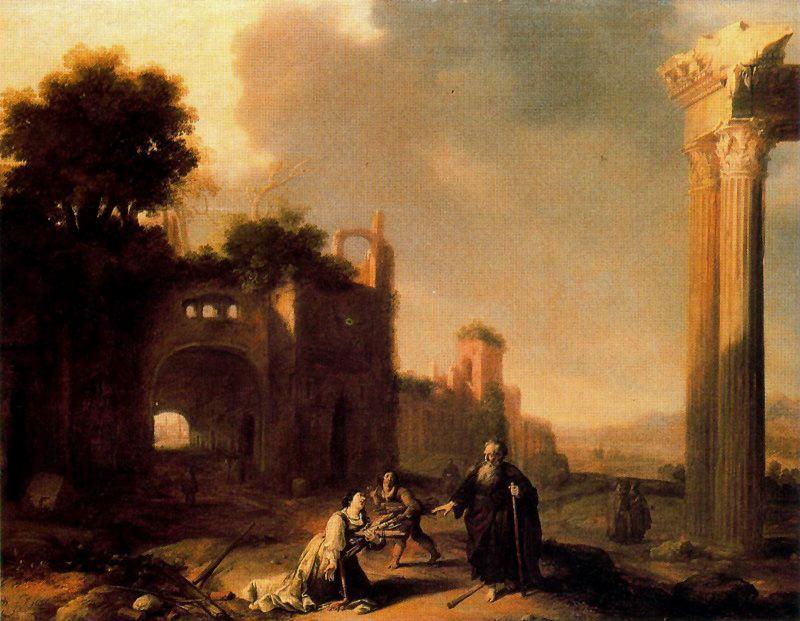
Instead, Jesus says, “You LACK one thing.” Listen to HOW the Lord speaks to him. In verse 21, he looks at him and loves him before he speaks the hard truth.For the “one” thing the man lacks, Jesus gives a multi-step solution:

  1. go, sell what you own
  2. give the money to the poor,
  3. you will have treasure in heaven;
  4. then come, follow me.

In case we think this is one obscure saying of Jesus in Mark, we find similar instructions in Matthew 19:21: “Jesus said to him, “If you would be perfect, go, sell what you possess and give to the poor, and you will have treasure in heaven; and come, follow me.” And in Luke 12:33: “Sell your possessions, and give to the needy. Provide yourselves with moneybags that do not grow old, with a treasure in the heavens that does not fail, where no thief approaches and no moth destroys.”

How does the rich man respond to Christ’s invitation? He goes away from Jesus  “shocked” and “grieved” because of his many possessions—and the mistaken belief that wealth and prosperity are the Lord’s rewards for our faithfulness. Therefore, if you are poor or sick, it must be because you or your parents have sinned.

This is the choice Christ has laid before him:  He can have:

                       a: the wealth and status of his life in this world OR

                       b: treasure in heaven

We are left wondering if the man has been changed by his meeting Christ, in spite of his departure in grief and shock.  How can we not be affected by Christ’s loving gaze and invitation to follow him?

We don’t have to wonder how the disciples respond to Christ’s teaching. They are “perplexed” when he says, “How hard it will be for those who have wealth to enter the kingdom of God!” They are “greatly astounded” when he says, again for emphasis, “Children, how hard it is to enter the kingdom of God!” and adds,  “It is easier for a camel to go through the eye of a needle than for someone who is rich to enter the kingdom of God.”

The disciples ask one another, “Then who can be saved?” Jesus overhears—or knows the question in their hearts. He looks at them with love, just as he looked at the man with many possessions.  “For mortals it is impossible,” he says, “but not for God; for God all things are possible.”

Peter speaks up for the group after that, declaring, “Lord, we have left everything and followed you!” He is still missing the point. “We have done what you asked,” he is saying.  “Haven’t we done enough to be saved?

Friends, we can learn much from this passage. First, we should never allow wealth or possessions take the place of God in our lives.  Stuff isn’t going to make us happier. When we get more stuff, we just want more. I speak from experience. What’s the point of new furniture when you have cats with claws? You end up having to cover it to protect it!

We have heard Jesus say in Matthew 6:24,  “No one can serve two masters. Either you will hate the one and love the other, or you will be devoted to the one and despise the other. You cannot serve both God and money.” But there’s more to this passage than a caution against collecting possessions and loving money. The Lord wants us to hear, once again, that second instruction—after Jesus tells the man to sell his possessions– give to the poor. The Lord is concerned for our needy neighbors and wants us to be concerned, too. This is part of answering Christ’s call!

There’s even more to be learned from today’s gospel lesson. The main message of  the passage, I believe, and indeed  the whole of the gospel is about our Creator’s love and grace. Human beings don’t understand God’s grace! We struggle to forgive ourselves and one another, so we assume God is struggling to forgive us, too.  But God isn’t keeping record of our failures or holding them against us.

And human beings don’t understand God’s unconditional love. Why? Because we don’t love that way and we don’t often see unconditional love in this world. Listen. You need to hear this. As Philip Yancy has written, “There is nothing we can do to make God love us more and there is nothing we can do to make God love us less.”

Brothers and sisters, there’s also nothing we can do to add to Christ’s work on the cross for our salvation.  All of us are sinners; none of us could save ourselves, even the earliest disciples who “left everything to follow Jesus.”

For mortals, it is impossible. But not for God. For God, all things are possible!

Let us pray. Holy One, thank you for Jesus, who shows and tells us how to love you and our neighbors, even those who might be hard to love. Forgive us, Lord, for our obsession with possessions. Remove our desire for more things that never satisfy us. Stir us to care for the poor as you do— to share ourselves, our friendship, and our resources with those in need. And Lord, help us to understand, accept, and receive your love, mercy and grace. Assure us that you have done everything needed for us and our salvation through the sacrifice of your perfect Son, Jesus Christ, our Redeemer and Lord. In His name we pray. Amen.

Oct. 3, 2021 Worship with The Presbyterian Church

Pastor Karen Crawford

Alice Hoover, organist

Jim Arganbright, liturgist

Link to Livestreamed Service: https://fb.watch/8pGxZgjSiE/

Bulletin:

Let them Come to Me

Meditation on Mark 10:13-16 and Hebrews 1:1-4; 2:5-12

Pastor Karen Crawford

Oct. 3, 2021: World Communion Sunday

     It is wonderful to be back in our main sanctuary for World Communion Sunday.  I don’t think I will ever forget those months of virtual Communion during the pandemic! That was hard, envisioning our connection with the Body of Christ while isolating in our homes.

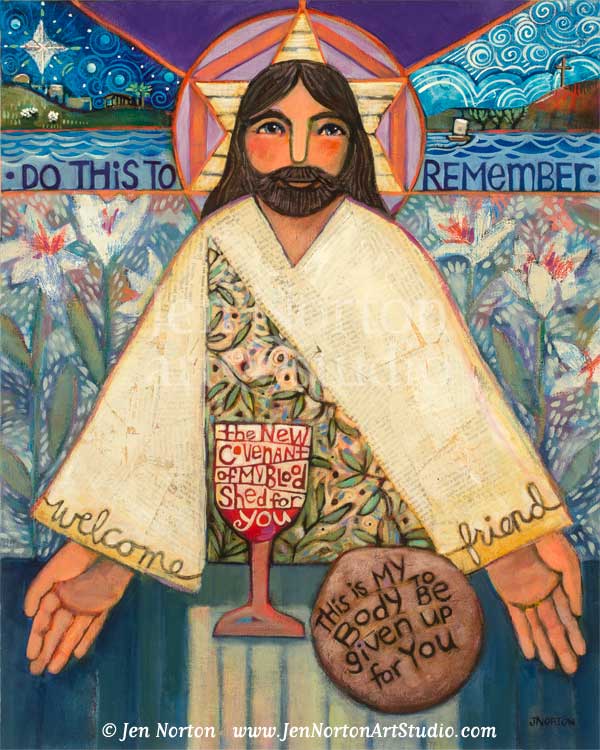
    Today, I am ready to celebrate Communion in a way that fits what we believe—that Communion should be passed, poured, eaten and in all respects shared with one another, symbolizing the unity we have in Jesus Christ!  The Sacrament of Communion should be delightful to see and delicious to taste—like the God we worship. As the psalmist sings in 34:8,  “Taste and see that the Lord is good!”

    We who were spoken into being and fearfully and wonderfully made in the image of God are reunited, restored, re-membered and reconciled to one another and our Creator. We have come to be changed and made new, and to become agents of change with the Body of Christ around the world.

      Paul talks about our call to co-labor with Christ in 2 Cor. 5, beginning at verse 14, For the love of Christ urges us on, because we are convinced that one has died for all; therefore all have died. 15 And he died for all, so that those who live might live no longer for themselves, but for him who died and was raised for them. 16 From now on, therefore, we regard no one from a human point of view; even though we once knew Christ from a human point of view, we know him no longer in that way. 17 So if anyone is in Christ, there is a new creation: everything old has passed away; see, everything has become new!  18 All this is from God, who reconciled us to himself through Christ, and has given us the ministry of reconciliation.”

   Our becoming a new Creation and co-laboring with Christ in his ministry of reconciliation is the message artist Makota Fujimara shared with Sojourners magazine in February. Fujimara is the author of a new book, Art and Faith: A Theology of Making, published in January.  He was inspired by theologian NT Wright, who wrote the forward for his book. Wright says the resurrection of Jesus sparked “the unexpected launch of new creation, of the ‘kingdom of God,’ on earth as in heaven” and that humans are equipped and invited to work with God in advancing this new reign.

   Fujimara, in his art, uses materials and techniques from nihonga, a Japanese style of painting. Pigments are made from crushed minerals and precious metals, then applied in many layers. Nihonga, he says, is “a slow process that fights against efficiency.”

Link to more about Fujimara’s art:

https://culturecarecreative.com/

“Prayer and contemplation are woven into the work. The tiny mineral particles refract light, often creating subtle prismatic effects. It is a style of art made for the type of long, unforced gaze that slowly reveals evermore depth. Deceptively simple and quietly elegant.” Sojourners, Feb. 2021. Here is “Walking on Water.”  And, “The Art of the Gospels.”

        “God created  beyond utility or need,” Fujimara says. “God is all sufficient and self-sufficient. In short (shockingly) God does not need us.  Yet God chooses community over isolation, gratuitous creation over passivity. God invites us to co-labor toward the new.”

    “Fujimara is also a student of kintsugi or ‘golden repair,’  the Japanese art of mending broken ceramics with lacquer mixed with precious metals, restoring a bowl or cup to wholeness  and function while highlighting, rather than masking, the fractures.  Objects repaired by kintsugi masters are often stunningly beautiful, veined with gold, silver, or platinum that trace a history of traumatic destruction and sublime redemption.”

     This art begins not with the gold—but with the shards. “Kintsugi masters sometimes handed down a set of fragments through generations, contemplating the pieces… for decades before beginning the repair, which itself might take years.” Like the art of kintsugi, Fujimara invites us to  “look with compassion and love on broken lives and broken systems as the starting point of repair, reform or healing.” He sees virtue in being able to see the brokenness and fractures, as painful as they may be.

    Through the pandemic and many other traumas of this last 18 months or more,  we can learn from Japanese art and the gospel itself that “we must first learn to behold even those painful broken fragments as beautiful,” rather than rush to fix everything or hide the damage. (Sojourners, Feb. 2021)

    Western cultures, including we who live in the U.S., wouldn’t hold onto broken shards for generations, considering how we might make a work of art of what remains. If something is broken, we quickly get it fixed or throw it away and buy new. We wouldn’t bother with the painstaking process of putting together all the broken shards with precious metals, and we certainly wouldn’t emphasize the broken places AND make them even more beautiful and valuable than they were before.

    Friends, on World Communion Sunday,  I look around this sanctuary—and I see many open seats. It’s hard not to notice—especially after worshiping all these months in our smaller, more intimate chapel. Yes, some of the seats are open for our members who haven’t yet returned because of the pandemic. But many are simply open, reflecting a time long ago, when our faith community was much larger. When you look around, you probably remember the people who used to sit in them and are no longer with us anymore.

   The open seats don’t discourage me one bit! I see them as waiting to be filled. We have plenty of room for seekers and believers. Do you know what I mean by seekers? Folks who don’t know Jesus or aren’t sure about him and haven’t accepted him as their savior. But we can’t wait for them to show up. We have to go to them and be intentional about inviting those outside our circle of friends, family and faith and make them feel welcome when they come.

Many people in our community don’t know they have a place at the table—a foretaste of the heavenly banquet to come in the Kingdom of God.

   You know who I miss the most at this table? You know who I long for? More young people. When we have more children and youth here, our worship has more energy and joy!

In Christ’s time, children were not seen as important. We can tell that by the disciples’ reaction to Christ’s words in the gospel of Mark today. And in our society, sometimes the voices of children aren’t heard. I pray that our congregation is one who listens and responds to their opinions and ideas, needs and desires, hopes and dreams, and concerns. After all, this is THEIR church, too.

   Jesus turns his society upside down and challenges modern notions when he teaches that the faith of children is actually THE model for adults. When the disciples are shooing away the mothers seeking a blessing for their children, he is indignant. Indignant! “Let the little children come to me; do not stop them; for it is to such as these that the kingdom of God belongs. Truly I tell you, whoever does not receive the kingdom of God as a little child will never enter it.” And he took them up in his arms, laid his hands on them, and blessed them.

    On this special day when we remember and give thanks for the Body of Christ, so much larger than one congregation or denomination and found in every nation, we come to the table as simply God’s redeemed children. We come as the beloved. We come not because we must, but because we may. We come with a little faith, wanting a little more. We come not because we are strong, but because we are weak.  We come seeking a blessing, like the mothers with their children in the gospel. And to see the One who is a glorious reflection of God and exact imprint of God’s very being, as Hebrews says. The one who is the pioneer of our salvation, made perfect through SUFFERINGS.

Cross Religion Christ Easter Crucifixion

Brothers and sisters, Christ understands our sufferings better than anyone else! There’s no one who knows and loves us more. We come to be united, strengthened, and made bold to share the good news! That Jesus, by the grace of God, tasted death so we wouldn’t have to! He is our source of hope and strength, who “sustains all things by his powerful word.”

Do not be dismayed by the brokenness of the world. Is that ever overwhelming to you? Don’t let it overwhelm you. And don’t be dismayed by your own brokenness. You are infinitely valuable to the Lord. We can’t rush the work of transformation—to be made whole and holy. We have to trust our Creator, the Divine Artist, and be patient.  

    Fellow co-laborers with Christ, keep reaching out with his love so the banquet table in the Kingdom of God will grow. Remember what Jesus said about children—how the Kingdom of God belongs to such as these. And, “Let them come to me!”

    With eyes of faith, I invite you to see how lovely and beloved you are, right now, as broken shards and yet, by the grace of God healed, whole, and holy.  I invite you to imagine how beautiful the Body of Christ will be when the Lord, gathers us all together in a final, divine work of art. Like the broken shards of kintsugi, joined by veins of silver and gold, we will be more precious and beautiful than before.

Let us pray. Holy God, who created us in your image, thank you for Jesus, your Son, who offers himself and new life to us as we celebrate Communion with Him and all the world. Thank you that he is our source of hope and strength and tasted death for us so we wouldn’t have to. Stir us to gratitude for what you have done for us and for our salvation. Help us to see ourselves with your eternal eyes and not be dismayed by the broken shards of our lives and the brokenness in the world around us. Give us a vision for the beautiful work of art you are making of us, a slow process, a divine process, a mystery waiting to be revealed in your timing. In Your Son’s name we pray. Amen.

Touched by the Spirit!

Meditation on Numbers 11 (Selected verses)

Pastor Karen Crawford

The Presbyterian Church, 142 N. 4th St., Coshocton, OH

Sept. 26, 2021

Link to our Live-Stream Service, including my messages for children and adults, as well as the baptism:

https://fb.watch/8gpyRlpd2R/

Bulletin:

    Anybody here love fall in Ohio? It’s my favorite season.  On Friday, Jim and I had our fall foliage tour. We drove to Wooster on SR 83.

If you’re from around here, you know that scenic, country road over rolling hills is windy and narrow. At first, it frightened me with the large trucks moving so fast with their heavy loads and farm machinery moving so slow. And then there are the Amish buggies  and bicycles that suddenly appear in the road. And the deer.  One was crossing as we turned a corner and went down a hill.

    But It was a beautiful, early fall day. Blue sky throughout the entire drive. The only thing that would have made it better, I told Jim, was if I were sipping a pumpkin latte.  

    I was having a craving for pumpkin.  When we stopped for lunch, I wanted a pumpkin muffin, but they were sold out. So, I bought canned pumpkin at the grocery store.

    That afternoon, I made two pumpkin pies.  They would have been better with vanilla bean ice cream, Jim said. That’s the way we like them! But we had to make do with Cool Whip.

     Making my pies and craving pumpkin, I thought about the Israelites wandering in the wilderness having a craving for MEAT. Who knows how long it had been since they left their homes and former lives in Egypt to follow Moses? I can imagine their misery, as they were city dwellers—not farmers, hunters, or trappers.

   Exodus 1:13-14 tells us about their backbreaking, oppressive labor, building supply cities for Pharoah.  He feared that the Hebrews were becoming too numerous and powerful. He worried they would rise up and side with his enemies; he wanted them to die. He set cruel taskmasters over the Hebrew slaves, making their lives “bitter with hard service in mortar and brick and in every kind of field labor.” He commanded the midwives to kill the male infants when they were born.

   The Israelites forget all the suffering and oppression of the past with the days, weeks, months and years of wilderness wanderings. They lose faith that God is going to keep His promises, even though here in Numbers 11 we read how God is feeding them every day with bread from heaven that falls like dew in the night.

      It’s an emotional thing for the Israelites—their desire for meat and the foods they used to eat. Manna satisfies their hunger and nourishes their bodies, but doesn’t satisfy the longings for the old life they were forced to leave behind. Egged on by certain negative folk Exodus calls the “rabble,” everyone begins to cry. The miracle of God’s daily bread that is keeping them alive becomes the thing that they despise!

     The foods they recall in this passage stir some scholars to question if these former slaves have selective memory and are viewing the past with rose-colored glasses. This would have been a rich diet for those held in captivity.

     “If only we had meat to eat!” the rabble cry. We remember the fish we used to eat in Egypt for nothing, the cucumbers, the melons, the leeks, the onions, and the garlic; but now our strength is dried up, and there is nothing at all but this manna to look at.”

    How do the Lord and Moses react? God becomes angry, and Moses is “displeased.” He complains to God, asking essentially, “Why me? Why are you treating your servant so badly? Why did you lay the burden of YOUR people on me?” Somewhere in the middle of his tirade, he demands, “Where am I to get meat to give to all these people?”

    What’s surprising to me is that Moses thinks, after all this time in the wilderness, that he is expected to provide food for the Israelites, without God’s help. He hasn’t up to now!  God has provided water from a rock and  bread from heaven. Is there anything too difficult for the Lord, who split the Red Sea so the Israelites could cross on dry land and the Egyptian forces riding in chariots would drown?

   We do that sometimes. We forget all that God has already done for us and we can lose our gratitude, particularly if we are stressed and feeling emotional—grieving what we no longer have, fearful for the future. The Israelites are worried about the future. Is this what it’s always going to be? Manna every single day forever? Wandering in the wilderness forever?

   This is what I hear God speaking to us through this passage today.

   First, look at what happens to the Israelites. The Lord in His grace and mercy continues to provide for the Israelites, even when they are ungrateful. He doesn’t take away the manna from heaven nourishing them daily. But because of the condition of their hearts and the way they demand meat and complain about the manna, the Lord will give them all the quail they can eat as a punishment. They fall ill and some will die.  Friends, sometimes the things we are craving aren’t good for us! Rather than always asking God to give us what we want, let us pray, instead, that God will lead us in His will.  When we ask for God’s will to be done, our hearts are changed.

    Then, let us learn from what happens with Moses. Moses never holds anything back from the Lord. He shares his anger, disappointments, doubts and fears. He’s always honest and authentic. But also notice that God’s chosen prophet is far from perfect! That makes me feel good—that even Moses made mistakes! And how does the Lord respond?  He answers his cry for help, without hesitation.

     God doesn’t expect perfection of us, either. But the Lord does want us to ask God for help when we are overwhelmed. God wants us to ask before we are overwhelmed!

    I believe God can’t wait to bless Moses and the 70 other leaders, who will be touched by the same prophetic Spirit that empowered Moses.  Do we have elders in worship today? Isn’t it a blessing to be an elder? The burden of leadership needs to be shared—as it is in the Church of Jesus Christ today.

      Maybe the most important lesson of the passage is at the end. The Holy Spirit isn’t limited to the people who gather in the holy tent of meeting. It can’t be controlled by human beings or contained in holy spaces. Medad and Eldad are touched by the Spirit and blessed with prophetic gifts, without coming to the tent of meeting! When they begin to prophecy in camp, Joshua wants Moses to stop them! And Moses says to the one who will lead God’s people after his death, “Would that all the Lord’s people were prophets, and that the Lord would put his spirit on them!”

      Friends, today, we celebrate the growth of the Church by the sacrament of Baptism!  Baby Catie  and Chandler, her father, were touched by the Spirit!

Christ has claimed them in their Baptism, just as Christ has claimed all of us and made us one in Him. Like the Israelites wandering in the wilderness, we leave our former selves and lives behind in the waters of baptism.  We are given a new identity. We are new Creations in Jesus Christ!  The old has passed away! Only God knows what we will become in this lifelong process of transformation…  when Christ has completed a good work in us.

On this day, I also remember my ordination 10 years ago in a little church in Renville, Minnesota.  I feel so grateful!  

 They took a chance on me! It seems like only yesterday when I saw the Minnesota prairie planted with corn, soybean and sugar beet. I can still see the faces of my beloved first congregation, though some of them have already gone ahead of us and joined the Great Cloud of Witnesses, cheering us on. The world has changed in these 10 years.  We have changed. The shape of ministry has changed, especially in these last 18 months. One thing that encourages me every day of ministry is that no matter how the world changes around us, Jesus Christ is the same yesterday, today and forever.  No matter what happens, we can count on the One to whom we belong to be faithful to lead us home!

    The Lord never gives up on us, my friends, and never stops responding to our cries for help! The Lord who loved us long before we loved Him continues to draw new followers to Himself and raise up new leaders in our midst, touched by the Spirit!

Let us pray. Holy One, Thank you for the work of your Spirit, filling us in our baptisms and continuing to empower the Church. Thank you for Catie and Chandler’s baptism today and for the faith of the family. We are so grateful that you chose each one of us to believe the good news. Thank you for never giving up on us—for hearing us when we cry, for wanting to help us and not desiring us to be overwhelmed with the responsibilities of our lives. Lord, you ask us to leave our old identities behind and become a new Creation in your Son. But we hold onto the past and have longings for a way of life that used to be, like the ancient Israelites. We don’t always feel comfortable with changes in our world, our church, in us. Forgive us, Lord. Touch us with your Holy Spirit, once again. Show us your will and teach us how to walk in your loving ways, and be faithful to share our hope with the world. In Christ we pray. Amen.

Wisdom from Above

Meditation on James 3:13-4:3, 7-8a

The Presbyterian Church, 142 N. 4th St., Coshocton, OH 43812

Pastor Karen Crawford

Sept. 19, 2021 Worship in the Chapel

Link to live streamed service, with message: https://fb.watch/87sobBAa_7/

Bulletin:

     Did you see the story on the front page of The Beacon yesterday? A man named Jon Kissner started a new volunteer group in Coshocton.  One Flower Bed at a Time helps elderly residents or those with health issues with yardwork they can no longer do for themselves. He got the idea when he saw people on Facebook complaining about their neighbors not cleaning up their yards. “I said we need to help people in those situations, and then the light bulb came on about starting a group.”

     One Flower Bed at a Time has 30 members already. They have done work around a number of houses, including Pam Clark’s. Pam has had double hip replacements and has trouble getting around. Here’s what her flower bed looked like before the crew started work.

Here’s the crew hard at work. 

And here’s what her yard looked like after they were finished.

Here is Pam with some of the members of One Flower Bed at a Time.

      Pam saw Jon’s group on Facebook and asked him about it. She was ready to pay for their help!  “But he said that is not what we are about,” she said “They are neighbors helping neighbors. I even offered to feed them, but they wouldn’t take that either.”

     Jon’s comment about people complaining about their neighbors’ yards on Facebook, and his response, “We need to help people in those situations,” made me think of today’s reading in James.  We can be like the people on FB and other social networks who complain about things without doing anything about it, or we can seek “wisdom from above” —and reap a harvest of righteousness—and sow peace.

     The passage starts with a question, “Who is wise and understanding among you?” If you raise your hand his question, he responds, “show by your good life that your works are done with gentleness born of wisdom.” This word translated “gentleness” is also translated “humility” or “considerateness.”

      While we don’t know for sure, the epistle of James may have been written by a brother of Jesus.

After Jesus ascended into heaven, James is chosen to be the leader of the church in Jerusalem. When Paul and Barnabas come before the apostles and elders in Jerusalem in Acts 15 to defend their unorthodox mission to the Gentiles, the Church is in a real crisis! For the first Christians are Jewish followers of Christ, and they aren’t sure that the message of the gospel is for everyone. Or, if they agree with expanding the mission to the world, many think that Gentiles should become Jews, first—learning and following all the rules of the faith—the dietary and purity laws and circumcision, among other requirements.

      James is a peacemaker. He passionately speaks up for the truth and fights for the unity and growth of the Church. He is the one who intervenes in the crisis in the Early Church in Acts and finds a peaceful way for the mission to continue and grow. Theologian, speaker and writer Barbara Brown Taylor says, “When Paul’s ministry continued to provoke believers in Jerusalem, James was among those who came up with a way for Paul to demonstrate his regard for Torah (Acts 21:17-26).”

       Barbara, writing more than a decade before the pandemic, says , “If the preacher of today’s passage faces warring church factions, James faces more. … He is sick and tired of hearing what people think about faith in God.  He is unimpressed by wisdom and understanding, at least the kind that people use to pound one another.  The only wisdom that interests James is the wisdom from above, which has nothing to do with good ideas and everything to do with living good lives.”

   This begs the question, “How we can tell the difference between earthly wisdom and wisdom from above?” Sounding something like the apostle Paul writing about love in 1 Cor. 13 (Love is patient, love is kind, not envious, boastful, arrogant or rude), James tells us in verse 17 how we can recognize wisdom from above: “But the wisdom from above is first pure, then peaceable, gentle, willing to yield, full of mercy and good fruits, without a trace of partiality or hypocrisy.”

     Where do the disputes and conflicts come from, according to James? Not from something outside of us.  “Do they not come from your cravings that are at war within you?” James asks. “You want something and do not have it; so you commit murder.  And you covet something and cannot obtain it; so you engage in disputes and conflicts.”

     That phrase, “so you commit murder,” catches my attention. This is no mere quarrel in the congregation. The disputes and conflicts in the Church of James’ time stir violence. This is a big problem for the church and its witness to the wider community!

      As for blaming the devil or anyone else for our sins, James says, “No way.”  The devil has no power over those Christ has claimed as his own! That battle has already been won!  “Resist the devil,”  James writes, “and he will flee from you.”

      So, you ask now, “how do we get this wisdom from above?”

     I think of Solomon. As a teenager, he ascends the throne to rule as king after the death of his father, David. He has a vision of God on the throne, asking him for whatever he wants. Solomon, speaking humbly, in right relationship with the Lord, asks God not for riches but for wisdom so that he may rule God’s people well. The Lord was pleased with Solomon’s request.

    So, if we follow Solomon’s example, we seek divine wisdom in prayer when we have a personal relationship with God, when we humble ourselves before God—and we ask for wisdom so that we might accomplish God’s will for us.

    You know, friends, looking around this room, I see so many gifted people! Remember, God’s gifts to us never run out.  The more we use God’s gifts, the more God gives to us to serve Him more.

     Now, I want to point out that our lectionary reading today skips a number of verses. I encourage you to read the entire chapter, when you get a chance. The missing verses emphasize our making a choice—is it friendship with the world or the Lord? We can’t have both. The congregation in James’ time is struggling with the same temptations with which we struggle—and James is pretty upset about their choices.

 “Adulterers!” he says. “Do you not know that friendship with the world is enmity with God? Therefore whoever wishes to be a friend of the world becomes an enemy of God.”

Brothers and sisters, the epistle reading—as does the entire wisdom book of James—challenges us to show our faith by living good lives, with God’s help. We need God’s help! Our Creator longs to give wisdom to all who ask, to all who want to serve and know the Lord more.

Last night, as I was putting finishing touches on my message—Jim shared a new photo with me of our two granddaughters.  I was surprised to see that they are wearing the dresses made by a kind friend in Florida years ago—and now they fit perfectly.

Shirley made these dresses along with many other dresses for young girls in Africa in need of clothing. Shirley, like many other Christians whom I know, is someone who possesses wisdom from above; she is “peaceable, gentle, willing to yield, full of mercy and good fruits.” She is humble and has no idea what a blessing she is to SO many people! And she loves the Lord.

My friend, Shirley.

 Today, we have a choice to be like the world and complain about everything without doing anything about it. Or we can commit to being a friend to God and look for ways to make our community a better place and grow the Kingdom of God, one loving act at a time.

     And may we reap a harvest of righteousness, sown in peace.

Let us pray.

Heavenly Father, we draw near to you now, with the promise that you will draw near to us. We want to be your friend and not the friend of the world so that we lose ourselves, our integrity, our faith. We love you and praise you for all you have done in our lives—and the good lives you have planned for each of us. Lord, we need your wisdom from above. Fill us with this gift so that we, too, may “peaceable, gentle, willing to yield, full of mercy and good fruits.” Stir us to use all of your gifts to us for your glory and for building up your Kingdom. May we never grow weary of doing good. In the name of our Triune God, we pray with thanksgiving. Amen.

Healing Words

Meditation on James 3:1-12

Pastor Karen Crawford

Sept. 12, 2021

It was Sheila Moody’s first day of work at the Pentagon—Sept. 11, 2001. It was a beautiful, early fall day—blue skies, sunny and clear. Jim and I listened to Sheila’s story this week, along with others captured in the MSNBC documentary, “Memory Box: Echoes of 9/11.”  

      Artist Ruth Sergel built the simple plywood box slide right after the terrorist attacks of Sept. 11 to provide a medium for the stories of ordinary people to be shared—and not forgotten.

The participants would share their stories twice—first in the days and months immediately following the attacks and then again in 2021, when they would also share what it was like speaking in the Memory Box the first time and what has happened to them since then.

     Certain details stood out to each of them in their stories. Sheila Moody remembered that she brought a few personal items on that first day of work at the Pentagon: her Palm Pilot, a novel to read at her lunch hour, and a Bible. She sat down behind her desk in her cubicle that morning and began her accounting job. Then, at 9:37 a.m., American Airlines Flight 77 carrying 59 passengers and 5 al-Qaeda hijackers crashed into the west side of the Pentagon.

That day, nearly 3,000 people died and 25,000 others injured in 3 attacks, hijacked planes crashing into The World Trade Center,

in a field in Shanksville, Pennsylvania,

and into the the iconic, five-sided building that is the headquarters for the Department of Defense.

     Sheila would eventually overcome her fears of another terrorist attack and return to her job at the Pentagon.

She told ABC News in March 2002 that she was sitting at her desk when she heard slide “a whistling, like a whistling sound and then a rumble, and then just a big whoosh… It felt like air at first but then I realized it was fire, just a big ball of fire. It felt like it came in through the window and just engulfed us.” She was only one of 3 workers to survive from the 34-person Pentagon accounting office.  

     When burning debris fell from the ceiling onto her hands, she shook them and cried out to the Lord for help. She shared in her Memory Box video in 2001 that she thought she was going to die. At the same time Sheila prayed for help, Staff Sgt. Christopher Braman prayed that God would give him strength to go back into the burning building and rescue those trapped inside.

Chris, a cook at the Pentagon and former Airborne Ranger, heard Sheila’s cries and answered, but he couldn’t see her. Sheila said that “he reached through the smoldering darkness as she clapped her hands to guide him, unable to call out again because she was choking.” ( Orange County Register, 9/5/21) “He would plunge inside toxic, smoldering ruins again and again over three days, helping to recover and bag the remains of 63 (people) among the 184 victims” who would perish that day as a result of the Pentagon attack. (Orange County Register 9/5/21)

     “Our prayers must have met somewhere,” slide Sheila told the Orange County Register last week. “I thank Jesus Christ as my savior, but I thank Sgt. Christopher Braman as my rescuer. God called him to order and put him into action.”

Chris picked up his cross and followed the Savior!

Sheila spent weeks at Walter Reed Army Hospital slide recovering from severe smoke inhalation and third-degree burns.

Doctors took skin from her legs to graft on her hands and face. Her physical scars have healed, but the mental scars were something she, like all the other survivors, would have to deal with on a daily basis.

     Sheila, in her many interviews since 911, is aware of the power of words, how they may affect others. She chooses her words carefully as she describes her journey to physical, mental, and spiritual health—being able to forgive those who tried to murder her that day.

     She uses healing words. How could she withhold forgiveness, slide she asks, when our suffering Lord, who died for our sins, offers unconditional love?

We have the joy of reading passages from James throughout the month of September. James is special in that it is considered the only wisdom book of the New Testament—much like Psalms, Proverbs, Job, Ecclesiastes, and Song of Solomon in the Old Testament.

Martin Luther didn’t think James was spiritual enough. He called it an “epistle of straw.”

He hated the part in chapter 2 about “faith without works is dead” and that pure and undefiled religion is caring for widows and orphans, who were the neediest people of his time. But we have to consider the audience for James; the epistle is written for people who are already Christians and want to be more faithful Christians, bearing the fruit of their spiritual transformation and witnessing to the self-giving, unconditional love of Jesus Christ.

 Today’s passage in chapter 3 on taming the tongue, being perfect in our speech, follows James’ urging believers to be “doers of the word and not hearers only.”  Therefore, the taming the tongue is an example of how to be a doer of the word—and live out our faith.

This passage haunted me this week as I failed miserably and repeatedly to tame my tongue. Miserably and repeatedly. Did I say that I failed to tame my tongue this week? The one verse that brought me comfort was verse 2. “For all of us make many mistakes.” Even James is admitting to not speaking perfectly, all the time. But he emphasizes that we should make it our goal.

For if we have a problem with our speech, the problem isn’t just with our tongue.

The problem is with our hearts.

Jesus says in Luke 6:45, “The good person out of the good treasure of the heart produces good, and the evil person out of evil treasure produces evil; for it is out of the abundance of the heart that the mouth speaks.”

On this day, in a world so needing to see and experience the unconditional love of Jesus Christ through us, our hearts and our words matter more than ever.

We witness to our faith and Christ’s love and grace when we speak healing words. Words that bring us together—and don’t divide. Words that make us whole.

***

     Sheila Moody is retired now after two decades of working at the Pentagon. She is a grandmother.

She welcomed to her family her son’s fiancé and now wife, a young woman from Egypt who was raised a Muslim. They are expecting their first child. “How amazing is that?” she asks, and laughs.

    Chris Braman, who prayed for strength to enter a burning building and saved Sheila’s life on Sept. 11, 2001, is a retired Army Sgt. First Class.

He turned 53 in August. He emerged from the tragedy a reluctant hero, a strong speaker, and a teacher who is ready to share his faith. He travels the country to talk about and give instructions on terrorism awareness. “He’s a cheerleader of sorts to hospitalized children, cancer patients, wounded veterans, and others in need of a boost.” ( Orange County Register 9/5/21).

     Though he retired from the Army in 2010 on a medical disability, he wears his dress blue uniform for such engagements. The charred uniform he wore while searching for people inside the Pentagon after the attack was sent to the U.S. Army Quartermaster Museum at Fort Lee, Va.

     He suffers from chronic asthma and has lungs like a coal miner, “severely and permanently damaged by breathing in jet fuel, smoke, asbestos, chemical fumes and human matter. The heat and chemicals seared his nasal cavity through to his esophagus…And then there’s the post-traumatic stress he’s learned to deal with through yoga, meditation and prayer.” (Orange Co. Register)

     In Chris’ modest home, mementos and awards from his Army career are displayed in a glass-top table in his living room. A cabinet displays the Olympic torch he carried on Dec. 21, 2001, inscribed with “light the fire within.”

     But where is the Purple Heart and Soldier’s Medal he was awarded for bravery on 9/11? Stored away somewhere, Chris says. He insists that they are honors he didn’t deserve.

     “It was all God’s intervention,” Chris says. “It had nothing to do with me.”

Let us pray.

Heavenly Father, thank you for your word to us today. Help us to be doers of your word and be perfect in our speech, with your help. Teach us to tame the tongue so that we allow you to speak through us healing words and with our lives bear witness to your unconditional love. And Lord, bless the first responders and all the volunteers and survivors of the terrorist attacks of 9/11. Continue to comfort and bring peace to the families who lost loved ones 20 years ago. Make us one as a country, dear Lord, as you did in the wake of those terrible attacks. Let us be united and remember our love for all of America, with all its diversity, all of us your children. Heal us and make us whole. In the name of our Triune God we pray. Amen.

Practical Resources for Churches

Everyone has a calling. Ours is helping you.

Consider the Birds

Pastor Karen shares thoughts on faith, scripture, and God's love and grace revealed through backyard wildlife.

F.O.R. Jesus

Fill up. Overflow. Run over.

Becoming HIS Tapestry

Christian Lifestyle Blogger

Whatever Happens,Rejoice.

The Joy of the Lord is our Strength

Stushie Art

Church bulletin covers and other art by artist Stushie. Unique crayon and digital worship art

The Daily Post

The Art and Craft of Blogging

WordPress.com News

The latest news on WordPress.com and the WordPress community.