The Presbyterian Church, Coshocton, Ohio
Pastor Karen Crawford
Nov. 21, 2021

Link to our bulletin for Christ the King Sunday, a service of readings and music telling the story of Christ from Advent to Pentecost:
Link to our live-streamed service:
Rev. Dr. Karen E. Crawford, Pastor
The Presbyterian Church, Coshocton, Ohio
Pastor Karen Crawford
Nov. 21, 2021
Link to our bulletin for Christ the King Sunday, a service of readings and music telling the story of Christ from Advent to Pentecost:
Link to our live-streamed service:
Meditation on I Samuel 1:4-20
The Presbyterian Church, Coshocton, OH
Pastor Karen Crawford
Nov. 14, 2021
Link to live-streamed service: https://fb.watch/9hndqTmN5F/
Downloadable Bulletin:

Jim and I had a rare treat on Thursday night. We drove to Columbus to “The Schott” at Ohio State to see contemporary Christian singer/songwriter Lauren Daigle.
The petite 30-year-old with a powerful voice has earned seven Billboard Music Awards, two Grammy awards, four American Music Awards and ten GMA Dove Music Awards. She has sold-out concert venues all over the world.

On Thursday, in spite of wind and pouring rain that soaked our clothes and umbrellas on the walk from the parking lot, the huge auditorium was filled with about 10,000 people. Many of them were young adults, teens, tweens, and children. Many of them knew all the words to Lauren’s songs—and sang along with her, especially the refrain of my favorite song of hers: “You Say.”
“You say I am loved when I can’t feel a thing. You say I am strong when I think I am weak. And you say I am held when I am falling short. And when I don’t belong, oh You say I am Yours. And I believe (I) Oh, I believe (I) What You say of me (I) I believe.”
Jim and I weren’t the only older fans at the concert. There were plenty others. The couple sitting next to us, Sandy and Jeff, said they had been married 40 years. The concert and the trip, which included an overnight hotel stay, was a Christmas gift to each other. They drove 6 and half hours from Lititz, PA, to see Lauren.
Even more powerful than Lauren’s voice is her faith, strengthened and shaped by hardship. At 15, she fell ill and was diagnosed with a disease called cytomegalovirus. The nasty, stronger cousin of mono can attack the liver and other organs. The doctors told her to rest and to isolate at home. Nothing else could be done.
She had hoped to be a singer since she was 3 years old and had a solo as a camel in the Christmas pageant. At 15, she didn’t even have the strength to sing and felt as if her life was over. Her one escape was a loft in her home that became a secret prayer space. “What are you trying to tell me, God?” she asked the Lord there. “Who am I supposed to become now?”
The Lord answered her with visions of herself singing in front of thousands of people, getting on and off a tour bus, writing and recording songs. It was God’s promise to her—though it was a 2-year journey for her healing, when, Lauren says, “God made himself known to me and in that knowing I found myself.”
Hannah, in our reading in 1 Samuel, also found herself—and her voice when God made himself known to her during a dark and difficult time.
First Samuel begins at the close of Judges, when Israel is in moral, religious and social chaos, for “there was no king in Israel; all the people did what was right in their own eyes.” Judges 21:25. The nation is marginalized by the increasingly powerful Philistines, while Israel is waiting, “for a king who will protect, defend, gather, and liberate the community.” (Walter Bruegemman) “Israel is waiting for David!.. With David’s appearance, Israel’s fortunes begin to change, and the change is known in Israel to be the work of God.” (Brueggemann)
The story begins not with David but with Israel’s waiting as Hannah’s waiting begins, in hopelessness. For Hannah is barren. Despite her struggle to conceive in this patriarchal society, she is dearly loved by her husband, Elkanah.
Because Elkanah loves her, our passage says, he gives Hannah twice the amount of meat to eat than his other wife, Peninnah.
Wait. Two wives? Are you wondering why Elkanah had two wives and why this contentious relationship?
Ancient commentaries on the Hebrew Scriptures or Midrash explain that when a couple has been married for ten years without having a child, the husband is required to take another wife to fulfill the commandment to be fruitful and multiply. (Jewish Women’s Archive) Elkanah, therefore, was compelled to marry Peninnah because of Hannah’s barrenness. Elkanah hints in this passage that Penninah has 10 children when he tries to comfort Hannah, saying, “Hannah, why do you weep? Why do you not eat? Why is your heart sad? Am I not more to you than ten sons?”
Hannah weeps and refuses to eat not just because she hasn’t been able to conceive, but because Peninnah, her rival, provokes and ridicules her mercilessly. In ancient rabbinic commentaries, more details are provided. “Peninnah would rise early in the morning and ask Hannah: ‘Aren’t you getting up to wash your children’s faces before they go to school?’ And six hours later she would ask: ‘Aren’t you going to greet your children when they come home from school?’ … Peninnah would grieve Hannah by means of ordinary everyday activities, taking pains to remind her, at all hours of the day, of the difference between them.” (Jewish Women’s Archive)
Every year, the family would go to Shiloh, the temple of the Lord, to pray and make the sacrifice required by their faith. The pilgrimage to Shiloh was another opportunity for Penninah to provoke Hannah, who would respond with tears and refusing to eat.
But something is different this year. This time, while Hannah prays in the presence of the Lord, she makes a vow that if God would look on her misery, remember her, and give her a son, then she will give the son back to the Lord. He will be a nazirite—set apart as holy for God’s purposes and not drinking any wine or cutting his hair.
I don’t know how to view the priest in this story. Is he comic relief or just plain “bad guy” when he totally misunderstands Hannah and accuses her of being drunk? And yet, his ridiculous response is what stirs Hannah’s transformation from passive and silent to strong and courageous. She finds her voice—and it’s a powerful one, still heard many, many generations later.
She answers, “No, my lord, I am a woman deeply troubled; I have drunk neither wine nor strong drink, but I have been pouring out my soul before the Lord.Do not regard your servant as a worthless woman, for I have been speaking out of my great anxiety and vexation all this time.” Her passionate speech persuades Eli he has made a mistake; this is a woman of faith. He sends her off with a blessing. “Go in peace; the God of Israel grant the petition you have made to him.”
Eli may have said this same blessing to everyone who comes to Shiloh to pray. But Hannah believes it, answering him with confidence, “Let your servant find favor in your sight.”
She eats and drinks with her husband, goes home, and is no longer sad! Her heart has been transformed. And the Lord remembers her. God remembers her! In due time, she gives birth to a son. They name him Samuel—Hebrew for “God has heard,” for she says, “I have asked him of the Lord.”
Hannah keeps her promise. When Samuel is weaned, she brings him to live in the house of the Lord at Shiloh, reminding the priest, “As you live, my lord, I am the woman who was standing here in your presence, praying to the Lord. For this child I prayed; and the Lord has granted me the petition that I made to him. Therefore, I have lent him to the Lord; as long as he lives, he is given to the Lord.”
Hannah’s story ends with her song of prayer. She sings praise to the God who transformed her and her life. From darkness to light, from desolation to hope, from sadness to joy. She sings praise to the God who will transform Israel. From darkness to light, desolation to hope, and sadness to joy, through her son, Samuel. The prophet and priest will bring the era of chaos and corrupt judges to a close and anoint Israel’s first kings—Saul and David.
She sings with her powerful voice, beginning, “My heart exults in the Lord; my strength is exalted in my God.”
In Advent, we will hear echoes of Hannah’s song with Mary’s song of praise in Luke, beginning, “My soul magnifies the Lord, and my spirit rejoices in God my Savior.”
Mary sang her version of Hannah’s song with her powerful voice.
God had remembered her, too!
***
Dear friends, I have often felt like a barren woman, longing for more children to be served by our ministries. I know God has put that desire in my heart so that I would pray for the children and young families of our community. God has plan for them. For God wants all to know the love and grace of Jesus and our hope of eternal life.
Today, with Hannah’s story of answered prayer for the long-awaited child, I am stirred to pray for children everywhere, EVEN MORE. For God answers prayer—in His way, in His time.
On Thursday night, at the Christian concert at Ohio State, I could see that the Kingdom of God is growing!
Jim and I gathered with about 10,000 people, many of whom were young adults, teens, tweens and children.
They knew the words to Lauren’s songs of faith.
10,000 people sang in a powerful voice!
That gathering of God’s children, singing our faith, would not have happened if not for Lauren’s dreams and prayers in her secret place.
And the Lord remembered her.
Let us pray…
Holy One, we come to you to confident that you are listening to our prayers—and that you want us to pray for your Kingdom to grow—and that you would use us to labor with you. Thank you, Lord, for remembering Hannah’s prayer and blessing her with a child after many years of barrenness, a child who would one day anoint Israelite’s greatest king, David. Thank you, Lord, for wanting to transform our hearts and lives like you transformed Hannah’s and Israel’s—from darkness to light, desolation to hope, and sadness to joy. And Lord, we thank you for the message of faith of many Christian musicians, and we pray you would bless them in their work, as you would all missionaries, using their gifts for your glory, that they may be fruitful in sharing your love and grace in song with all the nations. In your Son’s name we pray. Amen.
.
Meditation on 1 Kings 17:8–16
Pastor Karen Crawford
Nov. 7, 2021
Link to live-streamed worship service with adult and children’s messages: https://fb.watch/97ZL_5iVT-/
Downloadable Bulletin:
Hattie May Wiatt wanted to go to Sabbath School in the early 1880s, but the building was too crowded for her and other children like her to get in. What did you think of the story I shared with the children about Hattie May’s gift?
Russell H. Conwell was the young pastor.
The church was Grace Baptist in Philadelphia, located, at the time, at Berks and Mervine streets. Russell saw the little girl waiting outside the church one Sunday morning, and he carried her on his shoulders to the back of a crowded, Sabbath school classroom.
Russell met the girl on the street later that week and told her that the church would raise the money to have a Sabbath school building someday for all the children of the community who wanted to come. Hattie was excited and began to save her pennies, without the pastor knowing.

About two years later, when Hattie was about 8, she was sick and the pastor was called to her home to pray for her. Sadly, she didn’t recover. After she passed away in 1886, her mother gave to Russell Hattie’s purse with 57 cents that she had been saving for the new Sabbath school building.
Russell would later admit that when he told Hattie about the plan for the Sabbath School, it was just a dream. He didn’t have plans to raise the money and hadn’t told anyone about it. For the church was in a poor, working-class, neighborhood. People didn’t have hardly enough money on which to live, let alone to give to the church.
But to honor Hattie’s wishes, Russell took the 57 cents and shared her desire for a Sabbath School where the children didn’t have to wait in line or have a ticket to get in. He offered for sale to the congregation her 57 cents. They raised $250 plus the return of 54 of the 57 cents from the people who bought them. Russell mounted the 54 cents in a frame and hung them on the wall of the church for everyone to see Hattie’s gift.
The Wiatt Mite Society was organized, and they took the $250 raised by the sale of Hattie’s pennies and bought the house next door to the church for the Primary Department of the Sunday school. The church and Sabbath school continued to grow and became so crowded that one day they decided they needed more space for the church and the Sabbath School. They had faith and the 54 cents left from Hattie May Wiatt’s gift—and that was it.
Russell approached a local businessman about buying a lot on which to build a new, larger church. “Mr. Baird said: ‘I have been thinking this matter over and have made up my mind I will sell you that lot for $25,000, taking $5,000 less than I think it is worth, and I will take the 54 cents as the first payment and you may give me a mortgage for the rest at 5%.”
“…Mr. Baird afterwards returned the 54 cents as another gift. Thus we bought the lot,” said Russell in a 1912 sermon, “and thus encouraged of God step by step, we went on constructing this building. We owed $109,000 when it was done, but we had courage and faith in God… We could hardly have dreamed then that in the number of years that followed this people, without wealth, each giving only as he could afford from his earnings, could have paid off so great a debt without any outside help.”
But there was one extraordinary gift of $10,000—if the church would change its name from Grace Baptist to “The Baptist Temple.” The church agreed.
This is a drawing of the first church building at the corner of Berks and Mervine Streets in Philadelphia in the 1880s.

And this is a Broad Street view of the new Baptist Temple, around 1900.

And this is Russell Conwell, around 1921, with some of the children and youth at the church.

Are you wondering what became of the house at 1913 North Mervine Street, next to the church, bought by the Hattie May Wiatt Mite Society to be used for the Primary Department of the Sunday school?

That house would become the start of what is now Temple University. Pastor Russell would be the first teacher of the college, founded to prepare men for ministry.

Here is one of the graduations held at The Baptist Temple.

All because of Hattie’s gift.
Our readings in 1 Kings and in Mark are about extraordinary gifts from people so ordinary that they are practically invisible. Unlike Hattie May Wiatt, we will never know the names of these women, only that they are widows and they are poor.
The widow in our gospel reading is an Israelite woman who contributes the smallest but most generous gift to the temple treasury—two copper coins worth a penny. Jesus calls his disciples and says to them, “Truly I tell you, this poor widow has put in more than all those who are contributing to the treasury. For all of them have contributed out of their abundance, but she out of her poverty has put in everything she had, all she had to live on.”
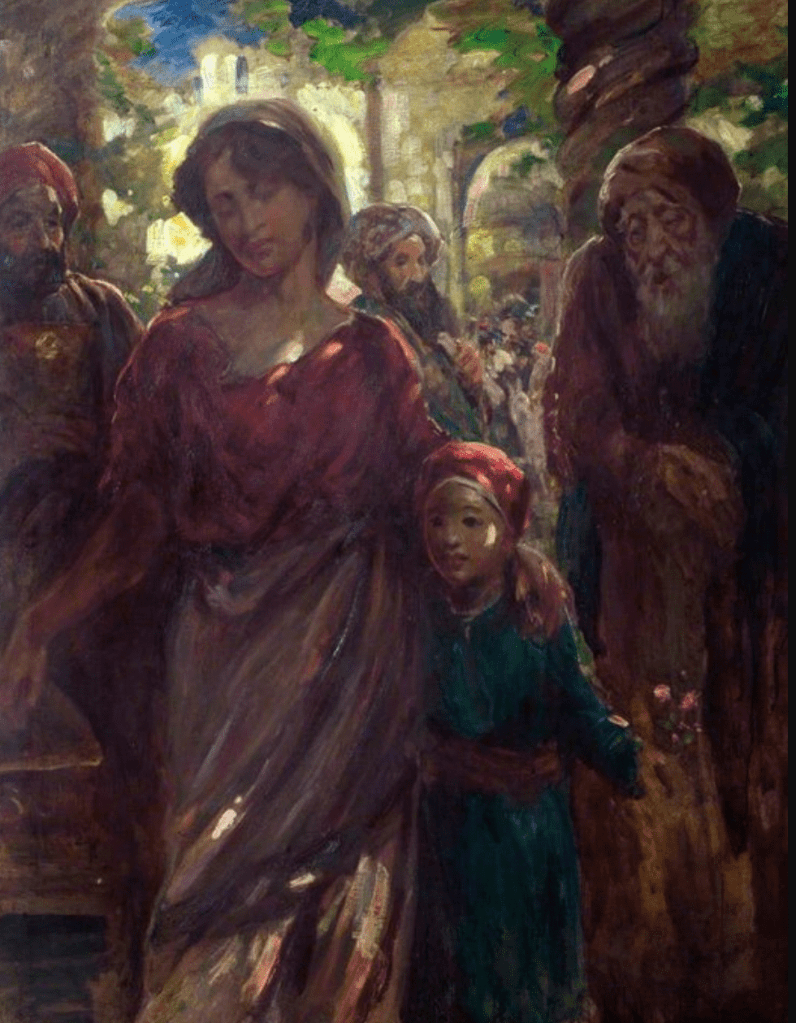
But the widow of which Jesus speaks in his first sermon in Luke 4 in his hometown of Nazareth, is the widow of Zarephath of I Kings. When the synagogue of his childhood responds in disbelief, Jesus warns them that he would do no miracles in his hometown and that his ministry would extend to Gentiles and foreigners. “Truly I tell you, no prophet is accepted in the prophet’s hometown. But the truth is, there were many widows in Israel in the time of Elijah, when the heaven was shut up three years and six months, and there was a severe famine over all the land; yet Elijah was sent to none of them except to a widow at Zarephath in Sidon.”
This unnamed widow at Zarephath is not a follower of the God of Israel. Yet she is the one whom God chooses to feed the great Israelite prophet, Elijah.

Zarephath is a small Phoenician town, a mile from the coast, about 8 and ½ miles south of Sidon and 14 miles north of Tyre. This is the homeland of Israel’s Queen Jezebel, a worshiper of Baal, married to Israel’s King Ahab, who built altars to Baal and “did evil in the sight of the Lord more than all who were before him.”
Elijah meets the widow at the town’s gate, and asks for a little water to drink, much like Jesus will do in John 4 when he meets the Samaritan woman at the well.
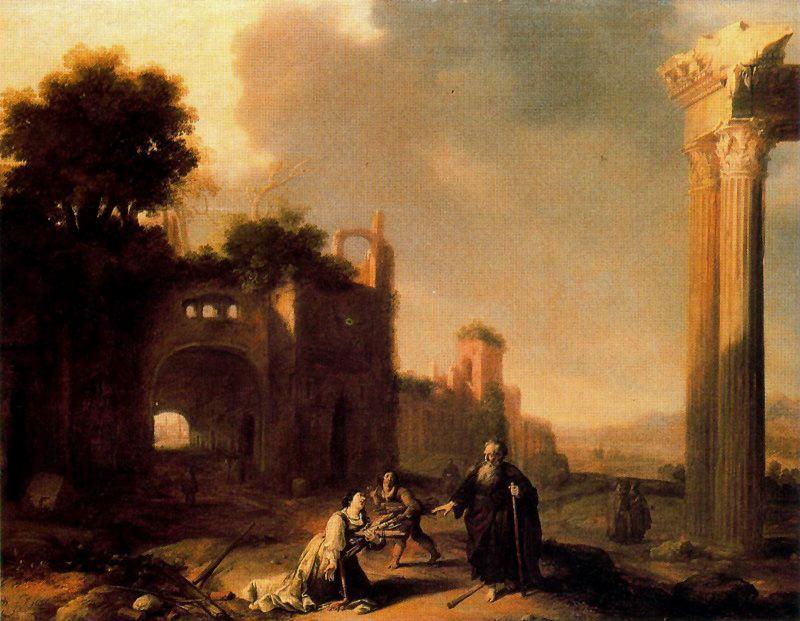
As the widow goes to bring Elijah water, he asks for bread. “As the Lord your God lives,” she says, in respect to Elijah’s faith, she has nothing baked—only a handful of meal in a jar and a little oil in a jug. She conveys her sense of hopelessness and acceptance of a cruel fate for herself and her child, when she says, “I am now gathering a couple of sticks so that I may go home and prepare it for myself and my son,” she says, “that we mat eat it, and die.”
“Do not be afraid,” Elijah says. She obeys his instructions to make a little cake of the meal for him first—and then something for herself and her son. “The jar of meal will not be emptied, “he says, “and the jug of oil will not fail until the day that the Lord sends rain on the earth.”
The words of the Prophet come to pass.The love and compassion of the God of the Exodus who fed the Israelites daily bread in the wilderness goes beyond worldly boundaries and divisions: Nation and politics. Race and gender. Wealth and poverty. Religion, language, and culture. Marital status. Age, education, and occupation to reach a poor, foreign widow and her son, fed for many days by a jar of meal and jug of oil that never run out.
The widow will forever be remembered for her welcome and generosity to a stranger and foreigner, someone distinctly Other to her—the great Israelite prophet Elijah.
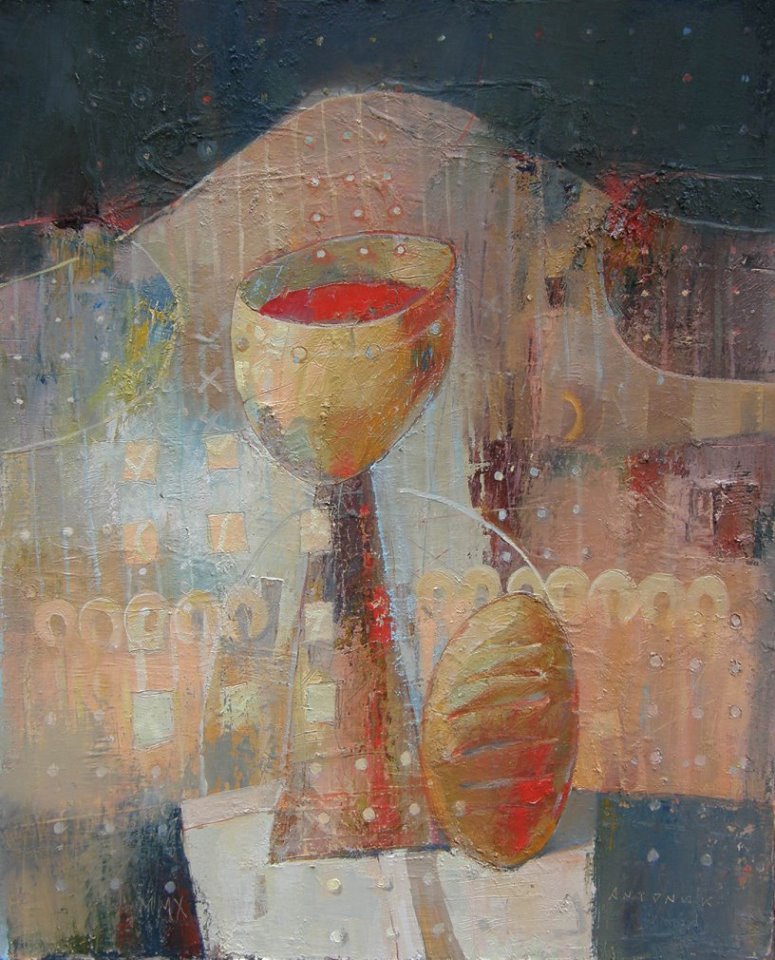
Friends, in a moment, we will celebrate our Communion with Christ and one another—and drink deeply from a spiritual well that never runs dry. As we seek to satisfy our hunger for the bread of heaven, and see Christ and ourselves more clearly, let us give thanks to the God who uses ordinary people for His glorious purposes.
Ordinary people like little Hattie and her gift of 57 cents for a Sabbath School—and it was all she had. Ordinary people like the unnamed widow who gave a couple of coins to the temple treasury—and it was all she had. Ordinary people like the unnamed, foreign widow who shared her last meal with God’s prophet—and it was all that she had for her and her son. Ordinary people—like you and me!
Let us offer all that we are, all that we have—for the sake of Christ and His Kingdom.
As we ask God to cleanse our hearts, heal our hurts, and nourish us to eternal life, let us remember: there are NO SMALL GIFTS when we give of ourselves wholeheartedly. Like manna from heaven, loaves and fishes for a mountain multitude, meal in a jug and oil in a jar, let us remember that God’s provision—for body, mind, and soul—will never end.
Remembering this and more, giving thanks with grateful hearts, let us break bread together.
Let us pray. Holy One, we thank you for your loving provision for us and for choosing us to be Christ’s followers. Thank you for your promise to use us—ordinary people—for your glorious purposes and for the examples of little faithful Hattie May and her kind pastor, and the two unnamed widows of Old Testament and New—who humbly offered all that they had and held nothing back. Gracious God, build up our faith and lead us to give generously from all that we have—and all that we will become, by the power of the Sprit so that your Kingdom and this congregation will grow. Loving Lord, let us see you and ourselves more clearly as we gather at your table, a foretaste of the heavenly banquet, seeking faith, hope, peace, and love as we break bread together. In the name of our Triune God we pray. Amen.
Pastor Karen Crawford
November 4, 2021
Meditation on John 11:32-44
All Saints Sunday
Pastor Karen Crawford
The Presbyterian Church
Oct. 31, 2021
Link to live-streamed service with the message and candle lighting: https://fb.watch/8_xNikrCCo/
Bulletin:

The phone rang yesterday—and it was a rare and wonderful surprise for Jim and me. His nephew was calling on Facetime so that his mother, Jim’s big sister Mary, could see and talk with her one and only sibling on her birthday.
Mary was born on Halloween! She is 10 years older than Jim. Today she is 87.
She is a former longtime church preschool director and kindergarten teacher in the public schools. She decided she would be a teacher when she was a little girl growing up in the Bronx. After she graduated high school in 1952, she went away to New Paltz State Teacher’s College. She graduated from college in 1956 and two years later, married a boy she had met in high school—Chuck Amann, an engineer.
One of Mary’s first teaching jobs was in a one-room schoolhouse in Fishkill, NY. Later, Chuck and Mary moved to New Rochelle and then to Pelham Manor to a home not 5 miles from where she had grown up. They had two boys–Scott and Kenny, and after Scott married Shelagh, two grandchildren came along: Molly and Jack.
When I met Mary around 2005, she had retired, but was still teaching every day, working as an elementary substitute. We had great conversations—Mary and me—with our early childhood backgrounds. She had strong opinions about what’s good for young children’s development. She loved it that I had three boys. She tried to spoil them whenever we visited.
Chuck passed away on Feb. 25, 2017. Mary has never been the same. We don’t know the actual diagnosis, but she has some form of dementia. She lives with a full-time nurse/companion. She no longer remembers or recognizes her children or grandchildren. She calls her oldest son, Scott, by her husband’s name.
When Jim called her about a year ago, saying, “Hi Mary! This is your brother, Jim.” Mary replied, “I don’t have a brother.” Jim was so sad after that!
On the call yesterday, Mary was having a good day. She was about to eat birthday cake with her son, daughter-in-law, and grandchildren. And though she struggled to find words and engage in conversation, she listened as Scott and Jim took a walk down memory lane, remembering the apartment on Corsa Avenue in the Bronx where Jim and Mary lived as children with their Irish-immigrant Presbyterian parents.
For a moment, there was a lifting of her confusion—and a look of joy. Could it be recognition? Had we seen a glimpse of the Mary we all knew and loved and for whom we still long?
Then I had this thought. “If only the Lord would heal her.” I decided, right then, that I would pray for her healing—something I haven’t done in a long time. I think I had just given up hope that Mary would ever get better.
But this is the same Lord who called forth Lazarus from the tomb. “Unbind him,” Jesus commands the crowd. “Unbind him and let him go!”
***
Jesus has delayed his response to Mary and Martha’s message about the illness of their brother, Lazarus, in our gospel reading in John 11. Jesus tells the disciples that the illness is for “God’s glory, so that the Son of God may be glorified through it.” He waits a couple of days before going to Bethany. Martha runs to meet him on the edge of town, saying, “Lord, if you had been here, my brother would not have died. But even now I know that God will give you whatever you ask of him.”
Jesus will engage in a theologian discussion with Martha that leads up to his declaration, “I am the resurrection and the life. Those who believe in me, even though they die, will live, and everyone who lives and believes in me will never die. Do you believe this?”
“Yes, Lord,” Martha says, “I believe that you are the Messiah, the Son of God, the one coming into the world.”
Martha runs home and tells Mary, “The teacher is calling for you.” She goes to meet Jesus—and this is where today’s passage begins. The one who will gratefully anoint his feet with perfume and wipe them with her hair kneels at his feet, crying and saying what Martha said. “Lord, if you had been here, my brother would not have died.”
Seeing her tears, Jesus is “greatly disturbed in spirit and deeply moved.” This phrase “greatly disturbed” will be repeated. Scholars wonder if this is grief mixed with anger, perhaps at the lack of faith shown by Mary and Martha and the Jewish community. Or, it could be anger at death itself!
Jesus asks to be taken to Lazarus and begins to weep before praying aloud, revealing more about our compassionate God. Here are just some of the things we can learn from this text:
At the end of the passage, when the dead man comes out, his hands and feet still bound with strips of cloth, I hear an invitation that I don’t want you to miss. The Lord is asking us to participate in his healing ministry, setting people free from the burdens they carry so that they may become something altogether new.
Jesus could have removed the graveclothes himself. He didn’t! Instead, he compels the crowd into action with, “Unbind him and let him go!” The Greek word translated “unbind” can also be translated “release.” So we can say that Lazarus is “released from the constraints of death.” (Gilberto Ruiz).
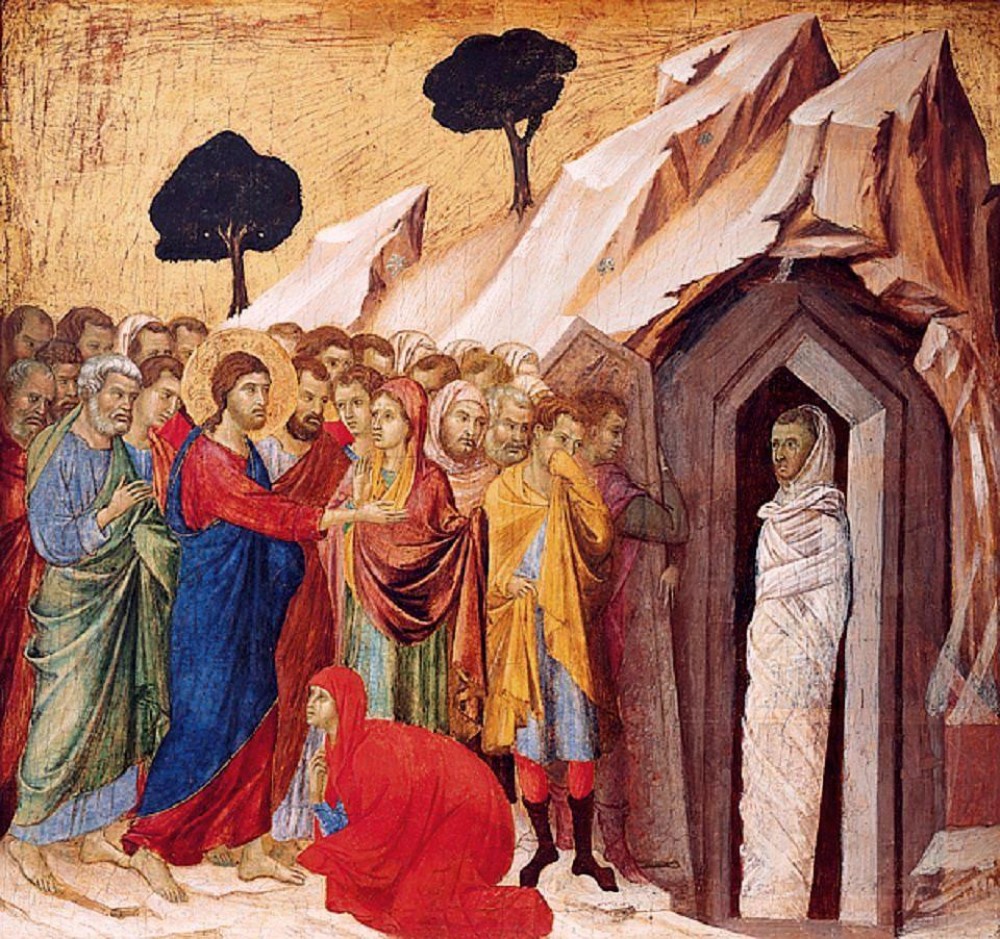
The raising of Lazarus is ultimately a sign story—and not just to the group of family and friends at Bethany but to all of us about “what the glory and presence of God in the world really means,” says one theologian, Theodore Wardlaw. “The point is that—through the life, death, and resurrection of Jesus Christ our Lord—the world is finally not a place where we need to revisit endlessly the losses in our lives that make us weep…We are forever being given the opportunity to step out of sorrows that would otherwise bind us, and to be embraced by what the story points to:.. life-giving resurrection joy.”
This story is not for people who have never wept or lost, Wardlaw says. It is “for those who, like Lazarus, are being called by Jesus to get back up again—to honor and thank God for what has been… (and) step into a life that still begs to be lived and that invites them forward into a hope filled future.”
Here on All Saints’ Sunday, we remember and give thanks for the lives of Christ’s followers in every time and place— and read scripture filled with the promise of things to come—when on earth, it really is like it is in heaven.
My sister-in-law, Mary, is one of those saints of the church who has touched many lives as a teacher of young children, a friend to many, a mother, grandmother, sister, wife, and faithful disciple of Jesus Christ.
I had forgotten how she had encouraged and supported me throughout seminary, even though she and Chuck didn’t think women should be pastors. Then, when I accepted my first call to ministry to the congregation in Minnesota, Chuck and Mary made an exception to their rule about female pastors. They were happy and proud—but sad that we lived so far away. Every time we talked to Mary, she invited us to come and stay with them.
Friends, who are the saints that touched your life? Who encouraged you and nurtured your faith? Parents or grandparents? Another family member? A Sunday school teacher, youth leader, or other church member? A friend or neighbor who invited you to church?
When I look around this sanctuary, I see a room full of saints! So many of you serve the Church quietly, behind the scenes. You have shaped the faith of many others and helped to grow the Kingdom. In your own personal life, you take time to talk to people and listen to their problems. You pray for the sick. You share what you have with people in need.
We are all ministers and saints, people of God redeemed by the Son and called to participate in Christ’s healing ministry. Jesus could have removed the grave clothes himself when he called a dead man out of the tomb. But he didn’t.
Instead, he cried out to the crowd an invitation to serve, “Unbind him and let him go!”
Let us pray.
Loving God, we thank you for forgiving us for all our sins and offering us new lives in Jesus Christ. Thank you for all the saints who have gone before us and who continue to cheer us on the race of faith from the Great Cloud of Witnesses. Empower us to minister to people who are carrying heavy burdens, Lord, and help them to trust in you. Lead us to build up the faith and hope in our community and world. And Lord, stir us to let go of our own burdens that we are carrying so that we may experience the fullness of your resurrection joy! We cry out to you now, “Unbind us and let us go to love and serve in your Son’s precious name.” Amen.
Meditation on Mark 10:46-52
Pastor Karen Crawford
Oct. 24, 2021
Link to live-streamed service, with adult and children’s messages:
Downloadable bulletin:
We gathered for a service of Communion on Thursday afternoon at Windsorwood Place in Coshocton. We were in Velma Hoffman’s living room—Margie Baird, Jan Kobel, Janet Ashman, Velma, and me. The room was warm and inviting. After confirming that Velma doesn’t pay for utilities, we turned on every light in the room to help us all to see the prayer of confession on small slips of paper. And help Janet read our passage of Scripture—the one from the gospel of Mark that we read today.
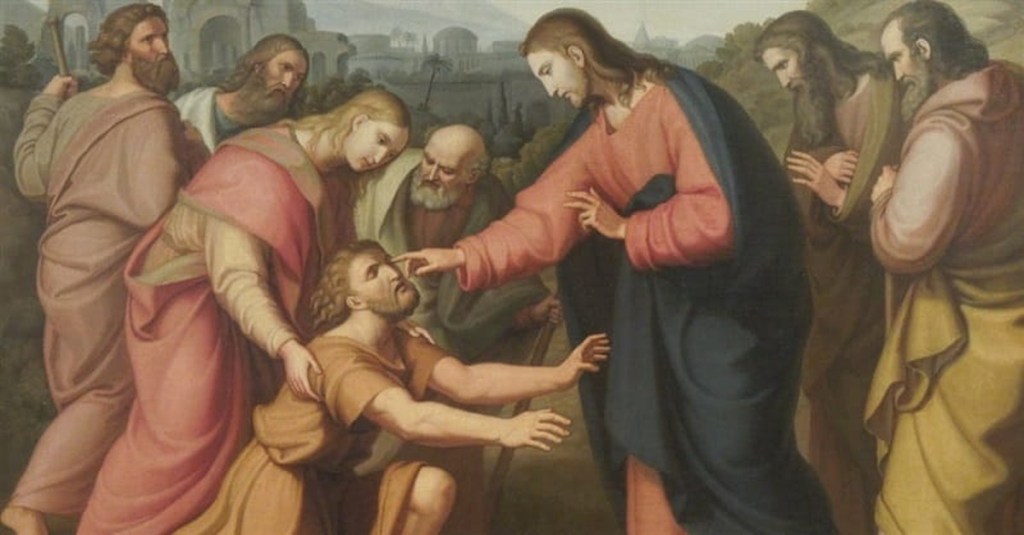
I studied my friends’ faces as Janet read the story of Bartimaeus, son of Timaeus—sitting beside the road. Begging as he always did. For he was blind. Then he hears Jesus of Nazareth is coming. He begins shouting to Jesus, asking for mercy! “Son of David” he cries two times—his cries revealing that he recognizes who Jesus really is—the anointed one, come to heal and save the world from its sins.
When Janet finishes her reading, we talk about the scripture—Velma, Margie, Janet, Jan, and me. It occurs to me that these four widows understand exactly what happened in Christ’s time—and what it all must mean for us as we seek to live eyes wide open to spiritual truths with the power to transform hearts and minds today.
They are strong, godly women. All of them caregivers since their marriages and the birth of their children. All of them still seeking Christ in faith, wanting new and abundant life, even in this season of simplicity and, at times, separation from those they love the most.
Margie has been there only 2 weeks. She enjoys coming out to be with the folks for meals and activities, though the meals seem kind of repetitive, she says. The food isn’t seasoned, so it doesn’t taste like meals at home. And they serve a lot of beans, she adds, and the others laugh in agreement. “Well, I guess they’re good for us,” she says with a smile. “High in protein.”
More than the home cooking that they miss, their greatest loss, 99-year-old Velma says, is their independence. When people ask what she misses the most in her new life at Windsorwood, she says, “My wheels. I miss my wheels!” Giving up her car means that whenever she wants to go somewhere—a quick trip to the store to pick up one thing or to go to church on Sunday morning, she has to rely on someone else to take her. She doesn’t want to be a burden to anyone.
The story of Bartimaeus speaks to this wonderful group of thoughtful, smart, sensitive women, who often feel, much like the blind man in Jesus’ time, on the margins of society. We talk about what Bartimaeus’ life must have been like before meeting Jesus–dependent on others for everything. Begging his only choice for survival.
And the crowd of people—many of whom are sighted, with homes, jobs, and full stomachs—sternly orders him to be quiet! Not only is he blind and silenced, he might as well be invisible—an outcast from the crowd.
But when he meets Jesus, and asks for mercy, in an instant, with a word, a blind man’s world goes from scarcity to abundance, darkness to light.
Velma marvels at how it must feel to suddenly be able to see after being blind, perhaps for a long time. “What would he see?” I ask. Faces and people, Velma says, where he had only heard voices. He would see sky, birds, and trees.
“What do you want me to do for you?” Jesus asks, after calling for Bartimaeus to come near when he hears Bartimaeus calling to him for mercy.
“My teacher,” the blind man answers. “Let me see again.”
***
This is the second and final time Jesus will heal a blind man in the gospel of Mark. The first time, in chapter 8, when Jesus and the disciples come to Bethsaida, some people bring a blind man to him and beg Jesus to touch him. He takes the blind man by the hand and leads him out of the village; and when he puts saliva on his eyes and lays his hands on him, he asks him, “Can you see anything?” And the man looks up and says, “I can see people, but they look like trees, walking.” So, Jesus lays his hands on his eyes again—and the man’s sight is restored. Notice these details—we never know the man’s name, he doesn’t ask for help or healing for himself, and it’s Jesus’ touch and saliva that heal him, not completely at first, but after a second try.
What’s different about the story of Bartimaeus? Well, we know his name, for one. Most people Jesus heals are never named. They are the poor, the blind, the sick, the lame and demon-possessed. Bartimaeus is a Greek word that means “son of Timaeus,” which seems oddly repetitive when we read the phrase, “Bartimaeus, son of Timaeus” in verse 46.
William Placher, prof. of philosophy and religion at Wabash College in Indiana,
says the repetition is to call attention to the name of the person seeking healing. “Timaeus” could mean “one who was purchased or bought.” Jesus has just foretold his death and resurrection, saying just before the beginning of today’s passage, “For the Son of Man came not to be served, but to serve, and to give his life as a ransom for many.” Now, Placher points out, “we encounter a son of one who was purchased or bought who needs help.”
The word call is key to this passage; this is the first time Jesus has called anyone since he called his 12 disciples and Levi early in the gospel. This is a call story! Not just a healing story! What does Bartimaeus do in response? I almost missed the significance of this detail. He throws off his cloak when he comes to him! This cloak, probably his only one and his protection from weather and harm, could easily be lost in the crowd and never recovered.He gives up his one precious possession, leaving behind almost all his material goods—with the exception of the few remaining clothes on his back.
What a contrast this is to the rich man who approaches Jesus earlier in chapter 10 and asks what he has to do to inherit eternal life. He lacks one thing, Jesus says. He needs to sell all that he owns and give the money to the poor, then come and follow him. That man doesn’t immediately follow Jesus in that call story. He goes away grieving—”because he has many possessions.”
With Bartimaeus throwing off his only cloak and coming to Jesus for the healing only Christ can give, what does the Lord say is the cause of his healing? Faith. Bartimaeus’ faith has made him well. That word translated well could mean physical or spiritual health. So one could say that Bartimaeus’ faith has also saved him.
This passage, indeed this whole section beginning at chapter 8 with the healing of the first blind man, isn’t really about physical blindness. It’s about spiritual blindness—something that plagues the disciples from the getgo. They never seem to understand what Jesus is trying to say. Even Peter, the first to say that Jesus is the Messiah, rebukes him when Jesus explains that he will be tortured, die and rise again.
James and John have just come to him with a request beginning in 10:35, revealing their spiritual blindness. “What is it you want me to do for you?” Jesus asks. They want him to say that, in his glory, they will sit at his right hand and his left. “You do not know what you are asking,” he answers.
Now, when Jesus asks Bartimaeus, “What do you want me to do for you?” the blind man simply wants to be able to see again—and believes that Jesus is the one, who, in his mercy, can do this for him, when no one else can.
“Here, just before Jesus’ entry into Jerusalem, is someone who gets everything right,” Placher says. “He recognizes Jesus as the Messiah, gives up everything, asks only for his sight, and follows Jesus on the way. Who is this perfect disciple? A blind beggar, sitting by the roadside, yelling his head off.”
***
Today’s passage stirs us to see ourselves in the story of Bartimaeus.
Are we the disciples who were called and responded—but are suffering from spiritual blindness? Are we focused on the things of this world, getting stuck in worry, rather than trusting in the things of God? Are we the ones choosing to live in scarcity and fear, not quite understanding the miracle of our salvation and the new and abundant life in Christ available right now?
Are we like the crowd, not seeing or wanting to see or be bothered by the blind beggar by the side of the road, crying out to Jesus?
Are we like Bartimaeus, willing to let go of even our prized possession, as Bartimaeus dropped his one cloak in the crowd when he heard that Jesus was calling for him? Are we ready to follow him, though it may mean sacrifice, it always means sacrifice, truly giving all of ourselves to His loving purposes?
Brothers and sisters, Christ is with us now. And he wants each of us to have the healing our Savior and Messiah offers to all. He wants us to live eyes wide open to spiritual truths with the power to transform hearts and minds today.
The one who came to serve and give his life as a ransom for many is asking us the same question he asked his first disciples and his perfect disciple—Bartimaeus, son of Timaeus:
“What do you want me to do for you?”
Let us pray.
Holy One, thank you for opening our eyes to the truth of your Word. Let it dwell richly in our hearts and transform us, more and more. Help us to never overlook people living in poverty, on the margins of society, like blind Bartimaeus, just trying to survive from day to day. Help us to see, befriend, and meet the needs of others as you lead us. Bless all our widows and widowers of our community who continue in simplicity of lives to minister to others with their wise and loving ways. May they never feel alone or lonely. Fill them and us with your joy. In Christ’s name we pray. Amen.
Everyone has a calling. Ours is helping you.
Pastor Karen shares thoughts on faith, scripture, and God's love and grace revealed through backyard wildlife.
Fill up. Overflow. Run over.
Christian Lifestyle Blogger
The Joy of the Lord is our Strength
Church bulletin covers and other art by artist Stushie. Unique crayon and digital worship art
The Art and Craft of Blogging
News, Tips & Website Tutorials


 Sharing God's Love and Grace