Ambassadors for Christ


Meditation on 2 Corinthians 5:16–21

March 6, 2016

Merritt Island Presbyterian Church

      “From now on, therefore, we regard no one from a human point of view; even though we once knew Christ from a human point of view, we know him no longer in that way. So if anyone is in Christ, there is a new creation: everything old has passed away; see, everything has become new! All this is from God, who reconciled us to himself through Christ, and has given us the ministry of reconciliation; that is, in Christ God was reconciling the world to himself, not counting their trespasses against them, and entrusting the message of reconciliation to us. So we are ambassadors for Christ, since God is making his appeal through us; we entreat you on behalf of Christ, be reconciled to God. For our sake he made him to be sin who knew no sin, so that in him we might become the righteousness of God.”

***

I was online this week, posting my sermon at my blog, writing emails and responding to Facebook messages and it occurred to me how important Internet communication has become to us as a society–and a church. How powerful a tool it is for ministry! With the Internet, you can quickly and easily communicate with people everywhere in the world, at any time of the day or night–from wherever you are. Talk about going beyond the church walls with the message of God’s love!

I was pleased to discover, before I came here, that our church has a great Website and a Facebook page, regularly updated. I am happy to see that in our congregation-from the very young to more than 80 years old–people are willing to share their joy with the world :o)


Selfie for March 6, 2016 sermon

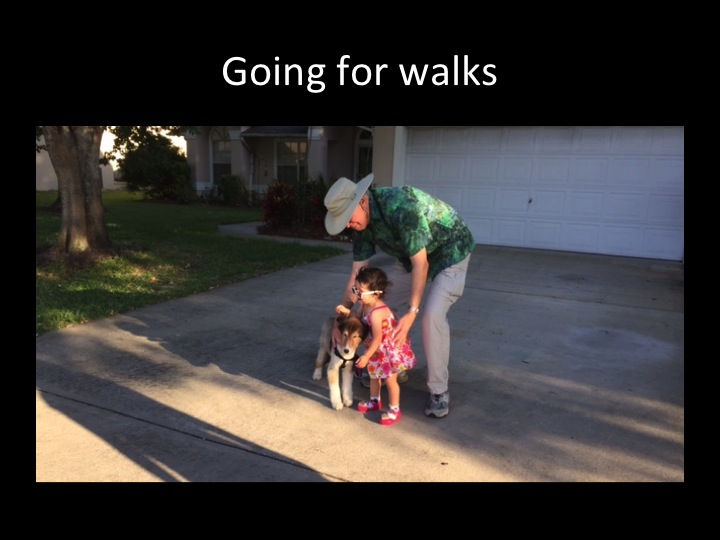
Last Saturday, I had tears of joy to catch a video posted by my friend Phyllis in MN. And it motivated me to pick up the phone and give her a call! Phyllis is not into computers; that’s her husband’s thing. But she wanted to share with all her friends and family her 3-year-old granddaughter, Addy, and her first attempt at riding a trike. And it’s not just any trike. It’s the one her daddy rode when he was a little boy.

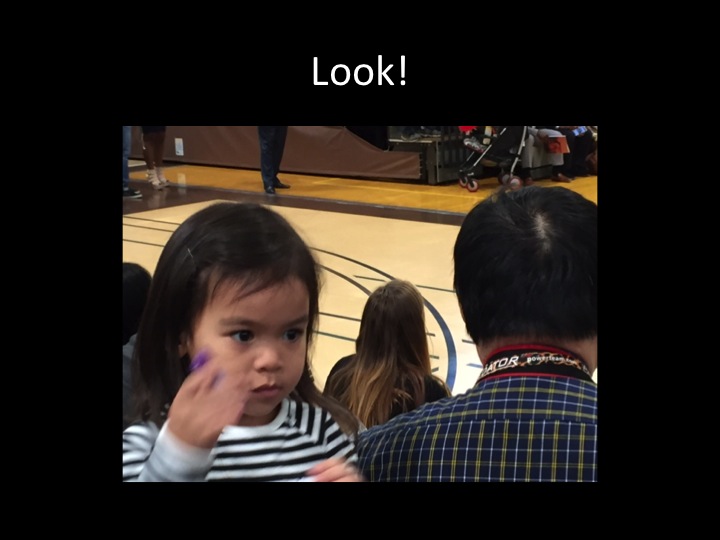
I like how the video begins, with Grandpa Dennis squirting W-D40 on the wheels. And how she starts off with her feet on the ground–powering the trike “Flintstone style.” Grandma cheers her on, while Addy, ponytail swinging, begins to pedal. It looks like hard labor, at first, doesn’t it? Slowly, the trike begins to move… Did you notice that she has trouble moving forward, when she keeps looking behind her?

Her attitude changes when she reaches the end of the path and who does she see? Daddy! Suddenly, riding the trike is easy! It’s just a tool to take her to her destination–her father’s adoring arms.

Off she goes, with joyful anticipation! Did you catch what Grandpa Dennis says? “Showin off mode!”

***


It’s really too bad for Paul that he didn’t have all the technology we have today that makes communication with far away friends so quick, easy and efficient. For Paul had some serious communication issues with the churches that he planted–and these, though not actually causing all the conflict, certainly didn’t help solve the churches’ problems. The church at Corinth, in particular, presented interesting challenges for the apostle.

Paul arrived in Corinth in the fall of A.D. 50. Corinth was a prosperous city-state on the narrow stretch of land that joins the Peloponnese to the mainland of Greece. He came alone the first time; Timothy and Silvanus were busy with the churches in Macedonia. In Corinth, Paul meets and becomes friends and partners with Aquila and Priscilla, a couple with a successful tent-making business. They had been in Corinth since the Emperor Claudius had expelled them from Rome in A.D. 49, along with the other Jews. Paul stayed in Corinth about 18 months on his first visit, when he was falsely accused and expelled from the synagogue. The congregation began meeting in a villa, though, and grew. But some members of the Corinthian church were of the wealthy, urban elite class with which Paul– who identified himself with the lower classes, insisted on working for his own living, and not taking money from the Corinthians–did not always get along. Paul left Corinth and ended up in Ephesus, planting and guiding a new church, for 3 years. That’s where he wrote 1 and 2 Corinthians, as well as other letters to the church that did not survive. In the meantime, a gifted Alexandrian Jew named Apollos, who preached and spoke better than Paul, visited the Corinthian church, as did none other than Cephas (Peter, the leading disciple of the Lord), both of whom the Corinthian church liked more than Paul. They questioned his qualifications for ministry after that and struggled with conflict from within. When Paul heard that the church failed to separate from people within the believing community who were sexually immoral, he responded with a letter that has not survived, mentioned in 1 Corinthians. But the church misunderstands his letter and thinks he means they should separate completely from Corinthian society. Then the church writes Paul with questions about food sacrificed to idols, temple worship, speaking in tongues and other controversial issues of the time. Paul, in 1 Cor. 16:17, says Stephanus and two other men, brought this letter to him. Then, just as that letter arrives, a delegation shows up bringing news that the Corinthian church is dividing into factions. He deals with this in 1 Cor. 1:11, and continues to address serious problems, including members suing one another and doubts about the resurrection of the dead.

Will Paul’s frustration with the Corinthians ever end?? Paul sends Timothy to the Corinthian church to explain his letter to them, as well as bring back a reliable report on what is really going on. As Paul plans to travel to Macedonia, more bad news from the Corinthian church arrives. The news is so serious that Paul decides to go to the Corinthian church a year earlier than he had planned. Details of the crisis are not spelled out, but Paul speaks of sexual sin and debauchery in 2 Cor. 12:21, and “quarreling, jealousy, outbursts of anger, factions, slander, gossip, arrogance and disorder” in 12:20. He prepares to go to Corinth, but then changes his plans and goes to Macedonia, delaying his visit to Corinth, and creating more hard feelings when he writes, instead, a “severe” letter, now lost to us, but mentioned in 2 Cor. 2:3-4 and 7:8-12. He immediately regrets sending it, fearing it will mean the end of his relationship with the Corinthians. But then he goes on to the Macedonian churches, seeking to solve problems there, before Titus brings him the message that things are both better and worse in Corinth. Then Paul writes the letter we call 2 Corinthians in A.D. 55, in response to Titus’s report and in preparation for his third and final visit to Corinth.

So hearing all this background, aren’t you amazed that we find this beautifully written passage, expressing the joy and promise for every Christian that we don’t have to look back and remember the sins and brokenness of the past, for we are not what we used to be, not when we believe on our Lord Jesus Christ?! Paul teaches that we have a different purpose, an important role to play in God’s kingdom, when we place our trust in Jesus Christ and surrender our lives to him.

Paul, gentle this time, reminds the Corinthians, “For the love of Christ urges us on, because we are convinced that one has died for all; therefore all have died. And he died for all, so that those who live might live no longer for themselves, but for him who died and was raised for them.” Then he tells them in a nice way that they need to change the way they look at the world and the Church. “From now on,” he continues, “we regard no one from a human point of view…”

Does it surprise you that he tells this divided, struggling church that theirs is a ministry of reconciliation–when they are not reconciled to Paul or one another, let alone able to reach out with the love of Christ to a hurting world? Paul is saying what we say when we pass the peace after the assurance of God’s grace:

“Since God has forgiven us in Christ, let us forgive one another. The peace of the Lord Jesus Christ be with us all!”

And now, miracle of all miracles, broken, sinful people like us are entrusted with the job of being ambassadors for Christ, with God making his appeal to the nations, through us! How can this be?

The answer is in 2 Cor. 5:17: so brief and concise in the Greek, “If anyone in Christ, new creation. Everything old has passed away; see, everything has become new!” The key word is “see”! Believe that we are who Christ has re-made us to be–ambassadors, for Him, though we may never have truly lived with the joy and confidence that belongs to the one who is, “in Christ, new creation.” If and when we see, then we can’t help but forgive others, for God doesn’t count our trespasses against us! Think of little Addy, pedaling the trike as fast as she can; it is hard, slow work, for someone who has never pedaled before. But her loving family cheers her on. She looks back fearfully, worried she might be alone, but she’s not. Her bright future lies ahead.

Then her smiling father appears, waiting to take her in a warm embrace– just as God waits for us to let go of the old that has passed away and see everyone and everything as God sees us.

In Christ–new creation! Ambassadors, for Him!

And suddenly, traveling this journey of faith is no longer hard; it’s easy — for our brothers and sisters in Christ cheer us on. May we keep our eyes on our destination– our smiling heavenly Father, waiting with arms open wide. Off we go, now, with joyful anticipation!


Let us pray.


Holy One, thank you for your Son, who has reconciled us to Him through His suffering and death on a cross. Thank you, loving God, for reconciling all Creation to yourself. Thank you for entrusting us with the message of reconciliation — being reconciled to you and one another. Help us to share this with the world by modeling forgiveness and reconciliation in our own families, communities and congregation. Forgive us for getting stuck in the past, sometimes, not letting go of hurts and refusing to see the world as you want us to see it–the Kingdom of God drawing near. Give us courage to be Christ’s ambassadors. Stir us to share the promise and hope you have placed within us–if anyone in Christ, new creation! In Christ we pray. Amen.

“My Thoughts Are Not Your Thoughts”


Meditation on Isaiah 55

Feb. 28, 2016

Merritt Island Presbyterian Church

Ebenezer snow 1


Ebenezer snow 3


“Ho, everyone who thirsts,
come to the waters;
and you that have no money,
come, buy and eat!
Come, buy wine and milk
without money and without price.
Why do you spend your money for that which is not bread,
and your labor for that which does not satisfy?
Listen carefully to me, and eat what is good,
and delight yourselves in rich food.
Incline your ear, and come to me;
listen, so that you may live.
I will make with you an everlasting covenant,
my steadfast, sure love for David.
See, I made him a witness to the peoples,
a leader and commander for the peoples.
See, you shall call nations that you do not know,
and nations that do not know you shall run to you,
because of the Lord your God, the Holy One of Israel,
for he has glorified you.
Seek the Lord while he may be found,
call upon him while he is near;
let the wicked forsake their way,
and the unrighteous their thoughts;
let them return to the Lord, that he may have mercy on them,
and to our God, for he will abundantly pardon.
For my thoughts are not your thoughts,
nor are your ways my ways, says the Lord.
For as the heavens are higher than the earth,
so are my ways higher than your ways
and my thoughts than your thoughts. 

For as the rain and the snow come down from heaven,
and do not return there until they have watered the earth,
making it bring forth and sprout,
giving seed to the sower and bread to the eater,
so shall my word be that goes out from my mouth;
it shall not return to me empty,
but it shall accomplish that which I purpose,
and succeed in the thing for which I sent it.
For you shall go out in joy,
and be led back in peace;
the mountains and the hills before you
shall burst into song,
and all the trees of the field shall clap their hands.
Instead of the thorn shall come up the cypress;
instead of the brier shall come up the myrtle;
and it shall be to the Lord for a memorial,
for an everlasting sign that shall not be cut off. 

***


2016-2-12 SRS birds 071 beach nwr

2016-2-12 SRS birds 053 nwr bird 3

I am enjoying winter in Florida! It’s still winter, right? No one really asks me anymore if I miss the snow. Just in case you are wondering — no, not really, though it is beautiful in rural Minnesota in winter–when you are inside looking out, the sun is shining, and it’s white all around.

I ran across one of my messages this week from Isaiah 55 that I preached to my last congregation in March 2013–and it made me smile! I don’t re-use sermons, but I do keep my old ones, just to make sure that I am not always preaching on the same scriptures and saying the same things! My message from 2013 started like this, “Jim and I are still trying to get acclimated to Minnesota winters. Exactly when does winter begin? And when does it end? The snow comes whenever it wants. It doesn’t look at the calendar and say, “Oh, today is the first day of spring. Time to go.” Jim and I, at the time, were in our second winter there. The first one turned out to be one of the mildest on record for the area. But the winter of 2013 was fierce. Even the Minnesotans were complaining about snow and ice–and yearning for spring. I was dreaming of warmer weather and summer vacations. Here’s some of what I wrote:

“The other day, I stepped out my door and the wind blowing across the fields sounded just like the ocean! I remembered going to the beach as a child. I think the memory was a gift from God. As if the Lord were saying, ‘Be patient. Winter won’t last forever.’ It lightened my burden to think about my many peaceful walks on the shore. I remembered how the ocean changes color with the light and hues of the sky. And how the Atlantic is a murky greenish-brown–not the deep blue that children use when they color a crayon sea. But the sound of the ocean is my most vivid memory. It’s a wild, natural noise. Loud, like the roar of a lion, so that if you try to shout to someone a little ways off, your voice is a whisper in the wind.

“When I stand and gaze at the ocean, I feel very small, as it seems to go on and on. But at the same time, I feel safe and secure. The ocean reminds me of our Creator–and how I am always in His presence, no matter where I go. I am comforted that He has plans, purposes and ideas that are so much bigger than you or I can dream….”

I had no idea, of course, that I would move to Merritt Island to serve the Lord and a new flock in 2015. I wasn’t looking for a new call, back then. If someone had told me that this was what my life would be, I am not sure that I would have believed it! In March 2013, it felt like winter would never end…

Now, when I see the ocean, I am amazed at how quickly my life can change. And how very important it is to look back and remember all the wonderful things that God has done. And trust Him for the things I cannot understand.

***

God’s people struggled to keep the faith when their Holy City and temple were destroyed, and they were exiled to Babylon in 586-7 B.C.E. I wonder if they believed him when Second Isaiah, author of chapters 40-66, told them in 43:19 to prepare for “a new thing” the Lord was about to do. This Isaiah, writing between 550 BCE and 515 BCE, assured the exiles that God would bring about their release from captivity and lead them home. Then it happens! In 538 B.C.E., King Cyrus allows the Jewish people to return to Jerusalem, a city in ruins, and rebuild their temple, but it takes years and many trials to overcome. Isaiah speaks to a people grown bitter from their profound loss and hardships. They believe God has abandoned them. Isaiah assures them that God still has a plan and that the hardships they have endured have made them stronger, more fit to accomplish God’s purposes. They must be surprised to learn that the Lord wants them to extend the witness of God’s reign far beyond their own borders–to the ends of the earth!

Isaiah 55 begins, “Ho, everyone who thirsts!” That means everyone who needs water to live. The word translated “Ho” can convey lament, such as “woe” or “alas”–or it can be a way of hailing people, including strangers on the street. “Hey, you!” or “You, there!” The invitation to come and drink water, wine and milk without paying is much like the invitation of Lady Wisdom in Proverbs 9, who invites the “simple” to a similar banquet. “Leave your simple ways,” she says in Proverbs 9:6, “and live, and walk in the way of insight.” Beckoning the thirsty stirs memories of God’s provision for Israel in the wilderness. Water is also symbolic of the Spirit of God, as in Isaiah 44:3, “For I will pour water on the thirsty land, and streams on the dry ground; I will pour out my Spirit on your offspring, and my blessing on your descendants.”

Isaiah urges God’s people to labor only for bread and that which “satisfies.” This makes me think of that line in The Lord’s Prayer, “Give us this day our daily bread” –a reminder that everything we have, even our food, is a gift from the Lord! This kind of labor of which Isaiah speaks–the labor that satisfies — isn’t a regular job to earn money; it’s a spiritual work–serving the Lord. Additionally, bread is symbolic of God’s Word in the Old Testament and Jesus in the New, as he says in John 6:33, For the bread of God is the bread that comes down from heaven and gives life to the world.”

The most powerful message of this passage, I believe, is just before the promise of joy and peace for God’s people –when God’s Kingdom comes to fruition and Creation is renewed. When mountains and hills burst into song and the trees of the field clap their hands. God, speaking through Isaiah, says, “For my thoughts are not your thoughts, nor are your ways my ways, says the Lord. For as the heavens are higher than the earth so are my ways higher than your ways and my thoughts than your thoughts.” The Hebrew word translated thoughts (mahsebot) contains the idea of calculations, devices or plans. Human mahsebot–plans or schemes in the Bible are often characterized by sinful deviance, such as Gen. 6:5, when “The LORD saw how great the wickedness of the human race had become on the earth, and that every inclination of the thoughts of the human heart was only evil all the time” ; or stubborn resistance to God (as in Jer. 18:12) or a misguided sense of self-sufficiency, such as in Isaiah 65:2: “All day long I have held out my hands to an obstinate people, who walk in ways not good, pursuing their own imaginations.”

Isaiah’s point is that God’s people, like all human beings, are sinful creatures, in need of God’s redeeming. Isaiah knows this all too well. How many times does he say, “listen” to a people who don’t want to hear? Three times in this one passage! “Listen carefully to me,” he says. “Incline your ear, and come to me.”   “Listen, so that you may live.”

Here is another important point. When Isaiah speaks of the wicked, he isn’t talking about the idol worshiping neighbors with which the Jewish people are living. He is talking about God’s own people who have adopted the idol-worshiping ways of their neighbors. And as I study this passage, I realize that our gracious God is talking to all of us!

Isaiah says, “Seek the Lord while he may be found, call upon him while he is near. Let the wicked forsake their way, and the unrighteous their thoughts; let them return to the Lord, that he may have mercy on them, and to our God, for he will abundantly pardon.”

May you remember, friends, as you leave this place how God waits and longs for us to come to him and drink deeply of His Spirit! May you be stirred to labor, hunger and thirst for the things of God, for these are what will satisfy. And I hope that when you see the ocean, as you often do, that you, too, will be amazed at how quickly your life can change, how very important it is to look back and remember all the wonderful things God has done, and to trust Him for the things you cannot understand.


Let us pray.


Holy One, we come to you now, people who thirst for your Spirit and hunger for your righteous Kingdom come to fruition, all Creation renewed. Thank you for your love and faithfulness to us, for all the wonderful things you have done. Help us, Lord, to put away the idols in our lives, the things that we love too much, and seek your abundant mercy and grace. Lead us to put you first in our lives, to humbly serve you every day, and to labor for the things that matter for all eternity, the things that will satisfy our souls. In Christ we pray. Amen.

Ebenezer snow 2

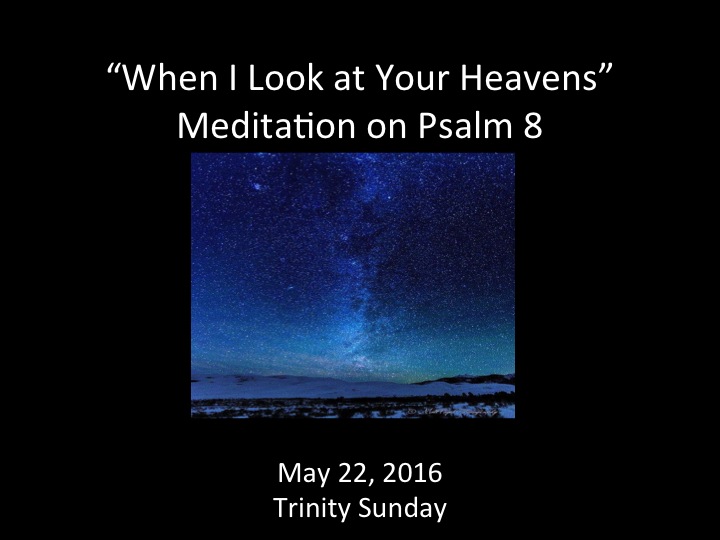
“Count the Stars, if you are able…”


Meditation on Genesis 15

Feb. 21, 2016

Merritt Island Presbyterian Church


     “After these things the word of the Lord came to Abram in a vision, ‘Do not be afraid, Abram, I am your shield; your reward shall be very great.’ But Abram said, ‘O Lord God, what will you give me, for I continue childless, and the heir of my house is Eliezer of Damascus?’ And Abram said, ‘You have given me no offspring, and so a slave born in my house is to be my heir.’ But the word of the Lord came to him, ‘This man shall not be your heir; no one but your very own issue shall be your heir.’ He brought him outside and said, ‘Look towards heaven and count the stars, if you are able to count them.’ Then he said to him, ‘So shall your descendants be.’ And he believed the Lord; and the Lord reckoned it to him as righteousness.

    “Then he said to him, ‘I am the Lord who brought you from Ur of the Chaldeans, to give you this land to possess.’ But he said, ‘O Lord God, how am I to know that I shall possess it?’ He said to him, ‘Bring me a heifer three years old, a female goat three years old, a ram three years old, a turtle-dove, and a young pigeon.’ He brought him all these and cut them in two, laying each half over against the other; but he did not cut the birds in two. And when birds of prey came down on the carcasses, Abram drove them away. As the sun was going down, a deep sleep fell upon Abram, and a deep and terrifying darkness descended upon him.

      “When the sun had gone down and it was dark, a smoking fire-pot and a flaming torch passed between these pieces. On that day the Lord made a covenant with Abram, saying, ‘To your descendants I give this land, from the river of Egypt to the great river, the river Euphrates.”


***

My friend, Lynn Miller, from Minnesota visited this week. She came to speak during our Tuesday night Lenten worship as a volunteer from the Friends of the Presbyterian Education Board of Pakistan. The group reaches out with compassion to some of the poorest families in the mostly Muslim nation. The Friends group provides scholarships and funds to build, repair and update the Presbyterian schools in Pakistan, founded by missionaries about 150 years ago. Because of the work of the Friends group and the P.E.B., poor, rural and minority children in Pakistan–many of whom are Christian–have educational opportunities not normally open to them.

During Lynn’s stay with us, we learned that she had studied French in college and had hoped to travel the world as a flight attendant, but TWA and Pan Am didn’t call; Michelin Tire did. She often wondered what would have happened if she had become a flight attendant–her dream career. Her administrative experience and people skills came in handy when she became involved with the Friends of the P.E.B. through her home church. Lynn’s job is to handle the scholarship piece, connecting donors with needy students. But she is also a donor, providing scholarships each year for two Pakistani children. She was able to meet the two children–sisters- and their parents during her visit to Pakistan in November. Their education will provide them with choices, other than getting married at a young age, living in almost certain poverty, and giving birth to many children.

Lynn asked about my story. I shared how I felt called to leave a challenging, interesting career as a religion journalist to go to seminary and how it was hard because I knew who I was when I was a journalist–and I liked who I was. I had always wanted to be a writer! When I went to seminary, my identity and my future were suddenly uncertain. I remember my own brokenness and daily struggle to fully trust the Lord, to surrender all my doubts, fears, hopes and dreams to Him.


***


Abram, in Genesis 15, is also struggling to trust the Lord, when the Lord gives him a vision. The first words, “After these things” connect us to earlier events. Abram’s story begins in Gen. 12, with the first time Abram, at age 75, hears God’s voice, telling him to leave Ur, the place of his birth, his family and his father’s house, and go to a land that God would show him. The promise is that God will make him a great nation, that God will be with him and bless him with land and children, and that he will be a blessing to all the families of the earth. The problem is that Abram and his beautiful wife, Sarai, are not young and Sarai has been unable to have children. But Abram hears God, believes God, and leaves his homeland with his wife and nephew, Lot, without question. They go to Canaan, where the Lord appears and says he will give the land to Abram’s offspring. Abram doesn’t question this gift; he builds an altar and “invokes the name of the Lord”–he prays. Then, when famine forces Abram and Sarai to move to Egypt and Abram gets scared and passes Sarai off as his sister, the Lord watches over them and prospers them, despite Abram’s fearful deception. God’s provision and protection continues and Lot and Abram become wealthy and separate when there is strife between the herders of their livestock. Lot moves to Sodom. Then, Sodom is attacked and Lot, his people and his goods are taken away, but God strengthens Abram to raise up an army and rescue Lot. Afterward, Melchizedek, the king and priest, blesses him. And Abram, grateful for what God has done, gives the Lord one-tenth of everything he has received.

But then we begin Gen. 15, and the scene is drastically changed. Where is the confident man, the brave warrior that Abram was in chapter 14? Years have passed; Sarai and Abram have grown even older, and still, no children! For the first time since he first heard God’s voice, Abram is struggling to believe in God’s promises. So the Lord speaks to Abram in a vision, assuring him that he need not be afraid, that he is his “shield”–ancient language of protection that we also find in the Psalms. God promises him a great reward–but this is a gift of grace, for certainly Abram has done nothing to deserve it! And now, also for the first time in Abram’s story, the elderly man responds to God, pouring out his doubts and fears. He says, “O Lord God, what will you give me, for I continue childless? And now the heir of my house is not my own child, but Eliezer of Damascus… You have given me NO offspring, and so a slave born in my house is to be my heir.”

Will God punish Abram for his questioning, for his lack of faith? No, God doesn’t punish or even scold Abram. He reassures him. His heir will be his own child–and this is my favorite part. God “brings” Abram outside. We can imagine the scene.. that he was in his tent, probably lying down, when the vision roused him from sleep, as we discover, in verse 5, that this vision is at night. For the Lord God says, “Look toward heaven and count the stars if you are able to count them.” God is saying, “Don’t look down at your own situation. You are being consumed by what you don’t have! And don’t look back at the past and your disappointment of my promises not yet fulfilled! Look up and remember who I am–that I am the Creator of the heavens and the earth–the one who made even you!” There is a pause written into the text, as we imagine Abram gazing up, in awe, at the starry night sky, and we read, “Then he said to him, ‘So shall your descendants be.’”

And, “Abram believed the Lord,” says verse 6, “and the Lord reckoned it to him as righteousness.” God declares Abram righteous because he believes in God’s promises to him. Then God reminds Abram what he has done for him and that this promise isn’t just about the one child that Abram and Sarai so desperately want; God has a MUCH bigger plan, involving a future nation. “I am the Lord,” God says, “who brought you from Ur of the Chaldeans to give you this land to possess.”

But then, Abram has more questions. He believes, but he wants to know more. In verse 8, we read, “But he said, ‘O Lord God, how am I to know that I shall possess it?” Abram wants a sign!

God complies with a sign of the promise that is frankly nothing like the breathtaking, starry night sky or the beautiful rainbow that Noah sees after the flood. Abram descends into a deep sleep, a “deep and terrifying darkness” and a smoking fire pot and a flaming torch pass between” the pieces of his sacrificed animals, sealing the covenant the Lord made with Abram, saying, “To your descendants I give this land…”


***

I wish I could say that after the vision of chapter 15, Abram had no more doubts that God would keep his promises and that Abram was patient, waiting for God’s promises to be fulfilled. But he did. And he wasn’t. In chapter 16, when Sarai still has not born Abram any children and he is 85 years old, Sarai talks him into sleeping with her Egyptian slave, Hagar, so that Sarai may “obtain children by her.” It’s a cruel mistake that hurts everyone involved. But God doesn’t give up on Abram; his promises of not just a child but a nation, and a blessing for every family on the earth, do come to pass, beginning with a son named Isaac, and, centuries later, the birth of the Messiah for all people, Jesus Christ.

All of our stories are something like Abram’s story! Every one of us is called to listen for God’s voice, to try to figure out God’s will for our lives, and try our best to obey. We are all called to follow in Jesus’s footsteps and live humbly for Him. But it’s not easy to trust the Lord when God’s promises don’t seem to match the so-called “reality” of our situations. We may struggle daily with doubts, fears, and impatience, while all the time, God is still with us and still our “shield”–our protection and guide, as he was for Abram.

May you take from Abram’s story not his failure to believe, for Abram is remembered as the patriarch with a rock-solid faith, which God “reckoned to him as righteousness.” May you remember, instead, that God doesn’t give up on us! And that wrestling with doubts and fears, and pouring them out before God, seeking God’s mercy and grace, is what it means to walk this journey of faith!

I leave you now with the reassurance of the good future God has planned for us. Don’t be consumed by what you want–and don’t have! Don’t wallow in the disappointments of the past! Look up and remember who God is! The creator of heaven and earth–the one who lovingly made you and me! The one whose grace IS enough!

“Look toward heaven and count the stars, if you are able to count them…So shall your descendants be!”

Starry Night 4

Night sky 1

Let us pray.

Heavenly Father, thank you for your Word that reassures us of your promises and our good future as your people, a people of hope! Thank you for sending your Son, Jesus Christ, when we were lost and could not find our way back to you. Forgive us when we have failed to believe and have not sought your will or your face. Humble us and help us to have a rock-solid faith, but if we struggle with doubts and fears, to bring them to you in prayer–and to seek your mercy and grace. Thank you, Lord, for never giving up on us! Thank you for your love and the promise of dwelling with you for all eternity. May we be stirred to share your loving promises to this hurting world. In Christ we pray. Amen.



In the Wilderness

Wuesthoff waiting room 11-24-15Bee Bee getting her belly rubbedBee Bee with Gordon

Meditation on Luke 4:1-13

Merritt Island Presbyterian Church

Feb. 14, 2016

“Jesus, full of the Holy Spirit, returned from the Jordan and was led by the Spirit in the wilderness, where for forty days he was tempted by the devil. He ate nothing at all during those days, and when they were over, he was famished. The devil said to him, ‘If you are the Son of God, command this stone to become a loaf of bread.’ Jesus answered him, ‘It is written, “One does not live by bread alone.” ’ Then the devil led him up and showed him in an instant all the kingdoms of the world. And the devil said to him, ‘To you I will give their glory and all this authority; for it has been given over to me, and I give it to anyone I please. If you, then, will worship me, it will all be yours.’ Jesus answered him, ‘It is written, “Worship the Lord your God, and serve only him.” ’ Then the devil took him to Jerusalem, and placed him on the pinnacle of the temple, saying to him, ‘If you are the Son of God, throw yourself down from here, for it is written, “He will command his angels concerning you, to protect you”, and “On their hands they will bear you up, so that you will not dash your foot against a stone.” ’ Jesus answered him, ‘It is said, “Do not put the Lord your God to the test.” ’ When the devil had finished every test, he departed from him until an opportune time.”

***

I was visiting a member who had fallen and her family at Wuesthoff hospital a few weeks ago, expecting to stay, oh, about 30 minutes or so. My schedule was tight that day and if I stayed longer than a half hour, I would be late for an 11:15 meeting. I was ready to close with a prayer for healing, when the door burst open and in came two unexpected visitors. These friendly strangers would remind me that there is nothing more powerful than the ministry of presence when someone is in need, quietly, lovingly walking beside them as they persevere through the wilderness times of their lives. And that ministry is a God thing; it is unpredictable and often happens amidst chaos and suffering.

Bee Bee had arrived with Rochelle, her owner, one step behind. “Can we come in?” asked Rochelle, but she and her big, red, furry dog were already in–and, taken by surprise, the family and I did not know what to say. Bee Bee is a certified therapy dog with her own hospital I.D., complete with first and last name, “Bee Bee Kenyon” and photo, though the picture doesn’t do her justice, Rochelle said.

You can’t tell by her appearance that Bee Bee, once upon a time, was a rescue dog. Her owners were moving and had too many dogs; they chose to give her away. She is a purebred, golden retriever. Her full name is “My Lady Daisy Bee(double e) Bee(double e).” Everyone calls her Bee Bee. Her job isn’t complicated; she has to be her own sweet self, and bring comfort and joy to people who need lifting up. Bee Bee knows how to work a room. She approaches each person, quietly, head down, and waits for their response. People can’t help but smile when she does that. She brought joy to one and another.  Then, without hesitation, she approached the patient in the hospital bed. The patient smiled and said, “You are beautiful. Do you know that?” After Bee Bee had visited with each person in the room, and everyone was smiling, Bee Bee was looking pretty happy, too.  I think she was thinking, “Mission accomplished.” Then, she rested, for even working dogs need a rest!

While Bee Bee rested, Rochelle shared their story of a life interrupted by suffering, a life messy and chaotic. Bee Bee only goes out with Rochelle each morning between 10 and noon to work as a therapy dog at area hospitals. But Bee Bee has another full-time job at home. Rochelle’s husband, Gordon, suffers from Parkinson’s; he has been bed ridden for 4 years. Rochelle is his full-time caregiver. For 4 years, with the exception of the 2 hours each day when Bee Bee goes out visiting, Bee Bee has stayed by Gordon’s side, seeking to comfort him in his pain. Those 2 hours a day, when they are out and about–reaching out to others in need– Rochelle says, have saved her life. And those 2 hours of visitation each day have brought joy to countless strangers, some who want to take “selfies” with Bee Bee and post them on Facebook. Or just reach down and rub her soft belly.

Bee Bee’s impact on others was brought home to Rochelle when Bee Bee was diagnosed with cancer. She had a tumor removed in January. The day I met them was their first day back visiting after Bee Bee’s illness. During her convalescence, she received many cards and letters from people to whom she brought joy and comfort in their time of need. They were sent to “Bee Bee Kenyon” at Rochelle’s home address! “Get well soon, Bee Bee!” some said. “We miss you!”

Rochelle thanked me for listening to her story. People don’t often invite her to share it, she said. It was then that I realized the real reason God had wanted me to stay at the hospital beyond the half hour for which I had planned–not just to meet Bee Bee and be reminded of the important ministry of presence, but to be there to encourage Rochelle.

With her husband’s illness and her all-consuming role as his full-time caregiver, Rochelle only has one friend, she says. Bee Bee!

***

In our gospel reading today in Luke, we are with Jesus in the wilderness with the devil–diabolos in Greek. As I read this, many questions pop into my mind, such as, “Why is he talking to the devil? Why is Jesus even listening to the voice of evil when he is God’s Son???” Readers know he is God’s Son at this point in Luke because in 3:21-22, when Jesus is praying after John baptizes him in the Jordan, a voice from heaven declares, “This is my Son, the Beloved, with you I am well pleased.” Strangely absent from this passage is the voice of God. Yet we know God is with him; we learn in 4:1 that it is the Spirit of God that has led him into the wilderness, which is not a lush, tropical rainforest, as we who live in Florida might imagine–but a dry, rocky, barren desert.

If you are thinking the “40 days” may be significant, then you are correct! This passage is meant to bring to mind the experience of the Israelites, who, when they were set free from captivity in Egypt, then wandered in the wilderness for 40 years because of their lack of faith and failure to be obedient to God’s commands. This passage in Luke 4 is actually 3 different scenes depicting Jesus, the Son of God, being obedient to His Father’s will and refusing to be seduced into using his power and authority for any reason other than God’s purposes. These 3 scenes are connected by 3 quotes from Deuteronomy; each one recalls an event in which the Israelites were tested in the wilderness–and failed! Yes, Luke wants us to compare Jesus with Israel; Jesus will be tempted, but will succeed in every test that Israel failed.

Twice, the devil begins a temptation with, “If you are the Son of God…” But the devil isn’t questioning Jesus’ identity. Both the devil and Jesus know his identity and purpose; that’s why the devil has come to try to bring him down, so that God cannot use him to reconcile all humanity to Himself. The word that has been translated “if” may be better understood as, “since.” “Since you are the Son of God…”

In the first scene, Jesus is famished, and the devil says, “Since you are the Son of God, tell this stone to become bread.” The devil is presenting a want as a need. Jesus refers to Deut. 8:3, when he answers, “One does not live on bread alone.” Deut. 8:3 says, “He humbled you by letting you hunger, then by feeding you with manna, with which neither you nor your ancestors were acquainted, in order to make you understand that one does not live by bread alone, but by every word that comes from the mouth of the Lord.” In the second scene, the devil presents lies as truth, showing Jesus, in an instant, a vision of all the kingdoms on earth. He offers to “give” Jesus power and authority over them, if Jesus bows down and worships him. But the devil doesn’t have power and authority over all the kingdoms of the earth; it is not his to give. Jesus quotes from Deut. 6:13, “The Lord your God you shall fear; him you shall serve, and by his name alone you shall swear.” For the third temptation, the devil takes Jesus to Jerusalem to the pinnacle of the temple and this time, the devil quotes scripture. He says, ‘Since you are the Son of God, throw yourself down from here,” and then he quotes Psalm 91:11-12, “for it is written, ‘He will command his angels concerning you, to protect you,’ and ‘On their hands they will bear you up, so that you will not dash your foot against a stone. ’” Jesus’ reply, from Deut. 6:16, recalls when Israel complained they had no water to drink and demanded that Moses perform a miracle to prove that the Lord was still among them. “Do not put the Lord your God to the test, as you tested him at Massah.”

After this final temptation, the devil, diabolos, leaves Jesus. But the devil, who would have an important role to play in Christ’s passion and death, would be back.

Christ’s wilderness experience will help prepare him for his public ministry that immediately follows the 40 days of temptation. But what does Christ’s wilderness experience teach us? I have heard sermons on this passage that focus on how to overcome personal temptation by quoting Scripture, holding fast to the Word of God. I see other important lessons from this passage, as well, including encouragement for us during this season of Lent, when we intentionally enter into Jesus’ experience of 40 days in the wilderness, repenting and confessing our sins, putting away what has become like an idol to us, and worshiping and serving only the Lord. It is a time when we seek a closer relationship with God and to spend more time in His Word and in prayer, listening for God’s voice. It is a time to respond to God’s love by showing compassion and kindness to friends and neighbors in need. And that may mean changing our schedules and routines to make time and space for just being with people, so that special ministry moments, such as my encounter with Bee Bee and Rochelle a couple of weeks ago, can take place.

I was a little late to my 11:15 meeting the day I stayed to meet Bee Bee and Rochelle. But I was blessed with the affirmation that there is nothing better for us to give than to give of ourselves, just being who God made us to be. And by the Spirit that dwells inside of us, revealing God’s love.


Let us pray.


Holy One, thank you for your Word that teaches us how to live in this world as we await and long for your Son’s Second Coming. Thank you for your Spirit that is always with us, strengthening us and guiding us through the wilderness times of our lives. Reveal your loving presence, Lord, to those who are suffering in our congregation and community. Heal the sick, especially Rochelle’s Gordon, and comfort those who mourn the loss of loved ones. Give us more compassion, Lord, as a church and help us to open up time and space in our lives so that more ministry moments beyond our church walls may happen. Reassure us that we have all that we need to minister to the world, with your Spirit that lives inside of us–and just by being ourselves, the people you have made us to be. In Your Son’s name we pray. Amen!


In Memory of Anita Thress

Meditation on Philippians 4:4-9

In Memory of Anita Thress

Service to Witness to the Resurrection

Feb. 2, 2016

4 Rejoice in the Lord always; again I will say, Rejoice. 5Let your gentleness be known to everyone. The Lord is near. 6Do not worry about anything, but in everything by prayer and supplication with thanksgiving let your requests be made known to God. 7And the peace of God, which surpasses all understanding, will guard your hearts and your minds in Christ Jesus. 8 Finally, beloved, whatever is true, whatever is honorable, whatever is just, whatever is pure, whatever is pleasing, whatever is commendable, if there is any excellence and if there is anything worthy of praise, think about these things. 9Keep on doing the things that you have learned and received and heard and seen in me, and the God of peace will be with you.

***

The message came in one morning not long ago that Anita was on hospice. Would the pastor come to visit? The family didn’t know me, yet, when they reached out to the church, expecting someone other than me to respond. But they trusted this church they had known since the congregation was young- in the mid 1960s. Some years had passed since Phil and Anita had attended. The Alzheimer’s disease with which Anita was diagnosed about 5 years ago had affected her mind and body so that the woman who was so involved with MIPC in its early, formational years could no longer connect with the people, worship, and activities of the church she so loved. Their three “boys,” whose faith was nurtured in this congregation, had all grown up and moved away for lives and adventures of their own. I would be happy to discover, though, that Anita was the first secretary of MIPC; she also taught children and youth and was ordained an elder in 1977. She was worship committee chair beginning in 1979, was VP of the church corporation in 1983, and was elected commissioner to General Assembly to vote on the historic merger of the Northern and Southern branches of the Church, divided since 1861 when the issue was slavery.

I visited Anita and her family for several days after that initial request for support. These were Anita’s last days and her family truly did surround her with love, taking turns sitting by her bedside at a healthcare facility on Merritt Island. I felt honored and privileged to be used by God to carry the peace and hope of Christ to them–and encourage them that God was with them and loved them still. I didn’t expect that the family would welcome me — a stranger — with such warmth and affection. But they did. And I didn’t expect that I would immediately feel that I was “at home” when I was with them. But I did. Knowing what I know about her now, I believe Anita would have been very proud of the hospitality her family showed me.

At the first visit, we talked about the Alzheimer’s–and the falls that led to Anita’s move to a memory care facility and then, finally, to the hospice facility. Most of the time, though, we didn’t talk about the painful times, the deep sadness they felt and their worries for her comfort and peace. We spent our time together sharing happy memories. We were filled with a spirit of joy–a gracious gift from God. They would tell stories–and we would all laugh. I found myself staying longer than I planned to stay. They brought in photos one afternoon. The time would just pass–and then I would remember that supper was cooking and it was time to go home to my own family. I learned later, from talking to longtime church members, that Anita, like Phil and the boys, was a storyteller, too, with a keen sense of humor, so you weren’t always sure if the story were real or something concocted in her imagination.

I heard how and when Anita and Phil met; she was 17, and he was 19. They lived in rural East Tennessee. He was a country boy with a goofy grin and no job; she was a smart, sophisticated, college-bound town girl who loved to read. She had her own ideas and wasn’t afraid to express them, though others didn’t agree. This would serve her well years later when she and Phil moved to Merritt Island with their three little boys, and she worked as the church secretary. One day, she asked the session for a new fangled electric typewriter because the old manual Smith Corona was not doing a quality job. She demonstrated the old manual, with its problems, to the all-male board that didn’t want to spend the money. ‘Course, most men didn’t type back then, either. Her demonstration convinced board member Pete McCalman that she needed a new one; if the session would not buy it for her, he would!

Though Phil and Anita were very different in personality, they both shared a spirit of adventure. With the passion and impulsivity of youth, they snuck off and got married without telling their parents. Weeks went by, I’m told, until Phil worked up the courage to inform his in-laws by slipping their marriage license under their door. I heard about their honeymoon, camping in the Smoky Mountains–and how a bear stole all their food while they were in the tent. Truth or exaggeration, I didn’t know. But it was a good story, and it made me laugh! Then, sure enough, I heard the story again from Phil’s sister, Betty. I asked her, “Did you know they were getting married?” “Some of us new,” she said, mysteriously, smiling. “Do you know about their honeymoon?” she asked. “The bear?” I asked. She nodded. It’s all true. Or at least Phil and Anita had everyone convinced. Probably the bear gets bigger and hungrier every time the story is told!

Anita, an extrovert, loved to play bridge. A number of people in this room played bridge with her. She did it several days a week with different groups. She convinced Phil, an introvert, that he should play, too, though he always fretted about it and needed 3 “dread days” before every game, she said. She was known for her wicked one-liners, delivered in her “mountain twang” that she never lost, despite the fact that she and Phil moved to Merritt Island when she was only 30. She got tired of people always asking her where she was from. She started telling people, “I’m from Boston.”

Most of the stories I heard involved their 3 boys, all of whom were born in Tennessee. Russ, the oldest, was 6 when the family moved to the same house on Merritt Island that Phil lives in now. Quite a few of the stories had to do with big messes. The Thress boys drank a lot of milk. T.G. Lee came out with a handy dandy 2½ gallon container with a slide-out spout. Anita told her middle son, Brad, “Don’t spill the milk.” Brad retorted, “I’m not gonna spill the milk!” Guess what happened? Milk everywhere. And then there was the story that begins with Phil buying Anita a new can opener, “a really good” can opener (but not electric) and installing it about 5 feet off the floor. She was opening a can of tomato sauce when the boys’ arguing distracted her. The can dropped 5 feet to the floor. “It was an explosion of tomato sauce,” Russ says. “There was tomato sauce on the ceiling.” But it wasn’t only the children who caused the messes and got into trouble. Anita got home early once to discover that Phil was using her blender to stir paint. She arrived just in time to catch him in the act. “What ARE you doing??” She asked. Phil answered, with that same goofy grin, “I needed to mix some paint.”

Anita was the one who brought order to situations. The efficient organizer. She was what we would call nowadays a “multi-tasker.” Everything she did seemed effortless. She was the teacher. She taught the boys how to clean house, do dishes and do their own laundry. And each one had to cook at least 1 meal. I asked Russ, “How did your mom get you to do all those chores?” He said, “There was no doubt that we would do it.”

Phil came to visit me at the church early one morning, some time after Anita had gone home to be with the Lord. He had other stories–and the joy of knowing and loving Anita– to share; we laughed together, once more, so much so that the women working in the church wondered what we were giggling about in my office. He told me how Anita grew frustrated that Phil would not get up in the middle of the night when their sons were babies. He’d say they weren’t calling him; they were saying, “Momma.” Then he’d roll over and go back to sleep. So Anita didn’t teach the third son to call her “Momma.” She taught him to say, “Daddy.” Clay, thinking he was calling for Anita in the middle of the night, was crying, “Daddy!”

Phil, knowing he had been outsmarted by a superior mind, got out of bed.

***

As I considered the scripture to share with you today for this day when we celebrate Anita’s life in a service of witness to the Resurrection, I remembered the joy that we miraculously experienced in what were undeniably some of the hardest days of this family’s life–waiting by Anita’s side in those last days.

Paul was facing death on house arrest in Rome when he wrote the letter to the Philippians, a church that had become to him so much more than a congregation he had planted. They were his friends. Paul often boasted that he had never taken help from any man or church–that he was able to work as a tentmaker and pay his own way. He DID accept gracious gifts for himself, though, from the Philippians, including a servant named Epaphroditus, who was sent to care for Paul during his imprisonment. But Epapthroditus falls ill and Paul sends him home with this letter. Paul worries that the Philippians will think Epaphroditus is a quitter, so he goes out of his way to give him a testimonial. “Receive him with all joy,” Paul says in 2:29-30, “and honor such men, for he nearly died for the work of Christ.” There is something so moving as we imagine Paul, himself awaiting execution, seeking to make things better for the servant sent to care for him–and to lift up the church–his friends–in their grief over his circumstances.

Paul writes that the secret to joy and peace during the most painful times of our lives is to receive and express the joy of the Lord. “Rejoice in the Lord always,” Paul says, “Again, I say rejoice.” He says, “Let your gentleness be known to everyone.” That word gentleness has been translated many different ways; it’s that difficult to translate from the Greek. Translations use moderation, patience, softness, modesty and forbearance. Eugene Peterson, in his paraphrase, The Message, says, “Make it as clear as you can to all you meet that you’re on their side, working with them and not against them.” William Barclay, famed Scottish New Testament interpreter and author, writes that epieikeia is “the quality of the man who knows that regulations are not the last word and knows when not to apply the letter of the law.” Consider the example of the woman caught in adultery. Found guilty, according to the Law, she should have been stoned. But what did Jesus say? “You who are without sin, cast the first stone.” Her accusers walked away. This word, “gentleness,” does not simply mean speaking with a soft voice and not getting angry; it means having grace for one another, accepting one another and helping one another be the best we can be, with God’s help, not judging or being harsh with one another. For God has shown such grace for us! Now let’s look at the full sentence–let your gentleness be known to everyone. Notice that he doesn’t say let your gentleness be known to your family, friends and church. He says, “everyone.” That means that people in the community and beyond should be talking about the grace and kindness of those Christians on Merritt Island–or wherever you live and go to church. We should be different than the rest of the world–because of our grace, the grace God has given to us in Jesus Christ.

And then Paul says, “Do not worry about anything.” He says this because he knows the Philippians ARE worrying about him. But they don’t have to! The cure is prayer. Take everything that worries you to the Lord in prayer. 7And the peace of God, which surpasses all understanding, will guard your hearts and your minds in Christ Jesus.  And “Finally, beloved,” Paul says, don’t think about all the bad things that might happen to me. Don’t think about how you may not see me again or that the same persecution may happen to you.Whatever is true, whatever is honorable, whatever is just, whatever is pure, whatever is pleasing, whatever is commendable, if there is any excellence and if there is anything worthy of praise, think about these things.” And keep doing the things –the acts of love and grace–that I have taught you to do.

The Lord is saying to us today to keep on telling the stories of our loved ones we have lost. Let us keep on telling the stories that make us smile, that remind us of the joy, not just the joy of knowing them, but that remind us of the joy and peace that is a gift from the Lord to strengthen us through difficult times. Keep on telling the stories–and keep on lifting all our worries up to the Lord in prayer. Pray for everything! And may the peace of God, which surpasses all understanding, guard our hearts and minds in Christ Jesus our Lord. Amen.Anita Thress photo 2

We Have Worked All Night Long


Meditation on Luke 5:1-11

Merritt Island Presbyterian Church

Jan. 31, 2016

     Once while Jesus was standing beside the lake of Gennesaret, and the crowd was pressing in on him to hear the word of God, 2he saw two boats there at the shore of the lake; the fishermen had gone out of them and were washing their nets. 3He got into one of the boats, the one belonging to Simon, and asked him to put out a little way from the shore. Then he sat down and taught the crowds from the boat. 4When he had finished speaking, he said to Simon, ‘Put out into the deep water and let down your nets for a catch.’ 5Simon answered, ‘Master, we have worked all night long but have caught nothing. Yet if you say so, I will let down the nets.’ 6When they had done this, they caught so many fish that their nets were beginning to break. 7So they signaled to their partners in the other boat to come and help them. And they came and filled both boats, so that they began to sink. 8But when Simon Peter saw it, he fell down at Jesus’ knees, saying, ‘Go away from me, Lord, for I am a sinful man!’9For he and all who were with him were amazed at the catch of fish that they had taken; 10and so also were James and John, sons of Zebedee, who were partners with Simon. Then Jesus said to Simon, ‘Do not be afraid; from now on you will be catching people.’ 11When they had brought their boats to shore, they left everything and followed him.


***

Does anyone here like to fish? I see people fishing from riverbanks in the morning on my way to church. I see more in the early evening, as the sun is going down, on my way home. I always wonder what they are catching –if anything –and what the best places are to fish, and what the best time of day is to go. And I wonder, are you allowed to just park your car or truck by the side of the road, set up a chair or stand on the shore and throw in your line?

I found a Website called, “Florida Go Fishing” that helped with some of my questions. “Don’t overlook obvious fishing spots as you drive around,” I read. “If it has water, it probably has fish. There are canals along most major roadways, both saltwater and freshwater, and you will see people fishing these canals every day. And don’t overlook bridges – if there is no sign that says you can’t fish, that means you can whip out your rod and fish away. If there is a safe place to pull off the road, stop and give it a try.”

I learned that you have a better chance at catching fish if you know the tides. The tides, currents, wind, phases of the moon, and the weather all affect the movement of fish, feeding patterns, and whether the fish will be biting “fast and furious”–or not at all! The best time to fish is when there is moving water during the incoming rising tides. The worst time to fish is when there is no water movement during “slack tides.” Slack periods can occur for several minutes to as many as nine or 10 hours. During slack periods, fish stop feeding because there are no currents to transport schools of bait within range of the game fish.”

I am not an angler as you have probably already guessed. I just don’t have the patience. I think my dislike of fishing started when I was little and Dad took my brother, sister, and me to a pond, baited our hooks, and helped us cast our lines into the water. Then he told us we had to sit still and be real quiet if we wanted to catch any fish. I’m not very good at being quiet or sitting still.

And though it felt like we were fishing for hours, I didn’t catch a thing!

***

Even if I were an avid angler today, I still would not understand our gospel account of the miraculous catch and its application to our lives without having some understanding of the culture and economy in which Jesus lived. First of all, this was not hobby fishing; these were professional fisherman, relying on a daily catch to sell and make a living, and not a very prosperous one at that. Additionally, fishing was hard, physical labor. It wasn’t anything like going out with my father and siblings, sitting, casting our lines into a pond on a sunny day. It didn’t matter if we caught any fish; we would still have supper that night. Mom was home probably making spaghetti and meatballs or my favorite, roast chicken.

We often hear sermons that make use of metaphors having to do with fishing poles, reels and bait, none of which appear in this scene. Peter, James and John are fishing with a net, probably made of linen, which the fish would be able to see during the day; hence, they were fishing at night. And nets were not dragged behind a moving boat. They were weighted and dropped over the side, in this case, in deep water. When it was time to bring in the nets or move to another location, the fisherman had to pull the heavy, wet nets with their catch back into the boat without any assistance from machines.

But before we get to the miracle catch, let’s check out the first miracle in this passage–in the first verse! “Once while Jesus was standing beside the lake of Gennesaret (or the Sea of Galilee), and the crowd was pressing in on him to hear the word of God.” Jesus, after being rejected at Nazareth and nearly pushed over a cliff when he delivered his first sermon in a synagogue, was now being pursued like a rock star. To be fair, since Nazareth, he had preached with a favorable response in a synagogue in Capernaum, and had “astounded” the people because he spoke “with authority.” Then he reveals his power by casting an unclean spirit out of man in the same synagogue. Are any of you wondering if Jesus knew Simon Peter before the beginning of today’s passage–when he climbs into Simon’s boat and asks him to “put out a little way from the shore” so he can sit down and preach without being crushed? The answer is yes. In chapter 4, Jesus spent the night in Simon’s house, where he healed Simon’s mother-in-law of a high fever–and she immediately got up and began serving them. At Simon’s house, people with all sorts of illnesses and diseases came to Jesus, who laid hands on them and cured them. In 4:41, we learn Jesus’s identity from the demons shouting as Jesus cast them out, “You are the Son of God!”

Now in 5:1, the crowd is “pressing in” to hear his message, which Luke calls the “word of God.” This is the first reference to “word of God” in Luke. In Acts, “the word of God” is used for the message about Jesus’s death and resurrection and sometimes for Jesus’ own message. Here in Luke, he can only mean that what Jesus speaks is the prophetic word of God–God speaking through Jesus Christ. His Scripture would have been what we call the Old Testament today. In this scene, we see the power of God’s Word to draw people to Himself and inspire them to want to change themselves and their lives to be more pleasing, more obedient to Him.

In Luke 5:4, Jesus finishes speaking and tells Simon, “Put out into the deep water and let down your nets for a catch.” Simon has already seen miraculous healings, including the healing of his own mother-in-law. But he is fisherman. And what Jesus has just said doesn’t make any sense. You don’t go out during the day with linen nets to fish, especially when you have just fished all night with your crew–and caught nothing at all.

And Simon’s tired. He’s been up for hours! They have just washed their nets, preparing them for going back out fishing that night. He probably just wants to get back home and get some rest, but he says, respectfully, appealing to logic, speaking from the experience of a seasoned fisherman, “Master, we have worked all night long but have caught nothing. Yet if you say so, I will let down the nets.”

Does Simon think he’s going to catch anything? Of course not! And he wants to make sure that Jesus knows he doesn’t really want to do it–and that he doesn’t believe they will catch any fish. Maybe so he can say, “I told you so,” when they don’t! Kind of like when we do something grudgingly and then we say we are doing it for the Lord, but really, we aren’t, because we are doing it grudgingly.

You know how the story ends. They catch so many fish that the nets are breaking; the boats are sinking. And Simon is convicted of his sin of unbelief. It wasn’t enough that he did what Jesus told him to do. He did it without faith, even after seeing the miracles the Lord had already done.

But why does he say, “Go away from me, Lord, for I am a sinful man”? We find out in verse 10, when Jesus responds to Simon, “Do not be afraid.” Simon, in the awesome power and presence of the Lord, convicted of his sin, is terrified. Now we come to what may be the most startling thing of this passage–even more startling than the miraculous catch. After Simon confesses that he is a sinner–unworthy of being in the presence of the Lord–Jesus assures him that he is the right man for the job. That Simon, a sinful man who doubted Christ’s miracles even after personally witnessing them, was who Jesus wanted to be his disciple, “Come with me; from now on you will be catching people.”

Simon Peter, James, and John, “left everything”–boats, nets, fish and their identity and jobs as fishermen–on the shore. They “left everything” and followed him.

***

Friends, today we welcome new leaders of our congregation, members who have heard the call from Jesus to greater commitment in the life of this congregation. They will promise to love and serve the Lord by loving and caring for this community of faith and seeking to lead others closer to Him. This is a call to servant leadership, just as Jesus came to serve and not to be served. This is a call to be courageous and seek to please God first, rather than seeking to please people. The only way to do that is to leave our old selves and former lives behind.

To our new ruling elders and deacons, I say, “It won’t be easy. You will be challenged. You will be changed. But if you submit to God’s will for you and the church, the Lord will use you to reveal his awesome deeds of power–God will heal and provide, like he did in Luke 5.

Right now, you may be feeling anxious. You might be wondering, “What was I thinking by saying yes?” You might be realizing at this moment that you, like Simon Peter, are a sinner–as we all are. You might be feeling unworthy to be in God’s presence, to be in God’s service. And we are, or at least, we would be if our God were not gracious, loving, merciful and kind–as God is!

You can do this–we can do all things–through Christ who will strengthen us.

Come on! Let’s follow him.


Let us pray.


Heavenly Father, thank you for raising up leaders in our congregation who are willing to take a leap of faith and work for the building of your Kingdom–right here in this community. Thank you for your many blessings to us–for being so faithful to us, though we are sinful people, who often struggle with doubts, anxiety, fatigue, and fear. Give confidence, creativity and courage to our new and continuing leaders. Help us all to be a support and encouragement for them. Lead us to pray for our leaders and this church every day. Help us to leave our old selves and old lives–everything– behind — to follow You. In Christ we pray. Amen.


All the People Gathered Together


Meditation on Nehemiah 8:1-3, 5-6, 8-10

Merritt Island Presbyterian Church

Jan. 24, 2016

***

“All the people gathered together into the square before the Water Gate. They told the scribe Ezra to bring the book of the law of Moses, which the Lord had given to Israel. Accordingly, the priest Ezra brought the law before the assembly, both men and women and all who could hear with understanding. This was on the first day of the seventh month. He read from it facing the square before the Water Gate from early morning until midday, in the presence of the men and the women and those who could understand; and the ears of all the people were attentive to the book of the law. And Ezra opened the book in the sight of all the people, for he was standing above all the people; and when he opened it, all the people stood up. Then Ezra blessed the Lord, the great God, and all the people answered, ‘Amen, Amen’, lifting up their hands. Then they bowed their heads and worshipped the Lord with their faces to the ground. So they read from the book, from the law of God, with interpretation. They gave the sense, so that the people understood the reading. And Nehemiah, who was the governor, and Ezra the priest and scribe, and the Levites who taught the people said to all the people, ‘This day is holy to the Lord your God; do not mourn or weep.’ For all the people wept when they heard the words of the law. Then he said to them, ‘Go your way, eat the fat and drink sweet wine and send portions of them to those for whom nothing is prepared, for this day is holy to our Lord; and do not be grieved, for the joy of the Lord is your strength.’”

***

Ok, I never thought I would be saying this. It’s cold outside!! I looked at the temperature in my car on the way to church yesterday morning and it said 51 degrees! I said, “What???” It didn’t feel like 51! There must have been a wind chill of 32 because I was freezing! Then I got to thinking, after I got home yesterday afternoon and changed into my sweatpants, that if I’m cold, I bet the Florida natives are REALLY COLD. Am I right?

So I brought you something. I climbed deep into my closet and pulled out my Minnesota, full-length parka. And my Muk Luks! These fur-lined babies are guaranteed to keep you warm and dry!

And you know, with this cold weather — and all that snow coming down up north — – I think maybe I should help ya’ll get ready–just in case the snow decides to head our way. I received an email yesterday with some tips for shoveling snow. And there was this little blue man illustrating each of the tips. Think of this as the 10 commandments of snow shoveling.

  1. Stretch first!
  2. Push snow, and use your legs to lift when you can’t push it.
  3. Keep your back straight as you move from the squat position to the upright position.
  4. Use your shoulder muscles!
  5. Hold the shovel close to your upper body.
  6. Keep one hand close to the shovel blade for better leverage.
  7. Don’t twist your upper body as you throw snow!
  8. Keep hydrated.
  9. Rest frequently. (the blue man sitting on a chair in the snow)

And my favorite, number 10: the illustration is two blue people holding hands, side by side. One has a shovel –and the other has a snow blower. Number 10 is (in big letters) ASK FOR HELP (and small letters) “whenever possible.” After surviving 4 winters in Minnesota, I have some advice. Skip steps 1 through 9. Go straight to 10, and if no one is available to help, just wait till springtime. It’ll melt. Eventually.

But seriously, snow can really be a problem for the elderly in Minnesota, particularly in the rural areas. One of the challenges of winter in Minnesota for me as a pastor seeking to minister to ALL of my flock was that many of our most faithful attendees couldn’t make it to church when it snowed or was icy. We missed them, and they felt bad; they really wanted to be there–for the fellowship and worship and the preaching and teaching.

So I thought and thought. How could I bring the Word of God to ALL of them?

****

I am so excited that we are studying Nehemiah today! Who in here has read Nehemiah? Good for you! If you are looking for Nehemiah, it’s right after Ezra and before Esther. Ezra and Nehemiah go together, and the two books may have been one, in the beginning. Ezra may have written both books, or Ezra and Nehemiah may each have written their own. Or someone else may have written them entirely. Parts of Ezra and Nehemiah are written in the first person, like a journal. The time is at the end of the Babylonian Captivity, after King Cyrus of Persia declares that God is charging him to rebuild the temple at Jerusalem and restore the Jewish religion. The temple and the Holy City had been destroyed in 586 or 587 BCE; Israel was scattered and beaten, struggling to keep their faith without being able to gather around God’s Word in community, and without worship and sacrifice in the temple.

Ezra, from Babylon, a scribe or “secretary, versed in the law of Moses which the Lord, the God of Israel, had given,” (Ezra 7:7) came to Jerusalem in the “seventh year of King Artaxerxes” (Ezra 7:7-8)–around 458 B.C.E. Nehemiah, who had held an important position in the Persian court, arrived to be the governor 13 years later, around 445 B.C.E. Being a “secretary” was a high political office, such as someone appointed secretary of the treasury or the province. King Artaxerxes had appointed him as secretary in Judah on behalf of the religious institutions. He was also a priest, who had made a special study of the law of Moses, and so was able to interpret the law for the Jewish community. The cool thing I discovered about Ezra was that he was the founder of Jewish exegesis–the close, critical study of a text to determine the meaning and application.

Well, Ezra was brought to Jerusalem not just to reform the Jewish religion, but to restore it; to make a fresh beginning. He had to teach them how to be the people of God. Many years had passed since they were together and whole as a community. And they had been unfaithful. Ezra learns that many of the people of Israel, including the priests and the Levites (the leaders of the community), had married foreign wives. Families were practicing idol worship. Ezra 9:2 says, “When I heard this, I tore my garment and my mantle and I pulled out some of the hair of my heard and my beard. I sat down dumbfounded… At the evening sacrifice, I rose from my humbled state and with my torn garment and mantle, I went on my knees and spread out my hands to the Lord, my God.”

Ezra has his work cut out for him! But so does Nehemiah, who arrives after Ezra and finds that the small remnant of Israelites who had survived the captivity was “in great trouble and shame. The wall of Jerusalem is broken down and its gates” are burnt. (Neh. 1:3) Hearing this, Nehemiah “sat down, wept, and mourned for days.” Then he “fasted and prayed to the God of heaven.” He leads the community that is broken emotionally, spiritually and economically to repent from their sins, grow stronger, and rebuild the wall, despite opposition and ridicule from their Samaritan neighbors.

And now, many more of the exiles and their descendants return. In Nehemiah 7, the chapter that precedes today’s reading, we find a list of all who came back after the wall was rebuilt–and the people could safely live in their Holy City once again.    The whole assembly, we read in Neh. 7:66 is 42,360 people, plus 7,337 male and female slaves, 245 male and female singers, 736 horses, 245 mules, 435 camels, and 6,720 donkeys. That’s the “all” that is gathered in the square before the Water Gate” in Neh. 8:1; more than 50,000 men, women and children–slave and free, plus many animals. They demand that Ezra come and preach from the Holy Scriptures! It’s their idea, not Ezra’s! The Levites, Nehemiah and Ezra share in the teaching and worship that goes on for about 6 hours! Can you imagine this? They are outside the temple–not only are there too many to fit in the temple at the same time, they wouldn’t all have been permitted to attend. The women and children would not have been allowed to enter the holiest places. They would not have been able to hear the Word of God or begin to understand.

What we see here is worship at its most powerful, completely centered on God’s Word, and it’s not even in a building! They listen to Ezra and the other teachers–from early morning until midday, “both men and women and all who could hear with understanding.” The people stand as the Scripture is read, lifting up their hands when they pray, “Amen, Amen!” They humble themselves before God, bowing their heads as they worship the Lord “with their faces to the ground.”

The miracle of this passage is that God’s Word was completely accessible to all. Everyone was given “ears to hear” and hearts open to change. And what was the effect of God’s Word? They wept! Why did they cry? They were reminded of their sins! The law convicted them of how much they fell short, just as God’s Word continues to both convict us and inspire us to want to change.

But Nehemiah, Ezra and the Levites told the people not to grieve! They wanted them to turn away from their sins and the brokenness of their lives–and look to the God who would heal and provide. “This day,” they say, (meaning, the day that the Scriptures were opened to them) “is holy to the Lord your God; do not mourn or weep.” They say, go home, eat, drink and celebrate–and share with all who don’t have enough. “Do not be grieved,” Nehemiah, Ezra, and the Levites say, “for the joy of the Lord is your strength!”

***

After my first winter in Minnesota, when I felt bad for the people who could not make it to church on snowy days, I started an ecumenical Bible study at a senior living community in the center of town. We had a core group of our members faithfully attend AND they invited their neighbors and friends. We averaged 12 to 20 people every week, which is pretty good in a town of only 1,300 people. And we truly dug deeply into the Word, a close, critical study, chapter by chapter, line by line. After 2 and ½ years of teaching on my own, I invited a Methodist colleague and friend, the Rev. Dean Nosek, to join me–and the study was better than before. We read Ruth, Acts, James, and Joshua. Pastor Dean began Genesis after I left. The group, he says, is still going strong!

The best part of the study was at the end, when people would share what they had learned and we would pray. I was always amazed at the insight of this group, most of whom were older than 85.

Friends, how can we take God’s Word to ALL our community? We have gifted Bible teachers–intelligent, creative, and educated people, blessed with the time and the passion to teach and learn. Let us look to our example in Nehemiah today, when more than 50,000 men, women and children, slave and free, plus many animals, gathered around God’s Word in the square of Jerusalem at the Water Gate.

They wept–and found strength together in the joy of the Lord!

Let us pray.

Holy One, we thank you for your Word that is so easily accessible to all of us. We have been given so much!! Thank you for your Spirit that speaks to us as we gather in your name, in this beautiful place, in this lovely community that is warm almost all year round. Help us to hear your voice, dear Lord, and humbly obey. Give us passion and excitement to reach our entire community with your Word. Raise up teachers and stir our hearts with a desire to learn, more and more, and grow closer and closer to you. Convict us of our sins and move us to tears of gratitude for what you have done for us through your Son! Strengthen us with your joy! In Christ we pray. Amen.
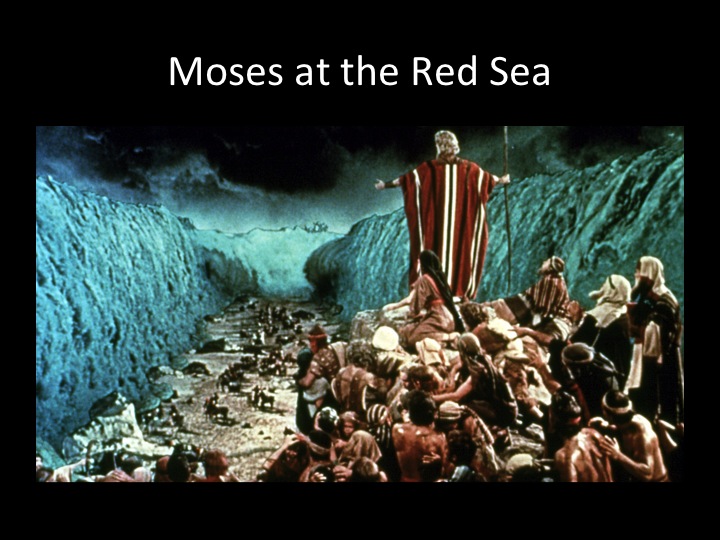
 

“Do Not Let Your Heart Be Troubled”

Meditation on John 14:1-7; 25-27

In Memory of Lois Sharpe

Jan. 23, 2016

Merritt Island Presbyterian Church

Rev. Karen Crawford


“‘Do not let your hearts be troubled. Believe in God, believe also in me. In my Father’s house there are many dwelling-places. If it were not so, would I have told you that I go to prepare a place for you? And if I go and prepare a place for you, I will come again and will take you to myself, so that where I am, there you may also be. And you know the way to the place where I am going.’ Thomas said to him, ‘Lord, we do not know where you are going. How can we know the way?’ Jesus said to him, ‘I am the way, and the truth, and the life. No one comes to the Father except through me. If you know me, you will know my Father also. From now on you do know him and have seen him.’

 ‘I have said these things to you while I am still with you. But the Advocate, the Holy Spirit, whom the Father will send in my name, will teach you everything, and remind you of all that I have said to you. Peace I leave with you; my peace I give to you. I do not give to you as the world gives. Do not let your hearts be troubled, and do not let them be afraid.”

***


I did not plan on visiting Lois the day I met her. Or, I should say, I didn’t know that I would be visiting Lois that day until shortly before seeing her. It was the day before Christmas Eve and I was actually on the way to visit her sister, Rose, who was suffering from Alzheimer’s and was receiving hospice care. I was with one of our deacons, Marilyn Smoot, visiting the sick and elderly, serving communion to those who would not be able to make it to our communion services on Christmas Eve.

If I weren’t a person of faith, I might say that it was by chance that I ended up visiting Lois that day. But of course it was God’s plan all along. The Spirit led me to call Arleigh, who is Rose’s nephew and Lois’s son, just as he was leaving Rose’s home and was on his way to visit Lois. His mother, like her sister, had been diagnosed with Alzheimer’s. The disease had progressed so that she, too, was receiving hospice care at a different location.

So, hearing that Arleigh was going to visit his mom, at the last minute, Marilyn and I decided to go with Arleigh.

Turned out, it was a good day for Lois. She had just had her bath and was lying in bed, her blue eyes bright and alert. She was more responsive than she had been for a while. She spoke only a few words, but she seemed to be following our conversation with interest. Later, I would learn about her strong faith, her many years as an active member of Palm Chapel, now River of Life Assembly of God. I learned that she had taught young children in Sunday school, enjoyed going to Bible studies, and sought to apply scripture to her daily life. She was involved for a number of years with in an outreach ministry to senior citizens in Brevard County called “Golden Life.”

Family was always important to Lois. She and her husband, Roy, and their two children, Arleigh and Peggy, moved from New York to Merritt Island in 1960. Lois’s sister, Rose, and her parents, James and Martha, moved with them. Lois worked as a secretary for many years at Rockwell – Kennedy Space Center, while Roy worked as a barber in Titusville. Lois did not have a college degree, but she was “forever a student,” taking continuing education classes at the community college, and nurturing the love of learning in her children. She liked crossword puzzles, crocheting, taking walks, and playing solitaire on the computer. She loved birds and had a collection of 2 or 3 dozen porcelain birds. After Roy died in 2002, Lois continued to live in the house they had bought when they first moved to Merritt Island, across from Divine Mercy Catholic Church, until her health became more fragile. She moved in first with her daughter, Peggy, then Asbury Arms (now Westminster Asbury) in Cocoa, and then, as the disease progressed, she moved to the place where Marilyn and I visited her the day before Christmas Eve, a group home on Merritt Island where she was cared for by hospice workers.

During that visit, I watched as she gazed at her son’s smiling face as he talked about how she used to play the saxophone. And how she participated in East Coast Christian Church’s 5K walk/run here on Merritt Island as recently as 5 years ago with Arleigh and his wife, Ok Sun. Arleigh finished the run, then went back and ran alongside Ok Sun, encouraging her to the end. When Ok Sun completed the run, Arleigh ran back for his mother, who was walking the race. He walked beside Lois, encouraging her to the finish line. Lois was 1 of only 3 women in her age group—75 and up—to attempt the run. She placed second.

I didn’t know that it would be the only conversation we would have together, that Lois would go home to be with the Lord three days after Christmas, four days after her sister, Rose, had gone home to be with the Lord. Because of my faith, my certainty of God’s plan and purpose for all of us, and for God alone knowing and keeping the number of our days, I am sure that it was no mere coincidence.

As I prepared to leave Lois with a prayer for healing, comfort and peace, I asked, “Can I come and visit you again?” She nodded and answered with one word, softly spoken. She may have said, “Visit” or “Come.” Arleigh assured me, “I think that’s a ‘yes.’” Joyfully, I promised that I would. Then I took her hand, she closed her eyes, and we sought the Lord in prayer.


***


We encounter an intimate conversation between Jesus and his disciples in our reading in John today. Jesus has just told the ones who left their old lives behind to follow him and learn from him that he will soon be leaving them. The time has nearly come for Jesus to go home to be with the Father. For several years, they have lived together and actively participated in Christ’s ministry. Jesus is trying to encourage his disciples to keep going, keep believing, keep up the good work, and hold fast to their faith, despite the trials, sorrows, and hardships that lay ahead.

“Let not your heart be troubled,” Jesus says, sensing their fear, feeling their distress. The word translated “hearts” in the NRSV (kardia) is singular, not plural, while the word that precedes it (your) is plural, not singular. Jesus is addressing this tight community of believers who share the same heart, same faith, same God.

He says, “Believe in God, believe also in me.” But I want you to think of the verb translated “believe” (pisteuo) as “trust.” Jesus is saying, “I know you are scared and sad, but you need to trust God and trust me.”

   Our Lord promises that they can also go where he is going — to his Father’s house (oikos), which is not just the word for a building, but a household or family. And the many dwelling places in the Father’s home are not the kind of houses with rooms we have in this world. Jesus is speaking of a spiritual dwelling place, an abiding with God–who has enough space within Himself for all people to dwell and truly desires to draw all people to Himself. This passage in John assures us of the promise that Christ will return for His Church. Jesus says, “And if I go and prepare a place for you, I will come again and will take you to myself, so that where I am, there you may also be.”

Poor Thomas. He is kind of the Eeyore of the disciples. But he is the only one with the courage to express his doubts and fears that are very likely shared by the others–and by many who will hear God’s Word in the generations to come. When Thomas says, “We don’t know where you are going. How can we know the way?” he is really saying, “No, we don’t want you go, we aren’t ready for you to go, we are afraid to lose you. We cannot imagine life without you here with us!”

The way of Jesus Christ has nothing to do with our worldly accomplishments or even our good works or good intentions. The way of Jesus to which John refers is about being in intimate relationship with Him–and we are, because of the grace of God, who sent His Only Son so that the world may not perish, but might believe on Him and have everlasting life. “I am the way,” Jesus says, “I am the way, the truth, and the life.”

The way of Jesus is learning to trust in Him who is the very revelation of God. “If you know me,” Jesus says, “you will know my Father also.”

The way of Jesus Christ leads to everlasting life from the moment we first believe.

Knowing Christ IS knowing the truth–not just an intellectual knowing, but an understanding that is God’s gift to us. This is an understanding that Christ promises we will have when we need it from the Spirit that abides with us now, teaching us “everything,” as Jesus says, and reminding us of all that he has said.

Knowing Christ means seeking the Lord in prayer and allowing ourselves to be led by the Spirit, our teacher, helper, and comforter during times such as these, when even believers may struggle with fear and doubt, like the father of a boy whom Jesus healed, who cries out in Mark 9:24, “Lord, I believe. Help my unbelief!”

Knowing the truth, knowing Jesus Christ, means possessing life, abiding in the One who longs to give us his peace, a peace that the world cannot give.

     Listen again to the One who has gone to prepare a place for all of us with his own death and resurrection, so all may abide in God–not just after we die, but in this world–here and now. Listen to the words of the One who promises to come again and take us to Himself, so that where he is, we may also be.

Do not let your heart be troubled. Trust in God. Trust also in me.”


Let us pray.


Loving Lord, we come to you now with all our doubts, fears, and sorrows. We seek your mercy and grace. Please heal us, Lord, and make us whole. Open our hearts and minds to receive your peace, a peace that only you can give, a peace that you desire to give to all who seek you. Teach us your loving ways and reassure us that we do know the way to eternal life–and that’s through an intimate relationship with you. Help us to trust you as we live out our faith, abiding in you, now and forever. Amen.


More Wine!

Meditation on John 2:1–11

January 17, 2016

Merritt Island Presbyterian Church

     “On the third day there was a wedding in Cana of Galilee, and the mother of Jesus was there. Jesus and his disciples had also been invited to the wedding. When the wine gave out, the mother of Jesus said to him, ‘They have no wine.’ And Jesus said to her, ‘Woman, what concern is that to you and to me? My hour has not yet come.’ His mother said to the servants, ‘Do whatever he tells you.’ Now standing there were six stone water-jars for the Jewish rites of purification, each holding twenty or thirty gallons. Jesus said to them, ‘Fill the jars with water.’ And they filled them up to the brim. He said to them, ‘Now draw some out, and take it to the chief steward.’ So they took it. When the steward tasted the water that had become wine, and did not know where it came from (though the servants who had drawn the water knew), the steward called the bridegroom and said to him, ‘Everyone serves the good wine first, and then the inferior wine after the guests have become drunk. But you have kept the good wine until now.’ Jesus did this, the first of his signs, in Cana of Galilee, and revealed his glory; and his disciples believed in him.”

***


Why is it that sometimes it takes congregations to suffer a tragic loss before they rediscover their faith? And why is it that some congregations, after tragic loss or bitter conflict, give up, break down, break apart and die–while others, such as a century-old church in Allentown, Pennsylvania, rise up to become better and stronger–more united, joyful, and hopeful — than ever before?


Hilltop United Methodist Church lost their building to fire in August 2014. The congregation wasn’t large or wealthy. They had to raise more than a million dollars, find another place to worship for a year, and hold themselves together as a congregation, while the church was being rebuilt. It was a traditional congregation like many other churches in America these days, with more people 55 and up than 35 and down. But they didn’t just rebuild what they had before. They built something new to meet the needs and desires of the future, while honoring the beauty and meaningful ritual and symbols of the past. The new sanctuary has stained glass windows and pews; and they sing hymns accompanied by piano, organ, and a modern, electronic projection system. Everyone had something to contribute to the “rebuilding” project, including a young boy whom Pastor Sue Hutchins recognized on Nov. 23– their first service back in their rebuilt, updated sanctuary. Logan Wilson had raised $750 by growing and selling his pumpkins. Did you see his proud smile?


Pastor Sue, speaking of the terrible loss and their miraculous recovery, said, “We were committed to this community and knew that God had a plan and a purpose for us here… It doesn’t matter if there is a fire. It doesn’t matter if there is some kind of catastrophe. God is still here… I just knew that God would bring us through.”


Don’t miss this important point: the church, when they gathered for their first service back in their building, was not celebrating the success of a fundraising campaign or the building project! They were celebrating, truly, their “new life” together in Jesus Christ. And God’s faithfulness to them!


***


In our gospel today, we find Mary, Jesus, and the disciples at a wedding in the little village of Cana, about 9 miles north of Nazareth in the Galilean hill country. Weddings back then were communal celebrations. The wedding of a virgin was held in the bridegroom’s house on a Wednesday. Relatives and friends came from all over to witness the covenant of man and wife, the union of two families. A wedding supper would start the festivities, which would last an entire week! Note that Mary, Jesus and the disciples aren’t wedding crashers. They aren’t strangers; they are invited, as we discover in the second verse, though we don’t know the name of the couple or their relationship to Mary or Jesus.


Don’t be fooled by this cozy, seemingly ordinary village scene. Jesus and his disciples aren’t taking a vacation from ministry. This is where the glory of God in Jesus Christ will be revealed for the very first time in the book of John–and his disciples, including Mary, will come to believe.


Wine wasn’t a usual drink for common people back then. Many peasants were employed in the grape-growing and winemaking industry, but poor people could not afford wine. However, it was expected that there would not be a wedding without wine–and plenty of it– to last 7 days and nights! Families would sell their flocks and borrow from other family members, if need be, to have wine at their children’s weddings. A wedding without wine would be an unthinkable embarrassment for the community.


And then the wine “gives out” or “runs short” or “fails,” as some translations say. This is a crisis! Mary turns to Jesus and says, “They have no wine,” but what she really means is, “What are we going to do?!” Jesus’s answer is cryptic. He addresses his mother as, “Woman,” but this is not to be misinterpreted as rudeness. Throughout John’s gospel, Jesus always calls Mary, “Woman.” In fact, Jesus, throughout the NT, never calls his mother by her first name or the Greek equivalent of “Mom”–not even when Jesus is on the cross. We read in John 19:26-27, “Jesus saw his mother there, and the disciple whom he loved standing nearby, (and) he said to her, “Woman, here is your son. Then he said to the disciple, “Here is your mother.” From that hour, the disciple took her into his home.”

John’s gospel is full of signs and symbols, words and phrases with more than one meaning and allusions to other scripture. The use of the word “woman” for Mary takes us back to Genesis, when God created man and “woman” in his image from the dust of the earth, but already had the redemption of humanity planned out! John sees Mary as the new Eve, just as the apostle Paul calls Jesus the “new man,” the second and the last Adam. He says in 1 Cor. 15:45,“Thus it is written, ‘The first man, Adam, became a living being’; the last Adam became a life-giving spirit.”


Back to the wedding crisis, in John 2:4, Jesus says to Mary, “What has this concern of yours to do with me?” Literally, he says, “What to me and to you?” This is an old Hebrew expression that can mean two things. One, it could be said by the injured person believing the other person is unjustly bothering or injuring him: “What have I done to you that you should do this to me?” such as when the poor widow says to Elijah in 1 Kings 17:18, “‘What have you against me, O man of God? You have come to me to bring my sin to remembrance, and to cause the death of my son!’” Or it can mean, as I believe is the case here, “This is your business, how am I involved?” such as when Elisha says to the King of Israel in II Kings 3:13: “‘What have I to do with you? Go to your father’s prophets or to your mother’s.’” The second implies disagreement, not hostility or injury.


The reason Jesus supplies for his disagreement? “My hour has not come.” The ancient translation of this, however, could actually mean, “Has my hour not yet come?” The use of the expression implies the opening or revealing of Christ’s ministry–not the passion, death and resurrection that the expression will come to mean in John 12:23-24, when Jesus answers his disciples, saying, “The hour has come for the Son of Man to be glorified.  Very truly, I tell you, unless a grain of wheat falls into the earth and dies, it remains just a single grain; but if it dies, it bears much fruit.”


Now, what does it mean when Mary turns to the servants and tells them to do whatever Jesus tells them? Does she expect a miracle? Is she telling Jesus what to do, and ignoring his response? Or is she just expressing her faith that Jesus will intervene in some way so that the joy of the celebration would not be stolen away and the wedding of a friend or family member ruined? Her faith is all the more impressive considering this is the FIRST miracle Jesus has done so far. Whether it is Mary’s faith or simply God’s plan all along or both, the wine is replenished and better than before. In fact, they have more wine than they probably need–more than 120 gallons!


What captures my attention is the old wine versus the new–and how the new wine comes from water set apart for Jewish purification rites, symbolizing the “old religion” of the law failing, falling short, running dry. When the headwaiter, having no idea what has happened, tastes the “new wine,” he calls the bridegroom and says, “Everyone serves the choice wine first; then, when the guests have been drinking awhile, the inferior wine. But you have kept the choice wine until now.”


Don’t you wonder why the guests don’t notice how inferior the wine is–until the “new” wine is produced? Why WAS the inferior wine OK? And then it came to me. Because that was the wine they were used to drinking. They didn’t know the joy they were missing!


Maybe it’s scary for some of us when we ask the Lord to remake us a church and individuals into something new– something more hopeful, faithful, loving, and joyful. Maybe it’s scary because it will mean humbly embracing change and new ideas and letting go of old, negative thoughts and behaviors. It will mean having to admit that we have been drinking inferior wine–or that we have allowed the wine to completely run out, without seeking the Lord to refresh, renew, and refill us!


When we seek the Lord for not just MORE, but NEW wine and accept the NEW that God wants us to do and be, we, too, like the little church in Allentown that rose up from the ashes, will celebrate our new life together in Jesus Christ. And God’s faithfulness to us!


Let us pray.


Loving, patient Lord,

Thank you for being with us, through all the struggles our church has faced in its more than 50 year history. Thank you, also, for your many blessings to us and the joy that we have experienced as we have sought to be your light to those who stumble in darkness. Fill us, Lord, with your new wine. Make us to do and be something we have never been–better than ever before. Humble us by the knowledge of your love. Lead us to be confident of our new life in Jesus Christ, which begins from this day, from this very moment on. Forgive us for negative thoughts and whispered words that have held us back from the changes you want us to make, changes we may have resisted for fear that it isn’t what we have done before. Give us courage to take risks –to dwell boldly together as your people, speaking the truth in love to one another, having grace for one another, being kind to one another, encouraging one another to use all the resources and gifts you have given us to build up your righteous kingdom. Help us to make our life of worship together truly a loving celebration, a miraculous sign for all the world of your power, hope, and glory, like the wedding of Cana long ago. In Christ we pray. Amen.



Practical Resources for Churches

Everyone has a calling. Ours is helping you.
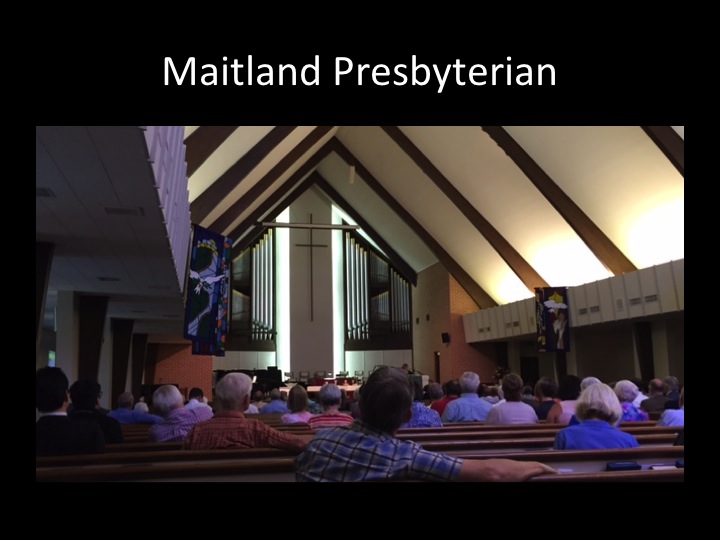

Consider the Birds

Pastor Karen shares thoughts on faith, scripture, and God's love and grace revealed through backyard wildlife.

F.O.R. Jesus

Fill up. Overflow. Run over.

Becoming HIS Tapestry

Christian Lifestyle Blogger

Whatever Happens,Rejoice.

The Joy of the Lord is our Strength

Stushie Art

Church bulletin covers and other art by artist Stushie. Unique crayon and digital worship art

The Daily Post

The Art and Craft of Blogging

WordPress.com News

The latest news on WordPress.com and the WordPress community.