Pip: If you have ever wondered what it looks like when Easter refuses to stay in the past tense, you have come to the right podcast.
Mara: This episode draws on a stretch of recent sermons from Reverend Dr. Karen Crawford, covering resurrection hope and what it means to be living stones, the shepherd’s voice and the unity Christ prays for, and what the Spirit’s arrival on Pentecost still demands of ordinary people.
Pip: Let’s start with the Easter season itself, and the question of what God’s people are actually being built into.
Resurrection And Post-Easter Hope
Mara: The sermons in this stretch keep pressing the same question: what does resurrection mean for people living right now, not just for those waiting on the other side of death?
Pip: And the answer in What Can Living Stones Do? is that Christ is preparing a place not just in some future heaven but among his people, today. The passage from John 14 gets reframed entirely: “When the Lord talks about preparing a place, I think he’s talking about a place for all of us to live and love and labor together for the Kingdom, now and forever.”
Mara: So the upshot is that the community itself is the dwelling place Christ is building. Drawing on First Peter alongside John, the sermon describes believers as living stones being fitted together with Christ as cornerstone into a spiritual house.
Pip: Stones that, the sermon is quick to point out, never stop growing or being shaped. There is something quietly demanding about that image.
Mara: The personal stakes sharpen that demand. The sermon recounts a medical emergency the night before it was preached, a husband bleeding through his bandages after surgery, hours in the emergency room. The miracle named is not that the bleeding stopped, but that peace arrived anyway, carried by the prayers of the congregation.
Pip: Which is exactly what a living stone does, apparently.
Mara: Wounded Healer takes the same territory from a different angle, meditating on the risen Christ who keeps his scars. The sermon quotes Henri Nouwen: “Jesus has given this story a new fullness by making his own broken body the way to health, liberation, and new life.”
Mara: And What About Mary? rounds out the season by sitting with Ascension Sunday and asking what Mary herself witnessed and carried. Luke’s brief three-verse account becomes an opening onto the Spirit still being sent, still clothing followers with power to go and bear witness.
Pip: Three sermons, one arc: resurrection is not a conclusion. It is an ongoing address.
Mara: That ongoing address raises its own question about who hears it and how, which is where the next theme begins.
Unity, Voice, And Belonging
Mara: The sermons here turn to the mechanics of belonging: how the shepherd’s voice reaches scattered sheep, and what Christ actually prays for on the night before he dies.
Pip: My Sheep Hear My Voice opens with a visit to a cousin’s farm in Northern Ireland, watching a shy farmer call his flock in their own language. The promise carried back from that field is this: “He allows us to recognize his voice amidst the many voices and sounds that surround us in our busy lives.”
Mara: What makes that promise weighty is the context. The trip nearly unraveled. A host said the timing was wrong. Decades of family estrangement sat in the background. By the end, reconciliation had quietly happened, and the sermon reads that as the Spirit working through a plan larger than anyone had mapped.
Pip: And then That They May Be One takes Christ’s prayer in John 17 and names the three things Jesus actually asks for: protection, unity, and joy. Unity, the sermon is careful to say, is not our achievement. It is what happens when people pray together with and for one another.
Mara: Florence Nightingale threads through that sermon as an extended example of what it looks like when someone answers a calling the world says is beneath them and ends up restructuring entire institutions through humble, persistent work.
Pip: From a farm in County Down to the Crimean War. The Spirit, it turns out, does not limit its range.
Mara: That range is exactly what Pentecost names directly.
Pentecost And The Spirit’s Call
Mara: Everyone! takes its title from the one word Joel and Peter refuse to qualify. The sermon sets up the Pentecost scene and then lands the line without softening it: “EVERYONE who calls upon the name of the Lord shall be saved.”
Pip: No expiration dates. No exclusions. The sermon actually compares the fine print on store coupons to what is conspicuously absent from the gospel offer.
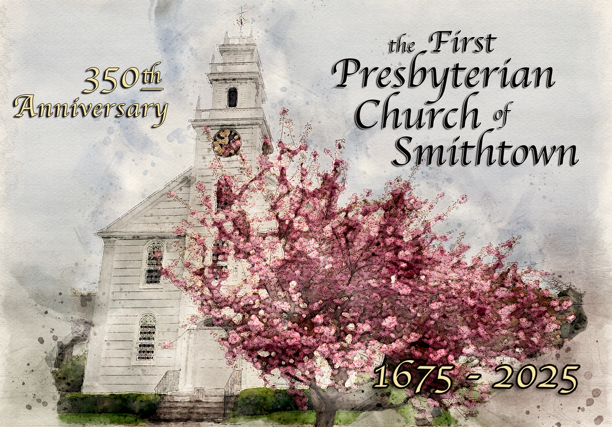
Mara: The sermon also traces Presbyterian history on Long Island from 1675 forward, including the Old School and New School split over slavery and the long road to reunion in 1983, as a way of showing that the Spirit keeps working through a church that keeps fracturing and, somehow, keeps being made one again.
Pip: Ordinary people. Extraordinary acts. The Spirit’s record, apparently, is unbothered by the institution’s.
Mara: Living stones, a shepherd’s voice, a flame that lands on everyone at once. The thread across all of it is that the Kingdom is not coming. It is already here, already at work.
Pip: Which means the only real question left is the one the sermons keep asking: what will we do with it? Same time next week.

