Meditation on Acts 16:16-34
Reverend Dr. Karen Crawford
First Presbyterian Church of Smithtown
Music Ministry Appreciation Sunday
June 7, 2026
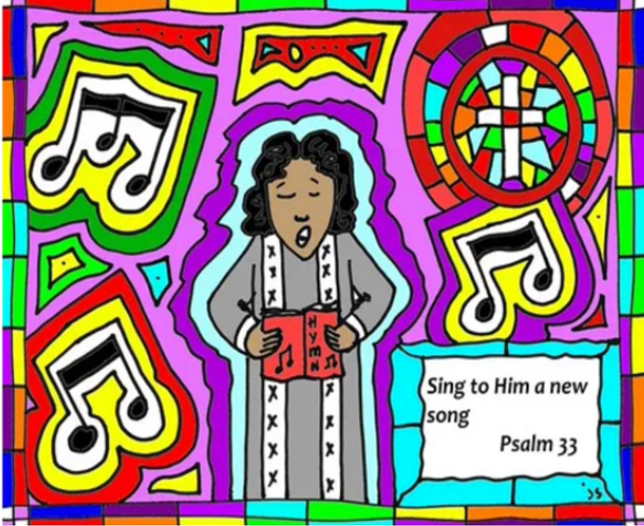
Who here likes to sing and make music for the Lord? Music has always been important to me—all my life. And I cannot imagine worship without singing and instrumental music! It just wouldn’t be the same.
Today, as we give thanks for our Music Ministry and show our appreciation to all who labor in this ministry for the Lord and God’s people, it is fitting to consider the importance of music for our worship and our lives of faith. The psalmist, in 96:1, proclaims that singing is for all people and Creation. “O sing to the Lord a new song!” he says. “Sing to the Lord, all the earth!” He cries out in 104:33, “I will sing to the Lord as long as I live; I will sing praise to my God while I have being.”
Ephesians 5:18-19 lifts the singing of psalms and hymns as a means of being filled with the Spirit and a lifestyle change for new believers. “Do not get drunk with wine, for that is debauchery, but be filled with the Spirit, as you sing psalms and hymns and spiritual songs to one another, singing and making melody to the Lord in your hearts.” Instruction on living in Christian community is found also in Colossians 3:16, “Let the word of Christ dwell in you richly; teach and admonish one another in all wisdom; and with gratitude in your hearts sing psalms, hymns, and spiritual songs to God.”
In the gospel of Matthew, Jesus models the power of singing to strengthen and heal in difficult times when he leads his disciples in a hymn at the close of the Last Supper, just before going to the Mount of Olives where he will be betrayed.
Looking back at Church history, though, we discover that by the “late Middle Ages the biblical call to song had become muted. The worshiping congregation did very little singing – only a few responses… With the Reformation, the Church’s attitudes toward singing began to change. Congregational participation increased dramatically.
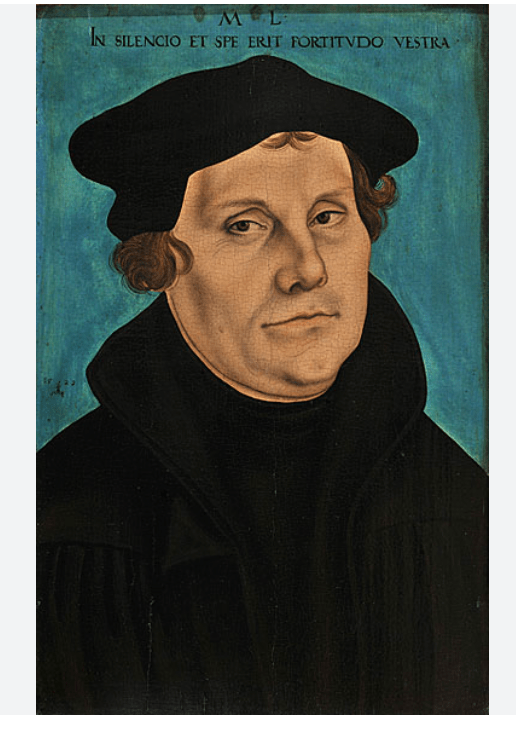
“Today Martin Luther is probably the best remembered Reformer as a writer of hymn texts and tunes… A Mighty Fortress is one of the best loved among Christians. Luther believed in the importance and power of song in the church. He taught that the praises of the faithful would drive away the devil. He also was convinced that hymns were a great device for teaching doctrine. Lutheran hymnody produced hymns that were at the same time devotional and doctrinal. Think of Ah, Holy Jesus, How Have You Offended or Jesus Priceless Treasure.”
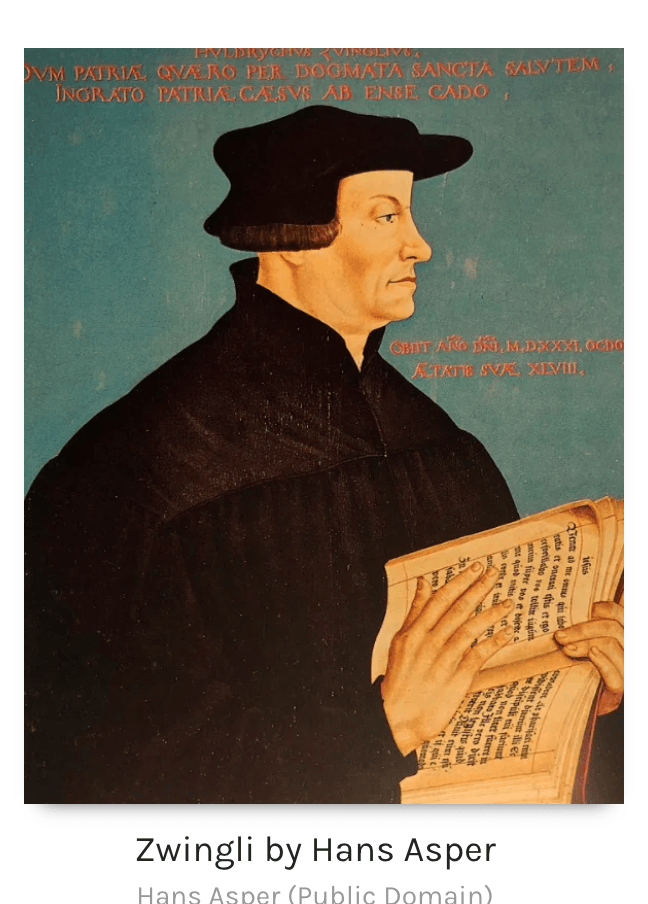
Zwingli was “probably the best musician among the major Reformers.” But he “believed that music was too powerful and too emotional to be used in Christian worship…. He argued that music would too easily move people away from focusing on the Word and its meaning for them. As a result, in Zurich singing was eliminated from worship in Zwingli’s day. No musical instruments, no choirs and no congregational singing were permitted….”
After Zwingli died on the battlefield in 1531, Heinrich Bullinger succeeded him as minister. He wasn’t set against singing in worship, although he wasn’t in favor of embracing any new musical fads. In 1561, Bullinger wrote the Second Helvetic Confession—Helvetic being Latin for “Swiss,” which is included in our Book of Confessions. In the confession, he writes, “Likewise moderation is to be exercised where singing is used in a meeting for worship. That song which they call the Gregorian Chant has many foolish things in it; hence it is rightly rejected by many of our churches. If there are churches which have a true and proper sermon but no singing, they ought not to be condemned. For all churches do not have the advantage of singing. And it is well known from testimonies of antiquity that the custom of singing is very old in the Eastern Churches whereas it was late when it was at length accepted in the West.”[1]

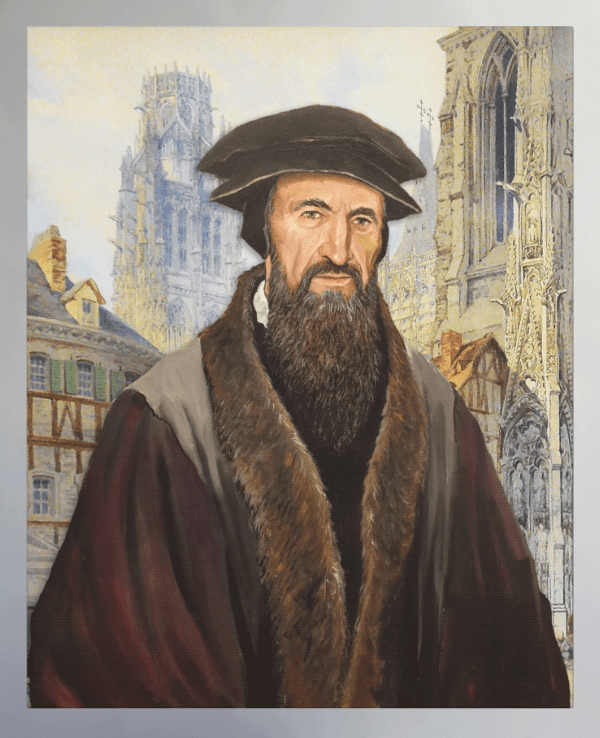
Calvin’s views were different from Luther and Zwingli. Although he didn’t believe any musical instruments belonged in worship, he saw congregational singing as a crucial part of the praise of God and of Christian fellowship and gave it a central place in the Genevan service. He saw the songs of the church as truly pleasant and delightful fruits of the Spirit. But like Zwingli, “he feared an excess of emotion in the music of the church (would be) a distraction from the Word. He wanted only unison singing by the congregation. He did not allow choirs, seeing them as too theatrical and as usurping the praises that all God’s people together should be offering to God.” His search for the spiritual led him to the Psalms.[2] Calvin encouraged poets and composers of his time to use their talents to prepare the Psalms for the church’s worship.
Our passage in Acts 16 reveals another power of music—to set us free from what binds us. Paul and Silas are on a missionary journey in Europe. They are in Philippi, where they had met Lydia, a wealthy dealer of purple, gathered with her household and other women for prayer on a riverbank. Her heart is opened to believe when Paul preaches, and she and her household are baptized. She prevails upon Paul and Silas to come and stay in her home.
In the passage that immediately follows the story of Lydia, the two missionaries are going to another place of prayer when they meet a slave girl with a spirit of divination. She follows them and annoys them for many days, until Paul, exasperated, casts the demon out of her. When she is set free from the demon, her owners’ hope of making money from her fortune telling is gone. So they drag Paul and Silas before the authorities and accuse them, not of being followers of Jesus, but of being Jewish and disturbing their city, “advocating for customs that are not lawful” for them, “being Romans, to adopt and observe.” Paul and Silas are stripped, flogged, and thrown in prison, in an “innermost cell” (meaning, no windows). Their feet are fastened in stocks.
What do Paul and Silas do in this desperate situation? They pray and sing hymns to God—as the other prisoners and jailor listen. Around midnight, while they are singing and praying, a violent earthquake opens all the doors and breaks the prisoners’ chains. With the almost certainty of losing all the prisoners, the jailor moves to take his own life. But Paul and Silas don’t leave. Paul calls out to the jailor and stops him from harming himself. The man falls down before them, and, trembling, asks, “What must I do to be saved?”
“Believe,” Paul says, “in the Lord Jesus, and you will be saved, you and your household.”
Well, the jailor believes, and brings Paul and Silas home with him, where Paul shares more about Jesus, their wounds are washed, the jailor and his household are baptized, and they all eat together.
Paul and Silas praying and singing hymns to God made all of this happen.
When we were forced to leave our sanctuary and worship in the parish hall for 7 weeks, beginning Maundy Thursday, we were all sad and anxious. We worried about what repairs would be needed, who would do them, and how to fund the project. We worried whether we were doing the right thing, leading our flock out of our beloved place of worship for God knows how long it would take while the repairs were done.
None of us expected the joy and intimacy of our worship in the parish hall. We were so close to one another! I was only a couple of feet from Pablo and the Sanctuary Choir. We could talk back and forth. And we did! The Handbell ringers were right on our level—so near to us that we could hear every note and see every expression on their faces. On Maundy Thursday and Good Friday, it was if we were being swept up by the music, readings, and prayers! We were truly immersed in the story of our Savior’s last days. And on Easter, it seemed as if an angelic choir had joined our singing.
I think the spiritual blessings that we experienced were because of the healing, strengthening, joy and faith producing power of music. The power to set us free from whatever binds us—including sadness, worry, and anxiety—and draw us nearer to the Lord.
I pray that we will continue to experience the power of music, now that we are back in our worship home. As you leave this space today, may you remember that your songs to the Lord don’t have to end when you step outside the church walls. May you remember that you have been set free in Jesus Christ. May you be filled with the Spirit, “as you sing psalms and hymns and spiritual songs to one another, singing and making melody to the Lord in your hearts.” May you sing to the Lord as long as you live! Sing praise to your God while you have being!
Let us pray.
Loving and Gracious God, thank you for your gift of music and especially the gift of our singing. Thank you for the hymns and songs that have been composed and sung to your glory that we and other congregations today still enjoy in our worship. May you truly be glorified in our songs of praise. May we be healed, strengthened and filled with your joy. Thank you for setting us free in Christ from whatever binds us—all our fears and sadness, all our worries and anxiety. May we be stirred to sing psalms and hymns and spiritual songs to each other, making melody to you in our hearts. And may we sing to you as long as we live, sing praise to you while we have being. In your Son’s name we pray. Amen.
[1] Heinrich Bullinger, The Second Helvetic Confession, in the Book of Confessions: Part 1 of the Constitution of the Presbyterian Church, USA.
[2] Robert W. Godfrey, “Reforming the Church’s Singing,” Western Seminary California, Feb. 5, 1990, at https://www.wscal.edu/resources/article/reforming-the-churchs-singing/

