
Meditation on Daniel 1:1-17
Rev. Dr. Karen Crawford
World Day of Prayer for the Care of Creation
Sept. 6, 2026

near Gold Beach, Ore., Aug 12, 2026.
“As we observe this World Day of Prayer for the Care of Creation (Sept. 1, 2026), we are once again invited to contemplate the gift of life and to cherish the earth that sustains it, for they are tangible ways of offering praise to our Creator.” — Pope Leo (OSV News photo/Bob Roller)
When Wendell Berry was 30, “he confronted in himself a deep need to return to his roots.” He moved “to an old two-room cabin on the Kentucky River at Port Royal, in Henry County, where his ancestors had lived since 1803.” “The cabin had been built in the 1920s by a great-uncle,” says a New York Times obituary, published Aug. 31. He called the cabin, ‘Long Legged House.’ “He had known the place all his life; … had visited it often as a boy and spent a summer there with his wife, Tanya.”[1] He had been raised on a tobacco farm in north-central Kentucky in a family who had farmed for 5 generations. He had gone to college, “studied English at the University of Kentucky and writing at Stanford.” A Gugenheim fellowship carried him to Italy and France in 1961. He landed in New York, intending to write and teach. He … had two children (with Tanya, whom he had married in 1957.) And he taught for two years at New York University” before going home to the land and agrarian life that was calling to him and would never let him go.
“Wendell Berry, a Kentucky farmer who plowed his fields behind Belgian draft horses and wrote lyrical poems, novels and essays — mostly in pencil and without electric light … died on Monday at his home in Port Royal, Ky. He was 92.” He considered himself a Christian and often cited the 4 gospels as his source for truth and inspiration for how he lived his life, including his sacred connection to the land and call to care for God’s creation. Returning to his home as a place to write for the rest of his life was a way to ensure, to himself, that he would always be bound by the truth, Wendell said in 2018. “It made a permanent connection between me and my native place, and with its landscape,’ he said. ‘The landscape was there to check me if I was wrong. I could never go away and make up stuff at cocktail parties about the backwoods of Kentucky. I worked with people here in all walks of life and learned from them.”
“He rebuilt the Long-Legged House and began writing there about sustainable agriculture and the culture of life on small farms and in farming towns.” He argued how “such places were vital to individual liberties and why they were rapidly disappearing from a landscape increasingly afflicted with topsoil erosion, polluted water and toxic chemicals.” In 1964, Wendell and Tanya “bought a 125-acre farm… and started raising sheep, corn and grain crops, and planted gardens for their own table.” He began teaching at the University of Kentucky in Lexington and for the next 50 plus years, he wrote with a pencil or pen on paper during daylight hours and refused to use electric lights at the Long-Legged House because “the power was supplied by strip-mined coal. His wife critiqued his work and typed his manuscripts on an old Royal standard. He refused to have a television set, or a computer after they came along.”
He first won national attention in 1977 with his essay, “The Unsettling of America: Culture & Agriculture.” He wrote of the need to “save small farms from big business and a government bent on agricultural efficiencies that … were destroying the land and a way of life. The book launched the modern movement for sustainable farming and became a conservationist classic.” He would go on to write, in addition to his nonfiction, 9 novels, 58 short stories, and 30 volumes of poetry. He called many of the collections, “Sabbath Poems,” written for others to enjoy in nature, stirred by his habit of walking out onto the land on Sunday mornings.
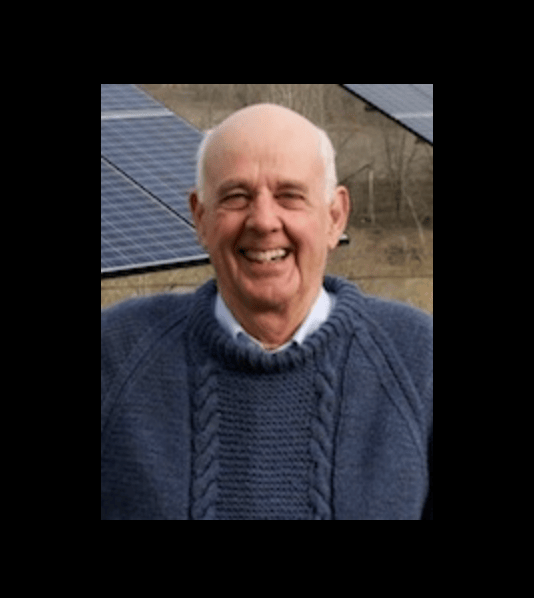
He was an activist. He famously defended family farms in rural communities being replaced by industrial agriculture to the former Secretary of Agriculture Earl Butz in 1977. He engaged in nonviolent civil disobedience against the construction of a nuclear power plant and joined others blocking the gates to a coal-fired power plant in Washington, D.C. He participated in a rally in Louisville during an EPA hearing on how to manage coal ash. He said, “The EPA knows that coal ash is poison. We ask it only to believe in its own findings on this issue, and do its duty.”[2]
He and 14 other protesters spent the weekend of February 12, 2011, locked in the Kentucky governor’s office to demand an end to mountaintop removal coal mining.
He was criticized by politicians and academics. Dr. Charles Barnhart, a dean at the University of Kentucky’s college of agriculture, said in 1988, “What Wendell is talking about is a primitive agriculture. It’s a nice way of life if you have a rich father and you’re a tenured member of the faculty at a university. But I don’t see a great proportion of the American public returning to farms. And I don’t see it as an industry that would ever be capable of feeding 225 million people.”[3] He won numerous awards, including the National Humanities Medal in 2011, “citing his achievements as a poet, novelist, farmer, and conservationist.”
If we were to write a New York Times obituary for Daniel, we would talk about his surviving a den of lions and a fiery furnace with Shadrach, Meshach, and Abednego. This was after he refused to stop praying to his God three times a day. Nor would he bow down to idols. We would talk about his prophetic visions and the book named for him that is the only “apocalypse” in the Old Testament. Do you know the apocalypse in the New Testament? Revelation. We might mention that Jesus names Daniel in Matthew 24:15 and Mark 13:14, which begin, “So when you see the abomination of desolation, spoken of by the prophet Daniel, standing in the holy place…” His habit of calling himself the Son of Man may have come from Daniel 7:13-14, “As I watched in the night visions, I saw one like a human being—coming with the clouds of heaven. And he came to the Ancient One—and was presented before him. To him was given dominion and glory and kingship, that all peoples, nations, and languages should serve him. His dominion is an everlasting dominion that shall not pass away, and his kingship is one that shall never be destroyed.”
In his obituary, we would speak of Daniel serving in high government positions under Nebuchadnezzar, Belshazzar, Darius, and Cyrus. But what I am most interested in is the overlooked story in today’s passage of the young boy, one of the Jewish noble children taken and deported to Babylon by King Nebuchadnezzar in 605 BC.[4] As their 3-year education in all things Chaldean began, the four friends received new identities and were expected to abandon the beliefs and traditions of the faith learned from their people and home in Judah. Daniel, as a teenager, wasn’t about to do that. His first act of quiet defiance was to refuse to consume the king’s food and wine. The palace master, who had become Daniel’s friend, was worried that if he ate only vegetables and water, his health would suffer. The king would see him in poorer condition than the other young men chosen to serve because they were all “handsome and without defect.” Daniel, a great negotiator from his youth, said, “Let me try this for 10 days.”
Are you wondering why Daniel wouldn’t eat and drink what was served in the palace? Well, the Babylonians ate foods not permitted by the dietary laws of his faith—pigs, shellfish, turtles, to name a few. And even if they brought him lamb or other meat that he was accustomed to eating with his family, the meat would not have been slaughtered and prepared in the way the laws required. Finally, the meat and wine of the palace would have been offered up as a sacrifice to the Babylonian gods. At the end of 10 days, Daniel and his three friends looked better and healthier than those consuming royal rations. God rewarded them for their faithfulness—giving them knowledge and skill in every aspect of literature and wisdom. Daniel had insight into all visions and dreams. That one act of turning away from evil—the rich palace food sacrificed to idols—and turning towards goodness set Daniel on the righteous path, walking with the Lord, living his convictions for the rest of his life.
I was sad to hear of the passing of Wendell Berry. He didn’t worry about book sales, criticism, or ridicule. He stayed true to his convictions all his 92 years of life. But I know that people will keep reading his writings and articles about him. They will watch recorded interviews and Laura Dunn’s two documentaries about the one whom NPR’s Dan Charles describes as “America’s foremost farmer philosopher.”[5] Dan says there has even been a small “Wendell Berry renaissance” in recent years. “He’s inspired a new generation of small, organic farmers.” Dan noticed “a quote from Wendell Berry — ‘Eating is an agricultural act’ — on the wall of a glitzy, trendy, food establishment in Manhattan.”
Laura Dunn tells Dan Charles how Wendell’s solution to the problem is with small acts of goodness done faithfully. “As Wendell Berry speaks (in The Seer), the film shows a pair of horses, an intact spider web, and a furniture-maker fitting together two pieces of wood. What he’s saying to me is there is no big solution. It’s broken! We’re all complicit in a broken system, in a broken world. The question isn’t how can I fix it all? But how can I, with my own two hands, do good work, every day? And I find that immensely hopeful!”[6]
Let us pray. Holy God, thank you for your beautiful creation, including human beings, so wonderfully made. Stir us to pray for and care for your creation, to be like Daniel and Wendell Berry, and live out the convictions of our faith. May we never give up. May our small voices join louder ones calling for us to live together in love and seek to bring healing and wholeness to our broken world. In Christ we pray. Amen.
[1] https://www.nytimes.com/2026/08/31/us/wendell-berry-dead.html
[2] https://en.wikipedia.org/wiki/Wendell_Berry
[3] https://en.wikipedia.org/wiki/Wendell_Berry
[4] John J. Collins, Anchor Bible Dictionary, Vol. 2 (D-G) (New York: Doubleday), 29-37.
[5] Dan Charles, “The Gospel According to Wendell Berry, On Screen,” in Food for Thought on NPR, April 24, 2016, accessed Sept. 8, 2026, at https://www.npr.org/sections/thesalt/2016/04/24/474092842/the-gospel-according-to-wendell-berry-on-screen.
[6] Dan Charles, “The Gospel According to Wendell Berry, On Screen,” at https://www.npr.org/sections/thesalt/2016/04/24/474092842/the-gospel-according-to-wendell-berry-on-screen.

