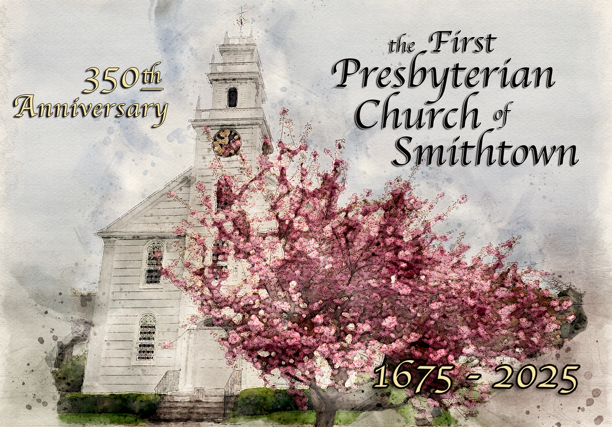
Too Much Stuff?

Meditation onLuke 12:13-21

First Presbyterian Church of Smithtown, NY

Reverend Dr. Karen Crawford

Aug. 3, 2025

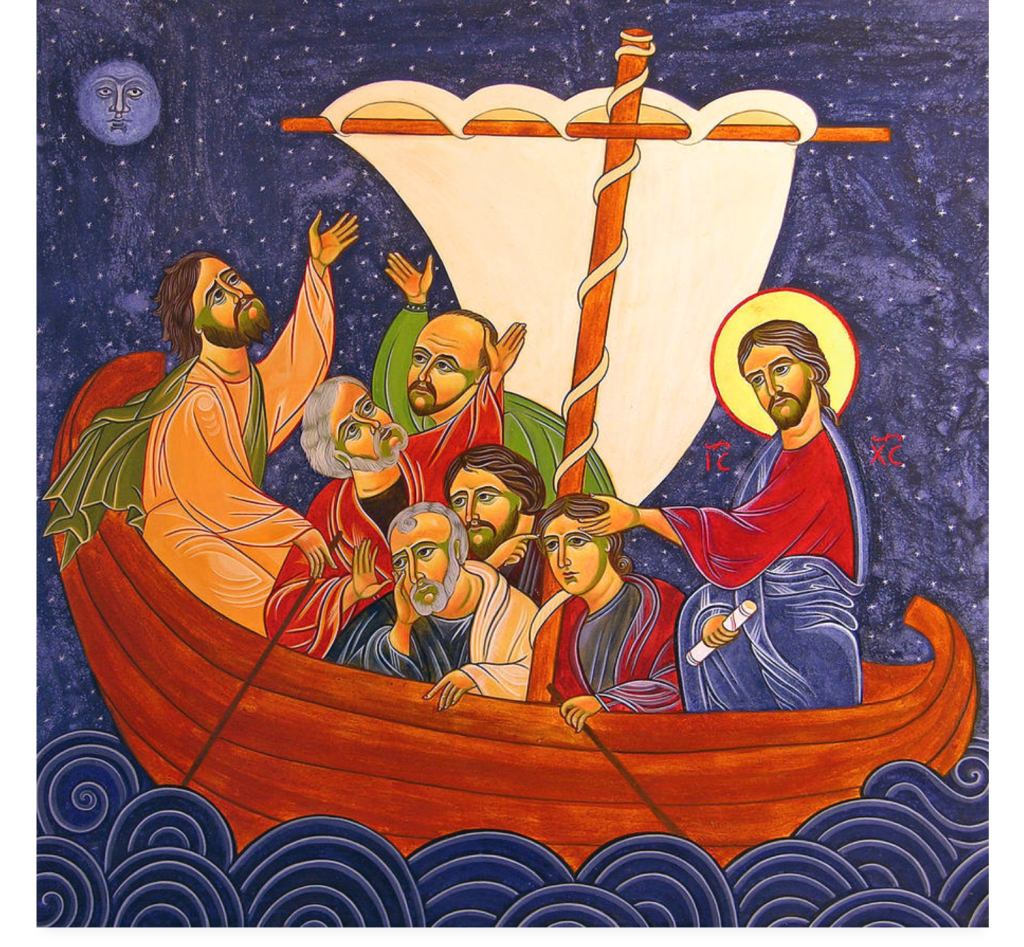
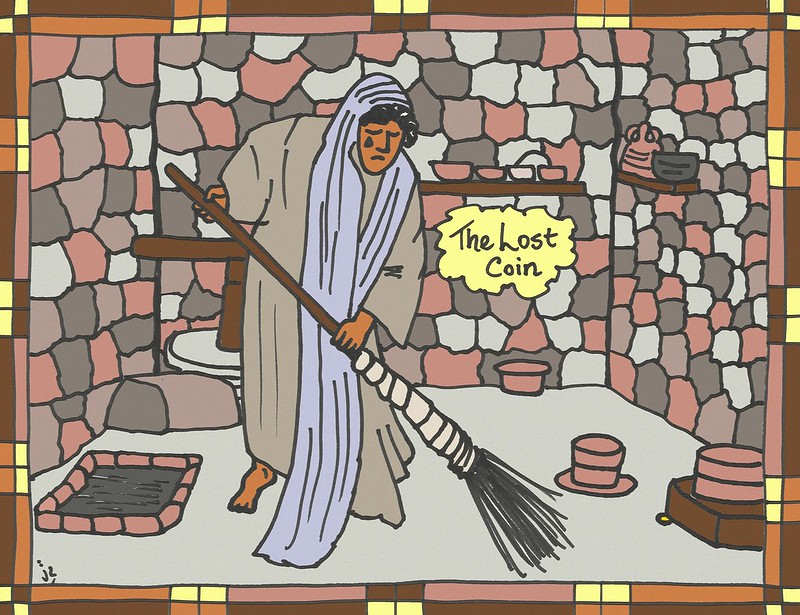
Art by Stushie

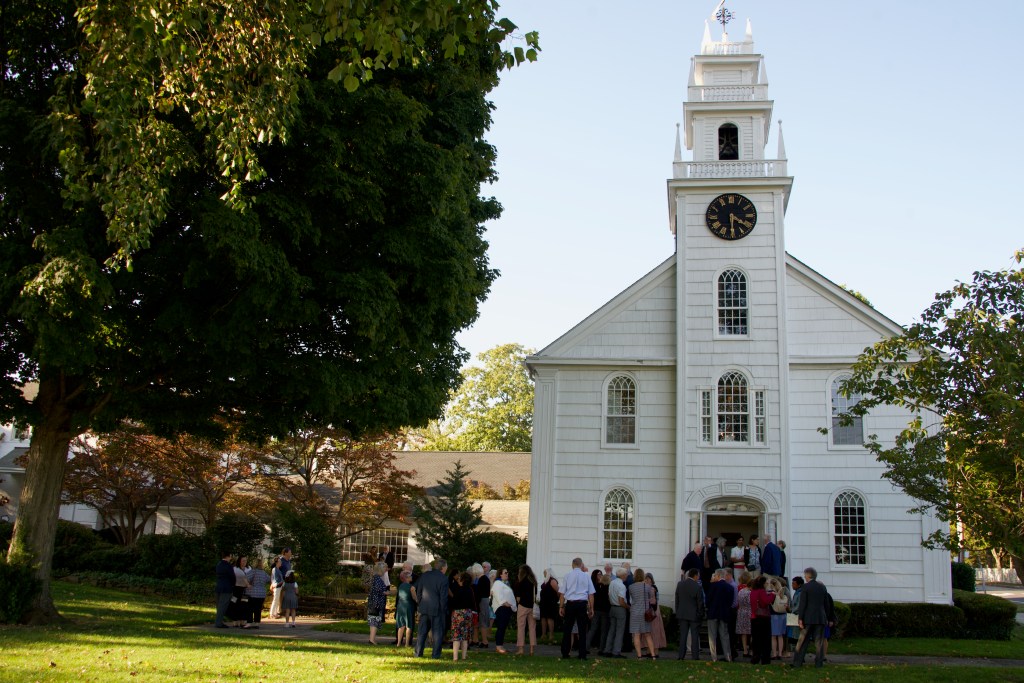
We had the pleasure of hosting Daniel Davidsen’s Eagle Scout Court of Honor here in our sanctuary yesterday. Quite a few of our church members attended and helped with the reception that followed.

The ceremony included numerous speakers sharing about his wonderful character, his faith and good works, his polite and respectful nature, his heart to serve, his intelligence, and his hard work and sheer grit that led him to accomplish the Eagle Scout rank, an honor that only about 5% of all Scouts will ever earn.

I spoke of his long involvement with his church, since childhood, when he sang in the children’s choir, sang with Christmas carolers to home- and nursing-home-bound. How he wrapped presents for our Adopt an Angel mission to needy children and helped the Flower Guild decorate the sanctuary with poinsettias on Advent and lilies on Easter.

He takes seriously the commitment he made when he confirmed his faith in 2020, making church a priority in his busy life, even now while he is home on summer break from Dartmouth. He serves frequently as our pulpit assistant, using a strong, clear voice and pleasant expression. As you well know, he doesn’t need a microphone! He is mature, friendly, cheerful, sensitive, and caring. He wiped away tears while sharing about the death of a friend, a fellow Scout. I talked about the beautiful, ambitious prayer garden project which will be a blessing to the church and community for many years to come.

What struck me throughout the moving ceremony was Daniel’s response to all that was being said and the numerous certificates that he received, proclaiming his worthiness of the honor. Daniel was overflowing with gratitude and joy. He smiled and said thank you to each person who congratulated him—and there were many people congratulating. He told the crowd that he appreciated each and every one of them for coming and hoped they would stay for the reception.  He credited his scout leaders for being his mentors, saying that without their support, he would never have stayed in scouting for so many years and would never have finished the requirements for the Eagle Scout rank. He thanked his parents, recognizing how their love and support helped him to become the man he is today.

Daniel made a point to thank me several times by email before the event—for my opening prayer, benediction, and the words that I would say about him and the prayer garden project. He thanked me in person yesterday, just before the service started. And he thanked me again afterward.

Later, it occurred to me that gratitude and the joy that often accompanies the spiritual gift of gratitude are what the two men in today’s passage in Luke lacked. It wasn’t just the man who wanted to build bigger barns to store his abundant crops and never have to work again. It was also the man at the beginning who shouted out the request of the Lord—-to tell his brother to share the family inheritance with him. Neither were grateful or joyful in their situations—not the man who felt cheated out of an inheritance or the man who had more wealth and things than he would ever need. And when he died, what would become of them?

The law specifies in Deuteronomy 21:17 and Numbers 27:1-11 and 36:7-9 that the elder brother receive a double portion of the inheritance. In this case, it seems that the younger brother received no inheritance at all. Jesus surprises the crowd with this parable of the rich man, instead of urging a fair division of the wealth, according to the law. The man wasn’t being unreasonable in his request!

The whole point of the parable is to warn the man who simply wants the inheritance that he is due not to become so focused on the wealth that he becomes like the rich man in the parable, who comes to a bad end. But the rich man’s problem isn’t merely greed. His wealth has led him to live as if there is no God. This is the treasure that he lacks—he is not “rich toward God.”

This is what Jesus is warning the man in the crowd and all of us hearing this Scripture: that our lives should not be focused on the wealth and material stuff of this world. Our lives should not be about accumulating more and more. Because where does that lead? We end up wanting more and more, because wealth and things don’t satisfy. The treasure that we all have is our faith, hope, and joy in the God who guides, fills, and equips us throughout the surprising journey that is our lives. And our treasure is our love for God and one another.

Daniel’s Court of Honor yesterday was a special celebration for not just Daniel and his family, but our entire church family. You could feel the love in this room. Friends, it truly takes a village to raise up our children in the Lord.

I received an envelope in the mail this week from Linda Cherney. Inside were belated birthday wishes, which I was happy to receive, especially because I was having a hard day. Actually, I was having a rough week. You see, I hurt my back just before we were going to go on vacation. I tried to pick up a fallen branch in our yard that was too heavy for me. So instead of enjoying the Finger Lakes, I was going to doctors, having scans, and taking medications that I don’t normally need. And I was in pain and frustrated.

Inside the envelope with Linda’s card was another envelope with two handmade cards from her grandsons, Roman and Bronx, revealing their budding faith and comfort and connection with their church and pastor. Roman wrote in pencil, “Dear Pastor Keran” and then “Happy Birthday” on a glowing cross, rays of light emanating from the beams. He signed his card at the bottom, “Love, Roman.” Bronx’s card made me laugh out loud. He drew a church pew with brown magic marker. Sitting side by side on the pew were Roman and Bronx, with their grandmother with yellow pants and a pink shirt in between. Their arms were extended straight out as if they were holding hands, without touching. They each had wide smiles on their faces. Above the pew with Roman, Bronx, and Nana, was a small, smiling figure without legs floating in the air. He had drawn his pastor—me—up in the pulpit!

I was filled with such gratitude and joy that I forgot my pain and frustration for a bit. I could just imagine them sitting at home taking the time to think about me and the church that they love and miss, because Linda has had a long recovery from a fall last May and the family has been unable to attend.

Their cards confirmed to me that we are, dear friends, building treasure in heaven here at First Presbyterian Church of Smithtown and in our homes and families. With the Spirit of Christ empowering and leading us, and God’s word guiding us, we are touching hearts and lives.

Don’t let yourself be discouraged by the difficulties in this world. You and me—with our hope and faith—we are making a difference!

Will you pray with me? Let us pray.

Holy One, thank you for the blessing of children and youth and our calling to nurture their faith and reveal your love. We pray that your Spirit will be with Roman and Bronx and all the children of our church who are home or traveling this summer. Help their families as they seek to be faithful to your call on their lives. Lord, give us your gratitude and joy. Keep us from wanting more and more and accumulating more and more, often with the fear that we might not, someday, have enough. Thank you for the reminder of the treasure that we have in you, a treasure that is everlasting and imperishable, a treasure not of this world, a treasure that must be shared with others. In Christ we pray. Amen.

For Daniel Davidsen’s Eagle Scout Honor Court

First Presbyterian Church of Smithtown, NY

Rev. Dr. Karen Crawford

Aug. 2, 2025

It is rare for a pastor to meet in her congregation a young man who possesses the gifts and talents of Daniel Davidsen. It is rarer still to meet a young man whose heart is for serving God and neighbor.

Daniel grew up in our congregation. He sang in our children’s choir and with our Christmas carolers to bring joy to homebound members. He helped wrap presents for needy children in our annual Adopt-an-Angel mission and decorated the church for Advent during our mission-focused Sunday that we call Preparing the Presence.  He has assisted the Flower Guild with arranging poinsettias and lilies in the sanctuary, a job where his height comes in handy.

My first encounter with Daniel was when he came to my first worship and congregational meeting in March 2022. He was smartly dressed in a suit, listening intently to the message, ready to welcome his new pastor, and listening for a word from the Lord for his life. He takes seriously the commitments he made when he confirmed his faith in 2020, making church a priority in his busy life, even now while he is home on summer break from Dartmouth. He serves frequently as our pulpit assistant, using a strong, clear voice and pleasant expression. He doesn’t need a microphone! He is mature, friendly, polite, cheerful, sensitive, and caring. He wiped away tears while sharing about the death of a friend, a fellow Scout.

What I noticed right away about Daniel is that he is always willing to help. When asked, he says yes and does his best, never doing anything halfway. He has cheerfully attended many church and manse Saturday workdays, without complaint. His most recent service for the church and his Eagle project is a prayer garden, built and maintained with the help of family, friends, some Scouts, and the church.

When he approached the Trustees and me about the garden, I couldn’t believe he had come up with this idea without talking with me first, because at the same time I was beginning my doctoral project, which coincidentally, if you believe in coincidences, was about the spirituality of Presbyterians who garden. The plot of ground that was fertile for his garden was an overgrown, weedy kitchen garden that had been neglected for a while.  

But there was extensive sitework that had to be done before the garden could be dug and planted—new fencing, new pavers and poured cement walkway. The rusty iron rail needed a fresh coat of black paint.

What you will see when you visit the space is that it isn’t an ordinary place for a prayer garden. If you sit on the circular iron bench, you will see and hear traffic lined up and passing through the busiest intersection in Smithtown at most times of the day and probably into the night. In this way, the beautiful garden, filled with perennial flowers, shrubs, and ornamental grasses, as well as a birdbath to attract pollinators, is a witness to our community of our love for our Creator God and our spiritual and physical connection to the soil. It is a place of rest and welcome for all visitors and weary passersby, and not just members of our flock. Though it is rarely quiet there, it is a comfortable, inviting place where people can come and talk with God, find peace, and discover the will of the Spirit for their lives.

The congregation, along with some Scouts, dedicated the prayer garden on Aug. 25 with an outdoor worship service. This provided us with yet another opportunity for this somewhat shy group of Presbyterians to shine our light and reach out to the folks driving through the intersection or stuck in traffic with the love, joy, and peace of Christ.

Thank you, Daniel, for your gift to your church and wider community, for the sake of the Lord and God’s children. This is a gift that will keep on giving because gardens, like all living creatures, never stay the same. They will always need our tending, visiting, and appreciating. They grow and change every day and are vulnerable and exposed, like we are, to whatever is happening in the world. May we, also, grow and change every day as we cast our cares on the Spirit that lives in the garden. This same Spirit lives in our hearts and will transform us as God’s people, more and more, for many years to come. Amen.

Who Is My Neighbor?

Meditation on Luke 10:25-37

First Presbyterian Church of Smithtown, NY

Reverend Dr. Karen Crawford

July 13, 2025

Something caught my eye in the grass after filling my birdfeeders the other day. Something moved—gave a little jump but didn’t go far.

I assumed it would be one of the bold chipmunks or squirrels, anxious to be the first creature to reach the sunflower and safflower seeds or, the favorite in all seasons—the block of suet hanging from a shepherd’s crook.

And then I saw a swarm of green flies around the creature, and I thought, “Uh oh. Something’s wrong.”

I cautiously drew closer to a lump of black feathers belonging to a baby bird. I saw the red on its belly and realized that it was a robin, too young to leave its nest. I bent down to examine it without touching it and the creature let out a frightened, “Peep! Peep!”

This stirred the memory of a baby robin that dropped to my lawn last year after it was stolen from a nest by a grackle, who was mobbed by other birds. I tried and failed to protect that robin in the grass. It was eventually retaken by the grackle who returned for its prey.

The thought of a baby bird dying on my watch on Thursday, in my yard, just didn’t sit right with me. Human beings are not natural friends of wild birds, even those of us who try to be kind to them. They are wise to be frightened and shy around us. Many more die from injuries by vehicles, pet cats on the loose, and through the loss of habitat due to human activity, including pesticides and fertilizers poisoning their water and food sources, rather than being gobbled up by hungry birds.

I pulled on rubber gloves and, when I gently picked up the bird to lay it in a box, it immediately opened wide its beak in hunger, hoping that I was its parent. I drove with the box next to me on the front seat and the creature peep peeping all the way to Sweetbriar Nature Center.

The rehabber met me at the front desk, quickly examined the robin and said that it looked like it had been pecked. It was missing an eye and had fly eggs under its wings. “I will take it,” she said, and I murmured my thanks as she walked behind a door where I couldn’t follow.

I told the receptionist, then, how our church is a big supporter of the center through our programs, donations, and volunteers. I did a little name dropping. “Peg Holthusen is one of our members,” I said. “She volunteered at Sweetbriar for years.” Marie Smith, the executive director, always remembers her in the letters that we receive thanking us for our donations.

I reached in my wallet and left some money with my business card. It wasn’t a lot. It was all the cash I had with me. I thought about all the supplies that Sweetbriar uses for every injured wild animal’s care. That donation wasn’t going to go far.

But the receptionist smiled widely and told me that I could call to check on the baby bird in a few days. I left the center praying that the bird would live.  

An expert in the law approaches Jesus in our gospel lesson in Luke today, seeking affirmation for the life that he is already leading. I heard once that a lawyer never asks a question in court that he doesn’t already know the answer to and has prepared her or his response. Do we have experts in the law here? Is that correct?

 When the expert asks Jesus the kind of life that he should live as a faithful Jew, so that he may earn his reward and “inherit eternal life,” he already knows the answer is to follow the 10 Commandments, the sum of which is his answer to Jesus’s question, “You shall love the Lord your God with all your heart and with all your soul and with all your strength and with all your mind and your neighbor as yourself.” This answer comes right out of the Torah: Deuteronomy 6:4-5 and Leviticus 19:18.

 But when the law expert asks, “And who is my neighbor?” he is ready for Jesus to say that the neighbor he is commanded to love lives in his community—they share the same faith, history, culture, food, and language, common ancestry, way of life, and geography.

The story Jesus tells refutes this assumption and challenges us to see beyond the circle of people we know and love and feel comfortable with. It challenges us to become more aware of the moments when we fail to love a neighbor, near or far, and ask the Holy Spirit for help.

Dr. Amy-Jill Levine, a Jewish New Testament scholar, provides wisdom for us who seek to live faithfully today. “The Good Samaritan has been appropriated by politicians and economists, hospitals and cafes,”[1] she says. “Its meaning has been reduced and romanticized to ‘if somebody is having a problem on the side of the road, stop and help.’ But parables are never simple,” and should be taken in their historical context.

“The New Testament’s treatment of lawyers usually is not complimentary… and this instance is no different. The lawyer addresses Jesus as ‘teacher,’ which does not fully encompass who Jesus’ followers believed he was. Not only does the lawyer already know the answer to his question, Levine said, but his question is a bad one. In addition, the lawyer is out to tempt Jesus — the verbs for ‘test’ and ‘tempt’ are the same. In essence, Levine said, the lawyer is in the same role as Satan was when he tempted Jesus in the desert.”[2]

Jesus says the lawyer’s reply to his question is correct. “Do this and you will live,” he says.

“But the lawyer wanted a single action to ensure him eternal life, and Jesus has given him a lifetime of work to do… When the lawyer asks, “Who is my neighbor?” what he is really asking is, “Who might I hate?”

In Jesus’s time, people walking the roads were vulnerable to being set upon not by Robin Hood like figures, but by “violent gang members.” The real question, Levine says, is “what do we do with a person who’s dying on the side of the road?”[3] The priest and Levite fail to love their neighbor and break the command of the Jewish Mishnah, which says that “even those in the cleanest, most ritually pure states are obligated to stop and attend to the corpse,” if, in fact, the victim was already dead.

“To go from priest to Levite to the fellow who stops, who was a Samaritan, is like going from Larry to Mo to Osama bin Laden,” Levine says. In Jesus’ historical context, Samaritans are the enemy. “It’s unthinkable,” she says, that there would be a so-called good or compassionate Samaritan.

The love of God and neighbor is a sort of compassion or “love that doesn’t require thought. It bypasses the intellect, and it gets us in the gut…You don’t even have to think about it. Your body, your visceral system, forces you to act.”

At the end of the parable, Jesus asks the man who was a neighbor to the man who fell into the hands of robbers. The lawyer can’t bring himself to say the word “Samaritan,” so he says, “The one who showed him mercy.” This same Jesus tells his followers in the Sermon on the Mount in Matthew that we are called to love our enemies and pray for them.

     Every day, we have opportunities to show grace and mercy—to friends and family and our church family, to people we meet or pass by in our communities, schools, or places of work. The Lord gives us opportunities to witness to God’s love through our acts of compassion.

    I have seen many occasions when our flock is moved to grace and mercy for neighbors near and far. I know that some of you have provided transportation for people to come church or go to the grocery store, or doctor’s appointments. I have watched you share food that you have provided or prepared; eat with someone who is lonely or grieving; bring food for the food pantry; give cookies to a homebound member; or called, visited or written to someone who is sick or injured. I know that you, in your own lives and ministries, are doing even more quietly to help your neighbors in need.

    As Amy-Jill says, we have a lifetime of work to do!

    And every day, we are blessed by the grace and mercy of others. We are blessed so much that we might take these blessings for granted. My prayer is that our eyes are opened to these unexpected acts of mercy and compassion that we receive so that we may be moved to gratitude to God and neighbor.

     And may our hearts and minds be open to opportunities when we may show grace and mercy to others in need, and reveal the mercy of the Lord who says in His Word,

“Do this and you will live.”

Let us pray.

Creator God, open our eyes to your love, mercy, and compassion in this world so that we may be moved to gratitude daily and give you thanks. O Lord, the world is full of creatures sometimes difficult to love, including our own selves, at times. Help us, dear Lord, by the Holy Spirit, to show mercy and compassion to neighbors near and far so that we may truly live and bear witness to the love of your Son, in whose name we pray. Amen.


     [1] Emily Perper, “Levine: Good Samaritan parable teaches compassion for the enemy,”

 The Chautauquan Daily, https://chqdaily.wordpress.com/2011/08/17/levine-good-samaritan-parable-teaches-compassion-for-the-enemy/

     [2] Perper, “Levine,” https://chqdaily.wordpress.com/2011/08/17/levine-good-samaritan-parable-teaches-compassion-for-the-enemy/.

     [3] Perper, “Levine..”

“Then I Will Follow You”

Meditation on 1 Kings 19:15–16, 19–21

First Presbyterian Church of Smithtown

Reverend Dr. Karen Crawford

July 6, 2025

Art by Stushie, used with permission

I met a woman named Vickie yesterday, who shared her faith story. I interviewed her as part of my work on the Presbytery’s Committee on Ministry.  She has applied to serve as pulpit supply, offering her gifts and talents to the 60 or so Presbyterian congregations on Long Island.

 She has served as an elder in her Presbyterian church since 2002. She has served on various committees, such as Children and Adult Education, the Cemetery Committee, Building and Grounds, and Community Outreach. She has had the “privilege of working on and leading Bible Study programs,” she says, Vacation Bible School, Youth Group, Mission Trips, and her church’s first Women’s Retreat. She has served as liturgist and most recently, completed the Presbytery’s preaching class for elders.

There’s more.

She didn’t grow up Presbyterian. She grew up in a family “where you were either a devout Catholic or Jehovah’s Witness.” She remained in both these worlds until adulthood, not usually celebrating Christmas or birthdays, being taught, as a young person, to take her faith out into the world, going door to door, two by two, with her Bible, knocking, waiting, and hoping for someone to welcome them inside.

When she grew to be an adult and struggled in a marriage that wasn’t healthy for her or her children, she came to a fork in the road. She decided to leave her husband. Because of that decision, she was excommunicated from the Jehovah’s Witnesses. She would be separated for years from her mother and sisters, who were not permitted to speak with her.

Vickie was on her own, working full time, caring for her children, and longing for spiritual answers to life’s important questions. She came to a moment, she says, of reaching out to God, as she had never done before. She started to pray. And though her life was still a “mess,” she says, the Lord showed her the way. “I finally followed Christ,” she says, “to my home, here in the Presbyterian faith.”

All of us have a testimony to share. Our stories may not be as dramatic as Vickie’s, but they are no less miraculous. One day, we were struggling with doubts. And one day, we began to seek God and believe. We started on a journey of discovery and relationship with the Lord and God’s people.

In our reading in First Kings 19, we hear another dramatic conversion story. Elijah has been a warrior for the Lord. He has fought the pagans in the royal court, including Israel’s Queen Jezebel who persuades the king and much of the nation to worship the Canaanite god Baal, a deity of storms, fertility, and warfare. Elijah has come through a difficult period in the wilderness, fleeing and becoming so weary that he lies down under a broom tree. He asks the Lord to take his life. God instead sends an angel to give him food, water, and encouragement so that he can continue in his work for God.

But the Lord knows that Elijah cannot go on forever as God’s prophet. The Lord sees that Elijah needs a helper, a personal assistant, someone to mentor in the work of a prophet and eventually take his place. The Lord sends Elijah to a rural area, where he sees Elisha plowing a field with a yoke of 12 oxen in front of him. I often wondered why this detail would be shared—about Elisha controlling and guiding 12 oxen in a wooden yoke, all by himself. I think the answer is that this was hard to do! It was hard, hot physical labor, but challenging mentally, as well. If he had 12 oxen, then he was probably plowing a large plot of land, too. This was unusual. Most farmers didn’t have 12 oxen, which were the John Deere tractors of the time. They were lucky to have one or 2.

Imagine you are Elisha, probably a young adult as there is no mention of wife and kids. He’s a good, strong farmer, providing for his parents and extended family.  It is subsistence farming back then. If the crop fails, the people go hungry. Elisha may have been an only child or at least an only son, because when Elijah lays the prophet’s mantle on him, Elisha responds, “Let me kiss my father and my mother, and then I will follow you.” He didn’t have any siblings to bid goodbye or to pass on the work of farming. Elijah immediately regrets his invitation, witnessing Elisha’s emotional response to the call. Elijah says, “Go back again, for what have I done to you?”

Elisha has already said yes to the call in his heart because he returns to his family, then, and makes difficult decisions that will forever affect their future and his own. There will be no going back home after he singlehandedly slaughters the 12 oxen, not leaving even ONE so that someone else can plow the earth and farm! Then he cooks the flesh of the oxen, using the wood from the yoke for the fire. Both equipment and livestock are now gone. Then he feeds his people—not just his parents, but his community. He eats with them before turning away from home, family, farm, and neighbors to follow Elijah and become his servant.

Talking to Vickie yesterday, I felt lifted and encouraged in my call and remembered how the Lord has been so faithful to me, all my life. But I have to be honest; I don’t enjoy my service to the presbytery as much as I enjoy being shepherd of this flock. My labor for the presbytery is often out of my comfort zone and challenges me to think about my own theology, my own beliefs about God and the church. It forces me to puzzle over 21st century problems that the Early Church never envisioned and worry about the future of the Presbyterian church on Long Island and in our increasingly secular nation.

But then I was so inspired by Vickie and her willingness to learn and grow and be used by God in new ways. The nearly 73-year-old woman never went to college, and now she has taken her first preaching course. She is willing, she says, to become a Jill of all trades.

All of us have a testimony to share and a journey to walk. Your story may not seem as dramatic as Vickie’s, but it’s no less miraculous. Let us share our stories and walk together.

The one thing that really stood out to me in her story is the welcome she received from not just one, but two Presbyterian congregations on Long Island. You, too, have been welcomed and embraced by Presbyterians! (So maybe we aren’t the frozen chosen, after all!) She was never made to feel like a stranger or outsider. She managed to fit right in; she rolled up her sleeves and got busy serving. Now she is seeking to be a leader of the Church that welcomed her and helped her grow in faith, hope, love, and witness. She is willing to pursue the education and training, which is about 5 seminary classes, to be eligible to serve as a Commissioned Ruling Elder, either in her own congregation, assisting her own pastor and serving her own church family, or in a small struggling church in our Presbytery that can no longer afford a full-time minister of word and sacrament.

Vickie shared that about two years ago she had a breakthrough in her journey of faith. She apologized to the Lord for not giving all of herself sooner. She was like Elisha, asking to care for her family first and THEN she would follow the Lord. This is what we all do. We have many good things that we can be doing in this world, and the Lord wants us to care for our families. But sometimes we use good things as an excuse not to do the harder things that the Lord wants us to do. That’s why we need to keep on seeking God in prayer.

When she was 71, though she had served the Lord since she was a young person, she finally surrendered her heart to God. She said, “I am giving you everything that I am.”

May her story inspire you to surrender not in part but the whole of yourself to God. May you be stirred to trust the Lord enough to say, as Vickie says, “Whatever time I have left, I am His. Fully. Completely. Wherever he wants me to go, I will go.”

Will you pray with me? Let us pray.

Holy One, we hear your voice calling us to follow your Son, our Savior, the Christ. But we hold back, afraid that offering our lives to your service may be too difficult, too uncomfortable, too much work. We are afraid of rejection by those with whom we would share our faith stories. We are afraid that we are not up to the tasks you are calling us to do and that maybe we lack the strength to follow faithfully, serving your people and our community with our gifts and talents. Thank you for inspiring examples of faith such as Vickie, here in our own presbytery. Bless her, Lord, as she listens for your voice and discerns her particular call. Bless and encourage all of us as we surrender our lives in gratitude, saying, “Wherever you want me to go, I will go.” In the name of Jesus we pray. Amen.

There Is Love

Meditation on 1 Corinthians 13

Reverend Dr. Karen Crawford

First Presbyterian Church of Smithtown

On the Occasion of the Reaffirmation of Wedding Vows for Nine Couples

June 29, 2025

From the beginning, it was a math problem.

First, it was the timing.

A busy journalist, divorced mother of three little boys, moving into our first home after the divorce, I didn’t have time for meeting men or interest in going on dates. When I met Jim, he was kind of a colleague, a new Presbyterian pastor in York, PA. He followed my newspaper stories and columns, sent me emails, asked me out to dinner, lunch, or coffee. And the answer was always no.

I didn’t have time.

One day, he sent me an email and said that he would wait till I had time for a friend in my life. He wanted to be that friend. He would wait as long as it takes.

When we finally had time to get a cup of coffee, or in my case, a cup of tea—we pulled up to the cat-themed café that Jim had been telling me about—and it was closed. Permanently. We had waited too long.

The second math problem was more difficult to solve. The numbers were not in our favor. Mom sat me down one day and did the math for me. When Jim is this old, I will only be this old.

Jim remembers the day in 1963 that JFK was shot and the day in 1965 when Malcom X was killed. I wasn’t born, yet. I wasn’t old enough for kindergarten when MLK was assassinated or when Jim was protesting the War during his seminary years.

I remember going to see Jim after this conversation with my mom—about the numbers. I remember feeling sad that if we married, it would probably mean that I would eventually be alone, again. That with our differences in age, I would probably outlive him.

 I made him promise me that if we married, he would at least be my husband for 20 years.

He did the math and agreed.

I just realized the other day that in July, after we celebrate our 20th wedding anniversary and my birthday, I will be the age he was when we first met.

And there were other important differences, other than the math. He was Presbyterian and Irish. I was neither of those. More importantly, he was a big dog person and I was scared of big dogs. I was a cat person and he hated cats.

But we had some things in common. We both loved the Lord and our faith led us to live intentionally, seeking God’s will for our lives and being ready to obey when we heard God’s voice, no matter how scary God’s will is. Sometimes, God’s will is scary.

Even with the math problems and other obstacles to overcome, including some of our children not being pleased when we got married, there was love.

Chapter 13 of Paul’s first letter to the Corinthians in our Bibles is often read at weddings. We interpret his instructions as rules for happy marriages, especially verses 4 through 8. Love is patient; love is kind.” It isn’t “envious or boastful or arrogant or rude.” I have to smile at “Love doesn’t insist on its own way,” because Jim and I both have leadership gifts, and we can be stubborn. Maybe we aren’t alone in this tendency. Is anyone stubborn in your households? Maybe it’s you? It is good to be reminded that love “is not irritable; it keeps no record of wrongs.” In other words, love not only forgives, it practices forgetting, just as when we sin and ask for God’s forgiveness, as Hebrews 8:12 tells us, along with the prophets Jeremiah, Isaiah, and Micah, the Psalms, Second Corinthians and Romans, the Lord “remembers our sin no more.”

These instructions that Paul—formerly a persecutor of the earliest Christians—wrote thousands of years ago to a young church struggling with divisions and egos in the city of Corinth are meant for all of Christ’s followers—and not just married couples. When he says that love “bears all things, believes all things, hopes all things, endures all things” and “Love never ends,” he is lifting up the perfect example of love—the unconditional, everlasting, and sacrificial love of Jesus Christ. Friends, human beings will always fall short of perfect love. We will always fall short. But Christ is still our example for the church and all our relationships with God and neighbor. And the presence of Christ in our hearts and homes is a powerful ingredient for happy, faithful, enduring marriages in every day and age.

The nine couples renewing their vows today were married in different decades and places. Russ and Sue and Tom and Marci were married in the 1960s. Ed and Janet and Ron and Carolyn were both married in 1972. Dave and Joanna, Rob and Linda, and John and Dawn were married in the 1980s. Jon and Elizabeth were married right here in June 2008. And I had the honor of presiding over the wedding of Frances and Terrell last November—in 2024.  Each of these couples have learned that love can endure math problems, family problems, financial problems, health problems—you name it; they have learned how to love. Today, some of them will make vows that they wrote for one another. Others will use the standard Presbyterian vows.

As they say their vows, may we be strengthened in our households and in our church family as we remember that 1 Corinthians 13 applies to the Church, all our brothers and sisters in the Lord. May we make their promise to love and honor one another, giving thanks for what has been and looking forward to all that will be, our prayer for our church family, especially as we celebrate our 350th anniversary this year.

 And when they promise to continue to share the journey of life with one another in faith and in hope, with God’s help, may you claim that promise for yourself, your family, and church family.

As you leave this space and enjoy food and friendship at the wedding reception, may you feel the embrace of God’s love for you.

May we all be encouraged to take our joy, hope, and faith out into a hurting world and practice the forgetting of sins—our own sins and the sins of others, especially those who are close to us.

May we all be stirred to point to Christ and say, “There is love.”

Let us pray.

Loving God, thank you for your Son’s perfect example of love—unconditional, everlasting, and sacrificial, not keeping track of wrongs. Help us to love in this way– forgive and forget—and refrain from our human tendencies to be stubborn and irritable. Forgive us when we fail to imitate your perfect love. Lead us to be patient and endure, as your Spirit, dwelling within us and in our midst, helps us every day. In the name of our Triune God we pray. Amen.

Journeys

Meditation on 1 Kings 19:1-15a

Reverend Dr. Karen Crawford

First Presbyterian Church of Smithtown, NY

June 22, 2025

We gathered at Lori Yastrub’s for our Sunday School picnic yesterday. Lori, our elder for children and youth Faith Formation, and her husband, Steve, have a swimming pool. With yesterday’s warm temperatures, the children so enjoyed the refreshment of the cool water for hours. And we had plenty of good food and fellowship to share.

This annual gathering is important to our ministry. Sunday School, as you know, usually happens inside the classroom. The picnic is an opportunity to laugh, eat, talk, relax, play, and take our faith outside in the world. This barbecue is a celebration of all the learning and growth and all that was accomplished in the previous Sunday School year. It’s meant to be fun! It also helps the children and young families form strong bonds with one another and with their teachers and me. Finally, the picnic reinforces the message that God is with us wherever we go—and we have other Christian friends traveling their journeys of faith beside us. We are not alone.

The broom tree figures prominently in our passage in 1 Kings today. The prophet Elijah is exhausted from doing God’s work. The mighty warrior prophet served the Lord in Northern Israel during the 9th century BCE. He has been fighting spiritual and physical battles for YHWH, armed with a sword. This is a time of relative peace and prosperity for the people of God. But it is also a time of rampant corruption and idolatry at the highest levels of Israel’s government.

Jezebel is perhaps Elijah’s greatest enemy. She was a beautiful Phoenician princess who married Ahab, the king of Israel, and became a powerful queen known for her promotion of the worship of Baal, a Canaanite god, in Israel. Jezebel persuades Ahab to worship this god associated with fertility, rain, and storms. His worship is seen as a direct challenge to YHWH, the God of Israel.[1]

At the beginning of our passage, Jezebel vows to avenge the deaths of the priests of Baal, and Elijah, the soldier who is responsible for them, escapes on foot, alone, to the desert, traveling miles and miles. At his lowest moment, when he feels like he has failed the Lord and is no better than his ancestors who failed to rid his nation of idolatry, he sits down under a broom tree. God is with him in the desert, under the broom tree, just as God will be with him in the quiet stillness or “sound of sheer silence” when eventually he reaches his destination.

The broom tree grows primarily in desert, hilly, and rocky areas in Israel and neighboring lands, where “it is often the only source of shade.”[2] The broom tree is really a bush, growing 2 to 12 feet high. “The twigs bear small leaves and white pea-like fragrant flowers in spring. The roots are long and reach deep for water. The roots were used for charcoal.”[3]

I was surprised to learn that broom trees also grow wild in the United States—in Arizona and Nevada. In these places, “many people consider them a weed and pull them up as quickly as they find them.”[4] Although, when you are in the desert heat, you appreciate any little bit of shade you can find, even a weedy bush that, more often than not, isn’t tall enough to stand under; you have to hunker down beneath it.

The bush is the first sign of God’s compassionate provision for the weary prophet in the desert and God’s desire to strengthen him to continue in his unique calling. After Elijah prays that the end would be near, he lies down under the broom tree and falls asleep. Then there are more signs of God’s care for Elijah. The angel of the Lord shows up, touches him to awaken him and tells him to eat. “At his head was a cake baked on hot stones and a jar of water. He ate and drank and lay down again. The angel of the Lord came a second time, touched him, and said, ‘Get up and eat, or the journey will be too much for you.’ ”

You see, the Lord always had Elijah’s journey in mind—and knew just what he needed to accomplish God’s work, with every step. The prophet ate and drank, and that little bit of food from the angel gave him the strength for a journey of 40 days and 40 nights. His destination? Horeb, the mountain of God. That’s where the Lord will be revealed to Elijah and the prophet will know, without a doubt, what God desires for him to do. He knows, because God places that desire within him, just as God places desires within us and provides all that we need for the journeys that we will take, journeys that may not take us far from here and journeys that take us a long way from what is comfortable and familiar.

Yesterday at the Sunday School picnic, I thought about the journeys that brought the young families to our church. Some of the children are children and grandchildren of longtime members, some who grew up in our church. Some are children of a new generation of Presbyterians who have come as young adults from other places. Some have attended a few years with their children. Some have just come to visit our church in the last few months. Looking around at the kids jumping off the diving board, floating around on blow up rafts or chatting in small groups at the shallow end by the side of the pool, it struck me how the children have grown in the three years since I came to minister here. Later, I marveled at how much better I know these families—and I know each child by name.

Today, we honor three teens whom I met in my first Confirmation class here and have had the privilege of coming to know them and their parents. They may be graduating from different high schools, but they have a common faith in Jesus Christ and membership in this church. They are part of our family. Today, they receive scholarships from their congregation, which they will use for different colleges and universities and different majors, preparing for different careers. God has a special path chosen for each one.

On their journeys, they will be energized by new experiences. They will enjoy living on their own for the first time, without someone telling them to do their homework or what time to go to bed or worrying about what they are wearing. They will make new friends, visit new places, eat different foods (some they will like, some they won’t) and try new leisure activities. They will also grow weary and discouraged at times, passing through deserts. College is more challenging than high school and requires good organization and time management. Teachers will expect them to be responsible and meet their deadlines for reading and written work, without reminders or warnings. They will pull all-nighters to finish papers they procrastinated about and cram for final exams, only to realize that what they studied wasn’t on the test. They will drink too much caffeine. They will miss their high school friends. They will miss their families. They will be far from home. But whenever they encounter deserts, a broom tree will spring up like a weed, if they are looking for it. They may find rest and peace for body, mind, and soul.

Although we cannot be with them when they go away to college, they take their church family and their Lord in their hearts. They bring with them all their memories from their childhood church experiences, too. May these memories and all that was learned here serve them well as they prepare for the future God has planned. We will continue to remember them in our prayers. We look forward to welcoming them back home on school breaks and when this leg of their journey is over.

May the God of Israel who was faithful to strengthen Elijah on his sacred journey send angels to feed and strengthen Joanna Huang, Andrew Carbonara, and Julianna Landi in their deserts and oases. May they place their trust in the Lord and seek to walk their paths as God directs them. May these three youth and all of us grow in faith, hope, love, and witness so that we may become like the hardy broom trees, springing up like weeds in all the dry places to bring cool refreshment and rest to others.  May we all come to know the desires of God’s heart and may these desires become our own.

Let us pray.

Holy One, thank you for your presence and plan for us and your Spirit that guides us on our sacred journeys. Thank you for the angels who nourish us with faith, hope, and love along the way. Show us your will for us, dear Lord. May we have your heart’s desires. Strengthen us so that we may live in peace and confidence, trusting in your love. But if we get discouraged and weary like Elijah, we pray that you will send a broom tree and food from heaven when we need it. May we become like hardy broom trees, springing up like weeds in all the dry places to be a blessing to others. In the name of our Triune God we pray. Amen.


     [1] Encyclopedia Brittanica at https://www.britannica.com/biography/Jezebel-queen-of-Israel

      [2] “Flora” in Anchor Bible Dictionary edited by David Noel Freedman (NY: Doubleday, 1992),805.

      [3]  “Flora,” 805.

      [4] Nancy Cushman, “Lessons from the Broom Tree,” July 1, 2019 at https://dscumc.org/blog/2019/07/01/lessons-from-the-broom-tree/

Endurance Produces Character

Meditation on Romans 5:1-5

First Presbyterian Church of Smithtown, NY

Reverend Dr. Karen Crawford

June 15, 2025: Trinity Sunday/Choral Appreciation Sunday

Stushie Art for Trinity Sunday, used with permission

I discovered this week that our congregation has ALWAYS sung hymns.

When we met in our original building on Moriches Road, most hymns were sung as rounds or refrains with the words and the tune led by a member of the congregation.

The first musical instrument that accompanied our singing was played in our present Church building, as far back as 200 years ago, and it was a bass viol. Viols first appeared in Spain and Italy in the mid-to-late 15th century and were most popular in the Renaissance and Baroque periods (1600-1750). It looked a little like our modern cellos but had flat rather than curved backs and sloped rather than rounded shoulders. It had c-shaped holes rather than f-shaped holes, and 5 to 7 strings rather than 4 strings.

Our first organ-type instrument was a melodeon. This innovation was resented by some of the older members, says historian Dick Mehalick. “They looked upon it as an evil thing.” A melodeon is a small, button accordion, typically used for playing folk music or dances.

On March 31, 1862, the church purchased a harmonium, an organ operated by a foot pedal that pumps air through the reeds tuned to different pitches. The harmonium came from the Carhart and Needham Company on East 23rd Street in New York City. It cost $380, with a church discount of $70 off the original price. The harmonium was placed in the front of the church on a raised platform by the first pew. This instrument did not please the church, either, so it was exchanged for another organ whose tone was still not very musical, Dick says. We had no staff organists or choir directors in our early years. Volunteers received gifts now and then from members of the congregation.

The Ladies Aid Society came to the rescue. They purchased a larger Mason and Hamlin organ sometime in the late 1800s and assumed the responsibility of paying the organist’s salary. Our present pipe organ was purchased in 1909 for $1,850. It, too, operated by air, “manually pumped through a goat skin bellows by a long-handled lever mechanism. The air supply was motorized in 1916. The organ served us well for many years, “even though with advancing age it would occasionally stick, skip a note, or go off key—to the amusement of the congregation but to the chagrin of the organist and choir director.” In 1973, the congregation voted to refurbish the organ after a long debate over whether we should buy a new one or fix the old. The refurbishing cost $19,750 and all the money was raised through special projects, memorials, and other donations.

In 1981, a two-octave set of handbells was purchased through memorial gifts and dedicated. I am not sure if we had a handbell choir before 1981, but soon we had both a Chancel Handbell Choir, with high school and adult players, and a Westminster Handbell Choir for grades 7, 8, and 9. We also had a sacred dance choir, which was led in 1990 by Ardene Vandermeulen.

The new blue hymnal of 1989 stirred a controversy. It failed to include some familiar hymns, such as Battle Hymn of the Republic, and changed the language of some other familiar hymns to be more inclusive. At the same time, it brought back songs that the 1970 hymnal left out, such as Blessed Assurance and included some new hymns.

Although I have no idea when our congregation formed its first choir, I was able to able to go back as far as Rev. Brown’s tenure to learn some things about the history of our choral singing. In 1968, rehearsals were on Wednesday nights. The Senior Choir rehearsed from 8:30 to 10 p.m. and “anyone with a love of music (was) welcomed to attend.” This choir sang at the 11 o’clock service. The Chapel Choir –7th through 12th graders—rehearsed from 7:30 to 8:30 p.m. The Junior Choir –4th through 6th graders—rehearsed from 6:45 to 7:30 p.m. They sang on alternate Sundays at 9 a.m. The handbell choirs would rehearse on Monday nights by 1990. (Today, both our vocal and handbell choirs rehearse on Monday nights and Sunday mornings.) Robert Lawton directed all the choirs from the 1960s until 1991, when he retired. The organist in 1968 was Gloria Sandbeck. Patricia Cook became music director after Mr. Lawton left. She moved in 1997, and John Kenneth took her place. Linda Lingenfelter served as the organist for more than 20 years, retiring in 1996. Susan Laurence, a graduate student from SUNY Stony Brook, served as organist for a year. Linda Lingenfelter returned on a part-time basis, sharing the organist position with Judy Lee until 2000.

Mary Charlene Harris served as our interim choir director in 2000, while Cindi Lehmann served as music director. By 2004, Cindi Russell was serving as director of music, leading all the choirs, while Carol Trump played the organ. Pablo Lavandera, a graduate student at Stony Brook, came to us in February 2005 as a substitute organist. He took on the permanent organist position in December of that year. Dr. Joanna Kaczorowska followed Cindi Russell as music director and choir director from 2008-2011, with Pablo playing organ and piano. When Joanna K. moved on, Pablo, who became Dr. Pablo in May 2009, assumed both positions—music director and organist. Joanna Huang came to serve the church as a volunteer and intern with Pablo around 2019 and was hired as a staff musician and children’s music ministry leader in 2023.

When I arrived to serve as your minister in 2022, I was delighted to learn that our congregation still has a full choir, and all are volunteers. And not only that, we have a handbell choir that rings almost every week from September through June. That is unusual. Having someone play violin with the organ or piano every Sunday is also rare and wonderful.

I have given some thought to why we still have choirs when so many churches are struggling to keep even one. This question is related to the question of how our congregation has survived for 350 years, I believe.

I think it is because we know what’s important—living out our faith, serving the Lord—and that we are willing to work hard to persist as a church. We have hope, so we ENDURE. We bear with one another, through ups and downs, and, as the Apostle Paul tells us in Romans 5, we have the love of God poured into our hearts by the Holy Spirit that Christ has given us. This is our strength!

This faith stirs us to let go of perfection as a church and individuals. People have made mistakes over the last three centuries. We are going to make mistakes in the years to come. But we are justified by faith—and that is, the faith of Jesus Christ—and not our good works, charisma, or brilliant decisions. Our salvation is based completely on God’s grace. Our existence as a Church of Jesus Christ is all from God’s grace. That means that all the world around us can dissolve into chaos and mayhem, and we still have peace with God through our Lord Jesus Christ. No one can take our peace with God away from us.

This passage in Romans gives us permission to boast. Here are the things that we can boast about. One is our hope of sharing the glory of God. This is both the promise that we, like Christ, will be resurrected and glorified with him because of his suffering work for us on the cross. But it is also that we share the glory of God to the world through our words and acts of kindness and generosity. We are showing God’s glory. We are revealing the goodness of God when we are good!

The other thing we can boast about is our afflictions! Our suffering! We do this as a church. Our entire church family is invited to share our prayer needs during worship, but the ministry of shared suffering continues through the fellowship hour, choral rehearsals, committee and board meetings, men’s and women’s lunches, phone calls, emails, and letters to one another and more. Whenever two or more Christians come together, we are always safe to share our afflictions with one another. And we do. I am not sure that we actually boast of them, like Paul tells us. But he gives us reason to do this. There is an excellent purpose to our afflictions.

It’s a chain reaction. Suffering produces endurance, endurance produces character, and character produces hope. This is a hope that is not put to shame, a hope that cannot disappoint us. Because we can trust in one thing—and that’s our God of love and, once again, the love of God poured into each of our hearts by the Holy Spirit.

I thank God for our ministry of music. I am so grateful to all our musicians, including our handbell and vocal choirs, instrumentalists, and our choir director, Dr. Pablo Lavandera. All of you have an important calling. Thank you for sharing your gifts and your commitment to come to worship and labor in many rehearsals, developing your gifts and talents, and for encouraging one another as you walk with the Lord.

I asked Pablo last night, “Why do you think we still have a choir, while other churches are struggling and some of have given up on choirs altogether?” He told me that our choir includes a very committed group of people who have been singing together for many years and want to stay together. “They are a family,” he says. They feel challenged by the music and appreciated by their music director—both as musicians and human beings.

“We are singing for a higher purpose,” he says, “and not to put on a show.” It’s all for the Glory of the Lord.

Will you pray with me? Let us pray.

Holy One, we give you glory and thanks for all that you are doing in our church and with each of as individuals. Thank you for your love for us, a love poured into our hearts by the Holy Spirit. This love and your grace have strengthened us to continue as your church for centuries. We pray for our blessing on all our musicians, on all who sing and play music in worship. We ask that you keep on building up our faith and strengthen us for many more years of serving you in this place. Remind us that our goal is never personal perfection, but rather to share our hope and your love, to endure and bear with one another in times of suffering and struggle, and to do everything to your glory, in your Triune name. Amen.

Filled with the Spirit

Meditation on Acts 2:1–21

First Presbyterian Church of Smithtown, NY

Rev. Dr. Karen Crawford

Pentecost

June 8, 2025

Art by Stushie, used with permission

        Today, on Pentecost, we recognize the Sunday School students’ enthusiastic participation and give thanks for their families who faithfully brought them to church and nurtured the faith and love of the Lord at home. And we show our appreciation for their teachers, who have served for decades, and for many others who labor behind the scenes and in the classroom for the children’s sake.

    When I consider how the move of the Spirit is evident in our congregation, I don’t have to look further than our ministry with children and youth. We may not have a LARGE program.

But there is a sweet Spirit blowing through our multigenerational church. We are a family! The children and youth are precious to us, and we know we are stronger and more joyful as a congregation when they in our midst!

   In October 2023, we had the opportunity to add to our music ministry for young children. Session approved hiring Joanna Huang as our “children’s music ministry leader” and more formally “church musician,” after years of sharing her musical gifts on the violin with the congregation as a volunteer/intern with Dr. Pablo Lavandera. Creating a position for Joanna and adding her to our music staff happened quickly—in a matter of days, through phone calls and emails with Session. Looking back, I believe that it was the Spirit stirring us to enlarge our ministry. We were convinced that the Lord was leading us to do this specifically because of the gifts that she possesses, including a heart to serve.

When I recommended Joanna for a PEO STAR scholarship last October, I spoke of her maturity, sensitivity, humility, and passion for music. She is creative, conscientious, and hardworking, arriving early to practice. For her Confirmation, she wrote a new verse to a hymn, and we sang it as she played her violin. Her greatest challenge is keeping up with her busy schedule as she is 100% committed to everything she does. Though she is busy, she doesn’t often say no to requests on her time when it comes to serving the church.

When asked to talk about her qualities that I believe will carry her into her future, I said, “She is a peacemaker, team player, and cheerful, gentle leader, with excellent problem-solving skills.” “She sets high standards for herself and is an eager learner, as well as a natural-born teacher…. She enjoys playing with others and encourages them so they can be their best. She is never nervous. Her playing is reliable and predictable, and her manner is always warm and professional.” I added at the end of my letter, “I have never met anyone quite like Joanna in my years of ministry—so trustworthy, giving, cheerful, and hardworking. The fact that we created a position for her on our staff, when we have a tiny staff, speaks volumes about her character and gifts. The church loves her. …We believe in her and want to help make her dreams come true. She’s going to go far in this world, with the right support, and we will miss her so much when she goes away to college. The worship service won’t be the same without her, not just for her music, but for the way her music builds community.”

On the Day of Pentecost, it isn’t the first time the Spirit has come. The Spirit was, in fact,

present at Creation. Genesis 1:1 says, “When God began to create the heavens and the earth,the earth was complete chaos and darkness covered the face of the deep, while a wind from God swept over the face of the waters.”  The Spirit was in the breath that the Lord breathed into the first human being. The Spirit led Moses –appearing as a cloud by day and fire by night—to guide the Israelites on their wilderness journey. John the Baptist was filled with the Spirit and foretold in Luke 3:16-17 how the One who was coming, who was more powerful than he, would baptize with Spirit or wind and fire. When John baptizes Jesus, the Spirit comes down on him like a dove.

On Pentecost, the Spirit comes in a new and powerful way, with a new purpose. This is what Christ had promised, an Advocate, Helper, and Comforter to enable his followers to take his gospel out to the world—first to the Jews from many nations who had gathered in Jerusalem for Pentecost or the Feast of Weeks. Pentakostos, theGreek word for 50th, fell on the 50th day after the presentation of the first sheaf to be reaped of the barley harvest or 50 days from the first Sunday after Passover. The Spirit teaches uneducated men from Galilee, Christ’s first apostles, to communicate the good news of the Risen Christ and His redemption to the Jewish people living in the diaspora, speaking many languages and dialects, and then to the Gentiles—all the nations, every part of the world.

But the Spirit isn’t just a great cosmic translator. The Spirit stirs the disciples to speak the exact words that each hearer needs to hear so they are persuaded to believe. For God knows the hearts and minds of human beings. When the Spirit comes, people are astonished and amazed! Others are cynical and skeptical (which is easy to believe) and accuse the disciples of being drunk. Peter is moved to stand and preach his first sermon to this crowd, and like many seasoned preachers, starts his message with a joke, saying how they couldn’t possibly be drunk because it was only 9 o’clock in the morning.

It’s fascinating to me that the Pentecost lectionary readings pairs the Acts passage with the passage in Genesis 11 about the Tower of Babel. The assumption is that when God created the world, people were united in one language. When they fell into sin, they became united for an evil, selfish purpose. They wanted to be as powerful as God. They wanted to be gods. They thought they could reach the heavens if they all worked together in this building project. The Lord saw this and confused their languages so they could no longer understand one another and work together. Then God scattered them so they would live all over the earth and not come together to do any more evil. Of course, they find a way.

When the Spirit comes on Pentecost, it’s a new start for the world. The evil intent in the hearts of human beings is undone by the compassion and mercy of God revealed in Jesus Christ. A new, diverse community is created. Any obstacles or divisions of language, culture, skin color, and age; gender, generation, and geography; history, economics, education, and lack thereof, slave or free, are overcome by the Spirit of the Lord on the day the Church is born. And it’s a God thing. This Church is not a human organization. It’s not a denomination. It isn’t Protestant or Catholic. It truly is the Body of Jesus Christ.

When we look at the world around us, we can’t help but see how confused and chaotic it is. Have you noticed that people can be attracted to one another and certain groups for the wrong reasons—looking to attain power, wealth, and glory for themselves? It reminds me of the big Tower builders in Genesis 11.

But I don’t want you to look around and focus on what is wrong. Let us just remember the Church has a different purpose. We who embrace Christ’s forgiveness and calling to follow  are connected by our love for God and one another, our worship and our compassionate service.

Today on Pentecost, let us be reminded that our power doesn’t come from ourselves alone. We can wear ourselves out with all the good that we try to do on our own, but then we aren’t really serving the Lord if we leave the Spirit out. I need the Spirit’s help every day. I need to remember to pray.

Today on Pentecost, we who are powered by the Spirit can be known by our fruits. Paul in Galatians 5:22-23 says the evidence of the Spirit’s work in our lives and our church are easy to see. Look for the presence of love, joy, peace, patience, kindness, goodness, faithfulness, gentleness, and self-control and you will find the Spirit of the Living God. You will find the children of God.

Today on Pentecost, don’t be intimidated and discouraged by big Tower builders, those who hunger for power. Ultimately, big tower builders fail and are frustrated, never satisfied. Christ has already won the victory over sin and death. We don’t have to be afraid. The Spirit has made a permanent home in our hearts. 1 John 4:4 encourages us, “Little children, you are from God and have overcome them (the world), because he who is in you is greater than he who is in the world.”

Today, on Pentecost, stay focused on Christ and the beloved community. Allow the Spirit that lives in you to lead you step by step. If you want to be energized and inspired, spend more time with children and youth. You know, they have as much to teach us as we have to teach them. After all, we share the same Spirit!

Joanna shares her future goals in an application for a church-sponsored scholarship. “Music has always felt like a conversation,” she says, “one that lets me listen, guide, and connect. As a violinist and pianist, I’ve learned that teaching and performing go hand in hand. This fall, I’ll begin studying violin performance at the University of Michigan, with plans to further my studies in graduate school. My goal is to perform in professional ensembles and later teach at the collegiate level, where I can support and inspire the next generation of musicians. I’ve taught younger students privately and through the Tri-M Music Honor Society, and I help lead music at the First Presbyterian Church of Smithtown each week. Watching children light up when they sing or hear the violin reminds me why I love this work. Moments like a student’s quiet thank-you after Sunday School will always stay with me after I leave for college. They push me to grow not just as a musician, but as a mentor.”

Will you pray with me?

Holy Triune God, thank you for sending your Spirit on Pentecost and for empowering ordinary people, such as the first disciples and us, to form and grow your Church here in Smithtown and beyond. Come, Holy Spirit, once again, so that we may be refreshed, encouraged, and united in your Son’s loving, healing purposes. Then give us courage to go out and speak the right words that will bring Christ’s light and peace and the Spirit of truth to places of darkness, division, and confusion. In the name of the Creator, Redeemer and Sustainer we pray. Amen.

“I will not leave you orphaned”

Meditation on John 14:18-27

First Presbyterian Church of Smithtown

Reverend Dr. Karen Crawford

In Memory of Palma Courtney

March 22, 1931 – May 31, 2025

 Palma DiMilia Courtney was born on the second day of spring in 1931 in Williamsburg, Brooklyn. Her parents were Josephine and Angelo, immigrants from southern Italy. These were the days when families were large. Palma was the 8th of nine children—first six boys—John, Joseph, Samuel, and Daniel, and two more who did not survive early childhood—then three girls: Lucy, Palma, and Mildred.  The three girls were always close.

 Though her parents had been Roman Catholic growing up in the old country, Palma and her siblings would be raised Presbyterian, first at Ainsley Street Presbyterian Church in Williamsburg. Palma graduated from Eastern District High School in 1949, where Mel Brooks had graduated five years before.

 After high school, Palma worked for 8 years for MetLife and Chase Manhattan Bank, doing secretarial work and bookkeeping. Then she met Thomas Courtney at a dance. He was Irish Catholic, just 5 months older. He lived in Greenpoint, the northernmost neighborhood of Brooklyn, which borders Williamsburg, where Palma’s family lived. He had served in the Navy during the Korean War era—3 years and 11 months. And he was old fashioned about some things. Without her knowledge, he asked her dad for Palma’s hand in marriage before he asked Palma to marry him. She was mad about that!

They were married on Feb. 16, 1957, in her Presbyterian Church.  

Palma remained close to her sisters after her marriage. They all married and moved to Oceanside in the 1950s and started having children. Palma settled into a life of full-time wife and mother. Four daughters were born there—Lynn, Claudia, Deborah, and Suzanne. Palma sewed all their clothes on her black Singer sewing machine. They had family vacations. And they attended First Presbyterian Church of Christian Hook Oceanside.

But their life was turned upside down in 1964 with the tragic death of Lynn, Palma and Tom’s first born. The little girl was walking home from school one day and was struck by a vehicle. She was 6 years old! A first grader. The family was devastated. How could this happen? They didn’t want to stay in Oceanside any longer.

Tom, who worked for New York Telephone Company, requested a transfer. He was moved to the Northport office. And the family moved in 1965 to a 3-bedroom, 1-bath rancher on Howell Drive in Smithtown. Everything came together, detail by detail. Soon, they started attending the white Presbyterian Church with the clock tower. The children would all attend Sunday School and Westminster Class and be confirmed. Eileen, their youngest, born in Smithtown in 1967, attended our Village Presbyterian Pre-School. Palma joined a Women’s Circle.

Palma didn’t go back to work until Eileen was in school, and even then, she kept it quiet and part time so she could be home when her children were home. Eileen discovered years later that her mother had been working at the cafeteria at Dogwood Elementary when she was a student there. She also worked for Abraham & Strauss department store at Smith Haven Mall during the Christmas season.

Her family would remain the highest importance to Palma. There were family vacations every summer—to Maine, Pennsylvania, upstate New York, and Florida. Every weekend, there was a family gathering in Oceanside. There was always a party. They celebrated many birthdays with cake, accordion music, and singing good old songs.

She continued to sew for most of her life, making clothing for her daughters and nieces. She enjoyed making crafts and quilting. Every niece, nephew, and grandchild, and perhaps some of the great grandchildren, have quilts made by Palma.

Her friendships were important to her throughout her life, as well. She stayed close with four or five girlfriends she had known since her school years. They had “girl” weekends in New Jersey. They took weeklong trips by car, plane, and bus, going to New Orleans and cross country to Yellowstone and California. They traveled to the Bahamas, Aruba, and more. She built lasting relationships and made memories to forever treasure.

Eileen shared with me how her mother was strong. Her mother had lived with her and her husband for the last 12 years. She wondered if the tragic loss of her first child, 6-year-old Lynn, made Palma stronger and helped her put into perspective all the other challenges and trials, which were nothing compared to that loss. She remained strong after losing her husband Tom to cancer in 1997. She helped her daughters through many hard things, not just through her encouraging words, but through her gift of wisdom, love, and hope that she was able to help them find solutions to their problems and a way forward when they were discouraged.

The readings today remind us that God is always waiting to be a refuge for us—a place of help and shelter through any storm. God is our home in this world and for all eternity. We have the promise of Christ’s return, our own resurrection with him, and no more suffering or sighing. He will wipe away all our tears.

Christ offers the gift of peace to us, a peace, he tells his first disciples in John, that the world cannot give. This peace comes from knowing and trusting Him, casting our burdens upon him, listening for His voice, following in His footsteps.

And we have power right now through the helper Christ sent long ago, who came on Pentecost—which we celebrate this Sunday in worship. God the Holy Spirit, our Advocate, is with us, living in the heart of every believer, dwelling in our midst when we gather in Christ’s name. We are never alone with any hard thing in this world.

The Spirit will strengthen you with wisdom and courage to do and understand things you never imagined you could do and understand. The Spirit will comfort you and heal your hurts, for this world is full of pain and suffering. You will not escape loss and grief here. The Spirit will help you when you struggle with doubts, and when you struggle to forgive. The Spirit will enable you to labor for peace and reconciliation in your household, extended family, community, and world.

I think of Palma’s daughters and the rest of the large, closeknit family who are grieving a mother, aunt, grandmother, and great grandmother. These are Christ’s words for you and for all of us:

“I will not leave you orphaned. I am coming to you. My peace I give to you. I do not give to you as the world gives. Do not let your hearts be troubled. Do not let them be afraid.”

Amen.

Enlightened Witnesses

Meditation on Luke 24: 44-53

First Presbyterian Church of Smithtown, NY

Reverend Dr. Karen Crawford

Ascension of the Lord

June 1, 2025

Any mystery fans here? I like to watch crime dramas on ACORN. Jim and I watch from 9 to 10:30 p.m., if I am home and can stay awake. We just finished the available episodes of The One That Got Away.  What brings me back to these mysteries, again and again, is the interesting and flawed characters, with their complicated relationships and histories, as well as their twisting plots and often surprising endings.

In The One That Got Away, the male detective is sure that the right man is in prison for a murder he solved more than a decade ago. He doesn’t want to reopen the case, nor does his boss, but his ex-partner, a woman to whom he was once engaged, comes back to town when another person has been found killed in the manner of the earlier crime. She wants to reopen the case, look for new evidence, and re-interview all the old witnesses.

The problem is caused by the two witnesses, whose testimony was enough to bring about the original conviction. We learn that the first one was actually coached by the male detective, because he was so sure that the man he had arrested had done the crime. Years later, the first witness is haunted by what he has done. He begins to question what he saw. Maybe it wasn’t really that man driving, after all. He can’t sleep at night.

The other witness was the wife of the convicted murder, whom he abused, along with their foster children. She contacts the police when she is dying years later and says she wants to tell the truth, when, in fact, she tells more lies to try to get her husband released and one of her foster sons framed for the crime that we discover in the end, SPOILER ALERT, she really committed.

Being a witness was important to the biblical writers, old and new testaments. The Bible is full of legal language. I had forgotten that Boaz assembled a group of men to serve as witnesses when he made a covenant regarding Ruth at the gate of the city. In Joshua, chapter 24, he tells the Israelites to be witnesses “against themselves” that they have chosen to serve the LORD. “Yes, we are witnesses,” they say. He tells them to throw away their foreign gods and yield their hearts to the Lord, God of Israel. And the people testify, “We will serve the Lord our God and obey him.”

In the gospels, and at least two of the epistles, a follower of Christ is to be a witness—martureo, in Greek. Martureo is found at least 79 times in the New Testament, most of them in John. The word is both a noun and a verb. It means to be a witness and to bear witness, or “affirm that one has seen or heard or experienced something, or that (one) knows because (one) was taught by divine revelation or inspiration.”[1]

Being a witness is important to our faith, too—to those of us who weren’t there at the time. We believe that Jesus Christ is risen from the dead and ascended into heaven because we trust the people who were there: the enlightened witnesses. Christ opened their hearts and minds so they could not only remember what they saw accurately and retell the stories but understand the deeper meaning behind what happened for their own lives and hope for all eternity.

The witnesses in Luke—possibly 120 disciples at this point—are led by him to the southeastern slope of the Mount of Olives, less than 2 miles from Jerusalem, to Bethany, a small village of great significance. Bethany was where Mary and Martha had invited him and the 12 to dinner (Luke 10:38-42) and Mary didn’t pull her weight in the kitchen. Bethany was where, in John 11, Jesus wept and raised their brother Lazarus after he had been in the tomb 4 days. Bethany was where Jesus had dinner in the house of Simon the Leper in Matthew 26. A woman came to him with an alabaster jar of expensive perfume and annoyed the disciples when she poured it on his head as he sat at the table. Bethany was “on the other side of the Jordan, where John” was baptizing and interrogated by the Pharisees in John 1:28. Bethany was the place where Jesus’ triumphal entry into Jerusalem on a donkey began in Luke 19.

Now Bethany is the place where the body of Christ, risen from the tomb, will leave his final footprint before, as we say in the Nicene Creed from the Church of the 4th century A.D. It is where “He ascended into heaven and is (still) seated at the right hand of the Father” until the time when he will “come again in glory to judge the living and the dead and his kingdom will have no end.”

How do Christ’s witnesses feel about their new role? They are filled with joy by Christ’s blessing as he is carried into heaven. They are moved to worship him while they are waiting for the Spirit that will clothe them with more power from on high. They are continually in the temple, blessing God!

Here’s what I am wondering. Maybe you are wondering, too.

Why does the Ascension really matter for our faith?

I ask this question because I realized the Ascension isn’t celebrated by every denomination or even every church in our denomination, especially when it doesn’t fall on a Sunday. Jim is at a Presbyterian church today that skipped right over it. This year, the calendar tells us to observe the Ascension on Thursday, May 29. Not many of us came to church that day.

One Massachusetts pastor, Rev. Dr. Mike McGarry, an author of several books on youth ministry, writes how after two decades of youth ministry, he’d recently discovered, much to his dismay, that he’d never taught the youth about the Ascension. He says, “I’d given it very little thought or attention at all.”[2] And I’m sure this is true for quite a few pastors.

The Ascension. MEH.

Mike says the doctrine of the Ascension has become one that “routinely ministers” to him. He says, “For most of my Christian life, I have honestly lived as if Jesus is currently hibernating. I know he was busy between Christmas and Easter, and I believe he will return again as judge and savior. But I have given very little thought to Jesus’ present ministry. He isn’t on sabbatical while the Father and Holy Spirit are at work in the Church today.”[3]

This is what he learned and what I hope you will remember from our message today—so that we may live out the role as Christ’s enlightened witnesses. Three things, really.

  1. The Ascension should give us confidence “that Jesus sees us. He isn’t aloof. He isn’t hibernating until he returns again. Jesus knows and sees what is happening today. He is still leading and caring for his people, especially in the midst of their suffering and persecution.”[4] Mike says, “Teenagers can live with confidence that Jesus isn’t merely watching them, he is watching over them. The presence of Christ is not simply a metaphor. For a generation … marked by loneliness and mental health struggles, the presence of Christ is a significant encouragement.”[5]
  • The Ascension should give us confidence that “Jesus will finish everything that he began. He wasn’t a failed-messiah,” [6] Mike tells the youth. “It’s common for teenagers and young adults to be disillusioned with the world, and to wonder, “If this is what Jesus accomplished, then why bother?” His death and resurrection are “central to his victory over sin and death, but so are his ascension and return. The ascension is a reminder that the victory of the gospel is secure, but it hasn’t yet been fully applied.” Remembering Christ’s ascension “gives teenagers confidence that God’s salvation is still unfolding.”[7]

And finally,

3. The Ascension should give us confidence “in the body. Jesus wasn’t a ghost. His resurrection and ascension were both bodily and physical, and he will return in the same way. Christianity is a physical and bodily religion. We do not merely believe in mindfulness or spirituality but in the goodness of creation and salvation of the body. The gospel leads us into the New Heavens and New Earth, which will be a physical life that is marked by glory and holiness.”[8]

Dear friends, what do you think of your role as witnesses? This is my hope and prayer.

That you are not frightened or intimidated by it. Sometimes, we think of witnessing to people as telling them how to get saved. Please don’t think of it this way. You need to be a witness to the new things that the Lord reveals to you about God and this world, yourself, and your life every time you hear or read Scripture and learn from the Body. You need to tell your story; participate in the making of a new story for the Church of Jesus Christ; and invite others to join in, share their stories, and be witnesses, too.

That you will have joy, like the disciples who were physically present at the Ascension, a joy that will draw you back to worship, continually blessing the Lord.

That the Ascension gives you confidence that Christ sees you and watches over you and isn’t in hibernation until he comes again.

And that you embrace Christ’s forgiveness for yourself and others. And speak and live in such a way that humbly bears witness to the truth, with no regrets, no sleepless nights.

Let us pray.

Holy One, we embrace the role of being your witnesses, those who were not physically present that day to see the events unfold, but who have been enlightened by your Son and trust the witnesses who were there. Thank you for Christ’s Ascension with a blessing, the completion of his exaltation and glorification, and the promise of our resurrection and glorification with him. Empower us to live confidently, knowing we are forgiven, and Christ is with us and watching over us from his seat on your right hand. Keep our hearts and minds open to learning new things in your Word and re-forming the way we think of you, ourselves, one another, your Church, and the world you so love. Grant us your peace, courage, and rest. Amen.


     [1] https://www.bibletools.org/index.cfm/fuseaction/Lexicon.show/ID/G3140/martureo.htm

      [2] Rev. Dr. Mike McGarry at https://livingtheologically.com/about/.

      [3] McGarry

      [4] McGarry

      [5] McGarry

      [6] McGarry

      [7] McGarry

    [8] McGarry

Practical Resources for Churches

Everyone has a calling. Ours is helping you.

Consider the Birds

Pastor Karen shares thoughts on faith, scripture, and God's love and grace revealed through backyard wildlife.

F.O.R. Jesus

Fill up. Overflow. Run over.

Becoming HIS Tapestry

Christian Lifestyle Blogger

Whatever Happens,Rejoice.

The Joy of the Lord is our Strength

Stushie Art

Church bulletin covers and other art by artist Stushie. Unique crayon and digital worship art

The Daily Post

The Art and Craft of Blogging

WordPress.com News

The latest news on WordPress.com and the WordPress community.